Introduction/Overview
Natural products, as an important source of drug discovery, play an irreplaceable role in the long history of human struggle against diseases. In recent years, with the advancement of separation and purification technology and the innovation of biological activity screening methods, a large number of structurally novel and significantly active secondary metabolites have been discovered from traditional medicinal plants. Plants of the Alismataceae family, especially Eastern Alisma(Alisma orientale (Sam.) Juzep. and Alisma(Alisma plantago-aquatica Linn.), As an important traditional Chinese medicine that promotes diuresis and dampness, its medicinal history can be traced back to the "Shennong Bencao Jing". Modern pharmacological studies have revealed the broad application prospects of Alisma orientalis extract and its active components in diuresis, blood lipid reduction, anti atherosclerosis, anti-inflammatory, liver protection and anti-tumor.
The main active ingredients in Alisma are recognized as triterpenoids, especially protostane type triterpenoids such as Alisol A, Alisol B, and their acetates. These compounds form the material basis for the pharmacological activity of Alisma. In continuous and in-depth chemical research, a series of more complex derivatives of Alismatal alcohol have been discovered one after another. among which,25 Methoxyalisol F As a relatively newly discovered natural triterpenoid compound, its unique chemical structure and potential biological activity have attracted the attention of researchers. This compound was isolated and identified from plants of the Alisma genus in recent years, with a CAS number of 2221029-53-2. Although the current research reports on 25 methyl Alismatal F are not as abundant as those on Alismatal A and B, preliminary activity screening has shown its potential in anti-inflammatory, anti-tumor, and metabolic regulation, indicating that it may become a worthwhile direction for exploring new drug development or lead compound optimization. This article aims to provide a systematic review of the chemical structure, physicochemical properties, plant sources, extraction methods, pharmacological activities, mechanisms of action, medicinal properties, and clinical application prospects of 25 methyl Alisol F, in order to provide comprehensive scientific basis for the in-depth research and development of this natural product.
Chemical structure and physicochemical properties
chemical structure
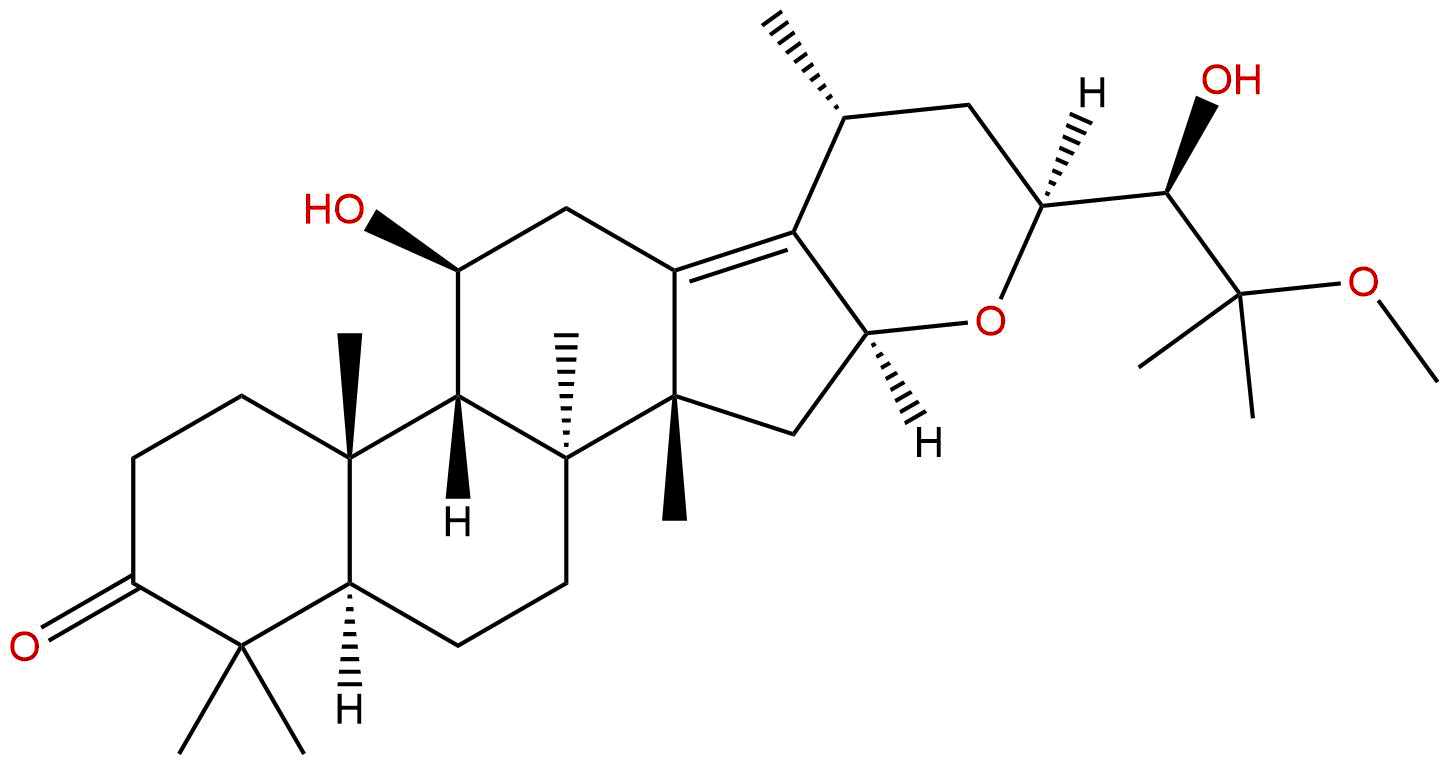
25 Methyl Alisol F belongs to the terpenoid tetracyclic triterpenoid class of compounds. The prototerpene skeleton is a characteristic triterpenoid structure in plants of the Alisma genus, characterized by a specific stereoisomeric tetracyclic system consisting of six isoprene units and often containing multiple oxygen-containing functional groups on the side chains. The structural naming of 25 methyl Alisol F implies its close relationship with Alisol F, with the main difference being the substituent at position C-25. Specifically, the C-25 position of Alismatal F is usually a hydroxyl group (- OH), while the C-25 position of 25 methyl Alismatal F is a methoxy group (- OCH ∝). This structural modification significantly alters the polarity of the molecule and its potential hydrogen bond donor/acceptor ability.
From the structural formula, the compound has a classic four ring core (A, B, C, D rings) of the original terpene, and there are hydroxyl substituents at multiple sites, such as C-11, C-24, etc. These hydroxyl groups are key groups for forming intramolecular hydrogen bonds and participating in biological activity. The side chain structures at positions C-13 and C-17 are complex and contain multiple chiral centers, giving the molecule a specific three-dimensional spatial configuration. Its precise chemical structure usually requires comprehensive analysis through high-resolution mass spectrometry (HR-MS), one-dimensional and two-dimensional nuclear magnetic resonance spectroscopy (1D&2D NMR) such as ¹ H-NMR, ¹ ³ C-NMR, HSQC, HMBC, NOESY, etc. The molecular formula of this compound is C ∝₁ H ₅₀ O ₅, and the calculated molecular weight is 502.7300 g/mol.
Physicochemical properties
Based on its chemical structure, it can be inferred that 25 methyl laxative alcohol F has the following physicochemical properties:
1. solubility As a polyhydroxytriterpene, it has good solubility in polar organic solvents such as methanol, ethanol, ethyl acetate, acetone, dimethyl sulfoxide (DMSO), etc. Due to the reduced polarity caused by the methoxy substitution at position C-25, its solubility in water may be lower, but its solubility in certain organic solvents may be better than its hydroxy analogue (Alismatal F). Its lipid water partition coefficient (LogP) is expected to be in the moderate range, which is consistent with its molecular weight and polar surface area.
2. Stability Under conventional storage conditions (low temperature, dark, dry), this compound is usually relatively stable. However, due to the presence of multiple hydroxyl and vinyl bonds in its structure (if any), oxidation, dehydration, isomerization, or degradation reactions may occur under strong acid, strong base, or high temperature conditions. Therefore, in the process of extraction, separation, and biological activity testing, attention should be paid to controlling the pH value and temperature.
3. spectral characteristics In ultraviolet spectroscopy (UV), due to the lack of conjugated double bond systems, the end absorption may be weak. Infrared spectroscopy (IR) can observe characteristic absorption peaks of hydroxyl groups (~3400 cm ⁻¹) and ether bonds (C-O-C,~1100 cm ⁻¹). In mass spectrometry analysis, the molecular ion peak [M+H] ⁺ or [M+Na] ⁺ should appear around m/z 503.7 or 525.7. The NMR spectrum can provide detailed structural information, especially the proton signal (usually at δ 3.2-3.4 ppm) and carbon signal (δ 55-60 ppm) of methoxy (- OCH ∝), which are key features that distinguish it from Alismatal F.
Plant sources and extraction methods
Plant-based
25 Methyl Alismatal F is mainly derived from the Alismataceae family and the Alismataceae genus(Alisma)Plants. The main known sources currently include:
1. Eastern Alisma(Alisma orientale (Sam.) Juzep.)Also known as Jian Ze Xie, it is one of the mainstream varieties of Ze Xie recorded in the Chinese Pharmacopoeia, mainly produced in Fujian, Jiangxi, Sichuan and other places. Its tuber is the main medicinal part of traditional Chinese medicine Alisma, and it is also the main material for isolating various alcohol compounds from Alisma.
2. Alisma(Alisma plantago-aquatica Linn.)Also known as Chuan Ze Xie, it is a variety included in pharmacopoeia and widely distributed. Its tubers are also rich in triterpenoids.
3. Other plants of the Alisma genus As follows:Alisma canaliculatum A. Braun et Bouche (Alisma stricta) and others may also contain triterpenoid compounds with similar structures, but the specific content and distribution of 25 methyl Alismatal F in these species are not yet fully studied.
Usually, the content of 25 methyl laxative alcohol F in plants is low and belongs to trace or trace components. Its biosynthetic pathway is believed to be the transfer of methyl groups from S-adenosylmethionine (SAM) to C-25 hydroxyl groups by specific methyltransferases of Alisma alcohol compounds, thereby forming methoxy derivatives. The content of this compound is influenced by various factors such as plant variety, place of origin, harvesting time, and processing methods.
Extraction and Separation Methods
Due to the low content of 25 methyl laxative alcohol F in plant materials, its extraction and separation require the use of systematic and efficient modern chromatographic techniques. The typical process is as follows:
-
Raw material preparation and extraction:
- raw material Dried Alisma rhizome, crushed to a certain fineness (such as 20-40 mesh).
- extraction solvent Commonly used polar organic solvents, such as 70-95% ethanol, methanol, or ethyl acetate. Reflux extraction or ultrasound assisted extraction are commonly used methods to improve extraction efficiency. Usually, multiple extractions (such as 3 times) are performed, and the extracted solutions are combined.
- Preparation of crude extract The extract is concentrated under reduced pressure to obtain the total extract.
-
Preliminary separation and enrichment:
- solvent extraction Suspend the total extract in water and perform liquid-liquid extraction using solvents of different polarities such as petroleum ether, ethyl acetate, n-butanol, etc. Due to its polarity, 25 methyl laxative alcohol F may be mainly enriched in the ethyl acetate extraction site or n-butanol extraction site.
- Preliminary Separation by Column Chromatography Using silica gel column chromatography and gradient elution with solvent systems such as chloroform methanol or petroleum ether acetone. Collect fractions containing the target compound through thin-layer chromatography (TLC) monitoring. This step can remove a large amount of pigments and impurities with significant polarity differences.
-
Fine separation and purification:
- Reverse phase column chromatography Use C18 or C8 reverse phase silica gel columns for gradient elution using methanol water or acetonitrile water systems. This is an effective method for separating triterpenoid compounds with similar structures. 25 Methyl Alismatal F and its analogues may be preliminarily isolated in this step.
- High performance liquid chromatography (HPLC)Preparation HPLC is a key step in achieving final purification. Usually, a C18 reverse phase chromatography column is used, with methanol water or acetonitrile water (often with a small amount of formic acid or acetic acid added) as the mobile phase, and isocratic or gradient elution is performed. Monitor with a UV detector (such as 210 nm) and collect the fraction of the target peak.
- Structural Identification The purified compound was structurally confirmed by spectroscopic techniques such as HR-MS and NMR (¹ H, ¹ ³ C, 2D-NMR), and was ultimately identified as 25 methyl Alisol F.
Pharmacological activity research
At present, research on the pharmacological activity of 25 methyl laxative alcohol F is still in its infancy, and the number of publicly reported literature is limited. However, based on its structural similarity with known active compounds of Alismatal alcohols (such as Alismatal A, B, F), it can be reasonably inferred that it may have a series of related pharmacological effects. The existing preliminary research mainly focuses on the following aspects:
1. Anti inflammatory activity
Inflammation is the common pathological basis of many diseases (such as cardiovascular diseases, diabetes, cancer, neurodegenerative diseases). Alisma alcohol compounds have been widely reported to have significant anti-inflammatory activity. Preliminary studies suggest that 25 methyl Alismatal F may exert anti-inflammatory effects by inhibiting key inflammatory signaling pathways.
- In vitro research In a lipopolysaccharide (LPS) - stimulated macrophage model (such as RAW 264.7 cells), 25 methyl laxative F may inhibit the production of pro-inflammatory factors such as nitric oxide (NO), prostaglandin E2 (PGE2), tumor necrosis factor - α (TNF - α), interleukin-6 (IL-6), and interleukin-1 β (IL-1 β). Its mechanism of action may be related to the inhibition of the activation of nuclear factor kappa B (NF - κ B) and mitogen activated protein kinase (MAPK) signaling pathways. The substitution of the C-25 methoxy group may affect its binding affinity with the target protein, resulting in a slightly different anti-inflammatory activity spectrum from Alismatal F.
2. Antitumor activity
Alisma alcohol compounds have shown cytotoxic or proliferative inhibitory effects in various cancer cell lines. The anti-tumor potential of 25 methyl laxative alcohol F is one of its research hotspots.
- cytotoxicity: Preliminary screening may show that it has growth inhibitory effect on some cancer cell lines (such as HepG2, breast cancer MCF-7, lung cancer A549, colon cancer HT-29, etc.). Its mechanism of action may involve inducing cell apoptosis (by activating Caspase family proteins and regulating Bcl-2 family protein expression), inducing cell cycle arrest (such as G0/G1 phase or G2/M phase arrest), inhibiting cell migration and invasion, etc.
- selectivity Evaluating its toxicity to normal cells (such as human liver cell LO2 and human kidney epithelial cell HEK-293) is an important indicator for measuring its development potential. The ideal anti-tumor compound should have a high selectivity index (SI).
3. Metabolic regulatory activity
The traditional efficacy of diarrhea, such as promoting diuresis, reducing blood lipids, and lowering blood sugar, is closely related to its diuretic, lipid-lowering, and hypoglycemic effects in modern medicine. 25 methyl laxative alcohol F may inherit these metabolic regulatory activities.
- Hypolipidemic effect Possible reduction of liver cholesterol synthesis by inhibiting the activity of 3-hydroxy-3-methylglutaryl-CoA reductase (HMG CoA reductase); Or by upregulating the expression of low-density lipoprotein receptor (LDLR), promoting the clearance of plasma low-density lipoprotein (LDL); It is also possible to reduce triglyceride synthesis by inhibiting key enzymes such as fatty acid synthase (FAS).
- Hepatoprotective effect In liver cell injury models such as those induced by carbon tetrachloride CCl ₄ or acetaminophen APAP, it is possible to reduce serum transaminase (ALT, AST) levels and alleviate liver pathological damage through antioxidant, anti-inflammatory, and anti apoptotic mechanisms.
- Anti diabetes effect It may exert hypoglycemic effects by improving insulin resistance, promoting glucose uptake, and inhibiting alpha glucosidase activity.
4. Other potential activities
- diuretic action As the main traditional efficacy of Alisma, its active ingredients may promote urine excretion by affecting the expression or activity of renal water salt transporters such as Na ⁺ - K ⁺ -2Cl ⁻ co transporter NKCC2 and aquaporin AQP2.
- Antiviral activity Some triterpenoid compounds have shown antiviral activity, and it is worth exploring whether 25 methyl laxative F has anti hepatitis virus, influenza virus and other activities.
- Immune regulatory activity May exert immune enhancement or immune suppression effects by regulating the function of T cells, B cells, or macrophages.
Mechanism of action and molecular targets
Although the direct molecular target research on 25 methyl Alismatal F is not yet in-depth, based on the research results of its structural analogues (especially Alismatal F), its possible mechanism of action and target network can be speculated. These mechanisms typically involve cross regulation of multiple signaling pathways.
1. Anti inflammatory mechanism
- NF - κ B pathway At rest, NF - κ B binds to the inhibitory protein I κ B and exists in an inactive form in the cytoplasm. When stimulated by LPS, TNF - α, etc., I κ B kinase (IKK) is activated, phosphorylates and degrades I κ B, releases NF - κ B into the nucleus, and initiates transcription of pro-inflammatory genes. 25 Methyl Zexatol F may inhibit the activity of IKK or directly interfere with the phosphorylation of I κ B, thereby blocking the nuclear translocation of NF - κ B and reducing the expression of inflammatory mediators such as TNF - α, IL-6, iNOS, COX-2.
- MAPK pathway The MAPK family includes three main pathways: ERK, JNK, and p38. These pathways also play a crucial role in the inflammatory response. This compound may inhibit the activity of upstream kinases such as MKKs, thereby suppressing the phosphorylation of JNK and p38, ultimately reducing the production of inflammatory factors.
- NLRP3 inflammasome NLRP3 inflammasome is an important component of the innate immune system, and its abnormal activation is associated with various inflammatory diseases. Alisma alcohol compounds have been reported to inhibit the assembly and activation of NLRP3 inflammasomes, thereby reducing the maturation and secretion of IL-1 β and IL-18. 25 Methyl Alismatal F may have a similar effect.
2. Antitumor mechanism
- Inducing apoptosis:
- Mitochondrial pathway (endogenous pathway)By downregulating the expression of anti apoptotic proteins Bcl-2 and Bcl xL, and upregulating the expression of pro apoptotic proteins Bax and Bak, mitochondrial outer membrane permeability is increased, leading to the release of cytochrome c (Cyt c) into the cytoplasm. Cyt c forms apoptotic bodies with Apaf-1 and procaspase-9, activating caspase-9 and subsequently activating downstream executing caspase-3/7, ultimately leading to cell apoptosis.
- Death receptor pathway (exogenous pathway)Possible activation of exogenous apoptotic pathways may be achieved by upregulating the expression of death receptors such as Fas and TRAIL-R, or by activating caspase-8.
- Inducing cell cycle arrest It is possible to inhibit cancer cell proliferation by regulating the expression of cyclins and cyclin dependent kinases (CDKs), such as downregulating Cyclin D1, CDK4/6 (causing G1 phase arrest) or Cyclin B1, CDK1 (causing G2/M phase arrest).
- Inhibit angiogenesis It is possible to reduce the formation of tumor neovascularization and cut off the nutritional supply to the tumor by downregulating the expression of vascular endothelial growth factor (VEGF) and its receptor (VEGFR), or inhibiting the activity of hypoxia inducible factor-1 alpha (HIF-1 alpha).
- Regulating autophagy Autophagy plays a dual role in the occurrence and development of tumors. This compound may affect cancer cell survival by inducing protective or inhibitory autophagy, depending on cell type and microenvironment.
3. Metabolic regulation mechanism
- lower blood lipids It may act as a regulator of farnesol X receptor (FXR) or liver X receptor (LXR), affecting the expression of genes related to bile acid synthesis and cholesterol metabolism. It may also directly inhibit HMG CoA reductase activity or inhibit lipid synthesis by activating the AMP activated protein kinase (AMPK) signaling pathway.
- liver protection By activating the nuclear factor E2 related factor 2 (Nrf2)/antioxidant response element (ARE) pathway, a series of antioxidant enzymes (such as HO-1, NQO1, GST) are induced to express and enhance cellular antioxidant defense capabilities. At the same time, by inhibiting the NF - κ B pathway, the inflammatory response of the liver is reduced, and by regulating Bcl-2 family proteins, liver cell apoptosis is inhibited.
molecular target
Based on the above mechanisms, the potential molecular targets that 25 methyl laxative F may act on include:
- Kinases Key kinases in the IKK, MKKs, JNK, p38, AMPK, PI3K/Akt/mTOR pathways.
- transcription factor:NF-κB、Nrf2、STAT3、HIF-1α。
- Apoptosis related proteins:Bcl-2、Bax、Caspase-3/8/9。
- Metabolic related enzymes HMG CoA reductase, FAS, alpha glucosidase.
- Inflammasome:NLRP3。
It should be emphasized that the above mechanisms and targets are mainly based on the common research of Alisma alcohol compounds. Due to its unique methoxy substitution, the binding mode, affinity, and downstream effects of 25 methyl Alismatal F to these targets may be specific and require direct validation through experimental techniques such as molecular docking, surface plasmon resonance (SPR), and drug affinity responsive target stability (DARTS).
Evaluation of drug properties and pharmacokinetics
The evaluation of drug properties is a crucial step in determining whether natural products can be transported from the laboratory to clinical practice. Based on the provided parameters and combined with its chemical structure, a preliminary analysis is conducted on the pharmacological properties of 25 methyl laxative alcohol F.
1. Physical and chemical properties and the "Five Rules for Similar Drugs"
- molecular weight 502.73 Da. This value exceeds the classical Lipinski's Rule of Five limit of molecular weight<500 Da. A larger molecular weight usually means that oral absorption may be poor, but it is not absolute, and many successfully marketed drugs also have a molecular weight exceeding 500.
- Lipid water partition coefficient (LogP)No specific values have been provided, but based on its structure (polyhydroxy+methoxy), LogP is expected to be between 3-5. This range is usually considered the optimal range for oral absorption.
- Hydrogen bond donor and acceptor The number of hydrogen bond acceptors is 5 (oxygen atoms from hydroxyl and ether bonds), which conforms to the rule of<10. The number of hydrogen bond donors (not provided, but based on the structure, there are at least 3-4 hydroxyl hydrogens) is expected to comply with the rule of<5.
- Topological Polarity Surface Area (TPSA): 86.06 Å ². TPSA is an important parameter for predicting oral absorption and blood-brain barrier permeability. Generally, TPSA<140 Å ² is considered to have good oral absorption potential. The value of 86.06 Å ² suggests that its oral absorption may be good, but it also explains why its blood-brain barrier permeability is predicted to be "Low" (usually when TPSA>90 Å ², brain permeability significantly decreases).
Summary Except for a slightly higher molecular weight than the standard, 25 methyl laxative F basically meets the five rules of generic drugs and has certain potential for oral administration. Its larger TPSA also indicates that it is less likely to enter the central nervous system, which may be an advantage in reducing central related side effects.
2. Pharmacokinetic (ADME) prediction
- absorb Expected moderate oral absorption. Its molecular weight and polarity may lead to poor water solubility, thereby limiting absorption. It may be necessary to use formulation techniques such as solid dispersions, liposomes, and cyclodextrin inclusion complexes to improve their bioavailability.
- distribution The plasma protein binding rate may be high and the distribution volume may be moderate. Due to its low blood-brain barrier permeability, it is mainly distributed in peripheral tissues such as plasma, liver, and kidneys.
- Metabolism As a triterpenoid compound, its metabolism mainly occurs in the liver and may involve phase I metabolism (such as hydroxylation, oxidation, demethylation) and phase II metabolism (such as glucuronidation, sulfation). The methoxy group at position C-25 may first be demethylated to form Alismatal F, which is then further metabolized. The cytochrome P450 enzyme system (such as CYP3A4, CYP2C9) may be involved in its metabolism.
- excretion Mainly excreted through bile, with some excreted through the kidneys. Due to its high molecular weight, bile excretion may be the main pathway.
3. Toxicity prediction
- Hepatotoxicity: Unknown. Alisma itself is relatively safe in traditional use, but long-term or high-dose use has also been reported to cause liver and kidney function damage. Alisma alcohol compounds may exhibit certain toxicity to liver cells at high concentrations in vitro. Systematic in vitro and in vivo toxicity evaluation is required.
- Cardiotoxicity (hERG inhibition): Unknown. HERG channel inhibition is the main cause of drug-induced long QT syndrome and arrhythmia. Triterpenoid compounds usually have a low risk of inhibiting hERG channels, but still need to be validated through patch clamp experiments.
- Genotoxicity (Ames test): Unknown. The Ames test is a standard method for evaluating the mutagenicity of compounds. At present, there is no relevant data, but based on its natural product sources, the risk of mutagenicity is usually low.
Overall evaluation of drug properties 25 Methyl Alismatal F has certain potential as a lead compound. Its advantages lie in its novel structure, multiple potential pharmacological activities, moderate TPSA, and difficulty in entering the brain. The main challenge lies in the potential oral bioavailability issues caused by high molecular weight, as well as the complete lack of toxicological data. Future research directions should focus on: 1) evaluating its ADME characteristics through in vivo and in vitro experimental systems; 2) Conduct comprehensive toxicology research (including acute toxicity, long-term toxicity, genetic toxicity, cardiac toxicity); 3) Explore formulation strategies to improve its bioavailability; 4) Perform structural modifications to optimize its pharmacological and pharmacokinetic properties.
Clinical application prospects and prospects
As a novel triterpenoid compound derived from the traditional Chinese medicine Alisma, 25 methyl Alismatal F has broad clinical application prospects, but there is still a long way to go before it can be practically applied.
1. Potential application areas
- Inflammatory diseases In view of its potential anti-inflammatory activity, it can be explored for the treatment of chronic inflammatory diseases such as rheumatoid arthritis, inflammatory bowel disease, asthma, atherosclerosis, etc.
- Metabolic diseases Based on its possible effects of lowering blood lipid, protecting liver and anti diabetes, it is expected to be developed as a candidate drug for the treatment of nonalcoholic fatty liver disease (NAFLD), hyperlipidemia, type 2 diabetes and its complications.
- neoadjuvant therapy Its anti-tumor activity, especially the synergistic enhancement or attenuation effect that may occur when combined with chemotherapy drugs, makes it potentially applicable in the comprehensive treatment of tumors. For example, as a chemotherapy sensitizer, it can reduce the dosage of chemotherapy drugs and alleviate toxic side effects.
- Liver protection In the fields of drug-induced liver injury, alcoholic liver disease, viral hepatitis and other liver diseases, its hepatoprotective activity deserves further research.
2. Challenges faced and future research directions
- Resource issues 25 Methyl Alismatal F has extremely low content in plants, with high natural extraction costs and low yields, making it difficult to meet the needs of large-scale research and development. In the future, it is necessary to develop efficient chemical or biological synthesis methods (such as using genetic engineering to modify yeast or plant cell factories) to obtain sufficient amounts of compounds.
- Deepening of drug efficacy and mechanism At present, most of the research is preliminary screening in vitro, lacking systematic in vivo pharmacological evaluation. Multiple animal disease models need to be established (such as hyperlipidemic rats, CCl induced liver injury mice, colitis mice, tumor bearing nude mice, etc.) to comprehensively evaluate their in vivo efficacy. At the same time, using omics techniques (proteomics, metabolomics) and chemical biology methods, accurately elucidate its targets and molecular mechanisms.
- Pharmacokinetic optimization Low oral bioavailability is a common challenge for many natural products. Modern pharmaceutical technologies such as prodrug design, nano formulations, and phospholipid complexes are needed to improve its water solubility, permeability, and metabolic stability, and enhance its bioavailability.
- safety evaluation A systematic and standardized preclinical safety evaluation must be conducted, including acute toxicity, long-term toxicity, reproductive toxicity, genetic toxicity, immunotoxicity, etc., to clarify their safety window and potential toxic side effects.
- Study on Structure Activity Relationship Systematically synthesize a series of derivatives of 25 methyl laxative alcohol F, study the effects of different site substituents (such as hydroxyl, methoxy, double bond positions) on their activity and pharmacokinetic properties, and search for lead compounds with stronger activity, lower toxicity, and better pharmacokinetic properties.
Conclusion
25 Methyl Alismatal F, as a structurally unique triterpenoid compound in the Alisma genus, has chemical and biological characteristics distinct from other Alisma alcohol compounds due to its C-25 methoxy substitution. Although research on this compound is still in the early stages of exploration, its preliminary activities in anti-inflammatory, anti-tumor, and metabolic regulation, combined with the long history of medicinal use of Alisma and the proven multiple pharmacological effects of Alisma alcohol compounds, indicate its enormous potential as a lead compound for new drug development.
However, transitioning from natural products to innovative drugs is a challenging path. 25 Methyl Alismatal F is currently facing key scientific issues such as scarce resources, unclear mechanism of action, poor pharmacokinetic properties, and toxicological data gaps. Future research requires the integration of multidisciplinary forces such as plant chemistry, medicinal chemistry, pharmacology, toxicology, pharmacy, and chemical biology to systematically and deeply investigate their chemical, biological, and pharmaceutical properties. By addressing resource bottlenecks, elucidating action targets, optimizing drug properties, and completing safety evaluations, it is expected to gradually transform this natural product molecule from traditional Chinese medicine into a candidate drug for treating major human diseases, contributing new strength to innovative drug development. In depth research on 25 methyl Alismatal F not only helps to reveal the pharmacological substance basis of traditional Chinese medicine Alisma, but also provides new ideas and directions for modern drug discovery based on natural products.