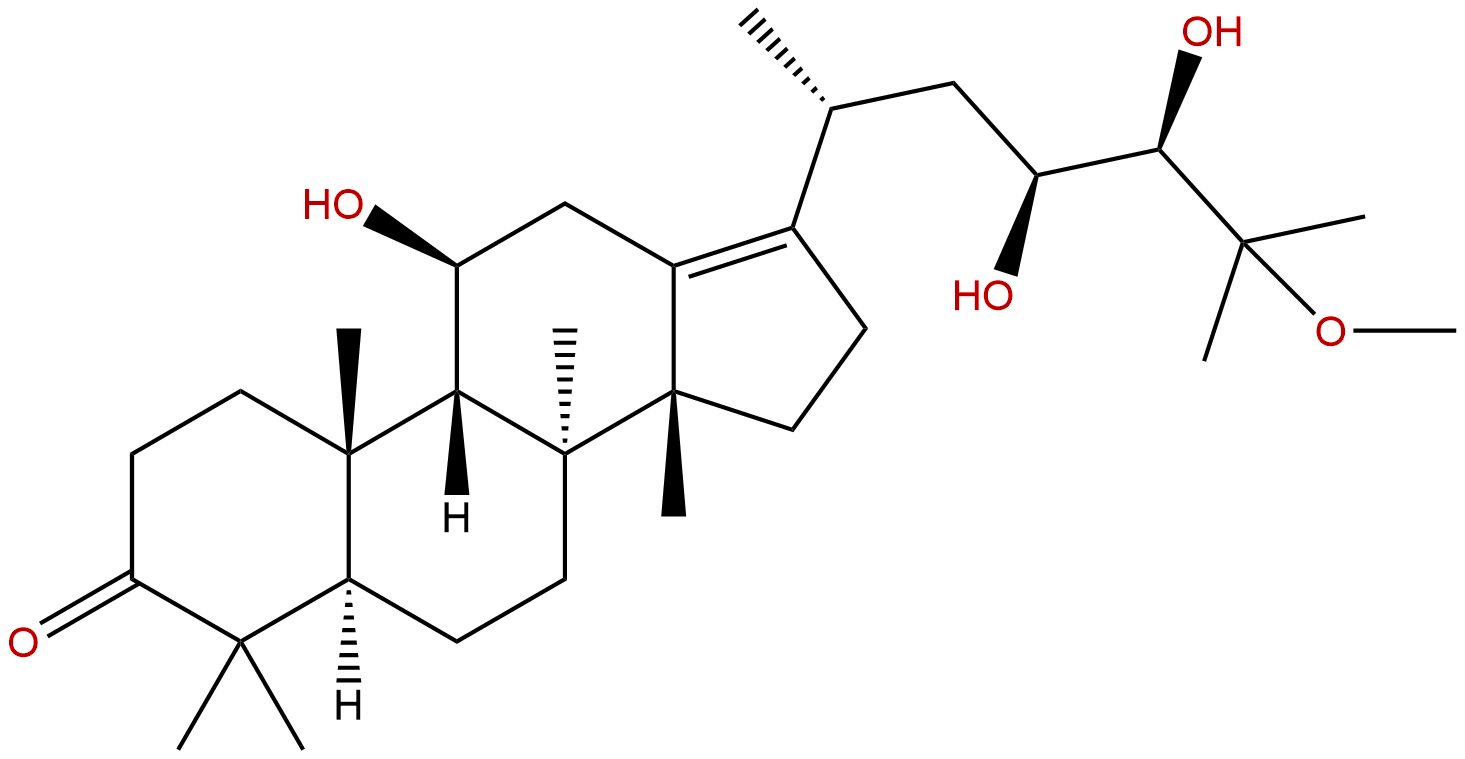


Product name: 25-methoxyalisol A
Synonym name:
Catalogue No.: BP3016
Cas No.: 155801-00-6
Formula: C31H52O5
Mol Weight: 504.752
Botanical Source:
Physical Description: Powder
Type of Compound: Triterpenoids
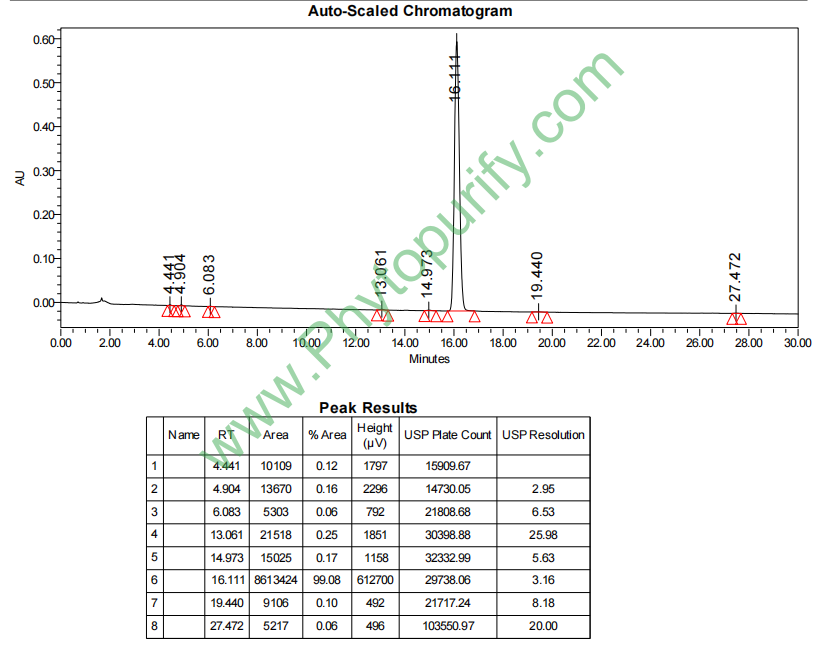
Purity: 95%~99%
Analysis Method: HPLC-DAD or/and HPLC-ELSD
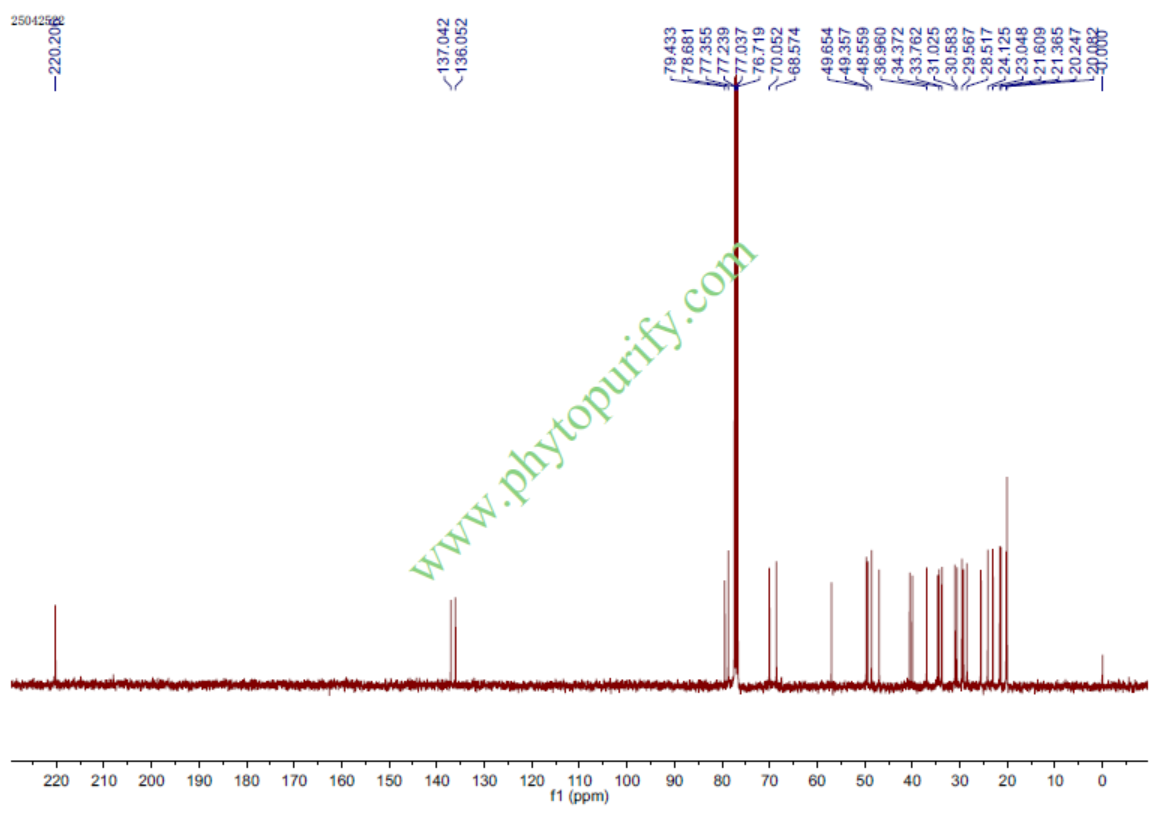
Identification Method: Mass, NMR
Packing: Brown vial or HDPE plastic bottle
The product could be supplied from milligrams to grams. Inquire for bulk scale.
We provide solution to improve the water-solubility of compounds, thereby facilitating the variety of activity tests and clinic uses.
For Reference Standard and R&D, Not for Human Use Directly.
HPLC of 25-methoxyalisol A
NMR of 25-methoxyalisol A
Storage conditions:Short-term storage at 2~8℃, long-term storage at -20 ~ -80℃
86.9900
4.8717
4.8728
.0049
2.2669
5.1661
Low
84.2334
5.2331
No
No
No
No
No
No
0.0
No
No
No
No
Diuretic dysfunction is a common pathophysiological link in various cardiovascular, renal, and endocrine system diseases, manifested as an imbalance in water and sodium excretion in the body, often leading to serious consequences such as edema, hypertension, and heart failure. The commonly used diuretics in clinical practice, such as loop diuretics, thiazide diuretics, and potassium sparing diuretics, have definite therapeutic effects, but long-term use often accompanies side effects such as electrolyte imbalance, metabolic abnormalities, and drug resistance. Therefore, searching for efficient and low toxicity new diuretic active ingredients from natural products has always been an important direction in drug development. Plants of the Alismataceae family, especially the Alismata genus(Alisma Spp. plants have long been renowned in traditional medicine for their diuretic, diuretic, and detoxifying properties. 25 methoxyalisol A (CAS: 155801-00-6) is a triterpenoid compound of the original terpenoid type isolated from Alisma, and is one of the key pharmacological substances for the traditional diuretic effect of Alisma. In recent years, with the deepening of modern pharmacological research, it has not only been proven to have significant diuretic activity, but also demonstrated a unique mechanism of action at the molecular target level, providing a highly promising lead compound for the development of new diuretic drugs. This article aims to provide a systematic review of the chemical structure, plant origin, pharmacological activity, mechanism of action, pharmacological properties, and clinical application prospects of 25 methoxy Alismatal A, in order to provide comprehensive scientific references for the in-depth research and development of this compound.
The molecular formula of 25 methoxy Alisol A is C ∝₁ H ₅₂ O ₅, with a molecular weight of 504.7520. Its chemical structure belongs to the highly oxidized triterpenoid type, which is a C-25 methoxylated derivative of Alismatal A. The core skeleton consists of six rings (A-F rings), among which A/B, B/C, and C/D rings are trans fused, and D/E ring is cis fused. The E ring and F ring are connected by an oxygen bridge to form a unique tetrahydrofuran ring structure. C-13, C-16, and C-17 are respectively connected to hydroxyl groups, while C-25 is connected to methoxy groups. These oxygen-containing functional groups are crucial for their water solubility and biological activity.
Its physicochemical properties exhibit typical characteristics of medium polarity triterpenoids. The calculated lipid water partition coefficient (LogP) is 4.8717, indicating that the compound has good lipophilicity. The theoretical polar surface area (TPSA) is 86.99 Å ², mainly contributed by multiple hydroxyl and ether bonds in the molecule. The predicted water solubility is low, about 0.0049 mg/mL, indicating that it may need to be improved in formulation development through techniques such as salt formation, cyclodextrin inclusion, or nanomaterialization. From the preliminary parameters of drug formation, its molecular weight is moderate and its blood-brain barrier permeability is predicted to be low, indicating that its effects may mainly be concentrated in the peripheral system and the risk of central nervous system side effects is relatively low. Importantly, the preliminary toxicity prediction showed no inhibition of hERG potassium channels (hERG inhibition: No), and the Ames test predicted a result of 0.0, suggesting a low potential mutagenic risk and providing preliminary positive signals for its safety assessment.
25 methoxy Alisma alcohol A mainly comes from plants of the Alisma genus in the Alisma family, among which medicinal Alisma is used(Alisma orientale (Sam.) Juz., Usually with Alisma plantago-aquatica L. subsp. orientale (Sam.) Sam. is its primary natural source. This plant is widely distributed in East Asia, and its dried tubers are authentic medicinal materials of the traditional Chinese medicine "Alisma". They have the effects of promoting water and dampness, relieving heat, and reducing turbidity and cholesterol.
The extraction and separation of 25 methoxy Alismatal A from plant materials typically involves a multi-step combination process. Firstly, the dried tubers of Alisma were crushed and subjected to hot reflux or ultrasound assisted extraction using ethanol or methanol to fully extract the active ingredients, including triterpenoids. After vacuum concentration, the crude extract obtained was subjected to systematic solvent fractionation using solvents such as petroleum ether, ethyl acetate, and n-butanol. The compound was mainly enriched in the ethyl acetate fraction. Further purification is highly dependent on modern chromatographic techniques. Silica gel column chromatography is commonly used for preliminary separation, with different ratios of petroleum ether ethyl acetate or chloroform methanol gradient elution. Subsequently, fine separation and purification were carried out using methods such as reverse phase silica gel (such as ODS) column chromatography, high-performance liquid chromatography (HPLC, commonly using C18 column with methanol water or acetonitrile water as mobile phase), and preparative thin layer chromatography (PTLC). The identification of its final structure was carried out through a combination of nuclear magnetic resonance (NMR, including ¹ H-NMR, ¹ ³ C-NMR, DEPT, HSQC, HMBC, ¹ H - ¹ H COSY, etc.), mass spectrometry (MS, such as ESI-MS, HR-ESI-MS), and X-ray single crystal diffraction techniques. In recent years, preparation chromatography techniques such as high-speed counter current chromatography have also been applied to the efficient preparation of such triterpenes due to their high recovery rate and avoidance of irreversible adsorption by solid adsorbents.
A large number of preclinical pharmacological studies have confirmed that 25 methoxy Alisrinol A is one of the core active ingredients in the diuretic effect of Alisma, and its pharmacological activity mainly focuses on regulating water and salt metabolism.
1. Diuretic activity: In various animal models, such as rats and mice, 25 methoxy laxative alcohol A exhibits dose-dependent diuretic effects. Compared with potent loop diuretics such as furosemide, its effect is relatively mild but long-lasting, and it can promote the excretion of sodium ions (Na ⁺), potassium ions (K ⁺), and chloride ions (Cl ⁻), exhibiting certain mineralocorticoid antagonistic characteristics. It is worth noting that in some studies, its sodium excretion may be stronger than its potassium excretion, which helps maintain a more favorable Na ⁺/K ⁺ excretion ratio, potentially reducing the risk of hypokalemia and may have advantages over traditional diuretics.
2. Anti hypertension and organ protection: Based on its diuretic and sodium excretory effects, 25 methoxy laxative alcohol A exhibits a certain antihypertensive effect in salt sensitive hypertensive animal models. In addition, research suggests that it may have a protective effect against hypertension induced cardiac hypertrophy and kidney damage by reducing capacity load and directly acting on renal targets, which goes beyond the simple diuretic effect.
3. Anti inflammatory and antioxidant: Water sodium retention and diuretic dysfunction are often accompanied by low-grade inflammation and oxidative stress. Preliminary studies have shown that 25 methoxy laxative alcohol A can inhibit the expression of certain inflammatory factors (such as TNF - α, IL-6) and enhance the antioxidant enzyme activity of kidney tissue. These auxiliary activities may help alleviate renal interstitial inflammation, protect renal tubular function, and indirectly support their diuretic and renal protective effects.
4. Other potential activities: A few studies have also reported that this compound may have anti diabetes nephropathy, anti atherosclerosis and other activities, which may be related to improving metabolism, anti inflammation and protecting endothelial function, but more in-depth systematic research is needed to confirm these activities.
The diuretic effect of 25 methoxy puerarin A is not achieved through a single pathway, but rather through multi-target and multi link regulation of the water salt transport system. Existing research has preliminarily revealed its interactions with multiple key target proteins.
1. Antagonism of mineralocorticoid receptor (NR3C2): NR3C2 is a key nuclear receptor that regulates sodium reabsorption in distal renal tubules and collecting ducts. After binding with aldosterone, the expression and activity of epithelial sodium channels (ENaC) and Na ⁺, K ⁺ - ATPase are upregulated. Research has shown that 25 methoxy laxative alcohol A can competitively antagonize the activation of NR3C2, inhibit aldosterone induced gene transcription, thereby reducing sodium reabsorption and promoting sodium excretion and diuresis. This is a key mechanism that distinguishes it from loop diuretics and thiazide diuretics, and has some similarities with potassium sparing diuretics such as spironolactone, but with a completely different chemical structure.
2. Inhibition of Na ⁺, K ⁺ - ATPase (ATP1A1) activity: ATP1A1 is the driving force pump that establishes the sodium potassium electrochemical gradient inside and outside the membrane of renal tubular epithelial cells. 25 methoxy Alismatal A has been shown to directly or indirectly inhibit the activity of the enzyme, reduce the active transport driving force of sodium, and affect subsequent secondary active reabsorption through the Na ⁺/K ⁺/2Cl ⁻ co transporter (NKCC2, encoded by the SLC12A1 gene). This partially covers the upstream site of action of loop diuretics in its mechanism of action.
3. Regulating aquaporin 2 (AQP2): AQP2 is a key water channel regulated by antidiuretic hormone (ADH) for water reabsorption in the collecting duct. Research has found that 25 methoxy laxative alcohol A may reduce the expression of AQP2 in the apical membrane by interfering with the ADH signaling pathway or promoting its internalization and degradation, thereby inhibiting water reabsorption and producing a water urinary effect.
4. Impact on ion channels and transporters: This compound also has regulatory effects on other important ion channels in the kidney. For example, it may inhibit the activity of NKCC2 (SLC12A1) in the ascending branch of the renal tubular medullary loop, similar to the effect of loop diuretics. Meanwhile, regulation of the remote renal unit ROMK channel (encoded by the KCNJ1 gene) may affect potassium secretion, which is closely related to its impact on urinary potassium excretion. The specific regulation method, whether it is directly suppressed or indirectly achieved through upstream signals, is still under further research.
In summary, 25 methoxy Alismatal A intervenes in water salt reabsorption at multiple levels, including the "power pump" (ATP1A1), "major transporter" (NKCC2, ENaC), "water channel" (AQP2), and "regulatory hub" (NR3C2), by synergistically antagonizing NR3C2, inhibiting ATP1A1, downregulating AQP2, and affecting SLC12A1 and KCNJ1 targets, forming its unique, mild, and persistent diuretic network.
Despite exhibiting good pharmacological activity, the pharmacological properties of 25 methoxy Alismatal A still require comprehensive evaluation.
Pharmacokinetic characteristics: At present, there is still limited systematic pharmacokinetic research on this compound. Based on its physicochemical properties (LogP=4.87, low water solubility), it can be predicted that its oral absorption may be limited by solubility and permeability, and its bioavailability may be moderate or low. Preliminary animal experiments suggest that after oral administration, it may be absorbed in the intestine, enter the liver through the portal vein, and undergo first pass metabolism. The multiple hydroxyl groups in its molecule are potential binding sites for glucuronidation and sulfation, suggesting that its metabolic pathway is mainly through II phase binding reactions. The prototype drug and its metabolites may be mainly excreted through bile and kidneys. Due to its low blood-brain barrier permeability and limited central distribution, it is beneficial for reducing central side effects.
ADMET characteristic analysis:
* Absorption (A) and distribution (D): Lipophilicity is beneficial for transmembrane absorption, but low water solubility is the limiting step. The binding rate to plasma proteins is unknown, but triterpenoids often have a high binding rate to albumin, which may affect the concentration of free drugs.
* Metabolism (M) and excretion (E): As mentioned earlier, it is easily converted by phase II metabolic enzymes. It is necessary to clarify the main metabolic enzymes (such as UGTs, SULTs) to evaluate the risk of drug drug interactions.
* Toxicity (T): Preliminary computer predictions indicate no hERG inhibition or Ames mutagenicity, suggesting a low risk of cardiotoxicity and genotoxicity. But comprehensive preclinical toxicology studies are needed, including acute toxicity, subchronic toxicity, reproductive toxicity, etc., to evaluate its safety window. Its NR3C2 antagonistic properties require attention to the feedback changes in hormone levels that may be caused by long-term use.
Challenges and Strategies in Pharmaceutical Science: Developing suitable drug delivery formulations is key to advancing their application. In response to its low water solubility, formulation technologies such as nanocrystals, solid dispersions, liposomes, and cyclodextrin inclusion complexes can be explored to improve dissolution and oral bioavailability. It is also possible to consider developing injectable lipid formulations or microemulsions for acute edema conditions.
25 methoxy Alisrinol A, as a natural active molecule derived from traditional Chinese medicine, has shown unique application potential in the treatment of diuretic dysfunction and related diseases.
Potential clinical application directions:
1. Chronic heart failure and edema: As a novel diuretic, it is particularly suitable for patients who are resistant to traditional diuretics or have severe electrolyte imbalances. Its multi-target, mild and persistent characteristics may be beneficial for maintaining a more stable internal environment.
2. Hypertension, especially salt sensitive hypertension: Its sodium excretion and NR3C2 antagonistic effects make it a potential targeted treatment option for this type of hypertension.
3. Kidney disease related water and sodium retention: The potential anti-inflammatory and renal protective effects of edema associated with nephrotic syndrome and chronic kidney disease (CKD) may bring additional benefits.
4. Adjuvant treatment for primary aldosteronism: As a natural source of NR3C2 antagonist, it may provide a new treatment option for such patients.
Future research prospects:
1. In depth mechanism research: By utilizing techniques such as gene knockout animals, proteomics, molecular docking, and dynamic simulations, we aim to accurately elucidate the interaction patterns and structure-activity relationships with targets such as NR3C2 and ATP1A1.
2. System drug optimization: Conduct comprehensive ADMET research and make reasonable chemical modifications based on structure-activity relationships (such as preparing prodrugs, optimizing solubility and metabolic stability) to improve its pharmacokinetic properties.
3. Formulation development and preclinical research: Accelerate the development of efficient and stable formulations, and complete standardized GLP toxicology evaluations, laying the foundation for their application for clinical research approval (IND).
4. Exploring combination therapy: Studying its combination with existing diuretics or antihypertensive drugs may produce synergistic effects, reducing their respective dosages and side effects.
5. Expand the activity spectrum: Further validate its potential value in metabolic diseases and inflammation related diseases.
25 methoxy Alismatal A is one of the landmark achievements in modern pharmacological research of traditional Chinese medicine Alisma. It is not only a scientific carrier for interpreting the traditional efficacy of "promoting diuresis and eliminating dampness" in Alisma, but also opens up new ideas for the development of modern diuretic drugs with its novel multi-target mechanism of action. From antagonizing mineralocorticoid receptors to regulating key ion pumps and water channels, its action network reflects the complexity advantage of multi-component and multi-target synergistic effects of natural products. Although there are still many challenges in drug formulation, systemic pharmacokinetics, and clinical translation, with the continuous deepening of research and the application of modern drug development technology, 25 methoxy Alisol A is expected to gradually develop from an excellent natural lead compound into a new type of drug for the treatment of urinary dysfunction and related cardiovascular and kidney diseases, achieving a leap from traditional wisdom to modern medicine and demonstrating the enormous potential and value of modern research in traditional Chinese medicine.
