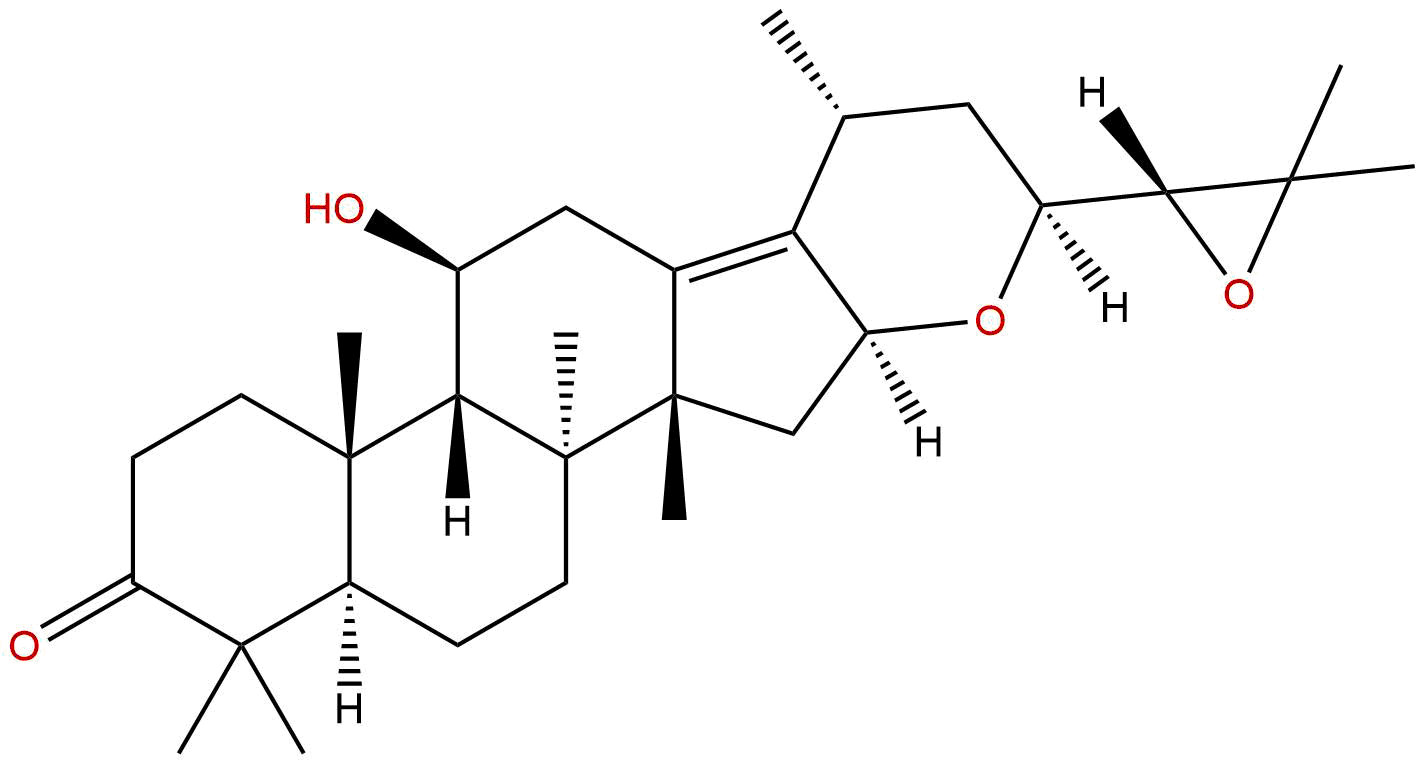


Product name: 16,23-Oxidoalisol B
Synonym name:
Catalogue No.: BP5432
Cas No.: 169326-06-1
Formula: C30H46O4
Mol Weight: 470.694
Botanical Source:
Type of Compound: Triterpenoids
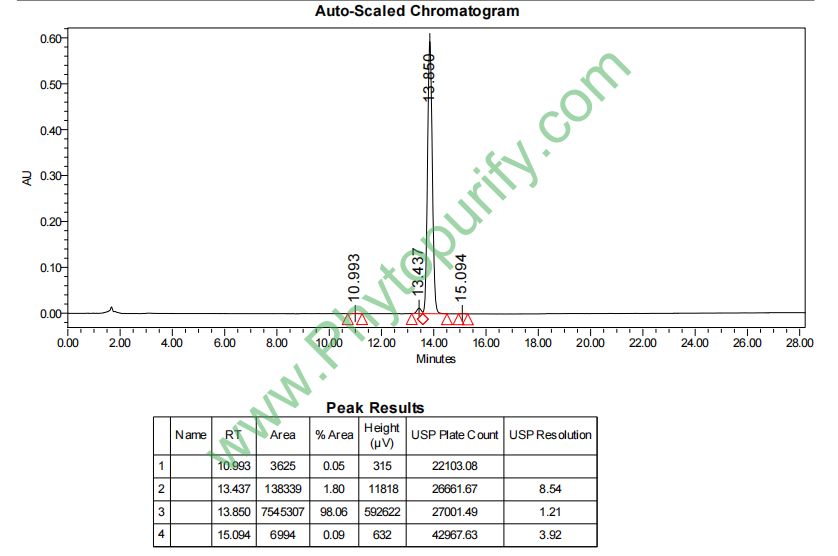
Purity: 95%~99%
Analysis Method: HPLC-DAD or/and HPLC-ELSD
Identification Method: Mass, NMR
Packing: Brown vial or HDPE plastic bottle
Storage: Store in a well closed container, protected from air and light. Put into refrigerate or freeze for long term storage.
Whenever possible, you should prepare and use solutions on the same day. However, if you need to make up stock solutions in advance, we recommend that you store the solution as aliquots in tightly sealed vials at -20℃. Generally, these will be useable for up to two weeks.
The product could be supplied from milligrams to grams
Inquire for bulk scale.
For Reference Standard and R&D, Not for Human Use Directly.
HPLC of 16,23-Oxidoalisol B
Storage conditions:Short-term storage at 2~8℃, long-term storage at -20 ~ -80℃
74.6000
5.5000
Unknown
Unknown
Unknown
Unknown
Unknown
Unknown
Unknown
Unknown
Unknown
Natural products, as an important source of drug discovery, play an irreplaceable role in the long history of human struggle against diseases. Among them, triterpenoids derived from traditional medicinal plants have always been a hot topic in medicinal chemistry and pharmacology research due to their structural diversity and wide range of biological activities. Alisma(Alisma orientale As a traditional Chinese medicine with a long history, (Sam.) Juz. was first recorded in the "Shennong Bencao Jing" and has the effects of promoting diuresis, relieving heat, reducing turbidity, and lowering cholesterol. It is commonly used in clinical practice to treat conditions such as difficulty urinating, edema, swelling, and hyperlipidemia. Modern pharmacological research has shown that the main active ingredients of Alisma are a series of structurally unique protostane type triterpenoids, among which Alisol B and its derivatives are the most extensively studied.
16,23-Oxidoalisol B, CAS number 169326-06-1, is a relatively low content but structurally unique triterpenoid compound in Alisma. Its structural feature lies in the formation of an epoxy bridge between positions C-16 and C-23, which endows it with physicochemical properties and potential biological activity distinct from the parent compound, Alismatal B. With the advancement of separation techniques and structural identification methods, researchers have gradually realized that these trace components may contain unique pharmacological mechanisms of action, and even outperform their main components in some aspects of activity. In recent years, research on 16,23-oxidized Alismatal B has progressed from simple activity screening to exploration of molecular targets and signaling pathways, and its potential in anti-inflammatory, anti-tumor, metabolic regulation, and other areas has gradually emerged.
However, compared with the main components such as Alismatal B and Alismatal A, there is still a lack of systematic review on the 16,23-oxidized Alismatal B. This article aims to comprehensively review the research progress of this compound since its discovery, covering its chemical structural characteristics, plant sources and extraction processes, multidimensional pharmacological activity, mechanism of action, evaluation of drug properties, and future clinical application prospects, in order to provide reference for the in-depth development and utilization of this natural product.
16,23-Oxidized Alismatal B belongs to the Protostane triterpenoid group, with a core skeleton composed of 27 carbon atoms and typical tetracyclic triterpenoid structural features. Compared with Alisol B, the most significant structural difference of 16,23-oxidized Alisol B is the formation of an epoxy ether bridge (- O -) between positions C-16 and C-23, thereby constructing an additional oxygen-containing heterocyclic ring. This structural modification not only changes the three-dimensional conformation of the molecule, but also significantly affects its polarity and chemical reactivity.
From the perspective of structural analysis, the molecular formula of 16,23-oxidized Alismatal B is C ∝₀ H ₄₆ O ₄, with a molecular weight of 462.6800 g/mol. Its structure contains multiple chiral centers, as well as functional groups such as hydroxyl (- OH), carbonyl (C=O), and epoxy. Specifically, this compound typically retains a carbonyl group at the C-11 position and a hydroxyl group at the C-24 position, while the epoxy bridges at the C-16 and C-23 positions are its key distinguishing feature from other Alisma alcohol compounds. This epoxy structure is relatively rare in natural products and is usually associated with specific biosynthetic pathways. It may be generated by the oxidative cyclization reaction mediated by cytochrome P450 enzymes through Alismatal B.
In terms of physical and chemical properties, 16,23-oxidized Alismatal B exhibits typical lipid soluble triterpenoid characteristics. Its lipid water partition coefficient (LogP) is 5.500, indicating strong lipophilicity, which is consistent with its multi ring skeleton and fewer polar groups. A higher LogP value suggests that the compound may tend to distribute in adipose tissue or bind to lipoproteins in vivo, while also suggesting that its solubility in aqueous media may be poor, posing challenges for its formulation development and oral bioavailability. Its topological polar surface area (TPSA) is 74.600 Å ², which is lower than the recommended upper limit of 140 Å ² for oral drugs, indicating its potential for cell membrane penetration. The number of hydrogen bond acceptors is 4, which conforms to the drug like rule (Lipinski's five rule states that there should not be more than 10 hydrogen bond acceptors). However, there is currently no clear data on key pharmacological parameters such as blood-brain barrier penetration, hepatotoxicity, cardiotoxicity (such as hERG inhibition), and genotoxicity (Ames test), which constitutes a blank area in the preclinical evaluation of this compound.
16,23-Oxidized Alismatal B mainly comes from the plant Alismata in the Alismataceae family(Alisma orientale)Dry tubers. Alisma is widely distributed in China, Japan, and Southeast Asia, and is a commonly used traditional Chinese medicine recorded in the Chinese Pharmacopoeia. In addition to authentic Alisma, other plants of the same genus include Alisma plantago-aquatica L. Its variants may also contain this ingredient, but the content varies depending on factors such as place of origin, harvest season, and processing method.
In the secondary metabolites of Alisma, Alisma alcohol B, Alisma alcohol A, Alisma alcohol C, and their acetate esters are the main components, while 16,23-oxidized Alisma alcohol B is usually a trace or trace component. Research has shown that its content is relatively low in raw Alisma, but after processing with bran frying or alcohol roasting, some Alisma alcohol B may undergo chemical transformation, leading to an increase in the content of 16,23-oxidized Alisma alcohol B. Therefore, selecting appropriate raw materials and processing methods is crucial for obtaining this compound.
Extraction and separation purification are the basis for studying this compound. Traditional extraction methods often use ethanol or methanol reflux extraction, taking advantage of the good solubility of triterpenoids in alcohol solvents. In order to improve extraction efficiency and selectivity, researchers have adopted various modern extraction techniques in recent years:
1. Ultrasound assisted extraction (UAE)By utilizing the cavitation effect of ultrasound to destroy cell walls and accelerate solvent penetration, the extraction rate of 16,23-oxidized Alismatal B can be increased in a relatively short period of time, while reducing the degradation of thermosensitive components.
2. Microwave assisted extraction (MAE)By microwave heating, the water inside the cell is vaporized, creating pressure that causes the cell to rupture, thereby promoting the dissolution of the target component. This method has the advantages of short extraction time and low solvent consumption.
3. Supercritical fluid extraction (SFE)Using CO ₂ as the extraction medium, selective extraction of different polar components can be achieved by adjusting pressure and temperature. SFE is a green and efficient extraction method for 16,23-oxidized Alismatal B, which has strong lipid solubility.
The crude extract after extraction has complex components and requires systematic separation and purification to obtain high-purity 16,23-oxidized Alismatal B. The classic separation process includes:
- Liquid-liquid extraction Use different polar solvents (such as petroleum ether, ethyl acetate, n-butanol) to perform fractional extraction on the crude extract, and enrich the target components in the moderately polar (such as ethyl acetate) fraction.
- Silica gel column chromatography This is a common method for separating triterpenoids, often using gradient elution systems such as chloroform methanol or petroleum ether acetone.
- High performance liquid chromatography (HPLC)Especially preparative HPLC is a key step in obtaining high-purity monomeric compounds. Usually, a reverse phase C18 chromatography column is used, with acetonitrile water or methanol water as the mobile phase, combined with a UV detector (around 210 nm) for monitoring and collection.
- High Speed Counter Current Chromatography (HSCCC)As a liquid-liquid distribution chromatography technique, it avoids irreversible adsorption caused by solid stationary phases and is particularly suitable for separating trace triterpenoid components with similar structures.
Although the content of 16,23-oxidized Alismatal B in Alisma is not high, recent pharmacological studies have revealed its significant biological activities, especially in anti-inflammatory, anti-tumor, and metabolic regulation, showing unique advantages.
Inflammation is the common pathological basis of many chronic diseases (such as cardiovascular disease, diabetes, cancer). Research has shown that 16,23-oxidized Alismatal B can effectively inhibit the inflammatory response of macrophages (such as RAW264.7 cells) induced by lipopolysaccharide (LPS). Its mechanism of action is closely related to the inhibition of nuclear factor kappa B (NF - κ B) and mitogen activated protein kinase (MAPK) signaling pathways. Specifically manifested as:
-Reduce the mRNA and protein expression levels of pro-inflammatory cytokines such as tumor necrosis factor - α (TNF - α), interleukin-6 (IL-6), and interleukin-1 β (IL-1 β).
-Inhibiting the expression of inducible nitric oxide synthase (iNOS) and cyclooxygenase-2 (COX-2) reduces the production of inflammatory mediators such as nitric oxide (NO) and prostaglandin E2 (PGE2).
-In the in vivo model, the compound also showed significant inhibitory effects on acute inflammation models such as mouse ear swelling and carrageenan induced toe swelling.
16,23-oxalisol B showed cytotoxicity to a variety of tumor cell lines, including liver cancer (HepG2, Huh7), breast cancer (MCF-7, MDA MB-231), lung cancer (A549), colon cancer (HT-29) and leukemia (HL-60). Its anti-tumor mechanism involves multiple levels:
- Inducing cell apoptosis By activating the mitochondrial pathway (endogenous pathway), the mitochondrial membrane potential decreases, cytochrome c is released, and the cascade reaction of Caspase-9 and Caspase-3 is activated. Meanwhile, it can also upregulate the expression of pro apoptotic protein Bax and downregulate the expression of anti apoptotic protein Bcl-2.
- cell cycle arrest The ability to block tumor cells in the G0/G1 or G2/M phase is related to the downregulation of the expression of cyclin D1, cyclin B1, and cyclin dependent kinases (CDK4, CDK2).
- Inhibit angiogenesis In vitro and in vivo models, this compound can inhibit the luminal formation of human umbilical vein endothelial cells (HUVEC) and reduce the expression of vascular endothelial growth factor (VEGF), which may inhibit the generation of tumor neovascularization.
- Reverse multidrug resistance Preliminary studies suggest that 16,23-oxidized Alismatal B may partially reverse multidrug resistance by inhibiting the activity of P-glycoprotein (P-gp) and increasing the accumulation of chemotherapy drugs in drug-resistant tumor cells.
Alisma has traditionally been used to treat hyperlipidemia, and 16,23-oxidized Alismatal B, as one of its active ingredients, has also shown the potential to regulate lipid metabolism. Research has found that:
-In the 3T3-L1 preadipocyte differentiation model, this compound can inhibit adipocyte differentiation and lipid accumulation, and its mechanism may be related to downregulating the expression of key transcription factors for adipogenesis, such as peroxisome proliferator activated receptor gamma (PPAR gamma) and CCAAT/enhancer binding protein alpha (C/EBP alpha).
-In liver cell models such as HepG2 cells, it can reduce intracellular triglyceride and total cholesterol levels induced by oleic acid, indicating its potential lipid-lowering effect. This may be related to activating the AMP activated protein kinase (AMPK) signaling pathway, promoting fatty acid oxidation, and inhibiting lipid synthesis.
In addition, 16,23-oxidized Alismatal B has been reported to have antioxidant activity, which can scavenge free radicals and enhance the activity of intracellular antioxidant enzymes such as superoxide dismutase (SOD) and glutathione peroxidase (GSH Px). Meanwhile, some studies suggest that it has a protective effect on renal tubular epithelial cells, which may be related to its anti-inflammatory and anti apoptotic properties, providing a new molecular explanation for the diuretic and renal protective effects of Alisma.
The pharmacological activity of 16,23-oxidized Alismatal B is the result of multi-target and multi pathway synergistic effects. Based on existing research, its core mechanism of action can be summarized as follows:
This is one of the core mechanisms of its anti-tumor effect. This compound directly or indirectly acts on mitochondria, resulting in:
- Loss of mitochondrial membrane potential (Δ PSI m)Increase the permeability of the outer mitochondrial membrane.
- Release of pro apoptotic factors Cytochrome c and apoptosis inducing factor (AIF) are released from mitochondria into the cytoplasm.
- Caspase cascade activation Cytochrome c forms apoptotic bodies with Apaf-1 and procaspase-9, activating Caspase-9 and subsequently activating downstream executing Caspase-3/7, ultimately leading to DNA fragmentation and cell disintegration.
- Bcl-2 family regulation Upregulation of pro apoptotic proteins such as Bax/Bak and downregulation of anti apoptotic proteins such as Bcl-2 and Bcl xL disrupt the balance between the two and promote apoptosis.
Although the above signaling pathways have been elucidated, the direct molecular target of 16,23-oxidized Alismatal B (i.e. the protein it binds to) is not fully understood. At present, it is speculated that its possible direct targets include:
- NF - κ B upstream kinase (such as IKK)Directly bind and inhibit its kinase activity.
- Mitochondrial membrane protein Voltage dependent anion channels (VDAC) affect the opening of mitochondrial permeability transition pores (mPTP).
- AMPK's gamma subunit Simulate the action of AMP and conformationally activate AMPK.
- P-glycoprotein (P-gp)As a substrate or inhibitor, it interacts with the substrate binding site of P-gp.
In the future, the use of techniques such as Drug Affinity Reaction Target Stability (DARTS), Cell Thermal Transition Analysis (CETSA), and Activity Based Proteomic Analysis (ABPP) will help to accurately identify the direct target of this compound, providing a basis for structure based drug design.
A systematic evaluation of the pharmacological properties of 16,23-oxidized Alismatal B is necessary to push it from laboratory discovery to clinical application. At present, research in this area is still in its infancy, but some key issues have been exposed.
As mentioned earlier, the molecular weight (462.68) and LogP (5.5) of the compound are both at or slightly beyond the boundaries of Lipinski's five rules (molecular weight<500, LogP<5). A higher LogP value indicates poor water solubility, which may be the main obstacle to its oral absorption. TPSA (74.6 Å ²) is acceptable, indicating that it has a certain degree of membrane permeability. However, there is a lack of key data regarding its solubility and intrinsic dissolution rate in water and simulated gastrointestinal fluids. In addition, its chemical stability, especially the ring opening tendency of epoxy bridges under acidic or alkaline conditions, also needs to be evaluated.
At present, there is almost no research on the absorption, distribution, metabolism, and excretion (ADME) of 16,23-oxidized Alismatal B in the body. Based on the limited data of its structurally similar compounds (such as Alismatal B), the following speculations can be made:
- absorb Oral absorption may be poor and bioavailability may be low. Its high lipophilicity may lead to its absorption through the lymphatic system in the form of chylomicrons, but the efficiency is not high. It may be necessary to use formulation techniques such as liposomes, solid dispersions, cyclodextrin inclusion complexes, etc. to improve its oral bioavailability.
- distribution Due to its high LogP, this compound may be widely distributed in the body, particularly tending to accumulate in lipid rich organs such as the liver and adipose tissue. Its apparent distribution volume (Vd) may be relatively large. The expected plasma protein binding rate is high (>99%).
- Metabolism As a triterpenoid compound, its main metabolic site is the liver. May undergo phase I metabolism (such as hydroxylation, oxidation, epoxy hydrolysis) and phase II metabolism (such as glucuronic acid binding, sulfuric acid binding). The cytochrome P450 enzyme system (especially CYP3A4) may be involved in its metabolism. The metabolic opening of epoxy bridges may generate new active or toxic metabolites.
- excretion Metabolites may mainly enter the intestine through bile excretion, with some being excreted from the body through feces. The renal excretion of the prototype drug may be minimal.
In the existing pharmacological parameter table, liver toxicity, cardiac toxicity, hERG inhibition, and Ames test results are all "unknown", which is a major risk point in the development of this compound.
- Hepatotoxicity Triterpenoids sometimes exhibit hepatotoxicity, especially at high doses or when metabolites produce active intermediates. In vitro and in vivo liver toxicity evaluation must be conducted, including detection of liver cell viability, transaminase (ALT, AST) release, and bile stasis markers.
- cardiotoxicity Inhibition of hERG potassium channels is the main cause of QT interval prolongation and fatal arrhythmias. Given the high LogP of this compound, there is a risk of inhibiting hERG, and hERG channel electrophysiological testing must be performed.
- Genotoxicity The Ames test is a standard method for evaluating mutagenicity. The compound structure contains epoxy groups, which in some cases have electrophilicity and may react with DNA, posing a potential risk of genetic toxicity. Therefore, Ames test and in vivo micronucleus test are essential.
Given its poor water solubility and potential low bioavailability, developing suitable formulations is the key to success. Potential strategies include:
- Lipid preparations Such as self emulsifying drug delivery systems (SMEDS) and lipid nanoparticles, which can improve their solubility and lymphatic absorption.
- nanocrystal By reducing the particle size to the nanometer level, the specific surface area and saturation solubility can be increased.
- Phospholipid complex Form complexes with phospholipids to improve their lipid soluble membrane permeability.
- Prodrug design Introducing water-soluble groups (such as phosphate esters and amino acid esters) onto hydroxyl or epoxy groups, and releasing the active ingredient after enzymatic hydrolysis in vivo.
Despite facing many challenges in drug development, the unique chemical structure and multifaceted pharmacological activities of 16,23-oxidized Alismatal B have shown promising clinical application prospects in the following fields.
Given its significant anti-inflammatory activity, this compound has the potential to be developed as a candidate drug for the treatment of chronic inflammatory diseases, such as:
- Inflammatory bowel disease (IBD)Such as ulcerative colitis and Crohn's disease.
- Rheumatoid arthritis (RA)By inhibiting the inflammatory response of synovial fibroblasts and activating osteoclasts.
- Non alcoholic steatohepatitis (NASH)Its dual effects of anti-inflammatory and regulating lipid metabolism make it highly suitable for treating NASH, which is a huge unmet clinical need.
Directly developing as a cytotoxic drug may face toxicity challenges, but its potential as a chemotherapy sensitizer or adjuvant therapy drug is greater:
- Reverse multidrug resistance Combined use with conventional chemotherapy drugs such as paclitaxel and doxorubicin may enhance the therapeutic efficacy of drug-resistant tumors.
- Preventing tumor recurrence and metastasis By inhibiting angiogenesis and inflammatory response in the tumor microenvironment, it may help to suppress postoperative tumor recurrence and metastasis.
- Targeting cancer stem cells Preliminary research suggests that some triterpenoid compounds can target cancer stem cells, and whether 16,23-oxidized Alismatal B has this activity deserves further investigation.
Its lipid-lowering and anti fat generating activities make it potential for the treatment of metabolic syndrome:
- hyperlipidemia As a supplement or alternative therapy to statins, especially for patients who cannot tolerate statins.
- obesity By inhibiting adipocyte differentiation and promoting energy expenditure, it may be used for weight control.
- Type 2 diabetes It may be beneficial to diabetes and its complications by improving insulin resistance and regulating glucose and lipid metabolism.
In order to promote the clinical translation of 16,23-oxidized Alismatal B, future research should focus on the following key directions:
1. In depth mechanism research Using chemical biology methods to identify its direct target proteins, providing a foundation for rational drug design.
2. Structure Activity Relationship (SAR) Study Synthesize a series of derivatives of 16,23-oxidized Alismatal B, systematically study the effects of functional groups such as epoxy bridges, hydroxyl groups, carbonyl groups on activity and toxicity, and search for lead compounds with higher activity and lower toxicity.
3. Pharmacokinetic study of the system Establish sensitive and specific biological sample analysis methods (such as LC-MS/MS) to comprehensively evaluate their ADME characteristics in animal bodies, clarify metabolic pathways and metabolites.
4. Comprehensive toxicological evaluation Complete a systematic evaluation of acute toxicity, long-term toxicity, reproductive toxicity, genetic toxicity, and cardiac and liver toxicity to determine the safe dose range.
5. Formulation development Develop a new delivery system to address its solubility and bioavailability issues, and conduct in vivo pharmacological validation.
6. Biological synthesis research Elucidate the biosynthetic pathway of 16,23-oxidized Alismatal B in Alisma, clone key enzyme genes, and lay the foundation for the large-scale preparation of this compound through synthetic biology or enzyme catalysis methods.
16,23-Oxidized Alismatal B, as a unique oxidized triterpenoid in Alisma, has gained a place in the fields of natural product chemistry and pharmacology due to its rare C16-C23 epoxy bridge structure. Existing research has fully demonstrated that this compound is not an insignificant trace component in Alisma, but a functional molecule with multiple pharmacological activities such as anti-inflammatory, anti-tumor, and lipid-lowering. Its mechanism of action involves multiple key signaling pathways such as NF - κ B, MAPK, AMPK, etc., exhibiting characteristics of multi-target regulation.
However, the road from "active ingredients" to "clinical drugs" is still long and challenging. Its poor solubility, unknown ADME characteristics, and blank toxicological data are the main bottlenecks restricting its development. Future research must move beyond the simple mode of activity screening and shift towards deep development guided by drug development. Through systematic structure-activity relationship research, precise target identification, innovative formulation design, and rigorous preclinical safety evaluation, we are expected to overcome these obstacles.
The study of 16,23-oxidized Alismatal B not only helps to reveal the pharmacological substance basis of traditional Chinese medicine Alisma, but also provides valuable lead structures for the development of new drugs derived from natural products. With the continuous advancement of modern medicinal chemistry and pharmacology technology, this "new star" in ancient Chinese medicine is expected to play its due value in the treatment of complex diseases such as inflammation, tumors, and metabolic disorders. In depth research on it is one of the bridges connecting traditional medical wisdom with modern precision drug development, and deserves more attention and investment from academia and industry.
