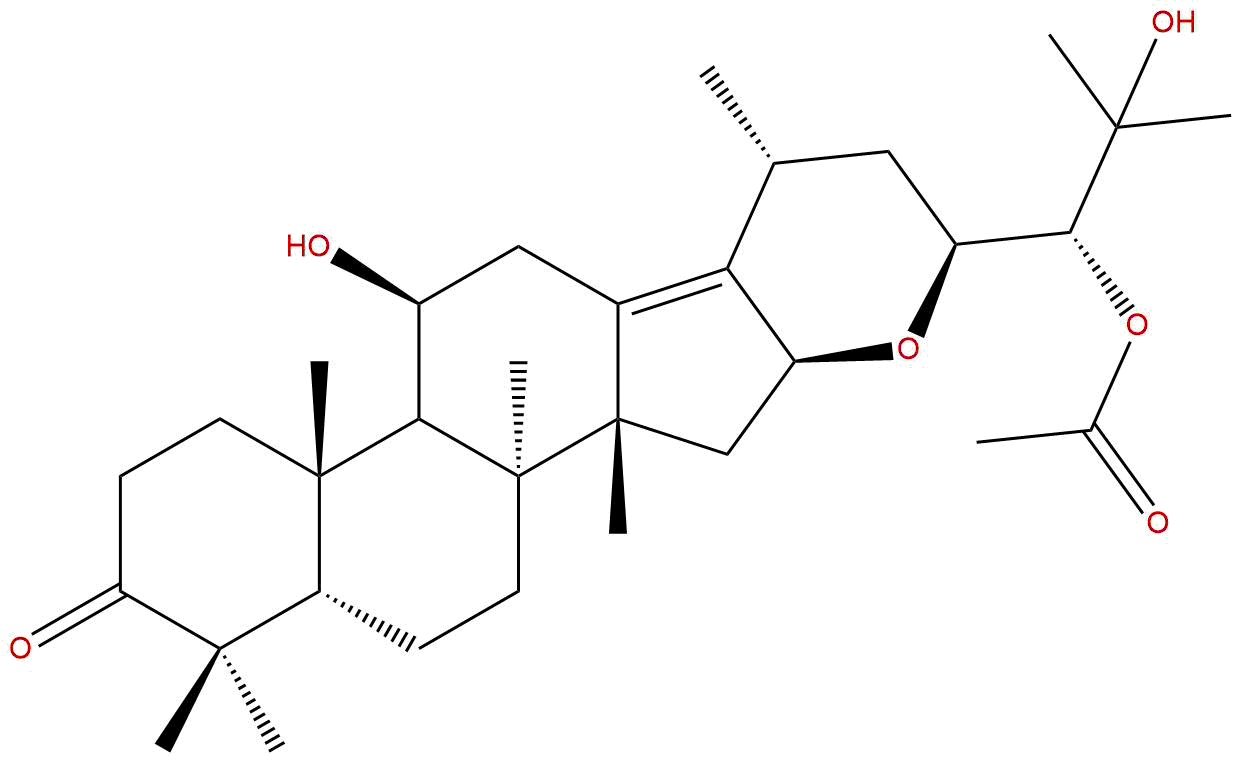


Product name: Alisol F 24-acetate
Synonym name:
Catalogue No.: BP3061
Cas No.: 443683-76-9
Formula: C32H50O6
Mol Weight: 530.746
Botanical Source:
Physical Description:
Type of Compound: Triterpenoids
Purity: 95%~99%
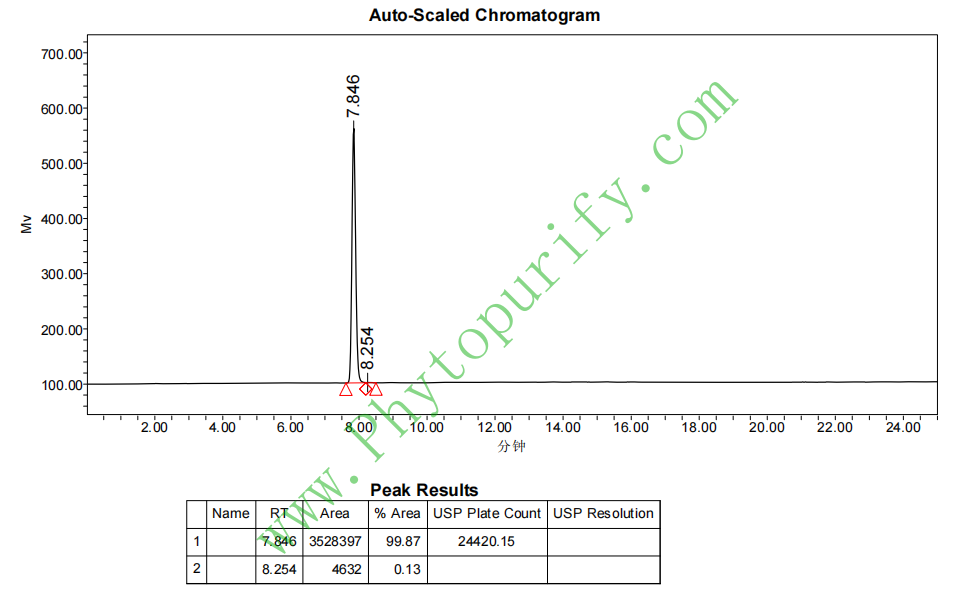
Analysis Method: HPLC-DAD or/and HPLC-ELSD
Identification Method: Mass, NMR
Packing: Brown vial or HDPE plastic bottle
The product could be supplied from milligrams to grams. Inquire for bulk scale.
We provide solution to improve the water-solubility of compounds, thereby facilitating the variety of activity tests and clinic uses.
For Reference Standard and R&D, Not for Human Use Directly.
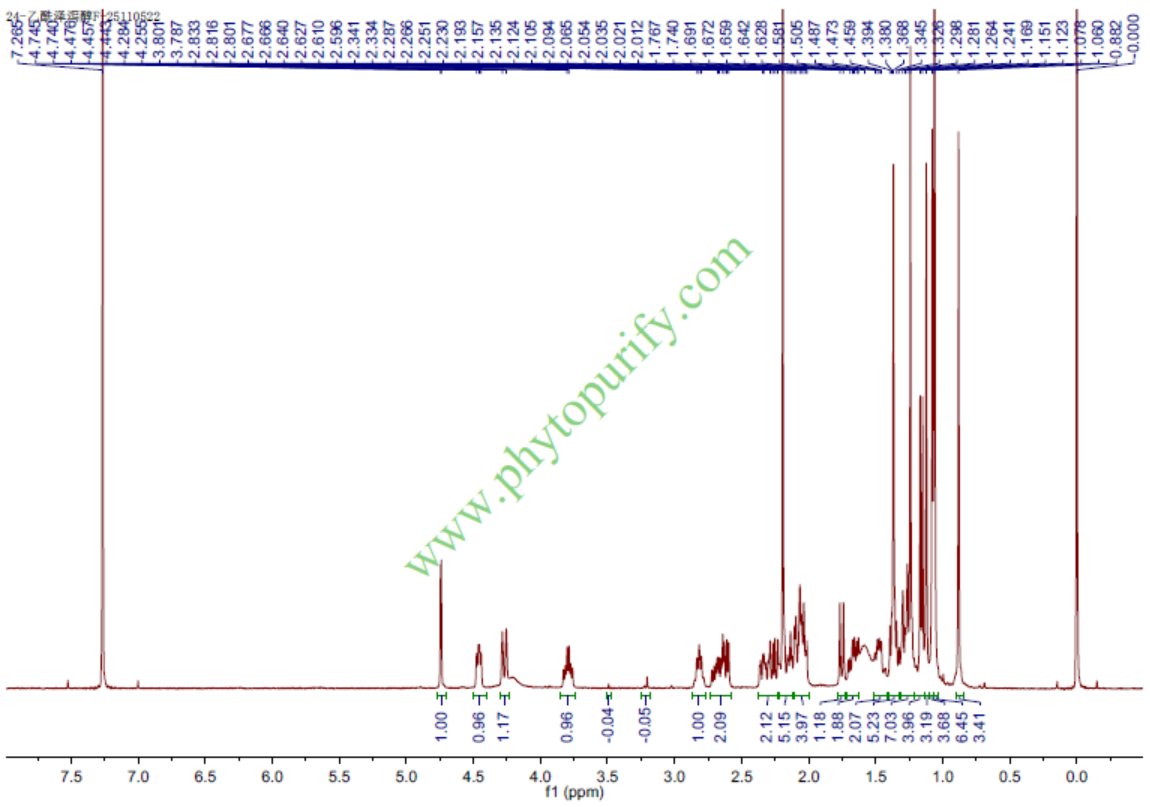
HNMR of Alisol F 24-acetate
HPLC of Alisol F 24-acetate
Storage conditions:Short-term storage at 2~8℃, long-term storage at -20 ~ -80℃
93.0600
4.4562
4.4560
.0042
3.1261
5.0350
High
82.1274
5.4054
No
No
No
No
No
No
0.0
Yes
No
Yes
Yes
Natural products, as an important source of drug discovery, play an irreplaceable role in the history of human disease prevention and treatment. Triterpenoids have always been a hot topic in medicinal chemistry and pharmacology research due to their structural diversity and wide range of biological activities. Alisol F 24 acetate, as a triterpenoid compound isolated from traditional Chinese medicine Alisma, has attracted much attention in recent years due to its significant activity in anti hepatitis B virus (HBV) and anti-tumor effects. Alisma(Alisma orientale The dried tubers of (Sam.) Juzep. have the effects of promoting diuresis, relieving heat, reducing turbidity, and lowering cholesterol in traditional Chinese medicine theory. They are commonly used to treat edema, urinary obstruction, phlegm induced dizziness, and hyperlipidemia. Modern research has revealed that the material basis of its pharmacological effects is mainly a series of structurally unique triterpenoids, among which 24 acetyl puerarin F is one of the representative active ingredients. This article aims to provide a systematic review of the chemical structure, plant origin, pharmacological activity, mechanism of action, pharmacological evaluation, and clinical application prospects of 24 acetyl Alismatal F, in order to provide comprehensive scientific references for the in-depth research and development of this compound.
The chemical name of 24-Acetyl Alismatal F is (24R) -24-Acetyloxy-11-Deoxy-16 β, 23S; 22R, 25-Diepoxy-3 β - hydroxyterpene-13 (17) - ene-21-acid 21,23-lactone. Its CAS number is 443683-76-9, molecular formula is C32H50O6, and molecular weight is 530.7460. This compound belongs to the highly oxidized triterpenoid class, with a core skeleton consisting of six rings (A-F), including five carbon rings (A-E) and one lactone ring (F ring). The structural features include: a hydroxyl group with a β - configuration at C-3, a double bond between C-13 and C-17, two key epoxy structures formed between C-16 and C-23, and C-22 and C-25, a lactone ring formed between the carboxyl group at C-21 and the hydroxyl group at C-23, and an acetoxy group connected to C-24. These complex structural modifications are an important foundation for its biological activity.
Based on the analysis of physicochemical parameters related to drug properties, the calculated LogP value is 4.4562, indicating that the compound has high lipophilicity. The topological polar surface area (TPSA) is 93.0600 Å ², which is relatively moderate. Its water solubility prediction value is relatively low, about 0.0042 mg/mL, which is consistent with its high LogP value, indicating that solubilization strategies may need to be considered in formulation development. The molecular weight is slightly higher than 500, but still within the acceptable range for drug like molecules. It is worth noting that its blood-brain barrier permeability is predicted to be "high", suggesting that it may have potential central nervous system effects, but whether it can exert pharmacological effects in the central nervous system requires experimental verification. In terms of early safety warning, the prediction shows that it has no hERG potassium channel inhibitory activity (low risk of QT interval prolongation), and the Ames test prediction result is negative (0.0), indicating that its potential genetic toxicity risk is low. These characteristics provide a favorable starting point for its further development.
24 Acetyl Alismatal Alcohol F is mainly derived from the plant Alisma orientale in the Alismataceae family(Alisma orientale Dried tubers of (Sam.) Juzep. Alisma is mainly distributed in East Asian regions such as China, Japan, and South Korea, and is extensively cultivated in Fujian, Sichuan, Jiangxi, and other areas of China. As a traditional Chinese medicine, its tubers are usually harvested, washed, dried, and removed of roots and rough skin when the stems and leaves begin to wither in winter.
The extraction and separation of 24 acetyl Alismatal F from plant materials typically involves the use of organic solvent extraction combined with various chromatographic techniques. The standard procedure is as follows:
1. Extract Crush the dried tubers of Alisma orientalis and first degrease them with petroleum ether or n-hexane to remove fat soluble impurities. Subsequently, medium polarity solvents such as ethyl acetate, methanol, or ethanol (or mixed solvents of different proportions, such as 95% ethanol) are used for reflux extraction or ultrasound assisted extraction. The ethyl acetate fraction is often considered as an effective fraction for enriching triterpenoids in Alisma prolifera.
2. Separation and Purification After reducing the pressure and concentrating the crude extract, preliminary separation is performed using silica gel column chromatography, often carried out using gradient elution systems such as petroleum ether ethyl acetate or chloroform methanol. The fraction containing the target compound is further purified by reverse phase silica gel column chromatography (such as ODS, using methanol water as the mobile phase), high performance liquid chromatography (HPLC, preparative or semi preparative), and recrystallization methods to obtain high-purity 24 acetyl Alismatal F monomer compound. Modern separation and analysis techniques such as liquid chromatography-mass spectrometry (LC-MS) and nuclear magnetic resonance (NMR, including 1H NMR, 13C NMR, 2D NMR) are key means for identifying its chemical structure.
24 Acetyl Alismatal F exhibits various pharmacological activities, among which antiviral and anti-tumor effects have been studied in depth.
Anti hepatitis B virus (HBV) activity This is one of the most prominent activities of 24 acetyl Alismatal F. Research has shown that this compound can effectively inhibit the secretion of viral antigens in human liver cancer cell lines infected with HBV, such as HepG2.2.15 cells. Its half inhibitory concentration (IC50) for inhibiting the secretion of hepatitis B surface antigen (HBsAg) and hepatitis B e antigen (HBeAg) was 7.7 µ M and 5.1 µ M, respectively, showing a strong inhibitory effect. The inhibition of HBeAg is usually associated with a decrease in viral replication activity, suggesting that 24 acetyl laxative F may interfere with the lifecycle of HBV.
Antitumor and pro apoptotic activity 24 Acetyl Alismatal F exhibits growth inhibition and induces apoptosis in various cancer cell lines. According to research reports, this compound can induce programmed cell death in human liver cancer cells, colon cancer cells, etc. through the mitochondrial pathway and death receptor pathway. The mechanism of promoting apoptosis involves activating the caspase cascade reaction, regulating the proportion of Bcl-2 family proteins (such as reducing the Bcl-2/Bax ratio), inducing a decrease in mitochondrial membrane potential, and cell cycle arrest. These findings provide experimental evidence for its potential as an anti-tumor lead compound.
Diuretic and anti edema potential Although there are few direct reports on the diuretic activity of 24 acetyl Alismatal F itself, considering its parent compound Alismatal alcohol and the traditional use of Alismatal medicinal materials, this compound is likely to be involved in regulating water and salt metabolism. The formation of edema involves a complex pathophysiological network, including increased vascular permeability, imbalance between glomerular filtration and reabsorption, and abnormal ion transport. From the analysis of associated targets, it is possible that it exerts indirect water and dampness promoting effects by affecting multiple targets related to edema, such as NOS2, ACE, PTGS2, NR3C2, VEGFA, AQP1, etc. This requires further targeted pharmacological validation.
The specific mechanism of action of 24 acetyl laxative F has not been fully elucidated, but existing research suggests that it may exert pharmacological effects through multiple targets and pathways.
Anti HBV mechanism The specific molecular targets for inhibiting the secretion of HBsAg and HBeAg are still being explored. Possible mechanisms of action include interfering with the replication and transcription of HBV DNA, inhibiting the assembly of viral core particles, affecting the post-translational modification and secretion pathways of viral proteins, or creating an unfavorable intracellular environment for virus replication by regulating the host cell's immune response and signaling pathways (such as NF - κ B and MAPK pathways).
Mechanism of promoting apoptosis In terms of anti-tumor effects, its pro apoptotic effect is related to multiple signaling pathways. Research has shown that it may upregulate pro apoptotic proteins Bax and Bad, downregulate anti apoptotic proteins Bcl-2 and Bcl xL, leading to increased mitochondrial outer membrane permeability, release of cytochrome C, and activation of Caspase-9 and Caspase-3, thereby performing cell apoptosis. In addition, Caspase-8 may also be activated through death receptor pathways such as Fas/FasL. The impact on the cell cycle, such as blocking cells in the G0/G1 phase or G2/M phase, is also an important mechanism for inhibiting proliferation.
Potential edema related target network analysis Based on its structural analogues and overall pharmacological studies of Alisma, 24 acetyl Alismatal F may act on a target network related to edema regulation
Based on computational predictions and preliminary research, a preliminary evaluation of the pharmacological properties of 24 acetyl Alismatal F is conducted
* Absorption and distribution A high LogP value (4.4562) and low TPSA suggest good membrane permeability and acceptable oral absorption potential, but extremely low water solubility may be the main limiting factor for its oral bioavailability. The predicted high blood-brain barrier permeability deserves attention, but it needs to be confirmed through in vivo experiments. As a triterpenoid lactone, its distribution in the body may be relatively widespread.
* Metabolism and excretion Triterpenoids typically undergo phase I metabolism (such as oxidation, reduction, and hydrolysis by cytochrome P450 enzymes) and phase II metabolism (such as glucuronidation and sulfation). The acetyl group at C-24 and the hydroxyl group at C-3 are potential metabolic sites. Its lactone structure may undergo hydrolysis and ring opening in vivo, affecting activity and distribution. At present, there is a lack of detailed identification of metabolites in the body and research on excretion pathways.
* Preliminary toxicity assessment The calculated prediction shows no risk of hERG inhibition and Ames mutagenicity, which is a positive signal. However, the potential hepatotoxicity, nephrotoxicity, and potential impact on normal rapidly proliferating cells based on their pro apoptotic activity of triterpenoids require comprehensive evaluation through systematic preclinical toxicology studies (such as acute toxicity, long-term toxicity, genetic toxicity, and reproductive toxicity experiments).
* Formulation Challenge Due to its extremely poor water solubility, it may be necessary to use solubilization techniques such as nanocrystals, liposomes, cyclodextrin inclusion complexes, solid dispersions, or develop formulations such as injectable emulsions in formulation development to improve its solubility and bioavailability.
At present, there are few reports on the pharmacokinetic studies of the 24 acetyl laxative F system, such as absolute bioavailability, plasma protein binding rate, tissue distribution, major metabolic pathways, and excretion kinetics. This is a key data gap that must be filled in the process of advancing its drug development.
24 Acetyl Alismatal F, as a natural triterpenoid compound with clear biological activity, has the following clinical application prospects:
Development of anti HBV drugs The existing anti HBV drugs are mainly nucleoside (nucleotide) analogues and interferons, which have problems such as drug resistance and side effects. The mechanism of action of 24 acetyl laxative F may be different from existing drugs, providing new candidate structures and targets for the development of novel anti HBV drugs. It can be used as a lead compound for structural optimization to enhance activity, reduce toxicity, or combined with existing drugs to achieve synergistic effects.
Antitumor adjuvant therapy or combination therapy Its pro apoptotic activity makes it promising in the field of tumor therapy. Especially for liver cancer, its dual effects of anti HBV and anti-tumor may have unique advantages. The possibility of using it as a chemotherapy sensitizer or in combination with targeted drugs can be explored, or it can be developed for tumor types with high specificity.
Treatment of edema and related diseases If its diuretic and anti edema effects through the aforementioned multi-target network are experimentally confirmed, it may be developed for the treatment of cardiogenic, nephrogenic or hepatogenic edema, as well as diseases possibly related to water and sodium retention, such as auxiliary treatment of hypertension.
Structural modification and optimization Using it as the parent nucleus for structural modification is a key strategy to enhance drug efficacy. For example, improving water solubility and pharmacokinetic properties by introducing hydrophilic groups; By modifying the lactone ring, epoxy structure or side chain, the selectivity and activity towards specific targets can be improved, and potential toxicity can be reduced.
Future research priorities should include:
* In depth mechanism research Using chemical biology methods such as affinity fishing, molecular docking, gene knockout/knockdown to identify its direct target.
* Systematic pharmacokinetic and toxicological evaluation Complete a standardized preclinical ADMET study to clarify its in vivo fate and safety window.
* Activity optimization Conduct systematic structure-activity relationship research and structural modification to obtain derivatives with better activity and properties.
* Pharmaceutical research Develop a new drug delivery system suitable for its physical and chemical properties.
24 Acetyl Alismatal F is an active triterpenoid component with significant research value found in traditional Chinese medicine Alisma. Its significant activity in combating hepatitis B virus and inducing tumor cell apoptosis reveals its enormous potential as a novel antiviral and anti-tumor lead compound. At the same time, it may continue and elucidate the traditional efficacy of "promoting diuresis and promoting diuresis" of Alisma by acting on complex target networks related to edema. Although the understanding of its molecular mechanism and pharmacological characteristics still needs to be deepened, existing research has laid a solid foundation for its further development. With the comprehensive application of modern medicinal chemistry, pharmacology, and pharmaceutical technology, 24 acetyl Alismatal F is expected to make breakthroughs in the development of innovative natural product drugs, providing new options for the treatment of related diseases. In depth research on it not only contributes to the discovery of new drugs, but also is a beneficial exploration for the modernization and internationalization of traditional Chinese medicine.
