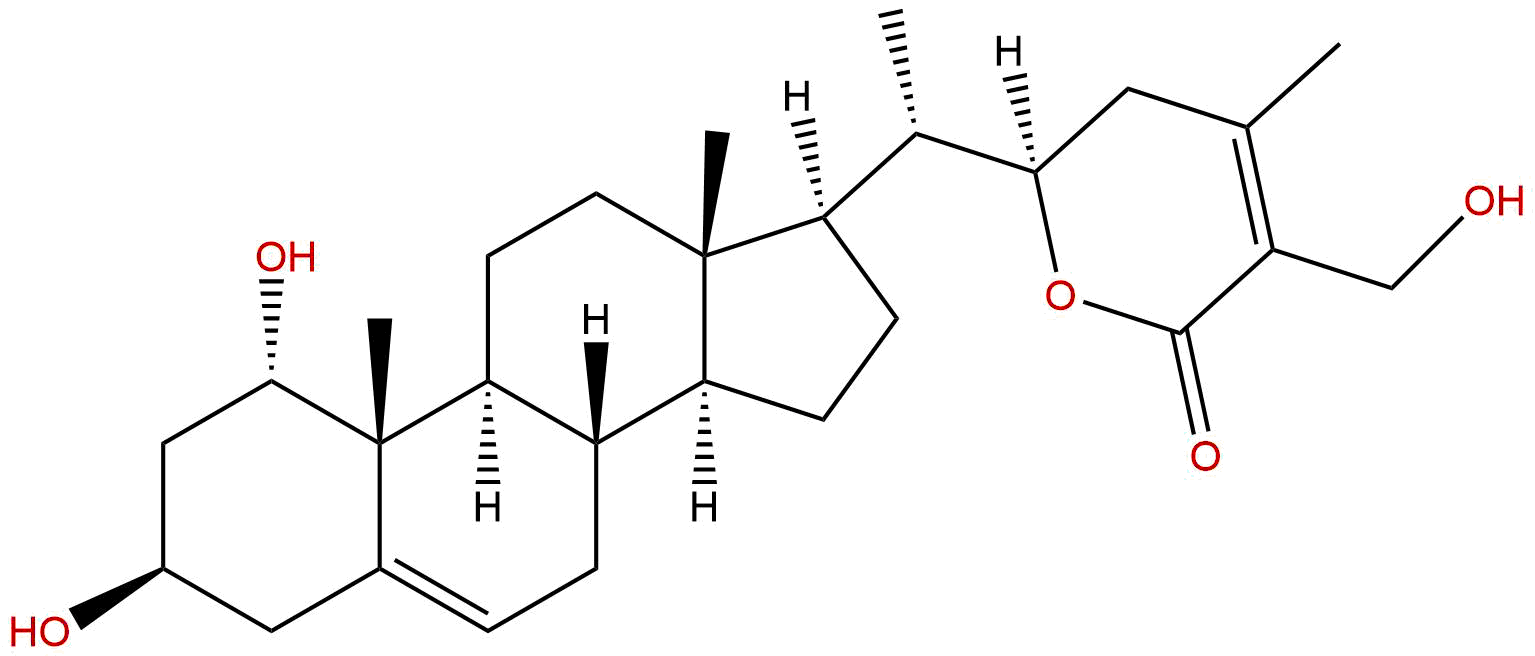


Product name: Pubesenolide
Synonym name: Sominone
Catalogue No.: BP2460
Cas No.: 98569-64-3
Formula: C28H42O5
Mol Weight: 458.639
Botanical Source: Ashwagandha
Type of Compound: Terpenoids
Purity: 95%~99%
Analysis Method: HPLC-DAD or/and HPLC-ELSD
Identification Method: Mass, NMR
Packing: Brown vial or HDPE plastic bottle
Storage: Store in a well closed container, protected from air and light. Put into refrigerate or freeze for long term storage.
Whenever possible, you should prepare and use solutions on the same day. However, if you need to make up stock solutions in advance, we recommend that you store the solution as aliquots in tightly sealed vials at -20℃. Generally, these will be useable for up to two weeks.
The product could be supplied from milligrams to grams
Inquire for bulk scale.
For Reference Standard and R&D, Not for Human Use Directly.
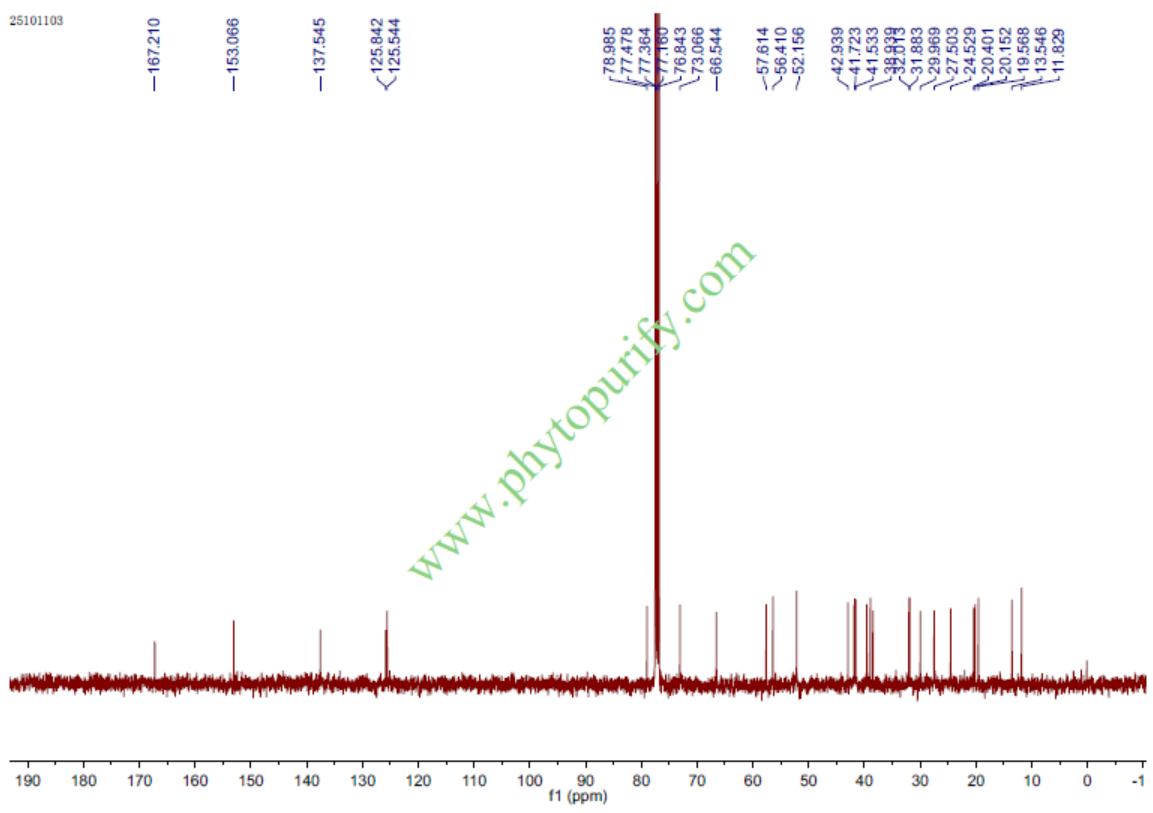
NMR of Pubesenolide
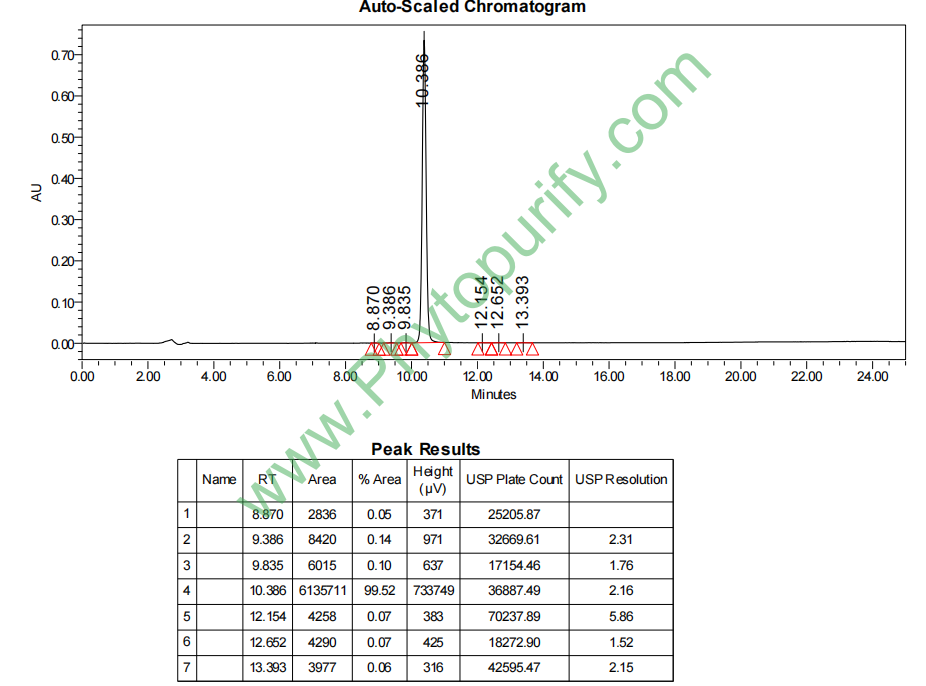
HPLC of Pubesenolide
Storage conditions:Short-term storage at 2~8℃, long-term storage at -20 ~ -80℃
Unknown
Unknown
Unknown
Unknown
Unknown
Unknown
Unknown
Unknown
Natural products, as an important source of drug discovery, play an irreplaceable role in the long history of human fight against diseases. From classic aspirin and paclitaxel to artemisinin in recent years, countless natural compounds and their derivatives derived from plants, microorganisms, and marine organisms constitute the core components of modern drug libraries. In the vast universe of natural products, lignans have attracted much attention due to their structural diversity and extensive biological activity. Pubesenolide, As a natural lignan compound with a unique skeleton, it has aroused strong interest from natural product chemists and pharmacologists since its discovery.
Pubesenolide, The Chinese name is also known as "Pubesonide", and its CAS number is 98569-64-3. This compound was initially isolated from traditional medicinal plants, and its unique chemical structure endows it with various potential pharmacological activities. Preliminary studies have shown that Pubesenolide exhibits remarkable effects in anti-inflammatory, antioxidant, and cell protection, indicating that it may have important development value in the treatment of diseases closely related to oxidative stress and inflammatory response, such as neurodegenerative diseases, cardiovascular diseases, and certain metabolic diseases. However, like many natural products, the research on Pubesenolide is still in a relatively early stage, and its in-depth pharmacological mechanisms, clear molecular targets, and systematic pharmacological evaluation are not yet complete. This article aims to comprehensively review the research progress on the chemical structure, plant origin, extraction methods, pharmacological activity, mechanism of action, and medicinal properties of Pubenol ide, in order to provide a systematic reference and scientific basis for the subsequent in-depth research and development of this compound.
Pubesenolide belongs to the class of dibenzylbutyrolactone lignans, and its core skeleton is composed of two phenylpropanoid units connected by C8-C8 'bonds and closed in the form of an internal ester ring. This structural feature endows it with unique stereochemical and physicochemical properties. Specifically, the molecular formula of Pubesenolide is C ₂₆ H ₂₆ O ₈, with a molecular weight of 466.6300 g/mol. Its structure contains multiple functional groups, such as phenolic hydroxyl, methoxy, and a key gamma lactone ring. The presence of these functional groups not only determines their chemical reactivity, but is also closely related to their biological activity.
From the perspective of physical and chemical properties, Pubesenolide typically appears as a white or off white crystalline powder. Due to the presence of multiple polar groups (such as hydroxyl groups) in its molecule, it has good solubility in polar organic solvents such as methanol, ethanol, and ethyl acetate, while its solubility in water is relatively low. The physical constants such as melting point and optical rotation vary depending on the specific chiral configuration and purity. It is worth noting that the lactone ring in Pubsennolide molecules may undergo hydrolysis and ring opening under alkaline conditions, while it is relatively stable under acidic conditions. This characteristic has a significant impact on its metabolism and stability in the body. In addition, the phenolic hydroxyl groups present in its molecules endow it with certain antioxidant capacity, which can eliminate free radicals or chelate metal ions, which may be one of the chemical bases for its various pharmacological activities. At present, precise spectral data (such as NMR, MS, IR) of Pubesenolide have been reported in multiple literature, providing key basis for its structural identification and subsequent derivative synthesis.
Pubesenolide mainly comes from Lauraceae plants, especially the genus Piper(Lindera)Hemujiangzi genus(Litsea)Some species within. For example, it was originally from Lindera obtusiloba Separated from the rhizome of San Ya Wu Yao. In addition, in Litsea japonica(Japanese Ginger Seed) and Lindera strychnifolia The presence of this compound has also been found in plants such as Wuyao. These plants have a long history of medicinal use in East Asia, especially in China, Japan, and South Korea. They are commonly used to treat rheumatism, rheumatism, bruises, indigestion, and inflammatory diseases. Therefore, searching for active ingredients from these traditional medicinal plants is an important way to discover Pubenol.
For the extraction of Pubesenolide, classical natural product chemistry methods are usually used. Firstly, crush the dried plant materials (such as roots or bark) and then extract them using organic solvents. Common solvents include methanol, ethanol, or their aqueous solutions. To improve extraction efficiency, techniques such as heating reflux, ultrasound assisted extraction, or microwave-assisted extraction can be used. After filtration and vacuum concentration of the extract, crude extract is obtained. Subsequently, the crude extract was preliminarily separated using liquid-liquid extraction method (such as sequentially using solvents of different polarities such as petroleum ether, ethyl acetate, n-butanol, etc.), and Pubenol was enriched in the ethyl acetate extraction layer. Further separation and purification rely on various chromatographic techniques, among which silica gel column chromatography is the most commonly used method, usually using mixed solvent systems such as chloroform methanol or petroleum ether ethyl acetate for gradient elution. In addition, reversed-phase silica gel column chromatography (such as ODS), Sephadex LH-20 column chromatography and preparative high-performance liquid chromatography (Prep HPLC) are also often used to obtain high-purity Pubesenolide monomer. The entire extraction and separation process requires real-time monitoring using thin-layer chromatography (TLC) and high-performance liquid chromatography (HPLC) to ensure effective separation of the target compound.
In recent years, research on the pharmacological activity of Pubesenolide has gradually deepened, revealing its potential therapeutic effects in multiple disease models.
1. Anti inflammatory activity
Inflammation is a defense response of the body against harmful stimuli, but excessive or persistent inflammation can lead to tissue damage and various diseases. Research has shown that Pubesenolide exhibits significant anti-inflammatory activity in both in vitro and in vivo models. In the lipopolysaccharide (LPS) - induced macrophage inflammation model, Pubenolide can significantly inhibit the production of pro-inflammatory factors such as nitric oxide (NO), prostaglandin E2 (PGE2), tumor necrosis factor - α (TNF - α), interleukin-6 (IL-6), and interleukin-1 β (IL-1 β). Its mechanism of action is related to the inhibition of the activation of nuclear factor kappa B (NF - κ B) and mitogen activated protein kinase (MAPK) signaling pathways. In addition, in animal models, Pubesenolide has shown good inhibitory effects on acute and chronic inflammation, such as carrageenan induced foot swelling and cotton ball granuloma.
2. Antioxidant activity
Oxidative stress is a common pathophysiological basis for many diseases, including aging, cancer, cardiovascular disease, and neurodegenerative diseases. The phenolic hydroxyl group in Pubenol molecules endows it with direct free radical scavenging ability. Multiple in vitro experiments have confirmed that Pubesenolide can effectively scavenge 1,1-diphenyl-2-trinitrophenylhydrazine (DPPH) free radicals, 2,2 '- diazo-bis-3-ethylbenzothiazoline-6-sulfonic acid (ABTS) cationic free radicals, and hydroxyl free radicals. At the same time, it can enhance the activity of endogenous antioxidant enzymes in cells, such as superoxide dismutase (SOD), catalase (CAT), and glutathione peroxidase (GSH Px), and increase the level of reduced glutathione (GSH), thereby reducing cell damage induced by hydrogen peroxide (H ₂ O ₂) or other oxidants.
3. Neuroprotective activity
Given its anti-inflammatory and antioxidant properties, the potential of Pubesenolide in neuroprotection has attracted much attention. In the neuronal toxicity model induced by glutamate or β - amyloid protein (A β), pretreatment with Pubenolide can significantly improve cell survival rate, reduce lactate dehydrogenase (LDH) release, and inhibit cell apoptosis. Its protective effect may be related to inhibiting oxidative stress, reducing endoplasmic reticulum stress, and regulating the expression of apoptosis related proteins (such as Bax, Bcl-2, Caspase-3). These findings suggest that Pubesenolide may have potential therapeutic value for neurodegenerative diseases such as Alzheimer's disease and Parkinson's disease.
4. Other activities
In addition to the main activities mentioned above, preliminary studies have also found that Pubesenolide has certain anti-tumor activity, which can inhibit the proliferation of certain tumor cells (such as liver cancer cells and lung cancer cells) and induce their apoptosis. In addition, it has been reported to have antiplatelet aggregation, anti allergic, and hepatoprotective effects. However, most of these studies remain at the cellular level, and their in vivo efficacy and specific mechanisms still need further validation.
Although the pharmacological activity spectrum of Pubesenolide is relatively broad, its exact mechanism of action and molecular targets are still being explored. Current research mainly focuses on downstream signaling pathways of its anti-inflammatory and antioxidant effects.
1. NF - κ B signaling pathway
NF - κ B is the core transcription factor of inflammatory response. In the resting state, NF - κ B binds to its inhibitory protein I κ B and exists in an inactive form in the cytoplasm. When cells are stimulated by LPS, TNF - α, etc., I κ B kinase (IKK) is activated, leading to phosphorylation and degradation of I κ B, thereby releasing NF - κ B into the nucleus and initiating transcription of various pro-inflammatory genes. Research has shown that Pubesenolide can inhibit the activity of IKK, prevent the degradation of I κ B, thereby blocking the nuclear translocation and transcriptional activity of NF - κ B, and ultimately downregulating the expression of inflammatory factors such as TNF - α, IL-6, iNOS, and COX-2.
2. MAPK signaling pathway
The MAPK family includes three main pathways: ERK, JNK, and p38 MAPK, which play a crucial role in regulating inflammation, cell proliferation, differentiation, and apoptosis. Pubesenolide was found to inhibit LPS induced phosphorylation of JNK and p38 MAPK, but had little effect on ERK phosphorylation. By blocking the activation of these pathways, Pubesenolide can inhibit the activity of downstream transcription factor AP-1, thereby synergistically exerting anti-inflammatory effects in conjunction with the NF - κ B pathway.
3. Nrf2/ARE signaling pathway
Nuclear factor E2 related factor 2 (Nrf2) is a key transcription factor for cells to resist oxidative stress. Under normal conditions, Nrf2 binds to Keap1 and is degraded by ubiquitination. When oxidative stress occurs, Nrf2 dissociates from Keap1, translocates into the nucleus, binds to antioxidant response elements (ARE), and initiates gene expression of a series of antioxidant and detoxifying enzymes (such as HO-1, NQO1, SOD, CAT). There is evidence to suggest that Pubesenolide can enhance cellular antioxidant defense by activating the Nrf2/ARE pathway, upregulating the expression of antioxidant enzymes. This may be one of the important mechanisms by which it exerts neuroprotective and hepatoprotective effects.
4. Potential direct targets
Although the research on the aforementioned signaling pathways is relatively in-depth, the direct molecular targets of Pubesenolide (i.e. the proteins it directly binds to) are still unclear. Future research requires the use of techniques such as Drug Affinity Reaction Target Stability (DARTS), Cell Thermal Transition Analysis (CETSA), or Activity Based Proteomic Analysis (ABPP) to identify the protein targets it directly acts on. For example, it may directly bind to and inhibit certain kinases (such as IKK, p38) or activate certain antioxidant proteins. Clarifying its direct target is crucial for understanding the precise mechanism of its pharmacological effects and conducting structure based drug optimization.
The development of natural products into clinical drugs must undergo strict pharmacological evaluation. At present, there is very limited information on the pharmacological properties of Pubesenolide, with most parameters (such as blood-brain barrier permeability, hepatotoxicity, cardiotoxicity, hERG inhibition, Ames test) labeled as "Unknown", highlighting the gap and urgency of research in this field.
1. Physical and chemical properties and drug like properties
The molecular weight of Pubesenolide is 466.63 Da, slightly higher than the limit of molecular weight less than 500 in Lipinski's Rule of Five, but still within an acceptable range. Its structure contains multiple hydrogen bond donors (phenolic hydroxyl) and hydrogen bond acceptors (carbonyl, ether oxygen), and its water solubility is expected to be poor, which may affect its oral bioavailability. Calculating its lipid water partition coefficient (logP) can help predict its membrane permeability. Preliminary computer simulation predictions may indicate good lipid solubility, but experimental measurements are needed to confirm.
2. Pharmacokinetic characteristics
There are currently no reports on pharmacokinetic (ADME) studies of Pubesenolide in animals or humans. Its absorption, distribution, metabolism, and excretion characteristics are completely unknown. For example, what is the degree of absorption in the gastrointestinal tract after oral administration? Is it affected by gut microbiota? How is it distributed in the body and can it cross the blood-brain barrier? What are the main metabolic pathways (such as lactone ring hydrolysis, glucuronidation, sulfation)? Are metabolites active? What is its half-life and clearance pathway? These are key issues that urgently need to be addressed. Future research requires the establishment of sensitive and reliable biological sample analysis methods (such as LC-MS/MS) and systematic in vivo pharmacokinetic experiments.
3. Safety evaluation
Safety is the cornerstone of drug development. The hepatotoxicity, cardiotoxicity (especially inhibition of hERG potassium channels), and genotoxicity (Ames test) of Pubesenolide are unknown. Given that many natural products exhibit activity in vitro but fail in vivo due to toxicity or metabolic instability, a comprehensive safety evaluation of Pubesenolide is crucial. This includes acute toxicity experiments, subchronic toxicity experiments, genetic toxicity experiments, and hERG channel inhibition experiments. Preliminary cytotoxicity experiments have shown that Pubesenolide has low toxicity to normal cells (such as nerve cells and liver cells) within the effective concentration range, but this is far from sufficient to prove its in vivo safety.
Although research on Pubesenolide is still in its early stages, its unique chemical structure and initially demonstrated multiple pharmacological activities paint an attractive prospect for its clinical application.
1. Main application directions
Based on its anti-inflammatory and antioxidant activities, the most promising application direction of Pubesenolide is in the treatment of diseases related to chronic inflammation and oxidative stress. For example:
- Neurodegenerative diseases Such as Alzheimer's disease and Parkinson's disease. Its neuroprotective effects, particularly by inhibiting A β toxicity, antioxidant, and anti-inflammatory mechanisms, make it a potential candidate drug. If it can be proven that it can penetrate the blood-brain barrier, its development value will be greatly enhanced.
- cardiovascular disease Atherosclerosis is essentially a chronic inflammatory disease. The anti-inflammatory and antioxidant properties of Pubesenolide may help to inhibit vascular endothelial damage, foam cell formation and plaque progression.
- Metabolic diseases Like non-alcoholic fatty liver disease (NAFLD), its onset is closely related to oxidative stress and inflammation. The hepatoprotective and anti-inflammatory effects of Pubesenolide may play a role in this field.
- Autoimmune diseases Like rheumatoid arthritis, its pathological core is chronic inflammation of the joint synovium. The anti-inflammatory activity of Pubesenolide may alleviate joint swelling and pain.
2. Challenges faced and future research directions
There are still many challenges to pushing Pubesenolide from the laboratory to clinical practice.
- Drug source issue The content of Pubenolide in natural plants is usually low, and obtaining a large amount of pure product is costly. Therefore, developing efficient chemical synthesis or semi synthesis routes, as well as utilizing biotechnology such as plant cell culture and genetic engineering for production, are key to solving the problem of drug sources.
- Optimization of drug properties To address the potential issues of poor solubility, metabolic instability, or low bioavailability, it is necessary to modify the structure through medicinal chemical methods. For example, designing prodrugs for phenolic hydroxyl groups or modifying lactone rings to improve their ADME properties.
- Mechanism and target elucidation Modern molecular pharmacology techniques must be utilized to identify the protein targets it directly acts on and elucidate its precise molecular mechanisms. This will provide precise guidance for structure based drug design and activity optimization.
- Systematic pharmacokinetics and toxicology research A comprehensive in vitro and in vivo ADME and toxicological evaluation must be completed to clarify its safety and efficacy, which is the necessary path to enter clinical trials.
Pubesenolide, as a natural lignan derived from traditional medicinal plants, exhibits various pharmacological activities including anti-inflammatory, antioxidant, and neuroprotective effects due to its unique dibenzylbutyrolactone skeleton. Its mechanism of action involves the regulation of key signaling pathways such as NF - κ B, MAPK, and Nrf2. However, research on this compound is still in its early stages, and its clear molecular targets, systematic pharmacokinetic characteristics, and comprehensive safety evaluation are still blank. Future research should focus on addressing drug source issues, elucidating mechanisms of action, optimizing drug properties, and completing rigorous preclinical evaluations. Despite the numerous challenges ahead, the multiple pharmacological potentials demonstrated by Pubesenolide make it a promising lead compound for the future treatment of chronic inflammation and oxidative stress-related diseases. With the continuous deepening of research, this ancient natural molecule is expected to shine with new vitality in modern drug development.
