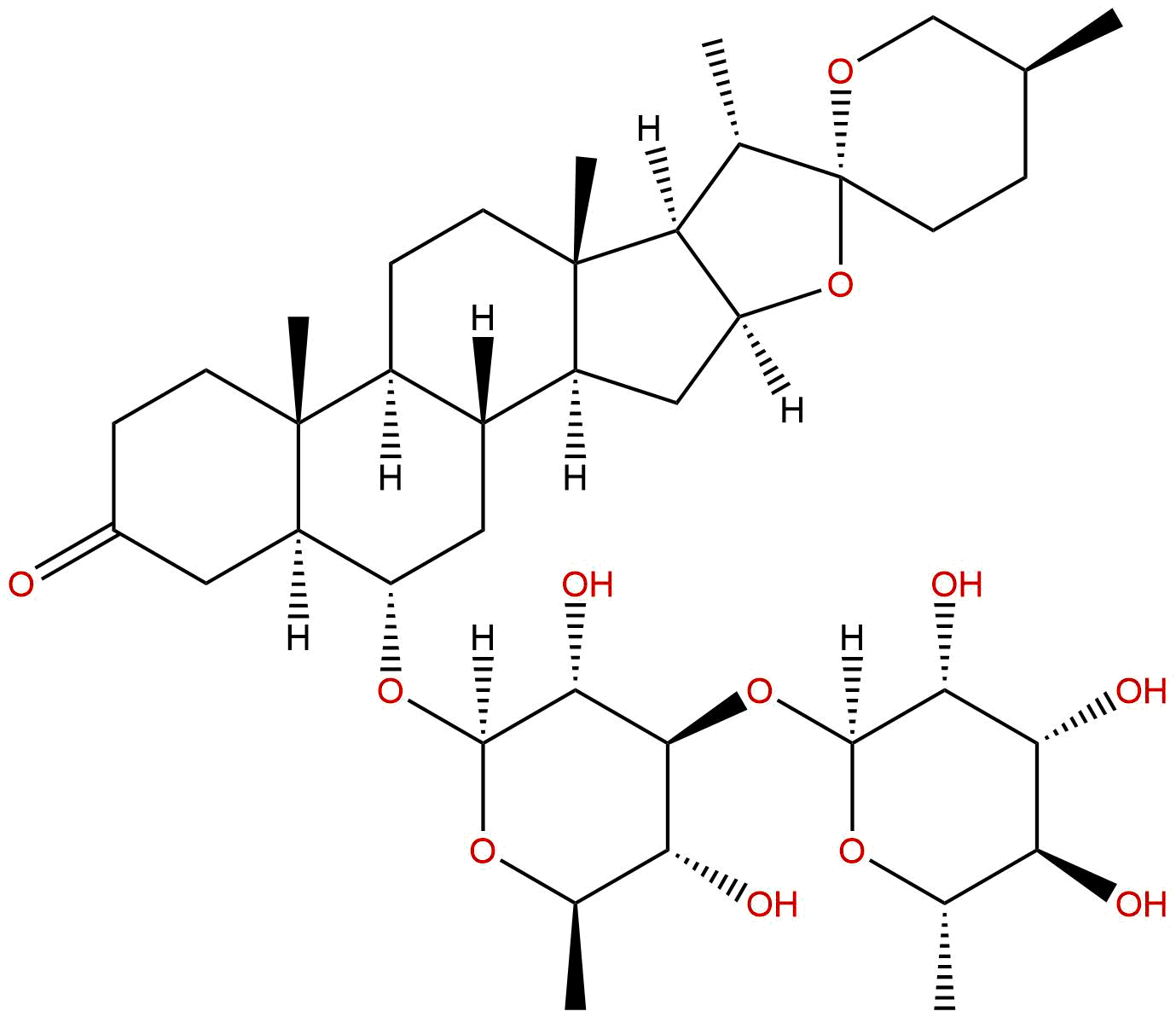


Product name: 26-degluco-torvoside H
Synonym name:
Catalogue No.: BP5320
Cas No.: 437988-00-6
Formula: C39H62O12
Mol Weight: 722.913
Botanical Source: Solanum torvum Sw.
Type of Compound: Terpenoids
Purity: 95%~99%
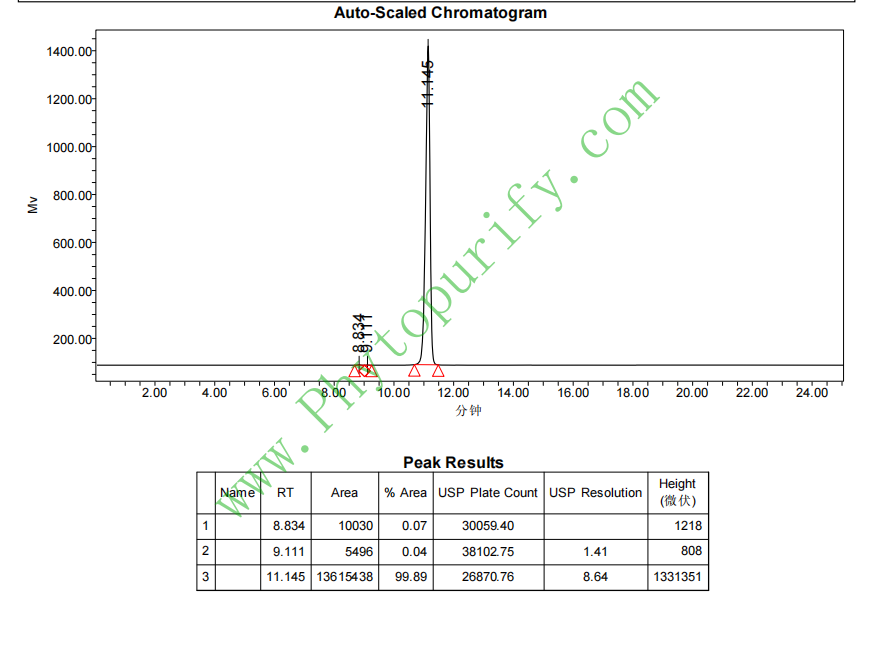
Analysis Method: HPLC-DAD or/and HPLC-ELSD
Identification Method: Mass, NMR
Packing: Brown vial or HDPE plastic bottle
Storage: Store in a well closed container, protected from air and light. Put into refrigerate or freeze for long term storage.
Whenever possible, you should prepare and use solutions on the same day. However, if you need to make up stock solutions in advance, we recommend that you store the solution as aliquots in tightly sealed vials at -20℃. Generally, these will be useable for up to two weeks.
The product could be supplied from milligrams to grams
Inquire for bulk scale.
For Reference Standard and R&D, Not for Human Use Directly.
HPLC of 26-degluco-torvoside H
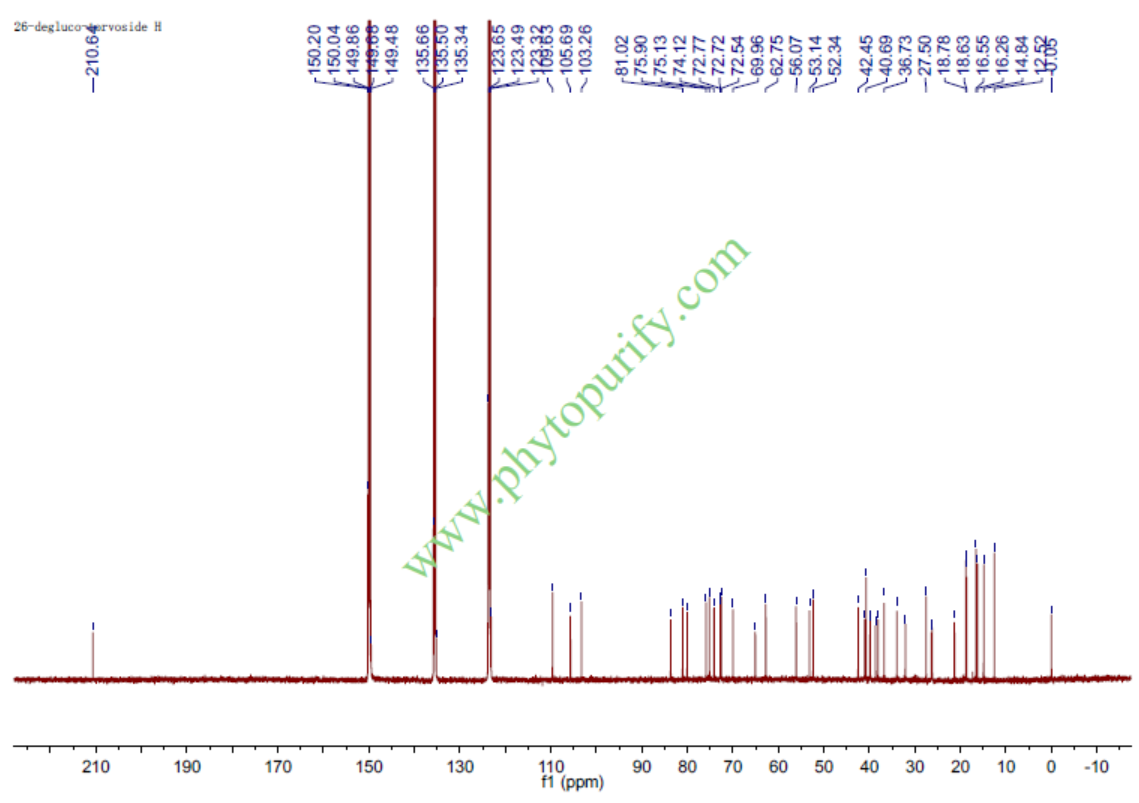
NMR of 26-degluco-torvoside H
Storage conditions:Short-term storage at 2~8℃, long-term storage at -20 ~ -80℃
173.6000
2.5866
2.5868
.0191
.6302
1.2660
Low
61.6810
6.3294
No
No
No
No
No
No
0.0
Yes
No
No
No
Natural products, as an important source of drug discovery, play an irreplaceable role in the long history of human struggle against diseases. From ancient medicinal plants to modern medicinal chemistry, the rich chemical diversity contained in nature provides unique molecular frameworks for treating various diseases. Among numerous natural products, steroidal saponins have attracted much attention due to their structural complexity and wide range of biological activities. They are widely present in various medicinal plants, especially in plants such as Liliaceae, Dioscoreaceae, and Scrophulariaceae, showing various pharmacological effects such as anti-tumor, anti-inflammatory, immune regulation, and blood sugar lowering.
In the vast family of steroidal saponins, they originate from the Scrophulariaceae plant genus Mormyria(Verbascum)The Torvoside series compounds have gradually entered the field of researchers due to their unique structure and significant biological activity. Among them, Torvoside H is an early identified and studied steroid saponin. However, its derivative, 26 degluco torvoside H, as a sugar chain hydrolysate of Torvoside H, has attracted increasing attention in recent years due to its outstanding potential in the anti-inflammatory field. This compound exhibits significant changes in its physicochemical properties and biological activity by removing a glucose group at position C-26 from the Torvoside H molecule, demonstrating more focused and potent pharmacological effects.
26 degluco torvoside H (CAS number: 437988-00-6) is a steroid saponin with a typical furazane type structure. Its molecular skeleton consists of a C27 steroid core, a spiro or furan side chain, and multiple sugar units. Compared with Torvoside H, 26 degluco torvoside H has shorter sugar chains, which directly affects its hydrophilicity, molecular size, and interaction mode with biological targets. Preliminary studies have shown that the compound exhibits significant activity in anti-inflammatory related disease models, effectively inhibiting the expression of various key inflammatory mediators and cytokines, such as tumor necrosis factor (TNF), inducible nitric oxide synthase (NOS2), interleukin-6 (IL6), interleukin-1 β (IL1B), and cyclooxygenase-2 (COX2). These targets are the core regulatory nodes of inflammatory response, and their over activation is closely related to the pathological process of a variety of chronic inflammatory diseases, such as rheumatoid arthritis, inflammatory bowel disease, atherosclerosis and neurodegenerative diseases.
This review aims to systematically summarize the chemical structure, physicochemical properties, plant origin, extraction methods, pharmacological activity, mechanism of action, pharmacological evaluation, and clinical application prospects of 26 degluco torvoside H, in order to provide comprehensive scientific basis for the in-depth research and development of this natural product.
The chemical structure of 26 degluco torvoside H belongs to the typical Furostanol type steroid saponin. Its core skeleton is a steroid parent nucleus composed of 27 carbon atoms, including the four rings A, B, C, and D of cyclopentane dihydrophenanthrene. Unlike Spirostanol type saponins, the side chain of furostanol type saponins forms an oxygen-containing furan ring at position C-22, and typically has a hydroxyl group attached to position C-26, which often forms a glycosidic bond with the sugar group. The name 26 degluco torvoside H is derived from the absence of a glucose group at its C-26 position, meaning that its hydroxyl group at C-26 is free rather than attached to a sugar group. This structural feature is the key distinguishing feature from Torvoside H and other similar compounds.
Specifically, the steroid parent nucleus of this compound typically contains multiple hydroxyl substituents, which may be located at positions C-1, C-2, C-3, C-5, C-6, C-11, C-12, C-15, etc. The specific substitution pattern varies depending on the plant source and isolation batch, but common patterns include hydroxyl groups at positions C-2, C-3, C-15, and the C-12 position may be a carbonyl group. The C-3 hydroxyl group of the mother nucleus is usually connected to an oligosaccharide chain, which is composed of monosaccharides such as D-glucose, D-galactose, L-rhamnose, D-xylose, etc., connected by specific glycosidic bonds (such as β - D-glucoside bonds, α - L-rhamnose glycosidic bonds). The common sugar chain structure may be: β - D-glucose - (1 → 2) - [β - D-glucose - (1 → 3)] - β - D-galactose - (1 → 4) - β - D-glucose. The free hydroxyl group at position C-26 is the key distinguishing factor between this compound and its prototype glycoside.
From the perspective of physical and chemical properties, the molecular weight of 26 degluco torvoside H is 722.9130 Da, which belongs to the category of medium-sized natural product molecules. The LogP of its lipid water partition coefficient is 2.5866, indicating that the compound has a certain degree of lipophilicity, but also contains sufficient hydrophilic groups (such as multiple hydroxyl and sugar groups), making it capable of partitioning in both aqueous and organic phases. The polar surface area (TPSA) is 173.6000 Å ², which is a relatively high value mainly attributed to the large number of hydroxyl and ether oxygen atoms in the molecule. High TPSA usually means strong hydrogen bonding ability between molecules and water molecules, which is not conducive to passive diffusion through cell membranes, especially the blood-brain barrier. The water solubility of this compound is 0.0191 mg/mL, making it a poorly soluble compound, which to some extent limits its bioavailability. In addition, the predictive model showed low blood-brain barrier penetration ability, negative hERG channel inhibition risk, and an Ames test result of 0.0, indicating low risks of cardiac and genetic toxicity. These physicochemical parameters provide important references for subsequent formulation design and pharmacokinetic studies.
26 degluco torvoside H is mainly derived from the Scrophulariaceae family of the genus Ranunculus(Verbascum)Plants. Mao Rui Hua genus is a large genus containing about 360 species of plants, widely distributed in temperate and subtropical regions of Europe, North Africa, West Asia, and East Asia. This genus of plants has a long history of application in traditional medicine, often used to treat respiratory diseases (such as cough, bronchitis), inflammatory diseases (such as sore throat, skin inflammation), and digestive system problems. Modern plant chemistry research has isolated and identified various chemical components from this genus of plants, including iridoid glycosides, phenylethanolic glycosides, flavonoids, triterpenoids, and steroidal saponins, among which steroidal saponins are considered one of its important active ingredients.
Specifically, 26 degluco torvoside H was originally derived from plants of the genus Ranunculus, such as Verbascum thapsus(Ordinary verbasco)Verbascum sinuatum(Botrytis cinerea) or Verbascum phlomoides Separated from medicinal verbascos. The aboveground parts of these plants (including stems, leaves, and flowers) are the main medicinal parts and the main raw materials for extracting the compound. It is worth noting that this compound may exist in the form of Torvoside H (a glycoside with a glucose group attached to the C-26 position) in plants. Under damage to plant tissues or the action of specific enzymes, it undergoes hydrolysis by endogenous β - glucosidase to remove the glucose group at the C-26 position and generate 26 degluco torvoside H. Therefore, during the extraction process, the extraction conditions (such as temperature, pH value, enzyme activity) will directly affect the content of the compound in the final product.
The extraction of 26 degluco torvoside H typically follows the standard process of natural product chemistry, which includes the following key steps:
Raw material pretreatment and extraction Dry plant materials (usually aboveground parts) are crushed and extracted using polar solvents. Due to the moderate polarity of steroidal saponins, commonly used extraction solvents include methanol, ethanol, or their aqueous solutions. In order to improve extraction efficiency, heating reflux extraction or ultrasound assisted extraction are often used. For example, using a 70% -80% ethanol aqueous solution to reflux and extract 2-3 times at 60-80 ℃ for 1-2 hours each time can effectively extract steroidal saponins including 26 degluco torvoside H.
Preliminary purification and enrichment After the extraction solution is concentrated under reduced pressure, crude extract is obtained. In order to remove a large amount of fat soluble impurities (such as chlorophyll and wax) and water-soluble impurities (such as sugars and proteins), liquid-liquid extraction method is often used. Suspend the crude extract in water and extract it sequentially with solvents such as petroleum ether, ethyl acetate, and n-butanol. Steroid saponins are usually enriched in the n-butanol extraction layer. In addition, macroporous adsorption resin column chromatography (such as D101, AB-8 type) is also a commonly used enrichment method. By gradient elution with different concentrations of ethanol water system, saponin components can be separated from other impurities.
Fine separation and purification The enriched crude saponins need to be further separated by various chromatographic techniques to obtain high-purity 26 degluco torvoside H. Common methods include:
Structural Identification The isolated pure product needs to be structurally confirmed through modern spectroscopic techniques, mainly including nuclear magnetic resonance spectroscopy (1H-NMR, 13C-NMR, DEPT, COSY, HSQC, HMBC) and high-resolution mass spectrometry (HR-ESI-MS). By analyzing mass spectrometry data to determine molecular weight and formula, key structural information such as the substitution mode of the steroid parent nucleus, the sequence of sugar chain connections, the configuration of glycosidic bonds (α or β), and whether the C-26 hydroxyl group is free can be determined by analyzing NMR spectra.
The pharmacological activity research of 26 degluco torvoside H is currently mainly focused on the anti-inflammatory field. Existing in vitro and in vivo experimental evidence shows that this compound has significant anti-inflammatory potential and can exert its effects through multiple targets and pathways.
In vitro anti-inflammatory activity
At the cellular level, the anti-inflammatory activity of 26 degluco torvoside H has been widely validated. The most commonly used experimental model is the lipopolysaccharide (LPS) - stimulated macrophage (such as RAW264.7 mouse macrophage line or macrophages derived from human THP-1 monocytes) inflammation model. LPS is the main component of the cell wall of Gram negative bacteria, which can activate a series of downstream inflammatory signaling pathways by binding to Toll like receptor 4 (TLR4), leading to the release of various pro-inflammatory factors and mediators.
Research has shown that 26 degluco torvoside H can significantly inhibit the production of nitric oxide (NO) in LPS stimulated macrophages in a dose-dependent manner. NO is an important inflammatory mediator, catalyzed by inducible nitric oxide synthase (NOS2), and its excessive production is closely related to inflammation and tissue damage. At the same time, the compound can effectively inhibit the synthesis of prostaglandin E2 (PGE2), which is the main product of cyclooxygenase-2 (COX2) catalyzing arachidonic acid metabolism and is a key inflammatory mediator causing fever, pain, and vasodilation. These results indicate that 26 degluco torvoside H exerts anti-inflammatory effects by inhibiting the expression or activity of two key enzymes, NOS2 and COX2.
In addition, the compound can significantly reduce the levels of various pro-inflammatory cytokines, including tumor necrosis factor - α (TNF - α), interleukin-6 (IL-6), and interleukin-1 β (IL-1 β). TNF - α is a core factor in initiating and amplifying inflammatory responses, IL-6 is involved in acute phase responses and immune regulation, and IL-1 β is closely associated with fever, pain, and cartilage destruction. The inhibition of these key cytokines by 26 degluco torvoside H indicates its potential to block the inflammatory cascade from the source. Further mechanistic studies (to be detailed in the next chapter) reveal that these effects are achieved by inhibiting key inflammatory signaling pathways such as nuclear factor kappa B (NF - κ B) and mitogen activated protein kinases (MAPKs).
In vivo anti-inflammatory activity
In animal models, the anti-inflammatory activity of 26 degluco torvoside H has also been preliminarily validated. For example, in the acute inflammation model of rat plantar swelling induced by carrageenan, oral or intraperitoneal injection of this compound can significantly reduce the degree of plantar swelling, and its effect is comparable or better than positive control drugs (such as indomethacin). In the xylene induced mouse ear swelling model, local or systemic administration can also effectively inhibit ear swelling. The results of these acute inflammation models confirm the anti exudative and anti edema effects of 26 degluco torvoside H in vivo.
In more clinically relevant chronic inflammation models, such as the collagen induced arthritis (CIA) rat model, treatment with 26 degluco torvoside H can significantly reduce joint swelling, improve joint pathological scores (including synovial hyperplasia, inflammatory cell infiltration, and cartilage/bone erosion), and reduce serum levels of TNF - α, IL-6, and IL-1 β. These results strongly suggest that the compound has potential value in the treatment of chronic autoimmune inflammatory diseases such as rheumatoid arthritis.
Other related activities
In addition to its direct anti-inflammatory effect, some studies also suggest that 26 degluco torvoside H may have antioxidant activity, which can clear free radicals or enhance the activity of endogenous antioxidant enzymes in cells, such as superoxide dismutase (SOD) and glutathione peroxidase (GPx). Due to the close relationship between oxidative stress and inflammatory processes, which are mutually causal, its antioxidant activity may also be a component of its overall anti-inflammatory effect. In addition, based on its potential for anti-inflammatory and immune regulation, future research may also explore its role in other inflammation related diseases such as inflammatory bowel disease, neuroinflammation, and metabolic inflammation (such as obesity related insulin resistance).
The anti-inflammatory effect of 26 degluco torvoside H is not limited to a single target, but rather achieves synergistic inhibition of multiple key inflammatory targets by regulating multiple interrelated signaling pathways. The most in-depth research currently focuses on its regulation of the NF - κ B and MAPKs signaling pathways.
1. Inhibit the NF - κ B signaling pathway
NF - κ B is one of the most important transcription factors in inflammatory response. In the resting state, NF - κ B binds to its inhibitory protein I κ B α and exists in an inactive form in the cytoplasm. When cells are stimulated by inflammation such as LPS and TNF - α, the I κ B kinase (IKK) complex is activated, which phosphorylates I κ B α and leads to its ubiquitination degradation. The released NF - κ B immediately translocates into the nucleus and binds to the κ B site on the promoter of the target gene, initiating the transcription of hundreds of inflammation related genes including TNF - α, IL-6, IL-1 β, NOS2, COX2, etc.
Research has shown that 26 degluco torvoside H can effectively inhibit LPS induced phosphorylation and degradation of I κ B α, thereby preventing nuclear translocation of NF - κ B. By blocking the activation of NF - κ B, this compound inhibits the expression of multiple downstream pro-inflammatory genes at the transcriptional level. This is one of the core mechanisms by which it can simultaneously inhibit multiple targets such as TNF, NOS2, IL6, IL1B, COX2, etc. In addition, the compound may directly or indirectly affect the DNA binding activity of NF - κ B, further weakening its transcriptional function.
2. Inhibit the MAPKs signaling pathway
The mitogen activated protein kinase (MAPKs) family, including extracellular signal regulated kinase (ERK), c-Jun N-terminal kinase (JNK), and p38 MAPK, is another signaling pathway that plays a critical role in inflammatory responses. After being phosphorylated and activated by upstream kinases, these kinases can phosphorylate various transcription factors (such as AP-1, ATF-2) and downstream kinases, thereby regulating the production of inflammatory mediators.
Research has found that 26 degluco torvoside H can significantly inhibit LPS induced phosphorylation of p38 MAPK and JNK, while having little or no effect on ERK phosphorylation. The activation of p38 MAPK and JNK is closely related to the synthesis of cytokines such as TNF - α and IL-1 β, as well as the expression of COX2. Therefore, inhibiting these two MAPK pathways is another important mechanism by which this compound exerts anti-inflammatory effects. There is a cross-talk between the NF - κ B and MAPKs pathways, which jointly regulate inflammatory responses. 26 degluco torvoside H simultaneously inhibits these two pathways, reflecting its multi-target and multi pathway synergistic effects.
3. Direct and indirect regulation of key inflammatory targets
In summary, 26 degluco torvoside H mainly exerts its broad-spectrum and potent anti-inflammatory effects by inhibiting the activation of two core inflammatory signaling pathways, NF - κ B and p38/JNK MAPKs, and downregulating the expression of a series of pro-inflammatory factors and enzymes such as TNF - α, IL-6, IL-1 β, NOS2, COX2, etc. at the transcriptional level. This multi-target, multi pathway mode of action has potential advantages in treating complex inflammatory diseases and may reduce drug resistance or side effects caused by single target inhibition.
The evaluation of drug properties is crucial in transitioning natural products from laboratory research to clinical applications. The pharmacological characteristics of 26 degluco torvoside H have both advantages and challenges.
Physical and chemical properties and drug like properties
According to the Lipinski Five Rules and other drug evaluation criteria, the molecular weight of 26 degluco torvoside H (722.9 Da) exceeds the threshold of 500 Da, and LogP (2.59) is within an acceptable range (-0.4 to 5.6). However, the number of hydrogen bond donors (multiple hydroxyl groups) and hydrogen bond acceptors (oxygen atoms on the sugar group) is relatively high, which is likely to exceed the limits of 5 and 10. Its high TPSA (173.6 Å ²) also suggests that its membrane permeability may be poor. These characteristics indicate that the compound does not fully comply with the drug like rules of traditional small molecule drugs, but is closer to a "natural product like" or "peptide like" molecule, and its oral bioavailability may be a major challenge.
Pharmacokinetic characteristics
At present, there are relatively limited reports on the in vivo pharmacokinetics (ADME) of 26 degluco torvoside H. However, based on its physicochemical properties and studies of similar compounds, some reasonable inferences can be made:
Toxicity assessment
The preliminary toxicity prediction results are relatively optimistic. HERG inhibition is predicted as' no ', indicating a lower risk of causing QT interval prolongation and arrhythmia in the heart. The Ames test result is 0.0, indicating no significant genotoxicity or mutagenicity. These are key safety indicators in drug development. However, this is only a prediction based on computer simulations or preliminary experiments. A comprehensive toxicological evaluation, including acute toxicity, long-term toxicity, reproductive toxicity, immunotoxicity, etc., is a necessary task before entering clinical trials. Especially for steroidal saponins, they may have hemolytic effects and require special attention.
Summary of Medicinal Properties
Overall, the pharmacological properties of 26 degluco torvoside H exhibit the characteristics of high activity and low bioavailability. Its strong anti-inflammatory activity and good initial safety are the advantages of its development, but its extremely poor oral bioavailability is the biggest obstacle it faces. Future strategies for optimizing drug properties should focus on:
1. Prodrug design Esterification or etherification modification of polar functional groups (such as hydroxyl groups) to improve lipid solubility, promote absorption, and then convert them into active forms in vivo.
2. New formulation technology Utilizing nanotechnology (such as lipid nanoparticles, polymer nanoparticles), self microemulsifying drug delivery systems (SMEDS), or phospholipid complexes to enhance their solubility and oral bioavailability.
3. Simplified structure Search for its pharmacophore, design and synthesize analogues with simpler structures, smaller molecular weights, and higher oral bioavailability through synthetic chemical methods.
4. Development of non oral administration routes Due to its poor oral absorption, it can be considered to develop into non oral dosage forms such as injections (for acute inflammation), transdermal patches (for local inflammation such as arthritis), or rectal suppositories (for inflammatory bowel disease).
Based on the unique anti-inflammatory mechanism and preliminary pharmacological activity data of 26 degluco torvoside H, it has shown broad clinical application prospects in the treatment of various inflammation related diseases.
1. Rheumatoid arthritis (RA)
RA is an autoimmune disease characterized by chronic and progressive synovitis of the joints. TNF - α, IL-6, IL-1 β and other pro-inflammatory factors play a central role in the pathogenesis of RA, while COX2 mediated PGE2 production is an important cause of joint pain and swelling. 26 degluco torvoside H can simultaneously inhibit these key targets and has shown efficacy in reducing joint swelling and bone erosion in CIA rat models, making it a potential candidate drug for treating RA. Compared with existing biologics such as TNF - α inhibitors, small molecule drugs have potential advantages in oral administration (after addressing bioavailability issues) and lower cost. Compared with traditional nonsteroidal anti-inflammatory drugs (NSAIDs, such as COX2 inhibitors), its multi-target effect may bring more comprehensive efficacy and fewer gastrointestinal side effects (because it does not directly inhibit constitutive COX1).
2. Inflammatory bowel disease (IBD)
IBD, Including Crohn's disease and ulcerative colitis, it is a chronic and recurrent inflammatory disease of the intestine. The dysregulation of the intestinal mucosal immune system and excessive production of pro-inflammatory factors are its main pathological features. The low oral bioavailability of 26 degluco torvoside H may actually become an advantage for the treatment of IBD. Because after oral administration, most drugs can stay in the local intestinal area and directly act on the affected intestinal mucosa, exerting local anti-inflammatory effects while reducing potential side effects caused by systemic absorption. Developing it into an oral colon targeted delivery system (such as pH sensitive or enzyme sensitive coated formulations) can further improve its local concentration and efficacy in the colon.
3. Neuroinflammation and neurodegenerative diseases
Although the ability of 26 degluco torvoside H to penetrate the blood-brain barrier is low, increasing evidence suggests that peripheral inflammation can affect the central nervous system through multiple pathways, leading to neuroinflammation. In addition, in pathological states where the blood-brain barrier is damaged (such as stroke, multiple sclerosis), peripheral drugs may also enter the central nervous system. Therefore, this compound may indirectly improve neuroinflammatory related diseases such as Alzheimer's disease, Parkinson's disease, and depression by reducing peripheral inflammation. In addition, by developing nano drug delivery systems that can cross the blood-brain barrier, it is also possible to directly deliver them to central targets.
4. Metabolic inflammation
Metabolic diseases such as obesity, type 2 diabetes and nonalcoholic fatty liver disease (NAFLD) are essentially a low-grade and chronic inflammatory state, that is, "metabolic inflammation". The infiltration of macrophages and the release of pro-inflammatory cytokines in adipose tissue are key driving factors for insulin resistance and metabolic disorders. The anti-inflammatory and antioxidant properties of 26 degluco torvoside H make it potential to improve metabolic inflammation, enhance insulin sensitivity, and delay the progression of NAFLD.
prospect
Despite its promising prospects, the clinical translation of 26 degluco torvoside H still faces many challenges. Future research should focus on the following aspects:
26 degluco torvoside H, as a natural furostane type saponin derived from plants of the Ranunculus genus, has shown significant research value in the field of natural product pharmacology due to its unique chemical structure and multi-target anti-inflammatory mechanism. It effectively downregulates key inflammatory mediators such as TNF - α, IL-6, IL-1 β, NOS2, and COX2 by inhibiting the NF - κ B and MAPKs signaling pathways, and exhibits significant pharmacological activity in various acute and chronic inflammation models. Meanwhile, the preliminary toxicity prediction results also provide positive signals for its safety.
However, this compound also faces typical challenges in natural product development, particularly its poor physicochemical properties and oral bioavailability. This is not only the main obstacle to its clinical translation, but also a key scientific problem that future research needs to focus on tackling. Through structural modification, prodrug design, or advanced drug delivery technologies, it is expected to overcome these bottlenecks and translate its powerful anti-inflammatory potential into clinically available therapeutic drugs.
In summary, 26 degluco torvoside H is a highly promising natural anti-inflammatory lead compound. In depth and systematic research on it not only helps to reveal the anti-inflammatory mechanism of steroidal saponins, but also provides valuable molecular templates and scientific basis for the development of new drugs for the treatment of complex inflammatory diseases such as rheumatoid arthritis and inflammatory bowel disease. With the continuous deepening of research, we have reason to expect that this natural product can play its due value in future clinical applications.
