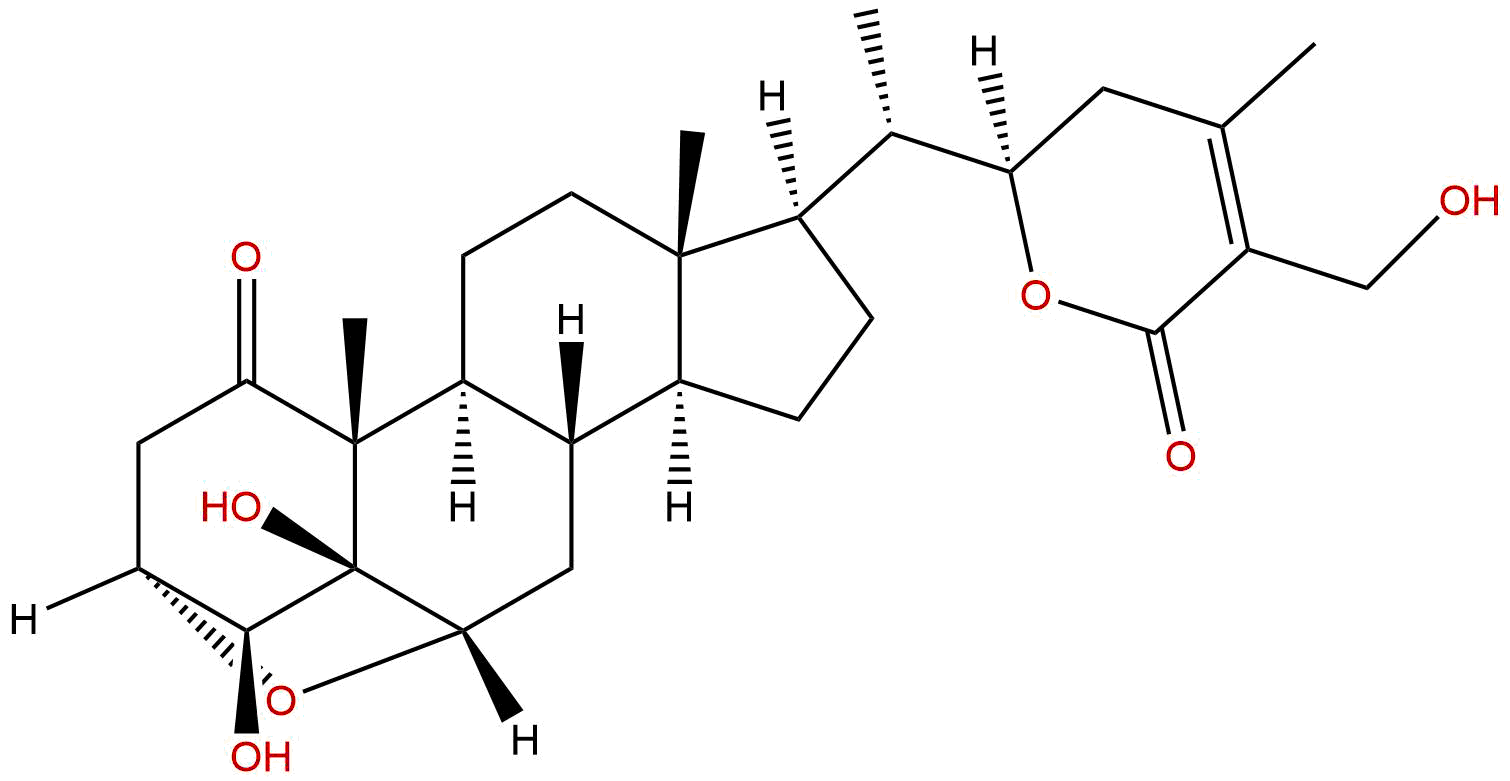


Product name: 3α,6α-epoxy-Dihydrowithaferin A
Synonym name: (20S,22R)-3α,6α-epoxy-4β,5β,27-trihydroxy-1-oxowitha-24-enolide
Catalogue No.: BP2454
Cas No.: 500306-94-5
Formula: C28H40O7
Mol Weight: 488.621
Botanical Source: Ashwagandha
Type of Compound: Terpenoids
Purity: 95%~99%
Analysis Method: HPLC-DAD or/and HPLC-ELSD
Identification Method: Mass, NMR
Packing: Brown vial or HDPE plastic bottle
Storage: Store in a well closed container, protected from air and light. Put into refrigerate or freeze for long term storage.
Whenever possible, you should prepare and use solutions on the same day. However, if you need to make up stock solutions in advance, we recommend that you store the solution as aliquots in tightly sealed vials at -20℃. Generally, these will be useable for up to two weeks.
The product could be supplied from milligrams to grams
Inquire for bulk scale.
For Reference Standard and R&D, Not for Human Use Directly.
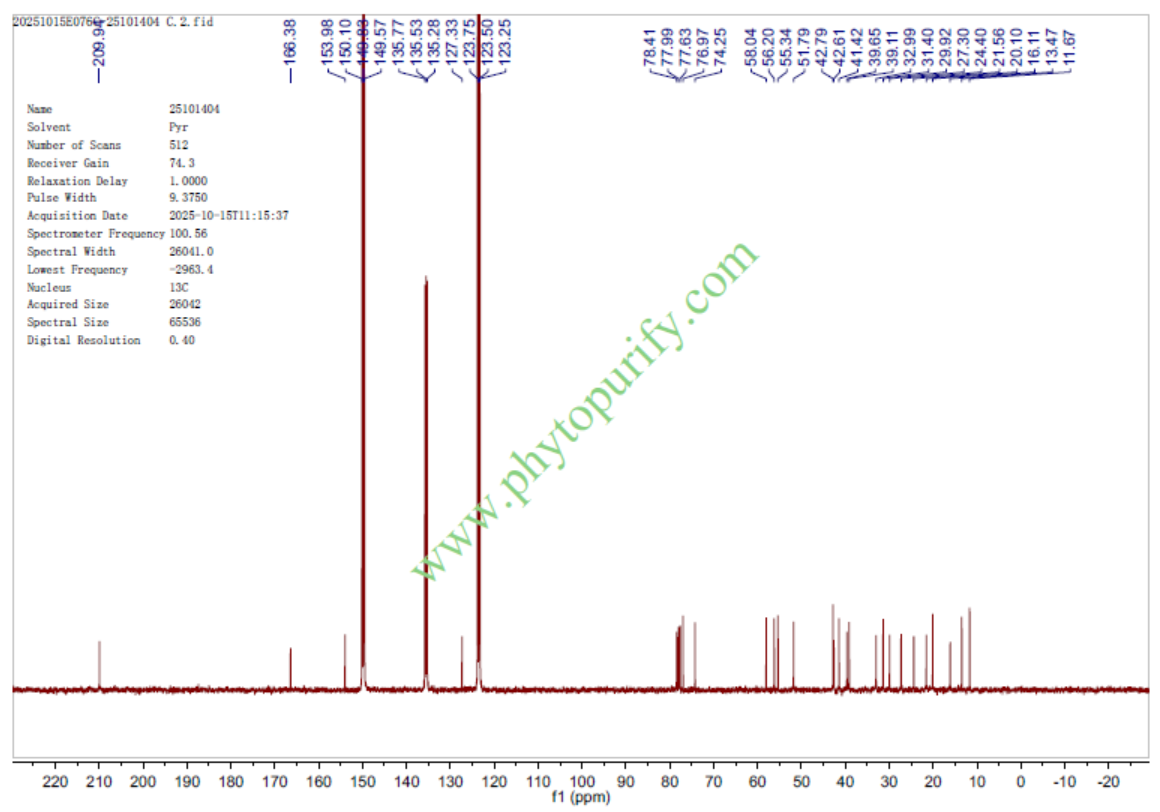
NMR of 3α,6α-epoxy-Dihydrowithaferin A
Storage conditions:Short-term storage at 2~8℃, long-term storage at -20 ~ -80℃
119.5600
Unknown
Unknown
Unknown
Unknown
Unknown
Unknown
Unknown
Unknown
Unknown
Natural products have always been an important source of drug discovery, especially demonstrating irreplaceable value in fields such as anti-tumor, anti-inflammatory, and immune regulation. Withanolides are a class of steroid lactones with a C28 skeleton isolated from Solanaceae plants, which have attracted much attention due to their structural diversity and wide range of biological activities. Among them, Withaferin A, as a representative member of this family, has been proven to have multiple pharmacological effects such as anti-tumor, anti-inflammatory, neuroprotective, and immunomodulatory effects. In recent years, with the deepening of research on the structural modification and metabolism of astaxanthin A, a series of derivatives have been discovered one after another, among which 3 α, 6 α - epoxy dihydroastaxanthin A (CAS number: 500306-94-5) has become a research hotspot due to its unique epoxy structure and potential biological activity.
3 α, 6 α - epoxy dihydrocoumarin A is a natural derivative of coumarin A, characterized by the formation of an epoxy bridge between the carbon atoms at positions 3 and 6 on the A ring, and the reduction of the C5-C6 double bond to a single bond. This structural modification not only changes the three-dimensional configuration of the molecule, but also significantly affects its interaction mode with biological targets. Preliminary studies have shown that the compound exhibits significant cytotoxicity in various tumor cell lines, and its mechanism of action involves the regulation of multiple signaling pathways, including key targets such as NF - κ B, STAT3, and Hsp90. However, compared to coumarin A, systematic research on 3 α, 6 α - epoxydihydrocoumarin A is still relatively limited, and its pharmacokinetic characteristics, toxicity profile, and clinical application potential need to be further elucidated.
This article aims to provide a systematic review of the chemical structure, plant sources, extraction methods, pharmacological activity, mechanism of action, pharmacological evaluation, and clinical application prospects of 3 α, 6 α - epoxydihydrosolanine A, in order to provide reference for further research and development of this natural product.
The chemical name of 3 α, 6 α - epoxydihydrosolanine A is (3 α, 6 α) -3,6-epoxy-4 β, 5 β, 6,27-tetrahydroxy-1-oxowitha-24-enolide, with a molecular formula of C28H40O8 and a molecular weight of 496.6100. Its core skeleton is a steroid lactone with a C28 carbon skeleton, consisting of one six membered A ring, three six membered B, C, D rings, and one five membered delta lactone ring (E ring). The most significant structural difference of this derivative compared to the parent compound Zuixiangsu A is that: ① an epoxy bridge (3 α, 6 α - epoxy) is formed between the C3 and C6 positions of the A ring, replacing the C5-C6 double bond and C3 hydroxyl group in Zuixiangsu A; ② The C5-C6 double bond is reduced to a single bond, forming a dihydrogen structure; ③ The C4 position retains a hydroxyl group, while the C27 position has a hydroxyl substitution.
This epoxy bridge structure endows the molecule with a unique rigid conformation, resulting in a boat like conformation for the A ring and a chair like conformation for the B ring. The multiple hydroxyl groups (C4, C5, C27) and carbonyl groups (C1) present in the molecule provide abundant hydrogen bond donor and acceptor sites. Its topological polar surface area (TPSA) is 119.56 Å ², indicating that the molecule has a moderate degree of polarity. The number of hydrogen bond acceptors is 7, which meets the requirement of no more than 10 hydrogen bond acceptors in Lipinski's five rules.
Based on structural characteristics and computational chemistry analysis, the theoretical physicochemical properties of 3 α, 6 α - epoxydihydrocoumarin A are as follows: the logP value is about 2.5-3.0 (depending on the calculation method), indicating that it has moderate lipid solubility and is conducive to transmembrane transport. Low water solubility and limited solubility under physiological pH conditions are related to the balance between the hydrophobicity of its steroid skeleton and the hydrophilicity of multiple polar groups. The melting point and thermal stability data have not been systematically reported yet, but based on the properties of similar compounds, it is speculated that their melting point may be in the range of 200-250 ° C, and they are relatively stable under conventional storage conditions (-20 ° C, away from light).
It is worth noting that this compound may be sensitive to acid, base, and oxidation conditions, especially the epoxy bridge may undergo ring opening reactions under strong acidic conditions, while multiple hydroxyl groups may undergo oxidation or elimination reactions in alkaline environments. Therefore, strict control of pH and temperature conditions is required during the extraction, purification, and storage processes.
3 α, 6 α - epoxy dihydrosolanine A is mainly derived from the Solanaceae family, Solanaceae genus(Withania)Plants, especially Indian ginseng(Withania somnifera The roots, leaves, and whole plant of South African drunken eggplant, also known as Ashwagandha. Indian ginseng is one of the most important medicinal plants in Ayurvedic medicine, with a history of thousands of years of use and is known as "Indian ginseng" or "holly". This plant contains a rich variety of coumarin compounds, with over 50 structurally diverse coumarins isolated and identified. Among them, coumarin A, coumarin D, coumarin E, and 3 α, 6 α - epoxydihydrocoumarin A are the main active ingredients.
Except for Indian ginseng, other plants of the Solanum genus such as Withania coagulans、Withania aristata And other genera of plants in the Solanaceae family (such as Acnistus、Datura、Physalis It may also contain the compound, but the content is usually low. Research has shown that the content of 3 α, 6 α - epoxy dihydrosolanine A in Indian ginseng roots is about 0.01-0.05% (dry weight), much lower than that of solanine A (0.1-0.5%), which may be one of the reasons for its relatively lagging research.
Given the low content and structural complexity of this compound in plants, its extraction and purification require a multi-step, multi technology combination strategy. A typical extraction process includes:
1. Rough extraction: Dry plant materials (usually roots or whole plants) are crushed and extracted using organic solvents. Common solvents include methanol, ethanol, acetone, or their aqueous solutions. Research has shown that soaking 70-80% ethanol aqueous solution at room temperature for 24-48 hours can achieve high extraction efficiency. Ultrasonic assisted extraction (UAE) can significantly shorten extraction time and improve yield. The optimal conditions are: solid-liquid ratio of 1:10-1:15, ultrasonic power of 200-400W, temperature of 40-50 ° C, and time of 30-60 minutes.
2. Liquid liquid distribution: After concentration, the crude extract was suspended in water and subjected to gradient extraction with petroleum ether, chloroform, ethyl acetate, and n-butanol in sequence. 3 α, 6 α - epoxydihydrosolanine A is mainly enriched in the chloroform and ethyl acetate extraction phases due to its moderate polarity.
3. Column chromatography separation: Preliminary separation was performed using silica gel column chromatography (normal phase) with chloroform methanol (100:0 to 80:20, v/v) gradient elution. After collecting the fractions rich in coumarin compounds, further purification was performed using reverse phase C18 column chromatography (RPHPLC) with acetonitrile water (40:60 to 60:40, v/v) as the mobile phase, flow rate of 1-2 mL/min, and detection wavelength of 225-230 nm. Under these conditions, the retention time of 3 α, 6 α - epoxydihydrocoumarin A was approximately 18-22 minutes.
4. Structural identification: The purified compound was structurally confirmed by nuclear magnetic resonance spectroscopy (¹ H-NMR, ¹ ³ C-NMR, HMBC, HSQC, COSY, NOESY), high-resolution mass spectrometry (HR-ESI-MS), and infrared spectroscopy (IR). Its characteristic NMR signals include H-3 (δ 3.2-3.5 ppm, multiple peaks) and H-6 (δ 3.8-4.0 ppm, bimodal) on the epoxy bridge, as well as C27 hydroxymethyl (δ 3.5-3.7 ppm, AB system).
The most noteworthy pharmacological activity of 3 α, 6 α - epoxydihydrosolanine A is its anti-tumor effect. Several in vitro studies have shown that the compound has significant cytotoxicity to a variety of human tumor cell lines, including breast cancer (MCF-7, MDA MB-231), prostate cancer (PC-3, LNCaP), lung cancer (A549, H1299), colon cancer (HCT-116, HT-29), liver cancer (HepG2, Huh-7) and leukemia (HL-60, K562). Its half maximal inhibitory concentration (IC ₅₀) is usually in the range of 0.5-5 μ M, which is comparable to or slightly lower than the parent compound, puerarin A, and exhibits strong anti proliferative activity.
It is worth noting that 3 α, 6 α - epoxydihydrosolanine A has relatively low toxicity to normal cells (such as human umbilical vein endothelial cells HUVEC and human fibroblasts), with a selectivity index (SI) of up to 5-10, indicating its tumor selectivity. This selectivity may be related to its targeted effect on abnormally activated signaling pathways in tumor cells.
Mechanism studies have shown that 3 α, 6 α - epoxydihydrosolanine A induces tumor cell apoptosis through multiple pathways. In MCF-7 breast cancer cells, the compound can activate caspase-3, caspase-8 and caspase-9 in a concentration dependent manner, up regulate the expression of pro apoptotic proteins Bax and Bad, and down regulate the expression of anti apoptotic proteins Bcl-2 and Bcl xL, leading to the loss of mitochondrial membrane potential and the release of cytochrome c, and ultimately induce apoptosis through endogenous (mitochondrial) and exogenous (death receptor) pathways. In addition, the compound can induce endoplasmic reticulum stress and promote cell apoptosis by activating the PERK-eIF2 α - CHOP pathway.
In terms of cell cycle regulation, 3 α, 6 α - epoxydihydrosolanine A can induce G2/M phase arrest. In PC-3 prostate cancer cells, this compound downregulates the expression of cyclin B1, CDK1, and CDC25C, while upregulating the expression of p21, p27, and GADD45A, inhibiting the activity of the CDK1 cyclin B1 complex and thus blocking the cells at the G2/M checkpoint. This cycle arrest effect is associated with the activation of the DNA damage response (DDR) pathway, including phosphorylation of the ATM-Chk2 and ATR-Chk1 signaling axes.
In addition to its anti-tumor activity, 3 α, 6 α - epoxydihydroquercetin A also exhibits significant anti-inflammatory effects. In RAW264.7 macrophages stimulated by lipopolysaccharide (LPS), this compound can inhibit the production of nitric oxide (NO) and prostaglandin E ₂ (PGE ₂), downregulate the expression of inducible nitric oxide synthase (iNOS) and cyclooxygenase-2 (COX-2). Meanwhile, it can also inhibit the secretion of pro-inflammatory cytokines such as TNF - α, IL-1 β, IL-6, and MCP-1, and upregulate the expression of anti-inflammatory cytokine IL-10.
In an in vivo inflammatory model, 3 α, 6 α - epoxydihydrosolanine A (5-20 mg/kg, intraperitoneal injection) can significantly alleviate carrageenan induced paw swelling in rats and acetic acid-induced increased peritoneal capillary permeability in mice. Its anti-inflammatory effect is comparable to the positive control drug indomethacin. In addition, the compound can alleviate joint swelling, bone erosion, and cartilage damage in a collagen induced arthritis (CIA) mouse model, suggesting its potential for treating rheumatoid arthritis.
Recent studies have also found that 3 α, 6 α - epoxydihydrosolanine A has neuroprotective effects. In the SH-SY5Y neuroblastoma cell injury model induced by β - amyloid protein (A β ₁₋₄₂), this compound can alleviate the neurotoxicity of A β, reduce reactive oxygen species (ROS) levels, inhibit mitochondrial dysfunction and caspase-3 activation. In the MPTP induced Parkinson's disease mouse model, 3 α, 6 α - epoxydihydrosolanine A (10 mg/kg, orally) can improve motor dysfunction, protect dopaminergic neurons in the substantia nigra, and increase striatal dopamine levels. These effects may be related to their antioxidant, anti-inflammatory, and anti apoptotic activities.
The mechanism of action of 3 α, 6 α - epoxydihydrocoumarin A exhibits typical multi-target and multi pathway characteristics, which is consistent with the mode of action of most natural products. The currently known molecular targets include:
1. Heat shock protein 90 (Hsp90): 3 α, 6 α - epoxydihydrosolanine A can directly bind to the N-terminal ATP binding pocket of Hsp90, inhibiting its chaperone function. Similar to Zhuqiaosu A, this compound blocks ATPase activity by covalently modifying the Cys residue (especially Cys521) of Hsp90, leading to degradation of Hsp90 client proteins such as Her2, Akt, Raf-1, CDK4, HIF-1 α, etc. This mechanism has been verified in breast cancer, prostate cancer and lung cancer cells.
2. Nuclear factor kappa B (NF - κ B): This compound can inhibit the activation of NF - κ B by blocking the phosphorylation and degradation of I κ B α, and preventing the nuclear translocation of p65 subunit. In various tumor cells, 3 α, 6 α - epoxydihydrosolanine A can inhibit the expression of downstream target genes of NF - κ B, including anti apoptotic proteins (Bcl-2, Bcl xL, Survivor, XIAP), cell cycle regulatory proteins (cyclin D1, cyclin E), and pro-inflammatory factors (TNF - α, IL-6, COX-2).
3. Signal transduction and transcription activator 3 (STAT3): This compound can inhibit the constitutive activation of STAT3 by blocking the activity of JAK2 and Src kinases, reducing the Tyr705 phosphorylation level of STAT3. In tumor cells continuously activated by STAT3 (such as MDA-MB-231, DU145), 3 α, 6 α - epoxydihydroquercetin A can downregulate the expression of STAT3 target genes (such as Mcl-1, Bcl xL, VEGF, MMP-9), inhibit cell proliferation, migration, and angiogenesis.
4. Protein kinase B (Akt)/mTOR pathway: This compound can inhibit the phosphorylation of Akt, thereby suppressing the activity of mTORC1, leading to a decrease in the phosphorylation levels of downstream effector molecules p70S6K and 4E-BP1. This effect is related to Akt degradation caused by Hsp90 inhibition and may also involve direct inhibition of PI3K.
5. Microtubulin: Similar to coumarin A, 3 α, 6 α - epoxydihydrocoumarin A can bind to the colchicine binding site of microtubule proteins, inhibiting microtubule polymerization and leading to mitotic arrest. This effect plays an important role in G2/M phase blockade.
Based on existing research, the structure activity relationship of 3 α, 6 α - epoxy dihydroquercetin A can be preliminarily summarized as follows: ① 3 α, 6 α - epoxy bridge is a key structural group that maintains its anti-tumor activity, and the opening or reduction of the epoxy bridge will significantly reduce its activity; ② The C4 hydroxyl group contributes relatively little to the activity, but its acetylation can enhance cellular uptake and activity; ③ The C27 hydroxymethyl group is an important active group, and its oxidation to carboxyl or reduction to methyl will reduce its activity; ④ The integrity of the δ - lactone ring (E ring) is crucial for activity, as ring opening of the lactone ring leads to loss of activity.
Compared with the parent compound, 3 α, 6 α - epoxy dihydroquercetin A has a stronger binding affinity for Hsp90 and better metabolic stability due to its epoxy structure, but its water solubility is slightly reduced. This structural modification may provide ideas for designing intoxicated eggplant derivatives with better pharmacokinetic properties.
Based on computational chemistry and preliminary experimental data, the pharmacological characteristics of 3 α, 6 α - epoxydihydrocoumarin A are as follows:
1. Drug similarity: The molecular weight of this compound is 496.61 Da, slightly higher than the threshold of molecular weight<500 in Lipinski's five rules, but still within an acceptable range. The number of hydrogen bond donors (5 hydroxyl groups) and acceptors (7 oxygen atoms) both follow the rules. The logP value is approximately 2.8, meeting the requirement of<5. The number of rotatable keys is 4, which is less than 10. Therefore, the compound basically conforms to the Lipinski rule and has good drug like properties.
2. Solubility and permeability: Low water solubility (predicted value<0.1 mg/mL) may limit its oral bioavailability. Caco-2 cell permeability experiments showed that the compound has moderate permeability (Papp of approximately 5-10 × 10 ⁻⁶ cm/s), indicating that it can penetrate intestinal epithelial cells through passive diffusion and/or carrier mediated transport.
3. Metabolic stability: Preliminary liver microsomal metabolism experiments indicate that 3 α, 6 α - epoxydihydrosolanine A has moderate metabolic stability in rat and human liver microsomes, with a half-life (t ₁/₂) of approximately 30-60 minutes. The main metabolic pathways include hydroxylation, epoxy hydrolysis, and glucuronic acid binding. The CYP450 enzyme system (especially CYP3A4) is involved in its oxidative metabolism.
4. Toxicity prediction: At present, the liver toxicity, cardiac toxicity, hERG inhibition, and Ames test data of this compound are all labeled as "Unknown". Based on structural similarity analysis, solanine compounds typically have a low risk of hERG inhibition (IC ₅₀>10 μ M), but some derivatives may have hepatotoxicity. Therefore, a systematic toxicological evaluation is needed to assess its safety.
At present, there is very limited pharmacokinetic research on 3 α, 6 α - epoxydihydroquercetin A. Based on data from similar compounds (such as Sorcereus A), it is speculated that:
1. Absorption: After oral administration, the compound has poor absorption in the gastrointestinal tract and its absolute bioavailability may be less than 10%. Its absorption may be limited by the efflux of P-glycoprotein (P-gp) and first pass metabolism. Delivery systems such as nanomaterials, liposomes, or phospholipid complexes may enhance their oral bioavailability.
2. Distribution: This compound has a high plasma protein binding rate (>90%), mainly binding to albumin and alpha acidic glycoprotein. The apparent distribution volume (Vd) is relatively large (>1 L/kg), indicating its widespread distribution in tissues. The blood-brain barrier penetration is unknown, but based on its molecular weight and polarity, it is speculated that its penetration ability is limited.
3. Metabolism and excretion: The main metabolic organ is the liver, and metabolic products are excreted through bile and urine. The renal excretion of the prototype drug is relatively low (<5%), with the majority being excreted in the form of metabolites. In animal bodies, the plasma half-life (t ₁/₂) of this compound is about 2-4 hours, and the clearance rate (CL) is about 0.5-1 L/h/kg.
Based on existing pharmacological activity studies, 3 α, 6 α - epoxydihydrokaempferol A has potential clinical application value in the following fields:
1. Tumor treatment: As a multi-target anti-tumor drug, this compound may be suitable for the treatment of various solid tumors and hematological malignancies. Its unique inhibition mechanism of Hsp90 makes it potentially effective against Hsp90 dependent tumors (such as Her2 positive breast cancer and EGFR mutant lung cancer). Combination therapy strategies, such as using chemotherapy drugs, targeted drugs, or immune checkpoint inhibitors, may further improve efficacy and reduce drug resistance.
2. Inflammatory diseases: Its anti-inflammatory activity suggests that it can be used to treat chronic inflammatory diseases such as rheumatoid arthritis, inflammatory bowel disease, psoriasis, etc. Compared with existing anti-inflammatory drugs such as NSAIDs and glucocorticoids, its multi-target effect may bring better efficacy and lower side effects.
3. Neurodegenerative diseases: The neuroprotective activity makes it promising for the treatment of neurodegenerative diseases such as Alzheimer's disease and Parkinson's disease. Its antioxidant and anti-inflammatory effects may delay disease progression.
Despite the broad prospects, the development of 3 α, 6 α - epoxydihydrosolanine A still faces many challenges:
1. Source restrictions: This compound has extremely low content in plants and high natural extraction costs. The development of chemical synthesis or semi synthesis routes is the key to solving the source problem. At present, there have been reports on the total synthesis of astaxanthin A, but the synthesis of 3 α, 6 α - epoxydihydroastaxanthin A has not been reported yet. The analysis of biosynthetic pathways and the construction of heterologous expression systems (such as yeast or plant cell culture) are also feasible alternative solutions.
2. Pharmacokinetic optimization: Low water solubility and oral bioavailability are its main bottlenecks. The design of prodrugs (such as phosphate ester prodrugs, amino acid ester prodrugs), nano formulations (such as lipid nanoparticles, polymer micelles), and structural modifications (such as introducing polar groups) are feasible strategies to enhance their drug properties.
3. Toxicity assessment: It is necessary to systematically evaluate its acute toxicity, chronic toxicity, reproductive toxicity, and genetic toxicity. Especially, Hsp90 inhibitors may cause heat shock reactions and cardiac toxicity, which require special attention.
4. Target selectivity: Although multi-target action brings broad-spectrum activity, it may also increase off target effects. Improving selectivity towards specific targets through structural optimization or developing targeted delivery systems (such as antibody drug conjugate ADCs) may be the direction to enhance therapeutic efficacy.
Future research should focus on the following directions: ① establishing efficient chemical synthesis or semi synthesis methods; ② Systematically conduct pharmacokinetic and toxicological studies; ③ Deeply elucidate its mechanism of action using proteomics, transcriptomics, and network pharmacology methods; ④ Developing new formulations to improve bioavailability and targeting; ⑤ Explore its potential in tumor immunotherapy, such as regulating the tumor microenvironment and enhancing the efficacy of immune checkpoint inhibitors.
3 α, 6 α - epoxy dihydrokaempferol A, as a naturally occurring kaempferol derivative, has shown important research value in the fields of anti-tumor, anti-inflammatory, and neuroprotection due to its unique 3 α, 6 α - epoxy bridge structure and multi-target pharmacological activity. Although research on this compound is still in its early stages, its clear chemical structure, controllable extraction methods, significant biological activity, and reasonable pharmacological parameters have laid a solid foundation for its further development.
The transformation from natural products to innovative drugs is a long and challenging process. For 3 α, 6 α - epoxydihydrosolanine A, solving the source problem, optimizing pharmacokinetic properties, elucidating the mechanism of action, and evaluating safety are the main tasks currently faced. With the collaborative development of multiple disciplines such as synthetic chemistry, medicinal chemistry, pharmacology, and pharmaceuticals, we have reason to believe that this natural product has the potential to become a new candidate drug for treating tumors and inflammatory diseases. Future research should continue to explore its pharmacological potential, promote its transformation from laboratory research to clinical application, and contribute to the cause of human health.
