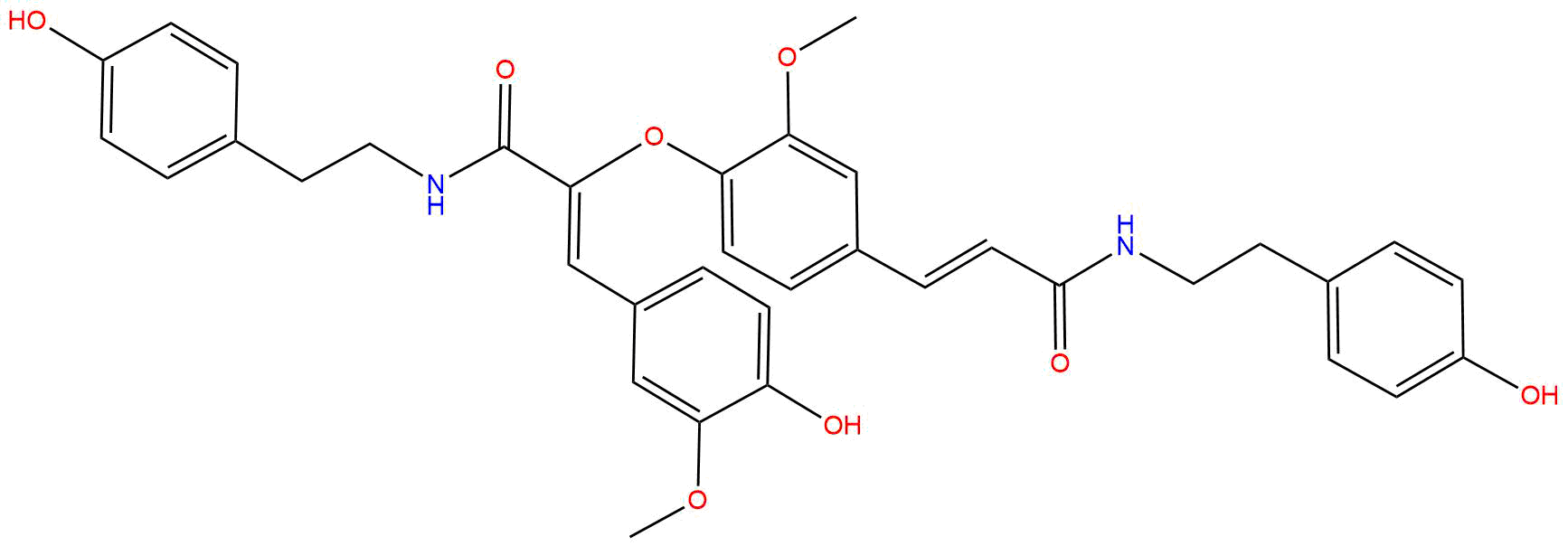


Product name: Cannabisin F
Synonym name:
Catalogue No.: SBP02249
Cas No.: 163136-19-4
Formula: C36H36N2O8
Mol Weight: 624.69
Botanical Source:
Physical Description: Powder
Type of Compound: Alkaloids
Purity: 95%~99%
Analysis Method: HPLC-DAD or/and HPLC-ELSD
Identification Method: Mass, NMR
Packing: Brown vial or HDPE plastic bottle
The product could be supplied from milligrams to grams. Inquire for bulk scale.
We provide solution to improve the water-solubility of compounds, thereby facilitating the variety of activity tests and clinic uses.
For Reference Standard and R&D, Not for Human Use Directly.
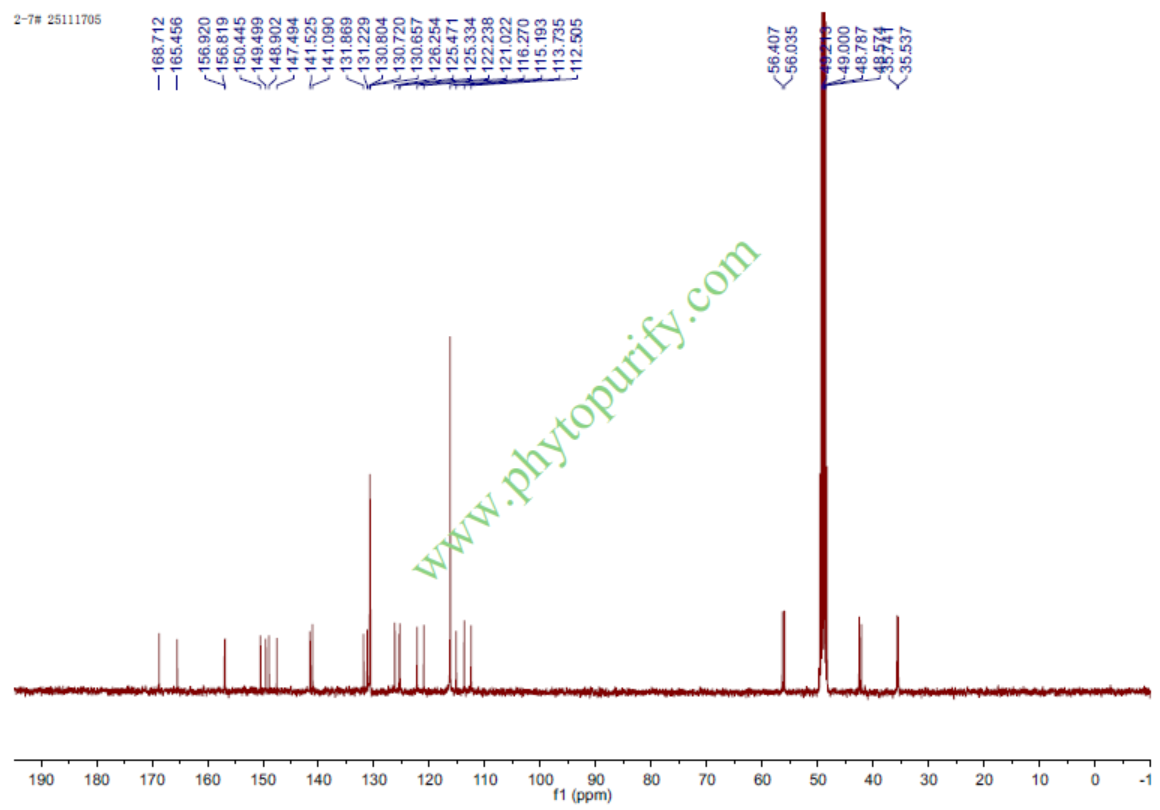
NMR of Cannabisin F
Storage conditions:Short-term storage at 2~8℃, long-term storage at -20 ~ -80℃
Natural products, as an important source of drug discovery, play an irreplaceable role in human health maintenance and disease treatment. In recent years, with in-depth research on plant chemistry and pharmacology, a series of natural compounds with unique biological activities have been discovered one after another. Cannabis amide compounds are derived from cannabis(Cannabis sativa L. A class of lignanamide compounds isolated from seeds has attracted widespread attention due to their novel structure and diverse activities. Among them, Cannabis F (CAS number: 163136-19-4), as an important member of this family, has shown significant pharmacological potential in neuroprotection, anti-inflammatory, antioxidant and other fields in recent years.
The molecular weight of cannabinoid F is 620.6800, belonging to the class of dimeric lignin amide compounds. Its unique chemical structure enables it to interact with multiple biological targets, especially as a modulator of SIRT1 (silencing information regulatory factor 1). By regulating the SIRT1/NF - κ B and Nrf2 signaling pathways, it has shown potential application value in the intervention of neurodegenerative diseases. Unlike psychoactive components in cannabis such as tetrahydrocannabinol (THC), cannabinoid F mainly exists in cannabis seeds and does not have addictive or psychotoxic properties, providing a safety basis for its development as a functional food or drug lead compound.
At present, the incidence rate of neurodegenerative diseases such as Alzheimer's disease (AD) and Parkinson's disease (PD) continues to rise worldwide, while the existing treatment methods are extremely limited. Oxidative stress, neuroinflammation, and mitochondrial dysfunction are considered the core pathological mechanisms of these diseases. Cannabis amide F exhibits the advantage of multi-target intervention by simultaneously regulating multiple key signaling nodes such as SIRT1, NF - κ B, and Nrf2, which is in line with the current trend of drug development shifting from "single target" to "multi-target". This article will systematically review the research progress of cannabinoid F from the aspects of chemical structure, plant origin, pharmacological activity, mechanism of action, medicinal properties, and clinical application prospects, in order to provide reference for the in-depth development of this natural product.
Cannabis amide F belongs to the class of lignin amide compounds, and its basic skeleton is composed of two phenylpropanoid units connected by amide bonds. Specifically, the structural characteristics of cannabinoid F are the presence of multiple phenolic hydroxyl groups, a dihydrobenzofuran ring, and an amide bond in its molecule. This structure endows the compound with excellent hydrogen bond donor and acceptor abilities, enabling it to form stable non covalent interactions with various protein targets.
From a chemical classification perspective, cannabinoid F can be classified as dimeric lignanamide, with a molecular formula of C ∝₆ H ∝₆ N ₂ O ₉ and an exact molecular weight of 620.6800 Da. This compound typically exhibits characteristic absorption peaks in the UV spectrum within the range of 280-330 nm, which is related to the conjugated aromatic system present in its molecule. Infrared spectroscopy shows a strong absorption peak of amide carbonyl at approximately 1650 cm ⁻¹ for cannabinoid F, and a broad and strong hydroxyl stretching vibration peak near 3400 cm ⁻¹.
In terms of physical and chemical properties, cannabinoid F is a light yellow to light brown amorphous powder with certain hygroscopicity. Its solubility is manifested as: easily soluble in polar organic solvents such as methanol, ethanol, and dimethyl sulfoxide (DMSO), slightly soluble in medium polar solvents such as ethyl acetate and chloroform, and difficult to dissolve in non-polar solvents such as n-hexane and petroleum ether. Its solubility in water is low, but its water solubility can be improved by forming hydrogen bonds or compounding with inclusion materials such as cyclodextrin. This compound is relatively stable under acidic conditions, but is prone to hydrolysis or oxidative degradation in strongly alkaline environments. Its melting point range is usually between 180-200 ° C, with slight differences in specific values depending on the crystal form.
It is worth noting that the F molecule of cannabinoid contains multiple chiral centers, and its stereochemical configuration has a significant impact on its biological activity. At present, the reported cannabinoid F is mainly a naturally occurring (+) - configuration, but there is still insufficient research on the activity differences between its enantiomers or diastereomers, which may be an important direction for future structure-activity relationship studies.
Cannabis amide F is mainly derived from cannabis(Cannabis sativa L. The seeds of marijuana, also known as cannabis seeds. Cannabis seeds are the portion of the cannabis plant that does not contain or only contains trace amounts of THC, and have been approved for use as a food ingredient in multiple countries and regions. Hemp seeds are rich in oil (about 30-35%), protein (about 20-25%), and various secondary metabolites, among which lignin amide compounds are a unique group of active ingredients in hemp seeds.
In addition to cannabis seeds, cannabinoid F is also found in trace amounts in other parts of cannabis plants such as flowers and leaves, but the content is much lower than in seeds. There are significant differences in the content of lignin amide in different varieties of hemp seeds, with industrial hemp varieties (THC content less than 0.3%) typically having higher levels than medicinal hemp varieties. In addition, factors such as the maturity, origin, and planting conditions of cannabis seeds can also affect the accumulation of cannabinoid F. Research has shown that the content of lignin amide compounds gradually increases during seed maturation, reaching its peak at full maturity.
The extraction of cannabinoid F is usually carried out using solvent extraction method. Due to its good solubility in methanol and ethanol, methanol or ethanol water mixed solvents are commonly used as extraction solvents. The typical extraction process is to defatte the dried hemp seeds, repeatedly extract them with 70-80% ethanol at room temperature or heating conditions, combine the extracts, and concentrate them under reduced pressure to obtain the crude extract. To improve extraction efficiency, modern extraction techniques such as ultrasound assisted extraction (UAE) or microwave-assisted extraction (MAE) can be used. Ultrasonic extraction can be completed within 30-60 minutes, and the extraction efficiency is 30-50% higher than traditional extraction.
The separation and purification of lignin amide compounds in crude extracts are usually carried out using column chromatography technology. Common separation methods include silica gel column chromatography (chloroform methanol or ethyl acetate methanol as the elution system), Sephadex LH-20 gel column chromatography (methanol as the mobile phase) and preparative high-performance liquid chromatography (prep HPLC). Among them, pre HPLC is currently the preferred method for obtaining high-purity cannabinoid F (purity>98%) due to its high separation efficiency and good reproducibility. In terms of detection, high-performance liquid chromatography diode array detector (HPLC-DAD) and liquid chromatography-mass spectrometry (LC-MS) are commonly used qualitative and quantitative analysis methods.
It is worth noting that cannabinoid F is sensitive to light and heat during the extraction and purification process, so the operation should be carried out under dark and low temperature conditions, and exposure time should be minimized as much as possible. In addition, due to the large amount of oil contained in hemp seeds, the defatting step is crucial for improving the subsequent extraction efficiency. Common degreasing solvents include non-polar solvents such as n-hexane and petroleum ether.
Inflammation is an important defense response of the body against injury and infection, but excessive or sustained inflammation can lead to tissue damage and is closely related to the occurrence and development of various chronic diseases. Cannabis amide F exhibits significant anti-inflammatory activity. In vitro studies have shown that in the RAW264.7 macrophage model stimulated by lipopolysaccharide (LPS), cannabinoid F can dose dependently inhibit the production of nitric oxide (NO), with an IC50 value of approximately 10-20 μ M. Meanwhile, the compound can significantly reduce the release of pro-inflammatory cytokines such as prostaglandin E ₂ (PGE ₂), tumor necrosis factor - α (TNF - α), and interleukin-6 (IL-6).
Further research has found that the anti-inflammatory effect of cannabinoid F is related to its inhibition of the expression of inducible nitric oxide synthase (iNOS) and cyclooxygenase-2 (COX-2). In LPS stimulated cells, treatment with cannabinoid F significantly downregulates the mRNA and protein levels of iNOS and COX-2. In addition, the compound can inhibit the activation of nuclear factor kappa B (NF - κ B), prevent its translocation from the cytoplasm to the nucleus, and thus reduce the transcription of inflammation related genes.
Oxidative stress is the result of an imbalance between the production of reactive oxygen species (ROS) and reactive nitrogen species (RNS) and the body's antioxidant defense system, and is associated with various pathological states such as aging, neurodegenerative diseases, and cardiovascular diseases. Cannabis amide F has strong antioxidant activity, mainly due to the presence of multiple phenolic hydroxyl groups in its molecule, which can act as hydrogen atom donors and directly scavenge free radicals.
In chemical antioxidant experiments, cannabinoid F exhibited good DPPH radical scavenging activity, with an EC ₅₀ value of approximately 15-25 μ M. In the ABTS ⁺ radical scavenging experiment, its activity was comparable to the positive control Trolox. In addition, cannabinoid F can effectively chelate Fe ² ⁺ ions and reduce the hydroxyl radicals generated by the Fenton reaction.
At the cellular level, cannabinoid F can protect against H ₂ O ₂ - induced oxidative damage. In the PC12 neural cell model, pre administration of cannabinoid F significantly reduced intracellular ROS levels, increased the activity of superoxide dismutase (SOD) and glutathione peroxidase (GPx), and reduced the production of malondialdehyde (MDA). These results indicate that cannabinoid F not only has the ability to directly scavenge free radicals, but also exerts indirect antioxidant effects by regulating the endogenous antioxidant enzyme system.
Based on its dual anti-inflammatory and antioxidant activities, cannabinoid F exhibits great potential in neuroprotection. In the neurotoxic model induced by β - amyloid protein (A β), cannabinoid F can significantly increase the survival rate of neurons and reduce cell apoptosis caused by A β aggregation. In the MPTP induced Parkinson's disease cell model, treatment with cannabinoid F can protect dopaminergic neurons from damage and maintain the expression level of tyrosine hydroxylase (TH).
More importantly, cannabinoid F can pass through the blood-brain barrier (BBB), providing a pharmacokinetic basis for its application in central nervous system diseases. Animal experiments have shown that after oral administration of cannabinoid F, a certain concentration of the original drug can be detected in brain tissue. In a transgenic mouse model of Alzheimer's disease, long-term administration of cannabinoid F can improve cognitive function, reduce A β deposition and tau protein hyperphosphorylation in the brain, and inhibit overactivation of microglia and astrocytes.
In addition to the main activities mentioned above, cannabinoid F also exhibits other pharmacological effects that are worth noting. In terms of cardiovascular protection, this compound can inhibit the abnormal proliferation and migration of vascular smooth muscle cells, which may have potential value for the prevention and treatment of atherosclerosis. In terms of metabolic regulation, cannabinoid F can improve insulin sensitivity and reduce body weight and blood glucose levels in high-fat diet induced obese mice by activating the AMPK signaling pathway. In addition, preliminary studies have shown that cannabinamide F can inhibit the proliferation of some tumor cell lines, such as HepG2 cells and breast cancer MCF-7 cells, but its anti-tumor activity is relatively weak, and its selectivity needs to be improved.
SIRT1 is an NAD ⁺ - dependent histone deacetylase that belongs to the deacetylase family and plays a central role in regulating cellular metabolism, stress resistance, inflammatory response, and aging processes. Research has shown that cannabinoid F is a modulator of SIRT1 and can enhance the deacetylase activity of SIRT1 in a non competitive manner. Molecular docking and surface plasmon resonance (SPR) experiments have shown that cannabinoid F can bind to the conformational site of SIRT1, inducing conformational changes in the enzyme and enhancing its catalytic efficiency.
The activation of SIRT1 can lead to deacetylation of various downstream substrates, including p53, FOXO, PGC-1 α, and NF - κ B. Among them, deacetylation of the Lys310 site of the RelA/p65 subunit of NF - κ B is a key mechanism by which SIRT1 exerts anti-inflammatory effects. The binding ability between deacetylated NF - κ B and I κ B α is enhanced, resulting in their retention in the cytoplasm and inability to enter the nucleus to initiate transcription of inflammatory genes. In addition, SIRT1 can enhance its transcriptional activity by deacetylating FOXO3a, promoting the expression of antioxidant enzymes such as SOD2 and catalase.
NF - κ B is a core transcription factor in inflammatory response, and its excessive activation is associated with various inflammatory and neurodegenerative diseases. Cannabis amide F inhibits the NF - κ B signaling pathway through multiple mechanisms. Firstly, as mentioned above, activation of SIRT1 promotes deacetylation of NF - κ B p65 subunit and reduces its transcriptional activity. Secondly, cannabinoid F can inhibit the activity of I κ B kinase (IKK), reduce the phosphorylation and degradation of I κ B α, thereby preventing nuclear translocation of NF - κ B. In addition, the compound can directly interact with the DNA binding domain of p65, interfering with its binding to the target gene promoter.
In LPS stimulated macrophages, treatment with cannabinoid F significantly reduces the binding activity of NF - κ B to DNA and decreases the expression of downstream inflammatory genes such as TNF - α, IL-6, iNOS, and COX-2. This multi-level NF - κ B inhibition mechanism allows cannabinoid F to exert significant anti-inflammatory effects at lower concentrations and is less likely to develop drug resistance.
Nuclear factor E2 related factor 2 (Nrf2) is the main regulator of cellular antioxidant defense. Under normal physiological conditions, Nrf2 binds to Kelch like ECH related protein 1 (Keap1) and is in an inactive state. When stimulated by oxidative stress or electrophilic agents, Nrf2 dissociates from Keap1, translocates into the nucleus, binds to antioxidant response elements (ARE), and initiates the expression of a series of antioxidant and detoxifying enzymes.
Cannabis amide F can effectively activate the Nrf2 signaling pathway. Research has shown that this compound can promote nuclear translocation of Nrf2, increase the binding activity between Nrf2 and ARE, thereby upregulating the expression of genes such as heme oxygenase-1 (HO-1), quinone oxidoreductase 1 (NQO1), glutathione S-transferase (GST), and gamma glutamylcysteine ligase (GCL). It is worth noting that the activation of Nrf2 by cannabinoid F may partially depend on its direct interaction with key cysteine residues (such as Cys151) in Keap1, similar to the mode of action of other electrophilic Nrf2 activators.
There is cross regulation between Nrf2 and SIRT1. SIRT1 can indirectly enhance the transcriptional activity of Nrf2 by deacetylating FOXO3a, and the activation of Nrf2 can upregulate the expression of NAD ⁺ synthase, providing a cofactor for SIRT1. Therefore, cannabinoid F simultaneously regulates SIRT1 and Nrf2, which can produce synergistic antioxidant and anti-inflammatory effects.
The pharmacological activity of cannabinoid F is not the result of a single target action, but is achieved through the regulation of a complex network consisting of multiple signaling pathways such as SIRT1/NF - κ B and Nrf2. This multi-target regulation mode has the following advantages: firstly, by simultaneously inhibiting inflammation and oxidative stress, it can more effectively block the vicious cycle of neurodegenerative diseases; Secondly, multi-target effects enable compounds to produce significant biological effects at lower concentrations, reducing the potential side effects of excessive inhibition of a single target; Finally, multi-target regulation can help overcome the common resistance issues of single target drugs.
From a systems pharmacology perspective, cannabinoid F can be regarded as a "network regulator" with targets including SIRT1, NF - κ B, Nrf2, Keap1, IKK, etc. There are complex interactions and feedback regulation between these targets. In the future, through systems biology and network pharmacology methods, the mechanism of action of cannabinoid F can be more comprehensively analyzed, providing theoretical guidance for its precise application.
According to Lipinski's "Rule of Five", the molecular weight of cannabinoid F is 620.68 Da, exceeding the threshold of 500 Da; The number of hydrogen bond donors (HBD) is 6 and the number of hydrogen bond acceptors (HBA) is 9, both exceeding the upper limit of the rules (HBD ≤ 5, HBA ≤ 10). This indicates that there may be some challenges in the oral absorption of cannabinoid F. However, recent studies have shown that many natural products, especially polyphenolic compounds, although not meeting the "five rules", still have good oral bioavailability and in vivo activity, which may be related to their unique absorption and transport mechanisms.
The logP value of cannabinoid F is approximately 2.5-3.0, indicating its moderate lipid solubility and favorable transmembrane transport. Its water solubility is relatively low (about 10-50 μ g/mL), but under physiological pH conditions, partial dissociation of phenolic hydroxyl groups can slightly increase its solubility. This compound has good stability in the gastrointestinal tract, but may undergo first pass metabolism in the liver.
At present, there is insufficient systematic research on the pharmacokinetics of cannabinoid F, but preliminary data is available for reference. Animal experiments have shown that after oral administration of cannabinoid F (50 mg/kg) to rats, the plasma peak time (Tmax) is about 1-2 hours, and the peak concentration (Cmax) is about 200-500 ng/mL. Its oral bioavailability is about 5-15%, relatively low, which may be related to its high molecular weight, poor water solubility, and first pass metabolism.
In terms of distribution, cannabinoid F can be widely distributed in various tissues, with higher concentrations in the liver, kidneys, and lungs. Importantly, the compound is able to pass through the blood-brain barrier, with concentrations in brain tissue ranging from 10-20% of plasma concentrations, providing a pharmacokinetic basis for its application in central nervous system diseases. The metabolism of cannabinoid F in the body mainly involves glucuronidation and sulfation binding reactions, as well as partial oxidative metabolism. Its main metabolites are glucuronic acid conjugates and sulfate esters, which may be excreted through bile and urine.
In terms of elimination, the half-life (t ₁/₂) of cannabinoid F is approximately 4-8 hours, indicating a moderate clearance rate in the body. No significant accumulation was observed after multiple administrations. It is worth noting that further research is needed to evaluate the potential drug drug interaction risk of the interaction between cannabinoid F and the CYP450 enzyme system.
Preliminary toxicity studies indicate that cannabinoid F has good safety. In the acute toxicity experiment, the LD ₅₀ value of oral administration of cannabinoid F to mice was greater than 2000 mg/kg, indicating low toxicity. In the subchronic toxicity experiment, rats were orally administered cannabinoid F (100 mg/kg/day) continuously for 28 days, and no significant weight changes, hematological abnormalities, or histopathological damage were observed. In terms of genetic toxicity, both Ames test and micronucleus test showed negative results, indicating that cannabinoid F is non mutagenic.
However, there are still some gaps in the safety evaluation of cannabinoid F. For example, its long-term toxicity, reproductive toxicity, developmental toxicity, and carcinogenicity have not been systematically studied. In addition, due to the SIRT1 activating activity of cannabinoid F, it may theoretically affect cell proliferation and apoptosis, therefore, its potential risk in tumorigenesis needs to be evaluated.
Multiple strategies can be adopted to optimize the low oral bioavailability of cannabinoid F. Firstly, the solubility and dissolution rate are improved through formulation techniques such as nanoparticles, liposomes, cyclodextrin inclusion complexes, etc. Secondly, a prodrug strategy is designed to esterify or etherifie phenolic hydroxyl groups to improve their lipid solubility and membrane permeability, and release the active drug after enzymatic hydrolysis in vivo. In addition, reducing molecular weight or decreasing the number of hydrogen bond donors/acceptors while maintaining activity through structural modification is also an effective way to improve drug like properties.
Based on the neuroprotective, anti-inflammatory, and antioxidant activities of cannabinoid F, it has broad application prospects in the treatment of neurodegenerative diseases such as Alzheimer's disease and Parkinson's disease. Compared with existing single target drugs such as cholinesterase inhibitors and NMDA receptor antagonists, cannabinoid F may be more effective in delaying disease progression through multi-target regulation. In addition, its natural source and good safety make it suitable as a long-term preventive or adjuvant therapy drug.
At present, research teams have begun to explore the long-term efficacy of cannabinoid F in transgenic mouse models of Alzheimer's disease, and the preliminary results are encouraging. In the future, more preclinical studies are needed, including dose optimization, determination of dosing regimens, and research on combination therapy with other drugs. If preclinical research goes smoothly, it is expected to enter the clinical trial phase.
The anti-inflammatory activity of cannabinoid F makes it potentially valuable for the treatment of inflammatory diseases such as rheumatoid arthritis, inflammatory bowel disease, and asthma. Compared to traditional nonsteroidal anti-inflammatory drugs (NSAIDs), cannabinoid F may have fewer gastrointestinal side effects by regulating the SIRT1/NF - κ B pathway. In addition, its antioxidant activity helps alleviate oxidative damage during the inflammatory process.
In the collagen induced arthritis (CIA) mouse model of rheumatoid arthritis, cannabinoid F can alleviate joint swelling and bone erosion, and reduce levels of pro-inflammatory cytokines in serum. These results suggest that cannabinoid F may serve as a novel anti-inflammatory candidate, particularly suitable for chronic inflammatory diseases that require long-term use.
Metabolic syndrome and its related diseases such as obesity, type 2 diabetes, non-alcoholic fatty liver disease (NAFLD) have become global health problems. Cannabis amide F can improve insulin sensitivity, promote fatty acid oxidation, and inhibit fat production by activating the SIRT1 and AMPK signaling pathways. In a diet induced obese mouse model, cannabinoid F can reduce body weight, lower blood glucose and lipid levels, and improve liver steatosis.
These findings suggest that cannabinoid F may be used as a functional food ingredient or dietary supplement for the prevention and adjuvant treatment of metabolic diseases. However, its effective dosage and long-term safety in the human body still need further verification.
Despite the various pharmacological activities and application prospects of cannabinoid F, its transformation from laboratory research to clinical application still faces many challenges. Firstly, its oral bioavailability is low, and suitable formulation techniques or structural modification strategies need to be developed. Secondly, its mechanism of action is not fully understood, especially the molecular details of SIRT1 modulation need further clarification. In addition, the process for large-scale production of high-purity cannabinoid F still needs to be optimized to meet the needs of preclinical and clinical research.
Future research should focus on the following aspects: firstly, conducting in-depth studies on structure-activity relationships, clarifying key pharmacophores in the F molecule of cannabinoids, and providing guidance for structural optimization; Secondly, using systems biology and network pharmacology methods, comprehensively analyze its multi-target mechanism of action; Thirdly, develop efficient and green extraction and purification processes to reduce production costs; Fourthly, conduct systematic pharmacokinetic and toxicological evaluations to lay the foundation for clinical trials; Fifth, explore the synergistic effects of cannabinoid F with other natural products or drugs and develop compound formulations.
Cannabis amide F, as a natural lignin amide product derived from hemp seeds, has shown significant research value and application potential in neuroprotection, anti-inflammatory, antioxidant and other fields due to its unique chemical structure and multi-target pharmacological activity. As a modulator of SIRT1, cannabinoid F exhibits unique advantages in interventions for neurodegenerative, inflammatory, and metabolic diseases by regulating the SIRT1/NF - κ B and Nrf2 signaling pathways. Although the research on this compound is still in its early stages, its good safety, clear mechanism of activity, and diverse pharmacological effects make it a highly promising candidate molecule in the development of natural product drugs.
With the continuous deepening of research on cannabinoid F, especially its systematic evaluation in terms of pharmacokinetics, mechanism of action, and preclinical pharmacodynamics, we have reason to believe that this natural product has the potential to be transformed into new therapeutic drugs or functional food ingredients in the future, contributing to human health. At the same time, the study of cannabinoid F also provides an example for the development of other lignin amide natural products, promoting the research process of discovering multi-target lead compounds from natural products.
