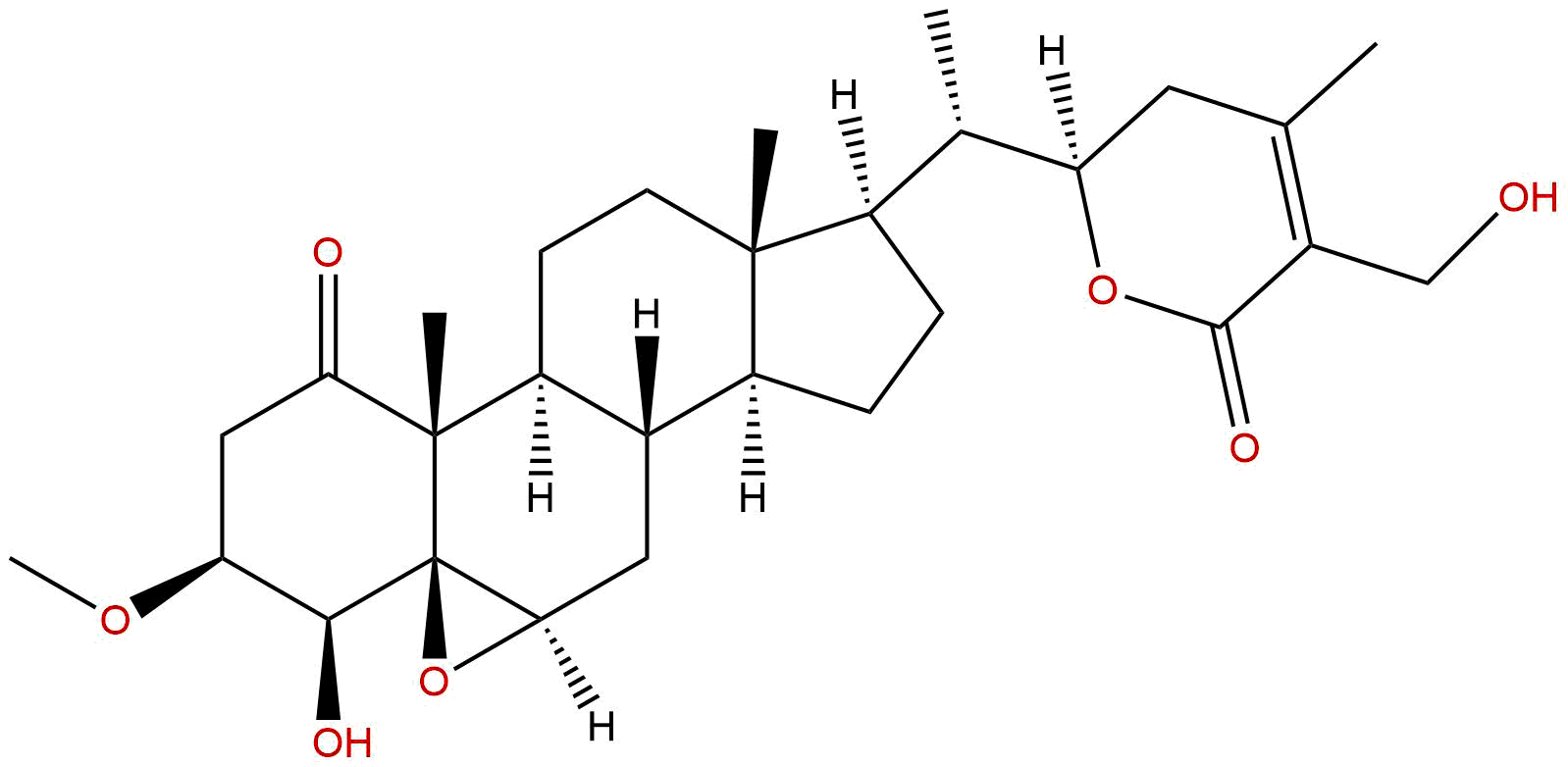


Product name: 3β-Methoxy-2,3-dihydrowithaferin A
Synonym name: Quresimin A
Catalogue No.: BP5319
Cas No.: 73365-94-3
Formula: C29H42O7
Mol Weight: 502.648
Botanical Source: Solanum torvum Sw.
Type of Compound: Terpenoids
Purity: 95%~99%
Analysis Method: HPLC-DAD or/and HPLC-ELSD
Identification Method: Mass, NMR
Packing: Brown vial or HDPE plastic bottle
Storage: Store in a well closed container, protected from air and light. Put into refrigerate or freeze for long term storage.
Whenever possible, you should prepare and use solutions on the same day. However, if you need to make up stock solutions in advance, we recommend that you store the solution as aliquots in tightly sealed vials at -20℃. Generally, these will be useable for up to two weeks.
The product could be supplied from milligrams to grams
Inquire for bulk scale.
For Reference Standard and R&D, Not for Human Use Directly.
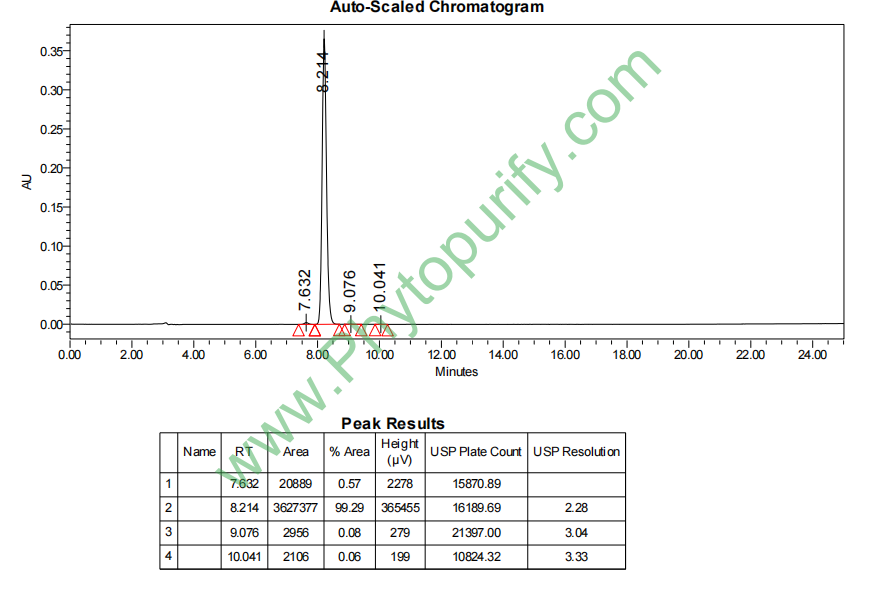
HPLC of 3β-Methoxy-2,3-dihydrowithaferin A
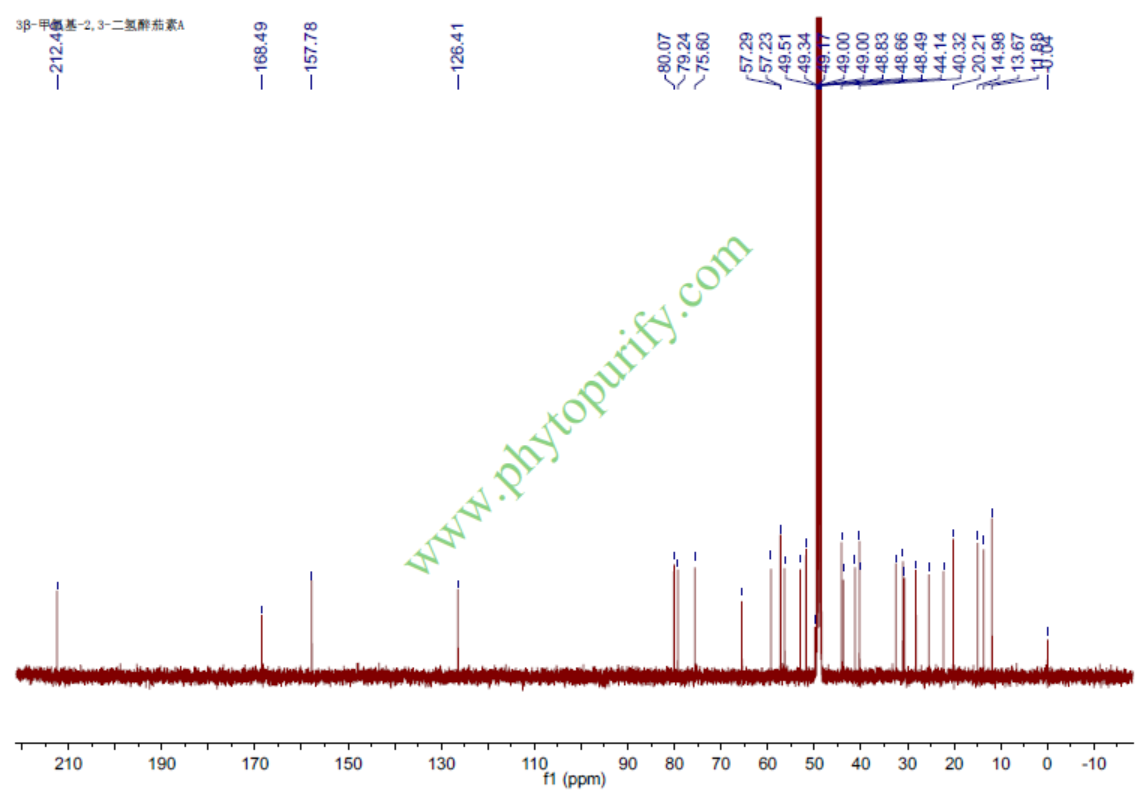
NMR of 3β-Methoxy-2,3-dihydrowithaferin A
Storage conditions:Short-term storage at 2~8℃, long-term storage at -20 ~ -80℃
105.5900
2.9766
2.9765
.0370
1.9576
8.9035
High
80.8345
5.8419
No
No
No
No
Yes
No
0.0
No
No
No
No
Natural products, as an important source of drug discovery, have long contributed numerous lead compounds and clinical drugs to human health. In the interdisciplinary field of plant chemistry and pharmacology, sleeping eggplant(Withania somnifera As a highly regarded medicinal plant in traditional Ayurvedic medicine, the study of its active ingredients has always been a hot topic in the international natural product community. Withanolides, as characteristic secondary metabolites of Solanum nigrum, are a class of steroid lactones with a C28 skeleton, renowned for their structural diversity and wide range of biological activities.
Among the numerous compounds of solanine, Withaferin A has become one of the most extensively studied members due to its significant anti-inflammatory, anti-tumor, and immunomodulatory activities. However, as research deepens, scientists have discovered that its natural derivatives also exhibit unique pharmacological properties. 3 β - Methoxy-2,3-dihydrowithaferin A (hereinafter referred to as 3 β - MDWA), as a structural modification product of huperzine A, has gradually attracted attention in recent years due to its potential application value in the field of antioxidant stress.
Oxidative stress refers to the imbalance between the production of reactive oxygen species (ROS) and reactive nitrogen species (RNS) in the body and the antioxidant defense system. This imbalance is considered to be the common pathological basis of many chronic diseases, including neurodegenerative diseases, cardiovascular diseases, diabetes and its complications, inflammatory diseases and aging process. Therefore, the search for efficient and low toxicity natural antioxidants, especially compounds that can regulate the endogenous antioxidant enzyme system, has become an important direction for drug development. 3 β - MDWA, with its unique chemical structure and preliminary pharmacological evidence, demonstrates the potential to combat oxidative stress-related diseases by regulating key antioxidant enzymes such as SOD1, CAT, GPX1, and HO-1, making it a natural product molecule worthy of further investigation.
This article aims to systematically review the research progress on the chemical structure characteristics, plant origin, pharmacological activity, mechanism of action, and pharmacological evaluation of 3 β - MDWA, in order to provide scientific basis for the further development and utilization of this compound.
3 β - MDWA belongs to the class of alcohol containing compounds, and its core skeleton is a steroid lactone structure with C28 carbon atoms. From a chemical naming perspective, this compound is a 2,3-dihydro derivative of astaxanthin A, with methoxy substitution introduced at the C3 position. Specifically, its structural features include:
The molecular formula is C ₂₉ H ₄₂ O ₇, and the molecular weight is 502.6480 g/mol. This molecular weight falls within the "golden range" of natural product drug discovery, meeting the approximate requirement of Lipinski's five rules for molecular weight less than 500.
According to computational chemistry and experimental data, the key physicochemical properties of 3 β - MDWA are as follows:
Based on the above parameters, 3 β - MDWA exhibits certain advantages in drug formulation, such as moderate lipid solubility, low cardiac toxicity, and low genetic toxicity, but also faces challenges such as poor water solubility.
3 β - MDWA mainly comes from the Solanaceae family, Solanaceae genus(Withania)Plants, especially Withania somnifera(Sleeping eggplant). Sleeping eggplant is a perennial shrub native to India, Pakistan, Sri Lanka, Nepal, as well as parts of the Middle East and Africa. In the traditional medical system, the roots and leaves of sleeping eggplant are widely used to enhance physical strength, anti-inflammatory, anti-aging, and improve cognitive function.
It is worth noting that the content of 3 β - MDWA in eggplant is usually low and belongs to trace components. Its biosynthetic pathway is closely related to coumarin A, which may be generated through the reduction of the C2-C3 double bond and C3 methoxylation modification of coumarin A. In addition, other plants of the Solanum genus such as Withania coagulans and Withania aristata It may also contain this compound, but there are few related reports.
Due to the low content of 3 β - MDWA in plant materials, specific strategies are required for its extraction and purification:
Extraction solvent selection Based on the moderate lipophilicity of the compound (LogP ≈ 2.98), organic solvents with moderate polarity are usually used for extraction. Common extraction solvents include methanol, ethanol, or methanol water mixed systems. Research has shown that a 70% -80% methanol aqueous solution has a higher extraction efficiency for solanine compounds.
extraction method:
Soxhlet extraction Suitable for small-scale laboratory extraction, but high temperatures may affect thermosensitive components.
Preliminary separation After the extraction solution is concentrated under reduced pressure, liquid-liquid extraction is usually used for preliminary separation. Suspend the crude extract in water and extract it sequentially with petroleum ether, ethyl acetate, and n-butanol. 3 β - MDWA is mainly enriched in the ethyl acetate extraction site.
Chromatographic separation and purification:
Preparation type high performance liquid chromatography (Prep HPLC)As the final purification method, a C18 preparation column is used, and acetonitrile water (usually 40:60 to 60:40) is eluted with equimolar or gradient elution to obtain 3 β - MDWA monomers with a purity greater than 98%.
Structural Identification The purified compound was structurally confirmed by techniques such as nuclear magnetic resonance spectroscopy (¹ H-NMR, ¹ ³ C-NMR, 2D-NMR), high-resolution mass spectrometry (HR-ESI-MS), and circular dichroism (CD). Among them, the β configuration of the C3 methoxy group can be confirmed by the correlation signals between H-3 and H-5 in the NOESY spectrum.
The core pharmacological activity of 3 β - MDWA is reflected in its antioxidant stress resistance. Oxidative stress involves multiple pathological processes, and this compound exerts protective effects through multiple pathways:
Direct free radical scavenging ability Preliminary chemical experiments have shown that 3 β - MDWA exhibits certain activity in DPPH (1,1-diphenyl-2-trinitrophenylhydrazine) and ABTS (2,2 '- diazobis (3-ethylbenzothiazoline-6-sulfonic acid) radical scavenging experiments, but its direct scavenging ability is weaker than classical antioxidants such as vitamin C or Trolox. This suggests that its antioxidant effect may rely more on indirect mechanisms, namely by regulating the endogenous antioxidant system.
Cellular level antioxidant protection In oxidative damage cell models induced by hydrogen peroxide (H ₂ O ₂) or tert butyl hydroperoxide (t-BHP), 3 β - MDWA pretreatment can significantly improve cell survival, reduce intracellular ROS levels, and decrease the production of lipid peroxidation product malondialdehyde (MDA). These protective effects have been reported in various cell lines, including liver cells (HepG2), neuronal cells (SH-SY5Y), and endothelial cells (HUVEC).
Enhance endogenous antioxidant enzyme activity The most significant effect of 3 β - MDWA is to upregulate the expression and activity of various key antioxidant enzymes. Research has found that this compound can significantly enhance the activity of superoxide dismutase (SOD1), catalase (CAT), glutathione peroxidase 1 (GPX1), and heme oxygenase-1 (HO-1). These enzymes form the core of the body's antioxidant defense system. SOD1 is responsible for converting superoxide anions into H ₂ O ₂, CAT and GPX1 further decompose H ₂ O ₂ into water, while HO-1 catalyzes the degradation of hemoglobin, producing bilirubin and carbon monoxide with antioxidant activity.
Oxidative stress is closely related to inflammatory response, and the antioxidant effect of 3 β - MDWA also extends to the anti-inflammatory field. In a macrophage model stimulated by lipopolysaccharide (LPS), this compound can inhibit the release of pro-inflammatory factors such as tumor necrosis factor - α (TNF - α), interleukin-6 (IL-6), and interleukin-1 β (IL-1 β). The mechanism may be related to the inhibition of the activation of the nuclear factor kappa B (NF - κ B) signaling pathway, which is a key transcription factor sensitive to oxidative stress.
Given its excellent prediction of blood-brain barrier permeability, the neuroprotective potential of 3 β - MDWA has attracted much attention. In the Alzheimer's disease cell model induced by β - amyloid protein (A β), this compound can reduce the neurotoxicity caused by A β aggregation and protect synaptic function. In addition, in the Parkinson's disease-related 6-hydroxydopamine (6-OHDA) injury model, 3 β - MDWA activates the Nrf2/ARE pathway, upregulates antioxidant enzyme expression, and reduces oxidative damage to dopaminergic neurons.
Preliminary studies also suggest that 3 β - MDWA may have the following activities:
- Hepatoprotective effect In animal models of liver injury induced by carbon tetrachloride (CCl ₄) or acetaminophen (APAP), this compound can reduce serum transaminase levels and alleviate liver tissue necrosis.
- Cardiovascular protection It may prevent atherosclerosis by inhibiting the oxidative damage and inflammatory reaction of vascular endothelial cells.
- anti-aging In model organisms such as nematodes, 3 β - MDWA can prolong lifespan and enhance stress resistance.
The core molecular mechanism of the antioxidant stress response of 3 β - MDWA is through the activation of the nuclear factor E2 related factor 2 (Nrf2)/antioxidant response element (ARE) signaling pathway. Nrf2 is the "main switch" that regulates cellular antioxidant defense, and under normal physiological conditions, it binds to Kelch like ECH related protein 1 (Keap1) and is in an inhibited state. When cells are stimulated by oxidative stress or electrophilic agents, Nrf2 dissociates from Keap1, translocates into the nucleus, forms heterodimers with small Maf proteins, binds to the ARE sequence in the promoter region of the target gene, and initiates the expression of downstream antioxidant enzymes.
Research has shown that 3 β - MDWA may activate the Nrf2 pathway through the following ways:
1. Directly modify Keap1 The α, β - unsaturated carbonyl structure (C1 carbonyl) in the compound may act as a Michael addition receptor, covalently binding to cysteine residues (such as Cys151, Cys273, Cys288) in Keap1 protein, causing a conformational change in Keap1 and releasing Nrf2.
2. Promote Nrf2 nuclear translocation By enhancing the stability of Nrf2 protein, reducing its ubiquitination degradation, and increasing nuclear Nrf2 levels.
3. Enhance ARE binding activity Improve the binding efficiency between Nrf2 and ARE sequences, thereby enhancing the transcriptional activity of downstream genes.
The target network regulated by the Nrf2 pathway of 3 β - MDWA includes:
In addition, the Nrf2 pathway also regulates other antioxidant enzymes such as glutathione S-transferase (GST), quinone oxidoreductase 1 (NQO1), and GSH synthesis related enzymes, forming a synergistic antioxidant network.
The role of 3 β - MDWA is not limited to the Nrf2 pathway, but also involves cross dialogue with other signaling pathways:
Based on the aforementioned physicochemical property parameters and preliminary pharmacological data, a comprehensive evaluation of the pharmacological properties of 3 β - MDWA is conducted
Advantage aspects:
-The molecular weight is moderate (502.65 Da), close to the upper limit of Lipinski rule, but still within an acceptable range.
-The LogP value (2.98) is within the ideal range of oral drug lipophilicity (1-3).
-No hERG inhibitory activity, good cardiac safety.
-Ames test negative, low risk of genetic toxicity.
-Having clear molecular targets (Nrf2 pathway) and distinct pharmacological mechanisms.
-The high permeability of the blood-brain barrier provides the possibility for the treatment of central nervous system diseases.
Challenge aspect:
-Very low water solubility (0.037 mg/mL), belonging to BCS class II or IV drugs, and oral bioavailability may be limited.
-The TPSA value (105.59 Å ²) is slightly higher, which may affect oral absorption and cell membrane permeability.
-Containing multiple metabolic sites (such as ester bonds and epoxy structures), metabolic stability needs to be evaluated.
-As a natural product, its sources are limited, and the development of chemical synthesis or semi synthesis routes is the key to large-scale production.
At present, there is insufficient systematic pharmacokinetic research on 3 β - MDWA, but based on its structural characteristics and studies of similar compounds, reasonable speculation can be made:
The preliminary safety data is encouraging:
- acute toxicity In rodents, the LD ₅₀ value of 3 β - MDWA has not been systematically reported, but the LD ₅₀ value of the same compound, puerarin A, is about 200-300 mg/kg (intraperitoneal injection), suggesting that 3 β - MDWA may have a similar toxicity range.
- Genotoxicity The Ames test is negative, indicating no mutagenicity.
- cardiotoxicity No hERG inhibitory activity, low risk of QT interval prolongation.
- Long term toxicity Lack of long-term toxicity research data is a key focus in future development.
Based on the pharmacological activity and mechanism of action of 3 β - MDWA, it has potential application value in the following disease fields:
Amyotrophic lateral sclerosis (ALS)SOD1 mutation is an important cause of familial ALS, and upregulating SOD1 activity may have therapeutic significance.
Metabolic diseases:
Non alcoholic fatty liver disease (NAFLD)By reducing liver oxidative stress and inflammatory response.
cardiovascular disease:
Ischemia-reperfusion injury Plays a protective role in myocardial infarction and stroke models.
Aging related diseases By activating the Nrf2 pathway, it delays cellular aging and tissue degeneration.
Formulation development To address the issue of poor water solubility, new formulations such as liposomes, nanoparticles, solid dispersions, or phospholipid complexes can be developed to improve oral bioavailability. In addition, transdermal or nasal administration routes may also become alternative options.
structural optimization Based on the structural skeleton of 3 β - MDWA, structural modifications can be carried out through medicinal chemical methods, such as introducing hydrophilic groups (phosphate groups, amino acid esters, etc.) to improve water solubility, or modifying metabolic instability sites to enhance metabolic stability.
Combination therapy When used in combination with existing drugs such as donepezil and levodopa, it exerts a synergistic effect and reduces the dosage and toxic side effects of a single drug.
Development of biomarkers Establish biomarkers based on Nrf2 pathway activation, such as HO-1 expression levels, for clinical efficacy evaluation and dose optimization.
clinical translation Need to complete the transition from preclinical to clinical research, including:
3 β - methoxy-2,3-dihydro-2,3-dihydro-2,3-dihydro-2,3-dihydro-2,3-dihydro-2,3-dihydro-2,3-dihydro-2,3-dihydro-2,3-dihydro-2,3-dihydro-2,3-dihydro-2,3-dihydro-2,3-dihydro-2,3-dihydro-2,3-dihydro-2,3-dihydro-2,3-dihydro-2,3-dihydro-2,3-dihydro-2,3-dihydro-2,3-dihydro-2,3-dihydro-2,3-dihydro-2,3-dihydro-2,3-dihydro-2,3-dihydro-2,3-dihydro-2,3-dihydro-2,3-dihydro-2. Its moderate lipid solubility, good blood-brain barrier permeability, low cardiac toxicity, and low genetic toxicity have laid a solid foundation for its further development.
However, the research on this compound is still in its early stages, facing challenges such as poor water solubility, lack of pharmacokinetic data, and insufficient preclinical studies. Future research needs to overcome its limitations through drug chemical modification and formulation methods based on a deep understanding of its molecular mechanism, and gradually promote clinical translation. With the continuous deepening of understanding of the role of oxidative stress in the occurrence and development of diseases, as well as the continuous advancement of natural product drug discovery technology, 3 β - MDWA is expected to become a new candidate drug for the treatment of neurodegenerative diseases, metabolic diseases, and cardiovascular diseases, contributing to human health.
From a broader perspective, the study of 3 β - MDWA also reflects a typical paradigm of the cross fusion of natural product chemistry and pharmacology - discovering active molecules from traditional medicinal plants, elucidating their mechanisms of action through modern scientific technology, and ultimately transforming them into clinically available therapeutic drugs. This process requires not only close collaboration between chemists and pharmacologists, but also collaborative efforts from multiple disciplines such as medicinal chemistry, formulation, toxicology, and clinical medicine. I believe that in the near future, with further research, 3 β - MDWA and its derivatives will provide new options for the treatment of oxidative stress-related diseases.
