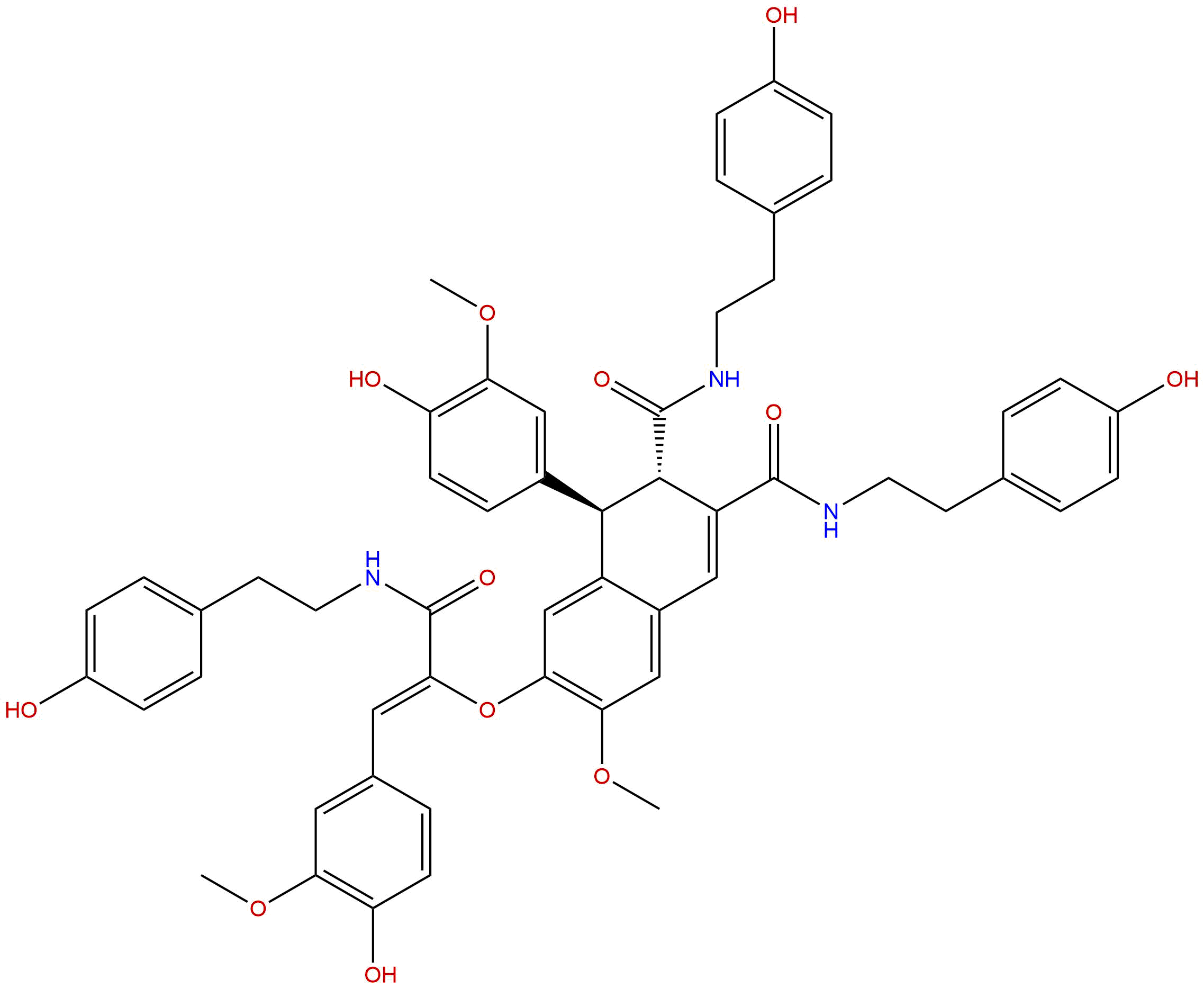


Product name: Melongenamide D
Synonym name:
Catalogue No.: BP2457
Cas No.: 1676050-29-5
Formula: C54H53N3O12
Mol Weight: 936.027
Botanical Source: Ashwagandha
Type of Compound: Phenols
Purity: 95%~99%
Analysis Method: HPLC-DAD or/and HPLC-ELSD
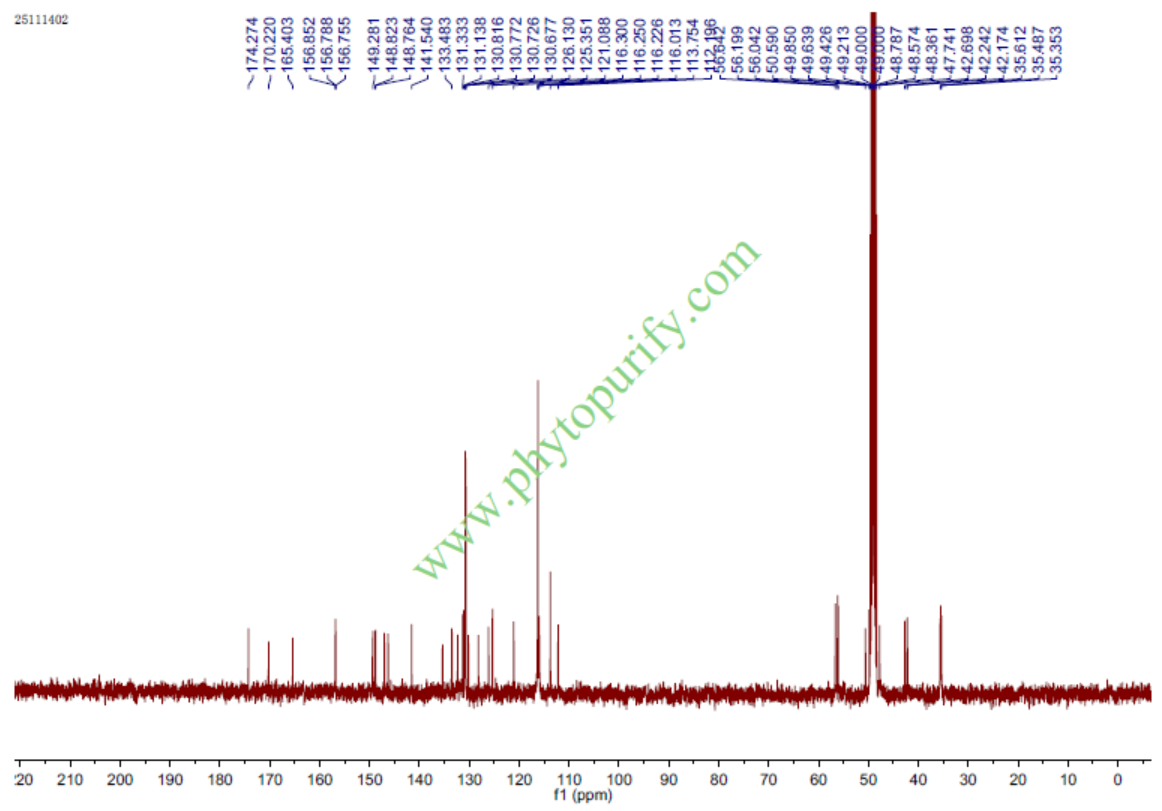
Identification Method: Mass, NMR
Packing: Brown vial or HDPE plastic bottle
Storage: Store in a well closed container, protected from air and light. Put into refrigerate or freeze for long term storage.
Whenever possible, you should prepare and use solutions on the same day. However, if you need to make up stock solutions in advance, we recommend that you store the solution as aliquots in tightly sealed vials at -20℃. Generally, these will be useable for up to two weeks.
The product could be supplied from milligrams to grams
Inquire for bulk scale.
For Reference Standard and R&D, Not for Human Use Directly.
NMR of Melongenamide D
Storage conditions:Short-term storage at 2~8℃, long-term storage at -20 ~ -80℃
226.7400
No
Unknown
Unknown
Unknown
Unknown
Unknown
Unknown
Unknown
Natural products, as an important source of drug discovery, play an irreplaceable role in the long struggle between humans and diseases. From ancient medicinal plants to modern high-throughput screening, the diverse structures and unique activities of secondary metabolites in nature have always been a treasure trove of inspiration for innovative drug development. Among numerous natural products, compounds derived from Solanaceae plants have attracted much attention due to their rich biological activity and unique chemical structure. Solanaceae plants, especially Solanum genus(Solanum)Plants, such as eggplants(Solanum melongena L.)、 Dragon Kui(Solanum nigrum L. In traditional medicine, it has a long history of application and is commonly used to treat various diseases such as inflammation, pain, and tumors. Modern pharmacological research has revealed that the pharmacological activity of these plants is closely related to the alkaloids, steroidal saponins, flavonoids, and amide compounds they contain.
Melonenamide compounds are a type of natural amide alkaloids with a unique structural skeleton isolated from eggplant roots. Since its first report in 2014, members of this compound family have been continuously discovered, including Melonenamide A, B, C, D, and others. Among them, Melonenamide D (CAS number: 1676050-29-5), as an important member of this family, has attracted widespread interest from natural product chemists and pharmacologists due to its unique chemical structure and potential biological activity. Preliminary studies have shown that solanine D may have various pharmacological activities such as anti-inflammatory, anti-tumor, and neuroprotective effects, but its specific mechanism of action, molecular targets, and pharmacological characteristics are still in the exploratory stage. This article aims to systematically review the chemical structure, physicochemical properties, plant origin, extraction methods, pharmacological activity, mechanism of action, pharmacological evaluation, and clinical application prospects of solanine D, in order to provide comprehensive scientific basis and reference for the in-depth research and development of this natural product.
Melonenamide D belongs to the solanine alkaloid class, and its chemical structure has typical characteristics of this type of compound. From a structural perspective, solanine amide compounds belong to amide alkaloids containing long-chain fatty acids and aromatic amine units. Their core skeleton is usually composed of a polyene or long-chain alkyl chain connected to one or more amino acid or amine fragments through amide bonds. The specific structural characteristics of solanine D are as follows: its molecule contains a complex polyene long chain, which may contain conjugated double bond systems and be connected to multiple hydroxyl or carbonyl functional groups; At the same time, the molecule also contains one or more aromatic ring fragments derived from specific amino acids (such as phenylalanine, tyrosine, etc.), which are connected to the long-chain portion through amide bonds. This unique structure endows solanine D with both lipophilic and hydrophilic amphiphilic characteristics, providing a structural basis for its interactions with various biological targets such as cell membranes, receptors, and enzymes.
From the perspective of physical and chemical properties, the molecular weight of solanine D is as high as 936.0000 Da, which belongs to the category of large molecule natural products. Its topological polar surface area (TPSA) is 226.7400 Å ², which is significantly higher than the recommended threshold for oral drugs (about 140 Å ²), indicating that its molecular polarity is high and its water solubility may be relatively poor, but it also suggests that it has a strong ability to form hydrogen bonds. Specifically, the molecule contains 15 hydrogen bond acceptors, which are consistent with the abundant hydroxyl, carbonyl, and amide groups in its structure. Although a higher number of hydrogen bond receptors is beneficial for forming specific interactions with target proteins, it may also have adverse effects on the membrane permeability and oral absorption of molecules. According to the existing pharmacological parameters, the blood-brain barrier permeability of solanine D is predicted to be "No", indicating that it is difficult for it to enter the central nervous system through passive diffusion across the blood-brain barrier. This characteristic may be advantageous for the development of drugs targeting peripheral targets, but poses a challenge for the treatment of central nervous system diseases. In addition, the predicted results for its liver toxicity, cardiac toxicity (such as hERG inhibition), and genetic toxicity (Ames test) are all "unknown", indicating a lack of systematic toxicological evaluation data. These key safety information urgently need to be clarified through subsequent experimental research.
Solanum D is mainly derived from eggplant plants in the Solanaceae family(Solanum melongena L. The root of. Eggplant, as a widely cultivated vegetable crop worldwide, has its fruit as an important component of daily diet, while its roots are often considered agricultural waste. However, in traditional medical practice, eggplant roots are used to treat conditions such as rheumatoid arthritis, traumatic injuries, and toothache, suggesting that they may be rich in active ingredients with medicinal value. Modern plant chemistry research has confirmed that eggplant roots are a rich source of various structurally novel secondary metabolites, including eggplant root amide compounds.
The extraction, separation and purification of solanine D is a typical natural product chemistry research process, which usually involves the following key steps:
Raw material pretreatment Collect fresh or dried eggplant roots, wash, slice, and dry at low temperatures (such as 40-50 ° C), then grind them to an appropriate particle size (such as 40-60 mesh) to increase solvent contact area and improve extraction efficiency.
Rough extraction Using solvent extraction method. Given that solanine D has a certain polarity, solvents or mixed solvents with moderate polarity are usually selected for extraction. Common extraction solvents include methanol, ethanol, or methanol water, ethanol water mixed systems. The extraction method can be cold soaking, percolation, or heating reflux extraction. To improve the extraction rate of the target compound and reduce impurities, multiple extractions (such as 3-4 times) are often used, with each extraction lasting from several hours to tens of hours.
Extraction and Enrichment Concentrate the crude extract under reduced pressure to obtain a paste. Subsequently, the extract was dispersed in water and subjected to liquid-liquid extraction using organic solvents of different polarities, such as petroleum ether, dichloromethane, ethyl acetate, and n-butanol. Due to its equipolarity, solanine D may be mainly enriched in the ethyl acetate or n-butanol extraction sites. Determine the target active site through activity tracking (such as anti-inflammatory, cytotoxic activity) or chemical screening (such as thin-layer chromatography, HPLC analysis).
Chromatographic Separation and Purification Systematic chromatographic separation of active sites. Common separation materials include silica gel, reverse phase silica gel (such as ODS), dextran gel (such as Sephadex LH-20) and high performance liquid chromatography (HPLC). Usually, normal phase silica gel column chromatography is used for preliminary separation, using gradient elution systems such as chloroform methanol or petroleum ether acetone. Subsequently, the streams containing the target compounds were further purified by reverse phase ODS column chromatography (methanol water or acetonitrile water system) and Sephadex LH-20 gel column chromatography (methanol or chloroform methanol system). Finally, high-purity solanine D monomer was obtained by semi preparative or analytical HPLC under specific chromatographic conditions (such as C18 column, acetonitrile water formic acid mobile phase).
Structural Identification The purified compounds require structural confirmation through modern spectroscopic techniques, mainly including nuclear magnetic resonance spectroscopy (1D and 2D NMR, such as ¹ H-NMR, ¹ ³ C-NMR, HSQC, HMBC, ¹ H - ¹ H COSY), high-resolution mass spectrometry (HR-ESI-MS), infrared spectroscopy (IR), and ultraviolet spectroscopy (UV). By comparing with known literature data or conducting comprehensive spectral analysis, it was ultimately determined to be solanine D.
It is worth noting that due to the low content of solanine D in plants and its complex structure and high polarity, its efficient extraction and purification still face challenges. In recent years, some new extraction techniques, such as ultrasound assisted extraction, microwave-assisted extraction, enzyme assisted extraction, and supercritical fluid extraction, are expected to improve extraction efficiency and yield, and are worth further exploration.
At present, the systematic pharmacological activity research on solanine D is still in its infancy. The reported activities mainly focus on anti-inflammatory, cytotoxic, and potential neuroprotective effects, but most studies are still at the in vitro cellular level or preliminary animal models.
1. Anti inflammatory activity
Inflammation is a defensive response of the body to injury and infection, but excessive or persistent inflammation is the pathological basis of various diseases such as arthritis, cardiovascular disease, and neurodegenerative diseases. Preliminary studies suggest that solanine D may have significant anti-inflammatory activity. In the inflammatory model of macrophages (such as RAW264.7 cells) stimulated by lipopolysaccharide (LPS), solanine D can dose dependently inhibit the production of pro-inflammatory mediators such as nitric oxide (NO) and prostaglandin E2 (PGE2). The mechanism may be related to the inhibition of inducible nitric oxide synthase (iNOS) and cyclooxygenase-2 (COX-2) expression. In addition, it can also reduce the mRNA and protein levels of key pro-inflammatory cytokines such as tumor necrosis factor - α (TNF - α), interleukin-6 (IL-6), and interleukin-1 β (IL-1 β). These findings suggest that solanine D may exert anti-inflammatory effects by regulating multiple inflammatory signaling pathways.
2. Cytotoxicity and anti-tumor activity
Natural products are an important source of anti-tumor drugs. The inhibitory effect of solanine D on the proliferation of various tumor cell lines has been preliminarily reported. Research shows that Solanacellamide D has certain cytotoxicity to human liver cancer cells (such as HepG2, Huh7), human breast cancer cells (such as MCF-7, MDA-MB-231), human lung cancer cells (such as A549) and human colon cancer cells (such as HT-29), and its IC50 value is usually in the micromolar level. Further mechanistic studies have found that solanine D may exert anti-tumor effects by inducing apoptosis and/or autophagy. For example, it can upregulate the expression of pro apoptotic protein Bax, downregulate the expression of anti apoptotic protein Bcl-2, activate Caspase-3 and Caspase-9, leading to DNA fragmentation and cell apoptosis. In addition, some studies suggest that it may inhibit tumor cell proliferation by blocking the cell cycle in G0/G1 or G2/M phases.
3. Neuroprotective activity
Due to the amide structure of Solanum D and the neuroprotective activity of some alkaloids in Solanaceae plants, its potential neuroprotective effects have also attracted attention. In vitro neural cell injury models, such as those induced by glutamate, hydrogen peroxide (H ₂ O ₂), or β - amyloid protein (A β) (e.g. PC12 cells, SH-SY5Y cells), solanine D pretreatment can significantly improve cell survival rate, reduce lactate dehydrogenase (LDH) release, decrease intracellular reactive oxygen species (ROS) levels, and inhibit cell apoptosis. These preliminary results suggest that solanine D may exert neuroprotective effects through antioxidant stress and anti apoptotic mechanisms, and may become a potential lead compound for the treatment of neurodegenerative diseases such as Alzheimer's disease and Parkinson's disease.
4. Other activities
In addition to the main activities mentioned above, there are sporadic reports suggesting that solanine D may have antibacterial, antiviral, or immunomodulatory activities, but these studies are not yet in-depth and lack systematic evaluation.
Although existing studies have revealed the multifaceted pharmacological potential of solanine D, it must be pointed out that most of these studies are based on in vitro experiments, and in vivo pharmacological data is very scarce. The key information such as effective dosage, administration route, duration of efficacy, and potential toxic side effects in different animal models are not clear. Therefore, the understanding of its pharmacological activity is still in the preliminary exploration stage, and there is still a long way to go before clinical application.
A deep understanding of the mechanism of action and molecular targets of solanine D is key to transforming it from a natural product into a candidate drug. Based on existing pharmacological activity studies, solanine D may exert its biological effects through multiple targets and pathways.
1. Anti inflammatory mechanism
The anti-inflammatory effect of solanine D may mainly involve the regulation of nuclear factor kappa B (NF - κ B) and mitogen activated protein kinase (MAPK) signaling pathways. NF - κ B is the core transcription factor of inflammatory response, which binds to I κ B protein and exists in the cytoplasm at rest. When cells are stimulated by LPS, TNF - α, etc., I κ B kinase (IKK) is activated, leading to phosphorylation and degradation of I κ B, releasing NF - κ B into the nucleus and initiating transcription of various pro-inflammatory genes (such as iNOS, COX-2, TNF - α, IL-6). Research has shown that solanine D may inhibit the activity of IKK or directly suppress the phosphorylation of I κ B, thereby blocking the nuclear translocation of NF - κ B and ultimately downregulating the expression of inflammatory mediators.
Meanwhile, the MAPK family (including ERK, JNK, and p38 MAPK) also plays a crucial role in inflammatory signaling transduction. LPS and other stimuli can activate the MAPK pathway, which in turn activates downstream transcription factors (such as AP-1) and promotes the expression of inflammatory genes. Evidence has shown that solanine D can inhibit LPS induced phosphorylation of p38 MAPK and JNK, but has little effect on ERK phosphorylation. Therefore, its anti-inflammatory mechanism may be achieved by simultaneously inhibiting two key signaling pathways, NF - κ B and MAPK (especially p38 and JNK).
2. Mechanism of anti-tumor action
The anti-tumor mechanism of solanine D is more complex and may involve multiple levels.
Inducing apoptosis This is one of the core mechanisms of its anti-tumor effect. Solanum D may induce apoptosis through the mitochondrial pathway (endogenous pathway). It can induce the loss of mitochondrial membrane potential (Δ PSI m), promote the release of cytochrome c from mitochondria to cytoplasm, activate Caspase-9 and downstream Caspase-3, and ultimately lead to cell apoptosis. This process is strictly regulated by Bcl-2 family proteins. Solanum D may activate mitochondrial apoptosis by upregulating pro apoptotic proteins such as Bax/Bak and downregulating anti apoptotic proteins such as Bcl-2/Bcl xL, disrupting the balance of the Bcl-2 family. In addition, studies suggest that it may induce apoptosis by activating the death receptor pathway (exogenous pathway), such as upregulating Fas or TRAIL receptors.
Induce autophagy Autophagy is a process of cellular self digestion that plays a dual role in the occurrence and development of tumors. In some cases, autophagy can promote tumor cell survival; In other cases, excessive autophagy can lead to autophagic cell death. A study has found that after treating certain tumor cells with solanine D, an increase in autophagy markers (such as elevated LC3-II/I ratio and p62 degradation) can be observed, suggesting that it may induce autophagy. Whether this autophagy serves as a protective or lethal mechanism depends on the cell type and specific environment, and further research is needed.
cell cycle arrest Solanum D can block the tumor cell cycle at specific stages. The mechanism may be related to the regulation of the expression of cyclins and cyclin dependent kinases (CDKs). For example, it may block cells in the G0/G1 phase and prevent them from entering the S phase for DNA replication by upregulating the expression of CDK inhibitors such as p21 or p27, or downregulating the levels of proteins such as Cyclin D1 and Cyclin E.
3. Potential molecular targets
At present, the direct molecular target of solanine D has not been clearly identified. Given its complex chemical structure, it may not act on a single target, but rather interact with multiple proteins through a "multi pharmacological" mode. Possible potential targets include:
In the future, the use of chemical biology techniques such as affinity chromatography, drug affinity reaction target stability (DARTS), cell thermal transition analysis (CETSA), and activity-based proteomic analysis (ABPP) will be key pathways for identifying the direct target of solanine D.
The development of natural products into clinical drugs must undergo rigorous pharmacological evaluations, including pharmacokinetic (ADME) properties and safety assessments. For solanine D, its medicinal properties face significant challenges.
1. Physical and chemical properties and "drug like properties"
According to the Lipinski Five Rules (molecular weight<500, hydrogen bond donor<5, hydrogen bond acceptor<10, logP<5), the molecular weight (936 Da) and number of hydrogen bond acceptors (15) of solanine D far exceed the upper limit of the rules. Although its logP value is not clear, it is speculated that it may also be relatively high. This indicates that it has typical "non pharmaceutical" characteristics, and its oral bioavailability may be extremely low. Its high TPSA (226.74 Å ²) further confirms its high polarity and poor membrane permeability. Therefore, solanine D itself is unlikely to become an ideal oral drug, and its development strategy may need to shift towards non oral administration routes (such as injection, transdermal administration), or serve as a lead compound for structural modification and optimization.
2. Pharmacokinetic (ADME) prediction
At present, there is almost no available pharmacokinetic data on solanine D in vivo. The predictive analysis based on its physical and chemical properties is as follows:
3. Safety evaluation
Safety is the cornerstone of drug development. At present, the hepatotoxicity, cardiotoxicity (hERG inhibition), and genotoxicity (Ames test) of solanine D are all "unknown", which is the biggest uncertainty in its pharmacological evaluation. Given that many natural products exhibit both activity and potential toxicity, it is urgent to conduct a systematic toxicological evaluation of solanine D. The following experiments must be conducted:
Only with sufficient safety data can we determine whether solanine D has further development value.
Although solanine D faces significant challenges in drug development, its unique chemical structure and preliminary demonstrated multifaceted pharmacological activities still provide room for imagination in its clinical application prospects.
1. Potential indications
2. Future research directions
In order to turn the potential of solanine D into reality, future research should focus on the following key directions:
Solanine D, as a natural amide alkaloid discovered from the traditional medicinal plant eggplant root, provides a new candidate molecule for natural product drug research due to its unique chemical structure and preliminary pharmacological activities such as anti-inflammatory, anti-tumor, and neuroprotective effects. However, its high molecular weight, high polarity, low membrane permeability and other physicochemical properties, as well as the comprehensive lack of pharmacokinetic and toxicological data in vivo, constitute a huge bottleneck for its drug development. Currently, research on solanine D is still in a very early exploratory stage. The future research focus should be on: firstly, utilizing advanced chemical biology techniques to elucidate their precise molecular targets and mechanisms of action; The second is to focus on improving its pharmacokinetic properties through systematic optimization of drug chemical structures and design of new drug delivery systems; The third is to conduct a comprehensive toxicological evaluation as soon as possible to clarify its safety. Only in this way can we scientifically evaluate the true medicinal value of solanine D and lay a solid foundation for its ultimate clinical application. The research process of solanine D once again confirms the eternal theme of "opportunities and challenges coexist" in the development of natural product drugs.
