


Synonym name:
Catalogue No.: BP0774
Cas No.: 31524-62-6
Formula: C20H20O4
Mol Weight: 324.376
Botanical Source:
Purity: 95%~99%
Analysis Method: HPLC-DAD or/and HPLC-ELSD
Identification Method: Mass, NMR
Packing: Brown vial or HDPE plastic bottle
Can be supplied from milligrams to grams.
For Reference Standard and R&D, Not for Human Use Directly.
Inquire for bulk scale.
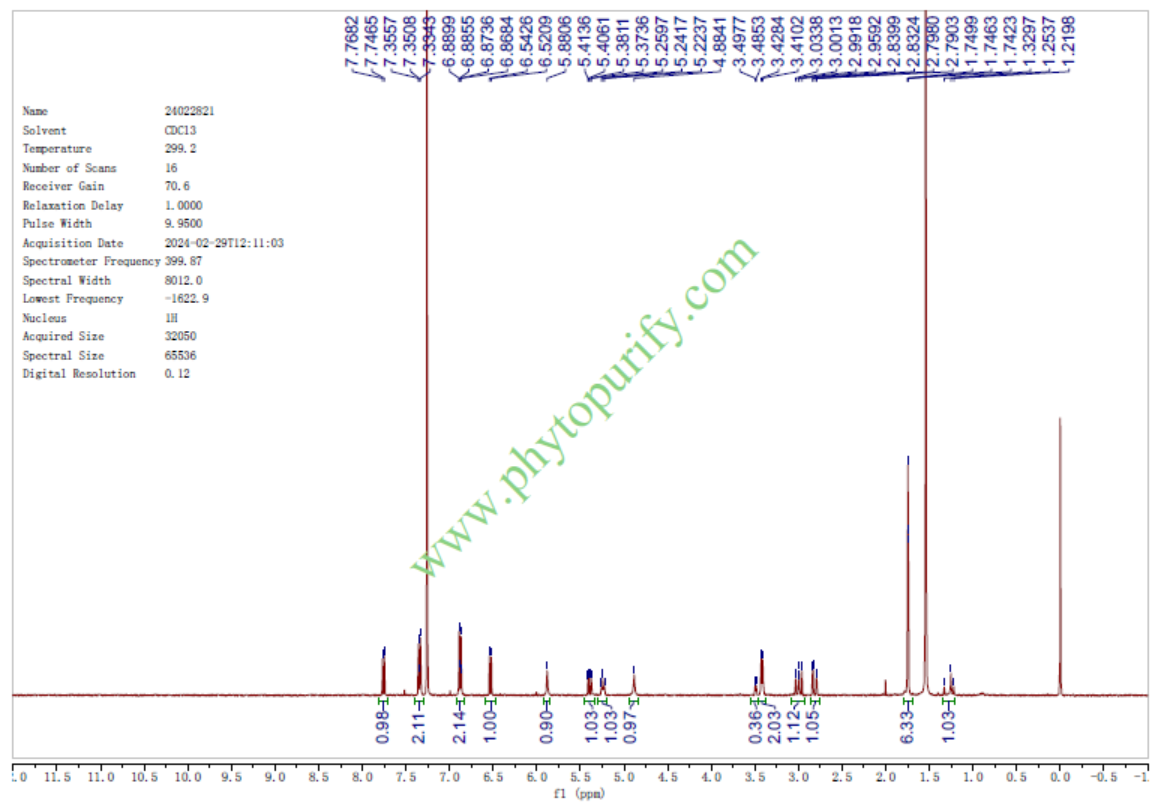
HNMR of Isobavachin
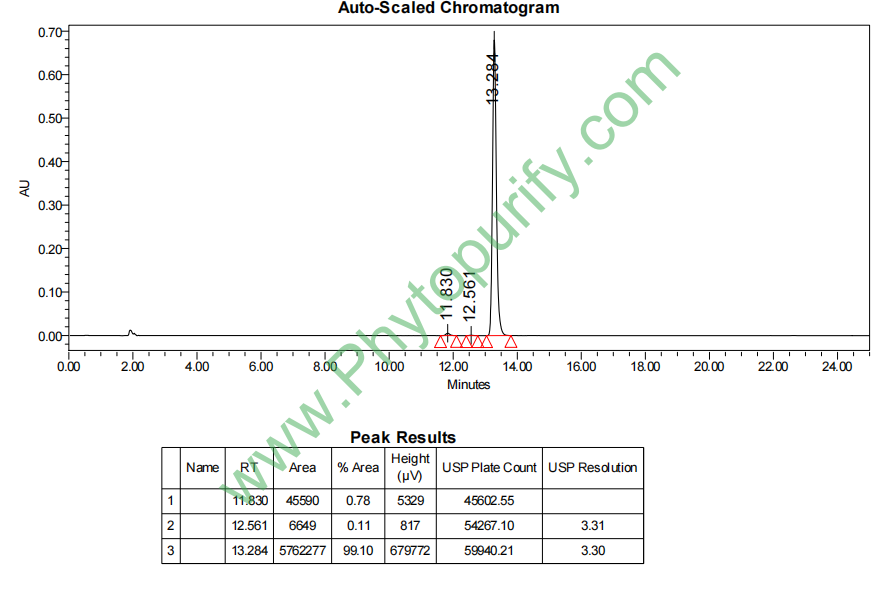
HPLC of Isobavachin
Storage conditions:Short-term storage at 2~8℃, long-term storage at -20 ~ -80℃
66.7600
3.9544
3.9402
.0950
3.1422
35.3032
Low
91.0645
3.0676
No
No
Yes
No
Yes
No
0.0
Yes
Yes
Yes
No
Natural products, as an important source of drug discovery, play an irreplaceable role in the long history of human fight against diseases. Flavonoids, as one of the widely distributed, structurally diverse, and active secondary metabolites, have always been a hot topic in medicinal chemistry and pharmacology research. Among numerous flavonoids, Isobavachin has attracted much attention due to its unique chemical structure and significant biological activity. Isoflavones of Fructus Psorale are a type of isopentenyl flavonoid mainly derived from the leguminous plant Fructus Psorale(Psoralea corylifolia L. Dry and ripe fruits. Psoralea, as a traditional Chinese medicine, has the effects of warming the kidneys and promoting yang, regulating qi and relieving asthma, warming the spleen and stopping diarrhea. Its chemical composition is complex, including coumarins (such as psoralen and isopsoren), flavonoids (such as psoralen flavonoids and isopsoren flavonoids), and monoterpene phenols. Among them, isopsoralen flavonoids exhibit unique physicochemical properties and pharmacological activities that differ from ordinary flavonoids due to a prenyl group attached to the 8th position of the A ring. Recent studies have revealed that isopsoralen flavone not only has classic antioxidant activity, but also shows potential role in promoting neuronal differentiation, regulating protein isopentenylation and other aspects. At the same time, its ability to regulate a variety of disease related targets (such as AMPK, STAT3, TLR4, etc.) such as breast cancer has also attracted widespread attention. This article aims to provide a systematic review of the chemical structure, plant origin, pharmacological activity, mechanism of action, pharmacological evaluation, and clinical application prospects of isopsoralen flavonoids, in order to provide reference for the in-depth research and development of this natural product.
The chemical name of Isobavachin is Isobavachin, and its CAS registration number is 31524-62-6. From a chemical structure perspective, isopentenyl flavonoids belong to the flavonoid class of flavonoids. Its parent nucleus structure is 2-phenylchromenone (flavonoid), with a 3,3-dimethylallyl (i.e. isopentenyl) side chain attached at position 8 of the A ring. This structural feature is the key distinguishing factor from other flavonoids. The introduction of isopentenyl not only increases the lipophilicity of the molecule, but may also affect its interaction with biological targets by altering its spatial conformation and electronic distribution. The molecular formula of isopsoralen flavonoids is C ₂₀ H ₂₀ O ₄, with a molecular weight of 324.3760 g/mol. Its theoretical LogP value is 3.9544, indicating that the compound has moderate lipid solubility, which is beneficial for its penetration of cell membranes, but may also affect its solubility and distribution in aqueous environments. The topological polar surface area (TPSA) is 66.7600 Å ², which is at a moderate level and suggests that it may have some oral absorption potential, but may also be influenced by intestinal transporters. The water solubility parameter is 0.0950 mg/mL, indicating its low solubility in water, which to some extent limits its bioavailability and poses challenges for drug formulation development. In terms of drug properties, computer prediction models show that isoflavones have low blood-brain barrier permeability, which means they may have a lower off target risk in the treatment of central nervous system diseases, but may also limit their direct effects on brain diseases. In addition, hERG inhibition prediction is negative, indicating a low risk of cardiac toxicity; The Ames test result is 0.0, indicating that it has no significant mutagenicity in standard testing. These preliminary pharmacological parameters provide a favorable safety basis for the further development of isopsoralen flavonoids.
Isoflavones of Fructus Psoraleae are mainly derived from the leguminous plant Fructus Psoraleae(Psoralea corylifolia L.)。 Psoralea is native to China, India, Myanmar, and other regions, and is mainly distributed in provinces such as Sichuan, Henan, Anhui, and Yunnan in China. Its dried and mature fruit (i.e. Chinese herbal medicine Psoralea) is the main medicinal part. In addition to Fructus Psoraleae, isoflavones from Fructus Psoraleae have also been found in a few other plants, such as certain leguminous plants, but their content is usually lower. Therefore, Fructus Psorale is currently the most important and economical natural source for obtaining isoflavones from Fructus Psorale.
The method of extracting flavonoids from Fructus Psoraleae is mainly based on its physicochemical properties, especially its lipid solubility and good solubility in organic solvents. Traditional extraction methods include solvent extraction, reflux extraction, etc. Common extraction solvents include ethanol, methanol, ethyl acetate, etc. Due to its good solubility in ethanol, low toxicity, and easy recovery, isopsoralen flavonoids are commonly extracted in laboratory and industrial solvents using ethanol aqueous solutions (such as 70% -95% ethanol). The extraction process usually involves crushing the fruit of Fructus Psorale, soaking or refluxing it with a solvent at room temperature or heating conditions, and then filtering and concentrating to obtain the crude extract.
In order to obtain high-purity isopsoralen flavonoids, further separation and purification of the crude extract are required. Common separation and purification techniques include:
1. Column chromatography This is the most classic separation method. Commonly used silica gel column chromatography involves gradient elution using mixed solvents such as petroleum ether ethyl acetate or chloroform methanol in different ratios. In addition, polyamide column chromatography and Sephadex LH-20 gel column chromatography are also commonly used for the separation of flavonoids.
2. High performance liquid chromatography method For preparation grade separation, preparative HPLC can obtain high-purity monomer compounds. Usually, a reverse phase C18 chromatographic column is used, with methanol water or acetonitrile water as the mobile phase.
3. High-speed countercurrent chromatography This is a liquid-liquid distribution chromatography technique that does not require a solid support and avoids irreversible adsorption of the sample on the stationary phase. It has the advantages of high separation efficiency and high sample recovery rate, and is particularly suitable for the separation of flavonoids.
In recent years, with the promotion of green chemistry concepts, some new extraction techniques such as ultrasound assisted extraction, microwave-assisted extraction, supercritical fluid extraction, etc. have also been applied to the extraction of active ingredients in Fructus Psorale. These methods have the advantages of short extraction time, low solvent dosage, and high extraction efficiency, and are expected to become effective supplements to traditional methods.
In recent years, significant progress has been made in the pharmacological activity research of isoflavones from Fructus Psorale, covering multiple aspects such as antioxidant, neuroprotective, anti-tumor, anti-inflammatory, and antibacterial effects.
1. Antioxidant activity
This is one of the earliest discovered and studied activities of isoflavones from Fructus Psorale. As a type of flavonoid compound, the phenolic hydroxyl group in its molecular structure (especially the ortho dihydroxy group on the B ring) is an effective free radical scavenging group. Research has shown that isoflavones from Fructus Psorale can effectively scavenge DPPH free radicals, ABTS cationic free radicals, and inhibit lipid peroxidation. Its antioxidant activity may be related to its chelation of metal ions and activation of endogenous antioxidant enzymes such as superoxide dismutase (SOD) and glutathione peroxidase (GSH Px). This activity is one of the foundations for its other pharmacological effects, such as neuroprotection and anti-inflammatory effects.
2. Neuroprotection and promotion of neuronal differentiation
In recent years, the potential of isoflavones in the field of neurological diseases has attracted widespread attention. Research has found that it can promote the differentiation of neural stem cells or PC12 cells towards neurons. The mechanism may be related to the activation of neurotrophic factor signaling pathways, such as the TrkB/ERK pathway. More importantly, studies have suggested that isoflavones from Fructus Psorale may affect neuronal differentiation and function by regulating the process of protein prenylation. Protein isoprenylation is an important post-translational modification that is crucial for membrane localization and signal transduction of small G proteins such as Ras and Rho. The isopentenyl side chain of isopsoralen flavonoids may mimic or interfere with endogenous isopentenyl donors (such as farnesyl pyrophosphate FPP, geranyl geranyl pyrophosphate GGPP), thereby affecting the isopentenylation levels of related proteins and regulating cell proliferation, differentiation, and survival. This discovery provides new ideas for the treatment of neurodegenerative diseases such as Alzheimer's disease and Parkinson's disease.
3. Antitumor activity
Isopsoralen flavone has shown anti proliferation and pro apoptosis activities in a variety of tumor cell lines, of which breast cancer is the most in-depth study. Studies have shown that isopsoralen can inhibit the proliferation of breast cancer cells (such as MCF-7, MDA-MB-231) and induce their apoptosis. Its mechanism of action involves multiple signaling pathways and targets. For example, it can inhibit cell growth and protein synthesis by activating the AMPK (PRKAA1) signaling pathway and suppressing the mTOR pathway. At the same time, it can downregulate the expression of anti apoptotic proteins MCL1 and BCL2, upregulate the expression of pro apoptotic protein Bax, thereby promoting cell apoptosis through the mitochondrial pathway. In addition, isopsoralen has also been found to inhibit the NOTCH1 signaling pathway, which plays a key role in self-renewal and tumorigenesis of breast cancer stem cells. For refractory subtypes such as triple negative breast cancer, isopsoralen also showed certain activity, which may be related to the inhibition of STAT3 signaling pathway and TLR4/MyD88/NF - κ B inflammatory pathway. In addition, it can downregulate the expression of IDO1 (indoleamine 2,3-dioxygenase 1), which may help reverse immune suppression in the tumor microenvironment. It is worth noting that the regulatory effect of isopsoralen on estrogen receptor beta (ESR2) is also worthy of attention, which may affect its efficacy in hormone dependent breast cancer. Finally, it can also inhibit tyrosinase (TYR) activity and potentially reverse multidrug resistance in tumor cells by inhibiting ABCB1 (P-glycoprotein).
4. Anti inflammatory activity
Isopsoralen flavonoids have shown anti-inflammatory effects in various inflammatory models. It can inhibit the production of nitric oxide (NO), prostaglandin E2 (PGE2), and pro-inflammatory cytokines (such as TNF - α, IL-1 β, IL-6) in macrophages stimulated by lipopolysaccharide (LPS). The mechanism is related to the inhibition of TLR4 signaling pathway, nuclear translocation of NF - κ B, and phosphorylation of MAPK pathway. These anti-inflammatory activities provide a theoretical basis for their application in the treatment of chronic inflammation related diseases such as inflammatory bowel disease and arthritis.
5. Other activities
In addition to the aforementioned activities, isoflavones have been reported to have antibacterial properties (such as against Staphylococcus aureus and Propionibacterium acnes), anti osteoporosis properties (by promoting osteoblast differentiation and inhibiting osteoclast activity), hepatoprotective properties (through antioxidant and anti-inflammatory mechanisms), and estrogen like or anti estrogen like activities (depending on cell type and concentration). These diverse pharmacological activities indicate that isopsoralen flavonoids are a natural product with multi-target action characteristics.
The pharmacological activity of isoflavones from Fructus Psorale is the result of their interactions with multiple molecular targets. Based on existing research, its mechanism of action can be summarized as follows:
1. Regulating cell proliferation and apoptosis signaling pathways
- AMPK/mTOR pathway Isopsoralen flavonoids activate AMPK (PRKAA1), thereby inhibiting the downstream mTOR signaling pathway, thereby suppressing protein synthesis and cell cycle progression, and exerting anti proliferative effects. This is one of the core mechanisms of its inhibitory effect on breast cancer and other tumor cells.
- BCL2 family proteins Isopsoralen flavonoids downregulate the expression of anti apoptotic proteins MCL1 and BCL2, while upregulating pro apoptotic protein Bax, alter mitochondrial membrane potential, promote cytochrome c release, activate caspase cascade reaction, and ultimately induce cell apoptosis.
- NOTCH1 signal pathway In breast cancer stem cells, isopsoralen can inhibit the cutting and activation of NOTCH1 receptor, thus blocking the expression of its downstream target genes (such as Hes1, Hey1), and inhibiting the self-renewal and tumor initiation ability of tumor stem cells.
- STAT3 signaling pathway Isopsoralen flavonoids can inhibit the phosphorylation and nuclear translocation of STAT3, reduce its transcriptional activity, and thus suppress the expression of downstream target genes (such as Cyclin D1, Survivor, VEGF), exerting anti-tumor and anti angiogenic effects.
2. Regulating the immune and inflammatory microenvironment
- TLR4/NF - κ B pathway Isopsoralen flavonoids can directly bind to or inhibit the activity of TLR4 receptors, block downstream MyD88 dependent signal transduction, inhibit phosphorylation and degradation of I κ B α, prevent nuclear translocation of NF - κ B p65 subunit, thereby reducing the production of pro-inflammatory cytokines (TNF - α, IL-6) and inflammatory mediators (NO, PGE2).
- IDO1 target Isopsoralen flavonoids can downregulate the expression and activity of IDO1. IDO1 is a key enzyme in tryptophan metabolism. In the tumor microenvironment, overexpression of IDO1 consumes tryptophan, inhibits T cell function, and promotes immune escape. Inhibiting IDO1 helps to restore anti-tumor immune response.
3. Affects protein post-translational modifications
- Protein isopentenylation This is a unique and novel mechanism of action of isopsoralen flavonoids. The isopentenyl side chain on its molecule may act as a substrate analogue for farnesyltransferase (FTase) or geranyl geranyl transferase (GGTase), competitively inhibiting the isopentenylation modification of small G proteins such as Ras and Rho. The abnormality of this modification can affect the membrane localization and signal transduction functions of these proteins, thereby affecting cell proliferation, differentiation, migration, and survival. In neurons, this mechanism may promote their differentiation.
4. Regulating hormone receptors and drug transporters
- ESR2 (estrogen receptor beta)Isopsoralen flavonoids have a regulatory effect on ESR2, which may manifest as agonists or antagonists depending on the cellular environment. This makes it play a complex role in hormone related diseases (such as breast cancer and osteoporosis).
- ABCB1 (P-glycoprotein)Isopsoralen flavonoids can inhibit the activity of ABCB1, thereby increasing the accumulation of chemotherapy drugs in drug-resistant tumor cells and reversing multidrug resistance. This may be achieved by directly binding to ABCB1 or influencing its expression.
5. Other targets
- TYR (Tyrosinase)Isopsoralen flavonoids can inhibit the activity of tyrosinase, thereby reducing the synthesis of melanin, which provides a basis for their application in the treatment of pigmentary diseases such as melasma.
In summary, isoflavones of Fructus Psorale form a complex regulatory network by acting on multiple targets such as AMPK, MCL1, BCL2, NOTCH1, IDO1, TLR4, STAT3, ESR2, TYR, ABCB1, etc., thus exerting their diverse pharmacological activities. This multi-target mode of action is not only advantageous (possibly resulting in synergistic effects), but also brings complexity to its mechanism research and clinical applications.
The development of isoflavones from Fructus Psorale into clinical drugs requires a systematic evaluation of their pharmacological properties, particularly their pharmacokinetic characteristics.
1. Analysis of pharmacological parameters
As mentioned earlier, the molecular weight (324.38 Da) and LogP value (3.95) of isopsoralen flavonoids conform to the Lipinski Five Rules (molecular weight<500, LogP<5), indicating their basic potential as oral drugs. TPSA (66.76 Å ²) is also within an acceptable range. However, its poor water solubility (0.095 mg/mL) is one of the main obstacles to its medicinal properties. Low water solubility can lead to incomplete oral absorption, low bioavailability, and may cause food effects. In addition, the low permeability of the blood-brain barrier may reduce central nervous system side effects, but it also limits its application in the treatment of brain diseases. The negative results of hERG inhibition and Ames test provide preliminary assurance for its safety.
2. Pharmacokinetic studies
At present, there is relatively limited systematic research on the pharmacokinetics of isoflavones in vivo, but some preliminary findings have been made:
- absorb Due to poor water solubility, the oral absorption of isoflavones from Fructus Psorale may be incomplete and vary greatly among individuals. Its absorption may be affected by the efflux of intestinal transporters such as BCRP and MRP2. Improving its bioavailability is a key challenge in formulation development.
- distribution Isopsoralen flavonoids have moderate lipid solubility and theoretically can be widely distributed in various tissues within the body. Its binding rate with plasma proteins (such as albumin) may be high, which can affect its free drug concentration and distribution volume.
- Metabolism Flavonoids mainly undergo phase II metabolism in the body, such as glucuronidation, sulfation, etc. The isopentenyl side chain of isopsoralen flavonoids may also undergo phase I metabolism (such as oxidation and epoxidation). The liver and intestines are its main metabolic sites. The activity of metabolites may differ from that of the parent drug and further research is needed.
- excretion Isoflavones and their metabolites are mainly excreted through bile and urine. Its half-life may be short and requires frequent administration or development of sustained-release formulations.
3. Formulation strategy
To overcome the problems of poor water solubility and low bioavailability, the following formulation strategies can be considered:
- Solid dispersion Dispersing isopsoralen flavonoids in water-soluble polymers (such as PVP, PEG) to form an amorphous form can significantly improve their solubility and dissolution rate.
- Liposomes or nanoparticles Encapsulating drugs in liposomes or polymer nanoparticles can improve their water dispersibility, stability, and targeting.
- Cyclodextrin inclusion complex The use of β - cyclodextrin or its derivatives to encapsulate isoflavones can improve their water solubility and stability.
- Phospholipid complex Forming complexes with phospholipids can improve their lipid solubility and transmembrane absorption capacity.
Based on its rich pharmacological activity and relatively clear molecular mechanism, isopsoralen flavonoids have shown broad application prospects in multiple disease fields.
1. Tumor treatment
Isopsoralen flavone has the most prominent potential in the treatment of breast cancer. Its multi-target effects (AMPK, STAT3, NOTCH1, IDO1, etc.) not only directly inhibit tumor cell proliferation and induce apoptosis, but also regulate the tumor microenvironment, reverse immune suppression and drug resistance. Therefore, it is expected to serve as:
- Chemosensitizer Combined with conventional chemotherapy drugs such as paclitaxel and doxorubicin, it reverses drug resistance and improves chemotherapy efficacy by inhibiting ABCB1.
- Immunotherapy adjuvant By inhibiting IDO1 and combining it with immune checkpoint inhibitors such as PD-1/PD-L1 antibodies, the anti-tumor immune response is enhanced.
- Targeting specific subtypes: Isopsoralen flavone may provide a new therapeutic option for subtypes lacking effective targeting drugs such as triple negative breast cancer.
2. Neurodegenerative diseases
The role of isoflavones in promoting neuronal differentiation and regulating protein isoprenoidization provides a new approach for the treatment of neurodegenerative diseases such as Alzheimer's disease and Parkinson's disease. However, its low blood-brain barrier permeability is the main obstacle. Future research can focus on:
- Developing a brain targeted delivery system By utilizing strategies such as nanocarriers and receptor-mediated cross cellular transport, the concentration of drugs in the brain can be increased.
- Explore alternative routes of administration If administered through the nasal cavity, the drug can bypass the blood-brain barrier and be directly delivered to the central nervous system.
3. Inflammation and immune related diseases
Its strong anti-inflammatory activity (via the TLR4/NF - κ B pathway) makes it potentially applicable in the treatment of chronic inflammatory diseases such as inflammatory bowel disease, rheumatoid arthritis, and psoriasis. Local administration (such as topical preparations, enemas) may be the preferred route of consideration.
4. Metabolic disorders
By activating AMPK pathway, isopsoralen may be beneficial to improve insulin resistance, regulate lipid metabolism, and treat type 2 diabetes and non-alcoholic fatty liver disease.
5. Skin diseases
Its inhibitory effect on tyrosinase activity makes it a candidate ingredient for whitening or treating pigmentary diseases such as melasma and freckles. Its antioxidant and anti-inflammatory activities also contribute to skin anti-aging and repair.
Outlook and Challenges
Despite its broad prospects, the clinical translation of isoflavones from Fructus Psorale still faces many challenges:
1. Pharmacokinetic optimization Low water solubility and bioavailability are the primary issues. We need to develop efficient formulation technology.
2. In depth analysis of the mechanism of action The specific contribution and synergistic effect of its multi-target action need to be further studied, especially the unique mechanism of protein isoprenylation.
3. In vivo efficacy and safety verification Currently, research is mostly focused on in vitro and animal models, requiring more high-quality in vivo pharmacological and long-term toxicity studies.
4. Study on Structure Activity Relationship Systematically study the effects of isopentenyl side chains and other structural modifications on activity and pharmacokinetic properties, providing guidance for structural optimization.
5. Quality Control and Standardization Establish stable and controllable extraction and purification processes and quality standards to ensure consistency in subsequent research and development.
As an important active ingredient in traditional Chinese medicine Fructus Psorale, isoflavones exhibit diverse pharmacological activities including antioxidant, neuroprotective, anti-tumor, and anti-inflammatory effects due to their unique structure of isopentenyl flavonoids. Its mechanism of action involves multiple key signaling pathways and molecular targets, such as AMPK, STAT3, TLR4, NOTCH1, IDO1, etc. Especially by regulating the novel mechanism of protein isoprenylation, it provides a new perspective for drug discovery. Although the issues of poor water solubility and low bioavailability in drug development urgently need to be addressed, preliminary safety evaluations (low hERG inhibition risk, no mutagenicity) have laid the foundation for its development. With the progress of modern pharmaceutical chemistry, pharmaceutics and pharmacology technology, through reasonable structural modification and preparation design, it is expected to overcome its inherent defects and transform this natural product into an effective drug for treating complex diseases such as breast cancer, neurodegenerative diseases and chronic inflammation. In the future, in-depth exploration of its mechanism of action, optimization of its pharmacokinetic properties, and rigorous preclinical and clinical research will be the key to promoting the transition of isoflavones from laboratory to clinical applications.
