| Catalog No | Package | Original Price | Price | Inventory | Quantity | Operating |
|---|---|---|---|---|---|---|
| BPF2219-5mg | 5mg | $420.00 | Sign in |
|


Storage conditions:Short-term storage at 2~8℃, long-term storage at -20 ~ -80℃
66.7600
4.4858
4.4612
.0226
5.1483
12.7271
Low
92.7839
2.6976
Yes
Yes
Yes
No
Yes
Yes
0.6
No
Yes
Yes
Yes
Natural products, as an important source of drug discovery, play an irreplaceable role in human health maintenance and disease treatment. Among the numerous natural compounds with biological activity, they are derived from the leguminous plant Psoralea(Psoralea corylifolia L. The series of chalcone compounds in () have attracted much attention due to their unique chemical structure and diverse pharmacological activities. Bavachromene, as a typical isopentenyl chalcone derivative, has become one of the research hotspots in the fields of natural product chemistry and pharmacology since its isolation and identification from Psoralea seeds.
Psoralea, as a traditional Chinese medicine, is considered to have the effects of tonifying kidney and yang, regulating qi and asthma, warming spleen and stopping diarrhea in traditional Chinese medicine theory. It is commonly used to treat diseases such as low back and knee pain, impotence, nocturnal emissions, frequent urination and enuresis caused by insufficient kidney yang. Modern pharmacological research has confirmed that extracts of Fructus Psorale and their active ingredients have various biological effects such as estrogen like activity, antioxidant, anti-inflammatory, anti-tumor, antibacterial, and anti osteoporosis. Among them, as one of the active ingredients with high content in Fructus Psorale, the chromone ring and chalcone skeleton in its chemical structure endow the molecule with unique physicochemical properties and biological activity characteristics.
In recent years, with the deepening of research on natural estrogen receptor modulators (SERMs), psoralenone has received widespread attention due to its significant estrogen like activity. Compared to synthetic estrogens, estrogen like compounds from natural sources typically have higher safety and may exhibit tissue-specific estrogen receptor modulation, providing important clues for the development of novel hormone replacement therapy (HRT) drugs. Meanwhile, the potential application value of this compound in antioxidant stress, skin protection, neuroprotection, and other aspects is gradually being revealed. This article will provide a systematic review of the research progress of chalcone from the aspects of chemical structure, plant origin, pharmacological activity, molecular mechanism, pharmacological evaluation, and clinical application prospects, in order to provide scientific basis for the in-depth development and utilization of this natural product.
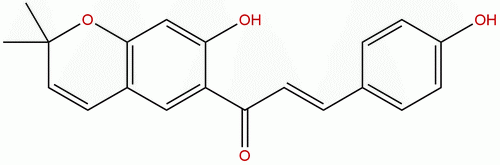
The chemical name of Bavachromene is (2E) -1- (2,2-dimethyl-2H-1-benzopyran-6-yl) -3- (4-hydroxyphenyl) -2-propen-1-one, with a molecular formula of C ₂₁ H ₂ O3 and a molecular weight of 322.3600 g/mol. Its chemical structure consists of three main parts: a chalcone core (α, β - unsaturated ketone structure), a p-hydroxyphenyl substituent, and a 2,2-dimethyl-2H-phenylpyran (selene) ring system.
The chalcone skeleton, as the core structure of this type of compound, endows the molecule with a good electronic conjugation system due to its α, β - unsaturated ketone units. This not only affects its UV absorption characteristics, but also serves as the key structural basis for its interaction with biological targets. The presence of a selene ring is an important characteristic that distinguishes this compound from other simple chalcones. The 2,2-dimethyl substituent in this ring system increases the lipophilicity of the molecule, while the double bond structure within the ring further expands the conjugated system of the molecule. The phenolic hydroxyl group on the hydroxyphenyl group is an important hydrogen bond donor, playing a crucial role in the recognition process between molecules and acceptors.
From a stereochemical perspective, the α, β - unsaturated double bonds of chalcones typically exist in the E configuration (trans), which is thermodynamically more stable. The crystal structure analysis of psoralenone confirmed its E-configuration, which gives the molecule a certain planarity and facilitates binding with the hydrophobic cavities of the target protein.
The physicochemical properties of chalcone from Fructus Psorale have a significant impact on its pharmacokinetic behavior and drug properties. The lipid water partition coefficient (LogP) of this compound is 4.4858, indicating its strong lipid solubility, which is consistent with the presence of multiple aromatic rings and isopentenyl structural units in its molecule. Higher lipid solubility is beneficial for compounds to penetrate biological membranes, but it may also lead to poor water solubility, affecting their oral bioavailability.
The topological polar surface area (TPSA) is 66.7600 Å ², which is at a moderate level, indicating that the molecule has certain polarity characteristics, mainly derived from phenolic hydroxyl and carbonyl oxygen atoms. According to the "Rule of Five" principle, compounds with TPSA less than 140 Å ² typically have good oral absorption potential, and the TPSA value of psoralenone chalcone meets this requirement.
The water solubility parameter is 0.0226 mg/mL, which belongs to insoluble compounds. This characteristic is consistent with its high LogP value, indicating the need for appropriate solubilization techniques in drug formulation development, such as cyclodextrin inclusion, solid dispersion, lipid nanoparticles, etc., to improve their solubility and dissolution rate.
It is worth noting that the blood-brain barrier (BBB) permeability of this compound is evaluated as "low", which means that it is not easily accessible to the central nervous system in the systemic circulation. This characteristic can be seen as an advantage to some extent, as many natural estrogen like compounds may produce adverse reactions through central action, and low BBB permeability can reduce the risk of central neurotoxicity. Meanwhile, the hERG inhibition evaluation result is' no ', indicating a low risk of cardiac toxicity, which is an important positive indicator in drug safety evaluation.
The Ames test result was 0.6, indicating that the compound did not exhibit significant mutagenicity in the bacterial recovery mutation test and had a low risk of genetic toxicity. The comprehensive analysis of these pharmacological parameters provides important reference for subsequent drug development.
Psoralen chalcone is mainly derived from the leguminous plant Psoralen(Psoralea corylifolia L., Also known as Cullen corylifolium Dry and mature seeds of (L.) Medik. Psoralea is native to Asian regions such as China, India, and Sri Lanka, and is mainly distributed in provinces such as Sichuan, Henan, Anhui, and Shaanxi in China. As an annual herbaceous plant, the medicinal part of Fructus Psorale is its fruit (seed), which is usually harvested in autumn when the fruit is ripe.
In addition to psoralen, this compound has also been found in small amounts in other plants, such as certain leguminous plants (e.g Psoralea Belonging to other species and mulberry plants, but the seeds of Psoralea are still its main source. Psoralea seeds are rich in various active ingredients, including furan coumarins (such as psoralen and isopsoralen), isoflavones (such as daidzein and genistein), chalcones (such as psoralenone chalcones and psoralen dihydroflavones), and monoterpene phenols. Among them, the content of chalcone in psoralen varies depending on the place of origin, harvesting season, and processing method, usually ranging from 0.1% to 0.5%.
The extraction method of chalcone from psoralen is mainly based on its physicochemical properties, especially its lipid solubility and moderate polarity characteristics. Traditional extraction methods include organic solvent extraction, ultrasound assisted extraction, microwave-assisted extraction, etc., while modern separation techniques often use chromatographic methods for purification.
Organic solvent extraction method It is the most commonly used method. Given that the LogP value of chalcone in psoralen is 4.4858, moderately polar organic solvents such as ethanol, methanol, ethyl acetate, etc. are ideal extraction solvents. Usually, 70% -95% ethanol is used for reflux extraction, with a solid-liquid ratio of 1:10-1:20, an extraction temperature of 60-80 ° C, and an extraction time of 1-3 hours. After concentration, the extraction solution can be further enriched with the target components using liquid-liquid extraction method. The commonly used solvent systems are petroleum ether ethyl acetate or chloroform methanol system.
Ultrasonic assisted extraction method By utilizing the cavitation effect and mechanical vibration of ultrasound, the extraction efficiency can be significantly improved and the extraction time can be shortened. Under the conditions of ultrasound power of 200-500W and frequency of 40-60kHz, the extraction time can be shortened to 30-60 minutes, and the extraction rate can be increased by 20% -30% compared to traditional reflux method.
Microwave assisted extraction method By utilizing the penetrability and selective heating properties of microwaves, the cell wall structure can be rapidly disrupted, promoting the dissolution of target components. Microwave power of 300-700W, extraction time of 5-15 minutes, high extraction efficiency and low solvent dosage.
In terms of purification,Silica gel column chromatography It is the most commonly used separation method. Using petroleum ether ethyl acetate or chloroform methanol as elution systems, gradient elution can effectively separate chalcone from other coexisting chalcone components.High performance liquid chromatography (HPLC) It can be used for high-purity preparation, usually using a C18 reverse phase column with methanol water or acetonitrile water as the mobile phase, and a detection wavelength of 280-320nm. In addition,High Speed Counter Current Chromatography (HSCCC) As a liquid-liquid distribution chromatography technique, it has also shown good application prospects in the preparation and separation of chalcone from psoralen, with advantages such as large sample loading, low solvent consumption, and high recovery rate.
In recent years,Supercritical fluid extraction (SFE) Technology has also been applied to the extraction of active ingredients from Fructus Psorale. By using CO ₂ as the extraction solvent and adding an appropriate amount of ethanol as the entrainer, under pressure of 20-30 MPa and temperature of 40-60 ° C, an extract rich in chalcone of psoralen can be obtained, and the product has no organic solvent residue, which is suitable for applications in the food and pharmaceutical fields.
The most notable pharmacological activity of psoralenone chalcone is its estrogen like effect. Multiple in vitro and in vivo studies have confirmed that this compound can bind to the estrogen receptor (ER), activate downstream signaling pathways, and produce biological effects similar to 17 β - estradiol. In the MCF-7 human breast cancer cell model, psoralen chromochalcone can promote cell proliferation in a concentration dependent manner, and this effect can be completely blocked by the estrogen receptor antagonist ICI 182780, indicating that its effect depends on the activation of ER. Further receptor binding experiments showed that the compound has affinity for both ER α and ER β, but slightly higher selectivity for ER β than for ER α, which may be related to its unique chromogenic ring structure.
In the ovariectomy rat model, psoralenone can significantly increase uterine weight, promote keratinization of vaginal epithelial cells, and increase serum estrogen levels, exhibiting typical estrogen like effects. It is worth noting that compared with estradiol, this compound has a more significant effect on bone tissue, while its stimulating effect on the uterus is relatively weak, suggesting that it may have tissue selective estrogen receptor regulatory activity, which is consistent with the characteristics of ideal selective estrogen receptor modulators (SERMs).
Psoralen chalcone exhibits significant antioxidant activity, and its mechanism of action involves multiple levels. In the chemical antioxidant system, this compound can effectively scavenge 1,1-diphenyl-2-trinitrophenylhydrazine (DPPH) free radicals, 2,2 '- diazobis (3-ethylbenzothiazoline-6-sulfonic acid) (ABTS) cationic free radicals, and has strong iron ion reducing ability (FRAP). Its antioxidant capacity is closely related to the phenolic hydroxyl group and conjugated double bond system in its molecular structure. The phenolic hydroxyl group can serve as a hydrogen atom donor, directly neutralizing free radicals; Conjugated systems help stabilize free radical intermediates.
At the cellular level, psoralenone can protect various cells from oxidative stress damage. In human keratinocytes (HaCaT), this compound can alleviate hydrogen peroxide (H ₂ O ₂) - induced cytotoxicity, reduce intracellular reactive oxygen species (ROS) levels, and increase the activity of superoxide dismutase (SOD), catalase (CAT), and glutathione peroxidase (GPX). In fibroblasts, psoralenone can inhibit the expression of matrix metalloproteinases (MMP-1 and MMP-3) induced by ultraviolet radiation, reduce collagen degradation, and demonstrate the potential to resist skin photoaging.
Psoralen chalcone exhibits anti-inflammatory activity in various inflammatory models. In macrophages RAW264.7 stimulated by lipopolysaccharide (LPS), this compound can inhibit the production of nitric oxide (NO) and prostaglandin E ₂ (PGE ₂), downregulate the expression of inducible nitric oxide synthase (iNOS) and cyclooxygenase-2 (COX-2). Meanwhile, it can also inhibit the release of pro-inflammatory cytokines such as tumor necrosis factor - α (TNF - α), interleukin-1 β (IL-1 β), and interleukin-6 (IL-6).
In an in vivo inflammatory model, psoralenone can alleviate carrageenan induced toe swelling in rats, reduce myeloperoxidase (MPO) activity and malondialdehyde (MDA) content in inflammatory tissues. These anti-inflammatory effects may be related to their inhibition of the nuclear factor kappa B (NF - κ B) signaling pathway and activation of the nuclear factor E2 related factor 2 (NRF2) pathway.
In addition to the main activities mentioned above, psoralenone also exhibits various other pharmacological effects. In terms of anti osteoporosis, this compound can promote the proliferation and differentiation of osteoblasts MC3T3-E1, increase alkaline phosphatase (ALP) activity and osteocalcin secretion, while inhibiting osteoclast formation and bone resorption activity. In terms of neuroprotection, psoralenone can alleviate the neurotoxicity induced by β - amyloid protein (A β), reduce intracellular calcium overload, inhibit mitochondrial dysfunction, and activate apoptotic signaling pathways. In addition, the compound also exhibits certain antibacterial activity and has inhibitory effects on Staphylococcus aureus and Staphylococcus epidermidis.
The estrogenic activity of psoralenone chalcone is mainly achieved through the activation of the estrogen receptor (ER) - mediated genomic signaling pathway. Molecular docking studies have shown that the chromone ring and chalcone skeleton of the compound can be embedded in the ligand binding domain (LBD) of ER. The phenolic hydroxyl group forms hydrogen bonds with Glu353 and Arg394 of ER, while the hydrophobic portion interacts with amino acid residues such as Leu387 and Phe404. This binding mode is similar to estradiol, but the molecular volume of psoralenone chalcone is larger, which may occupy more space in ER LBD, thereby affecting the conformational changes of receptors and the recruitment of co regulatory factors.
After ER activation, psoralenone can promote ER dimerization and nuclear translocation, bind to estrogen response elements (ERE) in the promoter region of target genes, and regulate the transcription of downstream genes. In addition, the compound can rapidly activate extracellular signal regulated kinase (ERK) and phosphatidylinositol 3-kinase (PI3K)/Akt signaling pathways through non genomic pathways, which may be involved in its cellular protective effects.
The antioxidant activity of psoralen chalcone involves the synergistic action of multiple molecular targets. Among them, nuclear factor E2 related factor 2 (NRF2/NFE2L2) is the core regulatory factor of its antioxidant activity. This compound can promote the dissociation of NRF2 and Kelch like ECH associated protein 1 (KEAP1), stabilize NRF2 and translocate it to the nucleus, bind to antioxidant response elements (ARE), and initiate the transcription of a series of antioxidant enzyme genes.
The downstream target genes regulated by NRF2 include:SOD1(Copper zinc superoxide dismutase) and SOD2 Manganese superoxide dismutase is responsible for converting superoxide anions into hydrogen peroxide;CAT Catalase catalyzes the decomposition of hydrogen peroxide into water and oxygen;GPX1(Glutathione peroxidase 1), which uses glutathione to reduce hydrogen peroxide and organic peroxides;HMOX1(Heme Oxygenase 1) catalyzes the degradation of heme into biliverdin, carbon monoxide, and iron ions, resulting in products with antioxidant and anti-inflammatory activities.
In addition, psoralen chalcone can directly regulate the activity of antioxidant enzymes. Research has shown that this compound can enhance the enzymatic activity of intracellular SOD, CAT, and GPX, partially through transcriptional regulation and partially through direct interaction with enzyme proteins to enhance their catalytic efficiency.
In terms of skin anti photoaging, psoralenone exerts a protective effect by regulating the expression of matrix metalloproteinases (MMPs). Ultraviolet irradiation can activate the mitogen activated protein kinase (MAPK) signaling pathway, upregulate the transcriptional activity of activator protein-1 (AP-1), and thereby promote MMP1(Interstitial collagenase) and MMP3 The expression of matrix lysins leads to the degradation of collagen and elastin in the extracellular matrix.
Psoralen chalcone can inhibit the phosphorylation of c-Jun N-terminal kinase (JNK) and p38 MAPK induced by ultraviolet radiation, block the activation of AP-1, and downregulate the expression of MMP1 and MMP3. Meanwhile, the compound can also activate the NRF2 pathway, induce the expression of antioxidant enzymes, reduce oxidative stress caused by ultraviolet radiation, and indirectly inhibit the activation of MMPs. In addition, psoralen chalcone can upregulate the expression of tissue metalloproteinase inhibitors (TIMPs), further balancing the activity of MMPs and protecting the skin matrix structure.
TYR Tyrosinase is a key rate limiting enzyme in melanin synthesis, and abnormally elevated activity can lead to pigmentation disorders. Psoralen chalcone has an inhibitory effect on tyrosinase, with an IC ₅₀ value in the micromolar range. Molecular mechanism studies have shown that this compound can serve as a mixed inhibitor of tyrosinase, with its chromone ring structure embedded in the active center of the enzyme, coordinating with copper ions. At the same time, the chalcone skeleton binds to the hydrophobic cavity of the enzyme, interfering with the binding of substrates L-tyrosine and L-dopa. This inhibitory effect manifests at the cellular level as a reduction in melanin synthesis and a decrease in the expression of tyrosinase related protein 1 (TRP-1) and TRP-2 in melanocytes.
Based on Lipinski's "Rule of Five" principle, the molecular weight of psoralenone chalcone (322.36 Da) is less than 500 Da, the LogP value (4.4858) is slightly higher than the upper limit of 5.0, the number of hydrogen bond donors (1 phenolic hydroxyl group) is less than 5, and the number of hydrogen bond acceptors (3 oxygen atoms) is less than 10. Overall, the compound meets the requirements for drug likeness, but a high LogP value suggests strong lipid solubility, which may affect water solubility and oral absorption.
The Veber rule further considers the flexibility and polar surface area of molecules. The number of rotatable bonds in chalcone of psoralen is 3 (less than 10), and the TPSA is 66.76 Å ² (less than 140 Å ²), which meets the general requirements for oral medication. However, its water solubility (0.0226 mg/mL) is poor, belonging to BCS Class II (low solubility, high permeability) drugs, and its dissolution characteristics need to be improved through formulation technology.
Based on computer-aided prediction and preliminary experimental data, the pharmacokinetic characteristics of psoralenone chalcone can be summarized as follows:
absorb Due to its high lipid solubility and low water solubility, the oral absorption of this compound may be limited by its dissolution rate. Its Caco-2 cell permeability is predicted to be moderate to high, indicating its good intestinal permeability. However, first pass metabolism may significantly affect its oral bioavailability, as chalcone compounds are prone to glucuronidation and sulfation binding reactions in the liver.
distribution A high LogP value suggests that the compound has a large apparent distribution volume (Vd) and may be widely distributed in tissues. The predicted plasma protein binding rate is high (>90%), mainly binding to albumin and α 1-acid glycoprotein. Low BBB permeability is an important feature that can avoid side effects on the central nervous system.
Metabolism The metabolism of psoralenone mainly involves phase I and phase II reactions. Phase I metabolism includes oxidation reactions catalyzed by cytochrome P450 enzymes (CYP450), mainly occurring on the methyl group of the chromone ring and the double bond of chalcone. Phase II metabolism mainly involves glucuronidation and sulfation of phenolic hydroxyl groups, generating water-soluble complexes that facilitate excretion. The main metabolic enzymes may include CYP3A4, CYP2C9, and UGT1A1.
excretion The compound and its metabolites are mainly excreted through bile and urine. Due to a molecular weight greater than 300 Da, bile excretion may dominate. The enterohepatic circulation may prolong its retention time in the body.
The safety evaluation data of psoralenone chalcone is limited, but existing information suggests that it has good safety characteristics. The Ames test result was negative (0.6), indicating no mutagenicity. The low risk of hERG inhibition suggests a lower risk of cardiac toxicity. However, as a compound with estrogenic activity, its long-term safety still needs attention, especially its potential impact on hormone sensitive tissues such as the breast and endometrium. In addition, high doses may cause liver toxicity, which requires further toxicological studies to clarify.
Psoralen chalcone, as a natural selective estrogen receptor modulator (SERM), has important development value in the field of hormone replacement therapy (HRT). Compared to traditional estrogen replacement therapy, this compound may provide better tissue selectivity, reducing stimulation of the breast and endometrium while exerting beneficial effects on the bone and cardiovascular system. This is particularly important for postmenopausal women who need long-term HRT, which can reduce the risk of breast cancer and endometrial cancer.
Based on its multiple activities of antioxidant, anti MMP, and tyrosinase inhibition, psoralenone has broad application prospects in the field of skin care. Its antioxidant activity can protect skin cells from UV induced oxidative damage, anti MMP activity can delay the degradation of skin collagen, and tyrosinase inhibitory activity can be used to improve pigmentation problems. Therefore, this compound can be used as an active ingredient in functional cosmetics or skin drugs for anti-aging, whitening, and skin repair.
Psoralen chalcone has shown potential in the treatment of osteoporosis by promoting osteoblast differentiation and inhibiting osteoclast activity. Its estrogen like activity can simulate the protective effect of estrogen on bone tissue, while avoiding excessive stimulation of reproductive organs by estrogen. Combined with its antioxidant activity, this compound may provide a multi-target therapeutic strategy for osteoporosis by inhibiting oxidative stress-induced bone loss.
Although the BBB permeability of psoralenone chalcone is low, its application in neurodegenerative diseases is still worth exploring. Research has shown that this compound can indirectly affect the pathological processes of the central nervous system by regulating peripheral oxidative stress and inflammatory responses. In addition, through the design of nano formulations or prodrugs, it is possible to improve their brain delivery efficiency, thereby exerting direct neuroprotective effects.
Despite the multifaceted pharmacological activities and good pharmacological basis of psoralenone, its clinical development still faces several challenges. Firstly, poor water solubility is the main factor limiting its oral bioavailability, and suitable formulation technologies such as liposomes, nanoemulsions, solid dispersions, etc. need to be developed. Secondly, the long-term safety of its estrogen like activity needs to be systematically evaluated, especially its effects in hormone sensitive tissues. In addition, pharmacological properties such as metabolic stability, drug interactions, and toxicity profiles still require further research.
Future research directions should include: optimizing its pharmacokinetic properties and receptor selectivity through structural modification; Using systems pharmacology methods to elucidate its multi-target mechanism of action; Developing new delivery systems to improve their bioavailability; Conduct systematic preclinical toxicology research; And explore its potential application in compound preparations.
Psoralen chalcone, as a representative active ingredient in Psoralea, has become an important molecule in the field of natural product research due to its unique chromone chalcone hybrid structure and multifaceted pharmacological activities. Its estrogen like activity, antioxidant, anti-inflammatory, anti MMP, and tyrosinase inhibitory effects endow this compound with potential applications in various fields such as hormone replacement therapy, anti-aging of the skin, and treatment of osteoporosis. The evaluation of drug properties shows that the compound basically meets the requirements of drug likeness and has low genetic toxicity and cardiotoxicity risks, but the problems of poor water solubility and metabolic stability still need to be solved.
From a molecular mechanism perspective, psoralenone exerts its biological effects by activating the NRF2/ARE antioxidant pathway, regulating ER signaling, inhibiting the MAPK/AP-1 pathway, and directly acting on multiple targets such as tyrosinase. This multi-target mode of action is in line with the concept of "multi-target therapy" in modern drug discovery, providing a theoretical basis for its application in complex diseases.
Looking ahead to the future, with the continuous deepening of research on chalcone, especially the elucidation of its tissue selective estrogen receptor regulation mechanism, and the application of new formulation technologies, this natural product is expected to be developed into an innovative drug with independent intellectual property rights. Meanwhile, its potential as a lead compound for structural optimization cannot be ignored. Through rational molecular design, it is expected to obtain derivatives with stronger activity, higher selectivity, and better pharmacokinetic properties. In summary, psoralenone represents a successful example of discovering new drug molecules from traditional Chinese medicine. Its research not only enriches the content of natural product chemistry, but also provides valuable lead compound resources for modern drug development.
Batch can search by a CAS number,one per line
