Introduction/Overview
Natural products have long been an important treasure trove for innovative drug discovery, among which chalcone compounds have attracted much attention due to their structural diversity and wide range of biological activities. 4-Hydroxylonchocarpin (CAS: 56083-03-5), as a member of the chalcone family, has become a hot topic in pharmacological research in recent years due to its multi-target and multi pathway pharmacological mode of action. This compound was initially isolated from various medicinal plants, and early research revealed its underlying antibacterial and anti-inflammatory properties. With the deepening of research, its more remarkable anti-tumor and anti osteoporosis activities have been gradually revealed, demonstrating great potential as lead compounds or candidate drugs. Especially its role in inducing tumor cell apoptosis and regulating key signaling pathways of bone metabolism provides a new molecular perspective and potential intervention strategies for the treatment of major diseases such as liver cancer and osteoporosis. This article aims to systematically review the chemical properties, plant sources, pharmacological activities, molecular mechanisms of action, pharmacological evaluation, and clinical application prospects of isopsoralene chalcone, in order to provide comprehensive academic references for the in-depth research and development of this compound.
Chemical structure and physicochemical properties
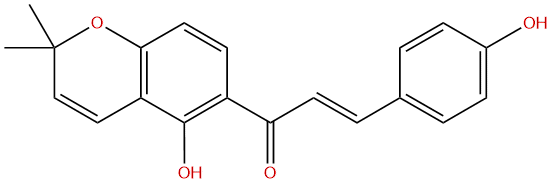
The chemical name of isopsoralene chalcone is (E) -1- (2,4-dihydroxyphenyl) -3- (2,2-dimethyl-2H-1-benzopyran-6-yl) -2-propen-1-one, with a molecular formula of C20H18O4 and a molecular weight of 322.36 g/mol. Its structure belongs to a typical chalcone skeleton, where two aromatic rings (A ring and B ring) are connected by an α, β - unsaturated carbonyl system. Its structural feature is that the A ring is a 2,4-dihydroxy substituted benzene ring, and the B ring is a 2,2-dimethyl-2H chromene (benzodihydropyran) ring. This unique structure of chromene chalcone combines the conjugation activity of chalcone with the hydrophobicity and steric hindrance of chromene ring.
In terms of physical and chemical properties, its calculated lipid water partition coefficient (LogP) is 4.49, indicating that the compound has high lipophilicity, which is consistent with the presence of hydrophobic chromophores and large conjugated systems in its structure. The topological polar surface area (TPSA) is 66.76 Å ², which is relatively small and conducive to transmembrane transport. The water solubility is poor, about 0.0246 mg/mL, indicating that solubilization strategies may need to be considered in formulation development. It is worth noting that its predicted blood-brain barrier permeability is high, suggesting its potential role in central nervous system related diseases. In the early safety screening, its Ames test value was 0.6, indicating a low risk of mutagenicity and no significant hERG potassium channel inhibitory activity, reducing the potential risk of cardiac toxicity. These basic pharmacological parameters lay the foundation for its subsequent optimization and development.
Plant sources and extraction methods
Isopsoralene chalcone is not widely present in all plants, but is mainly isolated from specific genera and species in the Fabaceae and Moraceae families. The main plant sources reported in literature include the genus Psoralea(Psoralea spp.)、Lonchocarpus Belonging (such as Lonchocarpus neuroscapha)And Derris Some plants belonging to the genus. These plants are often used in traditional medicine to treat inflammation, infections, and skin diseases, and modern research on their active ingredients has led to the discovery of isopsoralene chalcone.
The extraction of isolipochromenone from plant materials is usually carried out using organic solvent extraction method. The common process is as follows: first, dry plant roots, stems, or seeds are crushed, and then extracted or refluxed with a moderately polar organic solvent (such as methanol, ethanol, or acetone) at room temperature or under heating conditions. After merging the extracts, the crude extract was obtained by vacuum concentration. Subsequently, various chromatographic techniques were used for separation and purification. Silica gel column chromatography is commonly used as a preliminary separation method, with different ratios of petroleum ether ethyl acetate or chloroform methanol gradient elution. The stream rich in target compounds is further refined by preparative thin layer chromatography (PTLC), reverse phase high performance liquid chromatography (RP-HPLC) or gel chromatography (such as Sephadex LH-20). The separation process is often monitored by comparing the spot characteristics of thin layer chromatography (TLC) or high performance liquid chromatography (HPLC) with standard samples. In recent years, green extraction techniques such as ultrasound assisted extraction and microwave-assisted extraction have also been applied to improve extraction efficiency. Due to limited natural sources, research on total synthesis and structural modification is also underway, aiming to solve the source problem and optimize its activity.
Pharmacological activity research
Isopsoralene chalcone exhibits a wide range of pharmacological activities, reflecting the multi-target nature of natural products.
-
anticancer activity This is one of the most extensively studied activities of the compound. Research has shown that isopsoralene chalcone has inhibitory effects on proliferation and induces apoptosis in various cancer cell lines, especially in liver cancer cells such as HepG2 and Hep3B. Its function is not limited to inducing cell apoptosis, but can also inhibit cell migration and invasion, indicating its potential for anti metastasis. In addition, it also shows certain cytotoxicity to breast cancer, prostate cancer, colon cancer cells, etc.
-
Anti osteoporosis activity In terms of bone metabolism regulation, this compound exhibits biphasic regulatory effects. In vitro osteoblast models, it can promote osteoblast differentiation and mineralization; In the osteoclast model, it can inhibit the formation of osteoclasts and bone resorption function. This characteristic of simultaneously promoting bone formation and inhibiting bone resorption makes it an attractive candidate molecule for treating osteoporosis.
-
Antibacterial and antiparasitic activity Early studies have confirmed that it has inhibitory effects on various Gram positive and Gram negative bacteria. More noteworthy is its anti mycobacterial activity against Mycobacterium tuberculosis(Mycobacterium tuberculosis)It has inhibitory effects and provides new clues for the development of anti tuberculosis drugs. In addition, it also has anti malarial activity and can inhibit malaria parasites(Plasmodium falciparum)The growth.
-
Anti inflammatory and antioxidant activity Isopsoralene chalcone can inhibit the excessive production of inflammatory factors (such as TNF - α, IL-6, NO) induced by lipopolysaccharides (LPS). Its anti-inflammatory effect is related to the inhibition of inflammatory signaling pathways such as NF - κ B. At the same time, it can also scavenge free radicals and exhibit antioxidant capacity, which is closely related to the phenolic hydroxyl groups in its structure.
-
Antiviral activity Research has shown that this compound has inhibitory activity against human immunodeficiency virus type 1 (HIV-1) reverse transcriptase and is a natural non nucleoside reverse transcriptase inhibitor. Although the activity intensity needs to be improved, it provides a structural template for the design of anti HIV lead compounds.
Mechanism of action and molecular targets
The pharmacological effects of isopsoralene chalcone involve its interactions with multiple molecular targets and regulation of key signaling pathways.
-
The mechanism of action in anti-cancer:
- Activation of MAPK signaling pathway and induction of apoptosis This compound can significantly enhance the phosphorylation levels of p38 MAPK, JNK, and ERK. The activation of these three MAPK pathways plays an important role in cellular stress response. Continuous activation of JNK and p38 typically promotes pro apoptotic signals, while activation of ERK may have a dual effect due to different cellular contexts. In liver cancer cells, this multi pathway activation collectively leads to cell cycle arrest and initiation of mitochondrial dependent apoptosis pathways.
- Reactive oxygen species (ROS) generation Isopsoralene chalcone can induce a significant increase in ROS levels in liver cancer cells. Excessive ROS causes oxidative stress, damages mitochondrial function, leads to a decrease in mitochondrial membrane potential, releases cytochrome c, activates the caspase cascade reaction, and ultimately triggers cell apoptosis. The outbreak of ROS may be one of the important triggering factors for its activation of the upstream MAPK pathway.
- Other potential targets It may also involve inhibition of survival signaling pathways such as PI3K/Akt and STAT3, as well as regulation of the expression of Bcl-2 family proteins (upregulation of pro apoptotic protein Bax and downregulation of anti apoptotic protein Bcl-2).
-
The mechanism and targets of action in anti osteoporosis:
Its anti osteoporosis effect is mainly achieved by regulating the balance between osteogenesis and osteoclastogenesis processes, involving a series of key targets of bone metabolism:
- Promote osteogenic differentiation: By activating RUNX2 and SP7(Osterix) These two core transcription factors involved in osteoblast differentiation upregulate osteogenic marker genes such as COL1A1(Type I collagen)BGLAP The expression of osteocalcin promotes bone matrix synthesis and mineralization. Research suggests that it may activate RUNX2 by regulating the Wnt/β - catenin or BMP/Smad pathways.
- Inhibit osteoclastogenesis and function By inhibiting the receptor activator of nuclear factor kappa B ligand (RANKL) signaling pathway, it interferes with the fusion and differentiation of osteoclast precursors. At the same time, it can downregulate key functional enzymes of osteoclasts CTSK Expression of tissue protease K and possible upregulation of osteoprotegerin TNFRSF11B(OPG) Competitive inhibition of RANKL expression. In addition, it can also inhibit osteocalcin SOST The expression of Wnt can release its inhibition on the Wnt pathway, indirectly promoting osteogenesis.
- Hormone like effects Its structure may be related to estrogen receptors ESR1 Or vitamin D receptor VDR Has a certain affinity, simulates or regulates the effect of endogenous hormones on bone metabolism. Correct MMP9 Inhibition of matrix metalloproteinase 9 helps protect bone matrix from excessive degradation.
Evaluation of drug properties and pharmacokinetics
Based on its physicochemical parameters and preliminary biological data, a preliminary evaluation of the pharmacological properties of isopsoralene chalcone is conducted
Advantage:
1. Moderate molecular weight(322.36) meets the basic requirements of the "Five Rules" for drug properties.
2. Novel structure It has a unique skeleton of cyclohexene chalcone, which may provide a new mechanism of action.
3. Multi-target activity It may have a synergistic therapeutic effect on complex diseases such as cancer and osteoporosis.
4. Preliminary safety is good A negative Ames test indicates a low risk of genetic toxicity, while no significant hERG inhibition suggests a controllable risk of cardiac toxicity.
Challenges and Shortcomings:
1. Poor solubility Low water solubility (0.0246 mg/mL) is its main drawback, which will seriously affect its oral bioavailability and intravenous drug formulation development. It must be improved through formulation techniques such as nanocrystals, liposomes, cyclodextrin inclusion, and prodrug modification.
2. Metabolic stability may be poor The α, β - unsaturated ketones in the chalcone structure are active sites for Michael addition reactions, which can easily bind to glutathione (GSH) or thiol groups in biomolecules, leading to rapid metabolic inactivation or non-specific toxicity. Phenolic hydroxyl groups are also prone to undergo phase II metabolic binding reactions (glucuronidation and sulfation).
3. The selectivity needs further verification The extensive activation of multiple MAPK pathways by ERK requires further evaluation to determine whether it will lead to toxicity in normal tissues within the therapeutic window (such as sustained activation of ERK promoting proliferation in some cases).
4. Lack of pharmacokinetic data Currently, detailed research on its absorption, distribution, metabolism, and excretion (ADME) in the body is very limited. The prediction of high LogP and high blood-brain barrier permeability requires in vivo experimental confirmation. Key information such as whether there is a first pass effect after oral administration, what are the main metabolites, and how long their half-life needs to be clarified urgently.
The future optimization of drug properties should focus on: ① improving solubility and metabolic stability through structural modifications (such as introducing water-soluble groups, protecting phenolic hydroxyl groups, and saturating Michael receptors); ② Conduct systematic in vitro ADME (hepatic microsomal metabolism, CYP enzyme inhibition/induction, transmembrane transport) and in vivo pharmacokinetic studies; ③ Evaluate its in vivo efficacy and safety in disease animal models, such as ovariectomy rat osteoporosis model and liver cancer transplant tumor model.
Clinical application prospects and prospects
As a multi active natural compound, the clinical application development of isopsoralene chalcone may revolve around the following directions:
-
Development of anti-tumor drugs Especially for liver cancer, it can be used as a lead compound for structural optimization, aiming to improve its selectivity towards cancer cells, reduce its toxicity towards normal cells, and enhance its pharmacokinetic properties. It can also explore its combination therapy with existing chemotherapy drugs to enhance efficacy and overcome drug resistance.
-
Innovative anti osteoporosis drugs Its dual mechanism of promoting bone and inhibiting bone resorption is superior to most single acting drugs currently available (such as bisphosphonates that only inhibit bone resorption). Developing it as an original drug for treating postmenopausal osteoporosis and senile osteoporosis has unique advantages. Consider developing oral or local administration formulations.
-
Antibacterial/anti tuberculosis adjuvant therapy Given its anti tuberculosis activity against Mycobacterium tuberculosis, its structure can be used as a template to design novel anti tuberculosis drugs, or combined with first-line anti tuberculosis drugs to combat drug-resistant strains.
-
Chemical preventive agent Develop health products or drugs for chronic inflammation related diseases (such as colitis, hepatitis) or cancer chemoprevention by utilizing their anti-inflammatory and antioxidant properties.
However, there are still significant challenges to clinical application: firstly, it is necessary to complete the system optimization and evaluation from lead compounds to candidate drugs; Secondly, it is necessary to clarify the exact contribution and potential off target effects of its multi-target action in the in vivo network; Finally, large-scale, standardized natural source extraction or economically feasible chemical synthesis routes are needed to ensure the supply of raw materials.
Looking ahead to the future, with the development of computational chemistry, structural biology, and synthetic biology technologies, more precise rational design modifications can be made to isopsoralene chalcone. At the same time, advanced technologies such as organoids and gene edited animal models can reveal their tissue-specific effects and complex mechanisms in greater depth. Incorporating it into the research framework of integrated traditional Chinese and Western medicine, exploring its synergistic effects with traditional prescriptions, may also open up new application paths.
Conclusion
Isopsoralene chalcone is a natural chalcone compound with rich pharmacological activity and unique chemical structure. From basic antibacterial and anti-inflammatory properties to remarkable anti-cancer and anti osteoporosis effects, its research value is constantly being explored. The study of its mechanism of action, especially by activating the MAPK pathway to induce ROS generation and apoptosis, and by regulating a series of key bone metabolism targets such as RUNX2 and CTSK to regulate bone balance, provides new molecular clues for our understanding of the pathological processes of related diseases. Despite facing challenges such as poor solubility and metabolic stability in drug development, its multi-target effects and good preliminary safety characteristics make it a highly promising lead compound. Future research should focus on optimizing the structure of the system, conducting in-depth pharmacokinetic and toxicological evaluations, and exploring the specificity and selectivity of the mechanism of action. Through interdisciplinary collaboration, isopsoralene chalcone is expected to evolve from an interesting natural molecule into an innovative drug for treating major human diseases.