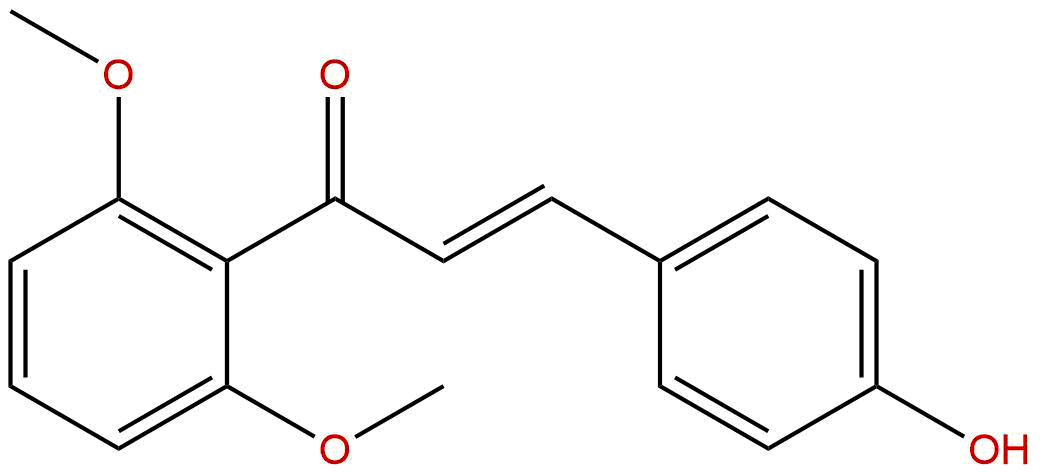


Product name: 1-(2,6-Dimethoxyphenyl)-3-(4-hydroxyphenyl)-2-propen-1-one
Synonym name: 2-Propen-1-one, 1-(2,6-dimethoxyphenyl)-3-(4-hydroxyphenyl)-
Catalogue No.: BP4992
Cas No.: 85679-87-4
Formula: C17H16O4
Mol Weight: 284.311
Botanical Source:
Type of Compound: Chalcones
Purity: 95%~99%
Analysis Method: HPLC-DAD or/and HPLC-ELSD
Identification Method: Mass, NMR
Packing: Brown vial or HDPE plastic bottle
Storage: Store in a well closed container, protected from air and light. Put into refrigerate or freeze for long term storage.
Whenever possible, you should prepare and use solutions on the same day. However, if you need to make up stock solutions in advance, we recommend that you store the solution as aliquots in tightly sealed vials at -20℃. Generally, these will be useable for up to two weeks.
The product could be supplied from milligrams to grams
Inquire for bulk scale.
For Reference Standard and R&D, Not for Human Use Directly.
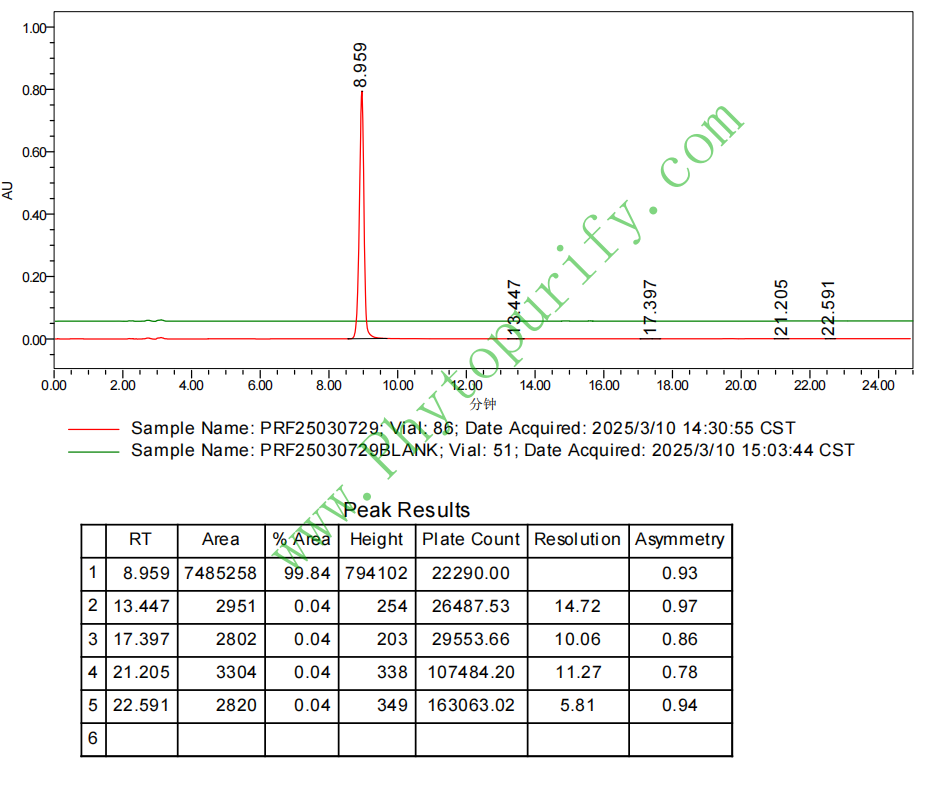
HPLC of 1-(2,6-Dimethoxyphenyl)-3-(4-hydroxyphenyl)-2-propen-1-one
Storage conditions:Short-term storage at 2~8℃, long-term storage at -20 ~ -80℃
55.7600
3.3073
3.3010
.0480
5.2372
32.9427
High
92.7306
1.9533
Yes
No
Yes
No
Yes
Yes
0.6
No
Yes
Yes
Yes
Natural products, as an important source of drug discovery, play an irreplaceable role in the long history of human fight against diseases. Chalcone compounds, as key precursors in the biosynthesis pathway of flavonoids, exhibit rich and diverse biological activities due to their unique α, β - unsaturated ketone structural framework. In recent years, with the in-depth exploration of the chemical diversity and pharmacological mechanisms of natural products, a series of structurally novel chalcone derivatives have been discovered and entered the research field. Among them, 1- (2,6-diethoxyphenyl) -3- (4-hydroxyphenyl) -2-propen-1-one (DHP), as a representative natural chalcone derivative, has attracted widespread attention due to its significant anti-tumor activity and multi-target characteristics.
The chemical structure of DHP is composed of two aromatic rings connected by an α, β - unsaturated ketone bridge, where ring A is a 2,6-dimethoxy substituted benzene ring and ring B is a 4-hydroxy substituted benzene ring. This specific substitution pattern endows the molecule with a unique electronic distribution and spatial configuration, which in turn affects its interaction with biological targets. Since its first isolation and identification from plants in the 1980s, DHP has been discovered in various medicinal plants, and its pharmacological activity research has evolved from initial screening to current systematic molecular mechanism analysis.
This article aims to provide a comprehensive academic review of DHP, systematically sorting out its chemical structure characteristics, plant sources and extraction methods, pharmacological activity spectrum, molecular mechanism of action, drug evaluation, and clinical application prospects, in order to provide systematic references for the in-depth research and development of this natural product.
The chemical name of DHP is 1- (2,6-dimethoxyphenyl) -3- (4-hydroxyphenyl) -2-propen-1-one, which belongs to the chalcone compound family. Its molecular formula is C ₁₇ H ₁₆ O ₄, and its molecular weight is 284.3110 g/mol. Structurally, the molecule consists of three key structural units: a 2,6-dimethoxy substituted benzoyl group (ring A), a 4-hydroxy substituted styrene group (ring B), and an alpha, beta unsaturated ketone bridge (- CO-CH=CH -) connecting the two.
It is worth noting that the two methoxy groups on the A ring are located in adjacent positions (2- and 6-position), and this symmetrical substitution pattern causes a significant change in the electron cloud density distribution of the A ring. At the same time, due to the steric hindrance effect of methoxy groups, it may affect the conformational preference of the entire molecule. The 4-hydroxy group on the B ring provides hydrogen bond donor ability, which is crucial for the interaction between the molecule and the target protein. α. The β - unsaturated ketone structural unit is the active center of chalcone compounds, and its conjugated system endows the molecule with excellent electron delocalization ability, while also providing active sites for Michael addition reactions.
According to computational chemical analysis, the oil-water partition coefficient (LogP) of DHP is 3.3073, indicating that the molecule has moderate lipid solubility, which is consistent with its structural characteristics of containing two aromatic rings and hydrophobic groups such as methoxy. The polar surface area (TPSA) is 55.7600 Å ², which is within the acceptable range for oral medication (usually considered to be less than 140 Å ²), indicating that it may have good oral bioavailability.
In terms of water solubility, the calculated water solubility value of DHP is 0.0480 mg/mL, which belongs to low water solubility compounds. This characteristic may limit its absorption and distribution in the body, and is also a key concern in subsequent drug development. It is worth noting that the blood-brain barrier penetration of DHP has been evaluated as "high", indicating that the molecule may have the potential to act on the central nervous system, but at the same time, it may also pose risks of central related side effects.
In terms of safety prediction, a negative hERG inhibition assessment indicates a lower risk of DHP induced cardiac QT interval prolongation. The Ames test result is 0.6, indicating a slight genetic toxicity risk. However, this result needs to be interpreted in conjunction with specific experimental conditions, and a more systematic genetic toxicity evaluation should be conducted in subsequent studies.
DHP was first discovered and reported in the 1980s, initially isolated from leguminous plants. With the deepening of plant chemistry research, researchers have successively detected the presence of this compound in plants of multiple families and genera. The currently known sources of plants mainly include:
Fabaceae plants Multiple leguminous plants are important sources of DHP, especially in the Astragalus genus(Astragalus Spp. and licorice genus(Glycyrrhiza The content of spp is relatively abundant in plants. These plants are often used in traditional medicine for anti-inflammatory, anti-tumor, and immune regulation purposes.
Zingiberaceae plants Some ginger family plants, such as the ginger genus(Alpinia The rhizomes of ginger plants also contain DHP, which is consistent with the chemical taxonomic characteristics of ginger plants that are rich in chalcone compounds.
Moraceae plants: Mulberry genus(Morus The root bark and stem bark of plants have also been reported to contain DHP, and mulberry plants are known for their abundant isopentenyl flavonoids and chalcone compounds.
Other sources In addition, there are sporadic reports in plants such as Asteraceae and Rutaceae, but the content is usually low.
It is worth noting that the content of DHP varies greatly among different plants and is influenced by factors such as growth environment, harvest season, and plant location. Generally speaking, the content in storage organs such as rhizomes and bark is relatively high, while the content in leaves and flowers is relatively low.
Researchers have established various methodological systems for the extraction and separation of DHP, mainly including:
Traditional solvent extraction method Using the moderate polarity characteristics of DHP, organic solvents such as ethanol, methanol, or ethyl acetate are often used for extraction. Usually, dried plant materials are crushed and repeatedly extracted with 70% -95% ethanol at room temperature or heating conditions. The extracted solutions are combined and concentrated under reduced pressure to obtain the crude extract.
Liquid-liquid extraction method After the crude extract is suspended in water, it is subjected to fractional extraction using solvents of different polarities such as petroleum ether, chloroform, ethyl acetate, n-butanol, etc. DHP is mainly enriched in the ethyl acetate and chloroform extraction sites.
Chromatographic separation technology: Further purification usually uses silica gel column chromatography, ODS reverse phase column chromatography, Sephadex LH-20 gel column chromatography and preparative high-performance liquid chromatography (Pre HPLC) and other technologies. In silica gel column chromatography, gradient elution is often performed using chloroform methanol or petroleum ether acetone systems; In reverse phase chromatography, methanol water or acetonitrile water systems are commonly used as mobile phases.
Modern extraction techniques In recent years, modern technologies such as ultrasound assisted extraction, microwave-assisted extraction, and supercritical fluid extraction have also been applied to the extraction of DHP. These methods have the advantages of high extraction efficiency, short time, and low solvent consumption. Especially with supercritical CO ₂ extraction technology, by adding an appropriate amount of ethanol as an entrainer, high purity DHP extract can be obtained under mild conditions.
The most noteworthy pharmacological activity of DHP is its anti-tumor effect. Numerous in vitro and in vivo studies have shown that DHP exhibits significant proliferation inhibition and cytotoxic effects on various tumor cell lines.
Broad spectrum anti-tumor activity: DHP has inhibitory effect on breast cancer (MCF-7, MDA-MB-231), liver cancer (HepG2, Huh7), lung cancer (A549, H1299), colon cancer (HCT116, SW480), prostate cancer (PC3, DU145), gastric cancer (SGC7901, BGC823), leukemia (HL60, K562) and other tumor cells, and its IC ≮ value is generally within the range of 1-20 μ M. It is worth noting that DHP has relatively low toxicity to normal cells and exhibits a certain degree of selectivity, which provides an important advantage for it as an anti-tumor candidate drug.
Inducing cell apoptosis DHP can induce tumor cell apoptosis through various pathways. Morphologically, tumor cells treated with DHP exhibit typical apoptotic features, including cell shrinkage, chromatin condensation, nuclear fragmentation, and formation of apoptotic bodies. At the biochemical level, DHP can activate the caspase cascade reaction, upregulate the expression of pro apoptotic proteins Bax and Bad, downregulate the expression of anti apoptotic proteins Bcl-2 and Mcl-1, leading to a decrease in mitochondrial membrane potential and release of cytochrome c.
Inhibition of cell proliferation and cycle arrest DHP can block tumor cells in the G0/G1 phase or G2/M phase, and the specific blocking phase varies depending on the cell type. Mechanistically, DHP can downregulate the expression of cell cycle positive regulatory factors such as cyclin D1, cyclin E, CDK2, and CDK4, while upregulating the levels of CDK inhibitory factors such as p21 and p27.
Inhibit migration and invasion DHP can significantly inhibit the migration and invasion ability of tumor cells at non cytotoxic concentrations. The scratch test and Transwell test both confirmed its anti migration activity, which is closely related to the downregulation of matrix metalloproteinases MMP-2 and MMP-9 expression by DHP.
In addition to anti-tumor activity, DHP also exhibits various other pharmacological effects:
anti-inflammatory activity DHP can inhibit the production of inflammatory mediators such as NO, PGE ₂, TNF - α, IL-6 in macrophages induced by lipopolysaccharide (LPS), and its mechanism is related to the inhibition of NF - κ B and STAT3 signaling pathways.
antioxidant activity The phenolic hydroxyl structure of DHP endows it with certain free radical scavenging ability, and DPPH and ABTS free radical scavenging experiments have confirmed its antioxidant activity, which may be related to its cell protective effect.
Antibacterial activity Some studies have reported that DHP has inhibitory effects on common pathogenic bacteria such as Staphylococcus aureus and Escherichia coli, but its activity is relatively weak, with MIC values typically ranging from 50-100 μ g/mL.
The pharmacological activity of DHP, especially its anti-tumor effect, involves the regulation of multiple molecular targets and signaling pathways. Based on existing research, its core mechanism of action can be summarized as follows:
MCL1 and BCL2 family regulation DHP can significantly downregulate the expression levels of anti apoptotic proteins MCL1 and BCL2, while upregulating the expression of pro apoptotic protein BAX. MCL1, as an important member of the BCL2 family, is highly expressed in various hematological and solid tumors and is closely associated with chemotherapy resistance. The inhibitory effect of DHP on MCL1 provides a molecular basis for overcoming tumor drug resistance. Research has shown that DHP can reduce MCL1 levels by inhibiting its transcriptional activity or accelerating its protein degradation.
STAT3 signaling pathway inhibition STAT3 is a key transcription factor in the JAK/STAT signaling pathway, which is continuously activated in various tumors, promoting cell proliferation, survival, and angiogenesis. DHP can inhibit the phosphorylation activation of STAT3, block its nuclear translocation, and inhibit the transcription of downstream target genes (such as cyclin D1, survivor, VEGF, etc.). Molecular docking studies have shown that DHP may directly bind to the SH2 domain of STAT3, interfering with its dimerization process.
MMP2 inhibition Matrix metalloproteinase MMP2 plays a crucial role in tumor invasion and metastasis, responsible for degrading type IV collagen in the basement membrane. DHP can inhibit the expression of MMP2 at the transcriptional and protein levels, and may also reduce the enzymatic activity of MMP2 by inhibiting its activation process. This effect is directly related to the ability of DHP to inhibit tumor cell migration and invasion.
HIF1A regulation Hypoxia inducible factor HIF1A is a core transcription factor for tumors to adapt to the hypoxic microenvironment, regulating the expression of various downstream genes such as VEGF, GLUT1, CA9, etc. DHP can inhibit the accumulation and transcriptional activity of HIF1A protein, and its mechanism may involve promoting the ubiquitination degradation of HIF1A or inhibiting its heterodimerization with ARNT. By inhibiting HIF1A, DHP can reduce tumor angiogenesis and glycolysis metabolism, thereby inhibiting tumor growth.
TOP1 and TOP2A dual inhibition Topoisomerase is a key enzyme in DNA replication and transcription processes, and is also a target of various clinical anti-tumor drugs. DHP has been shown to simultaneously inhibit the activity of TOP1 and TOP2A, and its mechanism may be related to the insertion of drug molecules between DNA double strands, forming a drug DNA enzyme ternary complex, thereby stabilizing the "cleavable complex". This dual inhibition mode endows DHP with unique anti-tumor advantages, which may reduce the risk of drug resistance caused by single target inhibition.
MAPK1/ERK pathway MAPK1 (ERK2) is a key member of the RAS-RAF-MEK-ERK signaling pathway, regulating cell proliferation and differentiation. DHP can inhibit the phosphorylation activation of ERK, thereby blocking the transmission of growth factor signals. It is worth noting that there may be a synergistic effect between DHP's inhibition of ERK and its inhibition of STAT3, as the two pathways have a cross-talk in various tumors.
Regulation of estrogen signaling The regulation of DHP on ESR1 (estrogen receptor α) and CYP19A1 (aromatase) suggests that DHP may have the potential of anti hormone dependent breast cancer. Molecular docking studies have shown that DHP can bind to the ligand binding domain of ESR1, exerting a selective estrogen receptor modulator (SERM) effect; Meanwhile, DHP can also inhibit the activity of aromatase and reduce the synthesis of estrogen.
Based on classic pharmacological evaluation criteria such as Lipinski's "Five Rules" and Veber's Rules, the pharmacological characteristics of DHP are as follows:
From the above parameters, DHP fully meets the pharmacological standards for oral drugs and has good drug like properties. However, its low water solubility (0.0480 mg/mL) is a key issue that hinders its further development. In addition, although high blood-brain barrier penetration provides the possibility for treating brain tumors, central nervous system side effects should also be monitored.
At present, there is insufficient systematic research on the pharmacokinetics of DHP in vivo, but based on its physicochemical properties and preliminary research results, the following characteristics can be inferred:
absorb DHP has moderate lipid solubility and good membrane permeability, and should be absorbed by the gastrointestinal tract after oral administration. However, low water solubility may limit the dissolution rate and affect oral bioavailability. The use of solid dispersion, liposome, cyclodextrin inclusion complex and other formulation technologies is expected to improve its solubility and oral absorption.
distribution The LogP of DHP is 3.3073, indicating its high tissue distribution volume. High blood-brain barrier penetration indicates its ability to enter the central nervous system, which provides the possibility for treating brain tumors and also suggests the need to pay attention to central toxicity. The expected high plasma protein binding rate may affect the concentration of free drugs.
Metabolism As a derivative of chalcone, the α, β - unsaturated ketone structure of DHP is the main metabolic site. It is speculated that its metabolic pathway includes: ① carbonyl reduction to alcohol; ② Double bond reduction; ③ Methoxy demethylation; ④ Phenolic hydroxyglucuronic acid or sulfuric acid binding. The cytochrome P450 enzyme system (especially CYP3A4 and CYP2C9) may be involved in its oxidative metabolism.
excretion DHP and its metabolites are mainly excreted through bile and urine. Due to its moderate molecular weight, some prototype drugs may be excreted through glomerular filtration, but most need to be metabolized by the liver and excreted in the form of conjugates.
Preliminary safety evaluation shows that the hERG inhibition risk of DHP is low, indicating a lower risk of cardiac toxicity. The Ames test result is 0.6, indicating a possible slight genetic toxicity risk, but this result needs further confirmation through in vivo micronucleus testing and chromosome aberration testing. In animal experiments, the acute toxicity of DHP is relatively low, but long-term toxicity research is still blank.
The potential indications for the multi-target anti-tumor mechanism based on DHP mainly include:
breast cancer DHP is active in both ER positive breast cancer and ER negative breast cancer, and its dual regulation of ESR1 and CYP19A1 makes it unique in the treatment of hormone dependent breast cancer. The combination of tamoxifen or aromatase inhibitors may produce a synergistic effect.
liver cancer The significant inhibitory effect of DHP on HepG2 and Huh7 cells, as well as its regulation of the HIF1A and STAT3 pathways, suggest its potential application in the treatment of liver cancer. Especially for patients with sorafenib resistant liver cancer, DHP may provide a new treatment option.
Lung cancer The activity of DHP on A549 and H1299 cells, as well as its inhibition of MMP2 and TOP1/2A, provide a basis for its treatment of non-small cell lung cancer.
Hematological system tumors The inhibitory effect of DHP on MCL1 makes it particularly valuable in the treatment of MCL1 dependent hematological tumors, such as multiple myeloma and acute myeloid leukemia.
Given the multi-target nature of DHP, a rational combination therapy strategy may improve efficacy and reduce the risk of drug resistance
Combined with chemotherapy drugs The combination of DHP with classic chemotherapy drugs such as cisplatin, paclitaxel, and doxorubicin can synergistically kill tumor cells through different mechanisms, while potentially reducing the dosage and toxicity of chemotherapy drugs.
Combination with targeted drugs The combination use of DHP with BCL2 inhibitors (such as Vinaclat), STAT3 inhibitors, or MEK inhibitors may enhance therapeutic efficacy by blocking compensatory signaling pathway activation.
Combined with immunotherapy The inhibitory effect of DHP on STAT3 may improve the tumor immune microenvironment and enhance anti-tumor immune response, and its combination with PD-1/PD-L1 inhibitors is worth exploring.
To overcome the limitations of DHP, future structural optimization can be carried out in the following directions:
Improve water solubility Introducing hydrophilic groups such as phosphate esters, amino acid esters, or sugar groups into the hydroxyl or methoxy positions of the B-ring phenol to prepare prodrugs or water-soluble derivatives.
Enhance targeting capability By connecting targeted ligands such as folate and RGD peptides, a targeted delivery system can be constructed to enhance the selective accumulation of drugs in tumor tissues.
Improve metabolic stability Modify the structure of α, β - unsaturated ketones, such as introducing fluorine atoms or methyl groups, to reduce metabolic rate and prolong half-life.
Nanoformulation development Using nanocarriers such as liposomes, polymer nanoparticles, and mesoporous silica to encapsulate DHP, solving its problems of poor water solubility and low bioavailability.
Although DHP has shown good anti-tumor activity and potential for drug development, its research still faces many challenges:
Lack of pharmacokinetic data At present, there is a lack of systematic pharmacokinetic studies in vivo, especially with unclear key parameters such as oral bioavailability, tissue distribution, metabolic pathways, and excretion characteristics.
Insufficient validation of in vivo drug efficacy Most studies remain at the cellular level in vitro, and a systematic evaluation of in vivo anti-tumor activity (including xenograft tumor models, in situ tumor models, and transgenic mouse models) is urgently needed.
Incomplete toxicity spectrum Except for preliminary genetic toxicity evaluation, there is almost no safety data on acute toxicity, subchronic toxicity, reproductive toxicity, and immunotoxicity of DHP.
Target selectivity to be confirmed Although multiple targets have been identified, the direct binding evidence of DHP to these targets (such as surface plasmon resonance, isothermal titration calorimetry, etc.) is still insufficient, and its true "target" and "off target" effects need to be systematically elucidated.
1- (2,6-diethoxyphenyl) -3- (4-hydroxyphenyl) -2-propen-1-one, as a natural chalcone derivative, has shown significant value in the field of anti-tumor drug development due to its unique chemical structure and multi-target action characteristics. This compound exerts anti-tumor effects on multiple levels, including inducing apoptosis, inhibiting proliferation, anti metastasis, anti angiogenesis, and regulating hormone signaling, by regulating multiple key targets such as MCL1, BCL2, STAT3, MMP2, TOP1/2A, HIF1A, MAPK1, ESR1, and CYP19A1.
From the perspective of drug development, DHP has good drug like characteristics, but its low water solubility and potential genetic toxicity risk are key obstacles that need to be overcome. Future research should focus on: systematically elucidating its pharmacokinetic characteristics and toxicity profile in vivo; Improve its physicochemical properties and bioavailability through structural modification and formulation techniques; Validate its in vivo anti-tumor efficacy in various animal models; Explore rational combination therapy strategies to enhance efficacy and overcome drug resistance.
With a deeper understanding of natural product chemistry and pharmacology, as well as continuous advancements in medicinal chemistry and nanotechnology, DHP and its derivatives are expected to provide new candidate drugs for cancer treatment. The complete transformation process from plant chemistry discovery to preclinical research requires not only in-depth basic research, but also interdisciplinary collaboration to ultimately achieve the transition of this natural product from laboratory to clinical use.
