


Synonym name: Broussochalcone B
Catalogue No.: BP0238
Cas No.: 28448-85-3
Formula: C20H20O4
Mol Weight: 324.376
Botanical Source: Broussonetia papyrifera
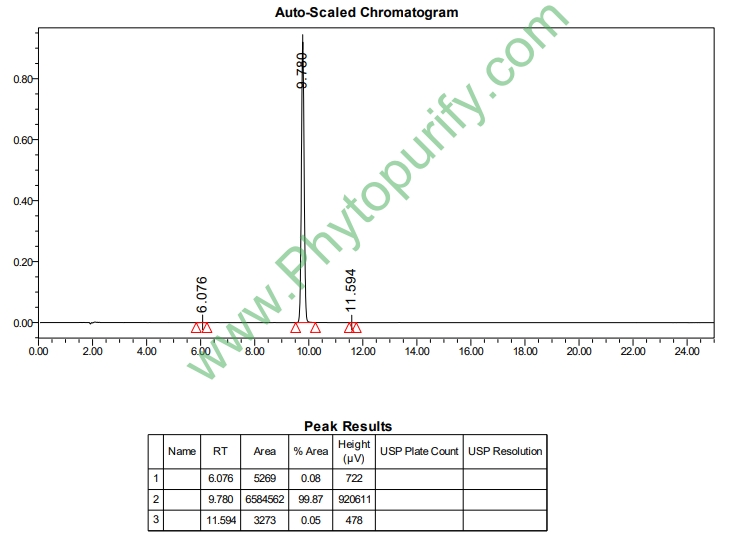
Purity: 95%~99%
Analysis Method: HPLC-DAD or/and HPLC-ELSD
Identification Method: Mass, NMR
Packing: Brown vial or HDPE plastic bottle
Can be supplied from milligrams to grams.
For Reference Standard and R&D, Not for Human Use Directly.
Inquire for bulk scale.
HPLC of Bavachalcone
Storage conditions:Short-term storage at 2~8℃, long-term storage at -20 ~ -80℃
Bavachalcone (CAS number: 28448-85-3) is a natural chalcone compound derived from the traditional Chinese medicine Psoralea corylifolia L. As an important secondary metabolite of plant flavonoids, psoralenone has attracted widespread attention in the fields of pharmacology and natural product chemistry due to its multi-target and multi pathway biological activities. In recent years, psoralenone has shown significant pharmacological potential in anti-cancer, anti-inflammatory, neuroprotective, and bone metabolism regulation, especially in the mechanism research of inducing tumor cell apoptosis, autophagy, and regulating inflammatory response. In addition, the regulation of psoralen chalcone on atherosclerosis related targets also indicates its application prospect in the prevention and treatment of cardiovascular diseases. This article will provide a systematic review of the chemical structure and physicochemical properties, plant sources and extraction methods, pharmacological activity and mechanism of action, pharmacological evaluation, and clinical application prospects of psoralenone, aiming to provide theoretical basis and reference for the in-depth research and new drug development of this natural product.
Psoralen chalcone belongs to chalcone compounds, with a molecular formula of C20H20O5 and a molecular weight of 324.37. Its structural features are a typical alpha, beta unsaturated carbonyl system, connecting two aromatic rings and possessing multiple hydroxyl substituents, endowing it with strong biological activity. The LogP value of psoralenone is 3.7, indicating its moderate lipid solubility, which is beneficial for cell membrane penetration. Its polar surface area (TPSA) is 77.76 Å ² and the number of hydrogen bond acceptors is 4, indicating its hydrophilicity and binding ability in intermolecular interactions. According to pharmacokinetic predictions, the blood-brain barrier permeability of psoralenone is low, the risk of liver toxicity is low, and there is no significant cardiac toxicity or hERG channel inhibition. The Ames mutagenicity test result is negative, indicating its good safety and potential for drug development.
Psoralea corylifolia L. mainly exists in the roots and seeds of Psoralea corylifolia L. Psoralea, as a traditional Chinese medicinal herb, is widely used to treat osteoporosis, skin diseases, and immune related diseases. The common methods for extracting chalcone from Fructus Psorale include solvent extraction, liquid-liquid partitioning, and chromatographic separation. Generally, ethanol or methanol is used as the extraction solvent, and the extraction efficiency is improved by ultrasound assisted extraction or reflux extraction. The crude extract was purified by techniques such as silica gel column chromatography and reverse phase high performance liquid chromatography (RP-HPLC) to obtain high-purity psoralenone. In recent years, supercritical fluid extraction and membrane separation technologies have also been introduced to improve extraction efficiency and purity, reduce the use of organic solvents, and comply with the concept of green chemistry.
Psoralen chalcone exhibits significant anti proliferative and pro apoptotic effects in various tumor cell lines. Research has shown that psoralenone can induce autophagy and apoptosis in HepG2 liver cancer cells, inhibit cell proliferation, indicating its potential anti-tumor activity. Its anti-cancer mechanism involves the regulation of multiple signaling pathways, including inhibiting the PI3K/Akt pathway, activating AMPK signaling, and regulating the expression of Bcl-2 family proteins, promoting programmed cell death. In addition, psoralenone can also weaken the inflammatory microenvironment of tumor cells and enhance its anti-cancer effect by regulating the NF - κ B signaling pathway.
Neuroinflammation is the pathological basis of various neurological diseases. Psoralen chalcone exerts significant anti neuroinflammatory effects by inhibiting the NF - κ B signaling pathway and reducing the expression of pro-inflammatory factors such as TNF - α and IL-1 β. Animal model studies have shown that psoralenone can improve depressive like behavior, suggesting its potential in antidepressant treatment. This effect may be closely related to its regulation of neuroinflammation and neurotransmitter balance.
Psoralen chalcone inhibits the differentiation and activity of osteoclasts by interfering with the ERK and Akt signaling pathways, reducing bone loss during bone resorption. It can also downregulate the expression of transcription factors c-Fos and NFATc1, which are key regulatory factors for osteoclast formation, demonstrating the potential application of psoralenone in the prevention and treatment of osteoporosis and related bone metabolism diseases.
Psoralea chalcone can regulate many atherosclerosis related targets such as AMPK, EHMT2, MCL1, BCL2, RECQ1, LOX-1, ABCA1 and IDO1. By activating AMPK signaling pathway, Psoralea chalcone can promote lipid metabolism and energy homeostasis, inhibit inflammatory reaction and slow down the process of atherosclerosis. At the same time, its inhibitory effect on LOX-1 receptors reduces endothelial damage mediated by oxidized low-density lipoprotein (oxLDL), protecting vascular function.
Psoralen chalcone showed significant inhibitory effects on β - secretase 1 (BACE-1) expressed by rod-shaped viruses in vitro experiments, indicating its potential application value in neurodegenerative diseases such as Alzheimer's disease. In addition, psoralenone also exhibits certain antioxidant and immune regulatory activities, further enriching its pharmacological spectrum.
The multi-target mechanism of action of psoralen chalcone is the basis of its pharmacological activity. Its main mechanism of action includes:
Promote autophagy and apoptosis Psoralen chalcone induces autophagy in HepG2 cells by activating the AMPK signaling pathway, while regulating the expression of Bcl-2 family proteins and promoting mitochondrial mediated apoptosis.
Inhibition of NF - κ B signaling pathway As a key regulatory factor of inflammation and immune response, NF - κ B is inhibited by psoralenone, which reduces the expression of pro-inflammatory cytokines and exerts anti neuroinflammatory and antidepressant effects.
Regulating the ERK and Akt signaling pathways Psoralen chalcone inhibits these two signaling pathways, blocks the differentiation and activation of osteoclasts, and reduces bone resorption.
Regulating transcription factor expression Downregulate the expression of c-Fos and NFATc1, and inhibit osteoclast formation.
Regulate atherosclerosis related targets Activate AMPK, regulate lipid metabolism and inflammatory response; Inhibit LOX-1 mediated oxidative stress; Regulating ABCA1 promotes cholesterol efflux and slows down plaque formation.
Inhibit BACE-1 activity Blocking abnormal cleavage of beta amyloid precursor may slow down the pathological progression of Alzheimer's disease.
The synergistic effect of these mechanisms of action has demonstrated excellent therapeutic potential of psoralenone in various disease models.
The pharmacological parameters of psoralen chalcone show that it has good potential for drug development. The molecular weight of 324.37 conforms to Lipinski's rule, and the LogP value is moderate at 3.7, which is beneficial for cell membrane permeability. The TPSA is 77.76, indicating that its molecular polarity is moderate and beneficial for bioavailability. The number of hydrogen bond receptors is 4, which supports its effective binding to the target protein. The low permeability of the blood-brain barrier suggests that its direct role in the central nervous system may be limited, but this also reduces the risk of central toxicity.
Toxicological evaluation shows that the hepatotoxicity risk of psoralenone is low, with no significant cardiac toxicity or hERG channel inhibition. The Ames test is negative, indicating its high safety. In terms of pharmacokinetics, although the systematic research on metabolism and bioavailability in vivo is not yet sufficient, existing studies suggest that it has good oral absorption, stable liver metabolism, and mainly excreted through the kidneys and bile. In the future, further research on in vivo pharmacokinetics, pharmacokinetics, and toxicology is needed to lay the foundation for clinical applications.
Psoralen chalcone, as a multifunctional natural product, has broad clinical application potential. Its anti proliferative and pro apoptotic effects in tumor treatment provide important clues for the development of new anti-cancer drugs. Especially in solid tumors such as liver cancer, psoralenone may be used as an adjuvant therapy to improve treatment efficacy and reduce chemotherapy toxicity and side effects.
In the field of neurological diseases, psoralenone is expected to become a new candidate drug for the treatment of depression and neurodegenerative diseases through its anti neuroinflammatory and antidepressant effects. Its inhibitory effect on BACE-1 provides new ideas for drug development in Alzheimer's disease.
In addition, the potential of Psoralea chalcone in the regulation of bone metabolism and the prevention and treatment of atherosclerosis suggests that it can be used for the comprehensive treatment of osteoporosis and cardiovascular diseases. It has good safety and good drug properties, making it suitable for further preclinical and clinical research.
Future research should focus on the in vivo pharmacokinetic optimization, formulation development, and combination therapy strategies of psoralenone, while delving into its molecular mechanisms to promote its clinical translation. Combining modern medicinal chemistry and pharmacology techniques, psoralenone is expected to become an important representative in the development of natural product drugs.
As a natural chalcone compound with multiple biological activities, psoralen chalcone exhibits a wide range of pharmacological effects and good safety. Its research achievements in anti-cancer, anti-inflammatory, neuroprotective, and bone metabolism regulation provide valuable scientific basis for the field of natural product pharmacology. Although the research on its pharmacokinetics and clinical applications in vivo is still in its infancy, psoralenone has high potential as a drug due to its unique molecular structure and multi-target regulatory ability. In the future, through systematic pharmacological, toxicological, and clinical research, it is expected to promote the development of psoralenone as a new natural medicine or drug lead compound, providing new strategies and choices for the treatment of related diseases.
