Introduction/Overview
Natural products have always been an important source of drug discovery and development, especially in the field of anti-tumor drugs. Various secondary metabolites and their derivatives isolated from plants have become an important component of clinical chemotherapy drugs. Chalcone is a natural flavonoid compound with 1,3-diphenyl-2-propen-1-one as the basic skeleton, widely present in various plants such as legumes, Asteraceae, and ginger. Due to their simple structure, ease of synthesis and modification, and various biological activities such as anti-inflammatory, antioxidant, antibacterial, antiviral, and anti-tumor, chalcone compounds have always been a hot topic in medicinal chemistry and pharmacology research.
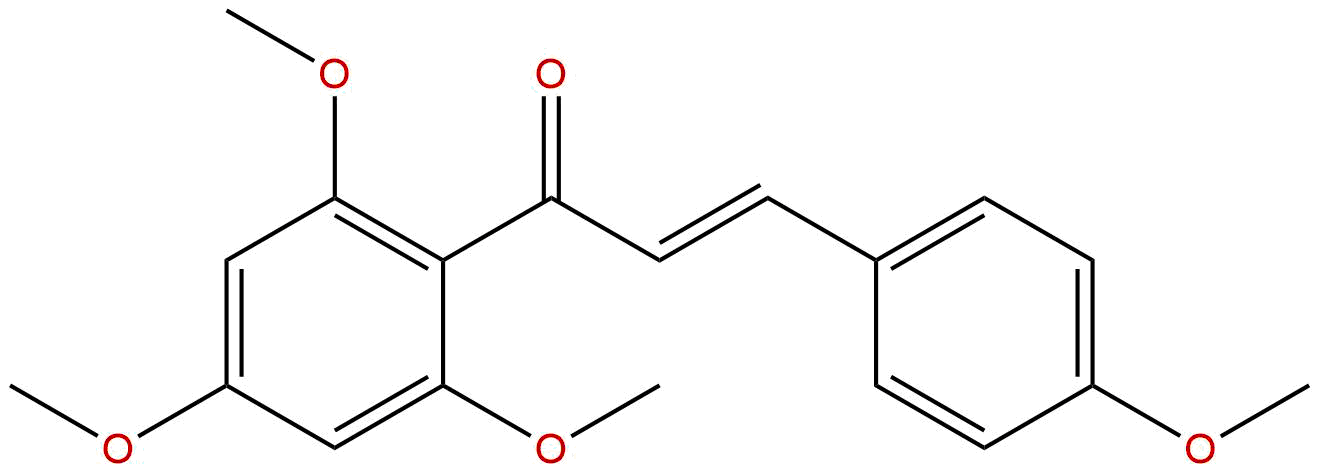
2 ', 4', 6 ', 4-tetramethoxychalcone (TMC), CAS number 94103-36-3, is a chalcone derivative with four methoxy substituents. Its structural feature is that the 2 ', 4', and 6 'positions of the A ring and the 4 position of the B ring are respectively replaced by methoxy groups (- OCH ∝). This multi methoxylation mode endows the molecule with unique electronic distribution, spatial configuration, and lipophilicity. In recent years, research on TMC has gradually deepened, especially in terms of anti-tumor activity. It has been found that TMC exhibits significant proliferation inhibition, induction of apoptosis, and anti metastasis effects on various cancer cell lines. Its mechanism of action involves the regulation of multiple key signaling pathways and molecular targets, including anti apoptotic proteins MCL1 and BCL2, transcription factor STAT3, matrix metalloproteinase MMP2, as well as topoisomerases TOP1 and TOP2A. In addition, TMC also shows potential in hormone related tumors (such as breast cancer), which may play a role by regulating estrogen receptor ESR1 and aromatase CYP19A1.
This article aims to systematically review the chemical structure, plant origin, pharmacological activity, molecular mechanism of action, and pharmacological evaluation of 2 ', 4', 6 ', 4-tetramethoxychalcone, and explore its development prospects as an anti-tumor lead compound, in order to provide reference for subsequent research.
Chemical structure and physicochemical properties
The chemical structure of 2 ', 4', 6 ', 4-tetramethoxychalcone belongs to the typical chalcone skeleton, which is formed by connecting the A ring (acetophenone moiety) and B ring (benzaldehyde moiety) through an α, β - unsaturated ketone bridge (- CO-CH=CH -). Its molecular formula is C ₁₉ H ₂₀ O ₅, and its molecular weight is 328.3640 g/mol. The four methoxy groups in the structure are located at the 2 ', 4', and 6 'positions of the A ring and the 4' position of the B ring, respectively. This highly symmetrical substitution pattern is relatively rare in natural chalcones.
From the perspective of physicochemical properties, the lipid water partition coefficient (LogP) of TMC is 3.5774, indicating its strong lipophilicity, which is mainly attributed to the presence of multiple methoxy groups in the molecule and the aromatic ring system. A higher lipophilicity is beneficial for its penetration through cell membranes, but it may also lead to poor water solubility. The calculated topological polar surface area (TPSA) is 53.99 Å ², which is at a moderate level, indicating its potential for oral absorption, but may be limited by its water solubility. The water solubility parameter is 0.0061 mg/mL, indicating that TMC has extremely low solubility in water, which may affect its bioavailability in practical applications and needs to be improved through formulation techniques such as liposomes, nanoparticles, cyclodextrin inclusion complexes, etc.
It is worth noting that the blood-brain barrier (BBB) penetration ability of TMC is predicted to be "high". This characteristic may have potential advantages for treating central nervous system tumors or brain metastases, but it may also increase the risk of central nervous system toxicity. In addition, the prediction result of hERG inhibition is "no", indicating that TMC has a low risk of cardiac toxicity, which is a positive indication of drug efficacy. The Ames test predicted a value of 0.9, indicating a potential genetic toxicity risk that needs to be validated through experiments in subsequent studies.
Plant sources and extraction methods
2 ', 4', 6 ', 4-tetramethoxychalcone was initially isolated and identified from plants. According to existing literature, this compound is mainly found in Fabaceae plants, such as certain Astragalus species(Astragalus Spp. and Robinia genus(Amorpha Spp.) plants. In addition, in plants of the Zingiberaceae family such as sorghum(Alpinia officinarum)It has also been found in the roots and stems. These plants are often used in traditional medicine to treat inflammation, pain, and tumor related diseases, and TMC may be one of their active ingredients.
The extraction method usually uses organic solvent extraction. Due to the strong lipid solubility of TMC, commonly used extraction solvents include methanol, ethanol, ethyl acetate, or chloroform. The typical extraction process is as follows: the dried plant material is crushed and soaked or percolated with methanol or ethanol at room temperature or heating conditions for extraction. The extract is then concentrated under reduced pressure and subjected to liquid-liquid extraction using petroleum ether, chloroform, ethyl acetate, and n-butanol in sequence. TMC is mainly enriched in the chloroform or ethyl acetate extraction sites. Further separation and purification usually rely on silica gel column chromatography, Sephadex LH-20 gel column chromatography, preparative high-performance liquid chromatography (Prep HPLC) and other technologies. In terms of structural identification, it mainly relies on nuclear magnetic resonance spectroscopy (NMR, including ¹ H-NMR, ¹ ³ C-NMR, HMBC, HSQC, etc.) and high-resolution mass spectrometry (HR-MS) to confirm its chemical structure.
Due to the low content of TMC in plants and the time-consuming and costly natural extraction process, chemical synthesis methods have become an effective way to obtain this compound in recent years. The classic method for synthesizing chalcone is through the Claisen Schmidt condensation reaction, which involves the aldol condensation of 2,4,6-trimethoxyacetophenone with 4-methoxybenzaldehyde catalyzed by a base (such as sodium hydroxide or potassium hydroxide) to obtain the target product. The synthetic route is simple and the yield is high, which can meet the needs of laboratory research and preliminary activity evaluation.
Pharmacological activity research
Antitumor activity
The most noteworthy pharmacological activity of TMC is its anti-tumor effect. Multiple in vitro studies have shown that TMC exhibits significant cytotoxicity towards various human cancer cell lines. For example, in human breast cancer cells (MCF-7, MDA-MB-231), liver cancer cells (HepG2, Huh7), lung cancer cells (A549), colon cancer cells (HCT116), and prostate cancer cells (PC3), TMC showed a dose and time-dependent inhibition of proliferation, and the half inhibition concentration (IC ≮₀) was usually at the micromolar level (1-20 μ M). It is worth noting that TMC has relatively low toxicity to certain normal cells, such as human umbilical vein endothelial cells (HUVEC) or normal liver cells (L02), indicating its selective anti-tumor potential.
Inducing apoptosis
TMC can induce tumor cell apoptosis through endogenous (mitochondrial) and exogenous (death receptor) pathways. Research has found that TMC treatment can lead to a decrease in mitochondrial membrane potential (Δ PSI m), release of cytochrome c into the cytoplasm, and activate Caspase-9 and Caspase-3, ultimately triggering an apoptotic cascade reaction. Meanwhile, TMC can upregulate the expression of pro apoptotic protein Bax, downregulate the expression of anti apoptotic proteins Bcl-2 and Mcl-1, disrupt the balance of Bcl-2 family proteins, and promote cell apoptosis.
Anti metastasis and anti invasion
Tumor metastasis is one of the main causes of death in cancer patients. TMC has also shown activity in inhibiting tumor cell migration and invasion. The scratch test and Transwell test results indicate that TMC can significantly reduce the migration and invasion ability of various cancer cells. Its mechanism is closely related to the inhibition of the expression and activity of matrix metalloproteinases (MMP-2 and MMP-9). MMPs are key enzymes that degrade extracellular matrix, and their reduced activity can effectively hinder the invasion and metastasis of tumor cells.
Angiogenesis inhibition
The growth and metastasis of solid tumors depend on the formation of new blood vessels. TMC has been reported to inhibit the expression of hypoxia inducible factor-1 alpha (HIF-1 alpha), thereby downregulating the expression of its downstream target gene vascular endothelial growth factor (VEGF) and inhibiting tumor angiogenesis. This effect has been validated in vitro luminal formation experiments and chicken embryo chorioallantoic membrane (CAM) experiments.
Other activities
In addition to anti-tumor activity, TMC also exhibits certain anti-inflammatory and antioxidant activities. For example, it can inhibit the production of nitric oxide (NO) and prostaglandin E ₂ (PGE ₂) in macrophages induced by lipopolysaccharide (LPS), and reduce the levels of pro-inflammatory cytokines such as TNF - α and IL-6. These activities may have a synergistic effect with their anti-tumor effects, as the chronic inflammatory microenvironment is an important promoting factor for tumor occurrence and development.
Mechanism of action and molecular targets
The pharmacological activity of TMC is the result of the synergistic effect of multiple targets and pathways. Based on existing research, the main molecular targets and signaling pathway regulatory mechanisms can be summarized as follows:
Regulating apoptosis related proteins: MCL1 and BCL2
MCL1 and BCL2 are important anti apoptotic proteins in the Bcl-2 family, highly expressed in various tumors, and closely associated with chemotherapy resistance. TMC can downregulate the expression of MCL1 and BCL2 at the transcriptional or post transcriptional level. Specifically, TMC may reduce its transcriptional activity by inhibiting the phosphorylation of STAT3, blocking its binding to the MCL1 and BCL2 gene promoters. In addition, TMC may accelerate the degradation of MCL1 protein by activating the ubiquitin proteasome pathway. The downregulation of MCL1 and BCL2 leads to an increase in mitochondrial outer membrane permeability, promotes cytochrome c release, and initiates the apoptotic program.
Inhibition of STAT3 signaling pathway
STAT3 (Signal Transduction and Transcription Activation Factor 3) is a key transcription factor that connects extracellular signals with nuclear gene transcription, and is continuously activated in various solid and hematological tumors. TMC has been shown to inhibit the phosphorylation of the Tyr705 site of STAT3, thereby preventing its dimerization, nuclear translocation, and binding ability to DNA. The inhibition of STAT3 activity not only downregulates downstream target genes such as MCL1, BCL2, Cyclin D1, VEGF, MMP2, but also enhances the sensitivity of tumor cells to chemotherapy drugs.
Inhibition of matrix metalloproteinase: MMP2
MMP2 (gelatinase A) is a key enzyme that degrades type IV collagen and plays a central role in tumor invasion and metastasis. TMC can inhibit the enzymatic activity and protein expression of MMP2. Mechanism studies have shown that TMC may reduce the transcription of MMP2 by inhibiting the MAPK/ERK signaling pathway or blocking the activation of transcription factors AP-1 and NF - κ B. In addition, TMC can upregulate the expression of tissue metalloproteinase inhibitor (TIMP-2), further inhibiting the function of MMP2.
Inhibition of Topoisomerase: TOP1 and TOP2A
Topoisomerases are essential enzymes in DNA replication and transcription processes, and are also targets of various clinical anti-tumor drugs such as camptothecin and etoposide. Molecular docking and enzyme activity experiments have shown that TMC can bind to TOP1 and TOP2A, inhibiting their catalytic activity, leading to DNA breakage and replication fork arrest, ultimately inducing tumor cell death. This topoisomerase inhibitory activity provides a new explanation for the anti-tumor mechanism of TMC.
Regulating hypoxia and angiogenesis: HIF1A
HIF-1 α is a core transcription factor that cells use to respond to hypoxic environments. It is often overactivated in solid tumors, promoting angiogenesis, glycolysis, and metastasis. TMC can inhibit the accumulation of HIF-1 α protein, possibly by promoting its hydroxylation degradation or inhibiting its translation process. The downregulation of HIF-1 α leads to a decrease in the expression of target genes such as VEGF and GLUT1, thereby inhibiting tumor angiogenesis and energy metabolism.
Regulating estrogen signaling: ESR1 and CYP19A1
For hormone dependent breast cancer, TMC shows potential anti estrogen activity. Research has shown that TMC can bind to estrogen receptor alpha (ESR1) and exhibit a certain antagonistic effect, inhibiting estrogen induced cell proliferation. Meanwhile, TMC can also inhibit the activity of aromatase (CYP19A1), which is responsible for converting androgens into estrogens. Therefore, TMC may play an anti breast cancer role through a dual mechanism (antagonizing ER and inhibiting aromatase), similar to the combined effect of selective estrogen receptor modulator (SERM) and aromatase inhibitor (AI).
Regulating the MAPK signaling pathway: MAPK1
MAPK1 (also known as ERK2) is a key member of the mitogen activated protein kinase (MAPK) pathway, involved in cell proliferation, differentiation, and survival. The regulation of MAPK signaling pathway by TMC is cell type dependent. In certain cancer cells, TMC can inhibit the phosphorylation of MAPK1, thereby blocking the overactivation of the Ras Raf MEK ERK pathway and inhibiting cell proliferation. But in other cases, TMC may induce cellular aging or autophagy by continuously activating ERK.
Evaluation of drug properties and pharmacokinetics
Based on computational predictions and limited experimental data, the pharmacological characteristics of TMC present both opportunities and challenges.
Analysis of drug properties The molecular weight of TMC is 328.36 Da, which conforms to Lipinski's "Five Rules" (MW<500). LogP is 3.58, which is within the ideal range (-0.4~5.6). The number of hydrogen bond donors is 0, and the number of hydrogen bond acceptors is 5, both of which comply with the rules. Therefore, structurally speaking, TMC has a good drug like basis.
Water solubility and bioavailability The most prominent issue with TMC is its extremely poor water solubility (0.0061 mg/mL), which severely limits its dissolution and absorption after oral administration and may result in extremely low oral bioavailability. Therefore, developing suitable drug delivery systems (such as liposomes, nanocrystals, phospholipid complexes, self microemulsifying systems) is a key strategy to improve their bioavailability.
Metabolic stability The methoxy group undergoes O-demethylation metabolism in vivo, catalyzed by cytochrome P450 enzymes such as CYP1A2, CYP2D6, CYP3A4. The metabolite may be hydroxylated chalcone, and its activity may be different from that of the parent compound. In addition, the α, β - unsaturated ketone structures are characteristic pharmacophores of chalcone compounds, but may also be potential metabolic instability sites (such as Michael addition reactions). Therefore, it is necessary to conduct in-depth research on the metabolic pathways and metabolites of TMC.
Plasma protein binding and distribution Due to its high lipophilicity, TMC is likely to bind highly to plasma proteins such as albumin, which can affect its free drug concentration and distribution volume. Its high BBB penetration suggests that drugs can enter the central nervous system, which is beneficial for treating brain tumors, but potential neurotoxicity should also be considered.
Toxicity prediction HERG inhibition negative is a positive signal that reduces the risk of cardiac toxicity. However, a positive Ames test prediction (0.9) suggests that TMC may have mutagenicity, which may be due to the alpha, beta unsaturated ketone structures acting as Michael receptors that may covalently bind to DNA or proteins. Therefore, in subsequent development, it is necessary to verify through in vitro and in vivo genetic toxicity experiments, and consider reducing toxicity through structural modification.
Clinical application prospects and prospects
2 ', 4', 6 ', 4-tetramethoxychalcone, as a natural multi methoxychalcone, exhibits unique advantages in multi-target and multi pathway regulation in the field of anti-tumor. Its targets cover multiple aspects such as apoptosis regulation, transcription factors, transferases, topoisomerases, and hormone signaling, which gives it the potential to overcome the susceptibility of single target drugs to drug resistance.
Application Prospects:
1. Candidate anti-tumor drugs TMC can be used as a lead compound to develop novel anti-tumor drugs through structural modifications, such as introducing water-soluble groups, optimizing metabolic stability, and reducing toxicity. Its multi-target properties are particularly suitable for combination therapy strategies, such as combining with chemotherapy drugs (such as cisplatin, paclitaxel) or targeted drugs (such as STAT3 inhibitors, BCL2 inhibitors) to enhance efficacy and reduce toxic side effects.
2. Hormone dependent tumor treatment TMC has dual regulatory effect on ESR1 and CYP19A1, which makes it have unique value in the treatment of breast cancer (especially ER positive, aromatase high expression), and is expected to be developed as a new drug with both SERM and AI functions.
3. Anti metastasis and anti angiogenesis Given its inhibitory effect on MMP2 and HIF-1A, TMC can be used to suppress tumor metastasis and angiogenesis, especially for adjuvant therapy of advanced or metastatic tumors.
4. Central nervous system tumors Its high BBB penetration provides the possibility for the treatment of malignant brain tumors such as glioblastoma, and is worth further exploration.
Challenges and Prospects:
Despite its broad prospects, the clinical translation of TMC still faces many challenges. The primary issues are poor water solubility and potential genetic toxicity. Future research should focus on the following aspects:
- structural optimization By means of medicinal chemistry, polar groups (such as phosphate esters, amino acid esters, sugar groups) are introduced while maintaining activity, or prodrugs are designed to improve water solubility and metabolic stability, and reduce toxicity.
- Formulation development Using nanotechnology (such as lipid nanoparticles, polymer micelles, mesoporous silica nanoparticles) to encapsulate TMC and improve its delivery efficiency and bioavailability.
- In depth mechanism research Using omics techniques such as transcriptomics and proteomics to systematically reveal the molecular network regulatory mechanism of TMC, clarify its direct target proteins, and elucidate its synergistic mechanism with existing drugs.
- In vivo efficacy and safety evaluation Establish multiple animal tumor models (such as xenograft tumor models and in situ tumor models), and systematically evaluate the efficacy, pharmacokinetic characteristics, and long-term toxicity of TMC and its derivatives.
Conclusion
2 ', 4', 6 ', 4-tetramethoxychalcone is a natural chalcone derivative with unique structure and diverse activities. It has demonstrated significant potential in the field of anti-tumor therapy, exerting multiple effects such as inducing apoptosis, inhibiting metastasis, anti angiogenesis, and anti estrogen by regulating multiple key targets including MCL1, BCL2, STAT3, MMP2, TOP1/2A, HIF1A, ESR1, and CYP19A1. Although its poor water solubility and potential genetic toxicity are the main bottlenecks restricting its clinical development, these problems are expected to be solved through reasonable structural modification and advanced formulation technology. As an important research object in the field of natural product pharmacology, TMC and its derivatives provide valuable lead molecules for the development of novel multi-target anti-tumor drugs, and future in-depth research will help promote their transition from laboratory to clinical applications.