


Product name: Alisol A
Synonym name:
Catalogue No.: BP0137
Cas No.: 19885-10-0
Formula: C30H50O5
Mol Weight: 490.725
Botanical Source: Alisma orientale(Sam.) Juzep.
Physical Description:
Type of Compound: Triterpenoids
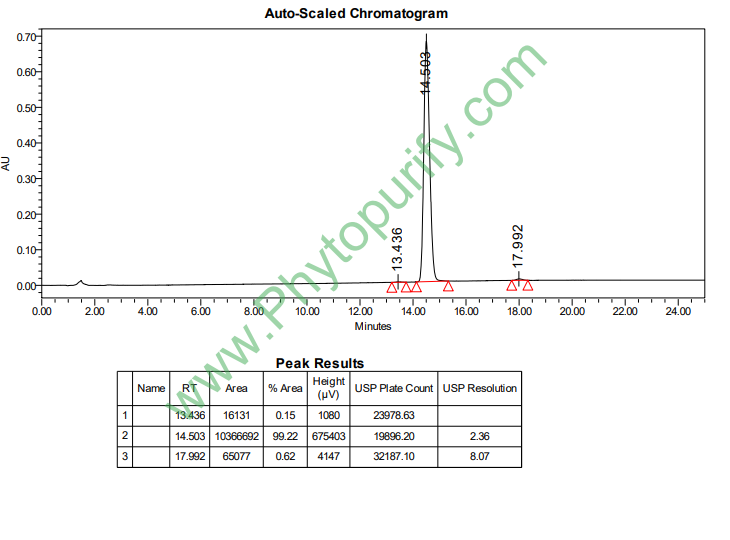
Purity: 95%~99%
Analysis Method: HPLC-DAD or/and HPLC-ELSD
Identification Method: Mass, NMR
Packing: Brown vial or HDPE plastic bottle
Storage: Store in a well closed container, protected from air and light. Put into refrigerate or freeze for long term storage.
Whenever possible, you should prepare and use solutions on the same day. However, if you need to make up stock solutions in advance, we recommend that you store the solution as aliquots in tightly sealed vials at -20℃. Generally, these will be useable for up to two weeks.
The product could be supplied from milligrams to grams
Inquire for bulk scale.
Description:
Alisol A may be an autophagic inducer, it has anti-cancer activity, it presents inhibitory effects on cancer cell lines tested(HepG2, MDA-MB-231, and MCF-7 cells).
References:
Phytochemistry. 2016 Nov;131:150-157.
Structures and biological activities of the triterpenoids and sesquiterpenoids from Alisma orientale.
Sixteen triterpenoids and nine sesquiterpenoids were isolated from the rhizome of Alisma orientale. Structures of 16-oxo-11-anhydroAlisol A 24-acetate, 13β,17β-epoxy-24,25,26,27-tetranor-Alisol A 23-oic acid, 1αH,5αH-guaia-6-ene-4β,10β-diol, and alisguaiaone were elucidated by comprehensive spectroscopic data analysis.
METHODS AND RESULTS:
The cytotoxic, antibacterial, antifungal, anti-inflammatory, and α-glucosidase inhibitory activities of isolated terpenoids were evaluated. Triterpenoids Alisol A, Alisol A 24-acetate, 25-O-ethylAlisol A, 11-deoxyAlisol A, alisol E 24-acetate, alisol G, alisol B 23-acetate and sesquiterpenoids 1αH,5αH-guaia-6-ene-4β,10β-diol, 10-hydroxy-7,10-epoxysalvialane exhibited cytotoxicities against the three tested human cancer cell lines with IC50 values ranging from 11.5 ± 1.7 μM to 76.7 ± 1.4 μM. Triterpenoids Alisol A, 25-O-ethylAlisol A, 11-deoxyAlisol A, alisol E 24-acetate, alisol G, and 25-anhydroalisol F showed antibacterial activities against the Gram-positive strains Bacillus subtilis and Staphylococcus aureus with MIC values of 12.5-100 μg/mL. Sesquiterpenoid 4β,10β-dihydroxy-1αH,5βH-guaia-6-ene exhibited antibacterial activity against B. subtilis with an MIC value of 50 μg/mL, and 10-hydroxy-7,10-epoxysalvialane exhibited activity against S. aureus with an MIC value of 100 μg/mL. Compounds 16-oxo-11-anhydroAlisol A 24-acetate, alisol F, 25-anhydroalisol F, and alisguaiaone exhibited inhibitory effects on lipopolysaccharide-induced NO production in RAW 264.7 macrophage cells. None of the compounds showed obvious inhibitory activity against α-glucosidase.
HPLC of Alisol A
Storage conditions:Short-term storage at 2~8℃, long-term storage at -20 ~ -80℃
92.8600
4.5600
Low
No
No
No
No
No
No
No
Alisol A, CAS number 19885-10-0, is a natural product of tetracyclic triterpenoids derived from the rhizome of traditional Chinese medicine Alisma orientale. As one of the main active ingredients in Alisma, Alismatal A has received widespread attention in recent years due to its multi-target and multifunctional pharmacological activities. A large number of studies have shown that alisol A not only has significant anti-cancer activity, especially has inhibitory effect on many cancer cell lines such as liver cancer (HepG2), breast cancer (MDA MB-231, MCF-7), but also has multiple biological effects such as regulating metabolic diseases, anti-inflammatory, anti atherosclerosis and anti obesity. Its mechanism of action involves key metabolic regulatory pathways such as AMPK/ACC/SREBP-1c, SIRT1, PPAR α, as well as inhibition of the expression of MMP-2/-9 and various inflammatory factors, demonstrating excellent multi-target regulatory potential. This article aims to systematically review the chemical structure and physicochemical properties, plant sources and extraction methods, pharmacological activity and mechanism of action, pharmacological evaluation and pharmacokinetic characteristics of Alismatal A, and explore its clinical application prospects in depth, providing theoretical basis and research direction for the drug development of this natural product.
Zexiechun A belongs to the terpenoid tetracyclic triterpenoid class, with a molecular formula of C30H50O4 and a molecular weight of 490.71. Its structural features include a four ring skeleton and multiple hydroxyl functional groups, endowing it with strong biological activity. The LogP value of Alismatal A is about 4.56, indicating that it has good lipid solubility and is conducive to cell membrane penetration; The TPSA (topological polar surface area) is 92.86 Å ², indicating its adaptability in both polar and non-polar environments. Alismatal A contains 5 hydrogen bond receptors and may participate in various intermolecular interactions. Its blood-brain barrier permeability is low, indicating limited direct impact on the central nervous system. The in vitro toxicological evaluation showed that Alismatal A had no significant hepatotoxicity, cardiotoxicity, or hERG channel inhibition effect, and the Ames mutagenicity test was negative, indicating high safety and a good basis for drug development.
Alisma orientale A is mainly extracted from the rhizome of Alisma orientale. Alisma is a plant of the Alismataceae family, widely distributed in East Asia, and is a commonly used medicinal herb in traditional Chinese medicine for promoting diuresis and moistening. Its rhizome contains abundant triterpenoids, among which the content of Alismatal A is relatively high.
The extraction process usually uses organic solvent extraction combined with column chromatography separation. The commonly used extraction solvents include ethanol, methanol, and their aqueous solutions, and the extraction temperature and time need to be optimized to ensure the stability of the active ingredients. After concentration, the extract was purified using techniques such as silica gel column chromatography and reverse phase high performance liquid chromatography (RP-HPLC) to obtain high-purity Alismatal A. In recent years, ultrasound assisted extraction and supercritical CO2 extraction techniques have also been applied to the efficient extraction of Alismatal A, significantly improving extraction efficiency and purity while reducing the use of organic solvents, in line with the concept of green extraction.
Zexiechun A exhibits significant inhibitory effects in various cancer cell lines. In vitro experiments showed that alisol A could inhibit the proliferation and induce apoptosis of HepG2 cells, MDA-MB-231 cells and MCF-7 cells of breast cancer cells. Its anti-tumor activity is closely related to cell cycle arrest, regulation of apoptosis related protein expression, and induction of autophagy. Partial studies have shown that Alismatal A inhibits tumor cell growth and migration by activating the AMPK signaling pathway, suppressing lipid synthesis and energy metabolism. In addition, Alismatal A can also inhibit the expression of matrix metalloproteinases MMP-2 and MMP-9, reducing the invasion and metastasis ability of tumor cells.
The role of Alismatal A in metabolic diseases is increasingly being recognized. It exhibits significant anti obesity effects by activating the AMPK/ACC/SREBP-1c pathway, regulating lipid metabolism, and reducing fat production. The activation of SIRT1 and PPAR α further promotes fatty acid oxidation and energy metabolism, which helps improve insulin resistance and fatty liver. Alismatol A can also play an anti-inflammatory and antioxidant role and slow down the process of atherosclerosis by inhibiting inflammatory cytokines (IL-1 β, IL-6, IL-8) and regulating the oxidative stress related factor NFE2L2.
Zexiechun A can significantly inhibit the expression of various inflammatory factors and alleviate inflammatory reactions. It inhibits the production of pro-inflammatory cytokines and reduces the promoting effect of the inflammatory microenvironment on disease development by regulating signaling molecules such as STAT3 and PRKCA. In addition, Alismatal A also has a certain regulatory effect on immune cell function, which may improve the pathological state of chronic inflammation related diseases by regulating the activation status of immune cells.
Zexiechun A exhibits certain antiviral and hepatoprotective effects in a hepatitis B model, which may be related to its regulation of liver cell metabolism and immune microenvironment. In addition, its protective effect on the cardiovascular system has gradually been revealed, mainly through anti atherosclerosis and antioxidant mechanisms.
The multi-target mechanism of action of Alismatal A is the basis for its broad pharmacological activity. The main targets and signaling pathways include:
AMPK(PRKAA1)As a cellular energy sensor, the activation of AMPK is the core of the regulation of metabolism and anti-tumor effects of Alismatal A. By activating AMPK, Alismatal A promotes fatty acid oxidation, inhibits lipid synthesis, regulates cellular energy balance, and thereby inhibits tumor cell proliferation and metabolic abnormalities.
SIRT1 Alismatal A activates SIRT1, promotes deacetylation reaction, regulates metabolism related transcription factors, and improves metabolic disorders and inflammatory states.
PPARαAs a key nuclear receptor for lipid metabolism, activation of PPAR α promotes fatty acid beta oxidation, reduces fat accumulation and inflammatory response.
MMP-2/-9 Alismatal A inhibits the expression of matrix metalloproteinases and reduces the invasion and metastasis ability of tumor cells.
Inflammatory factors (IL-1 β, IL-6, IL-8)By inhibiting the expression of these pro-inflammatory factors, Alismatal A reduces the inflammatory microenvironment and exerts anti-inflammatory effects.
STAT3、PRKCA、NFE2L2 These signaling molecules are involved in inflammation regulation, cell survival, and antioxidant response, and Alismatal A exerts multiple protective effects by regulating them.
In addition, Alismatal A also has regulatory effects on targets such as PTPN1, ABCB1, ALOX15, SHBG, TOP1, HIF1A, involving multiple aspects such as cell signaling, drug transport, lipid metabolism, and hypoxia response, reflecting its complex multi-target pharmacological properties.
Zexiechun A has good pharmacological parameters. Its molecular weight is 490.71, which falls within the range of most small molecule drugs; A LogP value of 4.56 indicates good lipid solubility, which is beneficial for oral absorption. The TPSA is 92.86 Å ², and moderate polarity helps balance solubility and membrane permeability. In vitro safety assessment showed no hepatotoxicity, cardiotoxicity, or genotoxicity, and did not inhibit hERG channels, reducing the risk of arrhythmia.
Pharmacokinetic studies have shown that Alismatal A has good oral bioavailability and is mainly distributed in the liver and metabolically active tissues, meeting its targeted needs for the treatment of liver and metabolic diseases. Its blood-brain barrier permeability is low, reducing the possibility of central nervous system side effects. The metabolic pathway is mainly through the liver enzyme system, and the activity of metabolites still needs further research. Excretion is mainly through bile and feces, with a moderate half-life, suitable for daily administration.
At present, the pharmacokinetic data of Alismatal A is relatively limited. In the future, it is necessary to strengthen in vivo metabolism, drug interactions, and long-term toxicology research to improve its clinical development foundation.
Zexiechun A, with its multi-target and multifunctional pharmacological properties, has demonstrated broad clinical application potential in multiple disease fields. Its research in the field of anti-tumor has made initial progress, especially in the treatment of liver cancer and breast cancer, it has shown good in vitro and in vivo activity. In the future, it can be combined with existing chemotherapy drugs to enhance the efficacy and reduce side effects.
In metabolic diseases such as obesity, nonalcoholic fatty liver disease (NAFLD), atherosclerosis, etc., Alismatol A provides a new treatment strategy by regulating energy metabolism and inflammatory response. Its anti-inflammatory and antioxidant effects also provide the possibility for intervention in chronic inflammation related diseases.
In addition, the potential application of Alismatal A in viral liver diseases such as hepatitis B suggests that it may become a new candidate drug for comprehensive treatment of liver diseases.
Future research should focus on:
Preclinical and clinical research Systematically evaluate the pharmacodynamics, safety, and dose-response relationship of Alismatal A, and promote clinical trials.
Formulation development Optimize oral formulations to improve bioavailability and targeting.
Combination therapy research Explore synergistic effects with existing drugs to enhance treatment efficacy.
In depth analysis of the mechanism Using multi omics techniques to reveal the comprehensive action network of Alismatal A and discover potential new targets.
Pharmacokinetics and toxicology Improve metabolic pathways and long-term safety data in the body.
In summary, as a natural product with multiple biological activities, Alismatal A has the potential to become a novel multifunctional drug, and future research and development are worthy of continuous attention.
As an important active ingredient in Alisma, Alismatal A has shown broad application prospects in fields such as anti-cancer, metabolic diseases, anti-inflammatory, and liver diseases due to its unique chemical structure and multi-target pharmacological activity. Its good pharmaceutical properties and safety have laid a solid foundation for clinical development. Although the understanding of its mechanism of action and pharmacokinetics is not yet complete, with the advancement of modern pharmacology and medicinal chemistry technology, Alismatal A is expected to become an important candidate molecule in the development of natural product drugs. In the future, through systematic preclinical research and clinical trial verification, Alismatal A is expected to provide new strategies and choices for the treatment of various major diseases, promoting the application and development of natural products in modern medicine.
