


Product name: Neochlorogenic acid
Synonym name: Caffeoylquinic acid
Catalogue No.: BP0083
Cas No.: 906-33-2
Formula: C16H18O9
Mol Weight: 354.311
Botanical Source:
Physical Description: Powder
Type of Compound: Phenylpropanoids
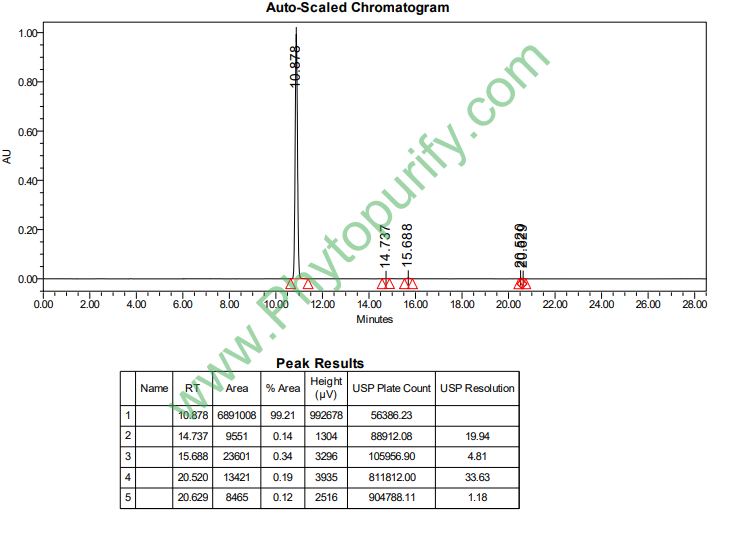
Purity: 95%~99%
Analysis Method: HPLC-DAD or/and HPLC-ELSD
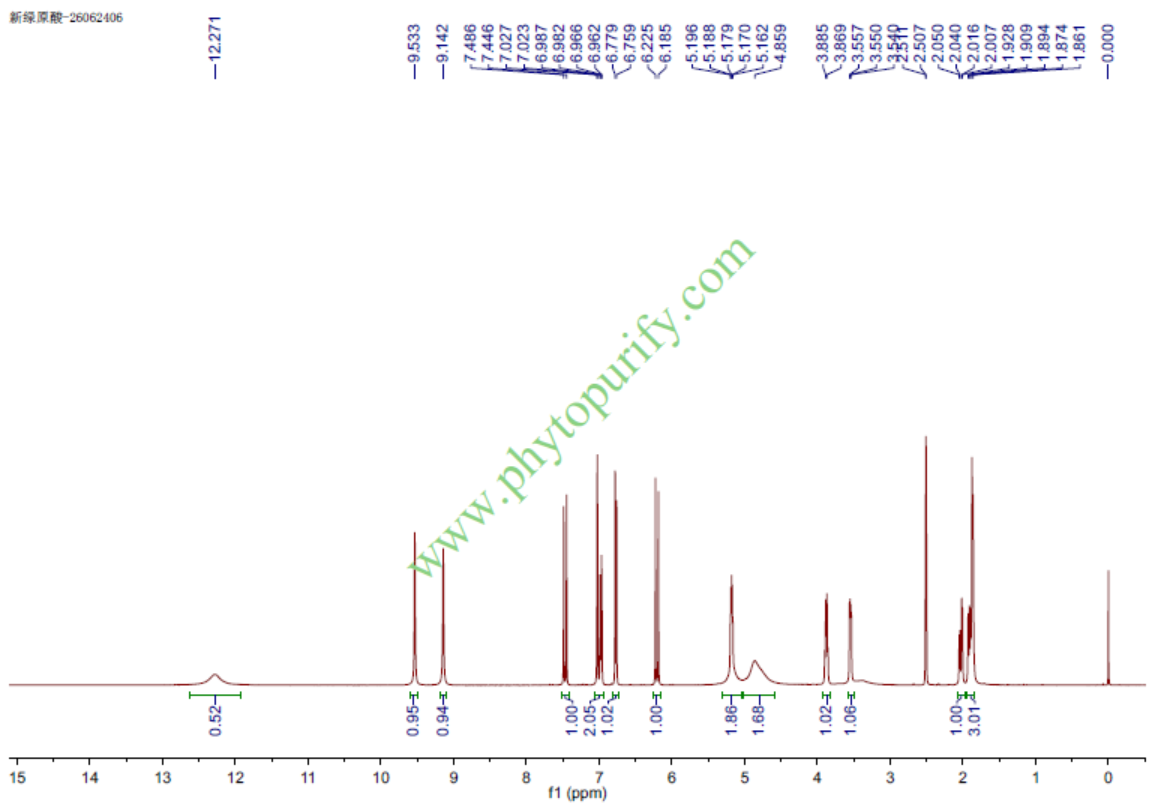
Identification Method: Mass, NMR
Packing: Brown vial or HDPE plastic bottle
Storage: Store in a well closed container, protected from air and light. Put into refrigerate or freeze for long term storage.
Whenever possible, you should prepare and use solutions on the same day. However, if you need to make up stock solutions in advance, we recommend that you store the solution as aliquots in tightly sealed vials at -20℃. Generally, these will be useable for up to two weeks.
The product could be supplied from milligrams to grams, up to kilograms
Inquire for bulk scale.
Descriptions:
Neochlorogenic acid (NCA) is a natural polyphenolic compound found in dried fruits and other plants, has shown that phenolic acids including NCA have outstanding antioxidant, antibacterial, antiviral, and antipyretic activities, it also exerts neuroprotective effects through the inhibition of pro-inflammatory pathways in activated microglia.[1]
Neochlorogenic acid (NCGA), chlorogenic acid (CGA) and its isomer, were found to be the major phenolic compounds in the flesh and peel of three peach cultivars, the high concentrations of CGA and NGA in immature fruits might contribute to their reduced susceptibility or increased resistance to brown rot infection by interfering with fungal melanin production.[2]
Neochlorogenic acid and chlorogenic acid could be colon cancer suppressive components of the prune.[3]
References:
[1] Kim M, Choi S Y, Lee P, et al. Neurochem Res, 2015, 40(9):1792-8.
[2] Villarino M, Sandín-Espa?a P, Melgarejo P, et al. J Agr Food Chem, 2011, 59(7):3205-13.
[3] Lee S O, Thurow T, Rom C R, et al. UARKive, 2012,5.
[4] Bing H E, Yang S Y, Yan Z. J Chinese Pharm Sci, 2012, 47(16):1280-4.
HPLC of Neochlorogenic acid
HNMR of Neochlorogenic acid
Storage conditions:Short-term storage at 2~8℃, long-term storage at -20 ~ -80℃
164.7500
-.2918
-2.3181
6.0512
.6246
.2730
Low
67.1825
3.8711
Yes
No
No
No
Yes
No
0.0
Yes
Yes
Yes
Yes
Natural products, as a treasure trove for drug discovery and development, play an irreplaceable role in the history of human disease prevention and treatment. Among them, polyphenolic compounds have become a hot topic in modern pharmacological research due to their extensive biological activity and low toxicity. Neochlorogenic acid (NCA), also known as trans-5-O-caffeoyl-D-quinic acid, is an important member of the chlorogenic acid family and belongs to the hydroxycinnamic acid ester class. Its CAS number is 906-33-2, and it is widely found in various plant-based foods and medicinal plants, such as coffee beans, honeysuckle, chrysanthemums, peaches, plums, and various berries.
In recent years, with the advancement of analytical techniques and the deepening of pharmacological research, chlorogenic acid has surpassed its scope as a common dietary ingredient and demonstrated remarkable diversified biological activities. Numerous in vitro and in vivo studies have confirmed that its core pharmacological effects are concentrated in powerful antioxidant, anti-inflammatory, antibacterial, antiviral, and neuroprotective aspects. Of particular importance is that neochlorogenic acid can inhibit the expression of inducible nitric oxide synthase (iNOS), cyclooxygenase-2 (COX-2), as well as pro-inflammatory mediators such as tumor necrosis factor alpha (TNF - α) and interleukin-1 β (IL-1 β), by regulating key signaling pathways such as nuclear factor kappa B (NF - κ B) and mitogen activated protein kinase (MAPK). This provides a theoretical basis for its application in inflammation related diseases, including metabolic syndrome, neurodegenerative diseases, and even cancer prevention. Recent studies have further linked it to potential interventions for complex diseases such as obstructive sleep apnea (OSA), suggesting that its target network may be more extensive.
This article aims to systematically review the chemical properties, natural sources, extraction methods, pharmacological activities, molecular mechanisms of action, pharmacological characteristics, and clinical application prospects of chlorogenic acid, in order to provide comprehensive scientific references for the in-depth research and development of this natural product.
Novochlorogenic acid is a compound composed of quinic acid (cyclohexane polyol carboxylic acid) and caffeic acid (hydroxycinnamic acid) connected by ester bonds. Its specific structure is the condensation of the carboxyl group of trans caffeic acid with the 5th hydroxyl group on the D-quinic acid ring, forming an ester bond. This specific linking position (5-O-caffeoyl) distinguishes it from other isomers of chlorogenic acid (such as chlorogenic acid, i.e. 3-O-caffeoylquinic acid); The key chemical characteristics of chlorogenic acid, also known as 4-O-caffeoylquinic acid.
From a chemical classification perspective, neochlorogenic acid belongs to cinnamic acid esters and cyclic alcohol carboxylic acids. Its molecular formula is C ₁₆ H ₁₈ O ₉, and its molecular weight is 354.3110 g/mol. This molecule contains multiple phenolic hydroxyl and carboxyl groups, making it highly polar. The calculated topological polar surface area (TPSA) is as high as 164.75 Å ², which explains its good water solubility (approximately 6.05 mg/mL). The calculated value of its lipid water partition coefficient (LogP) is about -0.29, further confirming its hydrophilic characteristics. These physicochemical properties determine the distribution characteristics of chlorogenic acid in organisms, such as its high polarity and TPSA, which predict its ability to penetrate the blood-brain barrier as "low". This may pose a challenge to the direct pharmacological effects of central nervous system diseases, but may also reduce the risk of certain central side effects.
Novochlorogenic acid is relatively stable in the solid state, but in aqueous solutions, especially under light, heating, or alkaline conditions, its ester bonds may undergo hydrolysis to produce caffeic acid and quinic acid, or may undergo isomerization and conversion to other chlorogenic acids. Therefore, attention should be paid to controlling temperature, pH, and light avoidance conditions during extraction, storage, and formulation processes to maintain their chemical integrity.
Neochlorogenic acid is widely distributed in the plant kingdom and is an important product of the phenylpropanoid metabolic pathway in plants. Its main plant sources include:
1. coffee beans Rich in unbaked or lightly roasted coffee beans, it is one of the main components of chlorogenic acid in coffee.
2. honeysuckle Traditional Chinese medicine honeysuckle is rich in chlorogenic acid compounds, with chlorogenic acid being one of its active ingredients.
3. chrysanthemum Especially medicinal chrysanthemum varieties such as Hangbai chrysanthemum.
4. Rosaceae fruits Such as peaches, plums, apricots, cherries and their products (such as dried plums), especially with high content in the skin.
5. Berry category Blueberries, blackberries, raspberries, etc.
6. Other medicinal plants Such as Eucommia ulmoides, Gardenia jasminoides, etc.
The following methods are commonly used to extract chlorogenic acid from plant materials:
1. Solvent extraction method The most commonly used method. Due to the polarity of chlorogenic acid, water, methanol, ethanol, or their aqueous solutions are commonly used as extraction solvents. The ethanol water system is widely used due to its safety, environmental friendliness, and high extraction efficiency. Usually, heating reflux or ultrasound assisted extraction is used to improve the yield.
2. Microwave assisted extraction and ultrasound assisted extraction These modern extraction techniques utilize the energy of microwaves or ultrasound to destroy plant cell walls, accelerate solvent penetration and target component dissolution, and have the advantages of short extraction time, high efficiency, and low solvent usage.
3. Supercritical fluid extraction Supercritical CO ₂ is mainly used, but due to its weak polarity, entrainers (such as ethanol) are often added to improve the extraction ability of polar polyphenols. This method has mild conditions and no solvent residue, but the equipment cost is relatively high.
4. Column chromatography purification Crude extracts typically contain multiple phenolic acid compounds with similar structures. To further purify high-purity chlorogenic acid, macroporous adsorption resins (such as AB-8, D101), polyamide resins, or silica gel column chromatography are commonly used for separation and enrichment. High performance liquid chromatography (HPLC) and high-speed countercurrent chromatography (HSCCC) are effective methods for preparing high-purity monomer compounds.
The optimization of extraction process requires comprehensive consideration of raw material characteristics, target product purity requirements, cost, and environmental factors.
A large number of studies have revealed the multifaceted pharmacological activities of new chlorogenic acid, whose core functions revolve around antioxidant and anti-inflammatory effects, and extend to multiple systems.
antioxidant activity The catechol structure (caffeoyl moiety) in the new chlorogenic acid molecule is a potent electron donor that can directly scavenge free radicals (such as DPPH, ABTS ⁺ free radicals, superoxide anions, hydroxyl radicals) and has the ability to reduce metal ions (such as Fe ³ ⁺). Its antioxidant capacity is even stronger than some common antioxidants such as ascorbic acid and BHT. In addition, it can upregulate the endogenous antioxidant defense system of cells, such as activating the nuclear factor E2 related factor 2 (Nrf2) pathway, promoting the expression of glutathione (GSH), superoxide dismutase (SOD), and catalase (CAT), thereby alleviating oxidative stress damage.
anti-inflammatory activity This is one of the most highly regarded activities of chlorogenic acid. In lipopolysaccharide (LPS) - induced inflammation models of macrophages (such as RAW264.7) and microglia (such as BV2), chlorogenic acid can dose dependently inhibit the production of nitric oxide (NO) and prostaglandin E2 (PGE2), and significantly downregulate the mRNA and protein expression of pro-inflammatory cytokines such as TNF - α, IL-1 β, and IL-6. In animal models such as mouse ear swelling, rat arthritis and colitis models, new chlorogenic acid also exhibits good anti-inflammatory effects.
Neuroprotective effect Based on its anti-inflammatory and antioxidant properties, chlorogenic acid has shown protective potential in neurological disease models. It can inhibit neuroinflammation mediated by activated microglia, alleviate neuronal damage induced by β - amyloid (A β) or glutamate, and improve memory impairment. In Parkinson's disease and cerebral ischemia/reperfusion injury models, it has also been shown that neochlorogenic acid can reduce dopaminergic neuron death and cerebral infarction area.
Antibacterial and antiviral activity Research has shown that chlorogenic acid has a certain inhibitory effect on various bacteria (such as Staphylococcus aureus, Escherichia coli) and fungi. Its antiviral activity has also been reported, such as having a certain inhibitory effect on influenza A virus, herpes simplex virus, etc. The mechanism may be related to interference with virus adsorption or replication.
Antipyretic and analgesic activity Traditionally, plants rich in chlorogenic acid are commonly used for fever and pain management. Experimental studies have confirmed that neochlorogenic acid has antipyretic effects in animal models induced by yeast or LPS, and can reduce writhing reactions induced by acetic acid in mice, indicating its peripheral analgesic effect.
Other potential activities: The study also suggests that neochlorogenic acid has potential value in regulating glucose and lipid metabolism (potential anti diabetes activity), protecting cardiovascular (improving endothelial function), anti-tumor (inducing apoptosis of cancer cells, inhibiting proliferation) and protecting liver.
The multiple pharmacological activities of chlorogenic acid stem from its precise regulation of key intracellular signaling pathways. Its core mechanism of action is closely related to the inhibition of the two main pro-inflammatory signaling pathways, NF - κ B and MAPK.
Inhibition of NF - κ B signaling pathway NF - κ B is the core transcription factor of inflammatory response. In the resting state, NF - κ B (usually p65/p50 dimer) binds to the inhibitory protein I κ B α and exists in the cytoplasm. When stimulated by LPS and other factors, the I κ B kinase complex is activated, phosphorylated, and degraded, allowing NF - κ B to enter the nucleus and initiate transcription of genes such as iNOS, COX-2, TNF - α, IL-1 β, etc. Research has shown that neochlorogenic acid can effectively inhibit the phosphorylation and degradation of I κ B α, thereby preventing the nuclear translocation and DNA binding activity of NF - κ B p65 subunit, ultimately downregulating the expression of numerous downstream pro-inflammatory mediators.
Regulating the MAPK signaling pathway The MAPK family (including p38, JNK, ERK) plays a crucial role in cellular stress and inflammatory responses. New chlorogenic acid has been shown to significantly inhibit LPS induced phosphorylation activation of p38 MAPK and JNK, while the inhibitory effect on ERK may vary depending on cell type and conditions. By inhibiting p38 MAPK, neochlorogenic acid further affects the activity of downstream transcription factors (such as AP-1), synergistically suppressing inflammatory responses.
Regulating the Nrf2/ARE antioxidant pathway In addition to directly scavenging free radicals, neochlorogenic acid can also exert indirect antioxidant effects by activating the Nrf2 pathway. It may modify Keap1 protein to promote Nrf2 to break free from Keap1 binding and transfer to the nucleus, bind to antioxidant response elements, initiate transcription of phase II detoxifying enzymes and antioxidant enzymes (such as HO-1, NQO1, GCLC), and enhance cell resistance to oxidative damage.
Interactions with specific disease-related targets Recent network pharmacology and molecular docking analysis have provided new perspectives for understanding the role of chlorogenic acid in complex diseases. For example, in Obstructive sleep apnea (OSA)In the context of OSA, it is closely related to chronic intermittent hypoxia and systemic inflammation, which can increase the risk of neurodegeneration. Analysis shows that chlorogenic acid may exert its benefits by acting on multiple potential targets associated with OSA and its complications, including:
Although chlorogenic acid has significant in vitro activity, its development as a drug candidate molecule requires strict pharmacological evaluation.
Physicochemical and Preliminary ADMET Properties:
Pharmacokinetic study Current pharmacokinetic studies (mainly conducted in animal models such as rats) have shown that:
Formulation strategy To improve its bioavailability and targeting, researchers are exploring various novel drug delivery systems, such as liposomes, nanoparticles, microemulsions, phospholipid complexes, and cyclodextrin inclusion complexes. These technologies can protect neochlorogenic acid from premature degradation, enhance its transmembrane transport, and even achieve targeted delivery to specific tissues or cells.
The broad biological effects of new chlorogenic acid depict potential prospects for its application in multiple disease fields.
However, successfully translating it into clinical drugs still faces challenges:
* The issue of bioavailability It is necessary to significantly improve its oral absorption and target tissue distribution through pharmaceutical methods or structural modifications (such as prodrugs).
* Depth of mechanism of action The existing mechanism research is still mostly focused on the pathway level, and it is necessary to more accurately identify the molecular target proteins that it directly acts on and clarify their structure-activity relationships.
* High quality clinical evidence At present, the vast majority of research is still in the preclinical stage, and there is an urgent need to design rigorous randomized controlled clinical trials to verify their effectiveness, safety, and optimal dosage in humans.
* Standardization and Quality Control As a natural product, the source of raw materials, extraction process, and the content and purity of NCA in the finished product must be standardized to ensure product consistency and reliability.
Future research should focus on: 1) exploring its direct target using chemical and biological methods; 2) Develop efficient and targeted new drug delivery systems; 3) Conduct translational research from preclinical to clinical settings, particularly in the systematic evaluation of complex disease models such as OSA and neurodegenerative diseases; 4) Explore its synergistic effects with other drugs or active ingredients.
As a natural polyphenol widely present in daily diet and medicinal plants, chlorogenic acid has become a highly anticipated star molecule in the field of natural product pharmacology due to its excellent antioxidant, anti-inflammatory, and multi-target regulatory properties. From a chemical structure perspective, it is a delicate combination of quinic acid and caffeic acid; From a pharmacological perspective, it exhibits intervention potential for various chronic diseases by inhibiting key inflammatory pathways such as NF - κ B and MAPK, activating the Nrf2 defense system. Especially its association with disease related target networks such as obstructive sleep apnea has expanded its application imagination space.
Although new chlorogenic acid still faces challenges such as low bioavailability, need for further deepening of its mechanism of action, and lack of clinical evidence on the road to mature drugs, with the continuous progress of modern pharmacy, molecular biology, and clinical research methods, these bottlenecks are expected to be overcome one by one. Whether as a lead compound for developing new therapeutic drugs or as a core functional ingredient in functional foods and health products, chlorogenic acid contains enormous value. Continued in-depth basic and translational research will help fully tap into the potential of this natural treasure and contribute more natural wisdom and solutions to the cause of human health.
