
| Catalog No | Package | Original Price | Price | Inventory | Quantity | Operating |
|---|---|---|---|---|---|---|
| BP0898-5mg | 5mg | $250.00 | Sign in |
|


Synonym name: Luteolin 5-glucoside; Galuteolin
Catalogue No.: BP0898
Cas No.: 20344-46-1
Formula: C21H20O11
Mol Weight: 448.38
Botanical Source: Galega officinalis and other plant spp
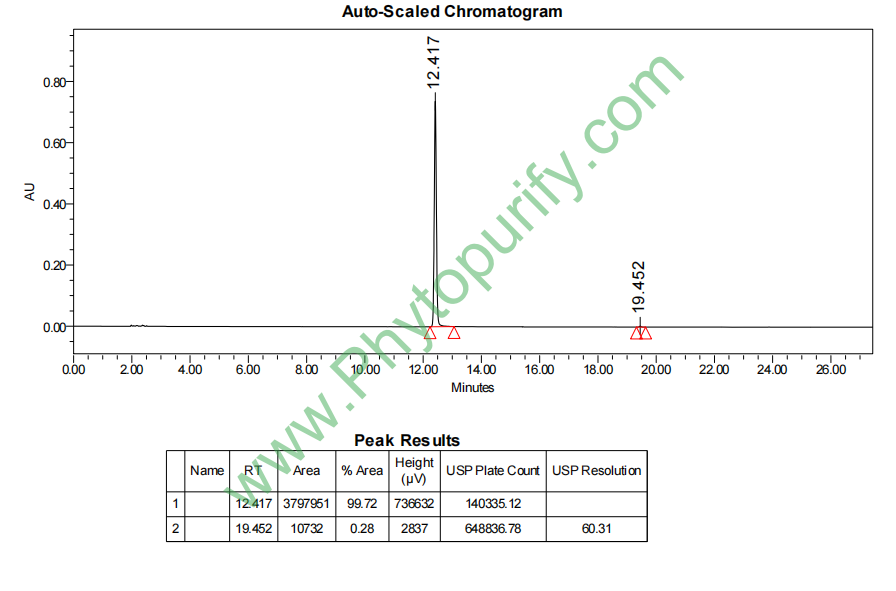
Purity: 95%~99%
Analysis Method: HPLC-DAD or/and HPLC-ELSD
Identification Method: Mass, NMR
Packing: Brown vial or HDPE plastic bottle
Can be supplied from milligrams to grams.
For Reference Standard and R&D, Not for Human Use Directly.
Inquire for bulk scale.
HPLC of Luteolin-5-O-glucoside
Storage conditions:Short-term storage at 2~8℃, long-term storage at -20 ~ -80℃
Natural products, as important resources for drug discovery, have long held a central position in pharmacological research and new drug development due to their structural diversity and wide range of biological activities. Flavonoids, as an important class of secondary metabolites in plants, have become a hot topic in natural product pharmacology research due to their significant multiple biological activities such as antioxidant, anti-inflammatory, anti-tumor, and neuroprotective effects. Luteolin-5-O-glucoside (CAS number: 20344-46-1) is a flavonoid glycoside mainly isolated from the Asteraceae plant Circium maackii. In recent years, an increasing number of studies have shown that this compound has significant anti-inflammatory activity, can regulate various inflammation related molecular targets, inhibit the generation of inflammatory mediators, and thus demonstrate potential application value in the prevention and treatment of inflammatory diseases.
This article provides a systematic review of the chemical structure and physicochemical properties, plant sources, and extraction methods of luteolin-5-O-glucoside. The focus is on exploring its pharmacological activity and mechanism of action, analyzing its pharmacokinetic characteristics based on drug parameters, and finally looking forward to its clinical application prospects, providing theoretical basis and research direction for the drug development of this natural product.
Luteolin-5-O-glucoside belongs to the flavonoid glycoside class of flavonoids, with a molecular formula of C21H20O11 and a molecular weight of 448.38. Its structure is formed by the O-glycosidic bond formed by the 5th hydroxyl group between luteolin, the flavonoid mother nucleus, and glucose. The basic skeleton of luteolin contains two aromatic rings (A ring and B ring) and a central oxygen heterocyclic ring (C ring). Glucosylation modification endows it with higher water solubility and potential for biological activity regulation.
In terms of physicochemical properties, the LogP value of luteolin-5-O-glucoside is -0.1856, indicating its strong hydrophilicity. Its water solubility is 1.6749 (unit not specified, but generally in mg/mL or mol/L), and its polarization surface area (TPSA) is 190.28 Å ², indicating its high polarity and the number of hydrogen bond donors/acceptors, which may affect its cell membrane permeability and bioavailability. The low permeability of the blood-brain barrier suggests that its role in the central nervous system is limited. The hERG channel inhibition experiment was negative, indicating a low risk of cardiac toxicity. The Ames test result is 0.6, indicating a low risk of genotoxicity and a good safety foundation.
Osmolin-5-O-glucoside is mainly found in the Asteraceae plant Circium maackii. Circium plants are widely distributed in temperate regions of Asia and have traditionally been used to treat inflammation, liver disease, and immune related diseases. The extraction of this compound is usually carried out using solvent extraction combined with chromatographic separation techniques.
The specific extraction steps include: collecting the aboveground parts of Circium maackii, drying and crushing them, and using methanol or ethanol aqueous solution (such as 70% ethanol) for reflux extraction. The extract was concentrated and separated, and then purified by techniques such as silica gel column chromatography and reverse phase high performance liquid chromatography (RP-HPLC) to obtain high-purity luteolin-5-O-glucoside. In recent years, green and efficient technologies such as ultrasound assisted extraction and microwave-assisted extraction have also been applied to the extraction of this compound, improving extraction efficiency and purity.
The anti-inflammatory effect of luteolin-5-O-glucoside is one of its most significant pharmacological activities. In vitro experiments have shown that this compound can significantly inhibit the production of nitric oxide (NO) in macrophages induced by lipopolysaccharide (LPS), reduce the excessive production of oxygen free radicals (ROS), and alleviate oxidative stress response. Its targets include inducible nitric oxide synthase (iNOS) and cyclooxygenase-2 (COX-2), both of which are key enzymes in the inflammatory response and participate in the synthesis of inflammatory mediators.
In addition, luteolin-5-O-glucoside can inhibit the expression of pro-inflammatory cytokines such as tumor necrosis factor alpha (TNF - α) and interleukin-6 (IL-6), regulate the nuclear factor kappa B (NF - κ B) signaling pathway, and alleviate inflammatory responses. Based on its regulatory effect on macrophages, luteolin-5-O-glucoside has shown good protective effects in various inflammatory disease models.
Luteolin-5-O-glucoside reduces oxidative stress damage and protects cells from oxidative damage by inhibiting peroxide free radicals (t-BHP induced ROS generation). Its antioxidant capacity is closely related to the electron supply ability of the hydroxyl groups in its flavonoid structure. Glucosylation modification further enhances its water solubility, which is beneficial for in vivo distribution and antioxidant effects.
Although current research is mostly focused on anti-inflammatory and antioxidant effects, the potential of luteolin-5-O-glucoside in regulating cell apoptosis, immune regulation, and neuroprotection is gradually being recognized. Its regulation of signal transduction molecules such as STAT3, CASP1, TRPV1, TRPA1, etc. suggests that it may play a role in complex diseases such as tumors and neuropathy, and is worthy of further research.
The anti-inflammatory mechanism of luteolin-5-O-glucoside is mainly achieved through multi-target and multi pathway synergistic regulation. Its key targets and signaling pathways include:
Through the multi-target effects mentioned above, luteolin-5-O-glucoside not only inhibits the production of inflammatory mediators, but also regulates the function of immune cells, reduces tissue damage, and demonstrates its potential as a natural anti-inflammatory drug.
The pharmacological parameters of luteolin-5-O-glucoside show that it has certain advantages and limitations. The molecular weight is 448.38, which is within the molecular weight range of most oral small molecule drugs. Its LogP value is -0.1856, indicating that it has strong hydrophilicity, which is beneficial for dissolution in the blood, but may limit passive diffusion and absorption of the cell membrane. A higher TPSA (190.28 Å ²) suggests greater polarity, which may affect oral bioavailability and tissue penetration.
Good water solubility, beneficial for formulation development and in vivo distribution. The low permeability of the blood-brain barrier suggests limited application in central nervous system diseases, but also reduces the risk of central toxicity. HERG channel inhibition is negative, indicating high cardiac safety. The Ames test results are low and the risk of genotoxicity is small.
At present, there is relatively little research on the in vivo pharmacokinetics of luteolin-5-O-glucoside. It is preliminarily speculated that its glucoside structure may be hydrolyzed into luteolin in the gastrointestinal tract, affecting its biological activity and metabolic fate. In the future, it is necessary to systematically study its absorption, distribution, metabolism, and excretion (ADME) characteristics to guide clinical applications and dosage form design.
Given the significant anti-inflammatory and antioxidant activities of luteolin-5-O-glucoside, its application prospects in various inflammation related diseases are broad. Including but not limited to:
Future research should focus on the in vivo pharmacokinetics, toxicological evaluation, and preclinical animal model validation of luteolin-5-O-glucoside, combined with modern pharmaceutical formulation technology to enhance its bioavailability and targeting. In addition, structural modification and derivative development are also effective strategies to enhance its efficacy and drug properties.
As a natural flavonoid glycoside derived from Circium maackii, hesperidin-5-O-glucoside has shown great potential in the prevention and treatment of inflammation related diseases due to its significant anti-inflammatory and antioxidant activities. The multi-target and multi pathway mechanism of action provides new ideas for the development of natural anti-inflammatory drugs. Although research on its pharmacokinetics and clinical applications in vivo is still in its early stages, its good safety and pharmacological parameters have laid the foundation for subsequent studies. In the future, through systematic pharmacology and pharmacokinetics research, combined with modern drug design and formulation technology, it is expected to promote the clinical translation of luteolin-5-O-glucoside and become an important candidate for natural anti-inflammatory drugs.
