


Product name: 3,4-Dicaffeoylquinic acid
Synonym name: Isochlorogenic acid B
Catalogue No.: BP0055
Cas No.: 14534-61-3
Formula: C25H24O12
Mol Weight: 516.455
Botanical Source: Lonicera japonica Thunb.
Physical Description:
Type of Compound: Phenylpropanoids
Purity: 95%~99%
Analysis Method: HPLC-DAD or/and HPLC-ELSD
Identification Method: Mass, NMR
Packing: Brown vial or HDPE plastic bottle
Storage: Store in a well closed container, protected from air and light. Put into refrigerate or freeze for long term storage.
Whenever possible, you should prepare and use solutions on the same day. However, if you need to make up stock solutions in advance, we recommend that you store the solution as aliquots in tightly sealed vials at -20℃. Generally, these will be useable for up to two weeks.
The product could be supplied from milligrams to grams
Inquire for bulk scale.
Description:
Isochlorogenic acid B has antioxidant activity, it is a potential PDE-5 inhibitor.
References:
J Biomol Struct Dyn. 2010 Apr;27(5):627-40.
Virtual screening and drug design for PDE-5 receptor from traditional Chinese medicine database.
From docking analyses, Isochlorogenic acid B was identified as the most potential inhibitory compound. De novo evolution designed 47 derivatives. Of the 47 derivatives, seven were able to map into the pharmacophore model, and these seven compounds were suggested to be the most promising leads for inhibiting PDE-5. An analysis of the hydrogen bond interactions formed between the docked ligands and PDE-5 identified ASN662, SER663 and GLN817 as the most frequently interacting residues. A total of eight novel leading compounds were identified to have favorable interaction with PDE-5. These compounds all had hydrogen bond interactions with three key residues that could be further investigated for understanding of PDE-5 and ligands interaction.
PLoS One. 2014 Sep 2;9(9):e106254.
The activity-integrated method for quality assessment of reduning injection by on-line DPPH-CE-DAD.
A sensitive on-line DPPH-CE-DAD method was developed and validated for both screening and determining the concentration of seven antioxidants of Reduning injection. The pH and concentrations of buffer solution, SDS, β-CD and organic modifier were studied for the detection of DPPH and seven antioxidants. By on-line mixing DPPH and sample solution, a DPPH-CE method for testing the antioxidant activity of the complex matrix was successfully established and used to screen the antioxidant components of Reduning injection. Then, antioxidant components including caffeic acid, isochlorogenic acid A, Isochlorogenic acid B, isochlorogenic acid C, chlorogenic acid, neochlorogenic acid and cryptochlorogenic acid were quantified by the newly established CE-DAD method.
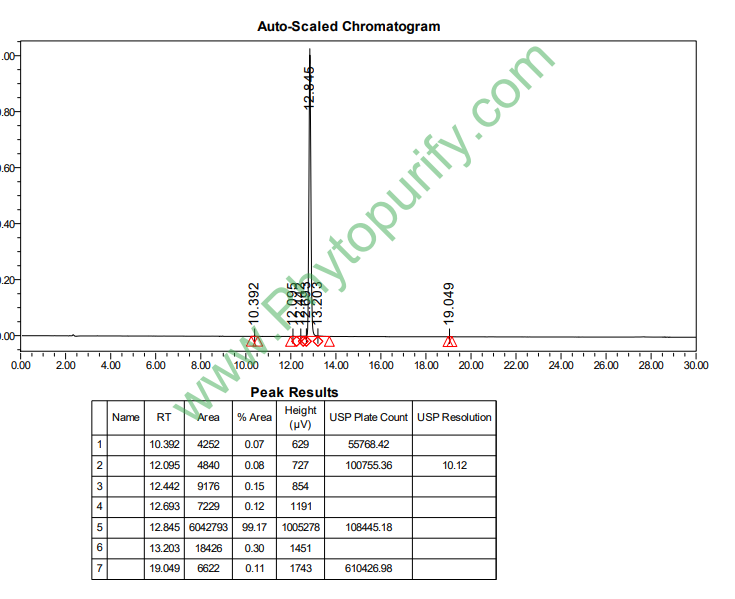
HPLC of 3,4-Dicaffeoylquinic acid
Storage conditions:Short-term storage at 2~8℃, long-term storage at -20 ~ -80℃
211.2800
1.1220
-1.0335
.8467
.7765
.2635
Low
88.9185
4.1411
No
No
No
No
Yes
No
0.0
Yes
Yes
Yes
Yes
Natural products have long been an important source of innovative drug discovery, and their structural diversity and wide range of biological activities provide valuable lead compounds for the treatment of various diseases. Chlorogenic acid compounds are a class of phenylpropanoid compounds widely present in the plant kingdom. They are a series of derivatives of caffeoylquinic acid and are abundant in various medicinal plants and foods such as honeysuckle, chrysanthemum, and coffee beans. Isochlorogenic acid B, also known as 3,4-di-O-caffeoylquinic acid, is an important member of the chlorogenic acid compound family. Its CAS number is 14534-61-3 and it is a conjugated acid of 4,5-di-O-caffeoylquinic acid.
In recent years, with the rapid development of modern separation and identification techniques and pharmacological research methods, various biological activities of isochlorogenic acid B have gradually been revealed. Research has shown that it not only has significant basic biological activities such as antioxidant and anti-inflammatory properties, but also exhibits unique potential in DNA protection, neuroprotection, liver protection, antiviral effects, and regulation of glucose metabolism. It is particularly noteworthy that its mechanism of action in the field of antiviral drugs is different from the traditional strategy of directly inhibiting virus replication, but enhances virus clearance by regulating host immune factors such as TRAIL, which provides new ideas for the development of antiviral drugs. In addition, its inhibitory activity against α - glucosidase and its potential ability to regulate apoptosis have also attracted attention in the field of diabetes and cancer prevention.
This article aims to provide a systematic review of the chemical structure, plant origin, pharmacological activity, mechanism of action, medicinal properties, and clinical application prospects of isochlorogenic acid B, in order to provide comprehensive scientific references for the in-depth research and development of this compound.
The chemical name of isochlorogenic acid B is 3,4-di-O-caffeoylquinic acid, which is one of the isomers of dicaffeoylquinic acid formed by ester bonding between quinic acid and caffeic acid. Its molecular formula is C25H24O12, with a molecular weight of 516.4550 Da. Its core structure is quinic acid (a cyclohexane polyol acid), which is connected to a caffeoyl group (i.e. 3,4-di-O-caffeoyl group) through an ester bond at the 3rd and 4th hydroxyl groups of the quinic acid ring. Caffeoyl is derived from caffeic acid with a phenylpropanoid structure, endowing the molecule with a conjugated system and phenolic hydroxyl groups, which are key pharmacophores for its antioxidant and other activities.
From the analysis of physical and chemical properties, the logarithm of the lipid water partition coefficient (LogP) of isochlorogenic acid B is 1.1220, indicating that it has a certain degree of lipophilicity, but overall it still leans towards hydrophilicity. Its topological polar surface area (TPSA) is as high as 211.2800 Å ², mainly attributed to the presence of multiple polar groups such as hydroxyl, carboxyl, and ester bonds in the molecule. A higher TPSA usually affects its transmembrane permeability. Its water solubility value is 0.8467 (usually measured in mg/mL or log mol/L, indicating moderate to low water solubility), which is consistent with its high polarity and molecular weight. Taking into account LogP and TPSA, isochlorogenic acid B conforms to some principles of the "Five Rules for Generic Drugs", but its high molecular weight and TPSA may pose challenges to its oral bioavailability.
In the preliminary evaluation of drug properties, the compound was predicted to have no inhibitory activity on hERG potassium channels, which reduces its potential risk of inducing QT interval prolongation and apical torsion type ventricular tachycardia, making it a favorable safety indicator. The predicted value of Ames test is 0.0, indicating that it may not be mutagenic, but further confirmation through experiments is needed. However, its blood-brain barrier permeability is predicted to be 'low', which means it may be difficult to enter the central nervous system through passive diffusion, which is a barrier that needs to be overcome for the treatment of central nervous system diseases.
Isochlorogenic acid B is widely distributed in nature and mainly exists in plants such as Asteraceae and Lonicera japonica. It is one of the key active ingredients in many traditional Chinese medicines and functional foods.
Main plant sources:
1. Asteraceae plants This is one of the most abundant sources of isochlorogenic acid B. For example, medicinal chrysanthemums(Chrysanthemum morifolium)It contains high levels of isochlorogenic acid B in different cultivated varieties, often coexisting with chlorogenic acid, isochlorogenic acid A, C, and others. Wild chrysanthemum(Chrysanthemum indicum)It is also an important source. In addition, dandelion, mugwort and other Asteraceae plants also contain this type of component.
2. Honeysuckle plants in the family Lonicera Honeysuckle flower(Lonicera japonica)It is an essential herb in traditional Chinese medicine for clearing heat and detoxifying, containing a large amount of chlorogenic acid compounds. Isochlorogenic acid B is one of its characteristic components and is often used as an indicator ingredient for quality control of honeysuckle medicinal materials.
3. Other plants There are also small amounts of isochlorogenic acid B present in coffee beans, echinacea, thistle, and some vegetables and fruits.
Extraction and Separation Methods:
The extraction and separation of isochlorogenic acid B usually follow the conventional process of natural product chemistry, but the conditions need to be optimized for its high polarity and relative sensitivity to heat and light.
1. extraction process Common solvent extraction methods. Due to its good polarity and water solubility, methanol, ethanol, and acetone water mixed solutions are commonly used extraction solvents. In order to improve extraction efficiency and reduce impurities, modern technologies such as ultrasound assisted extraction, microwave-assisted extraction, and pressurized liquid extraction have been widely used. These methods can shorten extraction time, reduce solvent consumption, and potentially improve the yield of target compounds.
2. Separation and purification After filtration and concentration, crude extracts are usually separated and purified using various chromatographic techniques. Macroporous adsorption resin chromatography (such as AB-8 and D101) is commonly used for preliminary enrichment of chlorogenic acid compounds, utilizing their adsorption and elution properties with different concentrations of ethanol to remove large polar impurities such as sugars and proteins. Further purification relies on high-performance liquid chromatography, especially preparative high-performance liquid chromatography, which uses a C18 reverse phase chromatography column and gradient elution with methanol water or acetonitrile water (usually added with a small amount of formic acid or acetic acid to adjust pH, inhibit phenolic acid ionization, and improve peak shape) as the mobile phase. This is currently the most effective method for obtaining high-purity isochlorogenic acid B monomer. High speed counter current chromatography, as a liquid-liquid distribution chromatography technique without solid carriers, has also been used for the separation of such compounds due to its high recovery rate and large preparation capacity.
A large number of in vitro and in vivo pharmacological studies have shown that isochlorogenic acid B has multiple biological activities, and its effects are broad and unique.
Antioxidant and DNA protective activities The multiple phenolic hydroxyl groups in the molecule of isochlorogenic acid B are the structural basis for its strong antioxidant capacity. It can effectively scavenge free radicals such as DPPH and ABTS, and exhibits significant iron ion reduction ability. In cellular models, it can alleviate oxidative damage induced by hydrogen peroxide (H ₂ O ₂) or other oxidative stressors. This antioxidant effect is directly related to its DNA protective effect, which involves clearing reactive oxygen species to prevent oxidative attacks on DNA strands and maintain genomic stability.
Neuroprotective activity In experimental models of neurodegenerative diseases such as Alzheimer's disease and Parkinson's disease, isochlorogenic acid B has shown protective potential. The mechanism may involve: ① antioxidant stress, reducing neuronal mitochondrial dysfunction; ② Inhibit neurotoxicity induced by β - amyloid protein (A β); ③ Anti neuroinflammation, inhibition of inflammatory factors produced by excessive activation of microglia; ④ Possible cholinesterase inhibitory activity (needs further validation). Although its blood-brain barrier permeability is low, it is expected to increase its concentration in the brain through structural modifications or drug delivery system improvements.
Liver protective activity Isochlorogenic acid B has a protective effect on chemical (such as acetaminophen, carbon tetrachloride) and alcoholic liver injury. It can reduce the levels of transaminase (ALT, AST) in serum and alleviate pathological changes in liver tissue. Its hepatoprotective effect is related to multiple mechanisms such as anti lipid peroxidation, inhibition of inflammatory factors (such as TNF - α, IL-6) release, regulation of liver cell apoptosis and autophagy balance.
Antiviral activity This is one of the most distinctive activities of isochlorogenic acid B. Research has shown that it has a certain inhibitory effect on influenza virus, human immunodeficiency virus (HIV), herpes simplex virus (HSV), and other viruses. Of particular importance is that its antiviral mechanism does not directly target viral proteins, but rather upregulates the expression of the host cytokine TRAIL (tumor necrosis factor related apoptosis inducing ligand). TRAIL can selectively induce apoptosis in virus-infected cells, thereby clearing the virus "factory" without damaging normal cells, which is a unique immune regulatory antiviral strategy.
α - glucosidase inhibition and hypoglycemic potential Isochlorogenic acid B can competitively inhibit the activity of alpha glucosidase, a key enzyme in the intestine that catalyzes the breakdown of carbohydrates into monosaccharides. By inhibiting this enzyme, glucose absorption can be delayed and postprandial blood glucose peak can be reduced. This makes it potentially valuable in the prevention and adjuvant treatment of type 2 diabetes.
Apoptosis mediated cytotoxicity In certain tumor cell line studies, isochlorogenic acid B exhibits concentration dependent growth inhibition and pro apoptotic effects. It may activate the Caspase cascade through the mitochondrial pathway or death receptor pathway, inducing tumor cell apoptosis. However, this cytotoxicity is selective and has relatively low toxicity to normal cells, but its specific selective mechanism and spectrum still need to be further explored.
The multiple pharmacological activities of isochlorogenic acid B stem from its interactions with multiple biomolecule targets, forming a complex network. Based on the provided target information and existing literature, its mechanism of action can be summarized as follows:
Energy Metabolism and Cardiac Protection (AMPK, PRKAA1)Adenosine activated protein kinase (AMPK) is a core regulatory factor in cellular energy metabolism. Isochlorogenic acid B may improve the energy supply of myocardial cells by activating AMPK, promoting fatty acid oxidation and glucose uptake, inhibiting synthetic metabolism, and combating myocardial energy metabolism disorders in heart failure. The activation of AMPK can also inhibit myocardial hypertrophy and fibrosis, exerting a direct cardioprotective effect.
Epigenetic regulation (EHMT2)EHMT2 (G9a) is a histone methyltransferase that catalyzes the dimethylation of histone H3 lysine 9 (H3K9me2), typically associated with gene transcription inhibition. Inhibition of EHMT2 may reverse abnormal gene silencing in certain pathological states. Isochlorogenic acid B may participate in regulating gene expression networks related to cell differentiation, apoptosis, or inflammation by affecting EHMT2 activity.
Neuropathological process related targets:
Inflammatory and oxidative stress-related targets:
Drug transport and efflux (ABCB1, ABCG2)ABCB1 (P-gp) and ABCG2 (BCRP) are important efflux transporters that affect drug absorption in the intestine, blood-brain barrier penetration, and accumulation in tumor cells. The interaction between isochlorogenic acid B and these transporters (as substrates or inhibitors) will directly affect its own pharmacokinetic behavior and interactions with other co administered drugs.
Unique antiviral mechanism (TRAIL pathway)As mentioned earlier, isochlorogenic acid B upregulates TRAIL expression, activates death receptors on the surface of virus-infected cells (such as DR4/DR5), initiates the Caspase-8-mediated exogenous apoptosis pathway, and selectively clears virus-infected cells. This mechanism does not directly rely on a single enzyme or receptor target, but rather achieves it by regulating the host immune response.
In summary, the synergistic effect of isochlorogenic acid B through multiple targets and pathways constitutes its broad pharmacological activity basis, reflecting the complexity of the mechanism of action of natural products.
Although isochlorogenic acid B has rich biological activity, whether it can be developed into an ideal drug still requires systematic pharmacological evaluation.
Preliminary drug analysis based on computational parameters:
As mentioned earlier, its molecular weight (516.5) is slightly higher than the ideal range (<500), higher TPSA (>140), and predicted low blood-brain barrier permeability, suggesting that its oral absorption and central distribution may be poor. However, its LogP is moderate, there is no risk of hERG inhibition, and the Ames test predicts negative results, which are positive aspects.
In vitro and in vivo pharmacokinetic studies:
Existing limited research indicates that the oral bioavailability of chlorogenic acid compounds (including isochlorogenic acid B) is generally low. This is mainly attributed to:
1. Intestinal stability Under the alkaline environment and microbial community of the intestine, ester bonds may undergo hydrolysis and be converted into caffeic acid and quinic acid or their monoesters.
2. Absorption and penetration The high polarity and molecular weight limit its passive transmembrane diffusion. It may be a substrate for intestinal transporters (such as oligopeptide transporter PEPT1) or efflux pumps (such as P-gp), with a complex absorption process and low efficiency.
3. First pass effect After absorption, it enters the liver through the portal vein and may undergo extensive II binding reactions (such as glucuronidation and sulfation).
4. distribution and elimination The prototype drug has a low concentration in plasma, a short half-life, and is mainly excreted through the kidneys and bile.
In order to enhance its medicinal properties, researchers are exploring various strategies:
* Structural modification Improve its lipid solubility and metabolic stability by esterification, salt formation, or preparation of prodrugs (such as ester prodrugs).
* Formulation technology Using drug delivery systems such as nanocrystals, liposomes, polymer micelles, and solid dispersions to improve solubility, promote intestinal absorption, delay metabolism, and achieve targeted delivery.
* combination therapy Co administration with drugs that inhibit their metabolic enzymes or efflux transporters may increase their bioavailability.
The systematic pharmacokinetic study, including the entire process of absorption, distribution, metabolism, and excretion (ADME), is a necessary path to promote the clinical application of isochlorogenic acid B.
As a multi active natural product, isochlorogenic acid B has broad clinical application prospects, but also faces challenges.
Potential application directions:
1. Adjuvant therapy for chronic metabolic and degenerative diseases: As a functional food additive or health product ingredient, it is used for the prevention and auxiliary treatment of type 2 diabetes (based on α - glucosidase inhibition), non-alcoholic fatty liver (based on liver protection and anti-inflammatory), and early intervention of neurodegenerative diseases (based on neuroprotection).
2. Antiviral adjuvant therapy Its unique immune regulatory antiviral mechanism makes it a beneficial supplement to traditional direct antiviral drugs, especially suitable for viruses that are prone to developing drug resistance (such as influenza virus, HIV), or for developing new antiviral strategies.
3. cardiovascular disease By activating targets such as AMPK and improving myocardial energy metabolism, it may provide new plant drug candidate molecules for the prevention and treatment of heart failure.
4. neoadjuvant therapy The activity of selectively inducing tumor cell apoptosis and the potential to reverse multidrug resistance (by inhibiting ABC transporters) are worthy of further exploration in tumor combination therapy.
Challenges and Future Prospects:
1. Deep analysis of the mechanism of action At present, the interaction modes (excitation/inhibition, direct/indirect) of most targets are not clear. It is necessary to use techniques such as molecular docking, surface plasmon resonance, gene knockout/knockdown to clarify their direct targets and signaling pathway networks.
2. Optimization of drug properties Low oral bioavailability is the biggest bottleneck. Future research should focus on systematic pharmacokinetic studies and actively develop novel delivery systems or conduct rational prodrug design.
3. Preclinical and clinical research It is urgent to conduct systematic efficacy and safety evaluations in animal models that are closer to human diseases, such as transgenic Alzheimer's disease models, humanized liver mouse models, etc., to lay a solid foundation for clinical trials.
4. Standardization and Quality Control As a natural product, the variety, place of origin, harvesting period, and extraction process of the plant from which it comes will all affect the content and purity of isochlorogenic acid B. It is crucial to establish a stable and controllable raw material supply chain and strict quality standards.
5. Multi component collaborative research In traditional Chinese medicines such as honeysuckle and chrysanthemum, isochlorogenic acid B often coexists with other isomers of chlorogenic acid and flavonoids. Studying its synergistic or antagonistic effects with other components is of great significance for elucidating the material basis of the efficacy of traditional Chinese medicine formulas.
Isochlorogenic acid B, as a naturally occurring compound of dicaffeoylquinic acid, exhibits multidimensional pharmacological activities such as antioxidant, neuroprotective, hepatoprotective, antiviral, hypoglycemic, and potential anti-tumor effects due to its diverse chemical functional groups. Its mechanism of action involves the regulation of multiple key targets such as AMPK, EHMT2, PTP1B, ALOX15, especially through upregulation of TRAIL to achieve immunomodulatory antiviral strategies, which is quite distinctive. However, the poor pharmacokinetic properties caused by its high polarity and large molecular weight are currently the main obstacles limiting its conversion into drugs.
Future research needs to comprehensively apply medicinal chemistry, pharmacology, and pharmacokinetics methods based on a deep understanding of its multi-target action network, and focus on solving the problem of low bioavailability. At the same time, promote preclinical research and standardized clinical trials of the system, and translate the findings of basic research into real clinical benefits. The research on isochlorogenic acid B not only contributes to the development of new drugs or functional products, but also provides an important entry point for a deeper understanding of the scientific connotation of traditional medicinal plants. With the continuous deepening of interdisciplinary integration, this natural molecule is expected to play a greater value in the field of human health.
