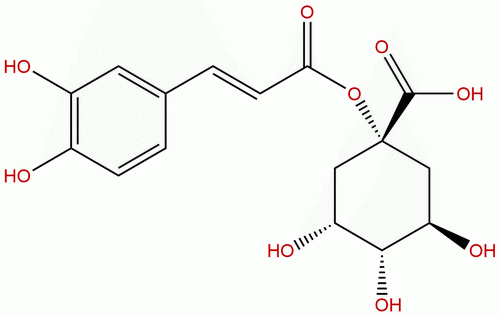
Product name: 1-O-Caffeoylquinic acid
Synonym name:
Catalogue No.: BPF9121
Cas No.: 1241-87-8
Formula: C16H18O9
Mol Weight: 354.311
Botanical Source:
Physical Description:
Type of Compound: Phenylpropanoids
Purity: 95%~99%
Analysis Method: HPLC-DAD or/and HPLC-ELSD
Identification Method: Mass, NMR
Packing: Brown vial or HDPE plastic bottle
The product could be supplied from milligrams to grams
Inquire for bulk scale.
For Reference Standard and R&D, Not for Human Use Directly.
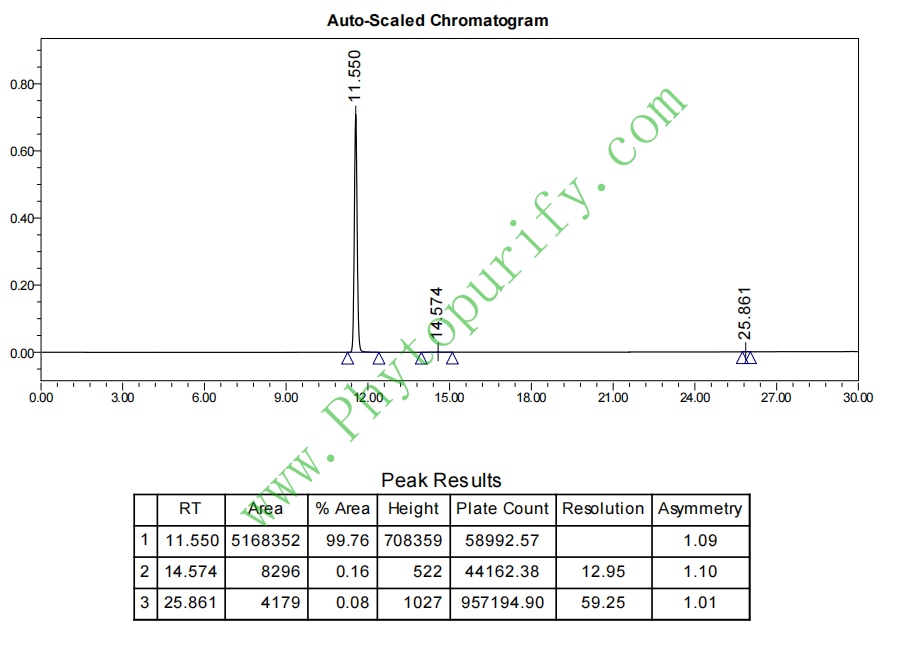
HPLC of 1-O-Caffeoylquinic acid
Storage conditions:Short-term storage at 2~8℃, long-term storage at -20 ~ -80℃
164.7500
-.2592
-2.3918
5.4074
.5486
.3382
Low
66.5527
3.6347
Yes
No
No
No
Yes
No
0.0
Yes
Yes
Yes
Yes
Natural products, as an important source of drug discovery, play an irreplaceable role in human health maintenance and disease treatment. Among numerous natural polyphenolic compounds, caffeoylquinic acid compounds have attracted much attention due to their extensive biological activity and potential medicinal value. 1-O-Caffeoylquinic acid (CAS number: 1241-87-8), as an important member of the caffeoylquinic acid family, is a caffeic acid alkyl ester formed by the condensation of the carboxyl group of trans caffeic acid and the 1-hydroxy group of (-) - quinic acid through esterification reaction. This structural feature combines the biological characteristics of caffeic acid and quinic acid, exhibiting a unique spectrum of pharmacological activities.
1-Caffeoylquinic acid is widely distributed in various plants in nature, especially abundant in tea trees (Camellia sinensis), and is considered one of the important secondary metabolites of tea trees. In recent years, with the continuous deepening of research on natural products, various pharmacological activities of 1-caffeoylquinic acid have been gradually revealed, including antioxidant, anti-tumor, anti-inflammatory and other effects. Among them, its characteristics as a nuclear factor kappa B (NF - κ B) inhibitor are particularly noteworthy. These findings provide a solid scientific foundation for the development of innovative drugs based on 1-caffeoylquinic acid.
This article will systematically review the research progress of 1-caffeoylquinic acid from the aspects of chemical structure and physicochemical properties, plant sources and extraction methods, pharmacological activity research, mechanism of action and molecular targets, drug evaluation and pharmacokinetics, clinical application prospects, etc., in order to provide reference for the in-depth research and development of this compound.
The chemical structure of 1-caffeoylquinic acid consists of two core units: the caffeic acid moiety and the quinic acid moiety. Caffeic acid (3,4-dihydroxycinnamic acid) is a typical hydroxycinnamic acid, which contains an ortho dihydroxy structure and α, β - unsaturated carboxylic acid groups in its molecule. Quinic acid (1,3,4,5-tetrahydroxycyclohexane-1-carboxylic acid) is a cyclohexane polyacid with four hydroxyl groups and one carboxyl group. In the molecule of 1-caffeoylquinic acid, the carboxyl group of caffeic acid is connected to the 1-position hydroxyl group of quinic acid through ester bonds, forming a caffeic acid alkyl ester structure.
From a stereochemical perspective, the quinic acid portion of 1-caffeoylquinic acid maintains the (-) - quinic acid configuration, while the caffeic acid portion adopts the trans configuration. This specific connection method and stereoconfiguration determine the biological activity of the compound. It is worth noting that caffeoylquinic acid compounds have multiple positional isomers, such as 3-O-caffeoylquinic acid (chlorogenic acid), 4-O-caffeoylquinic acid, 5-O-caffeoylquinic acid, etc. The isomers substituted at different positions have significant differences in biological activity.
The molecular formula of 1-caffeoylquinic acid is C16H18O9, with a molecular weight of 354.3110 g/mol. The physicochemical properties parameters of the compound are as follows: the lipophilic water partition coefficient (LogP) is -0.2592, indicating that the compound has good water solubility; The polar surface area (TPSA) is 164.7500 Å ², reflecting the presence of multiple polar groups in the molecule; The water solubility parameter is 5.4074, further confirming its good water solubility characteristics.
In terms of stability, 1-caffeoylquinic acid is sensitive to light, heat, and alkaline environments, and is prone to degradation or isomerization reactions. The ester bonds in its molecules are relatively stable under acidic conditions, but are easily hydrolyzed under alkaline conditions. In addition, the ortho dihydroxy structure makes it prone to oxidation, especially in the presence of metal ions or alkaline conditions. These physicochemical properties have significant impacts on the extraction, purification, formulation development, and in vivo pharmacokinetic behavior of the compound.
1-Caffeoylquinic acid is widely distributed in nature and mainly exists in higher plants. Its most famous source is tea tree (Camellia sinensis), which is an important secondary metabolite of tea trees and is abundant in tea leaves. Research has shown that 1-caffeoylquinic acid is detected in green tea, oolong tea, and black tea, and its content is influenced by factors such as tea tree variety, growth environment, harvesting season, and processing technology.
In addition to tea trees, 1-caffeoylquinic acid is also present in various medicinal and edible plants. For example, it has been found in plants of the Asteraceae family (such as Echinacea purpurea and Matricaria chamomilla), plants of the Rubiaceae family (such as Coffea arabica), plants of the Solanaceae family (such as Lycium barbarum), and various fruits (such as apples and blueberries). The content of 1-caffeoylquinic acid varies greatly among different plant sources, usually ranging from 0.01% to 0.5% of dry weight.
The extraction methods of 1-caffeoylquinic acid mainly include solvent extraction, ultrasonic assisted extraction, microwave-assisted extraction, and supercritical fluid extraction.
Solvent extraction method It is the most commonly used traditional method, usually using water, ethanol, methanol or their mixed solvents as extraction media. Due to the good water and alcohol solubility of 1-caffeoylquinic acid, ethanol water mixed systems (usually 50% -80% ethanol) can achieve high extraction efficiency. The extraction conditions such as temperature, time, solid-liquid ratio, and pH value have a significant impact on the extraction efficiency. Research has shown that extracting at 60-80 ℃ and pH 3-5 for 2-3 hours can achieve good extraction results.
Ultrasonic assisted extraction method By utilizing the cavitation and mechanical effects of ultrasound, extraction efficiency can be significantly improved and extraction time can be shortened. Compared with traditional solvent extraction, ultrasound assisted extraction can be carried out at lower temperatures, which is beneficial for protecting thermosensitive components. The optimized ultrasonic extraction conditions usually include: ultrasonic power of 200-500W, frequency of 20-40kHz, and extraction time of 15-30 minutes.
Microwave assisted extraction method By utilizing the penetrability and selective heating properties of microwaves, fast and efficient extraction can be achieved. This method is particularly suitable for the extraction of polar compounds, but attention should be paid to controlling the microwave power and extraction time to avoid local overheating leading to compound degradation.
Supercritical fluid extraction method Using supercritical CO2 as the extraction medium has the advantages of being green, environmentally friendly, and highly selective. Due to the high polarity of 1-caffeoylquinic acid, it is usually necessary to add solvents such as ethanol to improve extraction efficiency. This method is widely used in laboratory research, but industrial applications still face high cost challenges.
The crude extract after extraction usually needs further purification to obtain high-purity 1-caffeoylquinic acid. Common purification methods include column chromatography (such as silica gel column chromatography, polyamide column chromatography, macroporous adsorption resin chromatography), high performance liquid chromatography (HPLC), and high-speed countercurrent chromatography. Among them, macroporous adsorption resin chromatography is widely used in industrial production due to its advantages of large processing capacity, low cost, and reusability. The commonly used resin types include HPD-100, AB-8, D101, etc., and effective enrichment of 1-caffeoylquinic acid can be achieved through gradient elution.
The antioxidant activity of 1-caffeoylquinic acid is one of its most significant and widely studied pharmacological effects. The hydroxyl group structure of the compound molecule is the key pharmacophore for its antioxidant activity. Research has shown that 1-caffeoylquinic acid can exert antioxidant effects through various mechanisms:
Firstly, 1-caffeoylquinic acid can directly scavenge free radicals, including hydroxyl radicals (· OH), superoxide anion radicals (O2 · -), peroxide radicals (ROO ·), and DPPH radicals. Its ability to scavenge free radicals is closely related to the number and position of phenolic hydroxyl groups in the molecule. The hydroxyl structure of adjacent phenols can react with free radicals through hydrogen atom transfer (HAT) or single electron transfer (SET) mechanisms to generate relatively stable phenoxide free radicals, thereby terminating the chain reaction of free radicals.
Secondly, 1-caffeoylquinic acid can chelate transition metal ions (such as Fe2+, Cu2+), inhibit Fenton and Haber Weiss reactions, and reduce the generation of hydroxyl radicals. This mechanism has potential application value in the prevention and treatment of iron overload related diseases.
In addition, 1-caffeoylquinic acid can enhance the body's endogenous antioxidant defense system. Research has shown that this compound can upregulate the expression and activity of various antioxidant enzymes, including superoxide dismutase (SOD1, SOD2), catalase (CAT), glutathione peroxidase (GPX1), and heme oxygenase-1 (HMOX1). These effects are partially achieved by activating the nuclear factor E2 related factor 2 (NFE2L2/NRF2) signaling pathway.
The anti-tumor activity of 1-caffeoylquinic acid has been confirmed by multiple studies. In vitro experiments showed that the compound had a proliferation inhibitory effect on a variety of tumor cell lines, including liver cancer cells (HepG2), breast cancer cells (MCF-7), colon cancer cells (HT-29), lung cancer cells (A549) and melanoma cells.
The mechanism of the anti-tumor effect of 1-caffeoylquinic acid involves multiple aspects: inducing cell cycle arrest (mainly in G0/G1 phase or G2/M phase), inducing cell apoptosis (through mitochondrial pathway and death receptor pathway), inhibiting cell migration and invasion, inhibiting angiogenesis, etc. It is worth noting that 1-caffeoylquinic acid has low toxicity to normal cells and exhibits certain selective anti-tumor activity, which provides a safety basis for it as a candidate anti-tumor drug.
Caffeoylquinic acid, as an NF - κ B inhibitor, has significant anti-inflammatory activity. NF - κ B is a key transcription factor that regulates the expression of various inflammation related genes, including cytokines (such as TNF - α, IL-1 β, IL-6), chemokines, adhesion molecules, and inducible nitric oxide synthase (iNOS). 1-Caffeoylquinic acid can inhibit the nuclear translocation and transcriptional activity of NF - κ B by suppressing the activity of I κ B kinase (IKK), preventing the phosphorylation and degradation of I κ B α.
In addition, 1-caffeoylquinic acid can also exert anti-inflammatory effects by inhibiting the mitogen activated protein kinase (MAPK) signaling pathway, including ERK, JNK, and p38. This compound can reduce the production of nitric oxide (NO) and prostaglandin E2 (PGE2) in macrophages stimulated by lipopolysaccharide (LPS), and inhibit the expression of iNOS and cyclooxygenase-2 (COX-2).
In addition to the main activities mentioned above, 1-caffeoylquinic acid also exhibits various other pharmacological effects, including:
The antioxidant activity of 1-caffeoylquinic acid involves multiple molecular targets, among which the NRF2 signaling pathway is the most critical regulatory mechanism. NRF2 (encoded by NFE2L2 gene) is an alkaline leucine zipper transcription factor that is the main regulator of cellular antioxidant defense. Under normal physiological conditions, NRF2 binds to Kelch like ECH related protein 1 (KEAP1) and is in an inactive state. When cells are stimulated by oxidative stress or electrophilic agents, NRF2 is released from KEAP1 and translocated to the nucleus, where it binds to antioxidant response elements (ARE) and initiates transcription of downstream antioxidant genes.
Research has shown that 1-caffeoylquinic acid can promote nuclear translocation and transcriptional activity of NRF2 by modifying the cysteine residues of KEAP1, thereby upregulating the expression of various antioxidant enzymes, including SOD1, SOD2, CAT, GPX1, and HMOX1. These enzymes work together to maintain the redox balance of cells.
In addition, 1-caffeoylquinic acid can directly act on tyrosinase (TYR) and matrix metalloproteinases (MMP1, MMP3), inhibiting their activity. TYR is a key enzyme in melanin synthesis, and MMP1 and MMP3 participate in the degradation of extracellular matrix. The regulation of these targets makes 1-caffeoylquinic acid have potential application value in skin whitening and anti-aging.
The anti-tumor effect of 1-caffeoylquinic acid involves multiple signaling pathways and molecular targets. In addition to NRF2, the NF - κ B signaling pathway plays an important role in its anti-tumor mechanism. The sustained activation of NF - κ B is closely related to the occurrence, development, and drug resistance of various tumors. 1-Caffeoylquinic acid downregulates the expression of target genes, including anti apoptotic proteins (such as Bcl-2, Bcl xL, and Survivin), cell cycle regulatory proteins (such as Cyclin D1), and angiogenic factors (such as VEGF), by inhibiting NF - κ B activity.
In addition, 1-caffeoylquinic acid can also exert anti-tumor effects by regulating the PI3K/Akt/mTOR signaling pathway, Wnt/β - catenin signaling pathway, and p53 signaling pathway. The cross regulation of these signaling pathways forms the molecular network basis for the anti-tumor effect of 1-caffeoylquinic acid.
The anti-inflammatory effect of 1-caffeoylquinic acid is mainly achieved by inhibiting the NF - κ B and MAPK signaling pathways. Specifically, the compound can inhibit Toll like receptor 4 (TLR4) - mediated signal transduction and reduce the production of downstream inflammatory factors. In addition, 1-caffeoylquinic acid can also activate the NRF2 signaling pathway, induce the expression of anti-inflammatory proteins such as HMOX1, and form an anti-inflammatory antioxidant synergistic effect.
A systematic evaluation of the pharmacological properties of 1-caffeoylquinic acid based on medicinal chemistry and computational pharmacology methods. According to Lipinski's "Rule of Five", the molecular weight of the compound (354.31 Da) is less than 500 Da, the number of hydrogen bond donors (6 phenolic hydroxyl and carboxyl groups) is greater than 5, the number of hydrogen bond acceptors (9 oxygen atoms) is greater than 10, and the LogP value (-0.26) is less than 5. Although the number of hydrogen bond donors and acceptors exceeds the range of the "Five Rules", considering the specificity of natural products, this deviation is within an acceptable range.
The TPSA of 1-caffeoylquinic acid is 164.75 Å ², much higher than the threshold of 60 Å ², indicating that the oral bioavailability of this compound may be low. The water solubility parameter is 5.41, indicating that it has good water solubility and is beneficial for formulation development. The evaluation of blood-brain barrier penetration is low, indicating that the application of this compound in the treatment of central nervous system diseases may be limited.
The Ames test result is 0.0, indicating that 1-caffeoylquinic acid has no mutagenicity. The hERG inhibition evaluation is negative, indicating a low risk of cardiac toxicity. These safety data provide favorable conditions for further development of the compound. However, systematic toxicological studies are still needed, including acute toxicity, subchronic toxicity, reproductive toxicity, and carcinogenicity, to comprehensively evaluate its safety.
The pharmacokinetic studies of 1-caffeoylquinic acid are not yet sufficient, and existing data mainly come from animal experiments and in vitro models. After oral administration, the compound has poor absorption in the gastrointestinal tract and low bioavailability. This is related to its higher polarity and molecular weight. Research has shown that 1-caffeoylquinic acid can be hydrolyzed by esterases in the intestine to produce caffeic acid and quinic acid, which may have their own pharmacological activities.
In terms of distribution in the body, 1-caffeoylquinic acid is mainly distributed in tissues such as blood and liver. Due to its low blood-brain barrier penetration, the concentration in brain tissue is relatively low. The metabolic pathways mainly include ester hydrolysis, methylation, sulfation, and glucuronidation. The main excretion pathways are urine and bile.
To improve the bioavailability of 1-caffeoylquinic acid, researchers have explored various strategies, including the preparation of nano formulations (such as liposomes, nanoemulsions, polymer nanoparticles), phospholipid complexes, cyclodextrin inclusion complexes, etc. These formulation techniques can significantly improve the solubility and membrane permeability of the compound, enhancing its oral bioavailability.
Based on the multiple pharmacological activities of 1-caffeoylquinic acid, it has potential application value in the following disease fields:
Oxidative stress-related diseases: including cardiovascular diseases, neurodegenerative diseases, diabetes complications and aging related diseases. The strong antioxidant activity of 1-caffeoylquinic acid makes it a candidate compound for the prevention and treatment of these diseases.
Inflammatory diseases Such as rheumatoid arthritis, inflammatory bowel disease, asthma, and chronic obstructive pulmonary disease. As an NF - κ B inhibitor, it can effectively inhibit inflammatory responses.
Cancer Prevention and Treatment As a natural anti-tumor compound, 1-caffeoylquinic acid can be used for chemoprevention and adjuvant therapy of tumors. Its selective anti-tumor activity and low toxicity characteristics make it have the potential to be developed as an anti-tumor drug.
Skin protection By inhibiting TYR activity and antioxidant effects, 1-caffeoylquinic acid can be used in the development of skin whitening, anti-aging, and photoprotective products.
Although 1-caffeoylquinic acid has multiple pharmacological activities and good safety, its development still faces the following challenges:
Low bioavailability Low oral bioavailability is the main obstacle limiting its clinical application. The solution strategy includes developing new drug delivery systems (such as nanomedicine and prodrug design) and optimizing drug delivery routes (such as transdermal and inhaled administration).
stability issue This compound is sensitive to light, heat, and alkaline environments, and protective measures such as avoiding light, low temperature, adjusting pH, and adding antioxidants need to be taken during formulation development and storage.
The mechanism of action is unclear Although multiple molecular targets have been identified, the mechanism network of action of 1-caffeoylquinic acid is not fully understood. It is necessary to combine systems pharmacology and network pharmacology methods to thoroughly elucidate its multi-target mechanism of action.
Lack of clinical research At present, research on 1-caffeoylquinic acid mainly remains at the level of in vitro and animal experiments, lacking systematic clinical studies. Standardized clinical trials are needed to verify its effectiveness and safety.
Future research on caffeoylquinic acid should focus on the following directions:
Research on Structural Optimization and Structure Performance Relationship By chemical modification and structural modification, its bioavailability and targeting are improved, and the structure-activity relationship is explored.
Systematic study on multi-target mechanism of action Combining omics techniques and systems biology methods, comprehensively analyze its mechanism of action network.
Development of new formulations Develop new formulations with high bioavailability and targeting, such as nanoliposomes, polymer micelles, and mesoporous silica nanoparticles.
Combination therapy research Explore the combined application of 1-caffeoylquinic acid and clinical drugs to achieve synergistic effects.
Clinical translational research Conduct standardized preclinical and clinical research to promote its translation into clinical applications.
1-Caffeoylquinic acid, as a natural polyphenolic compound, has aroused strong interest among researchers due to its unique chemical structure and extensive pharmacological activities. From antioxidant, anti-tumor to anti-inflammatory effects, this compound exhibits various biological activities, and its mechanism of action involves multiple key signaling pathways and molecular targets such as NRF2 and NF - κ B. The good safety features and pharmacological parameters have laid the foundation for its further development.
However, research on 1-caffeoylquinic acid is still in its early stages, and there are still many challenges between laboratory discovery and clinical application. The main bottlenecks restricting its development are low bioavailability, stability issues, and incomplete understanding of its mechanism of action. With the interdisciplinary integration of medicinal chemistry, pharmacy, pharmacology, and systems biology, it is believed that these issues will gradually be resolved.
Looking ahead, 1-caffeoylquinic acid is expected to play an important role in the prevention and treatment of oxidative stress-related diseases, inflammatory diseases, and tumors. Through structural optimization, formulation innovation, and in-depth mechanism research, this natural product may be transformed into innovative drugs with clinical application value, contributing to the cause of human health.