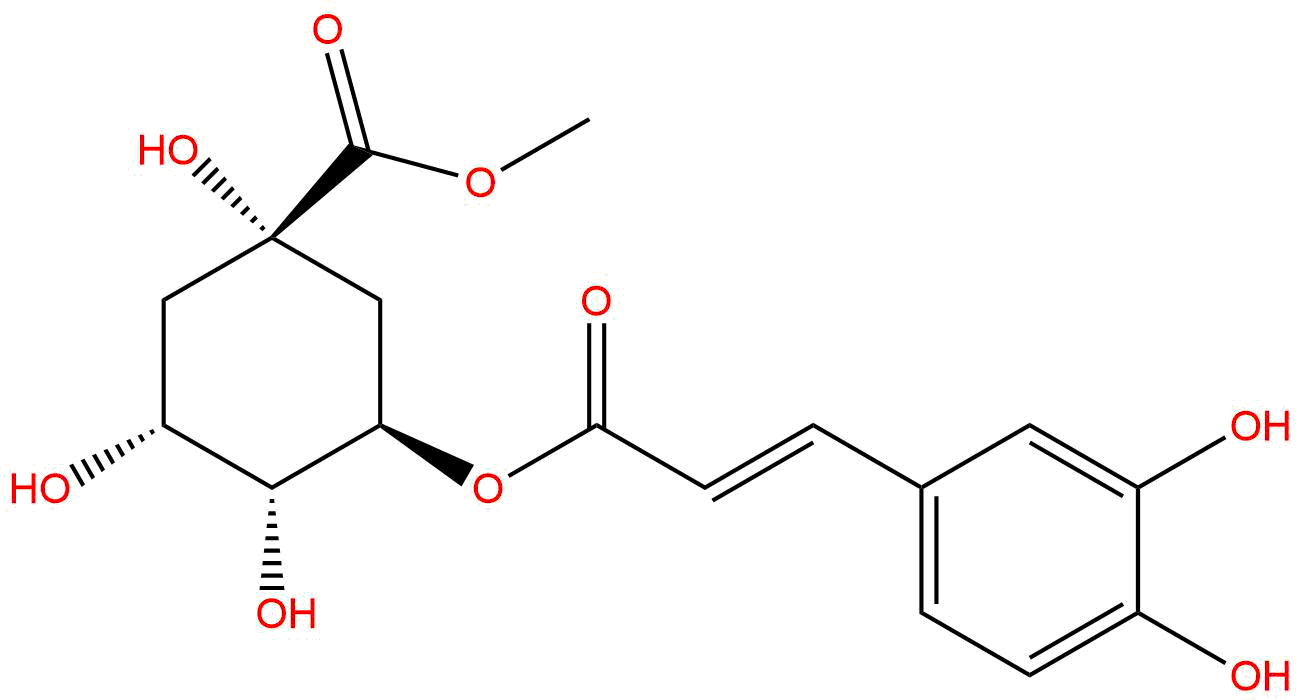


Product name: 3-O-Caffeoylquinic acid methyl ester
Synonym name: 3-O-Caffeoylquinic acid methyl ester
Catalogue No.: BPF2573
Cas No.: 123483-19-2
Formula: C17H20O9
Mol Weight: 368.338
Botanical Source:
Physical Description:
Type of Compound: Phenylpropanoids
Purity: 95%~99%
Analysis Method: HPLC-DAD or/and HPLC-ELSD
Identification Method: Mass, NMR
Packing: Brown vial or HDPE plastic bottle
The product could be supplied from milligrams to grams
Inquire for bulk scale.
For Reference Standard and R&D, Not for Human Use Directly.
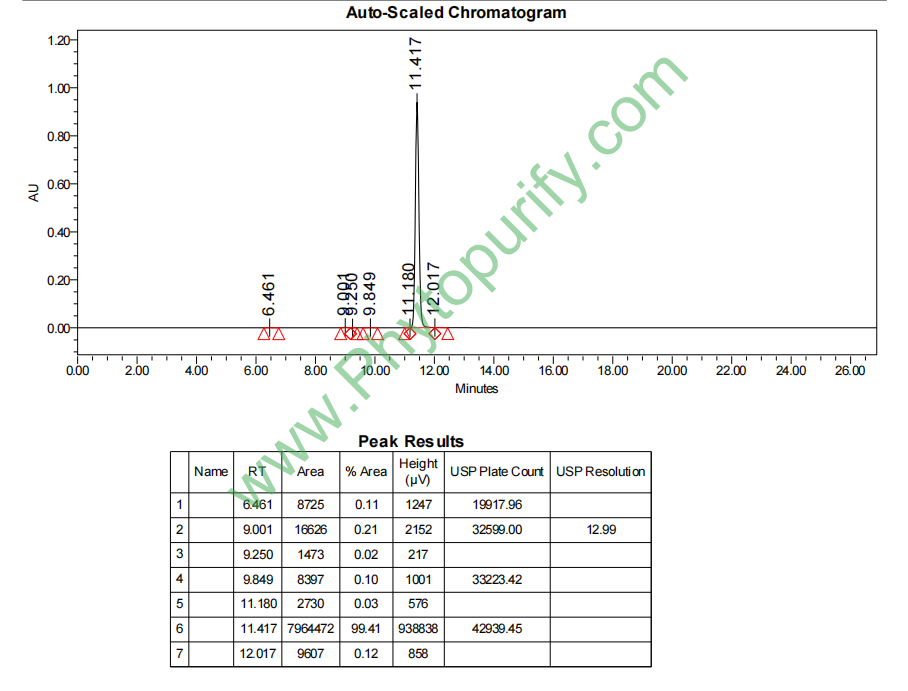
HPLC of 3-O-Caffeoylquinic acid methyl ester
Storage conditions:Short-term storage at 2~8℃, long-term storage at -20 ~ -80℃
153.7500
.2033
.1967
4.7536
.6270
.3202
Low
59.4284
3.8934
Yes
No
No
No
Yes
No
0.0
Yes
Yes
Yes
Yes
Natural products, as an important source of drug discovery, play an indispensable role in maintaining human health and treating diseases. Among numerous natural compounds with biological activity, phenolic acids have attracted much attention due to their broad pharmacological activity and relatively low toxicity. Chlorogenic acid (CGA), also known as 3-O-caffeoylquinic acid, is one of the most widely distributed polyphenolic compounds in nature. It exists in various plants such as coffee, honeysuckle, and Eucommia ulmoides, and has multiple biological activities such as antioxidant, anti-inflammatory, antibacterial, antiviral, and hypoglycemic and lipid-lowering effects. However, chlorogenic acid itself has a high polarity and low oral bioavailability, which to some extent limits its potential as a candidate drug for development.
3-O-Caffeoylquinic acid methyl ester (3-CQA-ME), as a natural methylated derivative of chlorogenic acid, has gradually entered the field of researchers in recent years. On the basis of retaining the core skeleton of chlorogenic acid - caffeoyl and quinic acid mother nucleus, this compound modified its physicochemical properties and biological activity characteristics by methylating the carboxyl group on quinic acid. This structural modification may not only affect its membrane permeability and metabolic stability, but also regulate its interaction mode with specific biological targets. It is worth noting that methyl chlorogenic acid is not a synthetic product, but an active ingredient naturally present in various medicinal plants, especially abundant in plants such as Asteraceae and Lonicera.
From a taxonomic perspective, chlorogenic acid methyl ester belongs to quinic acid compounds, specifically in the form of 3-O-caffeoylquinic acid methyl ester. Its CAS number is 123483-19-2, and its molecular formula is C ₁₇ H ₂₀ O ₉. With the development of modern separation and analysis technology, the extraction, purification, and identification methods of this compound have become increasingly mature, laying a material foundation for its in-depth pharmacological activity research. In recent years, research on methyl chlorogenic acid has evolved from simple activity screening to exploring molecular mechanisms, especially in the fields of antioxidant, anti-inflammatory, neuroprotective, and metabolic regulation, showing significant potential.
This review aims to systematically review the research progress on the chemical structure characteristics, plant sources, extraction processes, pharmacological activities, mechanisms of action, and pharmacological evaluation of chlorogenic acid methyl ester, in order to provide comprehensive scientific basis for the in-depth development and clinical application of this natural product.
The chemical structure of methyl chlorogenic acid consists of two parts: Caffeoyl moity and Quinic acid methyl ester. The caffeoyl group is connected to the C-3 hydroxyl group of quinic acid through ester bonds, hence its system is named 3-O-caffeoyl quinic acid methyl ester. This structure belongs to ester derivatives formed by hydroxycinnamic acid and quinic acid, with a molecular formula of C ₁₇ H ₂₀ O ₉ and a molecular weight of 368.3380 g/mol.
From the analysis of structural features, the molecule contains multiple phenolic hydroxyl groups (located on the benzene ring of the caffeoyl group, usually 3,4-dihydroxy substituted), one carboxylic acid methyl ester group (- COOCH ∝), and multiple hydroxyl groups on the quinic acid ring. These functional groups endow the compound with rich chemical reactivity and biological activity. Phenolic hydroxyl groups are the main contributing groups to antioxidant activity, which can effectively scavenge free radicals and chelate metal ions; The presence of methyl ester groups reduces the overall polarity of the molecule. Compared to chlorogenic acid (LogP of about -0.4), the lipophilicity of methyl chlorogenic acid is improved, with a calculated LogP value of 0.2033. This change may benefit its ability to cross biofilms and improve oral absorption and cellular uptake efficiency.
In terms of physical and chemical properties, the topological polar surface area (TPSA) of methyl chlorogenic acid is 153.7500 Å ², which is higher than the recommended threshold for oral drugs (about 140 Å ²), indicating that it may have some intestinal absorption disorders. However, compared to chlorogenic acid (TPSA of about 164 Å ²), it has been reduced. In terms of water solubility, its calculated water solubility value is 4.7536 mg/mL, which belongs to a moderately water-soluble compound, which is related to the retention of multiple hydroxyl groups in its molecule. It is worth noting that the blood-brain barrier (BBB) penetration ability of the compound was evaluated as "low", indicating that its distribution in the central nervous system may be limited, which could be a favorable feature for the development of peripheral targeted drugs and reduce central nervous system side effects.
From the perspective of chemical stability, methyl chlorogenic acid is relatively stable in acidic environments, but it is prone to hydrolysis under alkaline conditions, producing caffeic acid and methyl quinate or further hydrolyzing to quinic acid. In addition, its phenolic hydroxyl group is sensitive to light and heat, and may undergo oxidative degradation under long-term exposure to light or high temperature conditions. Therefore, in the process of extraction, storage, and formulation development, attention should be paid to avoiding light, low temperature, and suitable pH conditions.
Chlorogenic acid methyl ester, as a naturally occurring phenolic acid derivative, has been found in various medicinal plants and daily food ingredients. Its plant sources are mainly concentrated in families and genera such as Asteraceae, Caprifoliaceae, Rubiaceae, etc. Common plants rich in methyl chlorogenic acid include: Lonicera japonica Thunb., Chrysanthemum morifolium Ramat., Coffee Arabica L. fruits and leaves, Eucommia ulmoides Oliv., Taraxacum mongolicum Hand. - Mazz., and various Artemisia spp. It is worth noting that the content of methyl chlorogenic acid varies significantly in different plants and often coexists with analogues such as chlorogenic acid, cryptochlorogenic acid, and neochlorogenic acid, forming a complex phenolic acid spectrum.
In terms of extraction methods, traditional solvent extraction is still the most commonly used approach. Considering that methyl chlorogenic acid has both polarity and lipophilicity, ethanol water mixed solvents (such as 50% -80% ethanol) are usually used as extractants for extraction through heating reflux or cold impregnation methods. The extraction temperature is generally controlled at 40-60 ° C to avoid high temperature induced oxidation of phenolic hydroxyl groups or hydrolysis of ester bonds. In recent years, ultrasound assisted extraction (UAE) and microwave-assisted extraction (MAE) technologies have been widely used to improve extraction efficiency. The ultrasonic cavitation effect can destroy plant cell walls, promote solvent permeation, shorten extraction time to less than 30 minutes, and increase the yield of target compounds by 20% -40%. Microwave assisted extraction utilizes the rapid vibration of polar molecules in a microwave field to generate heat, achieving fast and efficient extraction, especially suitable for the extraction of thermosensitive components.
The crude extract after extraction needs to undergo purification steps to obtain high-purity methyl chlorogenic acid. Common purification techniques include liquid-liquid extraction (such as partition extraction with ethyl acetate or n-butanol), macroporous adsorption resin column chromatography (such as HPD-100 and D101 resins, eluted with ethanol water gradient), polyamide column chromatography (utilizing hydrogen bonding adsorption between phenolic hydroxyl and amide groups), and preparative high-performance liquid chromatography (pre HPLC). Among them, the macroporous adsorption resin method is the most widely used in industrial preparation due to its advantages of low cost, easy operation, and scalability. By optimizing the sample concentration, elution flow rate, and gradient conditions, chlorogenic acid methyl ester products with a purity of over 90% can be obtained.
In terms of structural identification, the confirmation of methyl chlorogenic acid usually relies on spectroscopic techniques. The UV spectrum shows characteristic absorption peaks at approximately 325 nm and 245 nm, corresponding to the cinnamoyl system (π→π * transition) of the caffeoyl group and the B-band absorption of the benzene ring, respectively. Infrared spectroscopy (IR) can observe characteristic peaks such as ester carbonyl (about 1700 cm ⁻¹), phenolic hydroxyl (about 3400 cm ⁻¹ broad peak), and aromatic ring skeleton vibration (about 1600, 1520 cm ⁻¹). Nuclear magnetic resonance hydrogen spectroscopy (¹ H NMR) and carbon spectroscopy (¹ ³ C NMR) can provide detailed proton and carbon atom chemical shift information, which is used to determine the connection position (C-3 position) between caffeoyl and quinic acid parent nuclei. High resolution mass spectrometry (HR-MS) provides precise molecular weight information, further confirming the molecular formula.
In recent years, significant progress has been made in the pharmacological activity research of methyl chlorogenic acid, with its biological activity spectrum covering multiple fields such as antioxidant, anti-inflammatory, neuroprotective, metabolic regulation, anti-tumor, and antibacterial.
antioxidant activity It is one of the most prominent pharmacological properties of methyl chlorogenic acid. In vitro chemical experiments have shown that the compound has significant scavenging ability against DPPH radicals, ABTS cationic radicals, hydroxyl radicals, and superoxide anion radicals, with a half maximal clearance concentration (EC ₅₀) value typically in the micromolar range. In cell models, methyl chlorogenic acid can effectively reduce the levels of reactive oxygen species (ROS) induced by hydrogen peroxide (H ₂ O ₂), tert butyl hydroperoxide (t-BHP), or ultraviolet radiation, alleviating oxidative stress damage. For example, in human keratinocytes (HaCaT), pretreatment with methyl chlorogenic acid can significantly inhibit ultraviolet B (UVB) - induced ROS generation and lipid peroxidation, and improve cell survival rate. In addition, in animal models, the compound can reduce the content of malondialdehyde (MDA) in serum and liver, enhance the activity of superoxide dismutase (SOD), catalase (CAT), and glutathione peroxidase (GPx), demonstrating in vivo antioxidant potential.
anti-inflammatory activity In terms of aspects, methyl chlorogenic acid can inhibit inflammatory reactions through multiple pathways. In a macrophage model stimulated by lipopolysaccharide (LPS), this compound can significantly reduce the release of nitric oxide (NO), prostaglandin E ₂ (PGE ₂), and pro-inflammatory cytokines such as tumor necrosis factor - α (TNF - α), interleukin-1 β (IL-1 β), and interleukin-6 (IL-6). The mechanism involves inhibiting the activation of the nuclear factor kappa B (NF - κ B) signaling pathway, blocking the phosphorylation and degradation of I κ B α, thereby reducing the transcription of inflammation related genes. In addition, methyl chlorogenic acid can also inhibit the expression of cyclooxygenase-2 (COX-2) and inducible nitric oxide synthase (iNOS), further exerting anti-inflammatory effects.
Neuroprotective effect It has been a hot research topic in recent years. In neurodegenerative disease models, methyl chlorogenic acid has shown the ability to protect neurons from oxidative stress and excitotoxic damage. For example, in the Alzheimer's disease cell model induced by β - amyloid protein (A β), the compound can reduce A β aggregation, decrease tau protein hyperphosphorylation, and inhibit neuroinflammatory responses. In Parkinson's disease models, methyl chlorogenic acid can upregulate the expression of antioxidant enzymes and protect dopaminergic neurons from toxic damage caused by 6-hydroxydopamine (6-OHDA) or 1-methyl-4-phenylpyridine ion (MPP ⁺) by activating the nuclear factor E2 related factor 2 (Nrf2)/antioxidant response element (ARE) pathway.
Metabolic regulatory activity In terms of aspects, methyl chlorogenic acid shows the potential to improve glucose and lipid metabolism disorders. In vitro experiments have shown that the compound can inhibit alpha glucosidase activity, delay carbohydrate digestion and absorption, and thus reduce postprandial blood glucose peak. In the HepG2 cell model of insulin resistance, methyl chlorogenic acid can activate the AMP activated protein kinase (AMPK) signaling pathway, promote glucose uptake and fatty acid oxidation, and improve insulin sensitivity. In addition, long-term administration of methyl chlorogenic acid in obese mouse models can reduce body weight, lower blood lipid levels, and improve liver steatosis.
Other activities It also includes anti-tumor activity (inhibiting the proliferation of cancer cells such as liver cancer and breast cancer by inducing cell cycle arrest and apoptosis), antibacterial activity (inhibiting common pathogenic bacteria such as Staphylococcus aureus and Escherichia coli), and skin protection activity (inhibiting tyrosinase activity, reducing melanin production, and inhibiting the expression of matrix metalloproteinases MMP-1 and MMP-3 to play an anti-aging role).
The pharmacological activity of methyl chlorogenic acid originates from its interaction with multiple molecular targets, which mainly involve key signaling pathways such as oxidative stress, inflammation, cell survival, and metabolic regulation.
Antioxidant related targets It is the core of the mechanism of action of methyl chlorogenic acid. This compound can directly act as a free radical scavenger, providing hydrogen atoms or electrons through phenolic hydroxyl groups to neutralize reactive oxygen and nitrogen species. More importantly, it can be activated through Nuclear factor E2 related factor 2 (NFE2L2/NRF2)The signaling pathway activates the endogenous antioxidant defense system. NRF2 is a key transcription factor for cells to cope with oxidative stress, which normally binds to Keap1 protein in the cytoplasm. When methyl chlorogenic acid enters the cell, it can modify the cysteine residue of Keap1, causing NRF2 to dissociate from Keap1 and translocate into the nucleus, binding to antioxidant response elements (ARE) and initiating the transcription of a series of downstream antioxidant enzyme genes, including Superoxide dismutase 1 (SOD1)and Superoxide dismutase 2 (SOD2)、Catalase (CAT)、Glutathione peroxidase 1 (GPX1)and Heme oxygenase 1 (HMOX1)These enzymes work together to form multiple layers of defense against oxidative damage. Research has shown that methyl chlorogenic acid has a stronger activation effect on NRF2 than its parent compound chlorogenic acid, which may be related to its methylation modification that increases cell membrane permeability.
Matrix metalloproteinases (MMPs)It is another important target of chlorogenic acid methyl ester.Matrix metalloproteinase 1 (MMP1)and Matrix metalloproteinase-3 (MMP3)It is a key enzyme involved in extracellular matrix degradation and plays an important role in skin photoaging, arthritis, and tumor invasion and metastasis. Chlorogenic acid methyl ester can downregulate the gene expression of MMP1 and MMP3 by inhibiting the phosphorylation of mitogen activated protein kinase (MAPK) pathways such as p38, JNK, and ERK, reducing the activation of transcription factor AP-1. In addition, the compound can directly chelate the zinc ions required for the active center of MMPs, inhibiting their enzymatic activity. This mechanism provides a molecular basis for its application in anti-aging skincare and anti arthritis treatment.
Tyrosinase (TYR)It is the rate limiting enzyme in the process of melanin synthesis. Chlorogenic acid methyl ester can competitively inhibit the activity of tyrosinase, reducing the production of dopaquinone and melanin. Molecular docking studies have shown that the caffeoyl group in this compound can form coordination bonds with copper ions in the active center of tyrosinase, while its phenolic hydroxyl group forms hydrogen bonds with amino acid residues of the enzyme protein, stabilizing the complex structure and exerting inhibitory effects. This discovery provides candidate compounds for the development of natural whitening agents.
In terms of anti-inflammatory mechanisms, methyl chlorogenic acid can reduce the production of pro-inflammatory cytokines by inhibiting the activation of NF - κ B and STAT3 signaling pathways. In addition, the compound can activate the AMPK pathway, improve energy metabolism, and alleviate inflammatory responses by inhibiting acetyl CoA carboxylase (ACC) and regulating downstream metabolic targets.
It is worth noting that the mechanism of action of methyl chlorogenic acid has the characteristics of multi-target and multi pathway synergy, which is consistent with its natural product properties. This multi-target mode of action may have advantages in the treatment of complex diseases such as metabolic syndrome and neurodegenerative diseases, but it also increases the complexity of mechanism research.
Developing natural products into clinical drugs requires a systematic evaluation of their pharmacological properties, including physicochemical properties, pharmacokinetic characteristics, safety, and preliminary toxicological evaluation. Based on existing data, methyl chlorogenic acid shows certain potential as a drug, but also faces several challenges.
Physical and chemical properties and drug like properties According to Lipinski's "Five Rules" (molecular weight<500, LogP<5, hydrogen bond donor<5, hydrogen bond acceptor<10), the molecular weight (368.34) and LogP (0.20) of chlorogenic acid methyl ester meet the requirements, but the number of hydrogen bond donors (5 phenolic and alcohol hydroxyl groups in total) and acceptors (9) is close to the upper limit. The TPSA value (153.75 Å ²) is slightly higher than the recommended range for oral medication (≤ 140 Å ²), indicating the possibility of insufficient intestinal permeability. However, compared to chlorogenic acid (TPSA 164 Å ²), methylation modification has improved membrane permeability to some extent.
Pharmacokinetic characteristics At present, there is insufficient systematic research on the pharmacokinetics of methyl chlorogenic acid in vivo, but relevant data on its parent compound chlorogenic acid can be referred to. After oral administration, chlorogenic acid is mainly absorbed in the small intestine, but the absorption rate is relatively low (about 30%), and most of it is hydrolyzed by esterases or metabolized by gut microbiota into metabolites such as caffeic acid, quinic acid, and dihydrocaffeic acid in the intestine and liver. Due to the presence of methyl ester groups, chlorogenic acid methyl ester may have certain resistance to the hydrolysis of esterases, thereby prolonging its action time in vivo. Preliminary animal experiments have shown that the prototype drug of methyl chlorogenic acid can be detected in plasma after oral administration, but its absolute bioavailability is still low (estimated to be less than 10%). In terms of distribution, this compound is mainly distributed in tissues with rich perfusion such as blood, liver, and kidneys. Due to the low BBB penetration, its distribution in the central nervous system is limited. The metabolic pathways mainly include ester hydrolysis, methylation, sulfation, and glucuronidation. Excretion is mainly through urine and bile.
safety evaluation Based on computer-aided prediction results, the hERG inhibition risk of chlorogenic acid methyl ester is "no", indicating a low risk of cardiac toxicity. The Ames test result was 0.0, indicating no significant mutagenicity. In acute toxicity experiments, the median lethal dose (LDX) of methyl chlorogenic acid was relatively high, demonstrating good safety. However, data on long-term toxicity, reproductive toxicity, and carcinogenicity are still blank and require further experimental verification.
Challenges and improvement strategies for drug development The main bottleneck for the pharmacological development of methyl chlorogenic acid is its low oral bioavailability. To address this issue, the following strategies can be considered: (1) Formulation technology: using new drug delivery systems such as liposomes, nanoemulsions, phospholipid complexes, or solid dispersions to improve their solubility and membrane permeability; (2) Structural modification: Introducing specific functional groups (such as phosphate esters and amino acid esters) to improve metabolic stability or targeting while maintaining the core pharmacophore; (3) Prodrug design: Acetylation or glycosylation modification of phenolic hydroxyl groups to improve intestinal stability, and release active prototype drugs through enzymatic interpretation in vivo.
Based on the pharmacological activity spectrum and safety characteristics of methyl chlorogenic acid, it has shown potential clinical application prospects in multiple therapeutic fields.
Skin Health and Anti Aging The triple action of chlorogenic acid methyl ester in antioxidant, tyrosinase inhibition, and MMP inhibition makes it an ideal candidate ingredient for developing new skincare products. It has clear application value in sun protection, whitening, wrinkle resistance, and repairing photodamage. At present, some cosmetics companies have added it as an active ingredient to high-end skincare products, but clinical human trial data still needs to be accumulated.
Metabolic diseases In view of its α - glucosidase inhibitory activity, AMPK activation effect and the role of improving insulin sensitivity, methyl chlorogenic acid is expected to be developed as a dietary supplement or drug for adjuvant treatment of type 2 diabetes and obesity. Its natural origin and low toxicity characteristics give it an advantage in long-term use. However, it is necessary to address the issue of low oral bioavailability to ensure sufficient in vivo exposure.
Neurodegenerative diseases Although the BBB penetration of methyl chlorogenic acid is low, its neuroprotective effect through activation of the NRF2 pathway still deserves attention. For early or preventive interventions, even limited brain distribution may have beneficial effects. In addition, it can be administered through nasal cavity or combined with brain targeted drug delivery systems to increase its concentration in brain tissue.
Anti inflammatory and immune regulation In chronic inflammatory diseases such as inflammatory bowel disease and arthritis, the anti-inflammatory activity of methyl chlorogenic acid may play a therapeutic role. Local administration (such as enema, intra-articular injection) can avoid oral absorption disorders and directly act on the lesion site.
Future research directions(1) Thoroughly elucidate the metabolic pathways and biological activities of chlorogenic acid methyl ester in vivo, and clarify its true effector molecule; (2) Using systems pharmacology and network pharmacology methods to reveal the molecular network of multi-target effects; (3) Develop efficient and controllable synthetic biology or chemical synthesis methods to solve the problem of low yield from natural sources; (4) Conduct standardized preclinical pharmacological and toxicological studies to lay the foundation for clinical trials; (5) Explore the synergistic effects of methyl chlorogenic acid with other natural products or clinical drugs, and develop compound formulations.
Chlorogenic acid methyl ester, as a natural methylated derivative of chlorogenic acid, retains the core pharmacological activity of the parent compound while improving some physicochemical properties through structural modification. Its significant antioxidant, anti-inflammatory, neuroprotective, and metabolic regulatory activities, as well as its multi-target and multi pathway mechanisms of action, make it a promising candidate for development in fields such as skin health, metabolic diseases, and neurodegenerative diseases. However, low oral bioavailability remains the main obstacle to its clinical translation. In the future, through innovative formulation technology, structural optimization, and drug delivery system development, it is expected to overcome this bottleneck and promote the clinical application of methyl chlorogenic acid from laboratory research. As an important member of the field of natural product pharmacology, the research on methyl chlorogenic acid not only enriches the knowledge system of phenolic compounds, but also provides valuable examples for innovative drug development based on natural products.
