


Product name: 3,5-Dicaffeoylquinic acid
Synonym name: Isochlorogenic acid A
Catalogue No.: BP0056
Cas No.: 2450-53-5
Formula: C25H24O12
Mol Weight: 516.455
Botanical Source: globe artichoke (Cynara scolymus), quince fruit (Cydonia oblonga), Caucasian whortleberry (Vaccinium arctostaphylos), Aster scaber and Ipomoea batatas (sweet potato) tubers
Physical Description: White powder
Type of Compound: Phenylpropanoids
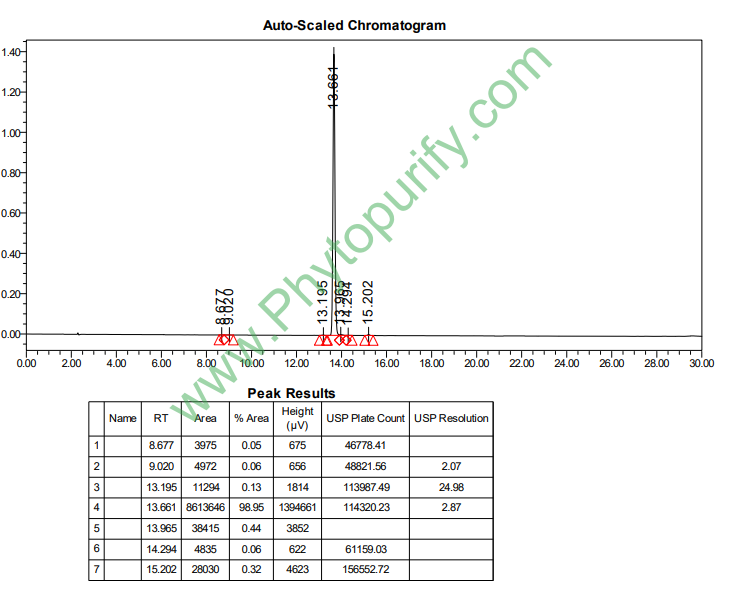
Purity: 95%~99%
Analysis Method: HPLC-DAD or/and HPLC-ELSD
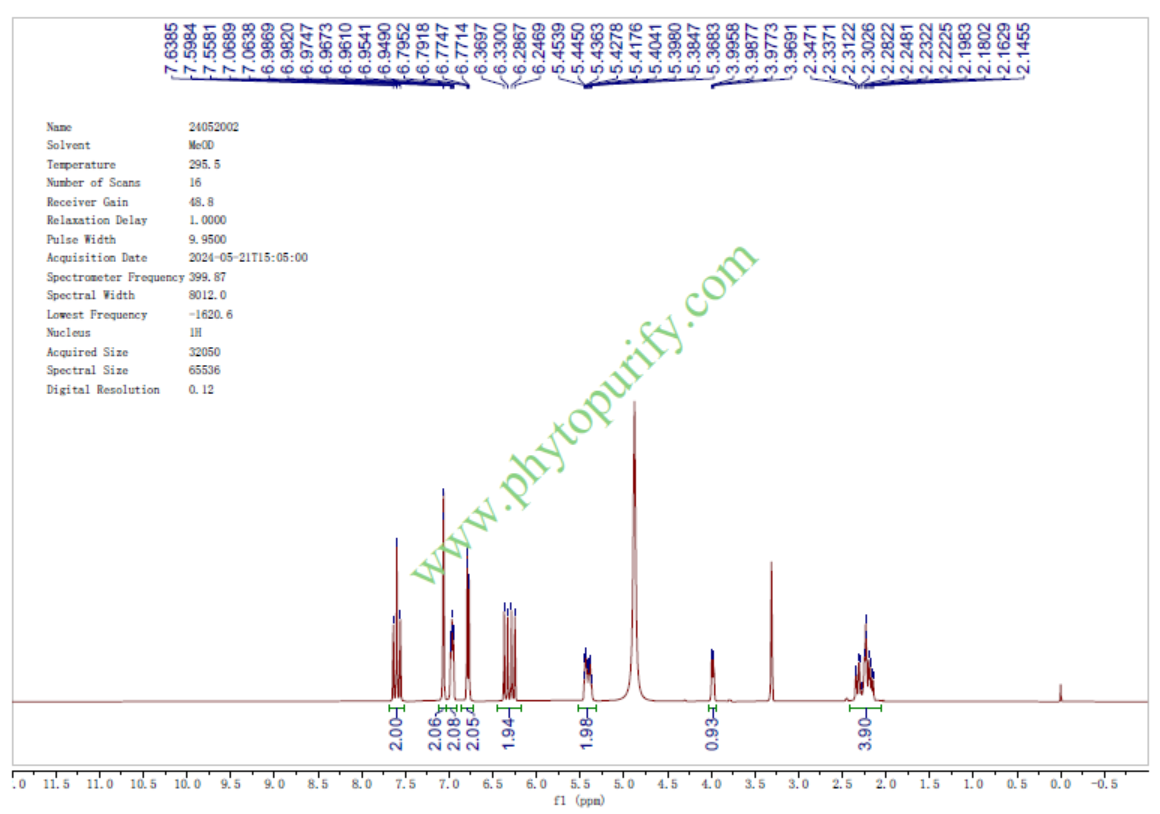
Identification Method: Mass, NMR
Packing: Brown vial or HDPE plastic bottle
Storage: Store in a well closed container, protected from air and light. Put into refrigerate or freeze for long term storage.
Whenever possible, you should prepare and use solutions on the same day. However, if you need to make up stock solutions in advance, we recommend that you store the solution as aliquots in tightly sealed vials at -20℃. Generally, these will be useable for up to two weeks.
The product could be supplied from milligrams to grams, up to kilograms
Inquire for bulk scale.
Descriptions:
Isochlorogenic acid A possesses the potent anti-hepatitis B activity and anti-HBV activity, could be achieved by its antioxidative property and induction of HO-1.[1]
Metabolic processes of isochlorogenic acid A in rats conform to linear dynamics with fast metabolism and short half-life.[2]
References:
[1] Hao B J, Wu Y H, Wang J G, et al. J Ethnopharmacol, 2012, 144(1):190-4.
[2] Cheng X G, Wang S J, Zeng J, et al. Chinese Journal of Experimental Traditional Medical Formulae, 2015(16):79-82.
[3] Li Xiangyang, Tu Wanqian. Chinese medicine, 2014, 36 (02): 353-8.
HPLC of Isochlorogenic acid A
HNMR of Isochlorogenic acid A
Storage conditions:Short-term storage at 2~8℃, long-term storage at -20 ~ -80℃
211.2800
1.1925
-.9008
.7197
.8493
.2511
Low
88.7985
3.8294
No
No
No
No
Yes
No
0.0
Yes
Yes
Yes
Yes
Natural products, as an important treasure trove for drug discovery and development, play an irreplaceable role in the long history of human fight against diseases. Among them, phenolic acid compounds have always been a hot topic in medicinal chemistry and pharmacology research due to their extensive and significant biological activities. Isochlorogenic acid A (3,5-Dicaffeoylquinic acid, 3,5-DCQA), as a member of the chlorogenic acid compound family, has attracted much attention in recent years due to its diverse pharmacological effects and potential therapeutic value. This compound was first isolated from Brazilian propolis and various medicinal plants (such as Suaeda salsa), and its unique chemical structure endows it with multiple biological activities such as antioxidant, anti-inflammatory, antiviral, anti-tumor, and hepatoprotective. With the development of modern molecular biology and network pharmacology, the study of the mechanism of action of isochlorogenic acid A has deepened from the traditional single target to the multi target and multi pathway synergistic mode. This article aims to systematically review the chemical properties, plant sources, pharmacological activities, molecular mechanisms of action, pharmacological evaluation, and clinical application prospects of isochlorogenic acid A, in order to provide comprehensive scientific references for the deep development and transformation of this natural product.
The chemical name of isochlorogenic acid A is 3,5-dicaffeoylquinic acid, and its CAS number is 2450-53-5. Structurally, it is composed of a quinic acid (a cyclic polyol carboxylic acid) as the central skeleton, which is condensed with the carboxyl groups of two trans caffeic acids through ester bonds on its 3rd and 5th hydroxyl groups, respectively. Therefore, it belongs to the class of carboxylic acid esters and cyclic alcohol carboxylic acid compounds. Its molecular formula is C25H24O12 and its molecular weight is 516.4550.
The caffeoyl group in its structure is the key pharmacophore that endows it with biological activity. Caffeic acid itself has a phenolic hydroxyl structure and is a potent antioxidant group. The introduction of two caffeoyl groups results in the enrichment of phenolic hydroxyl groups in the molecule of isochlorogenic acid A, which determines its significant antioxidant and free radical scavenging abilities. From the analysis of physical and chemical properties, the calculated lipid water partition coefficient (LogP) is about 1.19, indicating that it has a certain degree of lipophilicity, but overall it still leans towards hydrophilicity. Its topological polar surface area (TPSA) is as high as 211.28 Å ², which is mainly attributed to the numerous hydrogen bond receptors (ester and hydroxyl groups) in the molecule. This characteristic also indicates its strong hydration ability and relatively poor cytoplasmic membrane permeability. The calculated data shows that its water solubility is about 0.72 mg/mL, which is slightly soluble. These physicochemical parameters collectively affect its pharmacokinetic behavior, for example, its higher TPSA and polarity result in a predicted "low" blood-brain barrier permeability, meaning it is less likely to enter the central nervous system. In addition, preliminary pharmacological risk assessment showed that the hERG channel inhibition risk was negative, and the Ames mutagenicity test predicted a value of 0.0, suggesting that it may have good cardiac safety and low genetic toxicity risk, laying a good safety foundation for its further development.
Isochlorogenic acid A is widely distributed in nature and mainly exists in various Asteraceae, Lonicera, and propolis plants. Among them, Brazilian propolis (especially green propolis) is one of its most famous sources and the main material for early research and isolation of this compound. In addition, traditional medicinal plants such as Suaeda salsa(Suaeda spp.)、 Honeysuckle (Lonicera japonica), chrysanthemum (Chrysanthemum morifolium), coffee beans, and many vegetables and fruits (such as thistle and potato peel) have been detected.
The extraction of isochlorogenic acid A from plant materials mainly depends on its polarity and solubility. The conventional extraction methods include:
1. Solvent extraction method The most commonly used method. Usually, medium polarity solvents such as methanol, ethanol, or acetone aqueous solutions (such as 70% -80% ethanol) are used for extraction, reflux, or ultrasound assisted extraction. This method has high efficiency and relatively low cost.
2. Hot water extraction method By utilizing its certain solubility in water, but the extraction rate is usually lower than that of organic solvent methods, and more impurities such as polysaccharides and proteins may be extracted.
3. Modern extraction techniques In order to improve extraction efficiency and selectivity, techniques such as microwave-assisted extraction (MAE), ultrasound assisted extraction (UAE), and supercritical fluid extraction (SFE, commonly using CO ₂ and adding entrainers such as ethanol) have been applied. These methods can shorten extraction time, reduce solvent consumption, and potentially obtain higher purity extracts.
The crude extract after extraction usually requires further separation and purification to obtain high-purity isochlorogenic acid A. Common purification techniques include:
* Macroporous adsorption resin chromatography By utilizing the adsorption characteristics of phenolic acid compounds by resins such as AB-8, D101, HP-20, gradient elution with water and different concentrations of ethanol can effectively enrich isochlorogenic acid A.
* Silica gel column chromatography Gradient elution using mixed solvent systems such as chloroform methanol and dichloromethane methanol is a commonly used separation method in laboratories.
* Preparation type high performance liquid chromatography (HPLC)This is the most effective method for obtaining high-purity monomeric compounds, typically using a reverse phase C18 chromatography column with methanol water or acetonitrile water (often containing small amounts of formic acid or acetic acid to adjust pH) as the mobile phase for separation.
* High Speed Counter Current Chromatography (HSCCC)A liquid-liquid distribution chromatography technique that does not require a solid phase carrier and is suitable for preparing quantitative separations. It has unique advantages in separating isomers of isochlorogenic acid.
A large number of pharmacological studies both in vitro and in vivo have shown that isochlorogenic acid A has broad and significant biological activities.
The pharmacological effects of isochlorogenic acid A are not achieved through a single target, but exhibit a network regulatory feature of multi-target and multi pathway synergy, which is in line with the characteristics of natural product action. Based on its known activity, especially its association with diseases such as heart failure, its potential targets and pathways include:
In summary, isochlorogenic acid A may form a synergistic network by simultaneously acting on multiple targets such as AMPK (improving energy metabolism), inhibiting inflammatory oxidative pathways (reducing myocardial injury), regulating related enzymes and receptors (such as MAOA, ESR2), and jointly exerting potential therapeutic effects on complex diseases such as heart failure.
Although isochlorogenic acid A has a wide range of pharmacological activities, its medicinal properties still face some challenges, mainly due to its chemical structural characteristics.
The diverse pharmacological activities of isochlorogenic acid A provide broad prospects for its application in multiple therapeutic fields.
However, in order to achieve its true clinical translation, future research still needs to make breakthroughs in the following areas:
* In depth study on the mechanism of action Using techniques such as gene knockout/knock in, proteomics, metabolomics, etc., to accurately validate the multi-target network pharmacological mechanism in more complex disease animal models (such as pressure overload heart failure models).
* Preclinical and clinical research of the system Complete pharmacokinetic and toxicological (long-term toxicity, reproductive toxicity, etc.) evaluations that comply with international standards, and conduct rigorous randomized controlled clinical trials to confirm their effectiveness and safety in humans.
* Innovation in formulation technology Continuously developing efficient, stable, and targeted new delivery systems to solve the bottleneck problem of low bioavailability.
* Synthetic Biology Production Given the limited extraction content from plants and the influence of seasonal regions, exploring the use of microbial cell factories (such as yeast and Escherichia coli) for heterologous synthesis of isochlorogenic acid A is an important way to achieve its large-scale and sustainable supply.
As a naturally occurring polyphenolic acid compound, isochlorogenic acid A has shown great potential for transformation from traditional medicinal resources to modern therapeutic drugs due to its extensive pharmacological activity and multi-target mechanism of action. From chemical structure to plant origin, from basic antioxidant and anti-inflammatory properties to exploring the deep mechanisms of complex diseases such as heart failure, research continuously reveals its value as a "versatile" molecule. Despite facing challenges such as bioavailability in drug development, these obstacles are gradually being overcome through the cross fusion of modern medicinal chemistry, pharmacy, and synthetic biology. In the future, with deeper basic research and rigorous clinical verification, isochlorogenic acid A is expected to realize its application value in cardiovascular protection, liver disease prevention and treatment, tumor adjuvant therapy, and major health products, contributing a gift from nature to human health.
