


Product name: Luteoloside
Synonym name: Luteolin 7-glucoside; Glucoluteolin; Cinaroside; Cynaroside; Daphneflavonoloside; Flavopurposide
Catalogue No.: BP0899
Cas No.: 5373-11-5
Formula: C21H20O11
Mol Weight: 448.38
Botanical Source: Widespread in plants, e.g. in Salicaceae, Lamiaceae, Moraceae, Compositae, Leguminosae, Rosaceae, Gentianaceae. The commonest of all flavone glycosides
Physical Description: Yellow powder
Type of Compound: Flavonoids
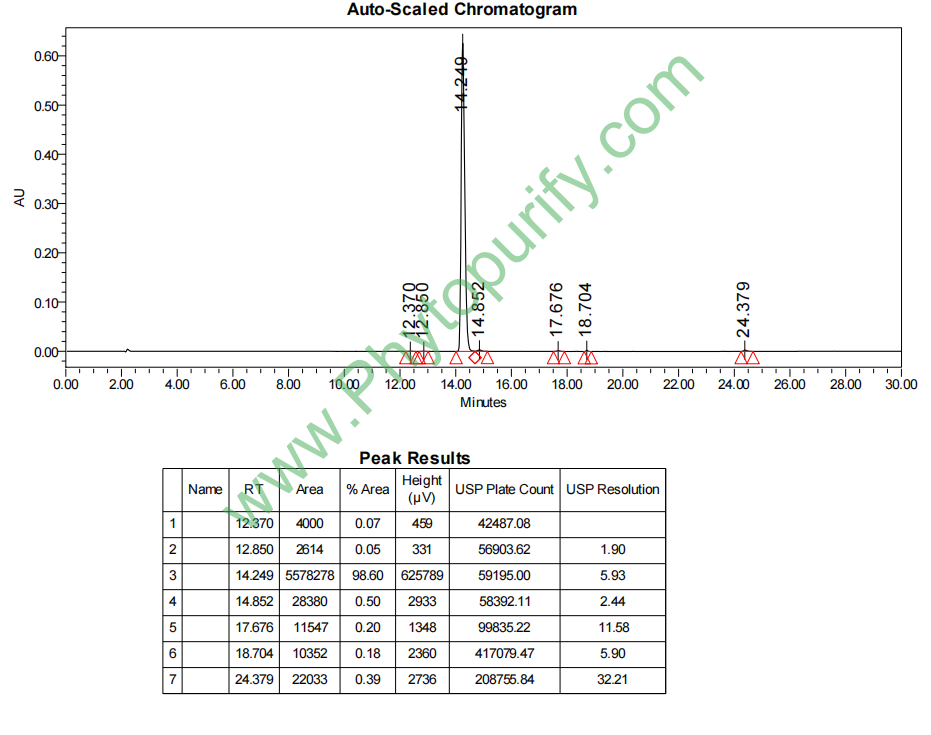
Purity: 95%~99%
Analysis Method: HPLC-DAD or/and HPLC-ELSD
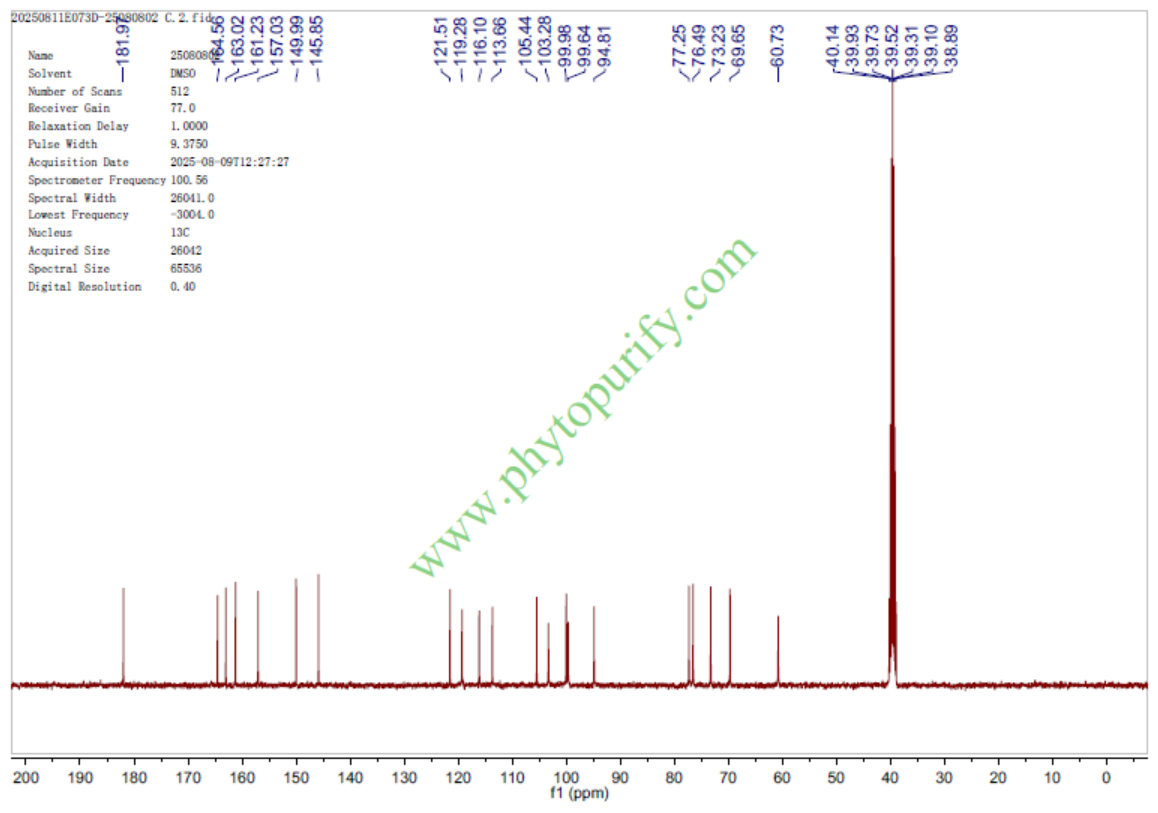
Identification Method: Mass, NMR
Packing: Brown vial or HDPE plastic bottle
The product could be supplied from milligrams to grams, up to kilograms
Inquire for bulk scale.
Descriptions:
Luteolin-7-O-glucoside and luteolin at concentrations lower than 20 muM, significantly suppresses the productions of nitric oxide and prostaglandin E-2 (PGE(2)) in bacterial lipopolysaccharide activated-mouse macrophage RAW264.7 cells without introducing cytotoxicity; the inhibitory effects were further attributed to the suppression of both inducible nitric oxide synthase (iNOS) and cyclooxygenase-2 (COX-2) protein expression, and not reduced enzymatic activity.[1]
Luteolin-7-O-glucoside from Ailanthus altissima has antiasthmatic activity through the downregulation of T helper 2 cytokine expression and inhibition of prostaglandin E2 production in an ovalbumin-induced asthma model.[2]
Luteolin-7-O-Glucoside can induce apoptosis by scavenging ROS and suppressing the expression of β-catenin in COLO 320 DM cells and effectively inhibit ACF development in DMH-induced experimental carcinogenesis, Hence it can be a potent anticancer drug for colon carcinogenesis.[3]
Luteolin-7-O-glucoside and luteolin can inhibit lipopolysaccharide-induced inflammatory responses through modulation of NF-κB/AP-1/PI3K-Akt signaling cascades in RAW 264.7 cells.[4]
Luteolin-7-O-glucoside has anti-asthmatic activity, can suppress leukotriene C(4) production and degranulation by inhibiting the phosphorylation of mitogen activated protein kinases and phospholipase Cγ1 in activated mouse bone marrow-derived mast cells.[5]
References:
[1] Hu C, Kitts D. Mol Cellr Biochem, 2004, 265(1-2):107-13.
[2] Jin M, Yang J H, Lee E, et al. Biol Pharm Bull, 2009, 32(9):1500-3.
[3] Baskar A A, Ignacimuthu S, Michael G P, et al. Nut Cancer, 2011, 63(1):130-8.
[4] Chungmu P, Song Y S. Nut Res Pract, 2013, 7(6):423-9.
[5] Jin M, Son K H, Chang H W. Biol Pharm Bull, 2011, 34(7):1032-6.
[6] Ling-Yun M A, Yao L W, Shuang-Cheng M A, et al. Chinese J Pharm Anal, 2009,29(9):1469-500.
HPLC of Luteoloside
NMR of Luteoloside
Storage conditions:Short-term storage at 2~8℃, long-term storage at -20 ~ -80℃
190.2800
-.0172
-.0534
1.3498
.5518
.1358
Low
79.6016
3.9242
Yes
No
No
No
Yes
No
1.2
Yes
No
Yes
No
Flavonoids, as one of the most widely distributed plant secondary metabolites in nature, have attracted the attention of pharmacological researchers due to their diverse biological activities. Luteoloside, also known as luteolin-7-O - β - D-glucoside, is a glycoside formed by the flavonoid compound luteolin binding a β - D-glucosyl group on the C-7 hydroxyl group. Compared to its aglycone luteolin, luteolin has significantly improved water solubility and bioavailability due to the introduction of sugar groups, which may result in better pharmacological activity and metabolic characteristics in vivo. This compound is widely present in various medicinal plants, such as honeysuckle, chrysanthemum, catnip, etc., and is one of the important material bases for these traditional medicinal herbs to exert the effects of clearing heat and detoxifying, calming the liver and improving vision. Modern pharmacological studies reveal that luteolin has a wide range of biological activities, especially in the protection of the cardiovascular system, showing great potential, involving antioxidant, anti-inflammatory, regulating lipid metabolism, improving endothelial function, anti atherosclerosis and other aspects. This article aims to systematically review the chemical properties, plant sources, pharmacological activities, molecular mechanisms of action, pharmacological evaluation, and clinical application prospects of verbascoside, in order to provide comprehensive scientific basis for the deep development and utilization of this natural product.
The chemical structure of verbascoside is clear, which is formed by connecting the 7-hydroxyl group of verbascoside (5,7,3 ', 4' - tetrahydroxyflavone) with β - D-glucopyranose through an O-glycosidic bond. Its molecular formula is C21H20O11 and its molecular weight is 448.38 g/mol. The CAS login number is 5373-11-5.
Its physical and chemical properties are closely related to its structure. The introduction of glycosidic bonds greatly altered the properties of the parent nucleus luteolin. The calculated logarithm of the lipid water partition coefficient (LogP) is approximately -0.0172, indicating that the compound has a high degree of hydrophilicity. The topologically polar surface area (TPSA) is as high as 190.28 Å ², which is mainly attributed to the numerous hydroxyl groups and oxygen atoms on the sugar ring in the molecule, further confirming its strong polarity characteristics. The theoretically predicted water solubility value is 1.3498 mg/mL, which belongs to the solubility range. This is consistent with the experimental observations of good solubility in hot water and polar organic solvents such as methanol and ethanol. However, high polarity and large TPSA also limit its ability to penetrate biofilms, and it is predicted that its permeability to the blood-brain barrier (BBB) is low, suggesting that the direct action of the central nervous system may be limited. In terms of preliminary safety prediction, its Ames test value is 1.2, indicating a low risk of mutagenicity; The inhibition prediction of hERG is' no ', indicating that its potential risk of cardiac toxicity (inducing long QT syndrome) is relatively low, providing preliminary chemical information support for its cardiovascular safety.
Osmanthus glycosides are widely distributed in the plant kingdom and are one of the characteristic components or main active ingredients of many medicinal plants.
1. Main plant sources:
* Honeysuckle family Honeysuckle flower(Lonicera japonica)It is one of the most famous sources of verbascoside, and its content is often used as one of the indicators to evaluate the quality of honeysuckle medicinal materials.
* the composite family Various chrysanthemums (such as Chrysanthemum morifolium)Wild chrysanthemums, dandelions, and other plants all contain abundant amounts of verbascoside.
* Lipstick family: Jingjie(Schizonepeta tenuifolia)This ingredient has also been detected in traditional Chinese medicines such as Prunella vulgaris.
* Other families and genera It is also distributed in various plants such as legumes and Plantago.
Its biosynthetic pathway belongs to the phenylpropanoid metabolism of plants. Phenylalanine undergoes a series of enzymatic reactions to produce coumaroyl CoA and malonyl CoA, which form a flavonoid skeleton under the action of chalcone synthase and other enzymes. It is then modified by hydroxylation, glycosylation, and other methods to ultimately produce verbascoside.
A large number of in vitro and in vivo studies have confirmed that verbascoside has multiple pharmacological activities, with its core functions revolving around antioxidant and anti-inflammatory effects, and extending to multiple systems.
Cardiovascular protective effect This is the most in-depth field of research on verbascoside.
Anti inflammatory and immune regulatory effects Osmanthus glycosides can significantly inhibit the excessive production of nitric oxide (NO), prostaglandin E2 (PGE2), and pro-inflammatory factors such as tumor necrosis factor - α (TNF - α) and interleukin-6 (IL-6) in macrophages induced by stimuli such as lipopolysaccharide (LPS). It also shows good anti-inflammatory effects on animal models of acute and chronic inflammation, such as carrageenan induced rat foot swelling and cotton ball granuloma models.
Neuroprotective effect Although the blood-brain barrier has poor permeability, some studies suggest that it may exert neuroprotective effects through indirect mechanisms. In Alzheimer's disease cell models, verbascoside can alleviate neurotoxicity induced by β - amyloid protein; In the cerebral ischemia model, its effect of reducing nerve damage has also been observed.
Other activities: It also includes antibacterial, antiviral (for some respiratory viruses), liver protection, anti diabetes and other potential activities, but the research is relatively scattered, and the depth needs to be strengthened.
The multiple pharmacological effects of verbascoside stem from its regulation of multiple signaling pathways within cells and its action on multiple key molecular targets. Based on the provided target information, the cardiovascular protective mechanism can be summarized as follows:
Regulating lipid metabolism and inflammation:
Protecting vascular endothelium and regulating vascular tension:
Regulating cell survival and electrophysiology:
In summary, verbascoside exerts cardiovascular protective effects through multi-target and multi pathway synergistic effects, including lipid regulation, antioxidant, anti-inflammatory, endothelial protection, and regulation of vascular tone.
Although verbascoside exhibits excellent activity in vitro, its drug like and pharmacokinetic properties in vivo are key factors determining its successful development as a drug.
Preliminary evaluation of drug properties Based on its physicochemical parameters, verbascoside meets most of the conditions in the "Rule of Five" (molecular weight<500, acceptable number of hydrogen bond donors/acceptors), but its extremely high polarity and TPSA result in poor membrane permeability, and its oral bioavailability is expected to be low. This is both a challenge and a suggestion that it may be more suitable for development as an injection or for improving absorption through structural modifications (such as prodrug preparation).
Pharmacokinetic study:
As a natural product with clear multi target cardiovascular protective activity, luteolin has broad prospects for clinical application and development, but also faces many challenges.
Potential application directions:
challenges faced:
Future Prospects:
Future research should focus on: ① breaking through the bioavailability barriers of modern formulation technologies (such as nanotechnology and targeted delivery systems); ② By utilizing techniques such as systems pharmacology, chemical biology, and structural biology, we aim to uncover the multi-target action network and precise molecular mechanisms; ③ Conduct standardized preclinical safety assessments (GLP) and exploratory clinical studies (Phase I/II) to accumulate human data; ④ Exploring its potential for combination therapy with other cardiovascular drugs such as statins and ACEIs may result in synergistic effects and reduced side effects.
Luteolin, as a kind of flavonoid glycoside widely existing in medicinal plants, has become one of the hot spots in natural product pharmacology research due to its remarkable antioxidant, anti-inflammatory and multi target cardiovascular protective activities. From a chemical structure perspective, the introduction of sugar groups endows it with good water solubility, but also brings the challenge of poor membrane permeability. Its pharmacological effects are achieved by regulating multiple key targets such as SELP, HMGCR, PPARG, ACE, AKT1, NOS3, ICAM1, VCAM1, etc., interweaving into a complex network of effects to safeguard cardiovascular health from multiple levels. However, lower oral bioavailability is the main obstacle to its translation into clinical applications. Future research should focus on improving its delivery efficiency through pharmaceutical strategies, and conducting systematic mechanism research and clinical validation to fully tap into the enormous value of this ancient plant component in modern disease prevention and control, providing solid scientific support for the development of innovative drugs or high-end health products with independent intellectual property rights in China.
