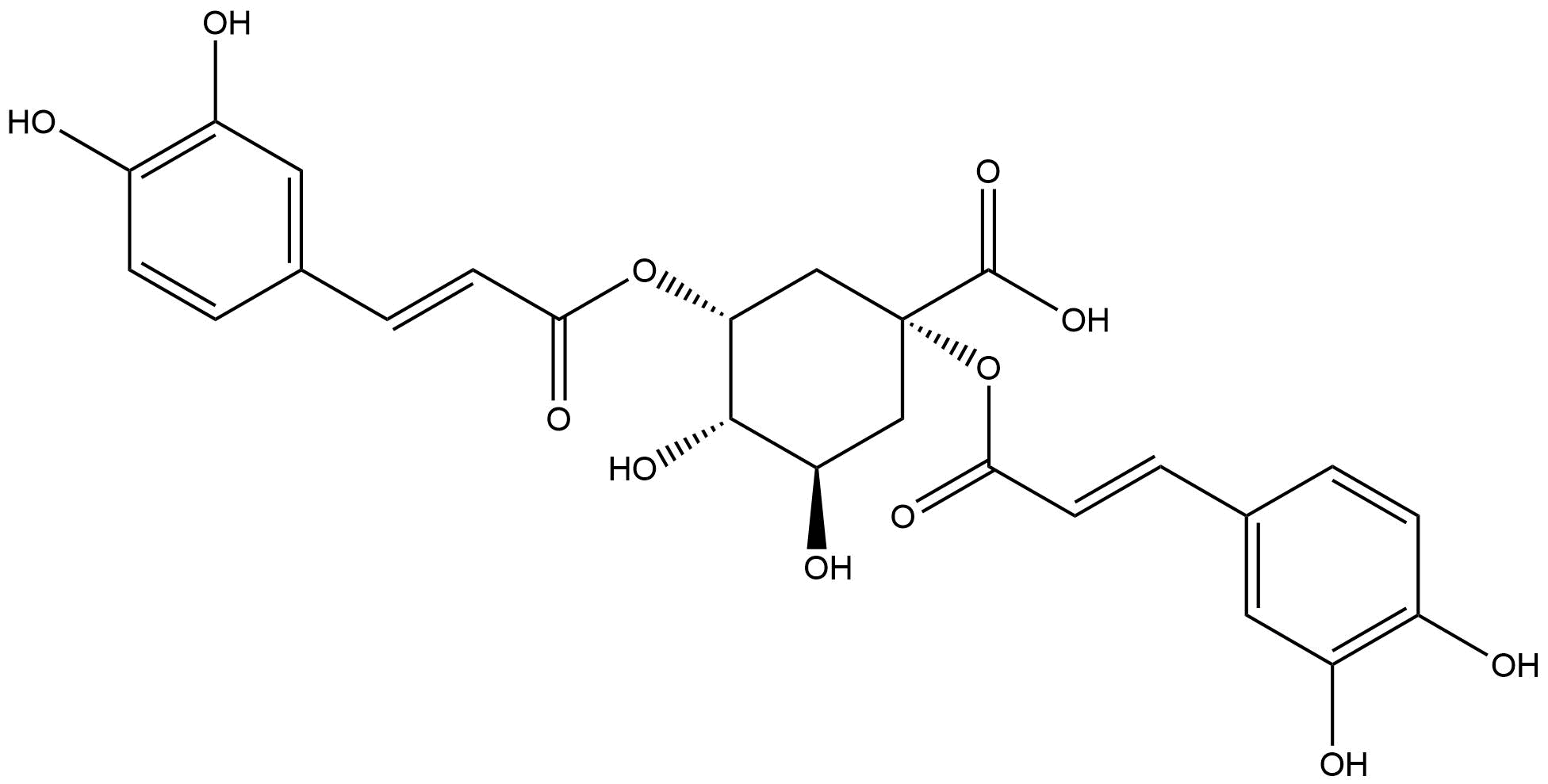


Synonym name: Cynarin; Cynarine; 1,3-Dicaffeoylquinic acid
Catalogue No.: BP0005
Cas No.: 30964-13-7
Formula: C25H24O12
Mol Weight: 516.455
Smiles: O=C(O[C@H]1C[C@](OC(/C=C/C2=CC(O)=C(O)C=C2)=O)(C(O)=O)C[C@@H](O)[C@H]1O)/C=C/C3=CC(O)=C(O)C=C3
Botanical Source: globe artichoke (Cynara scolymus), quince fruit (Cydonia oblonga), Caucasian whortleberry (Vaccinium arctostaphylos), Aster scaber and Ipomoea batatas (sweet potato) tubers
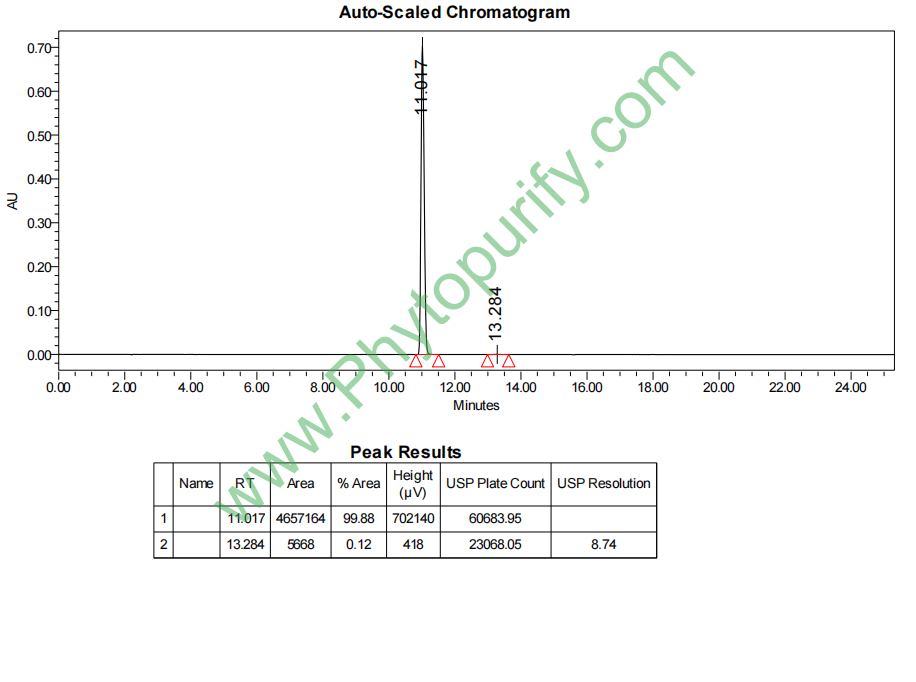
Purity: 95%~99%
Analysis Method: HPLC-DAD or/and HPLC-ELSD
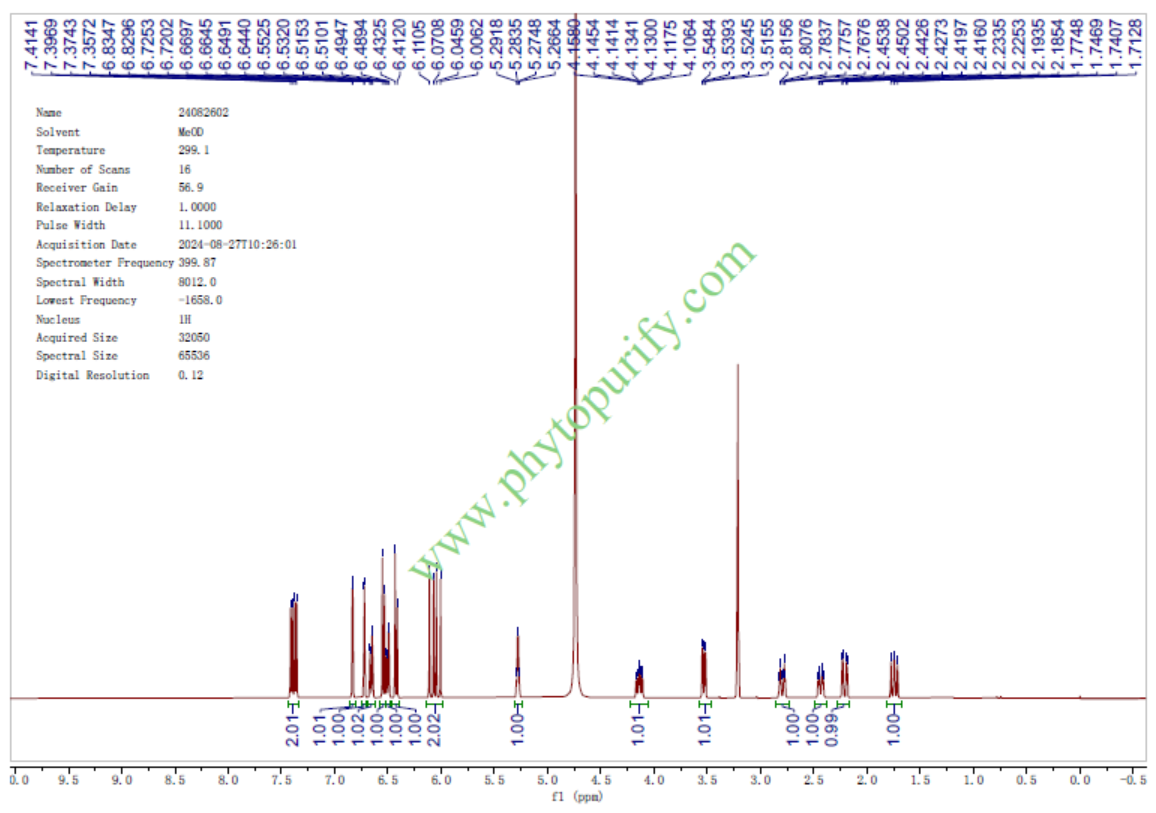
Identification Method: Mass, NMR
Packing: Brown vial or HDPE plastic bottle
Can be supplied from milligrams to grams.
For Reference Standard and R&D, Not for Human Use Directly.
Inquire for bulk scale.
HPLC of 1,3-Dicaffeoylquinic acid
HNMR of 1,3-Dicaffeoylquinic acid
Storage conditions:Short-term storage at 2~8℃, long-term storage at -20 ~ -80℃
211.2800
1.2621
-.9736
.6135
.8016
.2865
Low
88.3320
4.1639
Yes
No
No
No
Yes
No
0.0
Yes
Yes
Yes
Yes
Natural products, as an important treasure trove for drug discovery, play an irreplaceable role in the history of human disease prevention and treatment. Among them, caffeoylquinic acid compounds are a class of phenolic acid secondary metabolites widely distributed in the plant kingdom, which have attracted much attention for their excellent antioxidant activity. 1,3-Dicaffeoylquinic acid, as an important member of this class of compounds, is formed by the ester bond between two molecules of caffeic acid and one molecule of quinic acid at the 1st and 3rd hydroxyl groups. Its CAS number is 19870-46-3 and its molecular formula is C25H24O12. In recent years, with the deepening of modern pharmacological research, 1,3-dicaffeoylquinic acid is no longer limited to its basic antioxidant properties. Its multi-target and multi pathway regulatory effects in major chronic diseases such as cardiovascular and cerebrovascular diseases and neurodegenerative diseases have gradually been revealed. This article aims to systematically review the chemical properties, plant sources, pharmacological activities, molecular mechanisms of action, pharmacological evaluation, and clinical application prospects of 1,3-dicaffeoylquinic acid, in order to provide comprehensive scientific references for the in-depth research and development of this compound.
1,3-Dicaffeoylquinic acid belongs to chlorogenic acid compounds, and its core structure is quinic acid (a cyclohexane polyol acid). A molecule of caffeic acid (3,4-dihydroxycinnamic acid) is connected to the 1st and 3rd carbon atoms of quinic acid through an ester bond. This structure endows the molecule with multiple phenolic hydroxyl and carboxyl groups, which are the chemical basis for its strong polarity, hydrogen bond donor/acceptor ability, and significant biological activity.
From the analysis of physical and chemical properties, its molecular weight is 516.4550 g/mol. The calculated lipid water partition coefficient (LogP) is approximately 1.26, indicating that the compound has a certain degree of lipophilicity, but overall it still leans towards hydrophilicity. Its topological polar surface area (TPSA) is as high as 211.28 Å ², mainly attributed to the large number of oxygen atoms in the molecule (including hydroxyl, carboxyl, and carbonyl oxygen in ester bonds), indicating its strong ability to form intermolecular hydrogen bonds, but may also affect its efficiency in passive diffusion across membranes. The theoretically calculated water solubility value is about 0.6135 mg/mL, which belongs to the range of slightly soluble to soluble, consistent with its polyphenol hydroxyl structure. Based on its high TPSA and moderate LogP values, it is preliminarily predicted that its ability to penetrate the blood-brain barrier is relatively low, which is consistent with the assessment of "low" blood-brain barrier permeability in subsequent drug analysis. These basic physicochemical parameters are the key starting point for understanding their extraction, separation, in vivo processes, and bioavailability.
1,3-Dicaffeoylquinic acid is widely distributed in nature and mainly exists in plants such as Asteraceae and Lonicera japonica. Common medicinal plants rich in this compound include honeysuckle(Lonicera japonica Thunb.)、chrysanthemum(Chrysanthemum morifolium Ramat.)、dandelion(Taraxacum official) and Artichoke(Cynara scolymus L.) and others. In honeysuckle, it is one of the main antibacterial and antiviral active ingredients; In chrysanthemums, it is closely related to their heat clearing and vision improving effects.
The extraction method follows the general principles of plant polyphenols.Solvent extraction method It is the most commonly used method, usually using methanol, ethanol, or their aqueous solutions (such as 70% ethanol) for heating reflux or ultrasound assisted extraction, utilizing the principle of similar solubility to efficiently extract polar components. Subsequently, in order to isolate and purify high-purity 1,3-dicaffeoylquinic acid from the crude extract, various chromatographic techniques are required.Macroporous adsorption resin chromatography(such as AB-8 and D101 types) are commonly used for preliminary enrichment, using the adsorption desorption principle to remove impurities such as sugars. Further purification depends on Silica gel column chromatography、Polyamide column chromatography and Preparation type high-performance liquid chromatography Among them, reverse phase preparative HPLC (commonly using C18 chromatography column with methanol water or acetonitrile water system as mobile phase) is the key step to obtain high-purity monomers. In recent years,High-speed countercurrent chromatography The liquid-liquid distribution chromatography technology without the need for solid carriers has shown promising application prospects in the separation of such compounds due to its high recovery rate and avoidance of irreversible adsorption. The optimization of extraction process is usually based on the extraction rate or target compound content, examining factors such as solvent concentration, solid-liquid ratio, extraction temperature, and time.
A large number of in vitro and in vivo pharmacological studies have shown that 1,3-dicaffeoylquinic acid has diverse biological activities, and its potential applications far exceed the traditional understanding of antioxidant categories.
1. Antioxidant and free radical scavenging activity: This is its most fundamental and important activity. The catechol structure in the molecule is an efficient electron donor that can directly neutralize reactive oxygen species such as peroxyl radicals (ROO ·), hydroxyl radicals (· OH), and superoxide anions (O ₂·⁻), and may inhibit the Fenton reaction by chelating metal ions (such as Fe ² ⁺). Its antioxidant capacity is significantly stronger than that of single caffeic acid or quinic acid, reflecting the synergistic effect of its structure.
2. Anti atherosclerosis effect: In the atherosclerosis model, 1,3-dicaffeoylquinic acid shows a multi link protective effect. It can inhibit the inflammatory reaction and apoptosis of vascular endothelial cells induced by oxidized low density lipoprotein, reduce the foam of macrophages, and promote the reverse transport of cholesterol. Animal experiments have shown that it can alleviate high-fat diet induced aortic plaque formation and improve blood lipid profile.
3. Neuroprotective effect: In cell and animal models related to Parkinson's disease, this compound exhibits significant neuroprotective potential. It can alleviate the apoptosis of dopaminergic neurons induced by neurotoxins such as MPP ⁺ and 6-OHDA, and improve motor dysfunction. Its function is closely related to inhibiting oxidative stress, reducing neuroinflammation, and regulating cell apoptosis pathways.
4. Anti heart failure potential: Research has shown that 1,3-dicaffeoylquinic acid has a protective effect on myocardial cells. In heart failure models induced by myocardial ischemia/reperfusion injury or pressure load, it can improve heart function, reduce myocardial fibrosis, and its mechanism involves energy metabolism regulation and anti cardiomyocyte apoptosis.
5. Other activities: In addition, the study also reported its antiviral (such as inhibiting influenza virus, HIV), antibacterial, anti-inflammatory, hepatoprotective, and potential anti-tumor adjuvant activities, most of which are related to its ability to regulate cell signaling pathways and gene expression.
The multiple pharmacological effects of 1,3-dicaffeoylquinic acid stem from its regulation of multiple key signaling pathways and molecular targets. Based on the provided target information, its mechanism of action can be summarized as follows:
1. The core switch regulating energy metabolism and cell survival: AMPK signaling pathway
AMP activated protein kinase (AMPK) is a core regulator of cellular energy homeostasis. 1,3-Dicaffeoylquinic acid has been shown to activate AMPK (target PRKAA1). In atherosclerosis, AMPK activation can up regulate the expression of cholesterol efflux transporter ABCA1 and promote cholesterol efflux from macrophages; Simultaneously inhibiting inflammatory response. In heart failure, AMPK activation in myocardial cells can promote fatty acid oxidation and glucose uptake, improve energy supply, and inhibit pathological hypertrophy. In Parkinson's disease, AMPK activation helps promote neuronal autophagy, clear misfolded protein aggregates, and enhance mitochondrial function.
2. Intervention of cell apoptosis and survival balance:
- Anti apoptotic targets: This compound can upregulate the expression of B-cell lymphoma 2 protein (BCL2) and myeloid leukemia 1 protein (MCL1). These two are key anti apoptotic proteins that prevent the cascade of apoptosis by inhibiting the release of mitochondrial cytochrome C, which is crucial for protecting endothelial cells, cardiomyocytes, and neurons from stress damage.
- Epigenetic regulation: Its interaction with histone lysine methyltransferase 2 (EHMT2) suggests epigenetic regulatory mechanisms. Inhibition of EHMT2 may affect the histone methylation status of specific genes (such as pro apoptotic or pro inflammatory genes), thereby changing their expression, which has significance in the pathological process of heart failure and atherosclerosis.
3. Inhibit oxidative stress and inflammation related targets:
- LOX-1: As the main endothelial receptor for oxidized low density lipoprotein, LOX-1 is a key molecule for the initiation of atherosclerosis. 1,3-Dicaffeoylquinic acid can downregulate LOX-1 expression, block the internalization of ox LDL, and prevent endothelial dysfunction and inflammation caused by it.
- TLR4: In the neuroinflammation of Parkinson's disease, Toll like receptor 4 (TLR4) on microglia is abnormally activated. Inhibiting the TLR4 signaling pathway can alleviate neuroinflammation and protect dopaminergic neurons.
- ALOX15: 15 lipoxygenase (ALOX15) is involved in oxidative stress and the production of inflammatory mediators. Inhibiting its activity helps alleviate tissue oxidative damage, which has a protective effect in both heart failure and neurodegenerative diseases.
4. Specific targets affecting neurodegenerative diseases:
- BACE1: Although more closely related to Alzheimer's disease, inhibition of β - secretase 1 (BACE1) also shows potential for improving Parkinson's disease-related pathology, possibly related to reducing amyloid toxicity stress.
- MAOA: Monoamine oxidase A (MAOA) is a key enzyme in the degradation of dopamine. Inhibiting MAOA can increase synaptic dopamine levels and is one of the classic treatment strategies for Parkinson's disease. The effect of 1,3-dicaffeoylquinic acid on this target suggests that it may have direct potential for symptom improvement.
5. Other potential targets: The helicase RECQ1 and BLM may be involved in DNA damage repair, AKR1B1 (aldose reductase) is associated with the formation of oxidative stress end products, and APEX1 (depurine/depyrimidine endonuclease 1) is involved in DNA repair. The regulation of these targets together constitutes a complex network of their cellular protective effects.
In conclusion, 1,3-dicaffeoylquinic acid forms a synergistic "multi target network" by simultaneously acting on AMPK, apoptosis regulating protein, inflammatory receptor and multiple disease specific targets, which may be the molecular basis of its comprehensive efficacy on complex multi factor diseases (such as atherosclerosis, Parkinson's disease).
Although 1,3-dicaffeoylquinic acid exhibits excellent activity in vitro, its drug affinity and in vivo pharmacokinetic behavior are key factors determining its successful development as a drug.
Analysis of pharmacological parameters:
- Evaluation of the Rule of Five for Drugs: Its molecular weight (516) slightly exceeds the common upper limit of 500 daltons; Calculate LogP (1.26) ideal; The number of hydrogen bond donors (6 phenolic hydroxyl groups and 1 carboxyl group, a total of 7) exceeds 5; The number of hydrogen bond acceptors (12) is also relatively high. Strictly speaking, it does not fully comply with the "Five Rules", which is consistent with its natural product characteristics and suggests that its oral absorption may face challenges.
- Solubility and permeability: Moderate water solubility and high TPSA, combined with multiple hydrogen bond donors, typically indicate poor passive permeability of the cell membrane. This is contrary to its prediction Low blood-brain barrier permeability Consistently, treating central nervous system diseases such as Parkinson's disease is a major obstacle.
- Preliminary safety warning: According to the provided data, it does not inhibit hERG potassium channels ("No"), indicating a low risk of inducing QT interval prolongation in the heart. The Ames test result is 0.0, indicating that there is no mutagenicity in this testing system, which is an important positive signal for drug safety evaluation.
Prospects for pharmacokinetic research:
The existing literature on the pharmacokinetics of this compound system is relatively limited, but based on its structural characteristics and studies of similar compounds, it can be inferred that its characteristics are:
1. Absorption: After oral administration, ester bonds may be partially hydrolyzed by esterases in the gastrointestinal tract or intestinal wall, producing caffeic acid and quinic acid or their monoester derivatives, thereby affecting the bioavailability of the prototype drug. Its polyphenol structure may undergo extensive interactions with gut microbiota, such as hydrolysis, reduction, and lysis.
2. Distribution: The prototype drug may have a high polarity and plasma protein binding rate (phenolic hydroxyl groups are easily bound to albumin), and its distribution volume may be small, mainly distributed in the blood and extracellular fluid, making it difficult to enter brain tissue.
3. Metabolism: The liver is its main metabolic site, which may undergo glucuronidation and sulfation binding reactions, methylation, and further oxidation reactions, resulting in rapid metabolism.
4. Excretion: Its prototype and metabolites are mainly excreted from urine through the kidneys.
To improve its pharmacological properties, future research strategies may include:Structural modification(such as preparing prodrugs to increase lipid solubility and BBB penetration)Develop a new drug delivery system(such as liposomes, nanoparticles, microemulsions to improve solubility, targeting, and stability), and Explore combination therapy To reduce the effective dosage.
1,3-Dicaffeoylquinic acid, as a natural active molecule with multi-target effects, has shown broad application prospects in the prevention and treatment of chronic diseases, but also faces many challenges.
Potential application directions:
1. Primary/secondary prevention of cardiovascular and cerebrovascular diseases: With its antioxidant, anti-inflammatory, lipid regulating and vascular endothelial protection properties, it can be developed as a functional food additive or health care product for early intervention of atherosclerosis and hypertension. Combined with existing statins, it may have a synergistic effect and reduce side effects.
2. Adjuvant therapy for neurological disorders: Although BBB has poor penetrability, its powerful neuroprotective effect cannot be ignored. Delivery can be achieved through nanotechnology, such as brain targeted liposomes, or small molecule derivatives that can penetrate the BBB can be developed as a supplement to Disease modifying therapy for neurodegenerative diseases such as Parkinson's disease.
3. Antiviral and anti-inflammatory applications: Based on its high content and clear antiviral activity in traditional heat clearing and detoxification herbs (such as honeysuckle), its role against specific viruses (such as respiratory syncytial virus, influenza virus) can be further studied, and it can be developed into antiviral auxiliary drugs or local drugs such as mouthwash, spray, etc.
Challenges and future research directions:
1. Bottleneck of bioavailability: This is the biggest obstacle to its clinical progress. Future research needs to focus on: ① systematic and complete pharmacokinetic studies to clarify their in vivo fate; ② Innovative formulation technology to improve oral absorption and target tissue distribution.
2. Deep analysis of the mechanism of action: At present, target research is still mostly based on association analysis and preliminary validation. It is necessary to use chemical biology methods (such as photoaffinity labeled probes, proteomics) to directly identify its molecular targets and elucidate the network synergy between its multiple targets.
3. Lack of preclinical and clinical research: The vast majority of research remains at the stage of cell and animal models. It is urgent to carry out systematic toxicological evaluation (acute toxicity, chronic toxicity, reproductive toxicity, etc.) and standardized preclinical pharmacological validation in accordance with drug development standards, laying the foundation for clinical trials.
4. Chemical synthesis and structural optimization: At present, it mainly relies on plant extraction, which is costly and difficult to control purity. Developing fully synthetic or semi synthetic routes and using them as a basis for rational structural modifications is the only way to obtain more optimal candidate compounds for drug development.
1,3-dicaffeoylquinic acid is a shining star in the treasure house of natural products. It shows comprehensive therapeutic potential in atherosclerosis, heart failure, Parkinson's disease and other major disease models by regulating multiple key targets such as AMPK, apoptosis related proteins, inflammatory receptors, etc. The powerful antioxidant activity conferred by its polyphenol structure is the cornerstone of its pharmacological effects, while its multi-target properties are in line with the concept of modern complex disease systemic therapy. However, its poor pharmacokinetic properties, especially low oral bioavailability and low blood-brain barrier permeability, are the main barriers that stand in the way of transitioning from "active molecules" to "clinical drugs". Future research should focus on utilizing modern pharmaceutical, medicinal chemistry, and systems biology technologies to overcome delivery bottlenecks, deepen understanding of mechanisms, and promote standardized preclinical development. Only through continuous interdisciplinary efforts can this ancient natural molecule be revitalized and ultimately benefit human health.
