
| Catalog No | Package | Original Price | Price | Inventory | Quantity | Operating |
|---|---|---|---|---|---|---|
| BP0896-20mg | 20mg | $20.00 | Sign in |
|


Product name: Luteolin
Synonym name: Digitoflavone; Daphneflavonol; Flavopurpol; Luteolol
Catalogue No.: BP0896
Cas No.: 491-70-3
Formula: C15H10O6
Mol Weight: 286.239
Botanical Source: Occurs in many plants in Leguminosae, Resedaceae, Euphorbiaceae, Umbelliferae, Scrophulariaceae, Fabaceae, Asteraceae, Cistaceae, Passifloraceae, Yerbenaceae and Hepaticae. First isol. in 1832 from Reseda luteola
Physical Description: Yellow powder
Type of Compound: Flavonoids
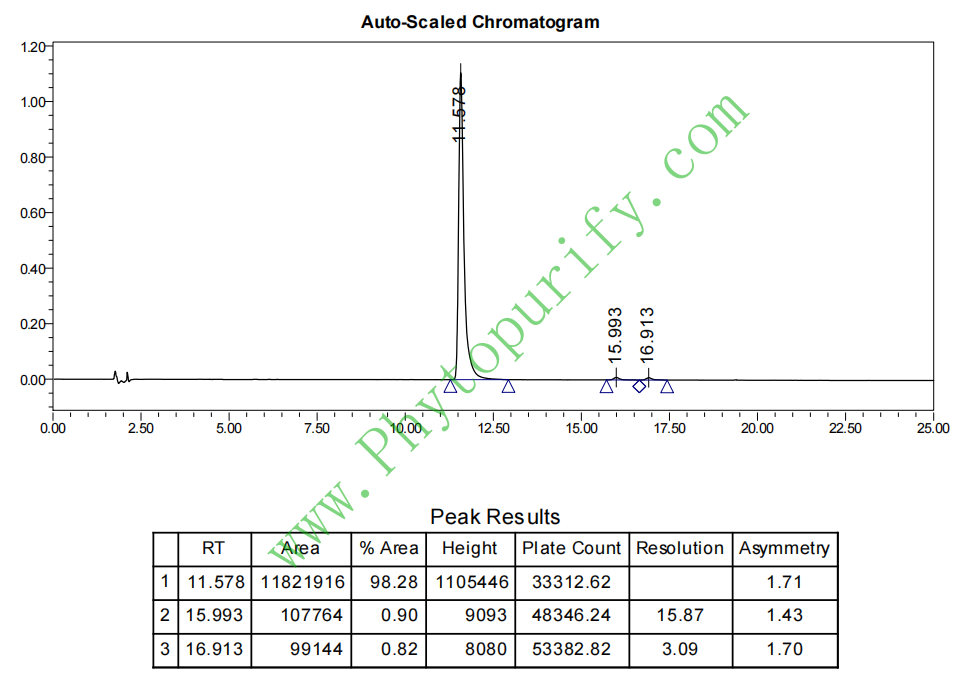
Purity: 95%~99%
Analysis Method: HPLC-DAD or/and HPLC-ELSD
Identification Method: Mass, NMR
Packing: Brown vial or HDPE plastic bottle
Storage: Store in a well closed container, protected from air and light. Put into refrigerate or freeze for long term storage.
Whenever possible, you should prepare and use solutions on the same day. However, if you need to make up stock solutions in advance, we recommend that you store the solution as aliquots in tightly sealed vials at -20℃. Generally, these will be useable for up to two weeks.
The product could be supplied from milligrams to grams, up to kilograms
Inquire for bulk scale.
Descriptions:
Luteolin, is a common flavonoid that exists in many types of plants including fruits, vegetables, and medicinal herbs, has anti-oxidant, anti-inflammation, anti-allergy and anticancer, has been used in Chinese traditional medicine for treating various diseases such as hypertension, inflammatory disorders, and cancer. [1]
Luteolin can reduce production of proinflammatory mediators and inhibit LPS-induced IL-6 production in the brain by inhibiting the JNK signaling pathway and activation of AP-1 in microglia, also shows potent anti-inflammatory activities by inhibiting nuclear factor kappa B (NFkB) signaling in immune cells, thus, could be a promising candidate to develop immuno-modulatory and neuroprotective therapies for the treatment of neurodegenerative disorders.[2-3]
Luteolin induces apoptosis in various cancer cells, one mechanism through death receptor 5 (DR5) upregulation, treatment with luteolin might be promising as a new therapy against cancer. [4]
Luteolin attenuates TGF-β1-induced epithelial–mesenchymal transition of lung cancer cells by interfering in the PI3K/Akt–NF-κB–Snail pathway, strengthen the anti-cancer effects of flavonoid compounds via the regulation of migration/invasion and EMT ability of various cancer cells.[5]
References:
[1] Lin Y, Shi R, Wang X, et al. Curr Cancer Drug Tar, 2008, 8(7):634-46(13).
[2] Jang S, Kelley K W, Johnson R W. P Natl Acad Sci USA, 2008, 105(21):7534-9.
[3] Dirscherl K, Karlstetter M, Ebert S, et al. J Neuroinflamm, 2010, 7(1):1-16.
[4] Horinaka M, Yoshida T, Shiraishi T, et al. Oncogene, 2005, 24(48):7180-9.
[5] Chen K C, Chen C Y, Lin C J, et al. Life Sci, 2013, 93(24):924-33.
[6] Chen X, Liu L, Sun Z, et al. Biomed Chromatogr, 2010, 24(8):826–32.
HPLC of Luteolin
Storage conditions:Short-term storage at 2~8℃, long-term storage at -20 ~ -80℃
111.1300
2.0407
1.6413
.0370
2.3044
21.6121
Low
88.8519
2.4203
Yes
No
Yes
No
Yes
No
1.2
Yes
No
Yes
No
Natural products, as an important source of drug discovery, play an indispensable role in the long struggle between humans and diseases. Among the diverse natural products, flavonoids have attracted much attention due to their widespread biological activity and relatively low toxicity. Luteolin, also known as 3 ', 4', 5,7-tetrahydroxyflavone, is a typical natural flavonoid compound widely present in various vegetables, fruits, and medicinal plants. Its unique chemical structure endows it with diverse pharmacological activities, making it one of the research hotspots in the field of natural product pharmacology.
The research history of luteolin can be traced back to the early 20th century, when it was mainly isolated and identified as a plant pigment. With the development of modern pharmacology and molecular biology techniques, the biological functions of magnolol have gradually been revealed. Early research mainly focused on its antioxidant and anti-inflammatory activities, while in the past two decades, its potential in anti-tumor, neuroprotective, cardiovascular protection, and metabolic regulation has been deeply explored. In particular, luteolin has been identified as an effective inhibitor of nuclear factor E2 related factor 2 (Nrf2), providing a new molecular basis for its application in cancer treatment. Nrf2 is a key transcription factor for cells to cope with oxidative stress and electrophilic substances, playing a protective role in normal cells. However, in some cancer cells, excessive activation of Nrf2 can actually promote tumor growth, drug resistance, and metastasis. Therefore, inhibiting Nrf2 activity has become a promising anti-cancer strategy, and luteolin precisely plays this role.
Lung cancer is one of the malignant tumors with the highest incidence rate and mortality in the world, and its treatment is facing great challenges. Despite significant progress in targeted therapy and immunotherapy, issues of drug resistance and side effects remain prominent. Osmanthus extract exhibits multiple anticancer activities in various human cancer cell lines, including non-small cell lung cancer (NSCLC) cells, including inducing apoptosis, blocking the cell cycle, inhibiting metastasis, and angiogenesis. Its mechanism of action involves the regulation of multiple signaling pathways, such as the regulation of key proteins such as BCL2, STAT3, MMP2, and the impact on receptors such as TLR4 and ESR2. These findings provide a theoretical basis for the development of magnolol as an adjuvant therapy or chemotherapy sensitizer for lung cancer.
This review aims to systematically review the research progress of luteolin, starting from its chemical structure and physicochemical properties, explore its plant origin and extraction methods, deeply analyze its pharmacological activity, mechanism of action, and molecular targets, and evaluate its clinical application prospects and challenges based on drug evaluation and pharmacokinetic characteristics, in order to provide comprehensive references for further research and development of luteolin.
The chemical structure of luteolin is the basis of its biological activity. As a typical representative of flavonoids, its core structure consists of two benzene rings (A ring and B ring) connected by an oxygen-containing heterocyclic ring (C ring), namely the C6-C3-C6 skeleton. Specifically, the chemical name of luteolin is 3 ', 4', 5,7-tetrahydroxyflavone, which is characterized by a hydroxyl group (- OH) at the C-5 and C-7 positions of the A ring, a carbonyl group (C=O) at the C-4 position of the C ring, and a hydroxyl group at the C-3 'and C-4' positions of the B ring. This ortho dihydroxy structure (i.e. the 3 ', 4' - dihydroxy group on the B ring) is a key functional group for the potent antioxidant activity of luteolin, which can effectively chelate metal ions and scavenge free radicals.
The molecular formula of luteolin is C ₁₅ H ₁₀ O ₆, with a molecular weight of 286.2390 g/mol. Its physical and chemical properties largely determine its internal behavior. The lipid water partition coefficient (LogP) of luteolin is 2.0407, indicating that it has a certain lipophilicity and can penetrate cell membranes well. However, its polar surface area (TPSA) is 111.1300 Å ², which is relatively large, mainly due to multiple hydroxyl and carbonyl groups in the molecule. Larger TPSA is usually not conducive to passive diffusion through the blood-brain barrier, which is consistent with the pharmacological parameters of low blood-brain barrier permeability of magnolol. The water solubility of luteolin is poor, with an experimental measurement value of approximately 0.0370 mg/mL, which limits its oral bioavailability and in vivo distribution. This low water solubility is a common challenge faced by many flavonoids and a key issue that needs to be addressed in their formulation development.
In terms of stability, luteolin is relatively stable under acidic conditions, but is easily oxidized and degraded in alkaline environments. Light, high temperature, and metal ions (such as Fe ³ ⁺, Cu ² ⁺) can also accelerate their decomposition. Therefore, measures such as avoiding light, low temperature, isolating air, and adding antioxidants need to be taken during storage and formulation to ensure its stability. In addition, luteolin undergoes phase II metabolism in the body, including glucuronidation, sulfation, and methylation, which significantly alter its biological activity and pharmacokinetic characteristics.
Osmanthus extract is widely distributed in nature and exists in various plants, especially in plants such as Asteraceae, Lamiaceae, Umbelliferae, Leguminosae, and Rutaceae, where it is abundant. Common plants rich in luteolin include celery (Apium graveolens), parsley (Petroselinum crispum), thyme (Thymus vulgaris), mint (Mentha spp.), chamomile (Matricaria chamomilla), honeysuckle (Lonicera japonica), perilla frutescens, as well as various peppers and vegetables. In addition, verbascoside is also present in plants in the form of glycosides (such as verbascoside, verbascoside 7-O-glucoside), which can be hydrolyzed into aglycone verbascoside under the action of gut microbiota.
There are various extraction methods for luteolin, and the choice of method depends on the purity, cost, environmental requirements, and subsequent applications of the target product. The traditional extraction methods mainly include solvent extraction and water extraction. The solvent extraction method utilizes the solubility of luteolin in organic solvents, including methanol, ethanol, acetone, and their aqueous solutions. Among them, ethanol is widely used due to its relatively low toxicity and good extraction efficiency. The extraction process usually involves drying, crushing, defatting (such as treatment with petroleum ether) of the raw materials, and then multiple extractions or reflux extractions. Although the water extraction method is low-cost and environmentally friendly, the extraction efficiency of luteolin is usually low due to its poor water solubility, and there are many impurities in the extract.
In order to improve extraction efficiency and selectivity, modern extraction techniques have been widely applied. Ultrasound assisted extraction (UAE) utilizes the cavitation effect of ultrasound to destroy plant cell walls, accelerate solvent permeation and solute diffusion, thereby achieving higher extraction rates in a shorter period of time. Microwave assisted extraction (MAE) utilizes the heating effect of microwaves to rapidly vaporize the internal water of plants, causing cell wall rupture and promoting the dissolution of active ingredients. Supercritical fluid extraction (SFE) typically uses carbon dioxide as the extractant, and by adjusting pressure and temperature to change its solubility, it can achieve selective extraction with no solvent residue in the product, making it particularly suitable for the extraction of thermosensitive components. In addition, enzyme assisted extraction (EAE) can effectively improve the extraction rate of luteolin by degrading plant cell wall components through cellulase, pectinase, and other enzymes.
The crude extract after extraction needs to undergo purification steps to obtain high-purity luteolin. Common purification techniques include column chromatography (such as silica gel column, polyamide column, macroporous adsorption resin column), high performance liquid chromatography (HPLC), and high-speed countercurrent chromatography (HSCCC). Macroporous adsorption resin is widely used in industrial production due to its advantages of low cost, reusability, and easy operation. By selecting appropriate resin types and elution conditions, luteolin can be effectively separated from other flavonoids and impurities.
The pharmacological activity spectrum of luteolin is extremely broad, covering anti-inflammatory, antioxidant, anti-tumor, neuroprotective, cardiovascular protection, anti diabetes, antimicrobial and other aspects. Among them, its anti-tumor activity, especially its role in lung cancer, is currently a hot research topic.
1. Antitumor activity
Luteolin has shown inhibitory effects on a variety of cancer types, including lung cancer, breast cancer, prostate cancer, colorectal cancer, liver cancer, stomach cancer, pancreatic cancer, ovarian cancer and melanoma. Its anti-tumor mechanism is multifaceted:
- Inducing cell apoptosis Osmanthus extract can induce cancer cell apoptosis through endogenous (mitochondrial) and exogenous (death receptor) pathways. In non-small cell lung cancer cells, luteolin can downregulate the expression of anti apoptotic protein BCL2 and upregulate the expression of pro apoptotic protein BAX, leading to loss of mitochondrial membrane potential, release of cytochrome c, and activation of Caspase cascade reaction, ultimately resulting in cell apoptosis.
- Block cell cycle Osmanthus extract can arrest the cancer cell cycle in G1/S or G2/M phases. The mechanism involves the regulation of cyclins and cyclin dependent kinases (CDKs), such as downregulating the expression of Cyclin D1, Cyclin E, CDK2, and CDK4/6, and upregulating the levels of CDK inhibitors p21 and p27.
- Inhibit cell metastasis and invasion Osmanthus extract can inhibit the migration and invasion ability of cancer cells. Its mechanism of action includes downregulating the expression and activity of matrix metalloproteinases (MMPs, such as MMP2 and MMP9), which are key molecules for degrading extracellular matrix and promoting tumor metastasis. In addition, luteolin can also inhibit metastasis by suppressing the epithelial mesenchymal transition (EMT) process.
- Inhibit angiogenesis The growth and metastasis of tumors depend on the formation of new blood vessels. Osmanthus extract can inhibit the expression of vascular endothelial growth factor (VEGF) and its receptors, thereby blocking tumor angiogenesis and cutting off the tumor's nutritional supply.
- Reverse drug resistance Osmanthus extract can be used as a chemotherapy sensitizer to enhance the anti-cancer effect of traditional chemotherapy drugs such as cisplatin, paclitaxel, and doxorubicin, and reverse multidrug resistance (MDR) in tumor cells. The mechanism may be related to the inhibition of drug resistance related signaling pathways such as Nrf2 and NF - κ B.
2. Anti inflammatory activity
Osmanthus extract is a potent anti-inflammatory agent. It can inhibit the production of various inflammatory mediators, such as tumor necrosis factor - α (TNF - α), interleukin-1 β (IL-1 β), interleukin-6 (IL-6), and nitric oxide (NO). Its anti-inflammatory mechanism mainly involves inhibition of the nuclear factor kappa B (NF - κ B) and mitogen activated protein kinase (MAPK) signaling pathways. Osmanthus extract can directly or indirectly inhibit the activity of I κ B kinase (IKK), prevent the phosphorylation and degradation of I κ B α, and thus inhibit the nuclear translocation and transcriptional activity of NF - κ B. In addition, it can also inhibit the TLR4 signaling pathway and reduce the release of downstream inflammatory factors.
3. Antioxidant activity
The ortho dihydroxy structure on the B ring of luteolin makes it an excellent free radical scavenger and metal ion chelating agent. It can directly remove reactive oxygen species (ROS) and reactive nitrogen species (RNS), such as superoxide anions, hydroxyl radicals, peroxynitrite, etc. However, it is worth noting that the inhibitory effect of magnolol on Nrf2 results in its dual antioxidant properties. In normal cells, it may reduce antioxidant defense ability by inhibiting Nrf2, but in some cancer cells, this inhibition actually helps overcome Nrf2 mediated drug resistance.
4. Neuroprotective effect
Osmanthus extract can cross the blood-brain barrier (although its permeability is low, there is still a certain amount that can enter the central nervous system), showing protective effects in neurodegenerative disease models such as Alzheimer's disease, Parkinson's disease, and cerebral ischemia. Its mechanism includes inhibiting neuroinflammation, reducing oxidative stress, inhibiting β - amyloid protein aggregation, and protecting dopaminergic neurons.
5. Cardiovascular protective effect
Luteolin has multiple protective effects on cardiovascular system, including reducing blood pressure, improving dyslipidemia, inhibiting atherosclerotic plaque formation, and protecting myocardial ischemia reperfusion injury. Its mechanism involves anti-inflammatory, antioxidant, improvement of vascular endothelial function, inhibition of vascular smooth muscle cell proliferation, etc.
The pharmacological activity of magnolol stems from its interactions with multiple molecular targets. These targets include signal transduction proteins, transcription factors, enzymes, receptors, and ion channels. The following focuses on the key molecular targets and mechanisms of action in the treatment of lung cancer.
1. Nrf2(NFE2L2)
Osmanthus extract has been identified as an effective Nrf2 inhibitor, which is a key characteristic that distinguishes it from many other antioxidant flavonoids. Nrf2 is the main regulator of cellular response to oxidative and electrophilic stress. Under normal physiological conditions, Nrf2 binds to Kelch like ECH associated protein 1 (Keap1) and is degraded by ubiquitination. When subjected to oxidative stress, Nrf2 dissociates from Keap1, translocates into the nucleus, binds to antioxidant response elements (ARE), and initiates the transcription of a series of antioxidant and detoxifying enzymes (such as HO-1, NQO1, GST). However, in various cancer cells, including NSCLC, Nrf2 often undergoes mutations or overactivation, leading to high expression of downstream target genes, thereby enhancing cancer cells' antioxidant capacity, promoting proliferation, inhibiting apoptosis, and leading to resistance to chemotherapy and radiotherapy. Osmanthus extract weakens the defense mechanism of cancer cells by inhibiting the nuclear translocation or transcriptional activity of Nrf2, making them more sensitive to oxidative stress and chemotherapy drugs, thereby exerting anti-cancer and sensitizing effects.
2. BCL2 family
BCL2 family proteins are the core regulators of mitochondrial apoptosis pathways. Osmanthus extract can downregulate the expression of anti apoptotic protein BCL2 and upregulate the expression of pro apoptotic proteins BAX and BIM in NSCLC cells. The decrease in BCL2/BAX ratio leads to an increase in mitochondrial outer membrane permeability, the release of cytochrome c, activation of Caspase-9 and Caspase-3, and ultimately induction of cell apoptosis.
3. STAT3
Signal transducer and activator of transcription factor 3 (STAT3) is a key oncogenic transcription factor that is continuously activated in various cancers, promoting cell proliferation, survival, angiogenesis, and immune escape. Osmanthus extract can inhibit the phosphorylation of STAT3 (Tyr705 site), prevent its dimerization and nuclear translocation, thereby suppressing its transcriptional activity. This leads to downregulation of downstream target genes such as Cyclin D1, Survivor, VEGF, MMP2, etc., thereby inhibiting tumor growth, angiogenesis, and metastasis.
4. TLR4
Toll like receptor 4 (TLR4) is a key pattern recognition receptor in the innate immune system, which can be activated by various endogenous or exogenous ligands, initiating downstream NF - κ B and MAPK signaling pathways and generating inflammatory responses. Chronic inflammation is an important driving factor for the occurrence and development of lung cancer. Osmanthus extract can directly bind to the MD-2 domain of TLR4, competitively inhibiting the binding of its ligands (such as LPS), thereby inhibiting the TLR4 mediated inflammatory signaling pathway and exerting anti-inflammatory and anticancer effects.
5. MMP2
Matrix metalloproteinase-2 (MMP2) is a key enzyme that degrades type IV collagen and plays a central role in tumor cell invasion and metastasis. Osmanthus extract can downregulate the expression of MMP2 at the transcriptional and protein levels, and inhibit its enzymatic activity. The mechanism may involve inhibition of upstream signaling pathways such as STAT3, NF - κ B, and MAPK.
6. Other targets
Osmanthus extract also acts on multiple other targets. For example, it can bind with estrogen receptor beta (ESR2) to play the role of selective estrogen receptor modulator (SERM), which may be related to its activity in some hormone related cancers (such as breast cancer). In addition, luteolin can also inhibit the PI3K/AKT/mTOR signaling pathway (involving PIK3CG), which plays a key role in cell growth, proliferation, and metabolism. The impact on MAPT (Tau protein) may be related to its neuroprotective effect. As a cholesterol transporter, the expression of ABCA1 is regulated by luteolin, which may be involved in its anti atherosclerosis effect.
Although luteolin has a wide range of pharmacological activities, its medicinal properties face many challenges, mainly reflected in poor pharmacokinetic properties.
1. Absorption
The oral bioavailability of luteolin is extremely low. The main reasons include: poor water solubility (0.0370 mg/mL), which limits its dissolution in the gastrointestinal tract; The intestinal first pass effect is strong, undergoing extensive phase II metabolism (glucuronidation, sulfation, methylation) in the intestinal wall and liver; And active efflux of efflux transporters such as P-glycoprotein (P-gp). Therefore, after oral administration of magnolol, it mainly exists in the form of metabolites in the plasma, and the concentration of free aglycones is extremely low.
2. Distribution
The high binding rate of luteolin to plasma proteins (especially albumin) limits its free distribution to tissues. Its apparent distribution volume is relatively large, indicating that it may have a widespread distribution in tissues. However, due to its low blood-brain barrier permeability (as indicated by pharmacological parameters), the amount entering the central nervous system is limited, which may limit its application in neurological diseases.
3. Metabolism
The metabolism of luteolin is mainly carried out in the liver and intestines. The main metabolic pathways include: UDP glucuronosyltransferases (UGTs) catalyzing glucuronidation to produce luteolin-7-O-glucuronic acid glycosides, etc; Sulfation catalyzed by sulfotransferases (SULTs); And the methylation catalyzed by catechol-O-methyltransferase (COMT) produces 3 '- O-methylluteolin (coumarin) and 4' - O-methylluteolin. These metabolites typically have higher water solubility and lower biological activity than the parent compound, but some methylated metabolites may retain some activity.
4. Excretion
Lutein and its metabolites are mainly excreted through bile and urine. Due to the presence of enterohepatic circulation, some metabolites can be hydrolyzed by the gut microbiota, releasing glycosides and being reabsorbed, thereby prolonging their retention time in the body.
5. Safety evaluation
Osmanthus extract is generally considered safe and no significant acute toxicity has been observed in various animal models. The Ames test result is 1.2, indicating that it may have weak genetic toxicity, but this result needs further verification. The hERG inhibition test was negative, indicating a low risk of cardiac toxicity. However, the safety of long-term high-dose use still needs to be systematically evaluated.
6. Improvement strategies for drug properties
Given the extremely poor pharmacokinetic properties of magnolol, improving its pharmacological properties is the key to its clinical application. The main strategies include:
- Formulation technology Adopting nanotechnology (such as liposomes, nanoparticles, nanoemulsions, solid lipid nanoparticles), cyclodextrin inclusion complexes, phospholipid complexes, eutectic technology, etc., to improve their water solubility and oral bioavailability.
- Structural modification By designing prodrugs such as introducing phosphate esters, amino acid esters, or sugar groups, their water solubility and metabolic stability can be improved. For example, the phosphate prodrug of luteolin can be enzymatically hydrolyzed in the body, slowly releasing the active parent drug.
- route of administration Develop non oral administration routes, such as transdermal, nasal, and pulmonary inhalation (for lung cancer), to bypass the first pass effect in the liver and increase local drug concentration.
Osmanthus extract, as a multi-target natural flavonoid, has shown great potential in the treatment of various diseases, especially in the field related to lung cancer. However, from laboratory research to clinical application, there are still many challenges and opportunities.
1. Treatment of lung cancer
The application prospect of magnolol in the treatment of lung cancer is the most promising. As an Nrf2 inhibitor, it is expected to become an effective tool for overcoming chemotherapy resistance in NSCLC. Combination therapy strategies, such as the combination of luteolin with cisplatin, paclitaxel, or gefitinib, have shown synergistic effects in vitro and in vivo models. In addition, the inhibition of STAT3, MMP2 and other targets by magnolol endows it with the potential to inhibit lung cancer metastasis. In the future, the development of local drug delivery formulations (such as inhalers) or targeted delivery systems for lung cancer may maximize their efficacy and reduce systemic side effects.
2. Other diseases
In addition to lung cancer, the therapeutic potential of luteolin in inflammatory diseases (such as colitis and arthritis), neurodegenerative diseases (such as Alzheimer's disease), metabolic diseases (such as diabetes and obesity) and cardiovascular diseases (such as atherosclerosis) is also worth further exploration. Its anti-inflammatory and antioxidant properties are the foundation of these applications.
3. Challenges and Future Directions
- The issue of bioavailability This is the biggest obstacle to the clinical translation of luteolin. Future research should focus on developing efficient and safe delivery systems or prodrugs to significantly increase their in vivo exposure.
- Target selectivity and off target effects The mechanism of action of magnolol is complex and involves multiple targets. This "multi-target" characteristic is both an advantage (able to simultaneously regulate multiple disease-related pathways) and a challenge (may lead to unpredictable side effects). It is necessary to utilize systems pharmacology and network pharmacology methods to gain a more comprehensive understanding of its functional network and identify key targets for its core therapeutic effects.
- Lack of clinical evidence At present, research on luteolin mainly focuses on in vitro and animal models, and high-quality human clinical trial data is extremely scarce. In the future, it is necessary to conduct rigorously designed Phase I and Phase II clinical trials to evaluate their safety, tolerability, pharmacokinetics, and initial efficacy.
- Quality Control and Standardization As a natural product, the source, extraction process, and purity standards of luteolin raw materials need to be unified and standardized to ensure the reproducibility of research results and the stability of product quality.
Osmanthus extract, an ancient natural flavonoid, has shown new vitality in modern pharmacological research. Its unique chemical structure endows it with diverse and powerful biological activities, especially in the field of anti-tumor. As an Nrf2 inhibitor, it demonstrates unique value in overcoming lung cancer resistance. From inducing cell apoptosis, blocking cell cycle to inhibiting metastasis and angiogenesis, luteolin weaves a complex anti-tumor network by regulating multiple key molecular targets such as BCL2, STAT3, TLR4, MMP2, etc.
However, the clinical translation of luteolin is not a smooth road. The extremely low oral bioavailability is the main bottleneck for its drug development, which requires innovative breakthroughs in the fields of formulation and medicinal chemistry in future research. At the same time, a deep understanding of its complex mechanism of action and the accumulation of high-quality clinical evidence will be the key to promoting the transition of luteolin from laboratory to clinical use.
In summary, luteolin is a natural product lead compound with great potential for development. Despite the numerous challenges ahead, with the continuous advancement of modern drug delivery technology, molecular pharmacology, and clinical research methods, we have reason to believe that magnolol or its derivatives have the potential to become a member of the arsenal against major diseases such as lung cancer in the future, contributing to human health. The continuous in-depth research on luteolin will not only contribute to the development of new therapeutic drugs, but also deepen our understanding of the relationship between natural products and diseases.
