


Product name: Alisol A,24-acetate
Synonym name:
Catalogue No.: BP0138
Cas No.: 18674-16-3
Formula: C32H52O6
Mol Weight: 532.762
Botanical Source: Alisma orientale(Sam.) Juzep.
Physical Description:
Type of Compound: Triterpenoids
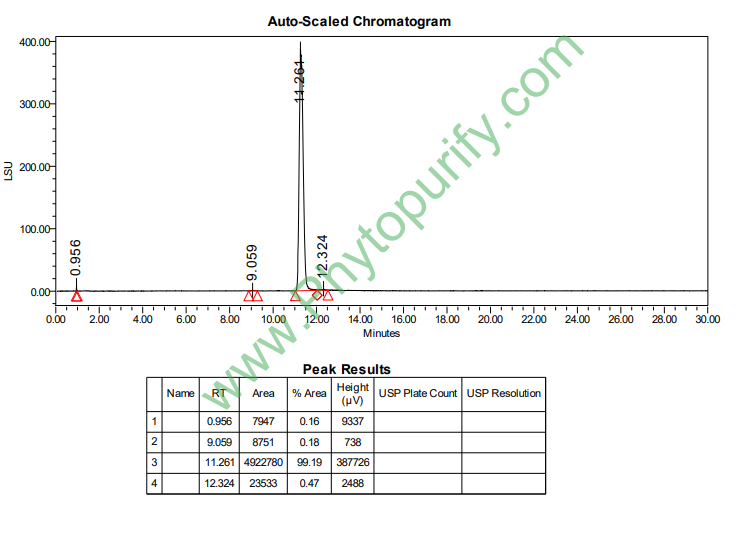
Purity: 95%~99%
Analysis Method: HPLC-DAD or/and HPLC-ELSD
Identification Method: Mass, NMR
Packing: Brown vial or HDPE plastic bottle
Storage: Store in a well closed container, protected from air and light. Put into refrigerate or freeze for long term storage.
Whenever possible, you should prepare and use solutions on the same day. However, if you need to make up stock solutions in advance, we recommend that you store the solution as aliquots in tightly sealed vials at -20℃. Generally, these will be useable for up to two weeks.
The product could be supplied from milligrams to grams
Inquire for bulk scale.
Description:
Alisol A 24-acetate has antibacterial activity, it also has anti-complement activity against the classical pathway of the complement system with IC50 values of 130 microM. Alisol A 24-acetate can effectively prevent bone loss in ovariectomized (OVX) mice, and that it can be considered a potential therapeutic for the treatment of postmenopausal osteoporosis.
References:
Anal Bioanal Chem. 2011 Jan;399(3):1363-9.
A sensitive liquid chromatography-mass spectrometry method for simultaneous determination of alisol A and alisol A 24-acetate from Alisma orientale (Sam.) Juz. in rat plasma.
METHODS AND RESULTS:
A liquid chromatography-mass spectrometry (LC-MS) method was developed and validated for the simultaneous determination of alisol A and Alisol A 24-acetate from Alisma orientale (Sam.) Juz. in rat plasma using diazepam as an internal standard. A 200-μl plasma sample was extracted by methyl tert-butyl ether and the separation was performed on Kromasil C(18) column (150 × 4.6 mm, 5 μm) with the mobile phase of acetonitrile (containing 0.1% of formic acid)-water (73:27, v/v) at a flow rate of 0.8 ml/min in a run time of 10 min. The two analytes were monitored with positive electrospray ionization by selected ion monitoring mode. The lower limit of quantitation for both alisol A and Alisol A 24-acetate were 10 ng/ml. The calibration curves were linear in the measured range 10-1,000 ng/ml for alisol A and 10-500 ng/ml for Alisol A 24-acetate. The mean extraction recoveries were above 74.7% for alisol A and above 72.4% for Alisol A 24-acetate from biological matrixes. The intra- and inter-day precision for all concentrations of quality controls was lower than 14.1% (RSD %) for each analyte. The accuracy ranged from -12.3% to 9.8% (RE %) for alisol A, and -8.6% to 14.2% (RE %) for Alisol A 24-acetate.
CONCLUSIONS:
The method was successfully applied to the study on the pharmacokinetics of alisol A and Alisol A 24-acetate in rat plasma.
Arch Pharm Res. 2003 Jun;26(6):463-5.
Anti-complementary activity of protostane-type triterpenes from Alismatis rhizoma.
Four protostane-type triterpenes, alisol B 23-acetate (1a), alisol C 23-acetate (2a), alisol B (3a), and Alisol A 24-acetate (4a), were isolated from the rhizome of Alismatis plantago-aquatice L. var. orientale Samuelson (Alismataceae) and eleven protostane derivatives (compounds 1-11) were obtained by selective modification from alisol B 23-acetate (1a).
METHODS AND RESULTS:
These compounds were investigated for their anti-complement activity against the classical pathway of the complement system. Alisol B (3a) and Alisol A 24-acetate (4a) exhibited anti-complement activity with IC50 values of 150 and 130 microM. Among the synthetic derivatives, the tetrahydroxylated protostane triterpene (9) showed moderate inhibitory activity with IC50 value of 97.1 microM.
CONCLUSIONS:
Introduction of an aldehyde group at C-23 (10; IC50 value, 47.7 microM) showed the most potent inhibitory effect on the complement system in vitro.
Arch Pharm Res. 2012 Nov;35(11):1919-26.
A new triterpenoid from Alisma orientale and their antibacterial effect.
A new triterpenoid, named alisol Q 23-acetate, as well as fourteen known terpenes, alisol B 23-acetate (2), alisol B (3), alismol (4), 10-O-methyl-alismoxide (5), alismoxide (6), 11-deoxyalisol C (7), 13β,17β-epoxyalisol B 23-acetate (8), 4β,12-dihydroxyguaian-6,10-diene (9), alisol C 23-acetate (10), alisolide (11), 16β-methoxyalisol B monoacetate (12), alisol A (13), 16β-hydroxyalisol B 23-acetate (14), Alisol A 24-acetate (15) were isolated from the rhizomes of Alisma orientale. The structures of compounds (1-15) were identified based on 1D and 2D NMR, including (1)H-(1)H COSY, HSQC, HMBC and NOESY spectroscopic analyses.
METHODS AND RESULTS:
Among these isolates, antibacterial effect of compounds 2, 3, 10, and 15, major constituents of A. orientale was examined. The MIC values of compounds 2, 10, and 15 were 5-10 βg/mL against eight antibiotic resistant strains, which were lower than those from the positive controls (MICs of chloramphenicol and ampicillin were 5-80 μg/mL).
CONCLUSIONS:
Therefore, compounds 2, 10 and 15 exhibited the potent antibacterial activity.
Molecules. 2016 Jan 9;21(1):74.
The Protective Effects of Alisol A 24-Acetate from Alisma canaliculatum on Ovariectomy Induced Bone Loss in Vivo.
Alisma canaliculatum is a herb commonly used in traditional Korean medicine, and has been shown in scientific studies to have antitumor, diuretic hepatoprotective, and antibacterial effects. Recently, the anti-osteoclastogenesis of Alisol A 24-acetate from Alisma canaliculatum was investigated in vitro. However, the influence of Alisol A 24-acetate on osteoporosis in animals has not been investigated.
METHODS AND RESULTS:
The present study was undertaken to investigate the anti-osteoporotic effect of Alisol A 24-acetate on bone mass in ovariectomized (OVX) mice and to identify the mechanism responsible for its effects. OVX mice were treated daily with 0.5 or 2 μg/g of Alisol A 24-acetate for a period of six weeks. It was found that these administrations significantly suppressed osteoporosis in OVX mice and improved bone morphometric parameters. The serum estradiol, bone alkaline phosphatase levels, regulatory T/Th17 cell numbers were significantly increased by Alisol A 24-acetate as compared with untreated OVX mice. In addition, TRAP activity was inhibited by Alisol A 24-acetate in OVX mice.
CONCLUSIONS:
These results suggest Alisol A 24-acetate effectively prevents bone loss in OVX mice, and that it can be considered a potential therapeutic for the treatment of postmenopausal osteoporosis.
HPLC of 24-acetate
Storage conditions:Short-term storage at 2~8℃, long-term storage at -20 ~ -80℃
99.1900
5.5000
Low
No
No
Alisol A (24 acetate) is a triterpenoid natural product isolated from plants of the Alisma genus, including Alisma orientale. As one of the main active ingredients in Alisma, 24 Acetyl Alismatal Alcohol A is widely used in traditional Chinese medicine for various therapeutic fields such as promoting diuresis, reducing blood lipids, and lowering blood pressure. In recent years, with the development of natural product pharmacology and molecular biological technology, the potential value of 24 acetyl alisol A in anti hyperglycemia and metabolic diseases has gradually been revealed, and it has become one of the hot spots in the prevention and treatment of diabetes and its complications.
Hyperglycemia is the core pathological state of diabetes. Long term hyperglycemia not only damages vascular endothelium, induces various complications, but also seriously affects the quality of life and life expectancy of patients. Although existing hypoglycemic drugs have significant therapeutic effects, there are still side effects and drug resistance issues, and there is an urgent need to develop safe and effective new hypoglycemic drugs. Due to its multi-target regulatory properties and good safety, 24 acetyl Alismatal A has shown great potential as a drug. This article will provide a systematic review of the chemical structure, sources, pharmacological activity, mechanism of action, and pharmacological evaluation of 24 acetyl Alisol A, aiming to provide a theoretical basis and research direction for its clinical development.
The chemical name of 24-Acetyl Alisol A is (3 β) -3-acetoxy-16 α, 23-dihydroxy-olean 12-ene-28-oic acid, with a molecular formula of C32H52O6 and a molecular weight of 532.75. This compound belongs to the triterpenoid class and has a typical five ring skeleton structure, containing one acetyl modified hydroxyl group and multiple free hydroxyl groups, endowing it with certain polarity and biological activity.
In terms of physical and chemical properties, the LogP value of 24 acetyl Alismatal A is 5.5, indicating its strong lipid solubility, which is beneficial for penetrating cell membranes but may affect water solubility and bioavailability. Its topological polar surface area (TPSA) is 99.19 Å ², and the number of hydrogen bond acceptors is 6, indicating that the molecule has a certain polarity and hydrogen bond formation ability. The blood-brain barrier has a lower ability to penetrate, reducing the risk of central nervous system side effects. The toxicity assessment showed no hepatotoxicity, cardiac toxicity, or hERG channel inhibition, demonstrating good safety characteristics.
Structural acetyl modification not only affects the lipophilicity and stability of molecules, but may also regulate their binding affinity with target proteins, thereby affecting their biological activity. The multi hydroxyl structure of triterpenoid skeletons provides diverse binding sites for their interactions with various protein targets.
24 Acetyl Alisma Alcohol A is mainly present in plants of the Alisma genus, especially in the rhizomes of Alisma orientale. As a traditional Chinese medicinal herb, Alisma is widely distributed in China, Japan, South Korea, and Southeast Asia. It has always been used for the treatment of diseases such as diuresis, edema reduction, lipid-lowering, and blood pressure lowering.
The common methods for extracting 24 acetyl Alismatal A include solvent extraction, column chromatography separation, and high-performance liquid chromatography (HPLC) purification. Generally, ethanol or methanol is used as the extraction solvent to obtain the crude extract through reflux extraction. Subsequently, separation and purification were carried out using silica gel column chromatography or reverse phase C18 column, and component identification was performed by combining thin layer chromatography (TLC) and mass spectrometry (MS). In recent years, ultrasound assisted extraction and supercritical CO2 extraction techniques have also been applied to improve extraction efficiency and purity.
The optimization of extraction process not only affects the yield, but also relates to the stability of active ingredients and the reliability of subsequent pharmacological research. Researchers generally focus on regulating the polarity, temperature, and time of the extraction solvent to ensure its structural integrity and activity retention for the extraction of 24 acetyl Alismatal A.
24 Acetyl Alisrinol A has shown significant potential in various pharmacological activities, particularly in regulating blood glucose metabolism, anti-inflammatory, antioxidant, and lipid-lowering effects, which have been widely reported.
Both in vitro and in vivo experiments have shown that 24 acetyl laxative alcohol A can effectively reduce blood glucose levels. Its mechanism of action involves promoting pancreatic beta cell function, enhancing glucose uptake and utilization, and inhibiting hepatic gluconeogenesis. Animal model studies have shown that the group treated with 24 acetyl laxative alcohol A showed significant improvement in glucose tolerance, with a significant decrease in fasting blood glucose and glycated hemoglobin levels.
Chronic inflammation and oxidative stress under hyperglycemia are the important pathological basis of diabetes complications. 24 Acetyl Alismatal A reduces inflammation and oxidative damage by inhibiting the expression of pro-inflammatory cytokines (such as TNF - α, IL-6) and activating antioxidant enzyme systems (such as SOD, GSH Px), protecting tissue cell function.
Alisma and its components have a regulatory effect on blood lipid metabolism. 24 acetyl alisol A can reduce serum total cholesterol, triglyceride and low-density lipoprotein, increase the level of high-density lipoprotein, improve lipid metabolism disorder, and provide comprehensive treatment advantages for patients with metabolic syndrome and diabetes.
Some studies also revealed the potential effects of 24 acetyl alisol A on liver steatosis, renal fibrosis and neuroprotection, suggesting its multiple pharmacological values in the prevention and treatment of diabetes complications.
The pharmacological effects of 24 acetyl Alismatal A depend on its regulation of multiple key molecular targets, reflecting its multi-target and multi pathway synergistic intervention characteristics.
EHMT2 (Histone Methyltransferase 2)EHMT2 is involved in epigenetic regulation and affects the expression of genes related to the insulin signaling pathway. 24 Acetyl Alismatal A promotes insulin sensitivity recovery by regulating EHMT2 activity.
UBP2 (Ubiquitin Specific Protease 2)Participate in protein degradation and signal transduction, regulate intracellular metabolic balance. 24 Acetyl Alismatal A may regulate the stability of metabolism related proteins by affecting the ubiquitination process mediated by UBP2.
PAI1 (plasminogen activator inhibitor 1)High expression is closely related to vascular complications in diabetes. 24 Acetyl Alismatal A can reduce PAI1 levels and alleviate the risk of vascular disease.
AMPK (5 'AMP activated protein kinase)As a cellular energy sensor, AMPK activation promotes glucose uptake and fat oxidation. 24 Acetyl Alismatal A enhances metabolic regulation ability by activating the AMPK signaling pathway.
SGLT2 (Sodium Glucose Co Transporter 2)Regulate renal glucose reabsorption. The inhibitory effect of 24 Acetyl Alismatal A on SGLT2 helps to increase urinary glucose excretion and lower blood sugar.
GCK (Glucokinase)Key glucose metabolism enzyme that promotes glucose phosphorylation. 24 Acetyl Alismatal A can upregulate GCK expression and enhance glucose metabolism.
APP (amyloid precursor protein) and BACE1 (β - secretase 1): Related to neurodegenerative diseases related to diabetes. 24 Acetyl Alismatal A may alleviate nerve damage by regulating APP metabolism.
CES1 (Carboxyesterase 1)Participate in lipid metabolism and drug metabolism. The regulation of CES1 by 24 Acetyl Alismatal A helps to improve lipid metabolism abnormalities.
PTPN1 (protein tyrosine phosphatase 1B)Negative regulation of insulin signaling pathway. 24 Acetyl Alismatal A inhibits PTPN1 activity and promotes insulin signaling.
24 Acetyl Alismatal A regulates multiple signaling pathways such as AMPK, PI3K/Akt, MAPK through the aforementioned targets, synergistically improving insulin resistance, promoting glucose metabolism, inhibiting inflammation and oxidative stress, demonstrating the ability to systematically regulate metabolic homeostasis.
24 Acetyl Alismatal A exhibits ideal characteristics in terms of pharmacological properties. Its molecular weight is 532.75, slightly higher than the recommended upper limit of 500 Da by Lipinski's rule, but still has good membrane permeability. LogP is 5.5, indicating strong lipid solubility, which is beneficial for cell membrane penetration, but may limit water solubility and oral absorption. The TPSA is 99.19 Å ², indicating moderate polarity that facilitates effective binding with target proteins.
Toxicological evaluation shows that 24 acetyl Alisrinol A has no significant hepatotoxicity, cardiotoxicity, or hERG channel inhibition, and is relatively safe. Low blood-brain barrier penetration ability reduces the risk of central nervous system side effects.
Pharmacokinetic studies have shown that 24 acetyl laxative alcohol A is rapidly absorbed orally, has a moderate plasma half-life, and is mainly metabolized and excreted through the liver. Its metabolites are mostly hydroxylated and deacetylated derivatives, and some metabolites still have biological activity. The bioavailability is limited by lipid solubility and solubility, and in the future, oral absorption can be improved through formulation optimization (such as nanocarriers, solid dispersions).
Based on the advantages of 24 acetyl alisol A in regulating multiple targets, improving metabolic disorder and safety, it has broad application prospects in the treatment of diabetes and related metabolic diseases. Especially in improving insulin resistance, lowering blood sugar and preventing and treating complications of diabetes, 24 acetyl alisol A has the potential to become a new hypoglycemic drug.
Future research should focus on the following directions:
Pre clinical in-depth mechanism research Further elucidate the mechanism of action and signaling pathway regulation of key targets by 24 acetyl Alismatal A, and reveal its multi-target synergistic effect.
Pharmacokinetic and Toxicological System Evaluation Improve the metabolic pathways, drug interactions, and long-term safety research in the body to provide a basis for clinical trials.
Formulation development and optimization of administration methods Overcoming the limitations of poor water solubility and low bioavailability, improving the convenience and efficacy of clinical applications.
Clinical trial design: According to the characteristics of diabetes patients, early clinical trials were carried out to verify its efficacy and safety.
In addition, the potential effects of 24 acetyl Alismatal A in anti-inflammatory, anti fibrotic, and neuroprotective aspects are also worth exploring and expanding its indications.
24 Acetyl Alisrinol A, as an important triterpenoid active ingredient in Alisma, has demonstrated significant pharmacological activity and good safety in the treatment of hyperglycemia and metabolic diseases due to its unique chemical structure and multi-target regulatory ability. Its mechanism of action covers multiple metabolic and signaling pathways, reflecting the advantages of multi-dimensional regulation of natural products. Although it is still in the preclinical research stage, its pharmacological evaluation and preliminary pharmacokinetic data have laid a solid foundation for future clinical development.
With the deepening of research, 24 acetyl alisol A is expected to become a new drug for the treatment of diabetes and related metabolic diseases, providing more safe and effective treatment options for patients. The future interdisciplinary collaboration will accelerate its transition from laboratory to clinical practice, promoting the application and development of natural product pharmacology in modern medicine.
