Introduction/Overview
Soybeans(Glycine max)As an important food and economic crop, its rich bioactive components have long been of great concern. In addition to the well-known isoflavones, soybean saponins (Soyasaponins) are a class of structurally diverse and biologically active triterpenoid saponins that constitute another key secondary metabolite in soybeans. According to the different glycoside structures, soybean saponins are mainly divided into Group A (oleanane type, such as soybean saponin Aa) and Group B (oleanane type, but C-21 position without carboxyl group, such as soybean saponin I), as well as Group E and DDMP saponins. Soyasaponin Be, as a member of Group B saponins, has a clear chemical structure and a CAS number of 117210-14-7. In recent years, with the in-depth study of the role of phytochemicals in chronic diseases and hormone related diseases, soybean saponin Be has gradually become an emerging research hotspot in the field of natural product pharmacology due to its multi-target regulatory potential in alleviating symptoms related to menopausal syndrome.
Menopausal syndrome is a collection of physiological and psychological symptoms caused by ovarian dysfunction and decreased fluctuations in estrogen levels, including hot flashes, night sweats, emotional fluctuations, sleep disorders, increased cardiovascular risk, and bone loss. Although traditional hormone replacement therapy (HRT) is effective, long-term use may increase the risk of breast cancer, endometrial cancer and thrombosis, prompting people to seek safer alternatives or supplements. Plant estrogens, especially soy isoflavones, have been widely studied. However, saponins derived from soybeans, especially triterpenoid saponins with specific structures such as soybean saponin Be, have unique non hormone or weak hormone like mechanisms of action, which may provide new ideas for safe intervention in menopausal related pathophysiological processes. This article aims to systematically review the chemical properties, plant sources, extraction methods, pharmacological activities, mechanisms of action, medicinal properties, and application prospects of soybean saponin Be in menopausal syndrome, in order to provide comprehensive academic references for the in-depth research and development of this compound.
Chemical structure and physicochemical properties
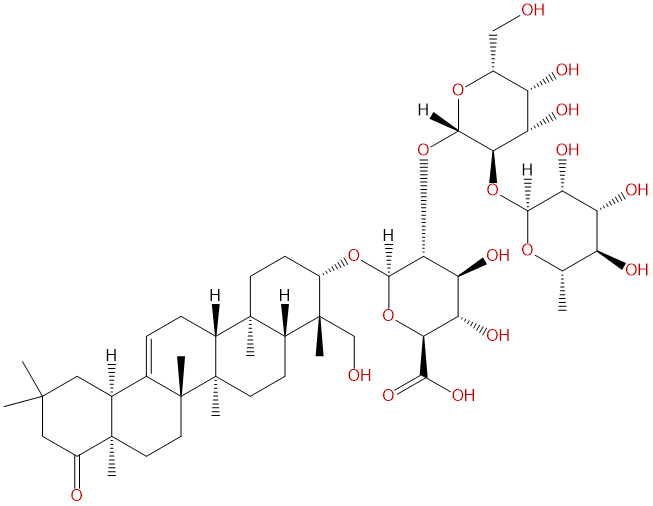
Soy saponin Be is an oleanane type pentacyclic triterpenoid saponin. Its glycoside is Soyasapogenol B, which is connected to sugar chains at positions C-3 and C-22, forming a disaccharide chain structure. Specifically, its sugar moiety is usually composed of monosaccharides such as glucuronic acid, galactose, arabinose, xylose, etc. connected in a specific order. This complex glycosylation pattern is an important determinant of its biological activity and water solubility.
According to the analysis of the provided pharmacological parameters, the molecular weight of soybean saponin Be is 941.1180, which belongs to a medium to large polar molecule. Its topological polar surface area (TPSA) is as high as 291.8200 Å ², mainly attributed to the abundant hydroxyl groups in the molecule and multiple oxygen atoms on the sugar chain, indicating its high hydrophilicity. The calculated LogP value is 2.2002, indicating that the molecule has a certain distribution ability in the lipid water phase, but overall hydrophilicity dominates. The water solubility measured in the experiment is 0.1660 mg/mL, which belongs to the category of slight solubility. This is consistent with the micelle formation behavior caused by the surfactant properties of most saponin compounds. In practical applications, it may be necessary to improve its solubility through formulation methods such as complex formation and nanomaterialization.
In terms of preliminary safety prediction, the compound showed no inhibitory effect on hERG potassium channels ("no"), indicating a low potential risk of cardiac toxicity, which is a positive signal for the safety of long-term medication. The Ames test result is 0.0, which is usually interpreted as not showing mutagenicity under the testing conditions, providing preliminary evidence for its genetic toxicity safety. However, its blood-brain barrier (BBB) permeability is predicted to be "low", consistent with its high molecular weight and high TPSA characteristics, which means its ability to directly act on the central nervous system may be limited, and its improvement of menopausal mood and sleep symptoms may mainly be achieved through peripheral or indirect mechanisms.
Plant sources and extraction methods
Soy saponin Be is mainly derived from leguminous plant soybean(Glycine max The seeds of (L.) Merr., namely soybean seeds. Its content is significantly affected by soybean varieties, cultivation conditions, growing regions, and storage and processing methods. Usually, soybean saponins are enriched in the cotyledons and hypocotyls of soybeans. In fermented soy products such as natto and soybean paste, some saponins may be converted into deglycosylated sapogenins by microbial enzymatic hydrolysis, and their activity and bioavailability may change.
The extraction of soybean saponin Be from soybeans usually follows the general extraction and purification process of saponin components in plant chemistry. The main steps are as follows:
-
Extract Polar solvents are often used for extraction. Due to the good hydrophilicity of saponins, methanol, ethanol, or ethanol water mixed solutions are commonly used extraction solvents. Heating reflux extraction or ultrasound assisted extraction can improve extraction efficiency. Sometimes a n-butanol water two-phase system is also used for preliminary enrichment, as saponins have a higher solubility in n-butanol phase.
-
Degreasing and impurity removal The crude extract contains a large amount of oil, protein, and pigments. Usually, petroleum ether or n-hexane is used for degreasing treatment, and then preliminary purification is carried out by column chromatography with macroporous adsorption resin (such as D101, AB-8 type). The differences in adsorption desorption behavior of saponins and polar impurities such as sugars and organic acids on the resin are used for separation, and water ethanol gradient elution is commonly used.
-
Separation and Purification After obtaining the crude saponin, further high-resolution separation techniques are needed to obtain the single compound soy saponin Be. Preparation based high-performance liquid chromatography (Prep HPLC) is currently the most commonly used and efficient method, usually using a reverse phase C18 chromatography column and gradient elution with methanol water or acetonitrile water (often with a small amount of formic acid or acetic acid added to adjust pH) as the mobile phase. In addition, silica gel column chromatography and Sephadex gel (LH-20) column chromatography can also be used for the separation and purification of intermediate stages.
-
appraisal The purified compounds require structural confirmation through various spectroscopic techniques, including mass spectrometry (MS, such as ESI-MS, HR-MS) to determine molecular weight, and nuclear magnetic resonance (NMR, including 1H-NMR, 13C-NMR, 2D-NMR, such as COSY, HSQC, HMBC) to analyze the positions and sequences of the carbon hydrogen skeleton and sugar group connections.
In recent years, green extraction technologies such as supercritical CO2 extraction (with the addition of entrainers) and microwave-assisted extraction have also been applied research, aiming to improve efficiency and reduce the use of organic solvents.
Pharmacological activity research
The pharmacological activity research of soybean saponin Be, especially in menopausal syndrome related model systems, has shown multiple beneficial effects, and its activity basis mainly stems from its anti-inflammatory, antioxidant, neuroregulatory, and potential hormone regulatory properties.
-
Estrogen like activity and alleviation of menopausal symptoms Although soybean saponin Be itself is not a typical plant estrogen (such as isoflavone aglycones), studies have shown that it may exert estrogen like regulatory effects through indirect pathways. In a postmenopausal rat or mouse model induced by ovariectomy (OVX), intervention with soy saponin Be can partially improve uterine atrophy, reduce weight gain, and alleviate bone density decline. More importantly, in behavioral tests, it can alleviate anxiety like and depression like behaviors exhibited by OVX animals, improve memory and cognitive function, suggesting its potential for improving menopausal mood disorders and cognitive decline.
-
Anti inflammatory and immune regulation Chronic low-grade inflammation is an important driving factor for menopausal cardiovascular disease and metabolic disorders. Soy saponin Be exhibits significant anti-inflammatory effects in various cell models (such as macrophages stimulated by lipopolysaccharide LPS) and animal models. It can inhibit the excessive production of pro-inflammatory mediators such as nitric oxide (NO), prostaglandin E2 (PGE2), interleukin-6 (IL-6), tumor necrosis factor alpha (TNF - α), etc. This anti-inflammatory effect is closely related to its regulation of key inflammatory signaling pathways.
-
Neuroprotection and Emotional Regulation Research on soy saponin Be has shown its potential for neural regulation in response to common emotional fluctuations and sleep disorders during menopause. In addition to behavioral improvement in the OVX model, in vitro studies have shown that it may affect the neurotransmitter system, such as regulating the serotonin (5-HT) and gamma aminobutyric acid (GABA) systems, which corresponds to its predicted targets SLC6A4 (5-HT transporter) and GABRA1 (GABA A receptor), and may regulate the neuroendocrine axis or affect peripheral central communication through direct penetration of the non blood-brain barrier.
-
anti-oxidative stress Oxidative stress is involved in menopausal aging, neurodegeneration, and cardiovascular damage. Soy saponin Be can enhance the activity of intracellular antioxidant enzymes such as superoxide dismutase (SOD) and glutathione peroxidase (GSH Px), eliminate free radicals, alleviate oxidative damage, and protect cells from apoptosis induced by oxidants such as H2O2.
-
The impact on metabolism Preliminary research suggests that soy saponin Be may help improve menopausal related glucose and lipid metabolism disorders, such as reducing insulin resistance and regulating blood lipid profiles, but its specific mechanism and effects need to be further explored.
Mechanism of action and molecular targets
The multifaceted improvement effect of soy saponin Be on menopausal syndrome is attributed to its synergistic regulation of multiple molecular targets and signaling pathways. Based on the provided target information, the mechanism of action network can be summarized as follows:
-
Nuclear receptors and hormone metabolism regulation:
- Estrogen receptors (ESR1/ESR2)Soy saponin Be may act as a weak selective estrogen receptor modulator (SERM). Research has shown that its affinity or activating effect on ESR2 (ER β) may be relatively stronger than ESR1 (ER α). ER β is highly expressed in bones, brain (especially hippocampus and cortex), cardiovascular system, and immune cells. Selective activation of ER β helps to exert neuroprotective, anti-inflammatory, and bone metabolism balance benefits, while avoiding the risk of breast and endometrial proliferation that may arise from excessive activation of ESR1.
- Aromatase (CYP19A1)This enzyme catalyzes the conversion of androstenedione and testosterone into estrone and estradiol, which is crucial for estrogen synthesis in the body. Soy saponin Be may affect the estrogen levels in local tissues such as brain, fat, and bone by regulating the expression or activity of CYP19A1, which is particularly important after ovarian failure.
- Progesterone receptor (PGR)There is a cross-talk between PGR and ESR. Soy saponin Be may indirectly regulate the expression or activity of PGR by affecting ESR signaling, and participate in maintaining reproductive tissue stability and neuroendocrine balance.
-
Inflammation and oxidative stress signaling pathway:
- Nuclear factor kappa B (NFKB1)NF - κ B is the core transcription factor of inflammatory response. Soy saponin Be has been shown to inhibit the degradation of I κ B α, prevent nuclear translocation of NF - κ B p65 subunit, and thereby downregulate the expression of downstream inflammatory factors (such as TNF - α, IL-6, IL-1 β) and enzymes (such as COX-2).
- Cyclooxygenase-2 (PTGS2/COX-2)COX-2 is the rate limiting enzyme for PGE2 synthesis, mediating inflammation and pain. Soy saponin Be contributes to its anti-inflammatory and antipyretic analgesic effects by inhibiting pathways such as NF - κ B, reducing the induced expression of COX-2, and lowering the level of PGE2.
- Mitogen activated protein kinase 1 (MAPK1/ERK2)The MAPK/ERK pathway is involved in cell proliferation, differentiation, inflammation, and stress response. Soy saponin Be may regulate the phosphorylation status of ERK1/2, affect the activity of downstream transcription factors, and thereby regulate the expression of inflammatory factors and antioxidant proteins.
-
Neurotransmitter system regulation:
- 5-hydroxytryptamine transporter (SLC6A4/SERT) and 5-hydroxytryptamine 2A receptor (HTR2A)The 5-HT system is closely related to emotions, sleep, and cognition. Soy saponin Be may affect the reuptake of 5-HT in synaptic cleft by regulating the activity or expression of SERT, thereby altering 5-HT neurotransmission. Meanwhile, the regulation of HTR2A may affect downstream signals and jointly participate in anti anxiety and anti depression effects.
- Gamma aminobutyric acid A receptor (GABRA1)GABA is the main inhibitory neurotransmitter, and GABRA1 is a subunit of the GABA A receptor that is associated with anti anxiety, sedation, and sleep regulation. Soy saponin Be or its metabolites may act as positive allosteric modulators to enhance GABAergic neural inhibition, thereby alleviating menopausal anxiety and insomnia symptoms.
In summary, soybean saponin Be does not act on a single target, but through a complex "multi-target multi pathway" network, synergistically regulates estrogen signaling, inhibits chronic inflammation, reduces oxidative damage, balances neurotransmitters, and comprehensively responds to multiple pathophysiological processes of menopausal syndrome.
Evaluation of drug properties and pharmacokinetics
Although soybean saponin Be exhibits excellent pharmacological activity, its drug like and pharmacokinetic (PK) properties are the key factors determining its successful development as a drug.
-
absorb As a highly polar molecule, the oral absorption of soy saponin Be may face challenges. Saponins are usually absorbed through passive diffusion in the upper small intestine, but the efficiency is relatively low. Its surface activity may affect intestinal mucosal permeability, but high polarity also limits transmembrane transport. The glycosylated portion may be partially hydrolyzed by gut microbiota to produce deglycosylated sapogenins (such as soy soap alcohol B), which have increased lipophilicity, are more easily absorbed, and may have different biological activities. Therefore, soybean saponin Be is likely to exert its effect in the form of prodrug, and its bioavailability depends on the metabolism of gut microbiota and the degree of host enzymatic hydrolysis.
-
distribution The predicted blood-brain barrier permeability is low, limiting its direct entry into the central nervous system. However, its improvement on menopausal neurological and psychiatric symptoms may mainly be achieved through peripheral anti-inflammatory and antioxidant effects that affect cytokine levels, or through indirect pathways such as regulating the peripheral central immune axis and HPA axis. In addition, it may have potential for targeted distribution in tissues rich in ER β, such as bone and vascular endothelium.
-
Metabolism The liver is its main metabolic site and may undergo phase I (such as hydroxylation) and phase II (such as glucuronidation, sulfation) reactions. The metabolism of gut microbiota is crucial, and the gradual hydrolysis of sugar chains is its main biotransformation pathway. The activity and toxicity of metabolites need further research.
-
excretion The prototype drug and its metabolites are mainly excreted through the kidneys and urine, and some may also be excreted through bile and feces. Due to its polarity, glomerular filtration may be the main excretion mechanism.
-
Optimization strategy for drug properties:
- Prodrug design Esterification, acylation, and other modifications of hydroxyl groups on sugar or aglycones to improve lipid solubility and membrane permeability, followed by hydrolysis to the active form in vivo.
- Formulation technology Using delivery systems such as liposomes, nanoparticles, micelles, and solid dispersions to encapsulate soy saponin Be, improving its solubility, stability, and intestinal absorption efficiency, and even achieving sustained release or targeted delivery.
- Structural modification Simplify or replace sugar chains while retaining pharmacophores, and search for derivatives with higher activity and better drug properties.
At present, there is still a relative lack of preclinical pharmacokinetic research data on the soy saponin Be system, such as absolute bioavailability, tissue distribution, and identification of major metabolites. This is a research gap that must be filled before it can move towards development and application.
Clinical application prospects and prospects
The application prospect of soybean saponin Be in the management of menopausal syndrome is broad, but it also faces challenges.
-
Potential application directions:
- Plant derived menopausal comprehensive conditioning agent Can be used as a supplement or substitute for soy isoflavones, and developed as a health food or plant-based medicine to alleviate symptoms such as mild to moderate menopausal hot flashes, night sweats, emotional instability, and sleep disorders. Its multi-target, non strong hormone like properties may provide a milder, long-term safety profile.
- Neuroemotional Health Support Develop natural products focused on emotional and cognitive improvement to address anxiety, depression, and cognitive decline in menopausal and perimenopausal women.
- Bone and cardiovascular health assistance Based on its anti-inflammatory, antioxidant and potential ER β activation, it may have auxiliary benefits in preventing menopause related osteoporosis and early atherosclerosis.
- combination therapy Combined with other plant active ingredients such as soy isoflavones and black cohosh extract, it may produce synergistic effects and comprehensively cover various symptoms of menopause.
-
challenges faced:
- Deep analysis of the mechanism of action The existing target associations are mostly based on network pharmacology prediction or preliminary validation, requiring more direct molecular docking, gene knockout/knockdown, reporter gene experiments, etc. to provide conclusive evidence.
- Systematic Pharmacology and PK/PD Research It is necessary to conduct safety and efficacy evaluations of long-term administration in animal models that are closer to clinical settings (such as non-human primates), and establish pharmacokinetic pharmacodynamic (PK/PD) models to clarify the effective dose, exposure effect relationship.
- Standardization and Quality Control As a natural product, standardization of its raw material sources, extraction processes, and formulation forms is crucial, requiring the establishment of highly sensitive content determination and fingerprint quality control methods.
- Clinical Evidence The biggest gap is the transition from preclinical to clinical research. We need to design rigorous randomized controlled clinical trials to evaluate their effectiveness, safety, and optimal dosage regimen in different populations (different races, menopausal stages).
-
Future Prospects:
Future research should focus on: ① using multi omics techniques (transcriptome, proteome, metabolome) to comprehensively reveal its systemic biological effects; ② Deeply explore the mechanisms of gut brain axis and gut bone axis in the interaction between gut microbiota metabolism and host; ③ Using modern pharmaceutical techniques to break through the bottleneck of drug development; ④ Conduct exploratory clinical research and accumulate preliminary human data. With the continuous deepening of understanding of soy saponin Be, it is expected to develop from a potential natural compound into an important functional ingredient or drug lead compound in the field of menopausal women's health.
Conclusion
Soy saponin Be, as an important triterpenoid saponin component in soybeans, has shown remarkable potential in alleviating menopausal syndrome due to its unique chemical structure and multi-target pharmacological activity. It exerts multiple effects such as weak estrogen like, anti-inflammatory, antioxidant, and neural regulation by regulating key signaling pathways such as ESR2, NF - κ B, and MAPK, intervening in the complex pathological network of menopause from multiple links. Although there are challenges in its pharmacological properties such as oral absorption and blood-brain barrier penetration, it is expected to be improved through modern pharmaceutical chemistry and formulation strategies. At present, the research on this compound is still in the preclinical stage, and there is an urgent need for further mechanism elucidation, systematic pharmacokinetic evaluation, and final clinical validation. In summary, soybean saponin Be is a natural product worth exploring in depth. Its research and development not only contribute to enriching intervention methods for menopausal syndrome, but also provide valuable scientific clues for the discovery of new drugs based on multi-target natural compounds.