


Product name: Daidzein
Synonym name:
Catalogue No.: BP0445
Cas No.: 486-66-8
Formula: C15H10O4
Mol Weight: 254.241
Botanical Source: Widespread isoflavone in the Leguminosae (Papilionoideae) e.g. in Chamaecytisus spp., Cytisus spp., Phaseolus spp. Also from Streptomyces xanthophaeus and Streptoverticillium album
Physical Description: Yellow powder
Type of Compound: Flavonoids
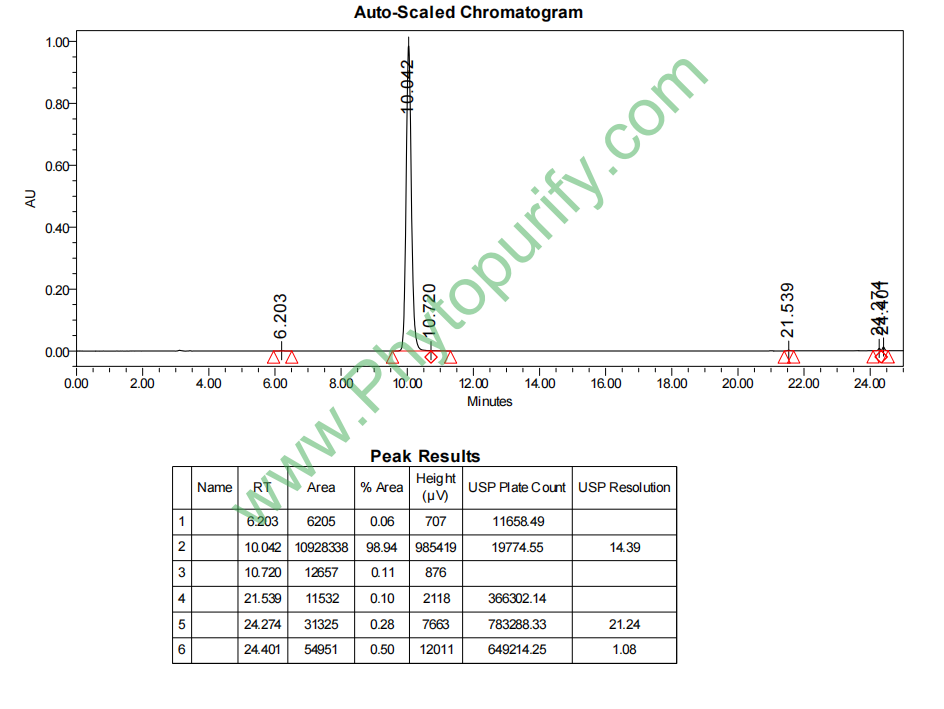
Purity: 95%~99%
Analysis Method: HPLC-DAD or/and HPLC-ELSD
Identification Method: Mass, NMR
Packing: Brown vial or HDPE plastic bottle
Storage: Store in a well closed container, protected from air and light. Put into refrigerate or freeze for long term storage.
Whenever possible, you should prepare and use solutions on the same day. However, if you need to make up stock solutions in advance, we recommend that you store the solution as aliquots in tightly sealed vials at -20℃. Generally, these will be useable for up to two weeks.
The product could be supplied from milligrams to grams, up to kilograms
Inquire for bulk scale.
Descriptions:
Daidzein and genistein glucuronides (DG and GG), major isoflavone metabolites, may be partly responsible for biological effects of isoflavones, such as estrogen receptor binding and natural killer cell (NK) activation or inhibition; DG and GG are weakly estrogenic, and they activate human NK cells in nutritionally relevant concentrations in vitro, probably at a site different from IL-2 action.[1]
Daidzein, genistein, and their .beta.-glycoside conjugates can inhibit mammary tumorigenesis in animal models of breast cancer, may have antitumor activity against breast cancer.[2]
Daidzein and daidzin can suppress free-choice ethanol intake by Syrian golden hamsters.[3]
Daidzein or 17 alpha-ethinylestradiol is more efficient than genistein in preventing ovariectomy-induced bone loss in rats.[4]
References:
[1] Zhang Y, Song T T, Cunnick J E, et al. J Nut, 1999, 129(2):399-405.
[2] Coward L, Barnes N C, Setchell K D R, et al. J Agr Food Chem, 1993, 41(11):1961-7.
[3] Keung W M, Vallee B L. P Nat Acad Sci USA, 1993, 90(21):10008-12.
[4] Picherit C, Coxam V, Bennetau-Pelissero C, et al. J Nut, 2000, 130(7):1675-81.
[5] Zhao X, Shen Q, Ma Y. J Chromatogr B, 2011, 879(1):113-6.
HPLC of Daidzein
Storage conditions:Short-term storage at 2~8℃, long-term storage at -20 ~ -80℃
70.6700
2.1570
2.0338
.0634
2.1042
27.6220
Low
90.9178
2.0713
Yes
No
Yes
No
Yes
Yes
2.1
Yes
Yes
Yes
Yes
Daidzein, also known as 7-hydroxy-3- (4-hydroxyphenyl) -4H-1-benzopyran-4-one, is a type of isoflavone compound widely found in leguminous plants. As one of the most important active isoflavones in soybeans and their products, daidzein and its metabolites have long been of great concern due to their diverse biological effects. Since the middle of the 20th century, with epidemiological studies finding that the incidence rate of some chronic diseases (such as cardiovascular diseases, breast cancer, menopausal syndrome, etc.) in Asian people is low and there is a correlation between the high intake of soybeans, the pharmacological research of soybean isoflavones has entered a rapid development stage. Daidzein not only plays a key role as a plant estrogen in regulating endocrine balance, but has also been proven to have multiple pharmacological activities such as anti-tumor, antioxidant, anti-inflammatory, improving metabolic syndrome, and protecting nerves and cardiovascular health. Its mechanism of action involves precise regulation of multiple signaling pathways and molecular targets, including nuclear receptors, kinases, transcription factors, and metabolic enzymes. This article aims to systematically review the chemical properties, sources, pharmacological activities, molecular mechanisms of action, pharmacological evaluation, and clinical application prospects of daidzein, in order to provide comprehensive scientific references for the in-depth research and development of this natural product.
Daidzein belongs to the 7-hydroxyflavone class of compounds, and its basic skeleton is 3-phenylchromenone. The specific structure is the introduction of an additional hydroxyl group at the 4 'position of 7-hydroxyflavone, forming 7,4' - dihydroxyflavone. Its molecular formula is C15H10O4, molecular weight is 254.24 g/mol, and CAS number is 486-66-8.
From the analysis of physical and chemical properties, daidzein is a light yellow needle shaped crystal or powder. Its LogP value is about 2.16, indicating moderate lipophilicity. The topological polar surface area (TPSA) is 70.67 Å ², indicating that the molecule has a certain polarity. These properties collectively determine its poor water solubility (approximately 0.0634 mg/mL), and its good solubility in organic solvents such as ethanol and DMSO. Its structure contains phenolic hydroxyl groups, giving it weak acidity and serving as a hydrogen bond donor and acceptor, which is the basis for its interactions with various biomolecules such as enzymes and acceptors. In addition, daidzein can produce characteristic fluorescence under ultraviolet light and is commonly used for its qualitative and quantitative analysis. Its chemical stability is relatively good, but it is sensitive to light and oxygen, so attention should be paid during extraction, storage, and formulation processes.
Daidzein mainly comes from legumes, especially soybean (Glycine max), which is one of the most abundant isoflavone aglycone forms in beans and their products (such as tofu, soybean milk, lobster sauce, miso). In the plant body, it often exists in the form of glycosides (such as daidzin), which can only be effectively absorbed by the gut microbiota or through hydrolysis during processing. In addition to soybeans, other legumes such as chickpeas and red clover also contain a certain amount of daidzein.
There are various methods for extracting daidzein, aiming to efficiently and environmentally obtain high-purity products from plant raw materials. Traditional methods include organic solvent reflux extraction (such as methanol, ethanol, acetone) or Soxhlet extraction, followed by separation and purification by column chromatography (such as silica gel column, polyamide column) or preparative high-performance liquid chromatography. Modern extraction techniques increasingly utilize methods such as ultrasound assisted extraction, microwave-assisted extraction, and supercritical fluid extraction (commonly CO2), which can significantly improve extraction efficiency, shorten time, and reduce the amount of organic solvents used. The optimization of extraction process usually focuses on factors such as solvent type and concentration, solid-liquid ratio, extraction temperature, time, and pH value. After obtaining the crude extract, it is often further refined by combining techniques such as recrystallization and membrane separation. In recent years, biotransformation methods (such as using specific microorganisms or enzymes to hydrolyze daidzein) have also become a research direction for producing high-purity daidzein.
A large number of in vitro and in vivo studies have confirmed that daidzein has broad and significant pharmacological activities, mainly reflected in the following aspects:
Plant estrogen like effects and improvement of menopausal syndrome Daidzein is a typical plant estrogen with a structure similar to endogenous estrogen 17 β - estradiol. It can competitively bind to estrogen receptors (ER α and ER β) with lower affinity, especially exhibiting higher selectivity for ER β. This characteristic allows it to exert a weak estrogen like effect when estrogen levels are low in the body (such as after menopause), thereby alleviating menopausal symptoms such as hot flashes, night sweats, palpitations, and emotional fluctuations, while reducing the potential risk to estrogen dependent tissues (such as the breast and endometrium).
Antitumor activity Daidzein inhibits proliferation, induces apoptosis and blocks cell cycle of many tumor cell lines (such as breast cancer, prostate cancer, colon cancer, liver cancer, lung cancer, etc.). Its anti-tumor effect is multifaceted, not only through the estrogen receptor pathway, but also involving inhibition of tyrosine kinases, topoisomerases, angiogenesis, and regulation of signaling pathways related to cell proliferation and apoptosis.
Cardiovascular protective effect: Research shows that daidzein can improve blood lipid profile (reduce total cholesterol, low-density lipoprotein cholesterol, and increase high-density lipoprotein cholesterol), inhibit low-density lipoprotein oxidation, resist platelet aggregation, promote vasodilation (partly by activating eNOS), and has anti atherosclerosis effect, thus producing comprehensive protective effects on cardiovascular system.
Antioxidant and anti-inflammatory activities Daidzein directly scavenges free radicals through its phenolic hydroxyl structure and can upregulate the activity of endogenous antioxidant enzymes such as superoxide dismutase and glutathione peroxidase. Its anti-inflammatory effect is closely related to the inhibition of pro-inflammatory factors (such as TNF - α, IL-6, IL-1 β) production, inhibition of cyclooxygenase-2 (COX-2) and inducible nitric oxide synthase (iNOS) expression.
Improving bone metabolism and preventing osteoporosis Through estrogen receptor mediated or non receptor pathways, daidzein can promote osteoblast differentiation and function, inhibit osteoclastogenesis and bone resorption activity, increase bone density, and has potential value in preventing and treating postmenopausal osteoporosis.
Neuroprotective and antidepressant effects Daidzein can penetrate the blood-brain barrier (although its permeability is low) and exert neuroprotective effects. Research has shown that it can improve cognitive function, alleviate neuroinflammation, and improve depressive like behavior, which may be related to regulating the monoamine neurotransmitter system (such as 5-HT) and neurotrophic factors.
Improve metabolic disorders Daidzein has an inhibitory effect on alpha glucosidase, which can delay carbohydrate absorption and help control postprandial blood sugar. In addition, it can improve insulin sensitivity, regulate lipid metabolism, and has the potential to prevent and treat diabetes and its complications.
The pharmacological effects of daidzein are the result of its interactions with multiple molecular targets in the body and the regulation of complex signaling networks. The key mechanisms and targets of menopausal syndrome and other related diseases include:
In addition, daidzein can also act as an activator of peroxisome proliferator activated receptor (PPAR), regulating glucose and lipid metabolism; Inhibiting DNA polymerase, topoisomerase II, and interfering with tumor cell DNA replication and repair; Activate Nrf2/ARE antioxidant pathways, etc.
The evaluation of drug properties is an important step in the development of natural products into drugs. According to the provided data:
* Molecular characteristics The molecular weight is 254.24, which complies with the Rule of Five, indicating that it has good oral absorption potential.
* Fat solubility and permeability LogP is 2.16 and TPSA is 70.67 Å ², belonging to the Biopharmaceutical Classification System (BCS) Class II or IV compounds (low solubility, variable or low permeability). Its blood-brain barrier permeability is predicted to be "low", which is consistent with the phenomenon that can be detected in the brain but at lower concentrations in actual research.
* Preliminary Safety Assessment The hERG inhibition test is' no ', indicating a low risk of causing QT interval prolongation in the heart. The Ames test value is 2.1 (usually considered positive if the ratio is greater than 2, and should be interpreted with caution), indicating that under the experimental conditions used, some strains may exhibit slight mutagenic signals, but this requires further in vitro and in vivo genetic toxicity studies to confirm their clinical risk.
Pharmacokinetic aspects:
* absorb After oral administration, daidzein is mainly absorbed in the intestine. Its glycoside form (daidzein) needs to be hydrolyzed by gut microbiota β - glucosidase to form aglycones and absorbed. The absorption rate and degree are influenced by factors such as food and gut microbiota composition.
* distribution After absorption, it is widely distributed in various tissues throughout the body. Due to its high plasma protein binding rate (mainly binding to albumin), its free concentration is relatively low. Although it can penetrate the blood-brain barrier and placental barrier, its distribution is limited.
* Metabolism Daidzein undergoes extensive phase I and phase II metabolism in the liver and intestine. Phase I metabolism mainly involves hydroxylation, demethylation, etc; The II binding reaction mainly involves glucuronidation and sulfation, generating corresponding complexes. It is worth noting that some individuals' gut microbiota can further metabolize daidzein into the more active S-estradiol (equol), and this group of people is known as "estradiol producers", who may gain greater health benefits from soy isoflavones.
* excretion Metabolites are mainly excreted through the kidneys with urine, and a small amount is excreted through feces with bile. After oral administration, the half-life of elimination is relatively short, about several hours.
Overall, daidzein has shown certain potential as a drug, but its poor water solubility, low oral bioavailability (usually<10%), and rapid metabolism are bottlenecks that restrict its direct development as a drug. Pharmaceutical strategies such as nanocrystals, phospholipid complexes, cyclodextrin inclusion complexes, solid dispersions, etc. have been widely studied to improve their solubility and bioavailability.
As a safe and multifunctional natural active molecule, daidzein has broad clinical application prospects, but also faces challenges.
Current applications and prospects:
1. Dietary supplements and functional foods Currently, daidzein and soy isoflavone extracts have been widely used as dietary supplements to alleviate menopausal syndrome. In the future, personalized products can be developed for the population of "estradiol producers".
2. drug development Based on its clear pharmacological activity, daidzein is expected to be developed as a drug for the prevention or adjuvant treatment of osteoporosis, cardiovascular disease, metabolic syndrome, specific types of cancer (such as hormone dependent cancer), and neurodegenerative diseases. Using it as a lead compound for structural modification to enhance activity, selectivity, and pharmacokinetic properties is an important direction for new drug development.
3. combination therapy The combination of daidzein with other drugs (such as chemotherapy drugs and anti osteoporosis drugs) may produce synergistic effects, reduce side effects or drug resistance, and has development value for combination therapy.
4. New delivery system The key to promoting its clinical application is to develop daidzein preparations that can improve bioavailability, achieve tissue targeting or controlled release using modern formulation methods such as nanotechnology and targeted delivery.
Challenges and Prospects:
1. Complexity of mechanism of action The advantages and disadvantages of multi-target effects of daidzein need to be more accurately evaluated. Clarifying its dominant signaling pathway and key targets under specific pathological conditions is crucial for improving treatment specificity and reducing off target effects.
2. Individual differences affect therapeutic efficacy Individual differences in the metabolic capacity of gut microbiota (such as the ability to produce estradiol), genetic background, hormone status, etc. lead to significant differences in their biological effects and therapeutic efficacy. Future research needs to strengthen the exploration of biomarkers to achieve precise nutrition and treatment.
3. Long term safety requires continuous monitoring Although short-term consumption of soy products is safe, the safety of high-dose, long-term supplementation and purification of soy glycosides, especially their potential effects on thyroid function, reproductive system, and estrogen sensitive diseases, still requires large-scale, long-term epidemiological studies and clinical trial data support.
4. Regulations and Standards As a natural product, its raw material quality, extraction process, product standardization, and regulatory supervision need to be further improved to ensure the effectiveness, consistency, and safety of the product.
As a core member of the soy isoflavone family, daidzein exhibits outstanding multiple pharmacological activities in regulating endocrine function, anti-tumor effects, protecting cardiovascular and cerebrovascular systems, antioxidant and anti-inflammatory effects, and improving bone metabolism and neurological function due to its unique chemical structure. Its mechanism of action involves precise regulation of multiple key targets and pathways such as ESR, MAPK, NF - κ B, 5-HT system, reflecting the synergistic effect of natural products with multiple components and targets. Despite challenges such as low water solubility and limited bioavailability in drug development, these obstacles are gradually being overcome through modern drug chemical modifications, development of novel delivery systems, and precise application strategies based on individual differences. In the future, with the deepening understanding of its molecular mechanism, the development of large-scale clinical research, and the innovation of formulation technology, daidzein is expected to evolve from an important dietary nutrient to an innovative drug or functional formulation for the prevention and treatment of various chronic diseases, especially those related to hormone imbalance and oxidative stress, contributing significant value to human health. Continuous and in-depth fundamental and translational research will lay a more solid foundation for its scientific application.
