Introduction/Overview
Menopausal syndrome is a collection of physiological and psychological symptoms that occur in women during and after menopause, including but not limited to hot flashes, night sweats, emotional fluctuations, sleep disorders, increased cardiovascular risk, and osteoporosis, caused by ovarian dysfunction and decreased estrogen levels. Although the effect of traditional hormone replacement therapy is clear, long-term use may increase the risk of breast cancer, endometrial cancer and thrombotic disease, prompting researchers to constantly explore safer alternative or complementary treatment strategies. In this context, plant estrogens, especially soy isoflavones and their derivatives, have become a research hotspot due to their structural similarity to endogenous estrogen 17 β - estradiol and their selective estrogen receptor regulatory properties.
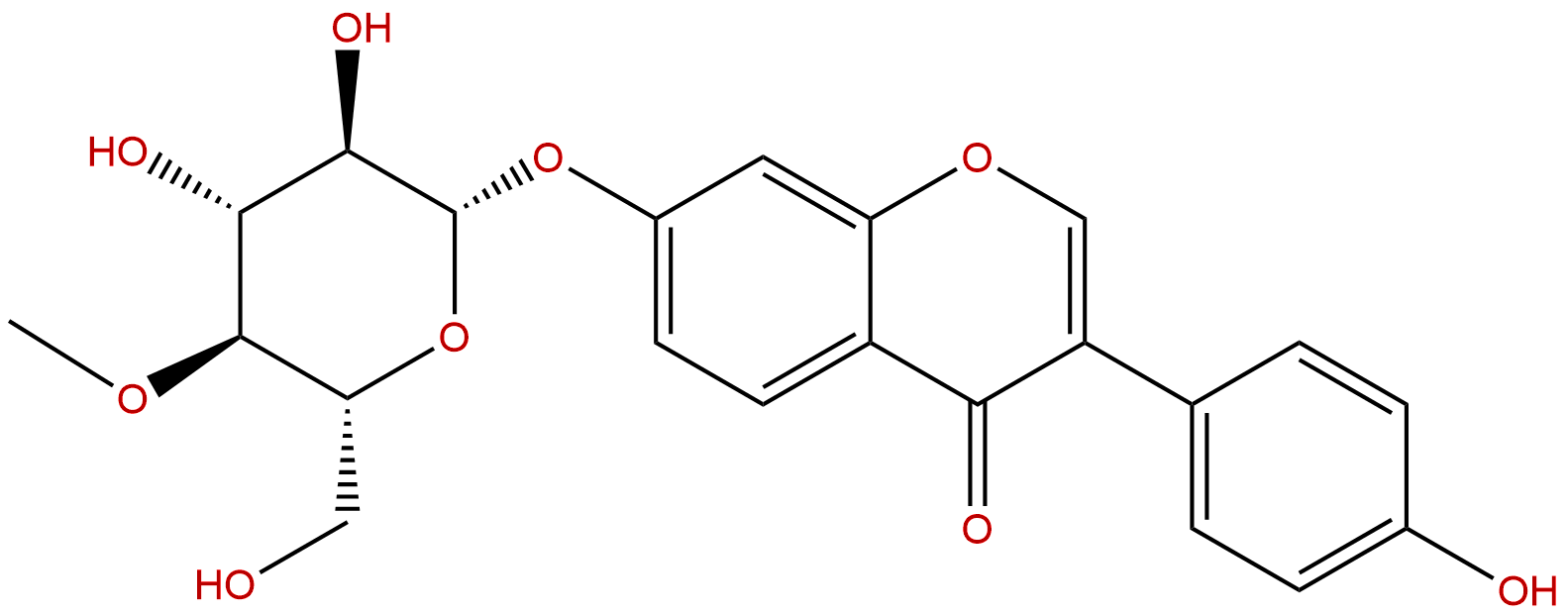
Daidzein 7-O-beta-D-glucoside 4 '' - O-methyl (CAS: 1195968-02-5) is an important glycosylated and methoxylated derivative of daidzein. Compared to its daidzein and primary glycosides such as daidzin, its unique structural modifications may significantly alter its physicochemical properties, bioavailability, receptor selectivity, and pharmacological activity profile. Current research suggests that this compound may intervene in multiple pathological stages of menopausal syndrome through multi-target and multi pathway mechanisms, demonstrating potential application value. This article aims to systematically review the chemical properties, plant sources, pharmacological activities, molecular mechanisms of action, medicinal properties, and clinical application prospects of 4 '' - methoxydaidzein, in order to provide comprehensive scientific references for the in-depth research and development of this natural product.
Chemical structure and physicochemical properties
The chemical name of 4 '' - methoxy daidzein is 7-hydroxy-3- (4 '- methoxyphenyl) -4H-phene-4-one-7-O - β - D-glucopyranoside. Its molecular formula is C22H22O9 and its molecular weight is 430.4090. The core of its structure is the flavonoid mother nucleus (3-phenylchromenone), which is connected to a D-glucopyranose group through a β - glycosidic bond on the 7th hydroxyl group of the mother nucleus, and undergoes methoxylation (- OCH3) modification on the 4 '' hydroxyl group of the glucose group.
This structural feature determines its key physicochemical parameters. The calculated lipid water partition coefficient (LogP) is 0.7824, indicating that the compound has moderate lipophilicity. However, compared to its daidzein glycoside (LogP usually>2), the introduction of sugar and methoxy groups significantly increases hydrophilicity. The topologically polar surface area (TPSA) is as high as 138.82 Å ², mainly attributed to the contribution of multiple oxygen atoms (sugar and methoxy) in the molecule, indicating strong hydrogen bonding ability. Its water solubility prediction value is 0.8554 mg/mL, which belongs to moderate to low water solubility, but is better than the vast majority of isoflavone aglycones. These properties collectively affect its biofilm permeability: predictions indicate a lower ability to cross the blood-brain barrier, which is consistent with its higher TPSA and polarity, suggesting that its direct effects on the central nervous system may be limited or that it may need to indirectly affect central function through peripheral mechanisms.
In addition, preliminary pharmacological risk assessment showed that the compound exhibited a low tendency towards mutagenicity in the Ames test (predicted value of 1.5), and had no significant inhibitory activity on hERG potassium channels, indicating a low risk of cardiac toxicity and providing preliminary positive signals for its safety evaluation.
Plant sources and extraction methods
4 '' - Methoxydaidzein is mainly found in leguminous plants, especially in soybean (Glycine max) and its products. It is a modified component in the soy isoflavone library, in addition to the main components such as daidzein and genistein. In addition, it may also be detected in medicinal plants rich in isoflavones such as Pueraria lobata and Trifolium pratense, but its content is usually lower than that of major glycoside forms such as daidzein and genistein.
The extraction of 4 '' - methoxydaidzein from plant materials usually follows the general extraction process of isoflavones, but needs to be optimized for its polarity. Common methods include:
1. Solvent extraction method Use methanol, ethanol, or their aqueous solutions (such as 70% -80% ethanol) for heating reflux or ultrasound assisted extraction. Due to the polarity of the compound, an appropriate proportion of water alcohol mixed solvent is beneficial for improving extraction efficiency.
2. Separation and Purification After vacuum concentration, the crude extract was subjected to liquid-liquid extraction using solvents such as petroleum ether and ethyl acetate to preliminarily enrich the polar fraction. Further purification relies on column chromatography techniques such as silica gel column chromatography, reverse phase C18 column chromatography (ODS), and high performance liquid chromatography (HPLC). Considering its sugar content, it is also possible to consider using macroporous adsorption resins (such as AB-8, D101) for enrichment and purification.
3. appraisal The final structural confirmation of compounds requires the comprehensive use of modern spectroscopic techniques, including ultraviolet spectroscopy (UV), infrared spectroscopy (IR), mass spectrometry (MS, especially high-resolution mass spectrometry HR-MS), and nuclear magnetic resonance spectroscopy (NMR, including 1H NMR, 13C NMR, and 2D NMR such as HSQC and HMBC), to clarify the sugar linkage position and methoxy substitution point.
At present, the large-scale preparation of this compound still faces challenges, mainly due to its relatively low content in natural sources. In the future, biosynthesis (such as using microbial or plant cell culture systems) or chemical enzymatic synthesis may be important directions for obtaining sufficient high-purity samples for further pharmacological and clinical research.
Pharmacological activity research
The pharmacological research on 4 '' - methoxydaidzein mainly focuses on its potential to improve symptoms and pathological changes related to menopausal syndrome, with evidence mostly coming from in vitro cell models and some animal experiments.
-
Estrogen like activity and selectivity As a plant estrogen, its core activity is to simulate or regulate estrogenic effects. Research has shown that 4 '' - methoxydaidzein can bind to estrogen receptors (ER), but its selectivity for ER subtypes (ESR1 and ESR2) may differ from its aglycone. There is evidence suggesting that glycosylation and methoxylation modifications may result in higher affinity or selectivity towards ESR2 (β subtype). ESR2 is highly expressed in specific regions of the bone, cardiovascular system, and brain, and is weakly associated with ESR1 mediated breast and endometrial proliferation effects. This potential selectivity is an important theoretical basis for its use as a safer alternative to HRT. In osteoblast culture models, it may promote cell proliferation and alkaline phosphatase activity, suggesting potential for anti osteoporosis.
-
The regulatory role of the nervous and psychiatric system 4 '' - Methoxydaidzein has shown regulatory potential for common emotional disorders and vasomotor symptoms during menopause, such as hot flashes. Animal behavioral experiments such as forced swimming and tail suspension tests suggest that it may have antidepressant like effects. Its function may be related to regulating the central monoamine neurotransmitter system, particularly affecting the activity of serotonin (5-HT) transporter (SLC6A4) and the functional balance of 5-HT1A and 5-HT2A receptors (HTR1A, HTR2A), thereby improving the stability of the emotion and temperature regulation center. Although its BBB permeability is low, it may have an effect by affecting peripheral central connections or acting on circular organs outside the blood-brain barrier.
-
Anti inflammatory and antioxidant effects Chronic low-grade inflammation and oxidative stress are important mechanisms for increased cardiovascular risk and accelerated aging during menopause. 4 '' - Methoxydaidzein can inhibit the production of inflammatory factors such as IL-6 and TNF - α induced by lipopolysaccharides (LPS) in cell models. The mechanism involves inhibiting the activation of nuclear transcription factor kappa B (NF - κ B, encoded by NFKB1) and downregulating the expression of inducible cyclooxygenase-2 (PTGS2/COX-2), thereby reducing the synthesis of inflammatory mediators such as prostaglandins. Meanwhile, its isoflavone structure itself has the ability to scavenge free radicals, which can alleviate oxidative damage.
-
The impact on aromatase Aromatase (encoded by the CYP19A1 gene) is a key enzyme involved in the conversion of androgens to estrogens. Some plant estrogens can regulate aromatase activity. The effect of 4 '' - methoxydaidzein on CYP19A1 is still controversial and may be manifested as a mild regulator of tissue specificity rather than a potent inhibitor, which helps to fine tune estrogen levels locally (such as in bones, brain) without causing severe fluctuations in systemic estrogen levels.
Mechanism of action and molecular targets
The multifaceted improvement effect of 4 '' - methoxydaidzein on menopausal syndrome stems from its interaction with multiple molecular targets, forming a networked pharmacological mechanism.
- Estrogen receptors (ESR1 and ESR2)As a core target, 4 '' - methoxydaidzein can induce receptor conformational changes upon binding to ER, allowing it to interact with co regulatory proteins and regulate downstream gene transcription. Its potential preference for ESR2 may be more conducive to activating gene pathways that play key roles in bone maintenance, neuroprotection, and cardiovascular protection, while relatively weakening the reproductive tissue proliferation effect mediated by ESR1, reflecting SERM like characteristics.
- Mitogen activated protein kinase 1 (MAPK1/ERK2)The MAPK signaling pathway is involved in cell proliferation, differentiation, apoptosis, and stress response. Estrogen can rapidly activate the MAPK pathway through non genomic effects. 4 '' - Methoxydaidzein may activate MAPK1 through membrane associated ER or other receptors, thereby affecting the expression of immediate early genes (such as c-Fos, c-Jun), mediating its protective effect on nerve cells or rapid promotion of osteoblast function.
- Nuclear factor kappa B (NFKB1) and cyclooxygenase-2 (PTGS2)In the inflammatory response, 4 '' - methoxydaidzein exerts anti-inflammatory effects by inhibiting the activity of I κ B kinase (IKK), preventing the degradation of I κ B protein, and thus retaining NF - κ B dimers (such as p50/p65) in the cytoplasm, inhibiting their nuclear translocation and transcription of pro-inflammatory genes (including PTGS2, TNF - α, IL-6, etc.).
- 5-hydroxytryptamine system related targets (SLC6A4, HTR1A, HTR2A)Menopausal mood and temperature regulation abnormalities are closely related to dysfunction of the 5-HT system. 4 '' - Methoxydaidzein may affect synaptic cleft 5-HT concentration by regulating the reuptake function of 5-HT transporter (SLC6A4). Meanwhile, it may act as a partial agonist or regulator on HTR1A (often associated with antidepressant and anti anxiety) and HTR2A (associated with mood, sleep, and thermoregulation), reshaping the balance of 5-HT neurotransmission and improving depressive like behavior and vasomotor symptoms.
- Progesterone receptor (PGR) and aromatase (CYP19A1)The interaction with PGR may be weak, but it cannot be ignored and may be involved in regulating the periodic changes of the endometrium. The regulation of CYP19A1 may be one of the pathways for local "fine-tuning" of estrogen biosynthesis, especially in fat, bone, and brain tissues.
In summary, 4 '' - methoxydaidzein exerts comprehensive benefits in hormone replacement, neuroprotection, anti-inflammatory, antioxidant and other dimensions by acting on multiple targets such as ESR (especially ESR2), MAPK, NF - κ B, 5-HT system, etc. from both genomic and non genomic levels, jointly alleviating menopausal syndrome.
Evaluation of drug properties and pharmacokinetics
Based on its physicochemical properties and preliminary biological data, a preliminary evaluation of the pharmacological properties of 4 '' - methoxydaidzein is conducted
- Absorption and oral bioavailability As a glycoside derivative, its hydrophilicity is stronger than that of glycosides, and it may be absorbed in the upper gastrointestinal tract (small intestine) through active transport (such as sodium dependent glucose transporter SGLT1) or passive diffusion. However, β - glucosidase in the gut microbiota and intestinal mucosal epithelial cells may hydrolyze it into secondary glycosides or daidzein, which can affect the blood concentration and subsequent effects of its prototype drug. Its oral bioavailability is expected to be lower than its aglycone, but the glycoside form may improve its water solubility and initial absorption rate.
- distribution Moderate molecular weight but high TPSA indicates that its tissue distribution has certain limitations. The predicted blood-brain barrier permeability is low, mainly distributed in tissues and organs with abundant blood supply, such as the liver, kidneys, bones (possibly enriched through specific mechanisms), etc. The binding rate of isoflavones to plasma proteins is not yet clear, but isoflavones usually have higher binding rates.
- Metabolism The liver is its main metabolic site. Metabolic pathways may include phase I metabolism (such as hydroxylation and demethylation mediated by cytochrome P450 enzymes) and phase II metabolism (glucuronidation and sulfation binding reactions). Its inherent methoxy and glycosyl structures may affect metabolic rate and products. The metabolism of gut microbiota is crucial, and reactions such as deglycosylation, ring opening, and reduction may occur to produce active metabolites such as estrol, which may contribute to or even dominate their ultimate biological effects.
- excretion Mainly excreted in the form of metabolites through the kidneys (urine) and bile (feces). The excretion of its prototype drug in urine may be relatively low.
- Challenges and optimization of drug development The main challenge lies in the possibility of widespread metabolism after oral administration, limited exposure of the prototype drug system, and weak BBB penetration ability. Future formulation strategies may consider: ① Developing prodrugs or structural modifications to improve metabolic stability and lipid solubility; ② Using nanocarrier systems (such as liposomes, polymer nanoparticles) or phospholipid complexes to enhance their bioavailability and targeting; ③ Explore non oral administration routes (such as transdermal administration) to avoid first pass effects.
Clinical application prospects and prospects
4 '' - Methoxydaidzein, as a natural product with multi-target activity, has shown unique application prospects in the field of menopausal health management, but also faces many challenges.
Potential application directions:
1. Plant medicine therapy for menopausal syndrome Can be used as a core ingredient in functional food additives or plant medicine preparations to alleviate symptoms such as mild to moderate hot flashes, night sweats, and emotional fluctuations, especially for women who are unwilling or unable to accept traditional HRT.
2. Prevention and Adjuvant Treatment of Postmenopausal Osteoporosis Based on its potential osteogenic activity and selectivity for ESR2, it may help maintain bone density and reduce the risk of fractures, and can be used as a synergistic supplement for calcium and vitamin D.
3. Cardiovascular and neuroprotection Its anti-inflammatory and antioxidant properties, combined with potential benefits for blood lipids and vascular function, may help reduce the risk of postmenopausal cardiovascular disease. The regulatory effect on the 5-HT system provides a basis for its improvement in menopausal related depression, anxiety, and sleep disorders.
4. combination therapy When used in combination with other plant estrogens (such as genistein), black cohosh extract, or traditional Chinese medicine formulas, it may produce synergistic effects and achieve more comprehensive symptom control.
Challenges faced and future research directions:
1. Lack of high-level clinical evidence Currently, the vast majority of research is still in the preclinical stage. It is urgent to design rigorous randomized controlled clinical trials to confirm their effectiveness, optimal dosage, and long-term safety in humans.
2. The mechanism of action needs further clarification In particular, more in-depth research is needed to accurately quantify the selectivity of ESR1/ESR2, the main active form (prototype or metabolite) in the human body, and the exact pathway of central effects.
3. Insufficient pharmacokinetic research A systematic study of human pharmacokinetics is needed to clarify its absorption, distribution, metabolism, and excretion characteristics, as well as the impact of individual differences (such as differences in gut microbiota on the metabolism of estradiol) on therapeutic efficacy.
4. Formulation development and standardization How to improve its bioavailability, develop stable, controllable, and high-quality formulation products, and establish strict quality standards is the key to achieving industrialization.
5. Long term safety assessment Although plant estrogens are generally considered safe, their potential effects on the breast and endometrium still need to be observed for a long time, especially in high-dose or long-term use.
Conclusion
4 '' - Methoxydaidzein, as a structurally modified member of the soy isoflavone family, exhibits distinct characteristics in physicochemical properties, target selectivity, and pharmacological activity spectrum compared to common isoflavone aglycones due to its unique glycosylation and methoxylation features. Existing research has revealed that it has potential value in alleviating menopausal symptoms related to estrogen deficiency, protecting bones and nerves, and resisting inflammation and oxidative stress through multiple mechanisms such as acting on estrogen receptors (especially possibly biased towards ESR2), regulating MAPK signaling, inhibiting NF - κ B inflammatory pathways, and balancing the serotonin system. The synergistic effect of these multiple targets makes it a promising candidate molecule for developing safer and more comprehensive natural therapies for menopausal syndrome.
However, the road from laboratory research to clinical application is still long. Future work needs to focus on verifying its human efficacy through high-quality clinical research, using systems pharmacology and modern analytical techniques to deeply reveal its complex network of action and metabolic fate, and overcoming its drug development shortcomings through advanced formulation technology. With the increasing emphasis on personalized medicine and integrated medicine, 4 '' - methoxy daidzein is expected to play a role in women's health in the future, especially in the field of comprehensive management of menopause, providing a new, natural health option for billions of perimenopausal and postmenopausal women worldwide.