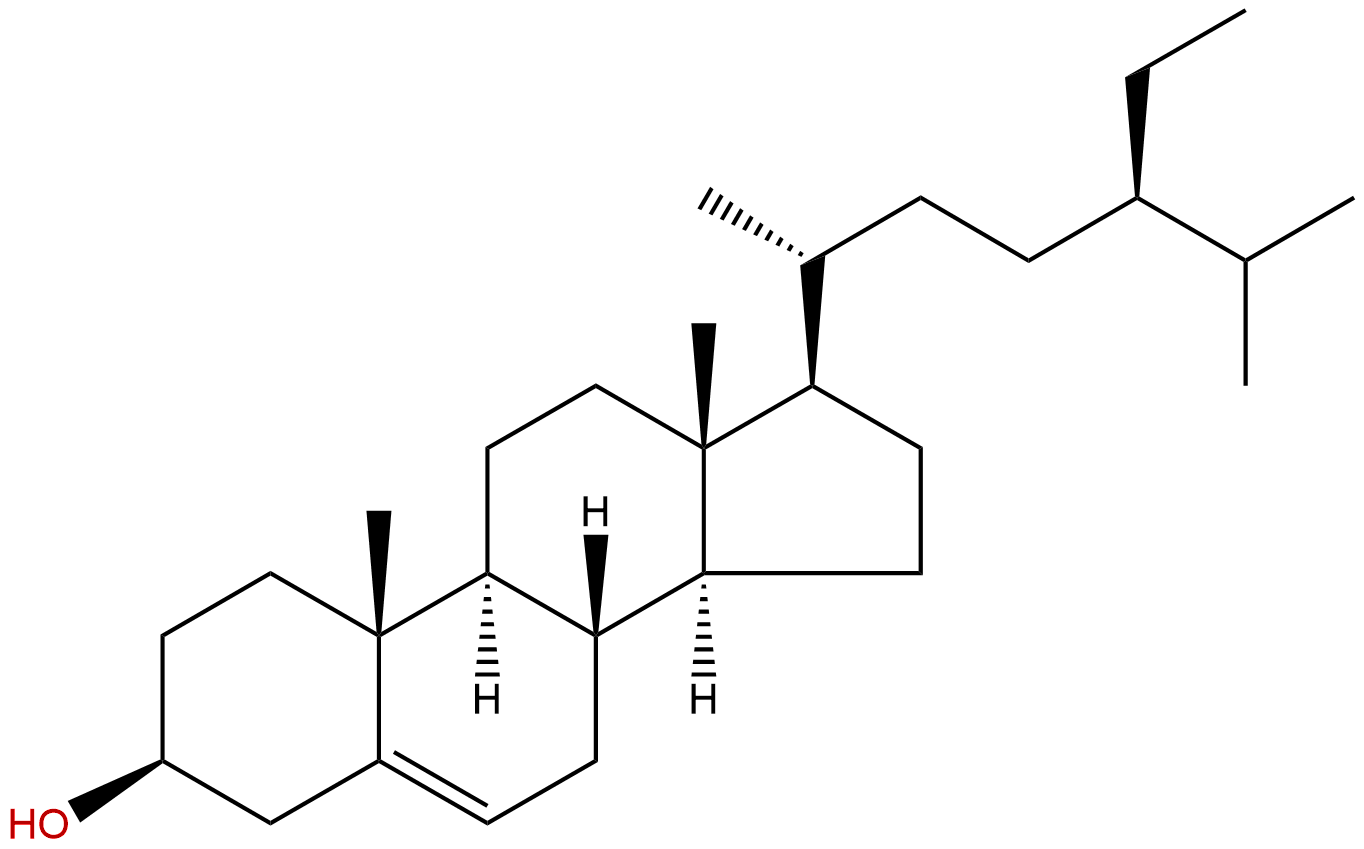


Product name: Beta-Sitosterol
Synonym name:
Catalogue No.: BP0237
Cas No.: 83-46-5
Formula: C29H50O
Mol Weight: 414.718
Botanical Source: Widely distributed in plants; the commonest sterol of higher plants. Also occurs in marine organisms, incl. the scallop Placopecten magellanicus, the sponge Reniera sp. and the alga Cladophora densa
Physical Description: Cryst.
Type of Compound: Steroids
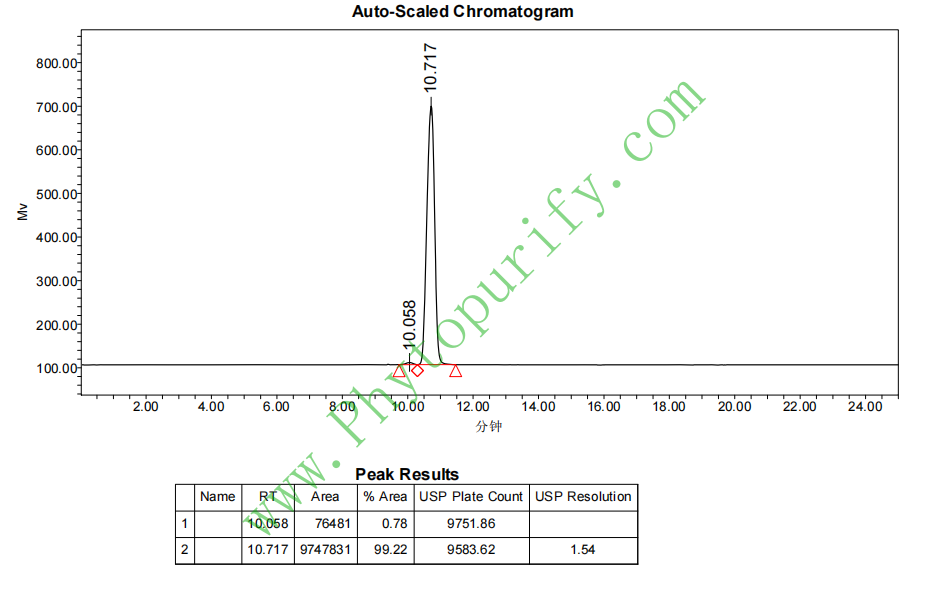
Purity: 95%~99%
Analysis Method: HPLC-DAD or/and HPLC-ELSD
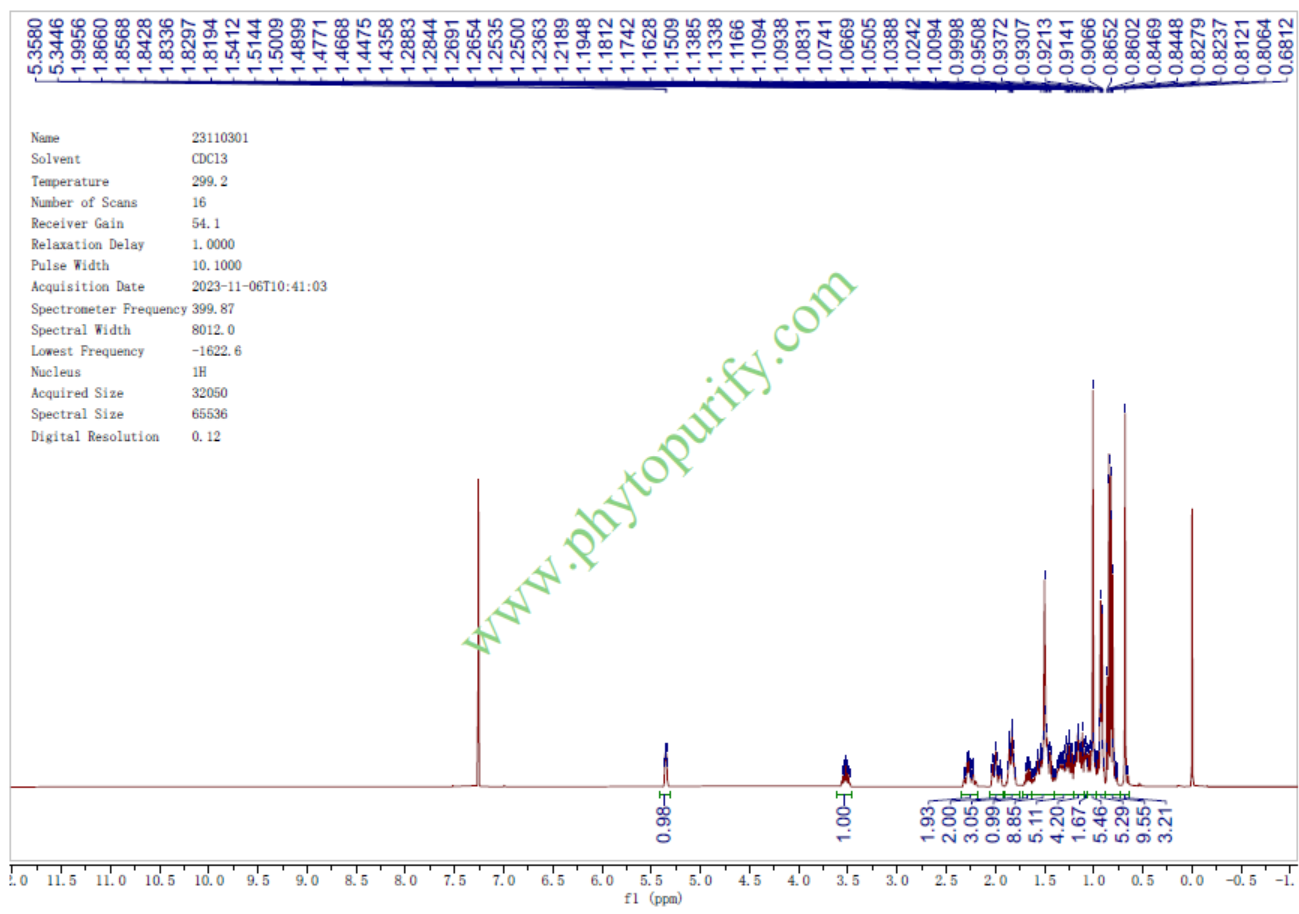
Identification Method: Mass, NMR
Packing: Brown vial or HDPE plastic bottle
Storage: Store in a well closed container, protected from air and light. Put into refrigerate or freeze for long term storage.
Whenever possible, you should prepare and use solutions on the same day. However, if you need to make up stock solutions in advance, we recommend that you store the solution as aliquots in tightly sealed vials at -20℃. Generally, these will be useable for up to two weeks.
The product could be supplied from milligrams to grams, up to kilograms
Inquire for bulk scale.
Descriptions:
Beta-Sitosterol a main dietary phytosterol found in plants, may have the potential for prevention and therapy for human cancer, β-sitosterol induces apoptosis in HT116 cells is associated with a decreased expression of the anti-apototic Bcl-2 protein and mRNA and a concomitant increase of the pro-apototic Bax protein and mRNA, and with release of cytochrome c from the mitochondria into the cytosol. [1]
Beta-Sitosterol (LD50>3 g/kg i.p. in mice, minimum ulcerogenic dose was 600 mg/kg i.p. in rats)has potent anti-inflammatory activity , similar to hydrocortisone and oxyphenbutazone when administered intraperitoneally; possesses antipyretic activity, similar to acetylsalicylic acid.[2]
Beta-Sitosterol shows a potent angiogenic activity in the chorioallantoic membrane (CAM) assay, it stimulates neovascularization in the mouse Matrigel plug assay and the motility of human umbilical vein endothelial cells in an in vitro wound migration assay in the presence of heparin, thus β-sitosterol is a novel plant-derived angiogenic factor which may have potential pharmaceutical applications for the management of chronic wounds.[3]
Beta-Sitosterol can inhibit proliferation and induce apoptosis in human solid tumors such as colon and breast cancers, it potently induces apoptosis in U937 cells and induces apoptosis is related to the selective activation of caspase-3 and induction of Bax/Bcl-2 ratio.[4]
References:
[1] Choi Y H, Kong K R, Kim Y A, et al. Int J Oncol, 2003, 23(6):1657-62.
[2] Gupta MB, Nath R, et al. Srivastava Planta Medica, 1980, 39(2):157-63
[3] Moon E J, You M L, Lee O H, et al. Angiogenesis, 1999, 3(2):117-123.
[4] Park C, Moon D O, Rhu C H, et al. Biol Pharm Bull, 2007, 30(7):1317-23.
[5] Nair V D, Kanfer I, Hoogmartens J. J Pharmaceut Biomed , 2006, 41(3):731-7.
HPLC of Beta-Sitosterol
HNMR of β-Sitosterol
Storage conditions:Short-term storage at 2~8℃, long-term storage at -20 ~ -80℃
Beta sitosterol (CAS number: 83-46-5), as a plant sterol compound widely present in plants, has attracted widespread attention in the field of natural product pharmacology in recent years due to its diverse biological activities and good safety. β - sitosterol has significant anti-inflammatory, anti-cancer, antioxidant, antibacterial, anti diabetes and analgesic effects, and can regulate cell function through multiple signal pathways, showing good therapeutic potential. This article will systematically review the chemical structure and physicochemical properties of β - sitosterol, plant sources and extraction methods, pharmacological activity and mechanism of action, drug evaluation and pharmacokinetic characteristics, and explore its clinical application prospects and research prospects.
β - sitosterol is a typical plant sterol with a molecular formula of C29H50O and a molecular weight of 414.7. Its structural characteristics include a four ring steroid skeleton and a side chain, with a hydroxyl group (- OH) located at the C-3 position, belonging to steroid compounds. The LogP value of β - sitosterol is as high as 9.29, indicating its strong lipid solubility. Its TPSA (topological polar surface area) is 20.23 and the number of hydrogen bond receptors is 1, reflecting its low polarity and difficulty in passing through the blood-brain barrier (BBB permeability is low). The oral bioavailability is about 10%, indicating limited oral absorption. Toxicological data shows that the LD50 of β - sitosterol is as high as 5000 mg/kg, and there is no significant hepatotoxicity, cardiotoxicity, or hERG channel inhibition. The Ames mutagenicity test is negative, indicating good safety.
β - sitosterol is widely present in various plant oils, nuts, seeds, and vegetables, especially in corn oil, soybean oil, peanut oil, sesame oil, and pumpkin seed oil with higher content. The extraction is usually carried out using solvent extraction method, and commonly used solvents include ethanol, methanol, hexane, etc. Modern extraction techniques such as ultrasound assisted extraction and supercritical CO2 extraction have also been applied to improve extraction efficiency and purity. After extraction, β - sitosterol products with a purity of ≥ 80% are often purified by silica gel column chromatography, recrystallization, or high-performance liquid chromatography (HPLC).
β - sitosterol exhibits significant anti-inflammatory activity in various inflammatory models. The mechanism mainly involves inhibiting the expression of pro-inflammatory cytokines such as TNF - α and IL-1 β, reducing levels of reactive oxygen species (ROS), and inhibiting the activation of the nuclear factor kappa B (NF - κ B p65) signaling pathway, thereby alleviating the inflammatory response. In the bovine mammary epithelial cell inflammation model, β - sitosterol restores the activity of the HIF-1 α/mTOR signaling pathway, inhibits adipogenesis disorders, and further alleviates inflammatory damage. In addition, β - sitosterol can regulate macrophage polarization, promote the formation of M2 anti-inflammatory phenotype, and alleviate the inflammatory response of rheumatoid arthritis in mice.
The anticancer activity of β - sitosterol has been verified in many cancer types, including breast cancer, lung cancer, colorectal cancer, etc. Its anti-cancer mechanism involves inducing cancer cell apoptosis, inhibiting tumor cell proliferation and migration. β - sitosterol activates the p53 signaling pathway through ROS mediated mitochondrial dysfunction, promoting cell apoptosis. It also activates caspase-3, caspase-8, caspase-9, mediates PARP inactivation, regulates the Bcl-2/Bax ratio, promotes cytochrome c release, and ultimately triggers cell apoptosis. In addition, β - sitosterol inhibits the activity of matrix metalloproteinases (MMPs) and blocks the invasion and metastasis of tumor cells. Multiple animal experiments have shown that β - sitosterol significantly inhibits tumor growth and has good anti-tumor potential.
β - sitosterol protects cells from oxidative stress damage by clearing free radicals, reducing ROS levels, enhancing antioxidant enzyme activity. In the diabetes model, β - sitosterol improves insulin sensitivity, regulates lipid metabolism, and reduces blood glucose levels. It has a regulatory effect on lipid metabolism disorders related targets such as NOTCH1, ABCB1, HIF1A, SIRT1, MAPK1, GSK3B, NR1H3, NPC1L1, etc., improving metabolic disorders.
β - sitosterol also exhibits certain antibacterial and analgesic activities, which can inhibit the growth of various pathogenic bacteria and alleviate inflammation related pain. In addition, it has potential effects on immune regulation, promoting the maintenance of immune homeostasis.
The multi-target mechanism of action of β - sitosterol is the basis for its various pharmacological activities. It regulates ROS levels, affects intracellular redox status, and thereby regulates multiple signaling pathways:
In addition, β - sitosterol regulates lipid metabolism and energy homeostasis by acting on lipid metabolism related targets such as NOTCH1, ABCB1, SIRT1, etc., improving metabolic disease states.
β - sitosterol has high lipid solubility (LogP=9.29), but its oral bioavailability is low (about 10%), which may be limited by intestinal absorption and first pass effects. Its extremely low polarity and large molecular weight limit its ability to pass through the blood-brain barrier, indicating limited application in central nervous system diseases. Toxicological evaluation shows that β - sitosterol has good safety, no significant liver and cardiac toxicity, and does not inhibit hERG channels. The mutagenicity test is negative, which conforms to good safety pharmacology characteristics.
Pharmacokinetic studies have shown that β - sitosterol is widely distributed in the body, mainly metabolized through the liver, and excreted in bile and feces. Its low water solubility and bioavailability limit its clinical application, and there is an urgent need to improve its pharmacokinetic performance through drug formulation techniques such as nanocarriers and liposome encapsulation.
Based on its multiple pharmacological activities and good safety, β - sitosterol has shown broad clinical application prospects in various disease fields. In particular, β - sitosterol has potential therapeutic value in anti inflammation, anti-cancer, metabolic diseases (such as diabetes and lipid metabolism disorders), etc. Currently, β - sitosterol has been widely used as a dietary supplement and functional food ingredient, but its clinical research as a drug is still in its early stages.
Future research should focus on:
β - sitosterol, as a natural plant sterol, has shown extensive potential in anti-inflammatory, anticancer, antioxidant, and metabolic regulation fields due to its multi-target and multi mechanism pharmacological properties. Its good safety and diverse biological activities make it an important object of research in natural product pharmacology. Although its clinical application still faces challenges such as low bioavailability and pharmacokinetic limitations, with the advancement of formulation technology and molecular pharmacology, β - sitosterol is expected to become an important candidate for future natural drug development. The in-depth mechanism research and clinical verification of the system will provide a solid foundation for its translational application, promoting its widespread use in the treatment of various diseases.
