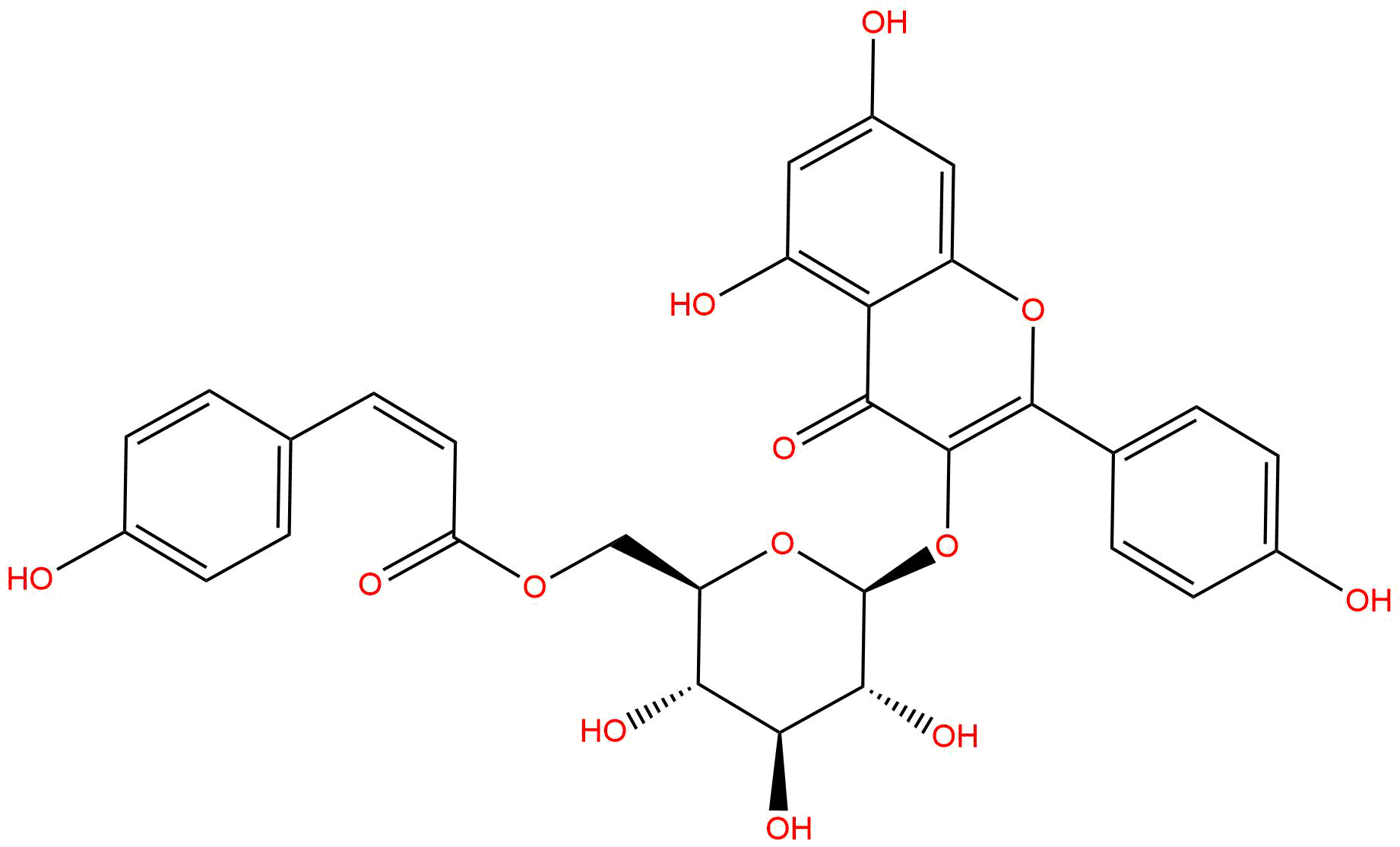


Product name: Tribuloside
Synonym name: Tribuloside A
Catalogue No.: BP3978
Cas No.: 22153-44-2
Formula: C30H26O13
Mol Weight: 594.525
Botanical Source: Tribulus alatus Del.
Physical Description:
Type of Compound:
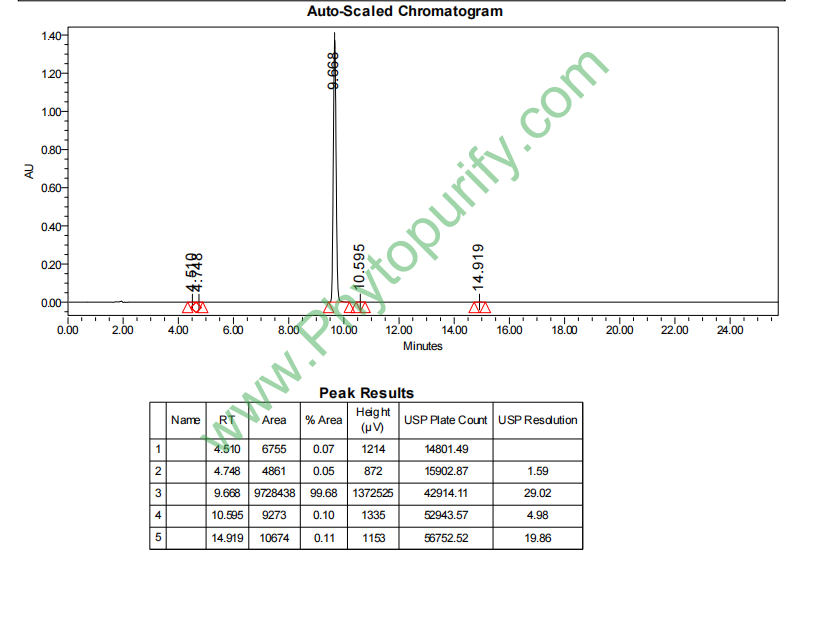
Purity: 95%~99%
Analysis Method: HPLC-DAD or/and HPLC-ELSD
Identification Method: Mass, NMR
Packing: Brown vial or HDPE plastic bottle
Storage: Store in a well closed container, protected from air and light. Put into refrigerate or freeze for long term storage.
Whenever possible, you should prepare and use solutions on the same day. However, if you need to make up stock solutions in advance, we recommend that you store the solution as aliquots in tightly sealed vials at -20℃. Generally, these will be useable for up to two weeks.
The product could be supplied from milligrams to grams
Inquire for bulk scale.
For Reference Standard and R&D, Not for Human Use Directly.
HPLC of Tribuloside
Storage conditions:Short-term storage at 2~8℃, long-term storage at -20 ~ -80℃
216.5800
1.6902
1.5429
.2002
.4411
.1860
Low
87.5723
4.1515
Yes
No
Yes
No
Yes
No
0.0
Yes
Yes
Yes
Yes
Natural products, as an important source of drug discovery, play an irreplaceable role in the long history of human struggle against diseases. Flavonoids, as the most widely distributed class of secondary metabolites in nature, have attracted much attention due to their structural diversity and extensive biological activity. Among numerous flavonoids, tribuloside, as an active ingredient with a unique pharmacological spectrum, has gradually entered the field of researchers in recent years. Tribulus terrestris glycoside is mainly derived from the Tribulus terrestris plant in the Tribulus terrestris family(Tribulus terrestris L.), This plant has a long history of application in traditional medical systems, especially in Ayurveda and Chinese traditional medicine, and is often used to treat urinary system diseases, inflammation, sexual dysfunction, and cardiovascular diseases.
The chemical structure of Tribulus terrestris glycoside belongs to the flavonol glycoside class, and its unique molecular skeleton endows it with various biological activities. Modern pharmacological research has revealed that saponins from Tribulus terrestris are an effective phosphodiesterase 4 (PDE4) inhibitor, with a half maximal inhibitory concentration (IC ₅₀) of 6 μ M. PDE4 is a cyclic adenosine monophosphate (cAMP) - specific hydrolase that is highly expressed in inflammatory cells. Its inhibition can lead to an increase in intracellular cAMP levels, thereby exerting anti-inflammatory and immune regulatory effects. In addition, saponins from Tribulus terrestris exhibit significant antioxidant activity, effectively scavenging 1,1-diphenyl-2-trinitrophenylhydrazine (DPPH) free radicals and demonstrating broad-spectrum antibacterial potential. What is even more remarkable is that the compound has been found to promote melanin production, which opens up new prospects for its application in the treatment of pigmentary diseases such as vitiligo and sun protection. Meanwhile, based on its anti-inflammatory and antioxidant properties, saponins from Tribulus terrestris have shown potential value in the treatment of inflammatory diseases such as acute lung injury.
This article aims to provide a systematic professional review of Tribulus terrestris glycoside, covering its chemical structure and physicochemical properties, plant sources and extraction methods, pharmacological activity, mechanism of action and molecular targets, pharmacological evaluation and pharmacokinetic characteristics. It also looks forward to its clinical application prospects, in order to provide comprehensive references for the in-depth research and development of this natural product.
Tribulioside is a naturally occurring flavonol glycoside compound. Its chemical structure parent nucleus is Kaempferol, which is 3,5,7,4 '- tetrahydroxyflavone. On the basis of the parent nucleus of kaempferol, a disaccharide group is attached to the hydroxyl group at position 3 of naringenin. Specifically, the sugar chain consists of one molecule of glucose and one molecule of rhamnose, connected by specific glycosidic bonds to form Kaempferol-3-O - β - D-glucopyranosyl - (1 → 2) - β - D-glucopyranosyl - (1 → 2) - β - D-glucopyranoside or similar structures. Its precise structure needs to be confirmed by techniques such as nuclear magnetic resonance (NMR) and mass spectrometry (MS). This glycosylation modification not only increases the water solubility of the molecule, but also has a significant impact on its interaction with biological targets and metabolic stability.
From the perspective of physical and chemical properties, the molecular formula of Tribulus terrestris glycoside is C ₂₇ H ∝₀ O ₁₆, with a molecular weight of 594.5250 Da. Its lipid water partition coefficient (LogP) is 1.6902, indicating that the compound has a certain degree of lipophilicity, but overall tends to be hydrophilic, which is consistent with its structural characteristics of containing multiple hydroxyl and sugar groups in its molecule. The polar surface area (TPSA) is as high as 216.5800 Å ², far exceeding the recommended threshold for oral medication (about 140 Å ²), indicating that its oral absorption may face challenges and poor membrane permeability. The water solubility parameter is 0.2002, indicating that its solubility in water is limited, but compared to its glycoside kaempferol, it has significantly improved. In terms of stability, as a flavonoid glycoside, Tribulus terrestris glycoside is relatively stable in acidic environments, but may undergo hydrolysis in strongly alkaline environments or under the action of specific enzymes (such as β - glucosidase) to remove glycosides and generate aglycones. In addition, the phenolic hydroxyl groups in its molecular structure endow it with excellent free radical scavenging ability, which is also the chemical basis for its antioxidant activity. The pharmacological evaluation showed that the ability of Tribulus terrestris glycoside to penetrate the blood-brain barrier is low, and there is no inhibitory risk on hERG potassium channels. The Ames test result was negative (0.0), indicating a low risk of genetic toxicity. These provide favorable safety prerequisites for its development as a candidate drug.
The main plant source of saponins from Tribulus terrestris is the Tribulus terrestris plant in the Tribulus terrestris family(Tribulus terrestris L.), This is an annual or perennial creeping herbaceous plant widely distributed in temperate and tropical regions around the world, including China, India, the Mediterranean coast, Africa, and the Americas. In traditional medicine, the fruit, whole plant, or roots of Tribulus terrestris are used as medicine. Modern plant chemistry research has shown that Tribulus terrestris contains various chemical components, including steroidal saponins (such as dioscin and Tribulus terrestris saponins), flavonoids (such as Tribulus terrestris glycosides, kaempferol, quercetin and its glycosides), alkaloids, amides, and polysaccharides. Among them, saponins from Tribulus terrestris are one of the representative flavonoid glycosides in Tribulus terrestris, and their content varies depending on the place of origin, harvest season, plant part, and variety. Generally, their content is higher in the fruit and aboveground parts.
The traditional solvent extraction method is still the most commonly used method for extracting saponins from Tribulus terrestris. Given that its molecule contains multiple polar groups (hydroxyl and sugar), polar solvents such as methanol, ethanol, or their aqueous solutions are ideal extraction solvents. Usually, reflux extraction or cold soaking methods are used to mix dried and crushed Tribulus terrestris raw materials (such as whole grass or fruit) with a certain concentration of ethanol (such as 70% -95%), repeatedly extract at a certain temperature, combine the extraction solutions, and concentrate under reduced pressure to obtain crude extracts. In order to improve extraction efficiency and selectivity, some modern extraction techniques have also been applied in recent years, such as ultrasound assisted extraction (UAE) and microwave-assisted extraction (MAE). These techniques can achieve higher extraction rates in a shorter period of time and reduce solvent usage by disrupting cell walls and accelerating solvent permeation.
The separation and purification of saponins from crude extracts usually require the use of multiple chromatographic techniques. The classic separation process includes: first, the crude extract is subjected to liquid-liquid extraction (such as extraction with petroleum ether, ethyl acetate, and n-butanol in sequence), and naringin is usually enriched in the ethyl acetate or n-butanol extraction layer due to its equal polarity. Subsequently, preliminary separation was performed using silica gel column chromatography and ODS (octadecylsilane bonded silica gel) reverse phase column chromatography, with gradient elution using chloroform methanol or methanol water systems in different ratios. Further purification is often carried out using preparative high-performance liquid chromatography (Prep HPLC) or high-speed counter current chromatography (HSCCC) to obtain high-purity tribulus glycoside monomers. Throughout the entire extraction and separation process, the structural identification of compounds relies on spectroscopic methods such as ultraviolet spectroscopy (UV), infrared spectroscopy (IR), mass spectrometry (MS), and one-dimensional and two-dimensional nuclear magnetic resonance spectroscopy (1D/2D NMR), which determine their chemical structures by comparing with literature data or analyzing spectra.
The pharmacological activity research of Tribulus terrestris glycoside covers multiple fields such as anti-inflammatory, antioxidant, antibacterial, promotion of melanin production, and cardiovascular protection, demonstrating multiple pharmacological characteristics.
1. Anti inflammatory activity
One of the most noteworthy pharmacological activities of Tribulus terrestris glycoside is its anti-inflammatory effect. As a PDE4 inhibitor (IC ₅₀: 6 μ M), it can effectively inhibit the activity of PDE4 enzyme, thereby reducing cAMP hydrolysis and increasing intracellular cAMP levels. CAMP, as an important second messenger, inhibits the production and release of various pro-inflammatory factors by activating signaling pathways such as protein kinase A (PKA) and downstream cAMP response element binding protein (CREB). Research has shown that saponins from Tribulus terrestris can significantly reduce the expression of inflammatory factors such as tumor necrosis factor - α (TNF - α), interleukin-1 β (IL-1 β), and interleukin-6 (IL-6) in macrophages stimulated by lipopolysaccharide (LPS). In animal models of acute lung injury (ALI), treatment with saponins of Tribulus terrestris can reduce infiltration of inflammatory cells in the lungs, decrease protein content and inflammatory cytokine levels in bronchoalveolar lavage fluid, improve pathological damage to lung tissue, and demonstrate a protective effect against ALI. In addition, its anti-inflammatory activity may also be related to the inhibition of the activation of the nuclear factor kappa B (NF - κ B) signaling pathway.
2. Antioxidant activity
Tribulus terrestris glycoside has significant antioxidant capacity. The multiple phenolic hydroxyl groups in its molecular structure are effective hydrogen atom donors, capable of directly scavenging free radicals and interrupting free radical chain reactions. In vitro experiments have confirmed that saponins from Tribulus terrestris have a significant scavenging effect on DPPH free radicals, and their activity is concentration dependent. In addition, it can also scavenge superoxide anion radicals (O ₂⁻ ·) and hydroxyl radicals (· OH), and exhibit certain reducing ability. In cell models, saponins from Tribulus terrestris can reduce intracellular reactive oxygen species (ROS) levels induced by hydrogen peroxide (H ₂ O ₂) or other oxidative stress inducers, protecting cells from oxidative damage. This antioxidant activity is one of the important foundations for its various pharmacological effects such as anti-inflammatory and cardiovascular protection.
3. Antibacterial activity
Tribulus terrestris glycoside exhibits inhibitory activity against various pathogenic bacteria. Research has found that it is effective against Staphylococcus aureus(Staphylococcus aureus)Escherichia coli(Escherichia coli)Pseudomonas aeruginosa(Pseudomonas aeruginosa)Common bacteria have a certain inhibitory effect. Its antibacterial mechanism may involve disrupting the integrity of bacterial cell membranes, inhibiting bacterial nucleic acid or protein synthesis, and so on. Although its antibacterial efficacy may not be as good as traditional antibiotics, as a natural product, its low toxicity and multi-target action characteristics make it have certain potential in the development of antibacterial adjuncts or anti resistant bacterial strategies.
4. Promote melanin production activity
A unique pharmacological effect of Tribulus terrestris glycoside is its ability to promote the production of melanin. Melanin is synthesized by melanocytes in the skin, and its quantity and distribution determine skin color, playing a key role in resisting UV damage. Research has shown that saponins from Tribulus terrestris can upregulate the activity and expression of tyrosinase, which is the rate limiting enzyme in melanin synthesis. Meanwhile, it can also promote the expression of tyrosinase related protein 1 (TRP-1) and TRP-2, and may regulate the expression of these key enzymes by activating the microphthalmia related transcription factor (MITF) signaling pathway. This discovery provides a new approach for treating pigmentary disorders such as vitiligo. In vitiligo models, tribulose may help restore pigmentation in vitiligo areas by promoting the proliferation of melanocytes and the synthesis of melanin. In addition, due to its ability to promote melanin production, theoretically it can also be used to develop sunscreen products with "photoprotective" effects, by increasing the content of natural melanin in the skin to enhance the defense against ultraviolet radiation.
5. Cardiovascular protective activity
Based on traditional applications and modern pharmacological research, saponins from Tribulus terrestris have also shown potential in cardiovascular protection. Its antioxidant and anti-inflammatory activities are important mechanisms of its cardiovascular protective effect. By inhibiting oxidative stress and inflammatory response, tribuloside may help to reduce the formation and development of atherosclerotic plaque. In addition, network pharmacology analysis suggests that saponins from Tribulus terrestris may exert protective effects by acting on multiple targets associated with cardiovascular disease, such as SELP (P-selectin), HMGCR (hydroxymethylglutaryl-CoA reductase), PPARG (peroxisome proliferator activated receptor gamma), ACE (angiotensin-converting enzyme), AKT1 (protein kinase B), NOS3 (endothelial nitric oxide synthase), ICAM1 (intercellular adhesion molecule-1), and VCAM1 (vascular cell adhesion molecule-1). For example, inhibiting ACE can produce a blood pressure lowering effect; Regulating HMGCR activity can affect cholesterol metabolism; Upregulation of NOS3 expression can promote the production of nitric oxide (NO) and dilate blood vessels; Inhibiting the expression of ICAM1 and VCAM1 can reduce the adhesion of monocytes to vascular endothelium, thereby inhibiting the initial steps of atherosclerosis. The synergistic effect of these multiple targets makes saponins from Tribulus terrestris have potential application value in the prevention and treatment of cardiovascular diseases.
The pharmacological activity of Tribulus terrestris glycoside originates from its interaction with specific molecular targets, thereby regulating multiple signaling pathways. Its mechanism of action exhibits the characteristics of multi-target and multi pathway.
1. PDE4 inhibition and cAMP signaling pathway
This is one of the most core molecular mechanisms of saponins from Tribulus terrestris. PDE4 is the main hydrolase of intracellular cAMP. Tribulus terrestris glycoside competitively binds to the catalytic site of PDE4, inhibiting its activity and leading to an increase in intracellular cAMP concentration. Elevated cAMP activates PKA. PKA phosphorylates various downstream effector molecules, including transcription factor CREB. Activated CREB enters the nucleus and binds to cAMP responsive elements (CRE) to regulate the transcription of a range of genes. In inflammatory cells, this pathway ultimately leads to a decrease in the synthesis of pro-inflammatory cytokines such as TNF - α and IL-6, while possibly increasing the production of anti-inflammatory factors such as IL-10. In addition, the cAMP/PKA pathway can also inhibit the activation of NF - κ B, further weakening the inflammatory response. Therefore, PDE4 is a key target for the anti-inflammatory effect of Tribulus terrestris glycoside.
2. Antioxidant and Nrf2/ARE pathway
The direct free radical scavenging activity of Tribulus terrestris glycoside is the basis of its antioxidant activity. In addition, it may enhance the antioxidant defense ability of cells by activating the nuclear factor E2 related factor 2 (Nrf2)/antioxidant response element (ARE) signaling pathway. Under normal conditions, Nrf2 binds to Kelch like ECH associated protein 1 (Keap1) and is degraded by ubiquitination. When cells are stimulated by oxidative stress or electrophilic agents (such as saponins or their metabolites), Nrf2 dissociates from Keap1, stabilizes, and translocates into the nucleus. In the nucleus, Nrf2 forms heterodimers with small Maf proteins, recognizes and binds to ARE sequences, and initiates the expression of downstream antioxidant enzymes and phase II detoxifying enzymes, such as heme oxygenase-1 (HO-1), quinone oxidoreductase 1 (NQO1), superoxide dismutase (SOD), glutathione S-transferase (GST), etc. By upregulating these endogenous protective enzymes, saponins from Tribulus terrestris can enhance the ability of cells to resist subsequent oxidative damage.
3. Promote melanin production and MITF/TYR pathway
The promotion of melanin production by saponins from Tribulus terrestris is mainly achieved by activating the MITF signaling pathway. MITF is the most important transcription factor regulating melanocyte development and melanin synthesis. Research has shown that saponins from Tribulus terrestris may upregulate the expression of MITF by activating the cAMP/PKA/CREB pathway or the p38 mitogen activated protein kinase (MAPK) pathway. After an increase in MITF protein levels, it binds to the promoter regions of key melanin synthesis enzyme genes such as tyrosinase (TYR), TRP-1, and TRP-2, promoting their transcription and expression. In addition, MITF can also regulate the differentiation and survival of melanocytes. Therefore, saponins from Tribulus terrestris upregulate MITF, thereby activating the entire melanin synthase system, ultimately leading to an increase in melanin production.
4. Multi target effects related to cardiovascular protection
Network pharmacology analysis revealed multiple potential targets associated with cardiovascular protection of saponins from Tribulus terrestris. For example:
- ACE inhibition By inhibiting angiotensin-converting enzyme (ACE) and reducing the production of angiotensin II, blood vessels can be relaxed and blood pressure can be lowered.
- HMGCR regulation May participate in the regulation of cholesterol metabolism by affecting the activity or expression of hydroxymethylglutaryl-CoA reductase (HMGCR).
- NOS3 upregulation Activation of endothelial nitric oxide synthase (NOS3) increases the production of NO. NO is an important vasodilator and has anti platelet aggregation and anti smooth muscle proliferation effects.
- Adhesion molecule inhibition: Down regulate the expression of intercellular adhesion molecule-1 (ICAM-1) and vascular cell adhesion molecule-1 (VCAM-1), and reduce the adhesion of leukocytes to vascular endothelium, which is a key step in the early stage of atherosclerosis.
- AKT1 activation Activate protein kinase B (AKT1), promote cell survival, inhibit myocardial cell apoptosis, and play a protective role in myocardial ischemia-reperfusion injury.
In summary, saponins from Tribulus terrestris form a complex and precise pharmacological network by inhibiting PDE4, activating Nrf2, regulating MITF, and acting on multiple cardiovascular related targets.
To develop natural products into clinical drugs, a systematic evaluation of their drug like and pharmacokinetic (ADME) properties is necessary. Tribulus terrestris glycoside exhibits certain advantages and challenges in these aspects.
1. Evaluation of drug properties
According to the Lipinski Rule of Five, an ideal candidate oral medication should typically meet the following criteria: molecular weight<500, LogP<5, The number of hydrogen bond donors is less than 5, and the number of hydrogen bond acceptors is less than 10. The molecular weight of Tribulus terrestris glycoside is 594.5250 Da, exceeding the threshold of 500; The number of hydrogen bond donors (phenolic hydroxyl and alcohol hydroxyl) and acceptors (oxygen atoms) is also much higher than the recommended values in the regulations. Therefore, from a regulatory perspective, saponins from Tribulus terrestris do not fully meet the standards of traditional oral medications, and their oral bioavailability may be low. However, its LogP value is 1.6902, which is within the ideal range. The TPSA reaches 216.58 Å ², indicating poor membrane permeability and difficulty in passive diffusion through the cell membrane. The pharmacological parameters show that its blood-brain barrier penetration ability is low, which may be beneficial for the treatment of peripheral diseases such as inflammation and cardiovascular diseases, and can reduce central nervous system side effects. Importantly, the risk assessment of hERG inhibition is' no ', and the Ames test result is 0.0, indicating low risks of cardiac and genetic toxicity and good safety. Overall, the pharmacological challenges of Tribulus terrestris glycoside mainly lie in oral absorption and membrane permeability, but its good safety provides a foundation for its development.
2. Pharmacokinetic characteristics
The pharmacokinetic studies of Tribulus terrestris glycoside are currently relatively limited, but can be inferred based on its structural characteristics and research on similar compounds.
- absorb Due to its large molecular weight and high polarity, the oral absorption of saponins from Tribulus terrestris may be poor. It may be mainly absorbed in the small intestine through passive diffusion or carrier mediated means, but the absorption efficiency is expected to be low. Its glycosidic bond may be hydrolyzed by β - glucosidase produced by gut microbiota, releasing the glycoside kaempferol, which may be absorbed into the circulation. Therefore, there may be both prototype drugs and metabolites present in the blood after oral administration.
- distribution After absorption, saponins and their metabolites of Tribulus terrestris may bind to plasma proteins and distribute to various tissues throughout the body. Due to its low fat solubility and high polarity, its distribution in tissues may be limited, mainly in extracellular fluid. Low blood-brain barrier penetration means that its concentration in the central nervous system is very low.
- Metabolism The metabolism of saponins in Tribulus terrestris mainly occurs in the liver and intestines. The main metabolic pathways include: ① hydrolysis Under the action of enzymes, glycosidic bonds are broken to generate glycosides such as kaempferol and sugar. ② Phase II metabolism The phenolic hydroxyl groups on the glycoside of kaempferol and its partially hydrolyzed products can undergo glucuronidation and sulfation binding reactions, generating more water-soluble complexes that are easier to excrete. ③ methylation Some phenolic hydroxyl groups may be methylated by catechol-O-methyltransferase (COMT).
- excretion Tribulus terrestris glycoside and its metabolites (especially glucuronic acid and sulfate complexes) are mainly excreted through bile and urine. Due to its large molecular weight and high polarity, bile excretion may be its main clearance pathway, and some metabolites can be reabsorbed through the enterohepatic circulation.
3. Considerations on dosage form and administration route
Given that oral bioavailability may be low, developing non oral routes of administration or adopting novel formulation technologies for tribulus glycosides is key to improving their pharmacological properties. For example:
- Local administration For applications that promote melanin production and sunscreen, topical application on the skin is an ideal route of administration. Tribulus terrestris glycoside can be prepared into cream, gel or patch, which can directly act on the skin target to avoid poor oral absorption.
- Inhalation administration For respiratory diseases such as acute lung injury, nebulized inhalation administration can directly reach the lungs, increase local drug concentration, and reduce systemic exposure and side effects.
- nano-formulation The use of nano delivery systems such as liposomes, nanoparticles, and cyclodextrin inclusion complexes can increase the solubility and stability of saponins from Tribulus terrestris, and may improve oral bioavailability through lymphatic absorption and other pathways.
- Prodrug design Esterification or phosphorylation modification of the phenolic hydroxyl group of Tribulus terrestris glycoside can be used to prepare prodrugs, which can improve its lipid solubility and membrane permeability. After enzymatic hydrolysis in vivo, the original drug can be released.
Based on the unique pharmacological activity spectrum of Tribulus terrestris glycoside, its clinical application prospects in multiple disease fields are broad, but it also faces many challenges.
1. Hypopigmentation diseases and skin protection
This is the most distinctive and promising application direction of Tribulus terrestris glycoside. Vitiligo is a common depigmented skin disease that seriously affects the quality of life of patients. At present, clinical treatment methods are limited and often accompanied by side effects. Tribulus terrestris glycoside provides a new candidate molecule for the treatment of vitiligo by promoting melanocyte proliferation and melanin synthesis. Future research should focus on: ① developing efficient and safe topical formulations, verifying their efficacy and safety in animal models and clinical trials of vitiligo. ② Explore its synergistic effect with narrow spectrum medium wave ultraviolet (NB-UVB) or 308nm excimer laser phototherapy to improve the color reproduction effect. ③ Research its application in sun protection products, by increasing endogenous melanin in the skin to provide more lasting UV protection and reduce the risk of photoaging.
2. Inflammatory diseases
As a PDE4 inhibitor, the anti-inflammatory activity of Tribulus terrestris glycoside provides a theoretical basis for its application in various inflammatory diseases. Acute lung injury (ALI)/acute respiratory distress syndrome (ARDS) is a clinically critical condition that lacks specific drugs. The protective effect of Tribulus terrestris glycoside in ALI model suggests that it may become a candidate drug for the treatment of such diseases. In addition, chronic inflammatory diseases such as chronic obstructive pulmonary disease (COPD), asthma, psoriasis, and rheumatoid arthritis are also associated with abnormal PDE4 activity. The development of inhaled or locally administered preparations of Tribulus terrestris glycoside may provide new options for the treatment of these diseases. However, the common side effects of PDE4 inhibitors, such as nausea and vomiting, require attention, and future research will focus on reducing gastrointestinal irritation through structural modifications or dosage form optimization.
3. Cardiovascular diseases
Based on its multi target cardiovascular protection, tribuloside has potential in the prevention and treatment of atherosclerosis, hypertension, myocardial ischemia and other diseases. Its multiple effects of antioxidation, anti-inflammatory, vasodilation, and blood lipid regulation are in line with the concept of comprehensive prevention and treatment of cardiovascular diseases. In the future, long-term animal model research can be used to evaluate its impact on the stability of atherosclerotic plaque and cardiac function. At the same time, utilizing network pharmacology and systems biology methods, we aim to further elucidate the molecular network of multi-target synergistic effects, providing a basis for precise applications.
4. Antibacterial applications
Although the antibacterial activity of Tribulus terrestris glycoside is relatively weak, considering the severe situation of antibiotic resistance, it is of great significance to develop natural antibacterial agents with new mechanisms or auxiliary effects. Tribulus terrestris glycoside may exert antibacterial effects by disrupting bacterial biofilms or enhancing host immunity. In the future, the combination application of it with existing antibiotics can be explored in order to reduce the dosage of antibiotics and minimize the development of drug resistance.
Outlook and Challenges
Despite the bright prospects, the development of saponins from Tribulus terrestris still faces significant challenges. The primary issue is its low oral bioavailability, which limits its application as a systemic drug. Therefore, developing non oral routes of administration (such as local and inhalation) and adopting advanced drug delivery systems (such as nanotechnology) are key to breaking through bottlenecks. Secondly, although its mechanism of action has been partially elucidated, it still needs to be further explored, especially in terms of its complex metabolic transformation in the body and the true active form (prototype or metabolite) that needs to be clarified. In addition, the sustainable supply of large-scale and high-purity saponins from Tribulus terrestris is also a challenge facing industrialization, requiring optimization of plant extraction processes or exploration of biosynthetic pathways. Finally, systematic preclinical toxicology evaluation and rigorously designed clinical trials are necessary steps towards its clinical application.
Tribulioside, as a natural flavonoid glycoside derived from the traditional medicinal plant Tribulus terrestris, has shown significant value in modern drug development due to its unique chemical structure and multi effect pharmacological activity. It is not only an effective PDE4 inhibitor with significant anti-inflammatory and antioxidant activities, but also exhibits multiple effects such as promoting melanin production, antibacterial and cardiovascular protection. Its mechanism of action involves multiple key signaling pathways such as cAMP/PKA, Nrf2/ARE, MITF/TYR, and interacts with multiple disease-related molecular targets.
Although there are challenges in drug formulation, especially in oral absorption, its good safety, low blood-brain barrier penetration, and clear pharmacological activity lay the foundation for its application in specific therapeutic fields. Especially in the local treatment of pigmentary diseases (such as vitiligo) and inhalation therapy of inflammatory diseases such as acute lung injury, Tribulus terrestris glycoside has shown unique advantages and enormous development potential. In the future, with a deeper understanding of its pharmacokinetic properties, the application of new formulation technologies, and the development of more preclinical and clinical studies, Tribulus terrestris glycoside is expected to evolve from a promising natural lead compound into an innovative drug for treating human diseases, adding new brilliance to the field of natural product pharmacology.
