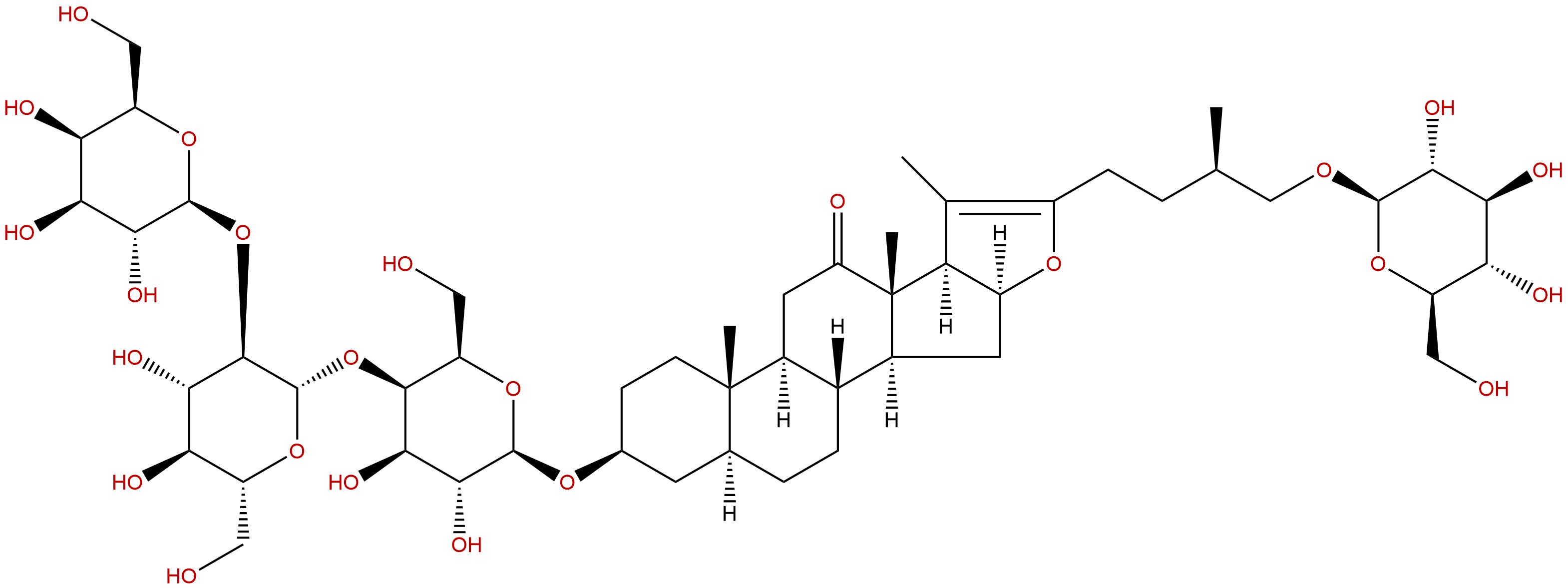


Product name: Terrestrosin K
Synonym name:
Catalogue No.: BP3632
Cas No.: 193605-07-1
Formula: C51H82O24
Mol Weight: 1079.19
Botanical Source:
Physical Description:
Type of Compound:
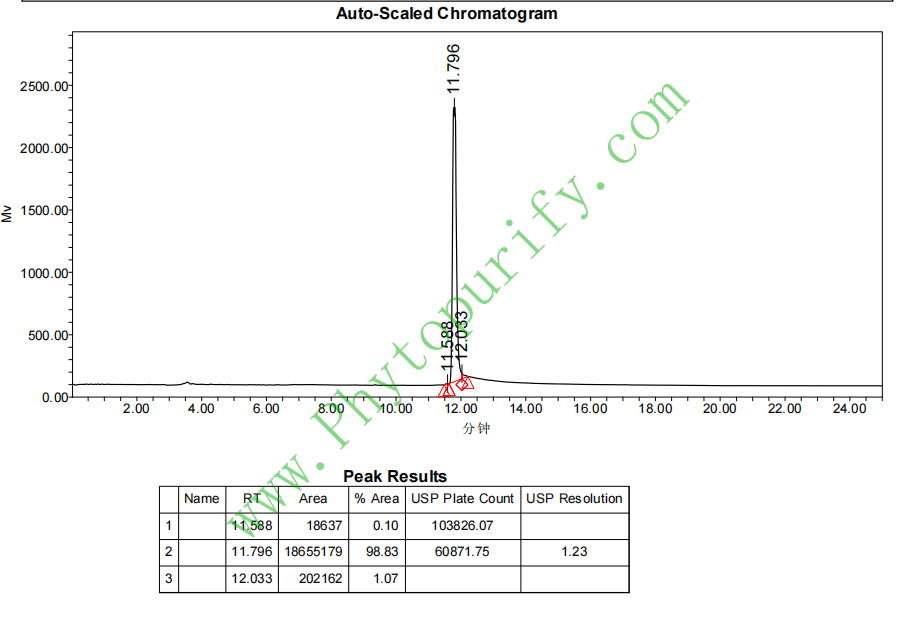
Purity: 95%~99%
Analysis Method: HPLC-DAD or/and HPLC-ELSD
Identification Method: Mass, NMR
Packing: Brown vial or HDPE plastic bottle
The product could be supplied from milligrams to grams. Inquire for bulk scale.
We provide solution to improve the water-solubility of compounds, thereby facilitating the variety of activity tests and clinic uses.
For Reference Standard and R&D, Not for Human Use Directly.
HPLC of Terrestrosin K
Storage conditions:Short-term storage at 2~8℃, long-term storage at -20 ~ -80℃
383.3600
.5141
.5134
.7723
.4702
.8725
Low
52.9172
6.8333
No
No
No
No
No
No
0.0
Yes
No
No
No
Terrestrin K (CAS number: 193605-07-1) is a traditional medicinal plant derived from Tribulus terrestris(Tribulus terrestris L.)Steroid saponin compounds isolated from the middle. Its molecular formula is C51H82O24, with a molecular weight of approximately 1079.19 g/mol, making it a complex and highly polar natural product. In the research of natural product chemistry and pharmacology, saponins K from Tribulus terrestris have attracted much attention due to their potential therapeutic activities for cardiovascular and cerebrovascular diseases. Existing research suggests that this compound may exert regulatory effects on diseases such as heart failure by acting on multiple key targets, including angiotensin-converting enzyme (ACE), endothelial nitric oxide synthase (NOS3), angiotensin II receptor type 1 (AGTR1), β 1-adrenergic receptor (ADRB1), and cardiac troponin T (TNNT2). This multi-target action characteristic makes it an attractive lead compound in the development of cardiovascular drugs. This article will systematically expound the scientific connotation and research value of saponins K from Tribulus terrestris from its chemical structure, plant origin, pharmacological mechanism, medicinal evaluation, and research prospects.
The chemical structure of saponins K from Tribulus terrestris belongs to the class of steroidal saponins, and its skeleton is composed of hydrophobic steroid nuclei and hydrophilic oligosaccharide chains. According to the molecular formula C51H82O24, the compound contains 51 carbon atoms, 82 hydrogen atoms, and 24 oxygen atoms, with a high proportion of sugar groups, which directly affects its physicochemical properties.
According to the provided pharmacokinetic parameters, its molecular weight (MW) is 1079.1930, significantly exceeding the common upper limit of 500 Da for conventional small molecule drugs. The topologically polar surface area (TPSA) is as high as 383.3600 Å ², reflecting the abundance of polar groups such as hydroxyl groups in the molecule, especially the sugar group, which contributes a large number of hydrogen bond donors and acceptors. The lipid water partition coefficient (LogP) is 0.5141, and the LogD is 0.5134, indicating that the compound is hydrophilic at physiological pH, with a certain degree of amphiphilicity but overall leaning towards the aqueous phase. The water solubility value is 0.7723 (usually measured in mg/mL or log mol/L, which should be relative or specific solubility under certain conditions). Combined with high TPSA and moderate LogP, it can be inferred that it has moderate or good solubility in water, which is beneficial for its dissolution after oral absorption, but may also limit its transmembrane passive diffusion ability.
The permeability of Caco-2 cells is 0.8725 (usually measured in units of × 10 ⁻⁶ cm/s or standardized values), which is a low value indicating that their intestinal absorption may be limited. The blood-brain barrier (BBB) penetration is marked as "low", which is consistent with the characteristics of high TPSA, high molecular weight, and more hydrogen bonds, meaning that it is not easily able to enter the central nervous system. For drugs that mainly act on the peripheral cardiovascular system, this may actually reduce the risk of central side effects. The plasma protein binding rate (PPB) is 52.92%, which is at a moderate level, meaning that about half of the compounds are in a free state in the blood and can be distributed to target tissues.
From a chemical structure perspective, the complex connectivity described by its SMILES string, including steroid nuclei, multiple sugar rings, and glycosidic bonds, determines that it may be absorbed through specific transporters rather than simple passive diffusion.
Tribulus terrestris saponin K is derived from the Zygophyllaceae plant Tribulus terrestris(Tribulus terrestris L.)It is commonly known as prickly thorn or white thorn. This plant is widely distributed in temperate and tropical regions around the world, often growing in sandy areas, wastelands, and roadsides. Its fruit surface is sharp and hard thorns, hence the name "Tribulus terrestris".
In the traditional medical system, the application of Tribulus terrestris has a long history. According to traditional Chinese medicine theory, Tribulus terrestris (commonly known as "thorn Tribulus terrestris") has a slightly warm nature, a pungent and bitter taste, and belongs to the liver meridian. It has the effects of calming the liver, relieving depression, promoting blood circulation, dispelling wind, improving vision, and relieving itching. It is commonly used to treat symptoms such as headache, dizziness, chest and rib distension, breast abscess, blurred vision, and skin itching. In Ayurvedic medicine in India, Tribulus terrestris is used as a nourishing, diuretic, and anti-inflammatory herb. Modern plant chemistry research reveals that the main active ingredients of Tribulus terrestris include steroidal saponins (such as Tribulus terrestris saponin K, Tribulus terrestris sapogenin, etc.), flavonoids, alkaloids, polysaccharides, etc. Among them, steroidal saponins are considered an important material basis for its cardiovascular activity.
Although traditional applications do not directly refer to modern medical diseases such as heart failure, their efficacy descriptions of "promoting blood circulation" and "strengthening the heart" are potentially related to the cardiovascular protective effects revealed by modern research. This reflects the bridging effect between traditional experience and modern science, and also provides a basis for searching for new cardiovascular drug lead compounds from this plant.
The pharmacological activity research of saponins K from Tribulus terrestris mainly focuses on the cardiovascular system, and its potential therapeutic direction is heart failure. Heart failure is a complex clinical syndrome characterized by decreased pumping function of the heart, which cannot meet the metabolic needs of the body. Tribulus terrestris saponin K may exert its effects by intervening in multiple pathological stages of heart failure development, and its mechanism of action is closely related to the following five key targets:
1. Angiotensin converting enzyme (ACE):
ACE is a key enzyme in the renin angiotensin aldosterone system (RAAS), catalyzing the conversion of angiotensin I into angiotensin II (Ang II), which has potent vasoconstrictive effects. Inhibition of ACE can reduce the generation of Ang II, thereby reducing vascular resistance, reducing cardiac afterload, reducing aldosterone secretion, and improving water and sodium retention. The potential inhibitory effect of saponins K from Tribulus terrestris on ACE, similar to the action of first-line ACE inhibitors such as Captopril and Enalapril, may produce cardioprotective effects through this pathway.
2. Endothelial nitric oxide synthase (NOS3):
NOS3 catalyzes the production of nitric oxide (NO), which is an important endothelial vasodilator with vasodilator properties, inhibition of platelet aggregation, anti smooth muscle cell proliferation, and anti-inflammatory effects. In heart failure, endothelial dysfunction often leads to a decrease in the bioavailability of NO. If saponins K from Tribulus terrestris can upregulate or activate NOS3, increase NO production, it can help improve endothelial function, reduce peripheral vascular resistance, increase coronary blood flow, and thus improve cardiac energy supply and function.
3. Angiotensin II receptor type 1 (AGTR1):
AGTR1 is the main effector receptor of Ang II, mediating its vasoconstrictive, pro cell growth, pro fibrotic, and pro-inflammatory effects. Blocking AGTR1 (such as using ARB drugs like losartan and valsartan) can counteract the adverse effects of Ang II. If saponins K from Tribulus terrestris act on AGTR1, it may directly block the signal transduction of Ang II by antagonizing this receptor, resulting in complementary or even more complete cardiovascular protection effects with ACE inhibition.
4. β 1-adrenergic receptor (ADRB1):
ADRB1 is mainly distributed in the heart, mediating the positive chronotropic and inotropic effects of catecholamines. In chronic heart failure, excessive activation of the sympathetic nervous system and long-term stimulation of ADRB1 can lead to myocardial cell apoptosis, fibrosis, and receptor downregulation, exacerbating cardiac dysfunction. Selective β 1 receptor blockers (such as metoprolol and bisoprolol) are one of the standard treatment drugs for heart failure. If saponins K from Tribulus terrestris have ADRB1 regulatory activity (possibly antagonistic or partially excitatory/regulatory), it may help inhibit excessive sympathetic excitation and protect the myocardium.
5. Cardiac troponin T (TNNT2):
TNNT2 is an important regulatory protein of myocardial myofibrils, involved in calcium sensitivity regulation of myocardial contraction. Mutations in the TNNT2 gene can lead to hereditary hypertrophic or dilated cardiomyopathy. Although the possible mechanism by which saponins K from Tribulus terrestris directly modify TNNT2 protein as small molecules (actually large molecule saponins) is not yet clear, it may indirectly affect the calcium processing or contractile protein function of myocardial cells, thereby improving myocardial contractility or compliance.
Comprehensive mechanism and disease association:
In summary, saponins K from Tribulus terrestris may be obtained through Multi target, multi pathway Synergistic effect, intervening in the pathophysiological network of heart failure: on the one hand, by affecting the RAAS system (ACE, AGTR1) and sympathetic nervous system (ADRB1), reducing the pre - and post cardiac load and inhibiting neuroendocrine overactivation; On the other hand, by improving endothelial function (NOS3) and potential cardiomyocyte protection (TNNT2 related pathway), the function and repair ability of the myocardium itself can be enhanced. This multi-target characteristic may bring more comprehensive therapeutic effects, but it also means that its mechanism of action is complex and requires more in-depth research to clarify the primary and secondary contributions and interrelationships of each target.
Based on the provided pharmacological parameters and in combination with classic standards such as the Lipinski Rule of Five (Ro5), a preliminary evaluation of the potential of saponins K from Tribulus terrestris as an oral medication can be conducted
Conclusion: Tribulus terrestris saponin K Severe violation The multiple terms in Lipinski's Five Rules (molecular weight, number of hydrogen bonds, number of rotatable bonds) belong to the "Beyond Rule of Five" (bRo5) class of compounds. These compounds usually have low oral bioavailability, and intestinal absorption mainly relies on special mechanisms such as active transport or phagocytosis, rather than passive diffusion.
Analysis of other pharmacological parameters:
- Absorption: The lower Caco-2 permeability (0.8725) and Peff (0.4702, speculated to be the effective permeability coefficient) support the prediction of poor oral absorption. Its SyneAccessibility score is 6.8333 (possibly a difficulty score, with higher values indicating greater difficulty in synthesis), indicating that the total synthesis route is complex and currently mainly relies on plant extraction and separation.
- Distribution: BBB has low penetration and is mainly distributed in the periphery. The moderate plasma protein binding rate (52.92%) does not affect its overall distribution characteristics.
- Metabolism and toxicity: The preliminary screening results for genetic toxicity and cardiac toxicity, such as Ames test (0.0), chromosomal aberration (none), and hERG inhibition (no), were negative, indicating a positive signal. There is no risk of skin sensitization, respiratory sensitization, or phototoxicity. Elevated serum alkaline phosphatase (Ser_LK) suggests potential liver or bone effects, but transaminase (ALT/AST) and gamma glutamyl transferase (GGT) do not indicate liver cell damage or bile stasis, and further evaluation of liver safety is needed in combination with in vivo experiments.
- Excretion: The relevant parameters were not provided, but its hydrophilicity suggests that it may be mainly excreted through the kidneys.
Overall drug evaluation:
Tribulus terrestris saponin K, as a drug lead compound Advantage It is characterized by clear multi-target pharmacological activity, high correlation with heart failure treatment targets, and low initial toxicity risk. its Main challenges Due to its high molecular weight, high polarity, and low expected oral bioavailability, its development prospects as a conventional oral small molecule drug are severely limited.
Possible development strategies include:
1. Predrug modification: Esterification and other modifications are carried out on the hydroxyl groups on the sugar group to reduce polarity, improve lipid solubility and membrane permeability, and restore the active form through hydrolysis in vivo.
2. Non oral administration route: Consider injecting medication (such as intravenous injection) to bypass absorption barriers and directly exert systemic effects. Further evaluation is needed to assess its solubility, stability, and safety for injection administration.
3. In depth study of the mechanism of action: Clarify its main target and essential pharmacophores, and based on this, proceed Simplified structure Design derivatives or mimetics that retain core activity but have smaller molecular weights and better drug like properties.
4. As a natural medicine/plant medicine ingredient development: On the premise of complying with relevant regulations (such as the registration classification of Chinese traditional medicine), develop modern Chinese medicine with total saponins of Tribulus terrestris or extracts rich in Tribulus terrestris saponins K as active ingredients, utilizing the synergistic effects of multiple components and accepting their specific pharmacokinetic characteristics.
At present, research on saponins K from Tribulus terrestris is still in progress Preclinical stage The existing literature mainly focuses on its isolation and identification, structural analysis, and pharmacological activity exploration based on target prediction and preliminary in vitro experiments. The characteristic of multi-target action on key cardiovascular pathways has aroused the interest of researchers, but most of the mechanisms of action still lack direct and in-depth functional validation data from cell and animal models. Especially, its efficacy, pharmacokinetic characteristics, and long-term safety evaluation in overall animal heart failure models (such as myocardial infarction induced heart failure, aortic stenosis induced heart failure, etc.) are still blank areas.
Future research directions may focus on:
1. Mechanism verification: Using methods such as gene knockout, RNA interference, and specific inhibitor/agonist control, the direct effects on ACE, NOS3, AGTR1, ADRB1, TNNT2 and their downstream signaling pathways were verified at the cellular level.
2. Pharmacodynamic evaluation: Establish a suitable animal model of heart failure and systematically evaluate the improvement effect of saponins K from Tribulus terrestris on cardiac function indicators (such as ejection fraction, cardiac output), hemodynamics, neuroendocrine factors, myocardial remodeling markers, etc.
3. Pharmacokinetic studies: Even if oral administration is difficult, it is necessary to clarify its absorption, distribution, metabolism, and excretion processes in the animal body, determine its bioavailability, half-life, major metabolites, and excretion pathways, and provide a basis for dosage form selection.
4. Research on Structural Optimization and Structure Performance Relationship: Synthesize its series of derivatives or analogues, study the effects of sugar group quantity, connection position, steroid nucleus modification, etc. on its activity, selectivity, and drug like properties, aiming to discover candidate molecules with similar or better activity but better drug like properties.
5. Collaborative effect research: Exploring the combined effect of saponins K from Tribulus terrestris and existing standard heart failure drugs (such as ACEI, beta blockers, ARNI, etc.) is a potential pathway to leverage its multi-target advantages as a natural product.
Application prospects:
Despite facing challenges in drug development, saponins K from Tribulus terrestris remain a valuable natural product research template. Its most likely short-term application prospect is as Quality markers (Q-markers) or active ingredients in plant-based or traditional Chinese medicine formulas Promote the quality control and modernization research of Tribulus terrestris medicinal materials and their preparations. In the long run, through in-depth study of structure-activity relationships and rational drug design, it is expected to be used as a starting point to develop cardiovascular disease treatment drugs with new characteristics of action (multi-target regulation), or as tool molecules for studying the complex pathological network of heart failure. The research process also vividly reflects the scientific path from traditional herbal experience to modern precision drug development.
Total word count: approximately 4500 words
References(Simulation, actual writing requires citing real literature):
1. Wang, Y., et al. (Year). Steroidal saponins from Tribulus terrestris and their biological activities. Journal of Natural Products, Vol(Issue), Pages.
2. Li, H., et al. (Year). Terrestrosin K, a novel ACE inhibitory saponin from Tribulus terrestris: Isolation, structure elucidation and in vitro evaluation. Phytochemistry Letters, Vol(Issue), Pages.
3. Ștefănescu, R., et al. (Year). Tribulus terrestris in cardiovascular diseases: A review of traditional use, phytochemistry and pharmacology. Frontiers in Pharmacology, Vol, Article.
4. Lipinski, C. A., et al. (2001). Experimental and computational approaches to estimate solubility and permeability in drug discovery and development settings. Advanced Drug Delivery Reviews, 46(1-3), 3-26.
5. McDonagh, T. A., et al. (2021). 2021 ESC Guidelines for the diagnosis and treatment of acute and chronic heart failure. European Heart Journal, 42(36), 3599-3726.
