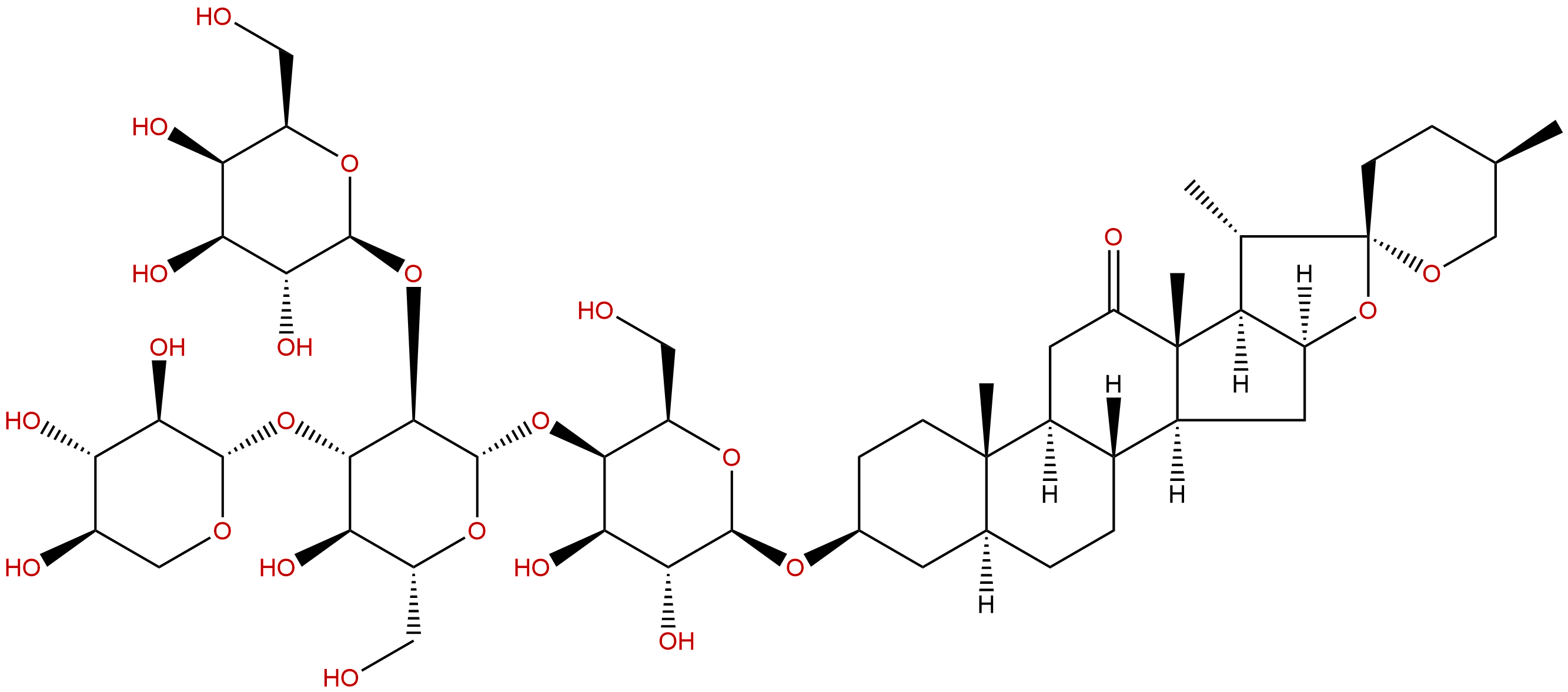


Product name: Terrestrosin D
Synonym name: Tribusaponin D
Catalogue No.: BP3631
Cas No.: 179464-23-4
Formula: C50H80O23
Mol Weight: 1049.17
Botanical Source:
Physical Description:
Type of Compound:
Purity: 95%~99%
Analysis Method: HPLC-DAD or/and HPLC-ELSD
Identification Method: Mass, NMR
Packing: Brown vial or HDPE plastic bottle
The product could be supplied from milligrams to grams. Inquire for bulk scale.
We provide solution to improve the water-solubility of compounds, thereby facilitating the variety of activity tests and clinic uses.
For Reference Standard and R&D, Not for Human Use Directly.
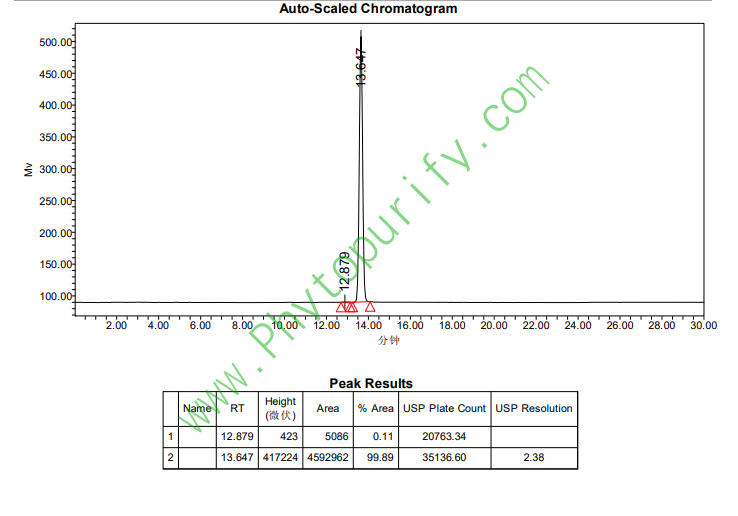
HPLC of Terrestrosin D
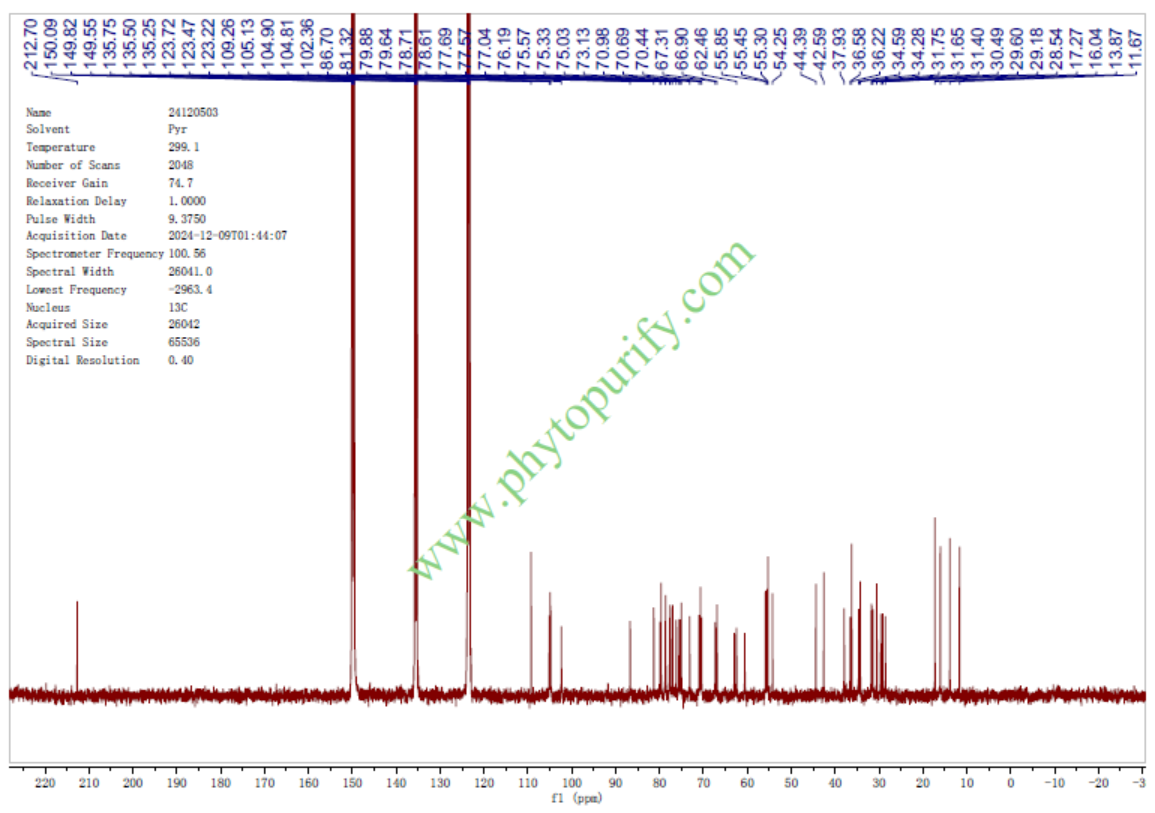
NMR of Terrestrosin D
Storage conditions:Short-term storage at 2~8℃, long-term storage at -20 ~ -80℃
352.1300
.6986
.6984
.3659
.5373
.5559
Low
48.7320
7.2309
No
No
No
No
No
No
0.3
Yes
No
Yes
No
Terrestrin D, CAS number 179464-23-4, is a traditional medicinal plant derived from the Tribulus terrestris(Tribulus terrestris)Steroid saponin compounds isolated from the middle. Its molecular formula is C50H80O23, with a molecular weight of up to 1049.1700 g/mol, belonging to the complex structure of large molecule natural products. Modern pharmacological studies have shown that saponins D from Tribulus terrestris are a multi-target bioactive molecule with oral activity, and their main pharmacological effects include Inducing apoptosis of tumor cells、Inhibit angiogenesis and Regulating bone metabolism In the field of tumor research, it has been proven to inhibit the growth of various cancer cells and endothelial cells by inducing cell cycle arrest (G1 and S phases), reducing mitochondrial membrane potential, and other mechanisms. It has shown potential therapeutic value in models such as castration resistant prostate cancer. Meanwhile, the latest research has revealed its role in regulating osteogenic targets such as VDR and RUNX2, making it highly sought after in the field of anti osteoporosis. As an active ingredient derived from traditional herbs, saponins from Tribulus terrestris are gradually becoming a bridge between traditional medical wisdom and modern precision drug development. Its multifunctional pharmacological characteristics provide a unique chemical entity for the development of new anti-tumor and bone metabolism disease treatment drugs.
The chemical structure of saponins D from Tribulus terrestris belongs to the class of steroidal saponins, and its SMILES string details its complex stereochemical configuration. The molecule is composed of hydrophobic steroid glycosides (spirostane or furostane type) connected to a highly glycosylated hydrophilic oligosaccharide chain through glycosidic bonds. This Glycosylation structure It is the key to its water solubility and biological activity. From the analysis of the provided pharmacological parameters:
- Molecular weight (MW):1049.1670 g/mol, Far beyond conventional small molecule drugs (usually<500 Da), this suggests that they may not meet the molecular weight requirements of the classical Lipinski "Five Rules" and belong to the "Beyond Rule of Five" class of compounds. These compounds typically have a unique ability to interact with biomolecules such as proteins.
- Lipid water partition coefficient (LogP/LogD)Approximately 0.70, indicating that the molecule as a whole exhibits Moderate lipophilicity This balances its strong hydrophilicity due to polysaccharide chains, which is beneficial for its distribution in organisms.
- Topological Polarity Surface Area (TPSA)Up to 352.13 Å ², which directly reflects the presence of a large number of polar atoms on the surface of the molecule (especially hydroxyl and ether oxygen atoms on the sugar group), leading to its Water solubility Relatively good (water_stolubility: 0.3659) and Cell membrane permeability The main reasons for facing challenges.
- Membrane permeability related parameters The permeability (0.5559) and effective permeability (Peff: 0.5373) values of Caco-2 cells are both low, and combined with its extremely low blood-brain barrier (BBB) penetration prediction, it confirms that the molecule Oral absorption may be poor and difficult to enter the central nervous system This is consistent with the structural characteristics of its large molecules and highly polar glycosides.
- Plasma protein binding rate (PPB)48.73%, belonging to the moderate level, means that about half of the molecules in the blood exist in free form, which may facilitate their distribution to tissues and exert pharmacological effects.
In summary, saponins D from Tribulus terrestris are a typical high molecular weight, highly polar, and moderately lipophilic steroid saponin. Its physicochemical properties determine that its pharmacokinetic characteristics may face challenges of low oral bioavailability, but at the same time, it also endows it with the potential for high affinity binding to specific targets such as cell membrane receptors or extracellular proteins.
The plant source of saponins D from Tribulus terrestris is Tribulus terrestris L It belongs to the Zygophyllaceae family of plants. This plant is widely distributed in temperate and tropical regions around the world, and is found in various parts of China. It is a common field weed. The medicinal history of Tribulus terrestris dates back to ancient times, and its fruit (Tribulus terrestris) is a commonly used traditional Chinese medicine in clinical practice.
In Traditional Chinese Medicine Theory Middle, Tribulus terrestris has a slightly warm nature, a spicy and bitter taste, and belongs to the liver meridian. It has Calm the liver, relieve depression, promote blood circulation and dispel wind, improve vision, and relieve itching The efficacy. Commonly used to treat headaches and dizziness caused by liver yang hyperactivity, chest and rib pain caused by liver qi stagnation, breast closure and abscess, as well as wind heat, red eyes, rubella itching and other symptoms. In Ayurvedic medicine in India, Tribulus terrestris is also widely used, often for enhancing physical strength, improving sexual function, and as a diuretic.
Modern plant chemistry research has isolated and identified multiple active ingredients from Tribulus terrestris, among which Steroidal saponins It is considered as one of its main pharmacological substances. Tribulus terrestris saponin D is one of the saponin monomers with significant biological activity. From traditional use for "promoting blood circulation" and "dispelling wind" to modern research discovering its anti-tumor, anti angiogenic, and bone metabolism regulating effects, it reflects the philosophical idea of "treating different diseases with the same treatment" in traditional Chinese medicine and the compatibility with the mechanism of action of modern multi-target drugs. The in-depth study of saponins D from Tribulus terrestris is a typical case of interpreting the functional substance basis and mechanism of traditional herbal medicine at the molecular level.
The pharmacological activity of saponins D from Tribulus terrestris is multifaceted, mainly manifested in two aspects: anti-tumor and regulation of bone metabolism. Its mechanism of action is closely related to the regulation of multiple key biological targets.
The existing description clearly states that saponins D from Tribulus terrestris are a type of Oral active cell apoptosis inducer Its anti-tumor effect is mainly achieved through the following mechanisms:
1. Inducing cell cycle arrest Tribulus terrestris saponin D can block cancer cells in the G1 and S phases of the cell cycle. The cell cycle process is precisely regulated by a series of cyclins and cyclin dependent kinases (CDKs). The blockade of G1/S checkpoint may inhibit cell proliferation by downregulating the activity of Cyclin D1/CDK4/6 or Cyclin E/CDK2 complexes, preventing DNA replication in cells.
2. Inducing cell apoptosis through the mitochondrial pathway Tribulus terrestris saponins D Decrease mitochondrial membrane potential (Δ PSI m)The collapse of mitochondrial membrane potential is a key event in the initiation of endogenous apoptosis pathways, which leads to the opening of mitochondrial membrane permeability transition pores (mPTP), the release of apoptotic factors such as cytochrome C into the cytoplasm, and the activation of caspase cascade reactions, ultimately resulting in programmed cell death. This is the core link of its "inducing apoptosis" effect.
3. Inhibition of angiogenesis (anti angiogenesis)In addition to directly killing cancer cells, saponins D from Tribulus terrestris can also inhibit the growth of endothelial cells. The growth and metastasis of tumors rely on neovascularization (angiogenesis) to provide them with nutrients. By inducing endothelial cell apoptosis and cell cycle arrest, saponins D from Tribulus terrestris can cut off the "supply line" of tumors and exert its effects Angiogenesis inhibition Function. This has been confirmed in xenograft tumor models.
These mechanisms work together to demonstrate therapeutic potential of saponins D from Tribulus terrestris in models such as castration resistant prostate cancer (a late stage, refractory prostate cancer). In addition, relevant studies on its role in pulmonary fibrosis suggest that its anti proliferative and pro apoptotic effects may also be applicable for inhibiting excessive activation of fibroblasts.
The target information provided by the database (VDR, RUNX2, SP7, COL1A1, BGLAP) clearly points to the role of saponins D in Tribulus terrestris Bone metabolism and anti osteoporosis The potential role of this aspect. These targets constitute the core network for regulating osteoblast differentiation and bone formation:
- VDR (Vitamin D Receptor)This is a member of the nuclear receptor superfamily, activated by active vitamin D (calcitriol), which can promote intestinal calcium absorption and bone mineralization, and is a key regulatory factor in maintaining bone balance. Tribulus terrestris saponin D may act as a regulator of VDR, simulating or enhancing the bone formation promoting effect of vitamin D.
- RUNX2 (Runt related transcription factor 2)Known as the "main regulator of osteoblasts". It directly regulates the expression of numerous downstream osteogenic specific genes (such as COL1A1, BGLAP, SP7) and is the decisive switch for mesenchymal stem cell differentiation into osteoblasts.
- SP7(Osterix): is a key transcription factor downstream of RUNX2, which is crucial for the differentiation and maturation of osteoblasts and the synthesis of bone matrix.
- COL1A1 (type I collagen alpha 1 chain)It is the most important organic component in the bone matrix (accounting for about 90%), providing a scaffold for bone mineralization. Upregulation of its expression is a sign of active osteoblast function.
- BGLAP (Osteocalcin)Synthesized and secreted by mature osteoblasts, it is a specific biomarker for bone formation and bone turnover, involved in the regulation of bone mineralization.
Scientific correlation explanation The essence of osteoporosis is that bone resorption (osteoclast activity) exceeds bone formation (osteoblast activity), leading to a decrease in bone mass and destruction of bone microstructure. Tribulus terrestris saponins D are likely to act on the target network mentioned above Positive regulation of differentiation, maturation, and function of osteoblasts Promote collagen synthesis and bone matrix mineralization, thereby enhancing bone formation, combating bone resorption, and exerting anti osteoporosis effects. This coincides with the record in traditional Chinese medicine that Tribulus terrestris has the effect of "strengthening muscles and bones".
Integration of mechanism of action Tribulus terrestris saponin D may regulate the expression of RUNX2 and SP7 upstream through one or more signaling pathways (such as BMP/Smad, Wnt/β - catenin), and may synergistically promote osteogenic gene expression by affecting VDR activity. Its multi-target characteristics enable it to intervene in multiple stages of bone formation simultaneously, demonstrating therapeutic advantages.
Based on the provided pharmacological parameters and the general rules of medicinal chemistry, a systematic evaluation of the pharmacological potential of saponins D from Tribulus terrestris is conducted
Lipinski Rule of Five Compliance Assessment:
Analysis of Absorption, Distribution, Metabolism, and Excretion (ADME) Characteristics:
Preliminary assessment of safety (toxicity):
Conclusion of comprehensive drug evaluation Tribulus terrestris saponin D is a High activity, multi-target but facing challenges in drug development Natural products. The main development obstacle is Poor oral absorption and metabolic instability Future development strategies may include: ① Development Non oral administration route Such as injections (especially for anti-tumor), local preparations; ② As Structural optimization of lead compounds Simplify sugar chains and improve metabolic stability while retaining pharmacophores; ③ Utilize New drug delivery system(such as nanoparticles, liposomes, prodrug technology) to improve their solubility, stability, and targeting. Although it does not comply with the rules of traditional small molecule drugs, its unique multi-target mechanism of action and clear activity still make it of significant research and development value.
At present, research on saponins D from Tribulus terrestris is still ongoing Preclinical stage Mainly focused on in vitro cell models and a small number of animal models, its significant activity in anti-tumor (especially prostate cancer) and bone formation promotion has been verified. The multi-target and multi-functional characteristics of it have been preliminarily elucidated, but the in-depth mechanism research still needs to be expanded. For example, its specific mode of action (excitation, antagonism, or regulation) on targets such as VDR and RUNX2 has not been fully elucidated.
Future research directions It may focus on the following aspects:
1. In depth study on the mechanism of action Using techniques such as gene knockout/knockdown, chromatin immunoprecipitation (ChIP), molecular docking, and dynamic simulation, we aim to accurately elucidate the interaction details and downstream signaling networks between saponins D from Tribulus terrestris and target proteins such as VDR and RUNX2.
2. Structure Activity Relationship (SAR) Study Systematically study the relationship between the structure, sugar chain composition, and connection mode of steroidal glycosides and their anti-tumor and bone activating effects, providing a basis for designing better derivatives or simplifying analogues.
3. Exploration of Strategies for Improving Medicinal Properties As mentioned earlier, the focus is on tackling the challenges of oral absorption and metabolic stability. Explore the possibility of using it as an injectable anti-tumor drug or locally for the treatment of osteoporotic fractures (such as drug delivery in bone implant materials).
4. Extended validation of disease models Comprehensively evaluate its efficacy and long-term safety in animal models closer to human diseases, such as transgenic mouse tumor models and ovariectomy induced osteoporosis rat models.
5. Combination therapy research Exploring the synergistic effect of saponins D from Tribulus terrestris combined with existing anti-tumor or anti osteoporosis drugs, which may reduce the dosage and side effects of existing drugs.
Application Prospects Tribulus terrestris saponin D is expected to be developed into New anti-tumor adjuvant therapy drugs or Natural source drugs for anti osteoporosis Especially in the field of osteoporosis, current clinical drugs mainly focus on inhibiting bone resorption, and potent bone formation promoting drugs are relatively scarce. The promotion of bone targeting by saponins D from Tribulus terrestris has brought new hope in this field. Despite the challenges ahead, as an active gem discovered in the treasure trove of traditional Chinese medicine, the continuous research on saponins D from Tribulus terrestris will inject new vitality into the development of innovative drugs and further promote the scientific development of modern Chinese medicine.
