


Synonym name: Bilobalide A
Catalogue No.: BP0274
Cas No.: 33570-04-6
Formula: C15H18O8
Mol Weight: 326.301
Botanical Source: leaves of Ginkgo biloba (ginkgo)
Purity: 95%~99%
Analysis Method: HPLC-DAD or/and HPLC-ELSD
Identification Method: Mass, NMR
Packing: Brown vial or HDPE plastic bottle
Can be supplied from milligrams to grams.
For Reference Standard and R&D, Not for Human Use Directly.
Inquire for bulk scale.
References

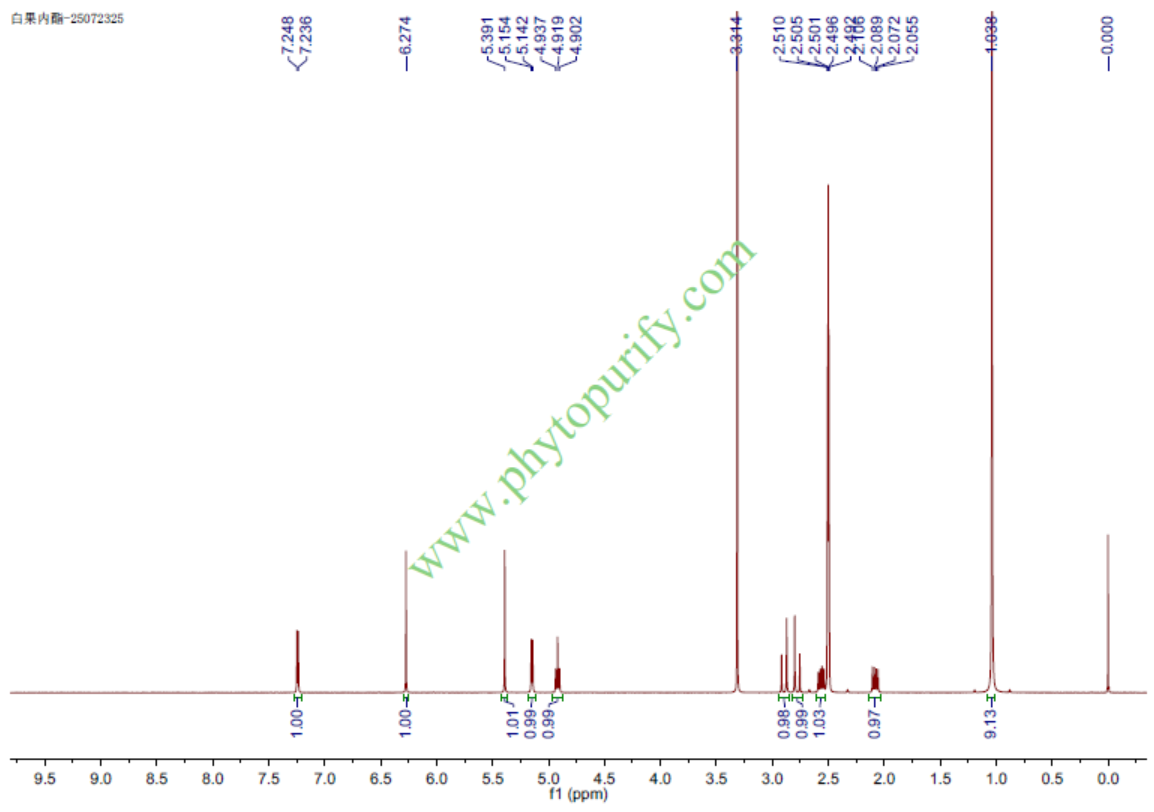
Storage conditions:Short-term storage at 2~8℃, long-term storage at -20 ~ -80℃
Bilobalide A (CAS number: 33570-04-6) is one of the important sesquiterpene triterpenoids in Ginkgo biloba leaves, which has attracted much attention due to its unique chemical structure and significant neuroprotective activity. Ginkgo biloba leaf extract, as the main component of traditional Chinese medicine and modern health products, is widely used as an adjuvant therapy for neurological diseases. Bilobalide, as one of the active ingredients in Ginkgo biloba leaves, exhibits protective and nutritional effects on neurons, especially in neurodegenerative disease models such as cerebral ischemia-reperfusion injury, showing good therapeutic potential. In recent years, with the development of molecular biology and pharmacology techniques, the mechanism of action of bilobalide has gradually been revealed, involving multiple cellular signaling pathways and key molecular targets. This article aims to systematically review the chemical structure, pharmacological activity, mechanism of action, pharmacological evaluation, and clinical application prospects of bilobalide, providing a theoretical basis and reference for subsequent research and development.
Bilobalide belongs to the sesquiterpene triterpenoid class of compounds, with a molecular formula of C15H18O7 and a molecular weight of 310.30. Its structural feature is a tricyclic lactone skeleton, containing multiple hydroxyl groups and lactone rings, endowing it with high polarity and abundant hydrogen bond acceptors (8). The topological polar surface area (TPSA) of bilobalide is 142.12 Å ², indicating its strong polarity and good water solubility. The LogP value is -0.97, indicating its strong hydrophilicity, which is conducive to distribution and dissolution in organisms. This compound has a high blood-brain barrier penetration ability (BBB permeability is high), which is particularly important for neurological drugs. The comprehensive performance of physicochemical properties enables bilobalide to effectively reach central nervous system targets in vivo and exert its pharmacological effects.
Bilobalide is mainly found in Ginkgo biloba L., an ancient gymnosperm, whose leaves are rich in various bioactive compounds, including flavonoids, terpenoids, and organic acids. Bilobalide is one of the representative components of sesquiterpene lactones in Ginkgo biloba leaves. Although its content is not as abundant as flavonoids, its biological activity is outstanding.
The method of extracting bilobalide mainly relies on organic solvent extraction and chromatographic separation techniques. Common extraction solvents include ethanol, methanol, and their aqueous solutions. Ultrasonic assisted extraction or reflux extraction can improve extraction efficiency. Subsequently, separation and purification were carried out using methods such as silica gel column chromatography and reverse phase high performance liquid chromatography (RP-HPLC). In recent years, supercritical fluid extraction and membrane separation techniques have also been applied to the extraction and purification of bilobalide, significantly improving yield and purity. The purified bilobalide can be structurally identified and quality controlled by techniques such as mass spectrometry and nuclear magnetic resonance (NMR).
The pharmacological activity of bilobalide mainly focuses on neuroprotective and anti apoptotic effects. Its most significant biological function is to inhibit NMDA (N-methyl-D-aspartate) receptor-mediated choline efflux, with an IC50 of approximately 2.3 μ M, indicating its potential role in regulating neurotransmitter release and neural excitability. Overactivation of NMDA receptors is the pathological basis of cerebral ischemia-reperfusion injury and various neurodegenerative diseases, and bilobalide exerts a protective effect on neurons by inhibiting this pathway.
In addition, bilobalide can activate the PI3K/Akt signaling pathway within nerve cells, promoting cell survival and inhibiting apoptosis. In vitro studies have shown that in the human neuroblastoma cell line SH-SY5Y, bilobalide significantly reduces cell apoptosis rate and enhances cell survival ability. Its antioxidant activity has also been confirmed, by regulating the expression of superoxide dismutase (SOD1, SOD2) and nitric oxide synthase (NOS3), alleviating oxidative stress damage to neurons.
In the model of cerebral ischemia-reperfusion injury, bilobalide can regulate various key molecules, such as anti apoptotic protein BCL2, pro apoptotic protein BAX, apoptosis executing enzyme CASP3, inflammatory transcription factor NFKB1, and angiogenic factor VEGFA, exerting a comprehensive neuroprotective effect. Its multi-target and multi mechanism pharmacological properties have made it a research hotspot in the field of neuroprotection.
The neuroprotective mechanism of bilobalide involves multiple molecular targets and signaling pathways, mainly including:
NMDA receptor regulation
Bilobalide can inhibit NMDA receptor-mediated overexcitation, reduce glutamate induced neurotoxicity, decrease choline efflux, and alleviate neuronal damage caused by excitotoxicity. GRIN1, as a subunit of NMDA receptors, is its key target.
Activation of PI3K/Akt signaling pathway
By activating the PI3K/Akt pathway, bilobalide promotes cell survival signaling, inhibits the expression of apoptosis related proteins, reduces CASP3 activation, and maintains normal cell function and structural integrity.
Regulating apoptosis related proteins
Bilobalide upregulates the anti apoptotic protein BCL2 and downregulates the pro apoptotic protein BAX, balancing intracellular apoptotic signals and reducing cell apoptosis.
Antioxidant and anti-inflammatory effects
By regulating the expression of antioxidant enzymes such as SOD1 and SOD2, bilobalide alleviates oxidative stress damage. At the same time, it inhibits the inflammatory response mediated by NFKB1 and reduces the level of neuroinflammation.
Promote angiogenesis and repair
Bilobalide can regulate VEGFA expression, promote angiogenesis in ischemic areas, improve local blood supply, and promote neurological function recovery.
Regulating nitric oxide synthase
By regulating NOS3 activity, bilobalide participates in vasodilation and neuroprotection, maintaining stable cerebral hemodynamics.
In summary, bilobalide regulates neuronal excitability, oxidative stress, apoptosis, and inflammatory response through multi-target synergistic effects, forming a complex neuroprotective network.
The medicinal properties of bilobalide exhibit good characteristics. Its molecular weight is moderate (310.3 Da), meeting the basic requirements of Lipinski's rule. The LogP value is -0.97, indicating that it has strong hydrophilicity, which is beneficial for in vivo distribution and bioavailability. High TPSA (142.12 Å ²) reflects its high polarity, but it can still effectively penetrate the blood-brain barrier and meet the demand for central nervous system drugs.
Toxicological evaluation shows that bilobalide has no hepatotoxicity or cardiotoxicity, and does not inhibit hERG channels, reducing the risk of drug-induced arrhythmia. The Ames test result is negative, indicating that it does not have genetic toxicity and has high safety.
In terms of pharmacokinetics, although systematic research on bilobalide is currently limited, previous studies have shown that it is well absorbed orally and can effectively enter brain tissue. Its metabolic pathway mainly involves the liver enzyme system, and the metabolites need further identification. In the future, systematic pharmacokinetic and toxicological studies need to be conducted to clarify its in vivo behavior and safe dose range.
Based on the neuroprotective effect and good drug properties of bilobalide, its application prospects in cerebral ischemia-reperfusion injury, neurodegenerative diseases (such as Alzheimer's disease, Parkinson's disease), and other neurological diseases are broad. Bilobalide provides a new approach for the comprehensive treatment of neurological diseases through its multi-target and multi mechanism effects.
Currently, Ginkgo biloba leaf extract has been widely used in clinical adjuvant therapy, and bilobalide, as one of its active ingredients, is expected to be developed as a single component neuroprotective drug in the future. Combining modern drug delivery technologies such as nanocarriers and brain targeted delivery systems is expected to further enhance its efficacy and safety.
In addition, the potential of bilobalide in antioxidant, anti-inflammatory, and promoting nerve repair also provides possibilities for its application in the rehabilitation of chronic neurological diseases and brain injuries. Future research should focus on its clinical pharmacology, dose optimization, and long-term safety evaluation to promote its clinical translation.
As an important sesquiterpene triterpenoid component in Ginkgo biloba leaves, bilobalide has demonstrated excellent pharmacological activity and potential as a drug due to its unique chemical structure and multi-target neuroprotective effects. It effectively prevents neuronal damage and apoptosis by inhibiting NMDA receptor-mediated neurotoxicity, activating the PI3K/Akt signaling pathway, regulating apoptosis, and antioxidant mechanisms, especially showing significant protective effects in cerebral ischemia-reperfusion injury.
The pharmacological evaluation shows that bilobalide has good safety and blood-brain barrier penetration ability, laying the foundation for its development as a central nervous system drug. In the future, combined with modern drug development technology, bilobalide is expected to become a new type of drug for treating neurological diseases, providing effective treatment options for clinical practice.
In summary, as an important research object in the field of natural product pharmacology, bilobalide has broad research and application prospects, and is worthy of in-depth exploration and development.
