Introduction/Overview
Malaria, an ancient disease caused by Plasmodium parasites and transmitted by mosquitoes, remains a major global public health challenge to this day. Although artemisinin and its derivatives based combination therapies (ACTs) have greatly reduced the incidence rate and mortality of malaria in the past decades, the resistance of malaria parasites to existing drugs (including artemisinin) is increasingly becoming a serious obstacle on the road to malaria prevention and control. Therefore, continuously exploring novel structures and unique mechanisms of action of antimalarial lead compounds from the treasure trove of natural products is of crucial strategic significance for the development of the next generation of antimalarial drugs.
Artemisinin, derived from the traditional Chinese medicine Artemisia annua(Artemisia annua L.), Its outstanding anti malarial activity has been recognized worldwide and has given rise to a series of semi synthetic derivatives. In the complex metabolome of Artemisia annua, in addition to artemisinin, there are also various structurally related sesquiterpene lactones, which together form a "artemisinin family" with rich biological activity. Dihydroartemisin-B (3R) - dihydroartemisin-B, CAS: 87206-33-5) is an important member of this family. As a key intermediate or derivative in the biosynthesis pathway of artemisinin, dihydroartemisinin not only has certain antimalarial activity, but also becomes an important molecular probe for studying the structure-activity relationship and mechanism of action of artemisinin compounds due to its unique chemical structure. In recent years, with the deepening of research on artemisinin resistance mechanisms and the exploration of its multi-target properties, the value of dihydroartemisinin as a lead compound has been re examined. This article aims to systematically review the chemical properties, plant sources, pharmacological activities, molecular mechanisms of action, pharmacological evaluation, and clinical application prospects of dihydroartemisinin B, in order to provide comprehensive scientific references for the development of antimalarial drugs based on this compound.
Chemical structure and physicochemical properties
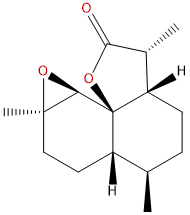
Dihydroartemisinin B, chemical name (3R, 5aS, 6R, 8aS, 9R, 12S, 12aR) - decahydro-3,6,9-trimethyl-3,12-bridge oxo-12H-pyrano [4,3-j] -1,2-benzodiazepin-10 (3H) - one, molecular formula C15H22O4, molecular weight 250.3380 g/mol. Its core structure is a unique 1,2,4-trioxahexane (trioxane) structural unit embedded in the sesquiterpene skeleton, and this characteristic peroxide bridge is the key pharmacophore for its antimalarial activity. Compared with artemisinin, dihydroartemisinin B lacks an oxygen atom at the C-12 position and is in a saturated state (hydrogenated) at the C-3 position, resulting in differences in molecular rigidity, electron cloud distribution, and chemical reactivity compared to artemisinin.
In terms of physical and chemical properties, the calculated lipid water partition coefficient (LogP) is 3.1238, indicating that the compound has moderate lipophilic properties, which is beneficial for its penetration into the lipid rich membrane structure of parasites. Its topological polar surface area (TPSA) is 38.8300 Å ², which is relatively small, further confirming its good membrane permeability. The predicted value of water solubility is relatively low, about 0.1131 mg/mL, indicating that it may be necessary to improve its bioavailability in formulation development through salt formation, inclusion complex formation, or the use of special delivery systems. It is worth noting that its predicted blood-brain barrier permeability is "high", which means that dihydroartemisinin may have a therapeutic effect on malignant malaria (cerebral malaria) involving the central nervous system, but at the same time, attention should be paid to its potential neurotoxic risks. The preliminary pharmacological risk assessment shows that its inhibitory risk on hERG potassium channels is "no", and the Ames test prediction value is 0.9 (usually considered to be<0.8 as risky), indicating that its risk of inducing cardiac toxicity and gene mutations is low, and it has a preliminary safety basis for further development.
Plant sources and extraction methods
Dihydroartemisinin B is mainly derived from the Artemisia annua plant in the Asteraceae family, Artemisia annua(Artemisia annua L.)。 In the glandular hairs of Artemisia annua, it exists as an intermediate or coexisting metabolite in the artemisinin biosynthesis pathway. The biosynthetic pathway of artemisinin begins with farnesyl pyrophosphate (FPP), which is catalyzed by enzymes such as sophoride synthase (ADS) to form artemisinin precursor artemisic acid. After a series of oxidation and cyclization steps, artemisinin and its structural analogues, such as artemisin B and dihydroartemisin B, are ultimately produced.
The extraction of dihydroartemisinin from plant materials usually uses organic solvent extraction method, which is similar to the extraction of artemisinin but requires attention to separation and purification. The common methods are as follows:
1. Raw material pretreatment Crush the dried Artemisia annua whole plant to increase the solvent contact area.
2. Solvent extraction Common low polarity solvents such as petroleum ether, n-hexane, and ethyl acetate are used for cold soaking or heating reflux extraction. Due to the similar properties of dihydroartemisinin and artemisinin, the initial extract is a mixture.
3. Preliminary separation Using silica gel column chromatography for crude separation, gradient elution (such as petroleum ether ethyl acetate system) is employed to preliminarily separate each component based on polarity differences.
4. Fine purification High purity dihydroartemisinin B is obtained through repeated normal or reverse phase silica gel column chromatography, preparative thin layer chromatography (PTLC) or high-performance liquid chromatography (HPLC), combined with analysis methods such as nuclear magnetic resonance (NMR) and mass spectrometry (MS) for tracking and identification.
In addition, with the development of synthetic biology, the use of genetically engineered yeast or microbial systems to achieve the biosynthesis of artemisinin compounds such as dihydroartemisinin B through heterologous expression of key enzyme genes in Artemisia annua has become a potential sustainable production alternative.
Pharmacological activity research
The core pharmacological activity of dihydroartemisinin B is focused on its anti malarial effect. In vitro experiments have shown that it exhibits inhibitory activity against various strains of malaria parasites, including strains sensitive and resistant to chloroquine. Although its half maximal inhibitory concentration (IC50) is usually higher than artemisinin and its first-line derivatives (such as dihydroartemisinin and artemether), its activity is still significant, indicating that its peroxide bridge structure can be activated by the internal environment of malaria parasites to produce cytotoxic effects.
In addition to its direct anti malaria activity, the study also suggests that dihydroartemisinin may have other potential pharmacological effects. For example, some artemisinin compounds have been reported to have anti-inflammatory, immunomodulatory, and anti-tumor activities. The basis of its action may be related to the generation of reactive oxygen species (ROS), interference with specific signaling pathways (such as NF - κ B and Wnt/β - catenin pathways), and its impact on cellular iron metabolism. As a member of this family, it is worth further exploring whether dihydroartemisinin B has similar "multi pharmacological" properties. For example, its anti-inflammatory potential may have synergistic therapeutic significance in alleviating excessive inflammatory reactions caused by malaria, such as the pathological process of cerebral malaria.
Mechanism of action and molecular targets
Dihydroartemisinin B, as a member of artemisinin compounds, shares a common mechanism of antimalarial action with artemisinin, namely the "activation alkylation" model, but may also exhibit unique target preferences due to structural differences.
-
Core mechanism of action Malaria parasites release high concentrations of ferrous ions (Fe ² ⁺) when digesting hemoglobin. The peroxide bridge in the structure of dihydroartemisinin B is reduced and cleaved by Fe ² ⁺, producing highly active carbon centered free radicals and reactive oxygen species (ROS). These highly reactive intermediates can irreversibly alkylate various biomolecules within the malaria parasite, including proteins, nucleic acids, and lipids, leading to their loss of function and ultimately causing parasite death.
-
Key molecular targets Research has shown that artemisinin compounds have multi-target effects. Dihydroartemisinin B may act on the following targets closely related to the survival of malaria parasites:
- PfATP6 Plasmodium sarcoplasmic/endoplasmic reticulum calcium ATPase (SERCA type). This is one of the widely studied potential targets of artemisinin, and alkylation may lead to an imbalance in calcium ion homeostasis.
- PfCRT and PfMDR1 They are transport proteins located on the parasite's digestive vesicle membrane and plasma membrane, respectively. They are closely related to drug resistance. Dihydroartemisinin B may directly act on these proteins, or its active metabolites may be pumped out by these proteins, thereby affecting drug efficacy and resistance.
- PfDHFR Dihydrofolate reductase is a key enzyme in the pyrimidine synthesis pathway. Although traditionally not the main target of artemisinin based drugs, alkylation may affect their function non specifically.
- Translation modification and protein degradation related targets As follows:PfK13 The mutation of Kelch13 protein is the main marker of artemisinin resistance. Dihydroartemisinin B may exert its effect by affecting the protein ubiquitination degradation pathway centered around PfK13 (involving autophagy related proteins such as PfATG8). In addition, regarding PFPK(protein kinase)PFCYTb/PFCYTBC The alkylation of cytochrome bc1 complex, a key component of mitochondrial respiratory chain, can interfere with the energy metabolism and signal transduction of parasites.
- Multi-target alkylation The latest proteomic research shows that artemisinin based compounds can extensively alkylate hundreds of malaria parasite proteins, many of which are essential proteins involved in basic metabolism, translation, chaperone function, and more. Dihydroartemisinin B is likely to have a similar "multi-target attack" characteristic, which makes it difficult for malaria parasites to develop high-level resistance through single target mutations.
Evaluation of drug properties and pharmacokinetics
Based on computational predictions and limited experimental data, the preliminary evaluation of the pharmacological properties of dihydroartemisinin B is as follows:
- Absorption and distribution Moderate LogP values and smaller TPSA are beneficial for oral absorption and transmembrane transport. Prediction of high blood-brain barrier permeability suggests that it has a wide tissue distribution and can effectively enter the site of infection, but it is also necessary to monitor the potential side effects of its accumulation in the central nervous system.
- Metabolism and excretion As a sesquiterpene lactone, its metabolism may be mainly catalyzed by the liver cytochrome P450 enzyme system (CYP450). Peroxy bridges may be reduced, lactone rings may be hydrolyzed, and molecules may undergo phase I metabolic reactions such as hydroxylation, followed by phase II binding reactions (such as glucuronidation). The specific metabolic product spectrum, major metabolic enzyme subtypes, and metabolic rate still need to be clarified through experiments. The main excretion pathways may be bile and kidneys.
- Pharmacokinetic parameters Currently, there is a lack of comprehensive in vivo pharmacokinetic research data. It is necessary to conduct animal experiments in the future to determine key parameters such as oral bioavailability, plasma half-life (t1/2), apparent volume of distribution (Vd), clearance rate (CL), etc., in order to evaluate the feasibility of its dosing regimen design.
- Preliminary Safety Assessment The calculated prediction suggests that there is no significant risk of hERG inhibition or mutagenicity (Ames test negative), which is a positive signal. However, comprehensive preclinical toxicology studies are still needed, including acute toxicity, subchronic toxicity, reproductive toxicity, etc., to confirm their safety window.
Clinical application prospects and prospects
The clinical application prospects of dihydroartemisinin B are mainly reflected in the following aspects:
- As a lead compound for antimalarial treatment Although its individual activity may not be as good as existing first-line drugs, its unique chemical structure provides an excellent starting point for optimizing drug chemistry. By structural modification, such as introducing groups that enhance water solubility, improving metabolic stability, or combining with known pharmacophores, it is expected to develop new derivatives with stronger activity, better pharmacokinetic properties, and the ability to overcome existing drug resistance problems.
- Combination medication components Given its slightly different target spectrum and resistance selection pressure, dihydroartemisinin or its optimized derivatives may be used as a new component in combination therapy in the future, in combination with other antimalarial drugs with different mechanisms of action, to delay the development of resistance and improve cure rates.
- Mechanism of Action Research Tool As a specific structural variant of artemisinin compounds, dihydroartemisinin B is a valuable molecular probe for in-depth research on the activation mechanism of peroxide bridged drugs, the selectivity of free radical alkylation targets, and the interaction mechanism of resistance related proteins (such as PfK13, PfCRT).
- Expand other indications Based on the pleiotropy of artemisinin compounds, it is worth exploring the potential applications of dihydroartemisinin B in anti-inflammatory, anti-tumor, and antiviral fields (such as anti hepatitis C virus, anti cytomegalovirus, etc.). Its high BBB permeability is particularly noteworthy and may provide new ideas for drug development in central nervous system related diseases such as neuroinflammation and glioma.
The challenges faced mainly include: low content of natural sources and the need to develop efficient chemical synthesis or biosynthetic pathways; Comprehensive preclinical efficacy, pharmacokinetics, and toxicology data urgently need to be supplemented; It is necessary to clarify its core advantages relative to artemisinin, such as the specific ability to overcome drug resistance, in order to establish its unique development value.
Conclusion
Dihydroartemisinin B is an important natural sesquiterpene lactone derived from the magical plant Artemisia annua. It is not only a key node in the artemisinin biosynthesis pathway, but also a drug lead molecule with multiple research values. The peroxide bridge in its structure endows it with classic free radical activation and multi-target alkylation anti malaria mechanisms, while its potential roles in PfATP6, PfK13, transporters, and various basal metabolic proteins make it play an important role in understanding and addressing the global challenge of artemisinin resistance. Although it may be slightly inferior to artemisinin in absolute activity, its good drug like prediction characteristics and clear structural modifiability leave ample room for optimization work by medicinal chemists. In the future, through interdisciplinary collaboration, combined with synthetic chemistry, structural biology, proteomics, and pharmacology, the details of the action of dihydroartemisinin B will be deeply revealed, and based on this, reasonable structural modifications will be carried out, which is expected to give birth to a new generation of antimalarial drugs and even open up new avenues for the treatment of other diseases. In the history of the continuous struggle between humans and infectious diseases, the continuous excavation and innovative research of natural products such as dihydroartemisinin will continue to contribute irreplaceable strength to safeguarding global health.