


Product name: Cardanol C17:0
Synonym name: 3-Heptadecylphenol
Catalogue No.: BP2433
Cas No.: 78636-94-9
Formula: C23H40O
Mol Weight: 332.572
Botanical Source: Ginkgo biloba L.
Type of Compound: Phenols
Purity: 95%~99%
Analysis Method: HPLC-DAD or/and HPLC-ELSD
Identification Method: Mass, NMR
Packing: Brown vial or HDPE plastic bottle
Storage: Store in a well closed container, protected from air and light. Put into refrigerate or freeze for long term storage.
Whenever possible, you should prepare and use solutions on the same day. However, if you need to make up stock solutions in advance, we recommend that you store the solution as aliquots in tightly sealed vials at -20℃. Generally, these will be useable for up to two weeks.
The product could be supplied from milligrams to grams
Inquire for bulk scale.
For Reference Standard and R&D, Not for Human Use Directly.
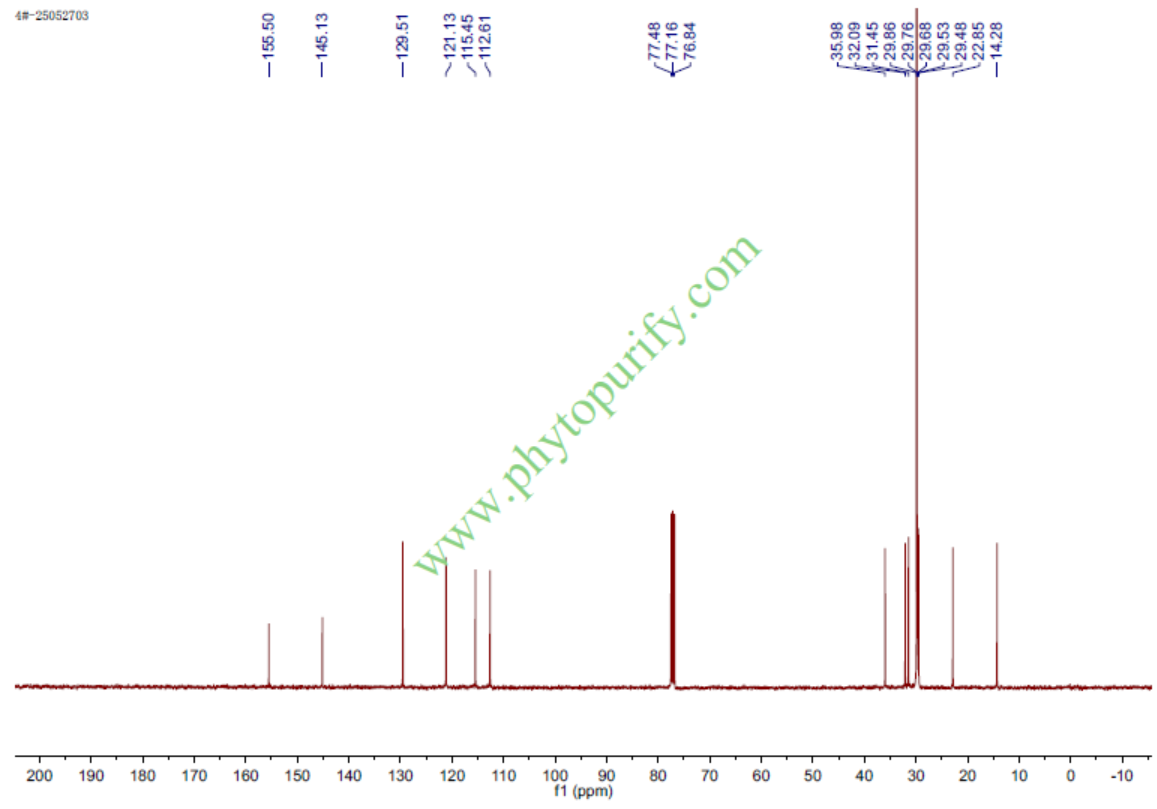
NMR of Cardanol C17:0
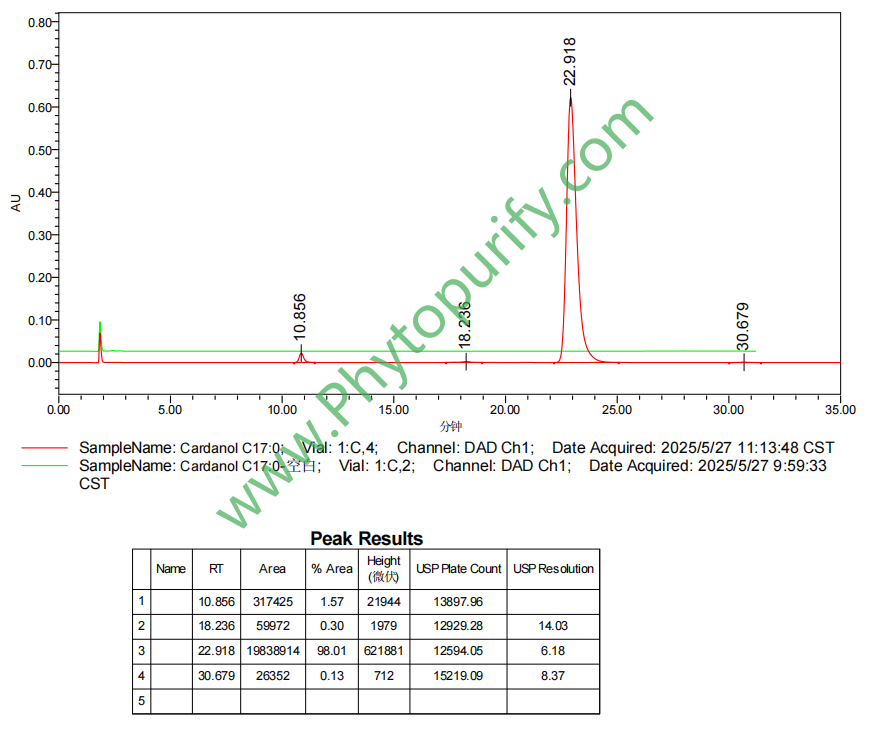
HPLC of Cardanol C17:0
Storage conditions:Short-term storage at 2~8℃, long-term storage at -20 ~ -80℃
20.2300
8.0000
8.0000
No
Yes
Unknown
No
Unknown
No
Unknown
Natural products have always been an important source of drug discovery and development, and their diverse chemical structures and unique biological activities provide a rich library of lead compounds for modern pharmacological research. Among numerous natural products, Cardanol, as the main phenolic component of Cashew Nut Shell Liquid (CNSL), has received increasing attention in recent years due to its unique chemical structure and extensive biological activity. Cardanol is a general term for a class of phenolic compounds with meta unsaturated long alkyl side chains. The carbon chain length and saturation of the side chains vary. Among them, Cardanol C17:0, which has a saturated 17 carbon alkyl side chain, is an important member of the Cardanol family.
Cashew nut phenol C17:0, chemical name 3-heptadecylphenol, CAS number 78636-94-9. The compound has a simple structure, consisting of a phenol ring connected to a fully saturated seventeen carbon straight chain alkane in the meta position. This unique amphiphilic structure of "polar head (phenolic hydroxyl group)+non-polar tail (long alkyl chain)" endows it with physicochemical properties and biological activity that are different from traditional phenolic compounds. Compared with other unsaturated side chain members in the cashew phenol family (such as C15:1, C15:3, etc.), the saturated side chain of C17:0 gives it higher chemical stability and lower oxidation sensitivity, laying a good foundation for its stabilizing effect in biological systems and subsequent drug development.
From the perspective of natural product pharmacology, cashew nut phenol C17:0 exhibits multiple pharmacological potentials. Previous studies have reported that it has various activities such as antibacterial, anti-inflammatory, antioxidant, anti-tumor, and enzyme inhibition. These activities are closely related to their ability to interact with biological membranes, regulate cellular signaling pathways, and directly act on specific protein targets. However, despite its broad spectrum of activity, systematic research on cashew phenol C17:0, particularly its in-depth molecular mechanism of action, in vivo pharmacokinetic behavior, and pharmacological evaluation, is still insufficient compared to its unsaturated homologs. This article aims to comprehensively review the chemical structure, plant sources, extraction methods, pharmacological activities, mechanisms of action, and medicinal properties of cashew phenol C17:0, in order to provide a systematic scientific basis for further research and development of this natural product.
The chemical structure of cashew nut phenol C17:0 is clear, and its IUPAC name is 3-heptadecylphenol. The molecular formula is C ₂∝ H ₄₀ O, and the molecular weight is 332.5600 g/mol. Its core structure consists of a benzene ring, with a fully saturated straight chain heptadecyl group (- C ₁₇ H ∝₅) connected to the 3rd position (meta position) of the benzene ring, and a phenolic hydroxyl group (- OH) connected to the 1st position. This structural feature distinguishes it from other components of cashew shell fluid, such as Anacardiac acid (with carboxyl groups in the ortho position) and Cardol (with two phenolic hydroxyl groups in the meta position).
In terms of physicochemical properties, cashew phenols C17:0 exhibit typical lipophilic characteristics. The calculated lipid water partition coefficient (LogP) is as high as 8.0000, indicating its strong lipophilicity and easy solubility in organic solvents such as ethanol, ether, chloroform, n-hexane, etc., while its solubility in water is extremely low. This high lipophilicity is due to the significant hydrophobic contribution of its long-chain saturated alkanes. Its polar surface area (TPSA) is only 20.2300 Å ², mainly due to the contribution of phenolic hydroxyl groups, which further confirms the non-polar dominance of its molecule. There is only one hydrogen bond acceptor (oxygen atom of phenolic hydroxyl group) in the molecule, and the hydrogen bond donor is also one (hydrogen atom of phenolic hydroxyl group). These physicochemical parameters determine the behavior of cashew phenol C17:0 in vivo, such as its tendency to bind to the lipid bilayer of cell membranes or to the hydrophobic pocket of serum proteins (such as albumin) with high affinity.
It is worth noting that the saturated side chain of cashew phenols C17:0 makes them chemically more stable than their unsaturated counterparts. Unsaturated cashew phenols (such as the C15 series containing one or more double bonds) are prone to auto oxidation, polymerization, and other reactions, while the saturated alkane chains of C17:0 are relatively inert, which may exhibit higher stability during storage, formulation processing, and in vivo metabolism. In addition, the presence of phenolic hydroxyl groups endows it with a certain acidity (pKa of about 10-11) and antioxidant capacity, making it suitable as a free radical scavenger or metal chelating agent. Its melting and boiling points are relatively high due to the presence of saturated long chains. Overall, the chemical structure of cashew phenol C17:0 determines its physicochemical properties of "strong lipophilicity, weak polarity, and high stability", which are the basis for evaluating its biological activity and medicinal properties.
Cashew phenol C17:0 is not a widely distributed compound in the plant kingdom, and its main source is cashew nuts from the Anacardiaceae family(Anacardium occidentale L. The fruit shell. Cashew nuts are an important tropical economic crop worldwide, with their kernels being a popular food and their shells being the main byproduct during processing. Waist fruit shell liquid (CNSL) is a dark brown viscous liquid obtained during the processing of waist fruit shells, accounting for about 20-30% of the weight of the shells. CNSL is a complex natural mixture, mainly composed of cashew acid (about 60-70%), catechol (about 10-20%), cashew phenols (about 5-10%), as well as small amounts of polymers and other phenolic substances.
Cashew phenols are products of the decarboxylation reaction of cashew acid at high temperatures (such as baking or steam treatment). Therefore, in cold pressed CNSL without heat treatment, the content of cashew phenols is extremely low, mainly in the form of alpha hydroxy acid. In the CNSL extracted by hot pressing or baking methods widely used in industry, most of the cashew acid has been converted into cashew phenols. Cashew phenols themselves are also a mixture, with the carbon chain length of their side chains mainly consisting of C15 (accounting for the vast majority, about 90% or more) and a small amount of C17, and the unsaturation of the side chains varies (from fully saturated to containing three double bonds). Therefore, the content of cashew phenols C17:0 in natural CNSL is relatively low, usually only accounting for a very small part of the total cashew phenols (for example, C15:0, C15:1, C15:2, C15:3 are the main components, and C17 series are secondary components).
For the extraction and purification of cashew phenols C17:0, multi-step separation techniques are usually required. Firstly, obtain crude CNSL from the shell of the cashew fruit. Subsequently, solvent extraction and alkaline treatment (such as sodium hydroxide solution) were used to separate the phenolic and non phenolic components in CNSL. Due to the close polarity between cashew phenol C17:0 and other cashew phenol homologues (especially C15 series), conventional column chromatography methods (such as silica gel column chromatography) are difficult to achieve efficient separation. More refined separation methods include:
Due to the low content of cashew phenol C17:0 in natural sources, its acquisition cost is relatively high. At present, in addition to separation from natural products, chemical synthesis is also a feasible way to obtain this compound, such as connecting long-chain alkanes to the meta position of phenol through Friedel Crafts alkylation reaction. However, the selectivity and yield of the synthetic route still need to be optimized as a challenge.
Although the content of cashew phenol C17:0 in natural cashew phenol mixtures is not high, pharmacological activity studies on its pure form have revealed multiple potential biological effects, which are closely related to its unique molecular structure.
1. Antibacterial activity
Cashew phenolic compounds generally exhibit broad-spectrum antibacterial activity. Research has shown that cashew nut phenol C17:0 is effective against various Gram positive bacteria, such as Staphylococcus aureus Staphylococcus aureus Bacillus subtilis Bacillus subtilis)And Gram negative bacteria (such as Escherichia coli)Escherichia coli Pseudomonas aeruginosa Pseudomonas aeruginosa)All showed a certain inhibitory effect. Its mechanism of action is believed to be related to the destruction of the integrity of bacterial cell membranes. The amphiphilic structure of cashew phenols C17:0 allows them to insert into the phospholipid bilayer of bacteria, increasing membrane permeability and leading to the leakage of important substances (such as potassium ions and ATP) from the cell, ultimately causing bacterial death. Compared with unsaturated cashew phenols, the saturated chain of C17:0 may endow it with stronger membrane insertion ability, but its antibacterial activity is usually weaker than homologues containing unsaturated bonds, which may be related to the fact that unsaturated bonds can more effectively disrupt membrane fluidity. In addition, cashew nut phenol C17:0 is effective against certain fungi, such as Candida albicans Candida albicans)It also shows inhibitory activity.
2. Anti inflammatory activity
Inflammation is a defense response of the body against injury or infection, but excessive or persistent inflammation can lead to various diseases. Cashew phenols C17:0 have shown anti-inflammatory potential in both in vitro and in vivo models. Research has found that it can inhibit the production of nitric oxide (NO) and prostaglandin E2 (PGE2) in macrophages stimulated by lipopolysaccharide (LPS), which are important inflammatory mediators. The mechanism may be related to the inhibition of the expression of inducible nitric oxide synthase (iNOS) and cyclooxygenase-2 (COX-2). In addition, cashew nut phenol C17:0 can also reduce the levels of pro-inflammatory cytokines such as tumor necrosis factor - α (TNF - α), interleukin-6 (IL-6), and interleukin-1 β (IL-1 β). This anti-inflammatory effect may be partially attributed to its antioxidant activity, but is more likely to involve direct regulation of intracellular signaling pathways such as NF - κ B and MAPK pathways.
3. Antioxidant activity
Phenolic compounds are well-known natural antioxidants. The phenolic hydroxyl group of cashew phenols C17:0 can serve as a hydrogen atom donor, effectively scavenging various free radicals such as DPPH free radicals, ABTS cationic free radicals, and hydroxyl free radicals. Its antioxidant activity is positively correlated with its concentration. Compared with catechol (containing two phenolic hydroxyl groups), the monophenolic structure of cashew phenols C17:0 makes their antioxidant capacity relatively weak, but still significantly better than many non phenolic compounds. Its long alkyl chain may help it locate in lipid environments such as cell membranes, thereby more effectively protecting membrane lipids from oxidative damage. This antioxidant activity may be one of the foundations for its various biological activities such as anti-inflammatory and anti-tumor effects.
4. Antitumor activity
In recent years, the anti-tumor potential of cashew nut phenol C17:0 has attracted the interest of researchers. Preliminary studies have shown that it has cytotoxicity to many cancer cell lines (such as human breast cancer cell line MCF-7, human liver cancer cell line HepG2, human colon cancer cell line HT-29, etc.) and can induce apoptosis. Its mechanism of action may involve multiple aspects: by disrupting mitochondrial membrane potential, releasing cytochrome c, activating caspase cascade reaction, thereby inducing endogenous apoptosis; By inhibiting the NF - κ B signaling pathway, downregulating the expression of anti apoptotic proteins (such as Bcl-2) and upregulating the expression of pro apoptotic proteins (such as Bax); In addition, it is possible to block cells in the G0/G1 or G2/M phase by interfering with the cell cycle progression. It is worth noting that its toxicity to normal cells is usually lower than that to cancer cells, demonstrating a certain degree of selectivity, which provides the possibility for it to serve as an anti-tumor lead compound.
5. Enzyme inhibitory activity
Cashew phenols C17:0 have also been found to have inhibitory activity against certain disease-related enzymes. For example, it can inhibit acetylcholinesterase (AChE) and butyrylcholinesterase (BuChE), which are important targets for the treatment of Alzheimer's disease. Its inhibitory activity may stem from the formation of hydrogen bonds or hydrophobic interactions between its phenolic hydroxyl group and key amino acid residues at the enzyme active site, such as serine and histidine. In addition, it has been reported to have inhibitory effects on tyrosinase (associated with melanin production), lipase (associated with obesity), and certain bacterial beta lactases (associated with antibiotic resistance).
The pharmacological activity of cashew phenols C17:0 is not derived from a single mechanism, but is achieved through a complex network of multiple targets and pathways. Understanding its molecular level mechanism of action is crucial for developing it into a drug lead compound.
1. Membrane interactions and physicochemical mechanisms
One of the core mechanisms of action of cashew nut phenol C17:0 is its interaction with biofilms. Its amphiphilic structure allows it to spontaneously insert into the lipid bilayer of the cell membrane. The saturated heptadecyl chain interacts with the hydrophobic tail of membrane phospholipids through van der Waals forces, while the phenolic hydroxyl group may be located at the water lipid interface of the membrane, forming hydrogen bonds with the polar head of phospholipids or water molecules. This insertion behavior can alter the physical properties of the membrane, such as increasing its fluidity, reducing its orderliness, changing its curvature, and even forming transmembrane pores. For bacteria, this membrane disturbance is a direct bactericidal mechanism. For eukaryotic cells, changes in membrane properties can affect the function of membrane proteins such as receptors, ion channels, and transporters, triggering downstream signaling cascades. For example, an increase in membrane fluidity may activate certain pressure response pathways or affect the formation and function of lipid rafts, which play a critical role in cellular signal transduction.
2. Signal pathway regulation
Cashew nut phenol C17:0 can regulate multiple important intracellular signaling pathways, which explains its various activities such as anti-inflammatory and anti-tumor effects.
3. Direct molecular targets
In addition to indirect regulation of signaling pathways, cashew nut phenol C17:0 may also directly bind to certain protein targets.
The conversion of natural products into clinical drugs must undergo strict pharmacological evaluation. Based on the provided pharmacological parameters, we can conduct a preliminary analysis of cashew phenol C17:0.
1. Analysis of drug properties
- molecular weight:332.56 Da, Meets the requirement of Lipinski's "Five Rules" for molecular weight<500.
- LogP 8.00, much higher than the threshold of LogP<5 in Lipinski's rule. The extremely high lipophilicity is the biggest challenge faced by the medicinal properties of cashew phenols C17:0. High LogP typically indicates poor water solubility, which may lead to incomplete oral absorption, low bioavailability, high binding to plasma proteins, and potential in vivo accumulation and toxicity issues.
- Hydrogen bond donor/acceptor One hydrogen bond donor (phenolic hydroxyl group) and one hydrogen bond acceptor, both comply with the "five rules" (donor<5, acceptor<10).
- TPSA: 20.23 Å ², far below the threshold of 140 Å ², indicating good membrane permeability.
Overall, cashew phenols C17:0 meet the requirements for drug like properties in terms of molecular weight and hydrogen bonding, but their extremely high lipophilicity (LogP 8.0) is a significant drawback. This suggests that it may not be an ideal candidate molecule for oral medication, but may be suitable for development as a topical formulation (such as skin medication) or for administration through non oral routes (such as injection, but with solubility issues to be addressed).
2. Toxicity prediction
- Blood-brain barrier (BBB)The predicted result is' No ', indicating that it is not easily able to cross the blood-brain barrier. This to some extent reduces the risk of central nervous system toxicity, but also limits its potential application in brain diseases such as Alzheimer's disease.
- Hepatotoxicity The predicted result is' No ', which is a positive signal.
- cardiotoxicity The predicted result is' No '.
- HERG inhibition The predicted result is' No ', indicating a low risk of causing QT interval prolongation in the heart.
- Ames test The result is' Unknown ', which means the mutagenicity is unknown, and this is a safety indicator that needs to be evaluated with emphasis.
These toxicity predictions are relatively optimistic, but it must be emphasized that they are computer predictions and the true situation needs to be verified through rigorous in vitro and in vivo toxicology experiments.
3. Pharmacokinetic challenges
The pharmacokinetic studies of cashew phenols C17:0 are currently very limited. Based on its physicochemical properties, its pharmacokinetic characteristics can be inferred as follows:
- absorb Oral absorption may be poor and irregular, mainly limited by its extremely low water solubility. It may be absorbed more through the lymphatic system. Topical application may have good transdermal absorption ability.
- distribution Due to its high lipophilicity, once it enters the bloodstream, it will be widely distributed in tissues, especially adipose tissue, liver, and lungs. Its apparent distribution volume (Vd) may be large. The binding rate with plasma proteins (especially albumin and lipoprotein) is expected to be very high (>99%).
- Metabolism The main metabolic pathways may include: ① glucuronidation and sulfation of phenolic hydroxyl groups, which are the classic phase II metabolic pathways of phenolic compounds; ② The oxidation of long alkyl chains by ω - and β - may ultimately form derivatives of phenylacetic acid or benzoic acid; ③ A small amount of I-phase oxidation reaction (such as hydroxylation) may also occur. The liver and intestines are the main metabolic organs.
- excretion Due to its high molecular weight and lipophilicity, the amount of its prototype drug excreted through the kidneys will be very small. Metabolites are mainly excreted into the intestine through bile, some may be excreted through feces, and some may undergo enterohepatic circulation.
4. Optimization strategy for drug properties
Regarding the main obstacles to the pharmacological development of cashew phenols C17:0 (high LogP, low water solubility), future optimization strategies could include:
- Prodrug design Modify phenolic hydroxyl groups into phosphate esters, amino acid esters, or glycosides to improve water solubility, and release the active ingredient through enzymatic interpretation in vivo.
- Formulation technology Modern formulation technologies such as liposomes, nanoemulsions, solid dispersions, and cyclodextrin inclusion complexes are used to improve their solubility and oral bioavailability.
- Structural modification Moderate modification of long alkyl chains, such as introducing polar groups (such as hydroxyl, carboxyl, amino) or shortening chain length, while maintaining core pharmacophores (phenolic hydroxyl and meta substitution), to reduce LogP while maintaining or optimizing activity. This requires in-depth structure-activity relationship (SAR) research.
Cashew nut phenol C17:0, as a natural phenolic compound derived from renewable resources, has a unique chemical structure and diverse pharmacological activities that indicate broad application prospects, although its development path still faces many challenges.
1. Antibacterial and anti infective fields
Given its membrane disruption mechanism and broad-spectrum antibacterial activity, cashew phenol C17:0 and its derivatives are expected to be developed as novel antibacterial agents. Especially in the context of increasingly severe antibiotic resistance, it is crucial to develop antibiotics with novel mechanisms of action. Cashew nut phenol C17:0 is not easy to induce bacterial resistance (because it acts on the basic structure of the cell membrane), making it a highly promising candidate molecule. Its application directions may include: ① local antibacterial ointment or cream, used for treating skin and soft tissue infections; ② Oral care products (such as mouthwash, toothpaste) used to inhibit oral pathogenic bacteria; ③ Antibacterial additives for medical devices or surface coatings. However, its potential toxicity to human cells needs to be carefully evaluated to ensure a therapeutic window.
2. Anti inflammatory and immune regulatory fields
Its anti-inflammatory activity makes it potential for treating chronic inflammatory diseases such as arthritis, inflammatory bowel disease, and dermatitis. By inhibiting key inflammatory pathways such as NF - κ B, cashew phenols C17:0 or their analogues may be developed as novel anti-inflammatory drugs, particularly as alternative or complementary therapies to nonsteroidal anti-inflammatory drugs (NSAIDs) or glucocorticoids. Its antioxidant activity may also be beneficial to oxidative stress related inflammatory diseases (such as atherosclerosis). However, to address the issue of low oral bioavailability, local administration or targeted delivery systems may be more feasible strategies.
3. Anti tumor field
The toxicity of cashew nut phenol C17:0 to various cancer cells and its ability to induce apoptosis make it a leading anti-tumor compound. The future research focus should be on: ① systematically evaluating its activity spectrum for different tumor types; ② Conduct in-depth research on its synergistic effect with existing chemotherapy drugs in order to reduce chemotherapy dosage and side effects; ③ Explore its potential as a tumor multidrug resistance reversal agent; ④ By modifying its structure, it can improve its selectivity towards tumor cells and reduce its toxicity to normal tissues. Due to its difficulty in crossing the blood-brain barrier, its application in the treatment of brain tumors may be limited.
4. Neuroprotection and Metabolic Diseases
Its inhibitory activity on AChE and BuChE provides a new approach for the treatment of Alzheimer's disease. However, its inability to pass through the blood-brain barrier is the main obstacle. Future research could explore developing it into prodrugs or utilizing nano delivery systems (such as liposomes targeting the brain) to achieve brain delivery. In addition, its inhibitory activity on lipase and tyrosinase also suggests its potential application in the treatment of obesity and pigmentary diseases such as melasma.
5. Agricultural and Industrial Applications
In addition to the pharmaceutical field, cashew nut phenol C17:0 can be used as a natural insecticide or fungicide in agriculture, and as a monomer or additive for polymer materials (such as plasticizers, antioxidants, surfactants) in industry. These non-medical applications have relatively low requirements for purity and toxicity, and may achieve industrialization faster.
prospect
Future research on cashew phenols C17:0 should focus on the following aspects:
1. In depth structure-activity relationship (SAR) research Systematically study the effects of changes in side chain length, saturation, and substituents on the benzene ring on activity and toxicity, providing guidance for rational drug design.
2. Comprehensive pharmacokinetic and toxicological evaluation Conduct in vivo experiments to clarify its absorption, distribution, metabolism, excretion (ADME) characteristics and long-term toxicity, especially genetic toxicity (Ames test) and reproductive toxicity.
3. Refined analysis of the mechanism of action Using chemical biology methods such as affinity chromatography and cell thermal transition analysis (CETSA) to identify the protein targets it directly acts on and elucidate the molecular network of its multi-target effects.
4. Development of drug delivery system Develop efficient and safe delivery systems, such as targeted formulations based on nanotechnology, to address the bottleneck of poor water solubility.
5. Green Synthesis and Biotechnology Develop efficient and environmentally friendly chemical or biological synthesis methods to address the issue of limited natural sources.
Cashew nut phenol C17:0, as a trace saturated phenolic component in cashew shell liquid, exhibits a series of remarkable pharmacological activities from antibacterial, anti-inflammatory, antioxidant to anti-tumor, thanks to its unique "phenol head alkyl tail" amphiphilic structure. Its mechanism of action involves direct membrane disturbance, regulation of multiple key signaling pathways such as NF - κ B and MAPK, as well as direct inhibition of various disease-related enzymes, reflecting the multi-target and multi pathway characteristics of natural products.
However, from the perspective of drug development, cashew nut phenol C17:0 faces significant pharmaceutical challenges, with the core issue being its extremely high lipophilicity (LogP 8.0) resulting in poor water solubility, which severely limits its oral bioavailability and in vivo pharmacokinetic behavior. Although the risk of hepatotoxicity and cardiotoxicity predicted by computers is relatively low, comprehensive toxicological evaluation, especially genetic toxicity, is still a gap that needs to be filled urgently.
In summary, cashew nut phenol C17:0 is a natural product lead compound with both potential and challenges. It provides us with a unique molecular framework for exploring novel antibacterial, anti-inflammatory, and anti-tumor drugs. Future research should not stop at discovering its activity, but should focus more on overcoming its pharmacological barriers through systematic structure-activity relationship studies, innovative formulation technologies, and reasonable structural modifications, truly transforming it from a "natural active molecule" into a "clinical candidate drug". The in-depth study of cashew phenols C17:0 is not only expected to bring new treatment options for human health, but also provide valuable experience and examples for mining and developing drugs from natural products.
