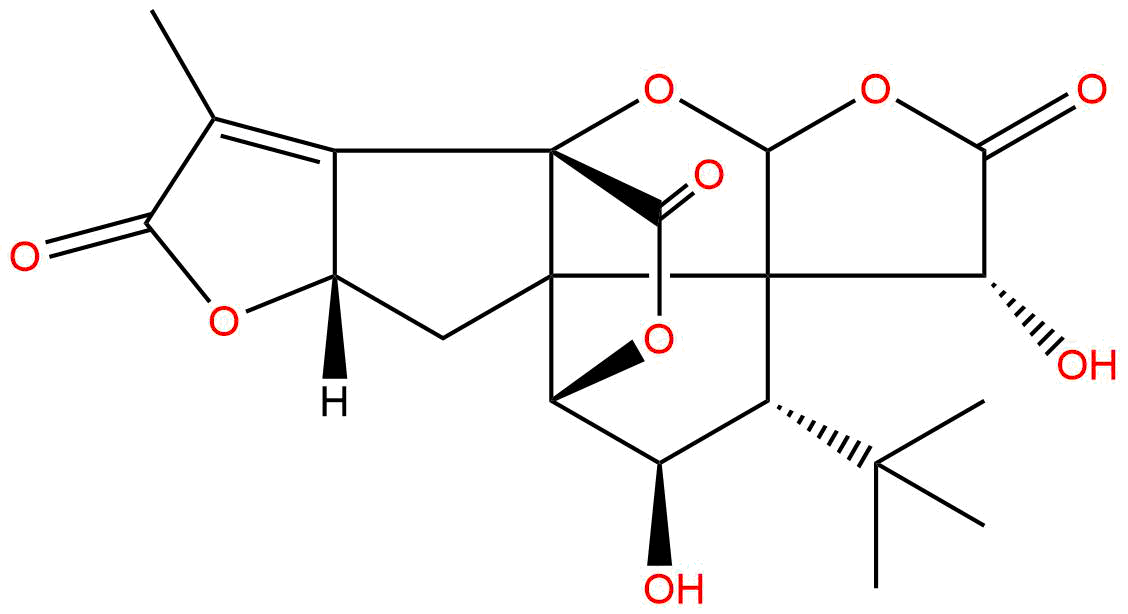


Name: Ginkgolide K
Synonym name:
Catalogue No.: BP4017
Cas No.: 153355-70-5
Formula: C20H22O9
Mol Weight: 406.39
Botanical Source: Ginkgo biloba (ginkgo)
Purity: 95%~99%
Analysis Method: HPLC-DAD or/and HPLC-ELSD
Identification Method: Mass, NMR
Packing: Brown vial or HDPE plastic bottle
Can be supplied from milligrams to grams.
For Reference Standard and R&D, Not for Human Use Directly.
Inquire for bulk scale.
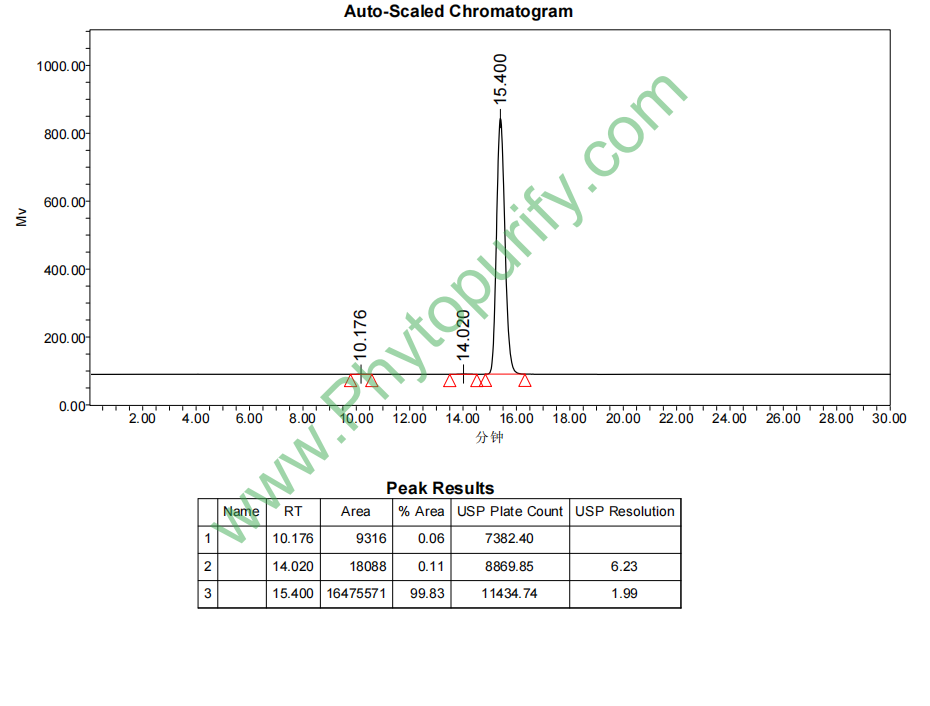
HPLC of Ginkgolide K
Storage conditions:Short-term storage at 2~8℃, long-term storage at -20 ~ -80℃
Ginkgolide K (CAS number 153355-70-5) is used as a Ginkgo biloba extract(Ginkgo biloba)One of the important active natural products, it has received widespread attention in recent years due to its significant neuroprotective effects and unique molecular mechanisms. Ginkgolide K belongs to the ginkgolide class of compounds, with a complex sesquiterpene lactone skeleton structure that can regulate multiple cellular signaling pathways, particularly demonstrating potential application value in the prevention and treatment of neurological diseases. In the pathological processes of neurodegenerative diseases such as Alzheimer's disease (AD), Parkinson's disease (PD), and ischemic brain injury, the pathological mechanisms of oxidative stress, neuroinflammation, and autophagy dysfunction are intertwined. Ginkgolide K induces protective autophagy by regulating the AMPK/mTOR/ULK1 signaling pathway, thereby exerting neuroprotective effects and becoming a hot topic in natural medicine research.
This article aims to systematically review the chemical structure and physicochemical properties, plant sources and extraction methods, pharmacological activity and mechanism of action, pharmacological evaluation and pharmacokinetic characteristics of ginkgolide K, as well as its clinical application prospects and future research directions, providing comprehensive reference materials for researchers in the field of natural product pharmacology.
Ginkgolide K is a sesquiterpene lactone compound with a molecular formula of C20H22O9 and a molecular weight of 406.3870. Its structural characteristics include a polycyclic lactone skeleton with multiple hydroxyl and lactone groups, endowing it with good biological activity and a certain degree of hydrophilicity. The LogP value is 0.9760, indicating that it has moderate lipid solubility and is conducive to cell membrane penetration. The topological polar surface area (TPSA) is 128.59 Å ², indicating its high polarity and favorable binding with biomolecules. The water solubility is 0.3276, which belongs to the category of moderately water-soluble compounds.
It is worth noting that ginkgolide K has a high blood-brain barrier penetration ability, which is particularly important for neurological drugs. The hERG channel inhibition experiment showed a negative result, indicating a low risk of cardiac toxicity. The Ames mutagenicity test score is 0.9, indicating a low risk of genotoxicity and meeting safety requirements.
The chemical structure of ginkgolide K is shown in the following figure (the structural diagram is omitted here), and its multi hydroxyl and lactone ring structures provide the basis for its biological activity, as well as the possibility for its synthesis and modification.
Ginkgolide K is mainly isolated from Ginkgo biloba leaves and seeds. Ginkgo biloba, as a "living fossil" plant, contains abundant ginkgolide compounds, especially represented by ginkgolides A, B, C, and ginkgolide K. Traditional extraction methods include solvent extraction, ultrasound assisted extraction, and supercritical fluid extraction.
The typical extraction process is as follows: first, dry ginkgo leaves are crushed, and ethanol or methanol is used as a solvent for extraction. The extraction solution is concentrated and purified by silica gel column chromatography, reverse phase high performance liquid chromatography (RP-HPLC) and other methods to obtain high-purity ginkgolide K. In recent years, the application of ultrasound assisted extraction and supercritical CO2 extraction technology has improved the extraction efficiency and purity, and is more environmentally friendly.
The content of ginkgolide K is greatly affected by the plant growth environment, harvesting season, and extraction process. Optimizing the extraction conditions is crucial for obtaining high-purity and highly active ginkgolide K.
The pharmacological activity of ginkgolide K is mainly concentrated in the field of neuroprotection, exhibiting a comprehensive effect of multiple targets and mechanisms.
Ginkgolide K can significantly reduce oxidative stress damage to nerve cells, inhibit neuroinflammatory responses, and promote neuronal survival. Both in vitro cell models and in vivo animal models have confirmed its protective effects against ischemic brain injury and neurodegenerative diseases. For example, in the ischemia-reperfusion injury model, ginkgolide K activates the AMPK signaling pathway, inhibits mTOR, induces ULK1 mediated autophagy, promotes the clearance and repair of damaged cells, and significantly improves neurological function.
Ginkgolide K can activate the nuclear factor erythroid 2-related factor 2 (NRF2) pathway, enhance the expression of intracellular antioxidant enzymes, reduce reactive oxygen species (ROS) levels, and alleviate oxidative damage. At the same time, it has an inhibitory effect on the expression of inflammatory mediators such as TNF - α, IL-1 β, etc., reducing neuroinflammation and protecting nerve tissue.
Ginkgolide K also improves neurotransmitter metabolism and promotes neural signal transduction by regulating acetylcholinesterase (ACHE) activity. In addition, it regulates apoptosis related proteins such as BCL2 and CASP3, inhibits neuronal apoptosis, and maintains the stability of neural networks.
Ginkgolide K can regulate the expression of Alzheimer's disease-related protein APP and its enzyme BACE1, reduce the deposition of β - amyloid protein (A β), and slow down neurodegenerative diseases. It also has a regulatory effect on microtubule associated protein tau (MAPT) and alpha synuclein (SNCA), which may intervene in the pathological process of diseases such as Parkinson's disease.
The neuroprotective effect of ginkgolide K involves multiple signaling pathways and molecular targets, reflecting its multi-target pharmacological properties.
Ginkgolide K activates 5 'AMP activated protein kinase (AMPK), inhibits mammalian rapamycin target protein complex 1 (mTORC1), promotes activation of autophagy related protein ULK1, and induces protective autophagy. Autophagy, as a key mechanism for clearing damaged proteins and organelles within cells, helps maintain neuronal homeostasis and alleviate ischemic and toxic damage.
Ginkgolide K activates the NRF2 signaling pathway, promotes the expression of antioxidant enzymes such as glutathione peroxidase (GPx) and superoxide dismutase (SOD), clears excess ROS, and protects nerve cells from oxidative damage.
Ginkgolide K inhibits neuroinflammatory responses by regulating nuclear factor kappa B (NF - κ B) and related inflammatory factors. At the same time, regulating BCL2 family proteins and CASP3 activity, blocking the apoptotic signaling pathway, and promoting neuronal survival.
Ginkgolide K downregulates the expression of β - amyloid precursor protein (APP) and β - secretase 1 (BACE1), reduces the production and deposition of A β, and slows down the pathological process of Alzheimer's disease. The regulation of tau protein (MAPT) and alpha synuclein (SNCA) helps to inhibit the formation of neurofibrillary tangles and Lewy bodies, reducing neuronal damage.
Ginkgolide K also affects signaling molecules such as SIRT1 and MAPK1, regulating cellular metabolism, inflammation, and stress response, further enhancing its neuroprotective effect.
Ginkgolide K has good medicinal properties. Its molecular weight is 406.3870, which conforms to Lipinski's rule. The LogP value of 0.9760 indicates that it has moderate lipid solubility and is conducive to cell membrane penetration. The TPSA is 128.59 Å ², which is slightly higher than the ideal range, but can still pass through the blood-brain barrier and meet the needs of neurological drugs.
Moderate water solubility (0.3276) is beneficial for the preparation and absorption of oral formulations. Pharmacokinetic studies in vivo have shown that ginkgolide K has a high blood-brain barrier permeability and can effectively enter the central nervous system to exert its effects. Its metabolic pathway mainly involves the liver enzyme system, and its metabolites have good safety.
In terms of safety, the hERG channel inhibition test was negative, indicating a low risk of cardiac toxicity. The Ames test score is 0.9, indicating a low risk of genotoxicity and meeting preclinical safety requirements.
However, the bioavailability and in vivo stability of ginkgolide K still need further optimization, and its pharmacokinetic performance can be improved in the future through drug carrier systems or structural modifications.
Ginkgolide K, as a natural product with multi-target neuroprotective effects, has broad clinical application prospects. Its potential therapeutic effects in neurodegenerative diseases, ischemic brain injury, and neuroinflammatory related diseases provide important clues for the development of new neuroprotective drugs.
At present, ginkgolide K is still in the stage of basic research and early pharmacological evaluation, and clinical research data is relatively lacking. In the future, it is necessary to strengthen its pharmacokinetic, toxicological, and clinical safety research, and promote the development of clinical trials. At the same time, combining modern drug delivery technologies such as nanocarriers and brain targeted drug delivery systems can enhance their in vivo stability and targeting.
In addition, the structural modification and derivative development of ginkgolide K are also important directions, which are expected to obtain more efficient and safer neuroprotective drugs. The application of multi omics technology and systems biology will help to deeply analyze its mechanism of action and expand the scope of indications.
Ginkgolide K, as a representative active ingredient in Ginkgo biloba leaves, has shown great potential for medicinal value due to its unique chemical structure and multi-target neuroprotective effects. By regulating the AMPK/mTOR/ULK1 signaling pathway to induce protective autophagy, activate antioxidant and anti-inflammatory mechanisms, ginkgolide K effectively alleviates nerve damage and has good prospects for development as a therapeutic drug for neurological diseases.
Although significant progress has been made in the research of ginkgolide K, its clinical application still faces challenges such as pharmacokinetic optimization, formulation development, and safety evaluation. In the future, combining modern drug development technology and interdisciplinary research, it is expected to promote the transition of ginkgolide K from the laboratory to clinical practice, benefiting patients with neurological disorders.
