


Product name: Bilobetin
Synonym name:
Catalogue No.: BP0275
Cas No.: 521-32-4
Formula: C31H20O10
Mol Weight: 552.491
Botanical Source: Ginkgo biloba L.
Physical Description:
Type of Compound: Flavonoids
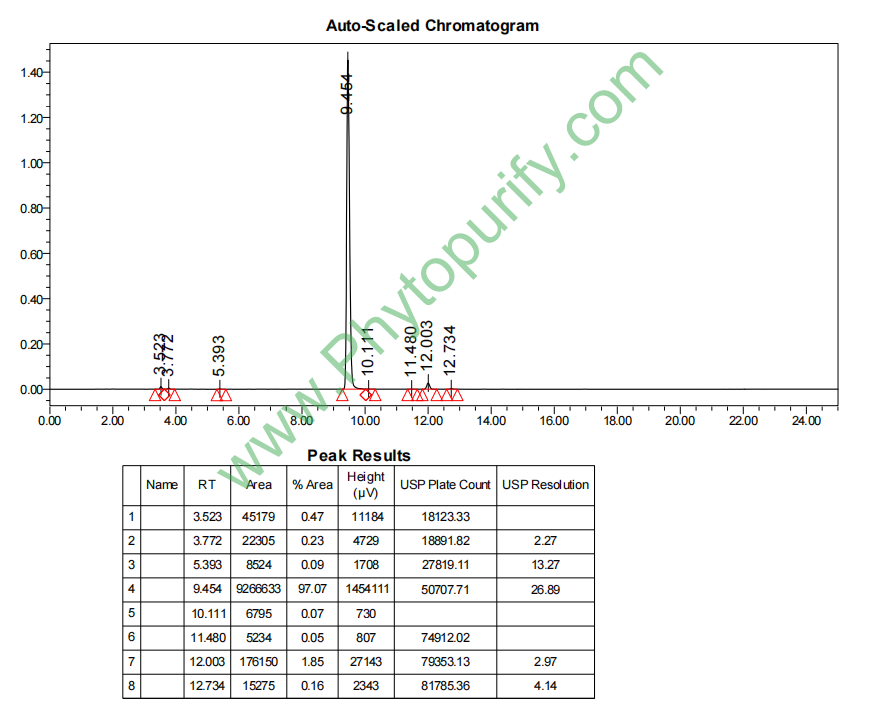
Purity: 95%~99%
Analysis Method: HPLC-DAD or/and HPLC-ELSD
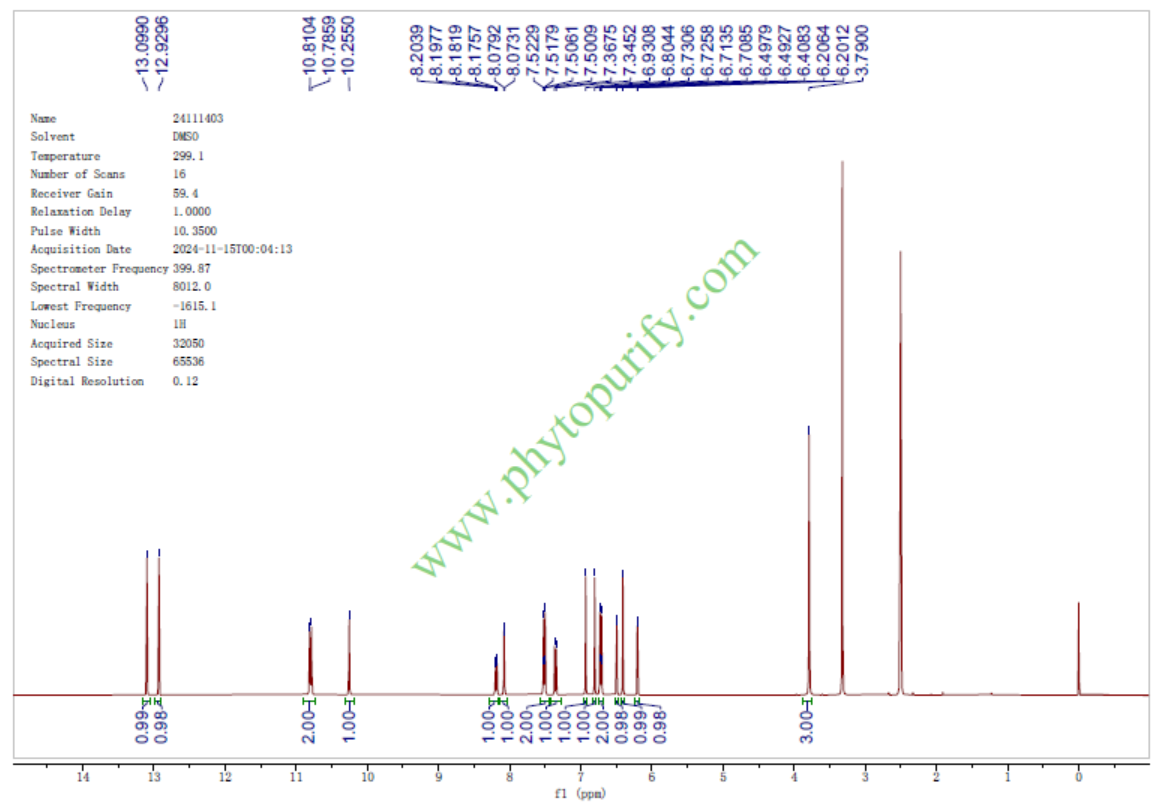
Identification Method: Mass, NMR
Packing: Brown vial or HDPE plastic bottle
Storage: Store in a well closed container, protected from air and light. Put into refrigerate or freeze for long term storage.
Whenever possible, you should prepare and use solutions on the same day. However, if you need to make up stock solutions in advance, we recommend that you store the solution as aliquots in tightly sealed vials at -20℃. Generally, these will be useable for up to two weeks.
The product could be supplied from milligrams to grams
Inquire for bulk scale.
Description:
Bilobetin treatment ameliorates hyperlipidaemia, lipotoxicity and insulin resistance in rats by stimulating PPARα-mediated lipid catabolism.
References:
Br J Pharmacol. 2012 Apr;165(8):2692-706.
Bilobetin ameliorates insulin resistance by PKA-mediated phosphorylation of PPARα in rats fed a high-fat diet.
The amelioration of insulin resistance by Bilobetin is closely related to its hypolipidaemic effect. The aim of the present study was to determine the insulin-sensitizing mechanism of Bilobetin by elucidating its effect on lipid metabolism.
METHODS AND RESULTS:
Rats fed a high-fat diet were treated with Bilobetin for either 4 or 14 days before applying a hyperinsulinaemic-euglycaemic clamp. Triglyceride and fatty acids labelled with radioactive isotopes were used to track the transportation and the fate of lipids in tissues. The activity of lipid metabolism-related enzymes and β-oxidation rate were measured. Western blot was used to investigate the phosphorylation, translocation and expression of PPARα in several tissues and cultured cells. The location of amino acid residues subjected to phosphorylation in PPARα was also studied.Bilobetin ameliorated insulin resistance, increased the hepatic uptake and oxidation of lipids, reduced very-low-density lipoprotein triglyceride secretion and blood triglyceride levels, enhanced the expression and activity of enzymes involved in β-oxidation and attenuated the accumulation of triglycerides and their metabolites in tissues. Bilobetin also increased the phosphorylation, nuclear translocation and activity of PPARα accompanied by elevated cAMP level and PKA activity. Threonine-129-alanine and/or serine-163-alanine mutations on the PPARα genes and PKA inhibitors prevented the effects of Bilobetin on PPARα. However, cells overexpressing PKA appeared to stimulate the phosphorylation, nuclear translocation and activity of PPARα.
CONCLUSIONS:
Bilobetin treatment ameliorates hyperlipidaemia, lipotoxicity and insulin resistance in rats by stimulating PPARα-mediated lipid catabolism. PKA activation is crucial for this process.
HPLC of Bilobetin
HNMR of Bilobetin
Storage conditions:Short-term storage at 2~8℃, long-term storage at -20 ~ -80℃
7-demethylated Ginkgo Bilobetin is an important flavonoid active ingredient in Ginkgo biloba leaves. Due to its unique biological activity and potential medicinal value, it has received widespread attention in the field of natural product pharmacology in recent years. Ginkgo biloba, as a traditional Chinese medicinal herb, has been widely studied for its various physiological regulatory effects, among which flavonoids are one of its main active ingredients. 7-demethyl ginkgo biloba biflavone not only has a significant role in lowering blood lipids, but also can improve insulin resistance, regulate lipid metabolism, showing potential therapeutic value for metabolic diseases, especially atherosclerosis. This article provides a systematic review of the chemical structure, plant origin, pharmacological activity, mechanism of action, pharmacological evaluation, and clinical application prospects of 7-demethylated ginkgo biloba flavonoids, aiming to provide theoretical basis and reference for the in-depth research and drug development of this natural product.
The chemical name of 7-demethylated Ginkgo Bilobetin is Bilobetin, with a CAS number of 521-32-4 and a molecular weight of 536.48. Its structure belongs to the class of flavonoids, with a typical flavonoid skeleton containing multiple hydroxyl and methoxy substituents. The molecule contains 10 hydrogen bond acceptors, greatly affecting its solubility and biological activity. Its LogP value is about 3.0, indicating that it has moderate lipophilicity, which is beneficial for cell membrane penetration but has low blood-brain barrier permeability. Its topological polar surface area (TPSA) is 189.75 Å ², and the higher polar surface area suggests that its absorption and distribution in vivo may be limited by the polar environment. 7-demethylated Ginkgo Biloba flavonoids showed no significant hepatotoxicity, cardiotoxicity, or hERG channel inhibition, and the Ames mutagenicity test was negative, demonstrating good safety characteristics.
7-demethylated ginkgo flavonoids are mainly present in Ginkgo biloba L. and are one of the important active ingredients in Ginkgo biloba extract (EGb 761). Ginkgo trees are plants of the Ginkgo genus in the Ginkgo family, widely distributed in China, Japan, and some parts of Europe. Its leaves contain abundant flavonoids and terpenoids, among which flavonoids account for a significant proportion.
The common methods for extracting 7-demethylated ginkgo flavonoids include solvent extraction, chromatographic separation, and crystallization purification. Generally, ethanol or methanol is used as the extraction solvent, and the extraction efficiency is improved by ultrasound assisted extraction or reflux extraction. Subsequently, high purity 7-demethylated ginkgo biloba flavonoids were obtained through separation and purification using techniques such as silica gel column chromatography and reverse phase high performance liquid chromatography (RP-HPLC). In recent years, the application of supercritical CO ₂ extraction and membrane separation technology has also provided new ways to improve extraction efficiency and purity.
The pharmacological activity of 7-demethylated Ginkgo Biloba flavonoids is mainly reflected in regulating lipid metabolism and improving insulin resistance. Numerous in vitro and in vivo experiments have shown that this compound can reduce plasma triglyceride and very low-density lipoprotein (VLDL) levels, promote liver lipid uptake and beta oxidation, reduce lipid accumulation in tissues, and improve metabolic disorders.
In animal models, 7-demethylated ginkgo biloba flavonoids significantly reduce triglyceride concentrations in the blood, improve insulin sensitivity, and alleviate insulin resistance by enhancing liver absorption and oxidation of lipids. Its regulatory effect on lipid metabolism enzymes includes enhancing the expression and activity of fatty acid β - oxidation related enzymes, inhibiting triglyceride synthesis and secretion, and reducing lipid toxicity to cells.
In addition, 7-demethyl ginkgo biloba biflavone has certain anti-inflammatory and antioxidant effects, can reduce atherosclerosis related inflammatory reaction and oxidative stress, protect vascular endothelial function, and delay the process of atherosclerosis. It shows good pharmacological potential in improving metabolic syndrome, non-alcoholic fatty liver disease (NAFLD) and diabetes related complications.
The mechanism of action of 7-demethylated Ginkgo Biloba flavonoids involves multiple signaling pathways and molecular targets, mainly through regulating lipid metabolism and insulin signaling to achieve its pharmacological effects.
Firstly, this compound can significantly promote the phosphorylation, nuclear translocation, and transcriptional activity of peroxisome proliferator activated receptor alpha (PPAR alpha). PPAR α, as a key regulatory factor in lipid metabolism, regulates the intake of fatty acids, β - oxidation, and triglyceride metabolism. 7-demethylated ginkgo biloba flavonoids activate PPAR α, enhance liver lipid metabolism, and reduce plasma lipid levels.
Secondly, 7-demethylated Ginkgo Biloba flavonoids enhance intracellular cAMP levels and protein kinase A (PKA) activity, further promoting the activation of PPAR α and forming a positive regulatory loop. In addition, the compound can activate AMPK (PRKAA1) as a sensor of energy metabolism, promoting fatty acid oxidation and glucose metabolism, and improving insulin resistance status.
In terms of atherosclerosis related targets, 7-demethylginkgo biflavone regulates the expression and function of several key proteins, including:
To sum up, 7-demethylginkgo biloba biflavone regulates lipid metabolism, inflammatory response and cell survival through multi target and multi pathway synergy, and exerts its potential to prevent and treat metabolic diseases and atherosclerosis.
7-demethylated Ginkgo Biloba flavonoids have good pharmacological parameters. Its molecular weight is 536.48, which conforms to the Lipinski rule and has a LogP of 3.0, indicating that it has moderate lipid solubility and is beneficial for oral absorption. A high TPSA (189.75 Å ²) may limit its ability to pass through the blood-brain barrier, consistent with its weaker role in the central nervous system.
In terms of safety, 7-demethylated ginkgo biloba flavonoids did not exhibit hepatotoxicity, cardiotoxicity, or hERG channel inhibition, and the Ames mutagenicity test was negative, indicating that they have good safety and low genetic toxicity risk.
Pharmacokinetic studies have shown that the oral absorption of this compound is relatively slow, and its bioavailability is limited by its polarity and molecular structure. Its metabolism is mainly carried out through the liver enzyme system, and the metabolites are mostly hydroxylation and conjugates. The distribution in the body is mainly concentrated in the liver and adipose tissue, which is consistent with their targets for regulating lipid metabolism.
In the future, optimizing its pharmacokinetic performance through structural modification and drug carrier technology is expected to enhance its clinical application value.
In view of the significant role of 7-demethylginkgo biflavone in regulating lipid metabolism, improving insulin resistance and anti atherosclerosis, it has broad clinical application prospects in metabolic syndrome, type 2 diabetes, non-alcoholic fatty liver disease, cardiovascular disease and other fields.
At present, although there is a large amount of in vitro and in vivo experimental data supporting its pharmacological activity, clinical research is still relatively lacking. In the future, preclinical safety evaluation and pharmacokinetic studies should be strengthened, and multi center, randomized controlled clinical trials should be conducted to verify its efficacy and safety.
In addition, by combining modern pharmaceutical formulation technologies such as nanocarriers and sustained-release formulations, it is expected to enhance their bioavailability and targeting, and improve therapeutic efficacy. By combining with other drugs, it can exert synergistic effects and expand its clinical indications.
Meanwhile, in-depth analysis of its molecular mechanism and multi-target action network can help discover new therapeutic targets and disease associations, providing new ideas for the development of natural product drugs.
7-demethylated ginkgo biloba biflavone, as an important biflavone active ingredient in ginkgo biloba leaves, shows good drug development potential by virtue of its multiple pharmacological effects of regulating lipid metabolism, improving insulin resistance and anti atherosclerosis. Its multi-target and multi pathway mechanism of action provides new strategies for the treatment of metabolic and cardiovascular diseases. In the future, through systematic pharmacological research, pharmacokinetic optimization, and clinical validation, it is expected that 7-demethylated ginkgo biloba flavonoids will be developed into safe and effective natural medicines, contributing to the prevention and treatment of related diseases.
