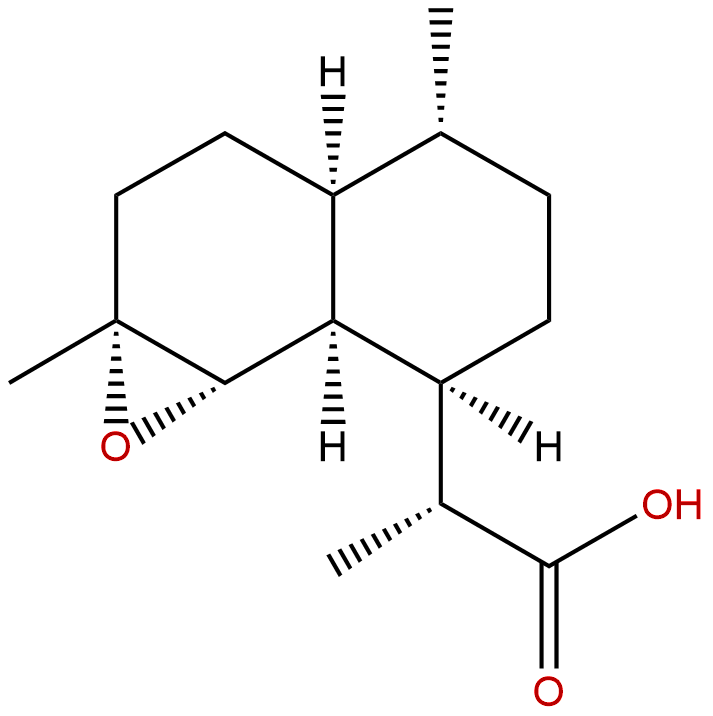
Product name: α-Epoxydihydroartemisinic acid
Synonym name:
Catalogue No.: SBP01470
Cas No.: 380487-65-0
Formula: C15H24O3
Mol Weight: 252.354
Botanical Source:
Physical Description: Powder
Type of Compound: Sesquiterpenoids
Purity: 95%~99%
Analysis Method: HPLC-DAD or/and HPLC-ELSD
Identification Method: Mass, NMR
Packing: Brown vial or HDPE plastic bottle
The product could be supplied from milligrams to grams. Inquire for bulk scale.
We provide solution to improve the water-solubility of compounds, thereby facilitating the variety of activity tests and clinic uses.
For Reference Standard and R&D, Not for Human Use Directly.
Storage conditions:Short-term storage at 2~8℃, long-term storage at -20 ~ -80℃
55.1800
2.5000
Unknown
Unknown
Unknown
Unknown
Unknown
Unknown
Unknown
Unknown
Natural products, as an important source of drug discovery, play an irreplaceable role in the long history of human fight against diseases. Especially in the field of anti malaria, it originates from the traditional Chinese medicine Artemisia annua(Artemisia annua L. The discovery of artemisinin and its derivatives not only saved millions of lives, but also marked a new era in antimalarial treatment. Artemisinin and its semi synthetic derivatives (such as artemether, artemether, etc.) are recommended by the World Health Organization as first-line antimalarial drugs due to their high efficiency, fast acting, and low toxicity. However, the biosynthetic pathway of artemisinin is complex, its content in plants is relatively low, and the chemical total synthesis cost is high and the steps are cumbersome, which greatly limits its large-scale production and application. Therefore, in-depth analysis of the in vivo biosynthetic pathway of artemisinin and exploration of the pharmacological activities of its key precursor compounds have important scientific significance and strategic value for optimizing production processes, discovering new active molecules, and expanding their application scope.
In this context, α - epoxydihydroartemisinic acid, as a key intermediate in the biosynthesis pathway of artemisinin, has gradually entered the field of researchers. This compound is an epoxy derivative of Dihydroartemisinic acid (DHAA), which is generated by the epoxidation reaction of DHAA catalyzed by cytochrome P450 monooxygenase (such as CYP71AV1) in Artemisia annua. Subsequently, epoxy dihydroartemisinin acid is converted into artemisinin through a series of non enzymatic or enzymatic cascade reactions. Therefore, epoxy dihydroartemisinin is not only a bridge connecting the precursor without peroxide bridge with artemisinin with peroxide bridge structure, but its unique chemical structure also suggests that it may have biological activity different from artemisinin.
Although the direct pharmacological activity research on epoxydihydroartemisinin acid is far less in-depth than that of artemisinin and its derivatives, its potential biological functions cannot be ignored as a "neighbor" in the artemisinin biosynthesis pathway. On the one hand, research on it helps to elucidate the precise regulatory mechanism of artemisinin biosynthesis, providing theoretical guidance for improving artemisinin production through synthetic biology or metabolic engineering methods. On the other hand, the epoxy and carboxylic acid groups contained in its molecular structure endow it with multiple sites for chemical modification, making it a valuable lead compound for developing novel semi synthetic derivatives. In addition, artemisinin compounds have been widely reported to have various pharmacological activities such as anti-tumor, anti-inflammatory, antiviral, and immune regulation in recent years. Whether epoxydihydroartemisinin acid also possesses these activities or has its unique activity spectrum is a scientific question worthy of further exploration.
This article aims to provide a systematic review of α - epoxydihydroartemisinic acid, covering its chemical structure and physicochemical properties, plant sources and extraction methods, existing pharmacological activity studies, potential mechanisms of action and molecular targets, pharmacological evaluation and pharmacokinetic characteristics, as well as its clinical application prospects, in order to provide comprehensive references for the subsequent research and development of this natural product.
Epoxydihydroartemisinic acid, also known as α - epoxydihydroartemisinic acid in English, has a CAS registration number of 380487-65-0. From a chemical structure perspective, it belongs to the sesquiterpene class of compounds, with a core skeleton consisting of 15 carbon atoms. It is an important intermediate containing epoxy groups in the artemisinin biosynthesis pathway.
The molecular formula of this compound is C ₁₅ H ₂₄ O3, and the calculated molecular weight is 252.3500 g/mol. Its structural features are: firstly, it retains the carbon ring skeleton of dihydroartemisinin acid, which is a six membered ring system containing isopropylidene side chains; Secondly, its most prominent structural feature is the presence of an alpha configured epoxy group (- O -) at positions C4-C5 (or C1-C2 according to numbering rules), which is a key structural unit connecting dihydroartemisinin and artemisinin; Finally, the molecule contains a carboxyl group (- COOH), which gives it a certain acidity. From the perspective of stereochemistry, this compound has multiple chiral centers, and its specific stereoconfiguration (especially the alpha configuration of the epoxy group) is crucial for subsequent chemical transformations and biological activity.
In terms of physicochemical properties, epoxy dihydroartemisinin acid exhibits typical lipophilic small molecule characteristics. Its lipid water partition coefficient (LogP) is 2.5000, indicating that its distribution in lipid soluble environments is better than in aqueous environments, which is consistent with its sesquiterpene skeleton structure. A higher LogP value indicates that the compound is easily able to penetrate biofilms, but may also have limitations in water solubility, affecting its formulation development and bioavailability. The Topological Polar Surface Area (TPSA) is 55.1800 Å ², which is mainly contributed by carboxyl and epoxy groups. TPSA is an important parameter for predicting drug oral absorption and blood-brain barrier penetration ability. It is generally believed that molecules with TPSA less than 140 Å ² have good oral absorption potential, while molecules with TPSA less than 60-70 Å ² may penetrate the blood-brain barrier. The TPSA value of epoxydihydroartemisinin acid is precisely near the critical value, suggesting that it may have some central nervous system permeability, but it also needs to be comprehensively judged in combination with other parameters. The number of hydrogen bond acceptors in its molecule is 3 (two oxygen atoms from the carboxyl group and one oxygen atom from the epoxy group), and the number of hydrogen bond donors is 1 (hydroxyl hydrogen from the carboxyl group). These parameters collectively determine the solubility, binding ability to target proteins, and pharmacokinetic behavior of the compound.
It is worth noting that epoxydihydroartemisic acid has certain reactivity in chemical properties. Epoxy groups are prone to ring opening and nucleophilic addition reactions under acidic or alkaline conditions, which is not only the chemical basis for their use as precursors for artemisinin synthesis, but also means that they may not be stable enough in physiological environments or during formulation storage. In addition, the presence of carboxyl groups allows them to form salts or esters, providing chemical modification sites for improving their physicochemical properties (such as increasing water solubility) or preparing prodrugs. Overall, epoxydihydroartemisinin acid is a natural product with a clear chemical structure, moderate lipophilicity, and reactive sites, which together determine its dual value as a drug lead compound and biosynthetic intermediate.
Epoxydihydroartemisic acid, as an endogenous intermediate in the artemisinin biosynthesis pathway, is mainly derived from Artemisia annua, a plant in the Asteraceae family(Artemisia annua L.), It is commonly referred to as Artemisia annua. This compound is not the main secondary metabolite in Artemisia annua, and its content is usually much lower than artemisinin and dihydroartemisinin. Its accumulation is significantly influenced by plant development stage, tissue location, environmental factors, and genetic background.
In plants, the biosynthesis of epoxydihydroartemisic acid begins with farnesyl pyrophosphate (FPP) and proceeds through steps such as Amorphadiene to produce dihydroartemisic acid. Subsequently, under the catalysis of cytochrome P450 enzymes (such as CYP71AV1) located in the cytoplasm or endoplasmic reticulum, dihydroartemisinin acid is epoxidized to form epoxydihydroartemisinin acid. This compound mainly exists in the glandular trichomes of Artemisia annua, which are the main sites for the synthesis and storage of artemisinin and its related terpenoids. Research has shown that the content of epoxydihydroartemisinin is relatively high in the leaves and buds of Artemisia annua plants, while it is extremely low in the stems and roots. In addition, its content reaches its peak during the flowering period of the plant, which is consistent with the accumulation pattern of artemisinin, further confirming its role as a direct precursor.
Due to the low content of epoxydihydroartemisinin in plants and its relatively active chemical properties (epoxy groups are prone to ring opening), its extraction and purification process presents certain challenges. Traditional extraction methods are usually combined with artemisinin extraction processes and optimized based on this. Common extraction processes include:
In addition to direct extraction from plants, with the development of synthetic biology, the use of genetically engineered microorganisms such as brewing yeast or Escherichia coli to produce epoxydihydroartemisinin has become a highly promising alternative solution. Heterologous synthesis of the compound can be achieved by introducing the complete biosynthetic gene cluster from Artemisia annua, including FPP synthase, sophoride synthase, CYP71AV1, and its reducing partner CPR, into a microbial host. This method is not only expected to break free from dependence on plant resources, but also to significantly increase yield by optimizing fermentation processes, providing a stable source of raw materials for subsequent pharmacological research and applications.
Compared to the extensive research on its downstream product artemisinin, there are relatively few reports on the direct pharmacological activity of α - epoxydihydroartemisinic acid. However, existing studies have revealed some noteworthy biological effects, especially in the fields of anti malaria, anti tumor, and anti-inflammatory.
1. Anti malaria activity
As a direct precursor of artemisinin, the core question is whether epoxydihydroartemisinin itself has antimalarial activity. Early studies generally believed that the unique peroxide bridge (1,2,4-trioxyhexane) in artemisinin molecules was an essential pharmacophore for its anti malarial activity. Epoxy dihydroartemisinin does not contain peroxide bridges, so theoretically its direct anti malarial activity should be much weaker than artemisinin. However, studies have shown that under specific in vitro or in vivo conditions, epoxydihydroartemisinin may undergo metabolic transformation or rearrangement in the presence of iron ions to generate active intermediates with peroxide bridge structures, thereby exhibiting certain antimalarial effects. But this activity is usually considered indirect or weak. Therefore, the current mainstream view still regards it as a precursor molecule with no anti malarial activity or extremely weak activity, and its value is more reflected in biosynthesis and chemical transformation.
2. Antitumor activity
In recent years, the anti-tumor activity of artemisinin and its derivatives has become a research hotspot, and its mechanism of action involves inducing iron dependent reactive oxygen species (ROS) production, inhibiting tumor angiogenesis, inducing cell cycle arrest and apoptosis, etc. Inspired by this, researchers began to explore the anti-tumor potential of epoxydihydroartemisinin acid. Preliminary cell experiments showed that epoxidized dihydroartemisinic acid may have a certain inhibitory effect on the proliferation of some tumor cell lines (such as leukemia cells, liver cancer cells, breast cancer cells, etc.). Its activity is usually weaker than artemether or dihydroartemisinin, but better than dihydroartemisinin. This activity may be related to the epoxy groups in its molecules. Epoxy groups are electrophilic centers that can easily react with nucleophilic groups (such as thiol and amino groups) in biomolecules (such as proteins and DNA), potentially interfering with cellular signaling pathways or inducing oxidative stress. In addition, epoxydihydroartemisic acid may be metabolically activated in cells, or it itself can exert cytotoxicity through mechanisms different from peroxide bridges, such as affecting mitochondrial function. However, current research on its anti-tumor activity is still in a very early stage, lacking systematic in vivo pharmacological evaluation and in-depth mechanism exploration.
3. Anti inflammatory and immune regulatory activity
Inflammatory response is a common pathological basis for many diseases, including malaria, cancer, and autoimmune diseases. Artemisinin compounds have been proven to have significant anti-inflammatory activity, which can inhibit key inflammatory signaling pathways such as NF - κ B and MAPK, thereby reducing the release of pro-inflammatory factors such as TNF - α, IL-6, and IL-1 β. Epoxy dihydroartemisinin acid, as a structural analogue, is also speculated to have similar anti-inflammatory effects. Preliminary studies have found that it may reduce the production of inflammatory mediators such as nitric oxide (NO) and prostaglandin E2 (PGE2) by inhibiting the expression of nitric oxide synthase (iNOS) and cyclooxygenase-2 (COX-2). In addition, its regulatory effects on immune cells, such as affecting macrophage polarization and T cell activation, are also directions worth exploring in the future. These potential anti-inflammatory activities may make them promising for the treatment of chronic inflammatory diseases such as arthritis and colitis, or as immunomodulatory adjuncts.
4. Other activities
In addition to the aforementioned fields, epoxy dihydroartemisinin may also have other pharmacological activities. For example, since artemisinin and its derivatives have been reported to have antiviral (such as anti cytomegalovirus, hepatitis B virus) and antiparasitic (such as anti schistosomiasis, Toxoplasma gondii) effects, the activity of epoxidized dihydroartemisinin in these fields is also worth preliminary screening. In addition, as a metabolic intermediate in plants, it may also participate in plant defense responses and have antifungal or antibacterial activity, but these speculations lack experimental evidence to support them.
Overall, the pharmacological activity research of epoxydihydroartemisinin acid is still in its infancy and far from forming a systematic understanding. The existing scattered evidence suggests that it may have anti-tumor and anti-inflammatory potential, but the strength of its activity and mechanism of action are still unclear. In the future, there is a need for more rigorous and systematic pharmacological research, especially in vivo pharmacological experiments, to clarify its medicinal value.
Due to insufficient research on the pharmacological activity of epoxydihydroartemisic acid, its exact mechanism of action and molecular targets are still a mystery to be solved. However, based on its chemical structural characteristics (epoxy groups, carboxyl groups, sesquiterpene skeleton) and structural similarity with artemisinin compounds, we can make reasonable speculations and analyses on its possible mechanism of action.
1. Electrophilic reaction mechanism based on epoxy groups
The most reactive part of epoxy dihydroartemisic acid molecules is the alpha epoxy group. Epoxy group is a highly tense ternary cyclic ether with electrophilicity, which is easily attacked by nucleophilic reagents in living organisms and undergoes ring opening reactions. These nucleophilic reagents include thiol groups (- SH) on protein cysteine residues, amino groups (- NH ₂) on lysine residues, imidazole groups on histidine residues, as well as glutathione (GSH) and amino groups on DNA bases. Therefore, epoxy dihydroartemisinin may exert biological effects by covalently modifying target proteins, altering their structure and function. This mechanism is similar to the anti-cancer or anti-inflammatory effects of some natural products, such as certain epoxyterpenes and epoxyquinones. For example, it may block tumor cell proliferation signals or inflammatory pathways by covalently binding and inhibiting certain key kinases, transcription factors, or metabolic enzymes. Identifying these covalently modified target proteins is key to elucidating their mechanisms of action.
2. Interaction with iron ions and oxidative stress
The core mechanism of artemisinin's anti malaria and anti-tumor effects relies on its peroxide bridge reacting with ferrous ions (Fe ² ⁺) to produce highly active carbon free radicals, which then alkylate key proteins in malaria parasites or tumor cells. Although epoxy dihydroartemisinin acid does not contain peroxide bridges, its epoxy groups may also interact with metal ions under specific conditions. More importantly, some studies speculate that in iron rich microenvironments such as the digestive vesicles of malaria parasites and tumor cells, epoxydihydroartemisinin may undergo rearrangement or degradation, generating active intermediates with carbonyl or peroxide structures. In addition, the ring opening process of epoxy groups may also consume intracellular reducing substances (such as GSH), disrupt the redox balance of cells, and lead to an increase in reactive oxygen species (ROS) levels, thereby inducing cell apoptosis. Therefore, inducing oxidative stress may be another potential mechanism for its cytotoxic effects.
3. Regulation of specific signaling pathways
Although lacking direct target evidence, based on its preliminary anti-inflammatory and anti-tumor activities, it can be inferred that epoxydihydroartemisinin may affect the following key signaling pathways:
- NF - κ B pathway NF - κ B is a core transcription factor in inflammation and tumorigenesis. Artemisinin compounds have been shown to inhibit the activity of I κ B kinase (IKK), thereby preventing nuclear translocation of NF - κ B and transcription of downstream target genes such as TNF - α, IL-6, COX-2. Epoxy dihydroartemisinin may exert its effects through a similar mechanism.
- MAPK pathway The mitogen activated protein kinase (MAPK) pathway (including ERK, JNK, p38) plays a critical role in cell proliferation, differentiation, and apoptosis. This compound may affect cell fate by regulating the phosphorylation levels of these kinases.
- PI3K/Akt/mTOR pathway This pathway is the central regulator of cell growth and metabolism. Inhibiting this pathway is the mechanism of action of many anticancer drugs. It is worth exploring whether epoxy dihydroartemisinin can target this pathway.
- Nrf2/ARE pathway As the main regulator of cellular antioxidant defense, the Nrf2 pathway is crucial in responding to oxidative stress. Epoxydihydroartemisinin, as an electrophilic molecule, may activate Nrf2, thereby inducing the expression of a series of detoxifying enzymes and antioxidant enzymes, which may be an adaptive response of cells to its toxicity.
4. Potential molecular targets
At present, there is no clear literature reporting the direct binding target of epoxy dihydroartemisinin acid. A strategy based on chemical proteomics, such as activity-based proteomics analysis (ABPP), will be an effective means of discovering its targets. By using epoxy dihydroartemisic acid probes with tags such as alkynyl groups, covalently bound proteins can be "caught" in living cells and identified by mass spectrometry. Potential targets may include:
- Proteins containing active cysteine Such as certain cysteine proteases (Caspases, Cathepsin), deubiquitinases (DUBs), protein tyrosine phosphatases (PTPs), etc.
- Proteins involved in redox regulation Such as thioredoxin (Trx), glutaredoxin (Grx), peroxiredoxin (Prx), etc.
- metabolic enzyme Such as certain cytochrome P450 enzymes, glutathione S-transferases (GSTs), etc.
In summary, the mechanism of action of epoxy dihydroartemisinin acid is likely to be a multi-target and multi pathway process, with the electrophilic reactivity of the epoxy group being the core driving factor. The future research focus should be on: 1) identifying its direct target using chemical and biological methods; 2) Systematically study its impact on key signaling pathways, particularly NF - κ B and oxidative stress pathways; 3) Clarify whether it undergoes metabolic activation in the body and the activity of the activated products.
The evaluation of drug properties is a crucial step in determining whether natural products can be transported from the laboratory to clinical applications. For epoxydihydroartemisinin acid, there is currently almost no research on its pharmacokinetics (ADME, i.e. absorption, distribution, metabolism, excretion) and toxicology, and all evaluations are mainly based on predictions of its physicochemical properties and structural characteristics.
1. Physical and chemical properties and drug like properties
According to Lipinski's "Rule of Five", an orally active drug should typically meet the following criteria: molecular weight<500, LogP<5, The number of hydrogen bond donors is less than 5, and the number of hydrogen bond acceptors is less than 10. The molecular weight (252.35), LogP (2.5), number of hydrogen bond donors (1), and number of acceptors (3) of epoxydihydroartemisinin fully meet the requirements of the "Five Rules", indicating its basic potential as an oral drug. Its TPSA value is 55.18 Å ², which is also within the ideal range. Therefore, from the perspective of physical and chemical properties, epoxy dihydroartemisinin acid is a molecule with good drug like properties.
2. Absorption and distribution
Its moderate lipophilicity (LogP=2.5) facilitates its penetration of intestinal epithelial cells through passive diffusion, indicating that its oral absorption may be better. However, its molecules contain carboxyl groups, which may exist in a non ionized form in the acidic environment of the gastrointestinal tract, facilitating absorption; But in the alkaline environment of the intestine, it will ionize, which may reduce absorption efficiency. In addition, carboxyl groups are also potential substrates for efflux transporters such as P-glycoprotein (P-gp), which may affect their absorption and brain distribution. Its TPSA value is close to the threshold of blood-brain barrier penetration, indicating that it may have a certain ability to distribute in the central nervous system, but this requires experimental verification. The plasma protein binding rate is an important factor affecting distribution volume and drug efficacy, and it is expected to have a high degree of binding with plasma albumin.
3. Metabolism and excretion
Metabolism is one of the key challenges in the drug formation of epoxydihydroartemisinin. The epoxy and carboxyl groups in its molecule are the main metabolic sites.
- Metabolism of epoxy groups Epoxy groups are highly susceptible to hydrolysis by epoxide hydrolase (EH) in vivo, producing corresponding diol metabolites that lose their electrophilic reactivity. In addition, the epoxy group may also be catalyzed by glutathione S-transferase (GST) to bind with glutathione, forming a more water-soluble thioether uric acid complex that accelerates excretion. This rapid metabolic inactivation may be an important reason for its low activity in the body.
- Carboxyl metabolism Carboxyl groups can undergo glucuronic acid or sulfuric acid binding reactions (phase II metabolism), generating more polar complexes that are excreted from the body through urine or bile.
- oxidative metabolism Other sites on its sesquiterpene skeleton may also be oxidized by cytochrome P450 enzymes (such as CYP3A4).
Therefore, epoxydihydroartemisic acid is likely to have a high first pass effect and a short half-life, resulting in low oral bioavailability. Its main excretion pathways may be urine and bile.
4. Toxicity prediction
According to the provided parameters, the hepatotoxicity, cardiotoxicity (such as hERG inhibition), and Ames test (predicting mutagenicity) of epoxydihydroartemisinin acid are all "unknown", indicating a lack of experimental data. Structurally, it can be inferred that:
- Hepatotoxicity Epoxy groups, as an electrophilic "structural alert", have potential liver toxicity risks. The active intermediates or covalently bound liver proteins produced by its metabolism may cause liver cell damage. This is the toxicity risk that needs to be evaluated in its development.
- cardiotoxicity Its structure does not contain alkaline nitrogen atoms, therefore the risk of inhibiting hERG potassium ion channels (leading to QT interval prolongation) is low.
- Genotoxicity The Ames test results are unknown. Epoxy groups theoretically have the ability to covalently bind to DNA, posing a potential risk of genetic toxicity, but are typically lower than nitrogen mustard or epoxide alkylating agents. Standardized genetic toxicity testing is required to evaluate.
- Other toxicities As an analogue of artemisinin, it may have neurotoxicity (such as ototoxicity) or embryotoxicity similar to artemisinin, although its activity is weaker, these risks cannot be ignored.
5. Summary of drug properties and optimization strategies
Overall, epoxydihydroartemisinin is a lead compound with a good drug like skeleton, but with metabolic instability and potential toxicity risks. The core strategy for optimizing its medicinal properties lies in:
1. Improve metabolic stability Structural modification of epoxy groups, such as replacing them with more stable groups (such as cyclopropane, double bonds), or introducing steric hindrance groups to hinder the approach of epoxide hydrolases. Carboxyl esters can also be esterified to prepare prodrugs, improving absorption and altering metabolic pathways.
2. Reduce toxicity Reduce its electrophilicity and non-specific covalent binding through structural modification. For example, opening the epoxy group to form a diol, and then selectively protecting or derivatizing it.
3. Improve pharmacokinetics Improve oral bioavailability through prodrug design (such as carboxylic acid ester prodrug). Or develop non oral routes of administration (such as injection, transdermal delivery).
In short, the possibility of epoxy dihydroartemisinin acid as a direct drug is not high, but its unique chemical skeleton and reactivity make it a valuable lead for the development of new anti-tumor and anti-inflammatory drugs. By rational drug chemical modification, it is expected to overcome the defects of metabolic instability and potential toxicity, and obtain candidate compounds with clinical application value.
Although α - epoxydihydroartemisinic acid has not yet entered any clinical research stage, it has shown potential application prospects in multiple fields as a key node in the artemisinin biosynthesis pathway and a natural product with a unique chemical structure.
1. As a key precursor for the synthesis of artemisinin and its derivatives
This is the most direct and clear industrial application value of epoxy dihydroartemisinin acid. At present, semi synthetic artemisinin has become an important way to supplement plant extraction sources and stabilize global artemisinin supply. Among them, the core process is to generate artemisinin through photooxidation or chemical oxidation starting from dihydroartemisinin acid. Epoxy dihydroartemisinin, as a natural intermediate between dihydroartemisinin and artemisinin, has more active chemical properties and can theoretically be converted into artemisinin through milder and more efficient chemical reactions. Research and development of chemical synthesis or enzymatic conversion processes using epoxy dihydroartemisinin as raw material is expected to simplify production steps, reduce costs, and improve yields. In addition, utilizing synthetic biology techniques to efficiently synthesize epoxydihydroartemisinin in microorganisms, and then preparing artemisinin through in vitro chemical transformation, is a highly promising "semi biosynthetic" route.
2. As a novel lead compound for drug development
As mentioned earlier, epoxy dihydroartemisinin acid has a highly reactive epoxy group and a modifiable carboxyl group. This provides an ideal platform for pharmaceutical chemists to develop candidate drugs with novel mechanisms of action through structural modifications.
- antineoplastic drugs To address its potential anti-tumor activity, a series of derivatives can be synthesized by ring opening, substitution of epoxy groups, or linking different pharmacophores to carboxyl groups to screen for compounds with stronger activity, better selectivity, and lower toxicity. For example, prodrugs targeting specific tumor cell surface receptors or tumor microenvironments can be designed and synthesized.
- antiinflammatory drug By utilizing its potential anti-inflammatory activity, new drugs can be developed for the treatment of chronic inflammatory diseases such as rheumatoid arthritis and inflammatory bowel disease. By optimizing its structure, it can enhance its anti-inflammatory activity and reduce its cytotoxicity, making it a safe candidate molecule for anti-inflammatory treatment.
- Covalent inhibitor The electrophilicity of epoxy groups gives them the potential to naturally act as covalent inhibitors. Through rational design, it can be transformed into irreversible inhibitors targeting specific disease targets, such as certain kinases and proteases. This strategy has unique advantages in targeted therapy, especially in targeting drug-resistant mutations.
3. As a tool molecule for chemical biology research
Epoxy dihydroartemisinin acid itself can serve as a valuable chemical biology tool. By utilizing the reactivity of its epoxy groups, it can be prepared into chemical probes (such as biotin or fluorescently labeled probes) for:
- Target discovery Fishing for covalently bound target proteins in a complex proteome to reveal their mechanisms of action and potentially discover new drug targets.
- Research on oxidative stress As an electrophilic molecule, it can be used to study how cells perceive and respond to electrophilic stress, as well as the activation mechanisms of antioxidant pathways such as Nrf2.
4. Potential applications in the field of agriculture
Given that artemisinin and its derivatives have been reported to have botanical pesticide activity, epoxydihydroartemisinin may also have applications in agriculture. For example, it may have anti plant pathogenic fungi, bacteria, or insecticidal activity. As a natural product, it is more easily degraded in the environment and may be more environmentally friendly than traditional chemical pesticides. Exploring its application in the agricultural field can expand its value and promote the comprehensive utilization of Artemisia annua resources.
Future Prospects
Looking ahead to the future, research on epoxy dihydroartemisinin acid will revolve around the following directions:
1. Deepen basic research The system conducts research on its pharmacological activities such as anti-tumor, anti-inflammatory, and immune regulation, especially in vivo pharmacological evaluation. Using chemical biology methods to identify the molecular targets it directly acts on and elucidate its mechanism of action.
2. Pharmaceutical Chemistry Optimization Using epoxy dihydroartemisinin acid as the parent nucleus, a systematic structure-activity relationship (SAR) study was conducted to design and synthesize a series of derivatives in order to obtain candidate compounds with higher activity, better selectivity, and better pharmacokinetic properties.
3. Application of Synthetic Biology Optimize its heterologous synthesis pathway in microorganisms to achieve efficient and low-cost production, providing sufficient raw materials for subsequent research and application. Meanwhile, explore the process of efficiently converting it into artemisinin in vitro.
4. safety evaluation Conduct comprehensive toxicology research, including acute toxicity, chronic toxicity, genetic toxicity, reproductive toxicity, etc., clarify their safety window, and lay the foundation for subsequent development.
In short, although epoxy dihydroartemisinin acid is not a mature drug, it is a potential "treasure molecule". With the deepening of research, it is expected to demonstrate its unique value in multiple fields such as anti malaria drug production, new drug development, and chemical biology tools.
Epoxydihydroartemisinic acid, as a key intermediate in the biosynthesis pathway of artemisinin, is far more important than just a simple metabolite. It is not only a chemical bridge connecting inactive precursors with the highly effective antimalarial drug artemisinin, but its unique alpha epoxy group and sesquiterpene carboxylic acid backbone also endow it with the potential as a drug lead compound and chemical biology tool.
This article systematically reviews the compound from multiple dimensions, including chemical structure, plant origin, pharmacological activity, mechanism of action, medicinal properties, and clinical application prospects. We recognize that although research on its direct pharmacological activity is currently weak, its "drug like" physicochemical properties, potential anti-tumor and anti-inflammatory activities, and chemical reactivity as a covalent modifier all suggest that it is worth further investigation and development. At the same time, its industrial application value as a semi synthetic precursor of artemisinin, as well as the feasibility of heterologous production through synthetic biology methods, also provide new ideas for solving the problem of artemisinin supply.
However, we must be aware that there is still a long way to go from laboratory discovery to clinical application of epoxydihydroartemisinin acid. The main challenges currently faced include metabolic instability, potential toxicity risks, and the lack of a precise mechanism of action. Future research needs to focus on optimizing its structure through medicinal chemical methods to overcome its metabolic deficiencies; Using advanced chemical biology techniques to reveal its molecular targets; And comprehensively evaluate its potential as a drug through systematic pharmacological and toxicological evaluations.
In summary, epoxy dihydroartemisinin is an important natural product that is "buried" under the halo of artemisinin. It is not only the key to understanding the intricate chemical synthesis of nature, but also a valuable resource for humans to search for new drugs. With the deepening of interdisciplinary research, we have reason to believe that this molecule derived from Artemisia annua will no longer be just a "passerby" in the synthesis of artemisinin, but is expected to play a more important role in future drug discovery and life science exploration. In depth research on it is not only a supplement and improvement of the scientific connotation of artemisinin, but also another powerful proof of the potential for natural product drug discovery.
Batch can search by a CAS number,one per line