


Synonym name:
Catalogue No.: BP0649
Cas No.: 107438-79-9
Formula: C20H24O10
Mol Weight: 424.402
Botanical Source: Ginkgo biloba (ginkgo)
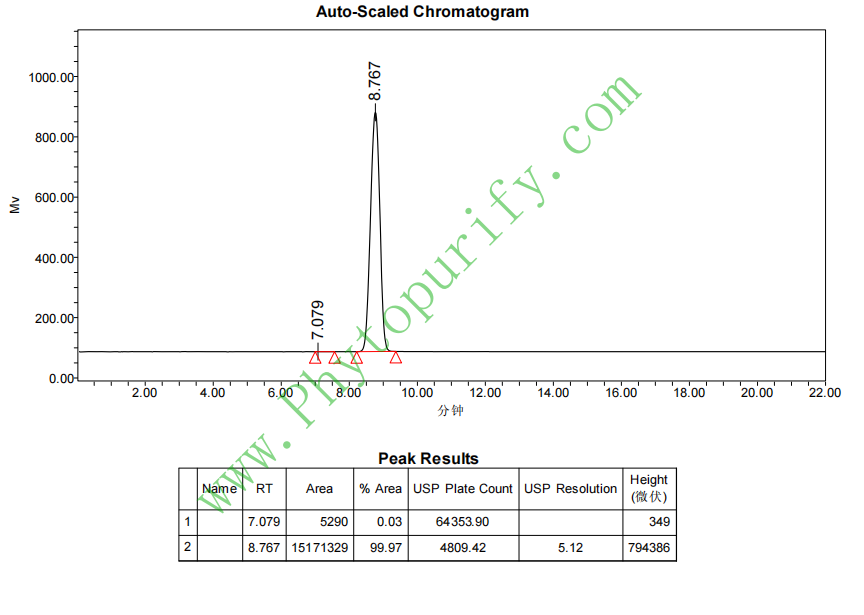
Purity: 95%~99%
Analysis Method: HPLC-DAD or/and HPLC-ELSD
Identification Method: Mass, NMR
Packing: Brown vial or HDPE plastic bottle
Can be supplied from milligrams to grams.
For Reference Standard and R&D, Not for Human Use Directly.
Inquire for bulk scale.
Description:
Ginkgolide J has neuroprotective activity, it can prevent A beta(1-42) induced inhibition of long-term potentiation in the CA1 region of mouse hippocampal slices, it is also capable of inhibiting cell death of rodent hippocampal neurons caused by A beta(1-42). Ginkgolide J can inhibit platelet aggregation induced by ADP or PAF.
References:
Neurobiol Aging. 2009 Feb;30(2):257-65. Epub 2007 Jul 20.
Protection against beta-amyloid induced abnormal synaptic function and cell death by Ginkgolide J.
METHODS AND RESULTS:
A new Ginkgo biloba extract P8A (TTL), 70% enriched with terpene trilactones, prevents A beta(1-42) induced inhibition of long-term potentiation in the CA1 region of mouse hippocampal slices. This neuroprotective effect is attributed in large part to Ginkgolide J that completely replicates the effect of the extract. Ginkgolide J is also capable of inhibiting cell death of rodent hippocampal neurons caused by A beta(1-42).
CONCLUSIONS:
This beneficial and multi-faceted mode of action of the ginkgolide makes it a new and promising lead in designing therapies against Alzheimer's disease.
Chem Biol Interact. 1997 Oct 24;106(3):183-90.
Antioxidative activity of ginkgolides against superoxide in an aprotic environment.
METHODS AND RESULTS:
The terpene lactones ginkgolide A, ginkgolide B, ginkgolide C, Ginkgolide J and bilobalide, which are components of a standardized extract (EGb 761) from leaves of Ginkgo biloba, as well as ginkgolide M from roots of G. biloba were studied regarding their reaction against superoxide (O2-) and hydroperoxyl radicals (HO2) in dimethyl sulfoxide as an aprotic solvent. It was found that the ginkgolides B, C, J, M as well as bilobalide react with superoxide and its protonated form as demonstrated by EPR and UV/VIS spectroscopy. The initial reaction rate with these oxygen-derived radicals is in the order of 100 M-1/s and below. Ginkgolide A does not react with superoxide under these conditions.
CONCLUSIONS:
From these findings it can be suggested that the superoxide scavenging effect of the ginkgolides B, C, J, M and bilobalide contributes to the antioxidant properties of G. biloba.
Exp Brain Res. 2007 Jun;179(4):665-71.
Ginkgolides protect primary cortical neurons from potassium cyanide-induced hypoxic injury.
In this study, we investigated the effects of ginkgolides (ginkgolide A, ginkgolide B, ginkgolide C and Ginkgolide J), the main constituent of the non-flavone fraction of EGb 761, on hypoxic injury induced by potassium cyanide (KCN) in primary cortical neurons.
METHODS AND RESULTS:
The neurons were pretreated with or without ginkgolides for 24 h before incubation with KCN for 4 h. The results demonstrated that KCN (0.05 mmol/l) significantly decreased cell viability and increased LDH release (P < 0.05 versus the control). The characteristic changes of neuronal morphology induced by KCN were observed. However, pretreatment of neurons with 37.5 microg/ml of ginkgolides (ginkgolides + KCN group) led to a significant increase in cell viability, a decrease in LDH release (P < 0.05 versus the KCN group) and a remarkable improvement in cellular morphology in hypoxic neurons compared with the KCN group.
CONCLUSIONS:
The data suggested that ginkgolides have a significant role to protect the primary cortical neurons from hypoxic injury induced by KCN.
HPLC of Ginkgolide J
Storage conditions:Short-term storage at 2~8℃, long-term storage at -20 ~ -80℃
148.8200
.1933
.1930
.4852
1.3621
3.8725
Low
22.6074
6.2830
Yes
No
No
No
Yes
No
0.9
Yes
No
Yes
Yes
Ginkgolide J (CAS number: 107438-79-9) is one of the representative active substances of non flavonoid components in Ginkgo biloba leaves, belonging to the ginkgolide class of compounds. As an important bioactive component in Ginkgo biloba extract, ginkgolide J has received widespread attention in recent years due to its unique chemical structure and multi-target pharmacological activity in neuroprotection, anti neuronal apoptosis, and various neurodegenerative diseases. Its IC50 value ranges from 12-54 µ M, demonstrating strong biological activity, especially in various neurological disease models such as Alzheimer's disease, Parkinson's disease, ischemic stroke, and chronic inflammatory pain, showing significant therapeutic potential.
This article will systematically review the chemical structure and physicochemical properties, plant sources, and extraction methods of ginkgolide J. It will provide a detailed evaluation of its pharmacological activity and mechanism of action, analyze its multiple pathways of action based on molecular targets, evaluate its pharmacological parameters and pharmacokinetic characteristics, and finally explore its clinical application prospects and future development directions, aiming to provide theoretical basis and research references for the drug development of ginkgolide J.
Ginkgolide J belongs to terpenoid lactones, with a molecular formula of C20H24O9 and a molecular weight of 424.4020. Its structural feature is a polycyclic lactone skeleton, containing multiple epoxy groups and hydroxyl groups, giving it high polarity and complex three-dimensional conformation. Its LogP value is 0.1933, indicating that ginkgolide J has low lipid solubility and a water solubility of 0.4852, indicating its solubility in the aqueous phase, but overall strong hydrophilicity. The topological polar surface area (TPSA) is 148.82 Å ², indicating its high molecular polarity, which to some extent affects its ability to pass through the cell membrane and blood-brain barrier.
The physicochemical properties of ginkgolide J determine its distribution and bioavailability in the body. Its blood-brain barrier permeability is relatively low, which may limit the direct action of the central nervous system. However, by regulating targets and indirect mechanisms outside the blood-brain barrier, it can still exert significant neuroprotective effects. The negative result of hERG channel inhibition experiment indicates a low risk of cardiac toxicity. The Ames mutagenicity test result is 0.9, indicating a low risk of genotoxicity and a good safety basis.
Ginkgolide J mainly exists in the leaves of Ginkgo biloba L., which is an important raw material for traditional Chinese medicine and modern health products. The active ingredients in Ginkgo biloba leaves are complex, mainly including flavonoids and terpenoids. Among them, ginkgolide J belongs to the latter and is one of the main components of non flavonoid terpenoids.
The extraction of ginkgolide J usually involves organic solvent extraction combined with multi-step separation and purification techniques. The common method is crude extraction using ethanol or methanol as solvents, followed by separation and purification through liquid-liquid partitioning, column chromatography (such as silica gel column, reverse phase C18 column), and high-performance liquid chromatography (HPLC). In recent years, ultrasound assisted extraction and microwave-assisted extraction techniques have been introduced to improve extraction efficiency and purity.
The purified ginkgolide J is subjected to structural identification and purity confirmation using modern analytical techniques such as mass spectrometry (MS), nuclear magnetic resonance (NMR), and infrared spectroscopy (IR) to ensure its quality standards for pharmacological research and drug development.
Ginkgolide J exhibits significant pharmacological activity in various neurological disease models, mainly including neuroprotective, anti neuronal apoptosis, anti-inflammatory, and neurotransmitter regulating effects.
Neuroprotective effect
Ginkgolide J exhibits good neuroprotective effects by regulating intracellular oxidative stress response, inhibiting the release of inflammatory factors, and promoting neuronal survival. In an in vitro neuronal cell model, ginkgolide J can significantly reduce oxidative damage induced apoptosis and improve cell survival rate. Animal model studies have also confirmed that it can improve neurological deficits and reduce pathological damage in models of ischemic brain injury, Alzheimer's disease, and Parkinson's disease.
Anti neuronal apoptosis
Ginkgolide J inhibits neuronal apoptosis pathway by regulating the expression of apoptosis related proteins. Its mechanism of action involves upregulating the anti apoptotic protein BCL2, inhibiting the activity of the pro apoptotic protein CASP3, balancing intracellular apoptotic signals, and protecting neurons from damage.
anti-inflammatory effect
Ginkgolide J can inhibit the expression of various inflammatory mediators, including TNF - α, IL-1 β, and COX-2 (PTGS2), and alleviate neuroinflammatory responses. Its relieving effect on chronic inflammatory pain is closely related to regulating inflammatory pathways.
Potential effects on neurodegenerative diseases
Ginkgolide J has shown multi-target regulatory ability in the study of Alzheimer's disease and Parkinson's disease, which can affect the generation and clearance of pathological proteins, improve neuronal function, and delay disease progression.
The multi-target mechanism of action of ginkgolide J is the basis of its pharmacological activity. By regulating multiple key proteins and signaling pathways, ginkgolide J achieves comprehensive regulation of neurological diseases.
In summary, ginkgolide J exerts its comprehensive pharmacological effects of neuroprotection, anti-inflammatory, and anti apoptotic through multi-target and multi pathway synergistic effects.
The pharmacological parameters of ginkgolide J indicate that it has certain potential for drug development, but there are also certain challenges.
At present, there is limited research on the pharmacokinetics of ginkgolide J. Preliminary data indicate that its oral absorption is slow, its metabolism is stable in vivo, and it is mainly metabolized through the liver enzyme system. The excretion pathways are mainly bile and urine. Further systematic pharmacokinetic and toxicological studies are needed in the future to provide support for clinical development.
Ginkgolide J, as an important non flavonoid active ingredient in Ginkgo biloba leaves, has shown broad application prospects in the fields of neurodegenerative diseases and nerve injury repair due to its multi-target and multi mechanism neuroprotective effects.
Alzheimer's disease and Parkinson's disease
Ginkgolide J has potential disease modifying ability by regulating amyloid metabolism, antioxidant stress, and anti-inflammatory effects. In the future, modern drug delivery technology can be combined to optimize its brain targeting and enhance therapeutic efficacy.
Ischemic stroke
Its protective and anti-inflammatory effects on neurons after ischemia provide new ideas for the treatment of acute and recovery phases of stroke. Ginkgolide J can be used as an adjuvant therapy drug to exert synergistic effects in combination with existing treatment regimens.
Chronic inflammatory pain
Ginkgolide J has potential value in chronic pain management by regulating inflammatory mediators and neural excitability, especially for neuropathic pain and inflammation related pain.
Drug development and formulation innovation
Given the low blood-brain barrier permeability of ginkgolide J, its bioavailability and targeting can be improved in the future through new formulation technologies such as nanocarriers and liposomes. Meanwhile, structural modification and derivative design are also important directions to enhance its pharmacological and pharmacokinetic properties.
Safety and clinical trials
At present, clinical research on ginkgolide J is still in its infancy, and there is a lack of systematic clinical trial data. In the future, it is necessary to strengthen its safety evaluation and clinical efficacy verification, and promote its transformation from laboratory research to clinical application.
Ginkgolide J, as an important non flavonoid active ingredient in Ginkgo biloba leaves, has shown broad application prospects in neuroprotection, anti neuronal apoptosis, and the treatment of various neurodegenerative diseases due to its unique chemical structure and multi-target pharmacological effects. Its multiple mechanisms of action involve multiple aspects such as energy metabolism regulation, inflammation inhibition, apoptosis regulation, and neural repair, reflecting the advantages of the "multi-target, multi pathway" treatment strategy in natural product pharmacology.
Although ginkgolide J has shown good pharmacological activity in vitro and animal models, its pharmacological parameters and pharmacokinetic characteristics still need to be optimized, especially in terms of improving blood-brain barrier penetration ability and oral bioavailability. In the future, combining modern drug design and delivery technologies, conducting in-depth preclinical and clinical research will lay a solid foundation for the drug development and clinical application of ginkgolide J.
In summary, ginkgolide J, as a potential neuroprotective natural product, deserves further exploration and development in the fields of natural medicine research and treatment of neurological diseases.
