Introduction/Overview
Natural products, as an important source of drug discovery, play an irreplaceable role in the long history of human fight against diseases. Among them, saponin compounds have always been a hot topic in medicinal chemistry and pharmacology research due to their structural diversity and wide range of biological activities. Gynostemma pentaphyllum, also known as "southern ginseng", is a perennial herbaceous vine of the genus Gynostemma in the Cucurbitaceae family. It has a long history of application in traditional Asian medicine. Modern pharmacological research has confirmed that the main active ingredient of Gynostemma pentaphyllum, Gynostemma pentaphyllum saponins, has various pharmacological effects such as anti-tumor, anti-inflammatory, antioxidant, lipid-lowering, and neuroprotective effects. Among nearly a hundred isolated and identified saponins from Gynostemma pentaphyllum, LXXV, due to its unique chemical structure and significant anti-tumor activity, has received widespread attention from researchers in recent years.
Gynostemma pentaphyllum saponin LXXV is one of the deglycosylated forms of ginsenoside Rb1, which allows it to retain its core pharmacological activity while potentially possessing different bioavailability and functional properties than the prototype compound. Preliminary studies have shown that the compound exhibits strong cytotoxicity in various tumor models, especially in the field of lung cancer treatment, demonstrating enormous potential. Its function involves inducing cell apoptosis, inhibiting proliferation, invasion and metastasis, and interacting with multiple key signaling pathways and molecular targets. This article aims to systematically review the chemical properties, plant sources, pharmacological activities, molecular mechanisms of action, pharmacological evaluation, and clinical application prospects of Gynostemma pentaphyllum saponins LXXV, in order to provide comprehensive scientific references for the in-depth research and development of this compound.
Chemical structure and physicochemical properties
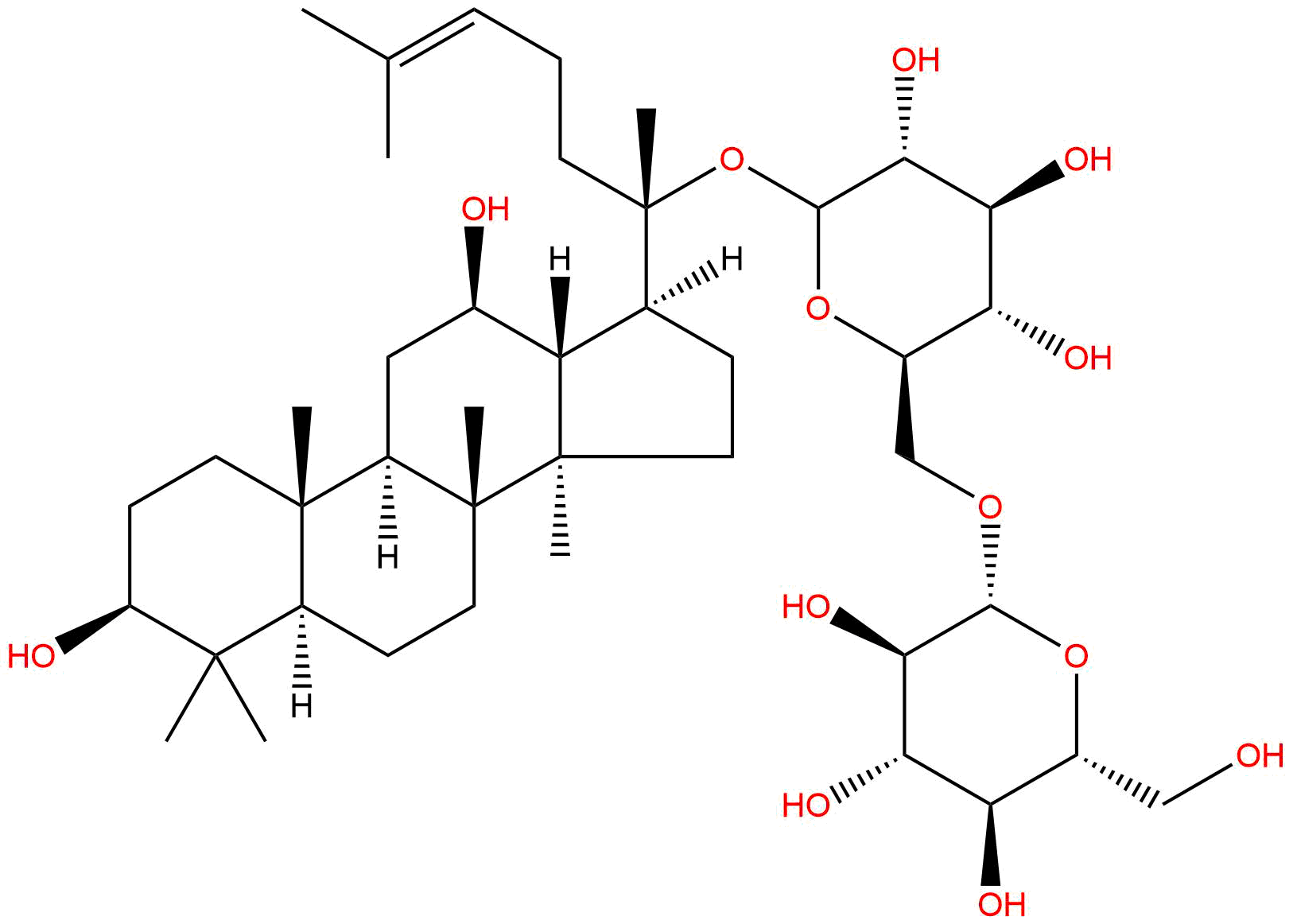
The chemical name of Gynostemma pentaphyllum saponin LXXV is (3 β, 12 β) -12,20-dihydroxydamam-24-en-3-yl O - β - D-glucopyranosyl - (1 → 2) - O - [β - D-xylopyranosyl - (1 → 3)] - β - D-glucopyranoside, and its CAS number is 110261-98-8. Structurally, it belongs to the Damane type tetracyclic triterpenoid saponin, which is a derivative of ginsenoside Rb1 that loses one glucose group at position C-20. Its parent nucleus is a steroid like Damatane structure, with sugar chains connected at positions C-3 and C-20, respectively. The sugar chain at position C-3 is a disaccharide (glucose glucose), while the sugar chain at position C-20 is simplified to a monosaccharide (xylose). This deglycosylation process is considered a key step in its biological activity transformation and metabolism.
The molecular formula of this compound is C41H70O14, with a molecular weight of 785.0250. The calculated lipid water partition coefficient is 3.1910, indicating that the compound has a certain lipophilicity, which is beneficial for its penetration of cell membranes, but may also affect its water solubility. Its topological polar surface area is as high as 218.99 Å ², mainly attributed to the abundant hydroxyl and sugar structures in the molecule. The theoretically calculated water solubility value is relatively low, about 0.0218 mg/mL, indicating limited solubility in water, which may be a potential limiting factor for its oral bioavailability. Preliminary pharmacological prediction analysis shows that the compound has a low ability to penetrate the blood-brain barrier, which means it may not be suitable for the treatment of primary tumors in the central nervous system, but also reduces the potential risk of neurotoxicity. In addition, the predictive model showed no significant hERG potassium channel inhibitory activity (low risk of arrhythmia) and genotoxicity (Ames test predicted value of 0.0), providing preliminary positive signals for its safety evaluation.
Plant sources and extraction methods
Gynostemma pentaphyllum saponins LXXV mainly come from the whole plant of Gynostemma pentaphyllum in the Cucurbitaceae family. Gynostemma pentaphyllum is widely distributed in areas south of the Yangtze River in China, Southeast Asia, and Japan, and prefers damp and shady environments. The content of its saponin components is closely related to the variety, origin, harvest season, and location. Usually, the total saponin content in leaves is higher than that in stems, and as one of the many saponins, the content of Gynostemma pentaphyllum saponin LXXV is relatively low and belongs to trace active ingredients.
The extraction of saponins LXXV from Gynostemma pentaphyllum usually follows the following process: first, the dried whole plant of Gynostemma pentaphyllum is crushed and crude extraction is carried out using solvent extraction method. Common solvents include methanol, ethanol, or ethanol water mixed solutions in different proportions, which are extracted using techniques such as heating reflux, ultrasound assisted, or microwave-assisted extraction to improve extraction efficiency. The crude extract is filtered and concentrated to obtain a total saponin extract. Subsequently, a series of modern chromatographic separation techniques are needed to finely separate and purify total saponins. This usually includes:
1. Macroporous adsorption resin chromatography Using resin (such as D101, AB-8) for specific adsorption of saponins, gradient elution with water and different concentrations of ethanol is performed to preliminarily enrich saponin sites.
2. Positive/reverse phase silica gel column chromatography This is the core step in separating saponin monomers. Gradient elution is often performed using solvent systems such as chloroform methanol water and ethyl acetate methanol water.
3. High performance liquid chromatography Especially, preparative high-performance liquid chromatography is the key to obtaining high-purity saponins LXXV from Gynostemma pentaphyllum. C18 reverse phase chromatography column is commonly used, with methanol water or acetonitrile water as the mobile phase, performing isocratic or gradient elution, and collecting the target peak through a UV detector (usually detected at around 203 nm).
4. Other Technologies Semi preparative liquid chromatography, high-speed countercurrent chromatography, etc. are also commonly used for final purification.
The isolated monomer compounds need to be structurally confirmed by techniques such as nuclear magnetic resonance and mass spectrometry. The entire extraction and separation process is complex, time-consuming, and has a low yield, which is also one of the bottlenecks restricting its in-depth research and development. In the future, developing efficient and environmentally friendly extraction and separation processes, or exploring biosynthetic pathways, is an important direction to solve the source problem.
Pharmacological activity research
Numerous in vitro and in vivo pharmacological studies have shown that saponins LXXV from Gynostemma pentaphyllum have a wide range of biological activities, with the most prominent being their anti-tumor effects.
1. Antitumor activity
Research has confirmed that saponins LXXV from Gynostemma pentaphyllum have significant growth inhibitory and cytotoxic effects on various cancer cell lines, particularly exhibiting high efficacy against lung cancer cells. In models such as non-small cell lung cancer A549 cells, this compound can significantly reduce cancer cell viability in a dose-dependent and time-dependent manner, induce cell cycle arrest (such as G0/G1 phase or G2/M phase arrest), and effectively trigger cell apoptosis. In addition to its direct killing effect, research has also found that it can inhibit the migration and invasion ability of cancer cells, indicating its potential for anti metastasis. In animal transplant tumor models, administration of saponins LXXV from Gynostemma pentaphyllum can significantly inhibit tumor growth and may produce synergistic effects when combined with certain chemotherapy drugs, while reducing some of the toxic side effects of chemotherapy drugs.
2. Other potential pharmacological activities
Although the research focus is on anti-cancer, based on the commonality of its saponin compounds and the known activity of structurally similar compounds (such as ginsenoside Rb1), Gynostemma pentaphyllum saponin LXXV may also have other potential pharmacological effects:
* anti-inflammatory effect Possible inhibition of pro-inflammatory cytokine release by regulating inflammation related pathways such as NF - κ B and MAPK.
* Antioxidant effect The phenolic hydroxyl groups in its structure may endow it with the ability to scavenge free radicals and alleviate oxidative stress.
* Cardiovascular protective effect It may exert its effect by regulating lipid metabolism (related to target ABCA1) and improving endothelial function.
* Neuroprotective effect Although its blood-brain barrier permeability is low, it may have a protective effect on peripheral nerves or through indirect mechanisms. The association of its target MAPT (Tau protein) also suggests its potential research value in tau protein diseases.
At present, the experimental data on these non anticancer activities are relatively limited, and more research is needed to confirm and clarify them.
Mechanism of action and molecular targets
The anticancer effect of saponins LXXV from Gynostemma pentaphyllum is the result of multi-target and multi pathway synergy. According to existing research, its mechanism of action mainly revolves around inducing cell apoptosis, inhibiting proliferation, invasion and metastasis, and regulating the tumor microenvironment, involving the following key molecular targets and pathways:
1. Inducing cell apoptosis
* Regulating the BCL2 family BCL2 is an important anti apoptotic protein. Gynostemma pentaphyllum saponins LXXV can downregulate the expression of BCL2 and may upregulate the expression of pro apoptotic proteins such as BAX, leading to a decrease in mitochondrial membrane potential, release of cytochrome C, and activation of the Caspase cascade reaction, ultimately triggering cell apoptosis.
* Inhibition of STAT3 signaling pathway STAT3 is a key transcription factor that continuously activates to promote cell survival, proliferation, and immune escape. This compound can inhibit the phosphorylation activation of STAT3, thereby downregulating the expression of its downstream target genes (such as Cyclin D1, BCL2, Survivor), promoting apoptosis, and inhibiting proliferation.
* Regulating nuclear factor kappa B signaling RELA is a key subunit of NF - κ B complex. Gynostemma pentaphyllum saponins LXXV may inhibit the phosphorylation of IKK or I κ B, prevent NF - κ B (RELA/p65) nuclear translocation, and thus suppress the transcription of a series of genes related to cell survival, inflammation, and metastasis.
2. Inhibit cell proliferation and cycle progression
* Intervention of cell cycle proteins By affecting the expression and activity of cyclical proteins such as Cyclin and CDK, it activates cell cycle checkpoints and blocks cells at specific stages.
* Applied to TOP2A TOP2A is an essential topoisomerase for DNA replication and cell division. This compound may interfere with the function of TOP2A, causing DNA double strand breaks and activating DNA damage responses, thereby inhibiting cell proliferation.
3. Inhibit invasion, metastasis, and angiogenesis
* Downregulate matrix metalloproteinases MMP2 is a key enzyme that degrades extracellular matrix and promotes tumor invasion and metastasis. Gynostemma pentaphyllum saponins LXXV can significantly inhibit the expression and activity of MMP2.
* Inhibition of PI3K/Akt pathway PIK3CG encodes the catalytic subunit p110 γ of PI3K. This compound may indirectly inhibit protein expression related to invasion and metastasis by inhibiting the important survival promoting and metabolic pathway of PI3K/Akt/mTOR.
* Potential regulation of estrogen receptor signaling ESR2 (ER β) is also expressed in non gonadal tissues such as lung cancer and participates in cell proliferation regulation. This compound may act as a regulator to affect ER β signaling.
4. Regulating immunity and cholesterol metabolism
* Regulating TLR4 signaling TLR4 is an important pattern recognition receptor that connects innate immunity with the tumor microenvironment. Regulating TLR4 signaling may affect polarization of tumor associated macrophages and secretion of inflammatory factors.
* Affects ABCA1 mediated cholesterol efflux ABCA1 plays a central role in cholesterol reverse transport. The reprogramming of lipid metabolism in tumor cells is an important feature. Regulating ABCA1 may affect tumor cell membrane fluidity, signal transduction, and energy supply, but its specific role in anti-cancer is complex and needs to be clarified.
These targets and pathways do not exist in isolation, but form a complex regulatory network. Gynostemma pentaphyllum saponins LXXV exert synergistic anti-cancer effects by acting on multiple nodes of the network.
Evaluation of drug properties and pharmacokinetics
Although saponins LXXV from Gynostemma pentaphyllum exhibit excellent activity in vitro, their successful development as a drug largely depends on their pharmacological properties, namely "pseudo pharmacological" and pharmacokinetic properties.
1. Physical and chemical properties, absorption, distribution, metabolism, and excretion
* absorb The compound has a high molecular weight (>500), high TPSA, and low predicted water solubility, all of which are unfavorable for its passive transmembrane diffusion and oral absorption. It may rely on transport proteins in the intestine for absorption, but efficiency may be limited. It is crucial to study its stability and intestinal permeability under different pH environments.
* distribution Predict low blood-brain barrier permeability, mainly distributed in peripheral tissues and organs. Its binding rate with plasma proteins is not yet clear, which can affect its free drug concentration and distribution volume.
* Metabolism As a saponin compound, its glycosyl portion is easily hydrolyzed by gut microbiota and glycosidase in the liver, undergoing deglycosylation metabolism and generating secondary glycosides (such as Gynostemma pentaphyllum saponins). The activity and toxicity of these metabolites may differ from the prototype compounds. The cytochrome P450 enzyme system may also be involved in its oxidative metabolism.
* excretion The prototype drug and its metabolites may be mainly excreted through bile and kidneys. It is necessary to clarify its main excretion pathways and rates.
2. Optimization strategy for drug properties
To address its potential pharmaceutical shortcomings, the following strategies can be considered:
* Prodrug design Modify specific groups on the hydroxyl or aglycone of the sugar group (such as esterification or salt formation) to prepare prodrugs with better water or lipid solubility, in order to improve oral bioavailability or targeting.
* New drug delivery system Using nanotechnology, such as liposomes, polymer micelles, nanoparticles, etc., to encapsulate drugs can significantly improve their water solubility and stability, achieve passive targeting (EPR effect) or active targeting (connecting targeting ligands), reduce non-specific distribution, and enhance tumor accumulation.
* Simplification and Modification of Structure On the basis of clarifying the pharmacophore, simplify or modify non essential sugar groups or mother nuclei to improve physicochemical properties while maintaining activity.
At present, there is a significant lack of publicly available data on the pharmacokinetics of the LXXV system of Gynostemma pentaphyllum saponins, including absolute bioavailability, tissue distribution, metabolite identification, and excretion kinetics. This is a key gap that must be filled to advance its preclinical development.
Clinical application prospects and prospects
As a natural small molecule with clear anti-cancer activity, the clinical application prospects of Gynostemma pentaphyllum saponins LXXV are mainly reflected in the following aspects:
1. Anti tumor therapy, especially for lung cancer
Given its significant effects on lung cancer cell lines and animal models, as well as its action on multiple key targets such as STAT3, BCL2, MMP2, etc., it is most promising for development as an anti lung cancer drug. Possible clinical application scenarios include:
* Single therapy For certain specific molecular subtypes of lung cancer, or as a second-line and subsequent supplementary treatment option.
* Combination therapy Combined with existing chemotherapy drugs (such as platinum, paclitaxel), targeted drugs, or immune checkpoint inhibitors to enhance efficacy, reverse drug resistance, and reduce toxic side effects. Its multi-target properties may help overcome tumor heterogeneity and adaptive drug resistance.
* Adjuvant treatment and prevention As a postoperative adjuvant therapy or chemoprevention for high-risk populations, its long-term safety and effectiveness need to be rigorously evaluated.
2. Potential in other disease areas
Based on the diversity of its targets, it is also worth exploring in other disease fields, such as:
* Inflammatory diseases By regulating the TLR4/NF - κ B pathway, it may be used to treat chronic inflammation related diseases.
* Metabolic diseases: It may have a regulatory effect on atherosclerosis and other disorders of lipid metabolism by affecting targets such as ABCA1.
* Neurodegenerative diseases The potential association with MAPT provides clues for its research in tau protein diseases such as Alzheimer's disease, but it requires overcoming the blood-brain barrier challenge.
3. Challenges faced and future research directions
Despite its broad prospects, it still faces severe challenges in its clinical application:
* Source and Supply Plant extraction has low yield and high cost. In the future, it is necessary to develop large-scale cultivation technologies (such as cell culture, hairy root culture) or explore chemical/biosynthetic pathways.
* Drug bottleneck As mentioned earlier, its water solubility, oral bioavailability, and metabolic stability are the main obstacles that urgently need to be addressed through pharmaceutical and medicinal chemistry methods.
* Lack of systematic pharmacology and toxicology research At present, research mainly focuses on in vitro and short-term in vivo efficacy, lacking comprehensive preclinical safety evaluation data such as systematic ADMET studies, long-term toxicity, reproductive toxicity, genetic toxicity, etc.
* Deep analysis of the mechanism of action Existing target studies are mostly related and require the use of chemical biology methods (such as affinity fishing, molecular probes) to directly verify their interactions and elucidate their network pharmacology mechanisms.
* Clinical conversion pathway It is necessary to identify the patient population (biomarkers) that are most likely to benefit and design a reasonable clinical trial plan.
Conclusion
Gynostemma pentaphyllum saponins LXXV, isolated from the traditional medicinal plant Gynostemma pentaphyllum, have shown remarkable pharmacological activity in anti-tumor, especially lung cancer, due to their unique structure as a deglycosylated derivative of ginsenoside Rb1. Its mechanism of action involves multiple pathways such as inducing apoptosis, inhibiting proliferation and metastasis, targeting key molecules such as BCL2, STAT3, MMP2, etc., demonstrating the advantages of multi-target synergistic effects of natural products. However, its large molecular weight, low water solubility and oral bioavailability, as well as unclear systemic pharmacokinetic and toxicological characteristics, constitute the main barriers to its conversion into clinical drugs.
Future research should focus on using synthetic biology or green chemistry methods to address their source issues; Optimize its drug properties through strategies such as prodrug design and nano delivery; Conduct systematic and in-depth preclinical pharmacokinetic and safety evaluations; And utilize multi omics techniques and precision medicine concepts to elucidate its precise mechanism of action and potential biomarkers. Only through interdisciplinary collaboration and overcoming these scientific and technological challenges can we fully unleash the therapeutic potential of the natural treasure of saponins LXXV from Gynostemma pentaphyllum, and provide new candidate drugs for the treatment of major diseases such as lung cancer, continuing the glorious chapter of natural products in the history of drug discovery.