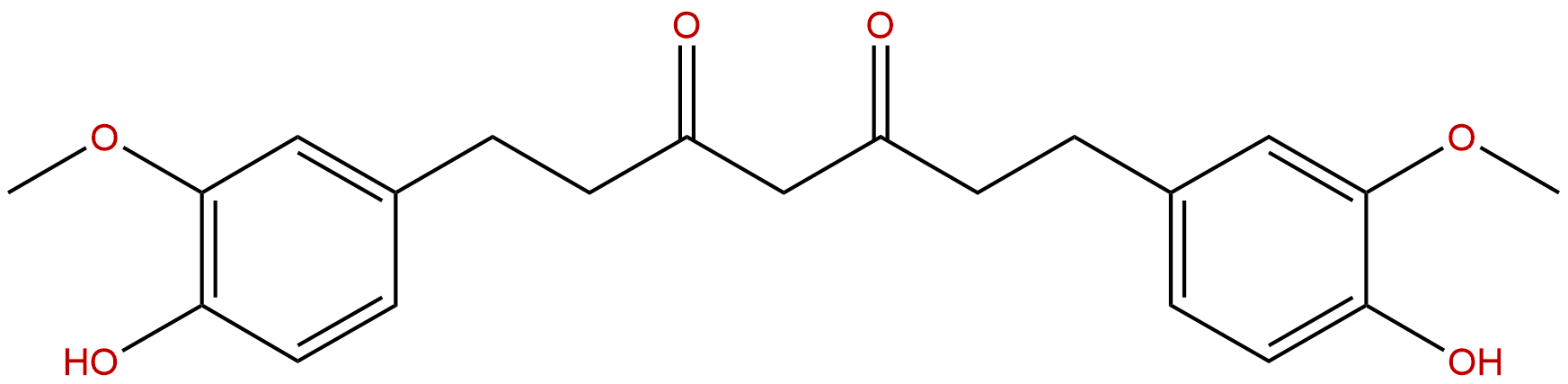


Product name: Tetrahydrocurcumin
Synonym name:
Catalogue No.: BP3386
Cas No.: 36062-04-1
Formula: C21H24O6
Mol Weight: 372.417
Botanical Source:
Physical Description: Powder
Type of Compound: Phenols
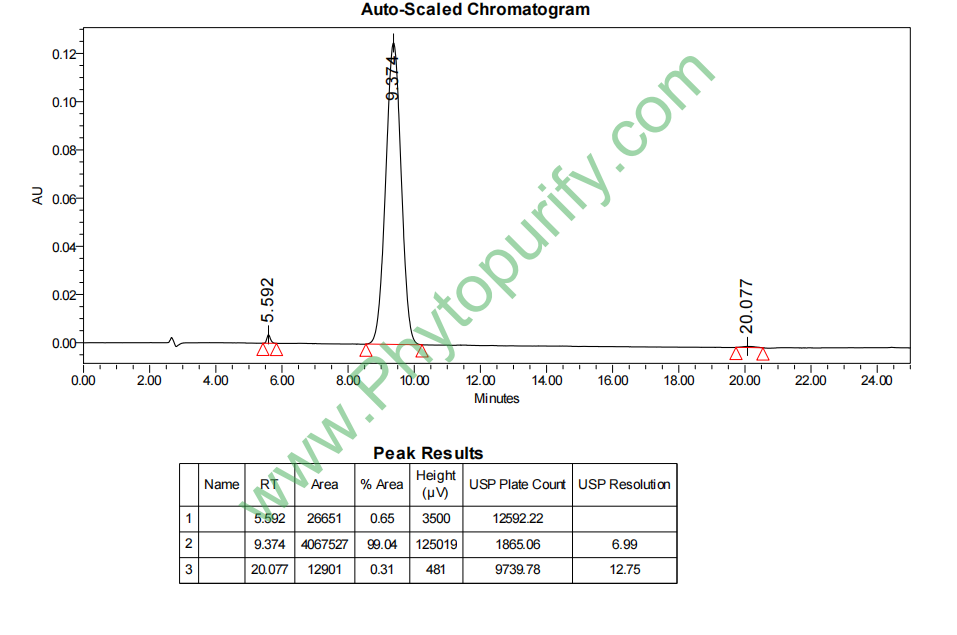
Purity: 95%~99%
Analysis Method: HPLC-DAD or/and HPLC-ELSD
Identification Method: Mass, NMR
Packing: Brown vial or HDPE plastic bottle
The product could be supplied from milligrams to grams. Inquire for bulk scale.
We provide solution to improve the water-solubility of compounds, thereby facilitating the variety of activity tests and clinic uses.
For Reference Standard and R&D, Not for Human Use Directly.
HPLC of Tetrahydrocurcumin
Storage conditions:Short-term storage at 2~8℃, long-term storage at -20 ~ -80℃
93.0600
2.6327
2.6200
.1037
6.4835
15.6063
Low
89.8382
2.2844
Yes
No
No
No
No
No
0.0
No
No
No
No
Natural products, as an important treasure trove for drug discovery and development, play an irreplaceable role in the long history of human fight against diseases. Turmeric(Curcuma longa L. As a traditional medicinal plant, its active ingredient curcumin has attracted much attention due to its wide range of pharmacological activities such as anti-inflammatory, antioxidant, and anti-tumor effects. However, curcumin has limitations such as low oral bioavailability, rapid metabolism, and poor chemical stability, which has prompted researchers to explore its structural analogues and metabolites in vivo. Tetrahydro curcumin (THC), as one of the main active products of curcumin through intestinal microbiota and liver reduction metabolism in vivo, is gradually emerging from the shadow of curcumin and demonstrating unique and promising pharmacological properties.
Tetrahydrocurcumin (CAS number: 36062-04-1) is a derivative of curcumin molecule in which two α, β - unsaturated ketone structures are reduced to dihydrocoumarin structures. This structural change not only significantly improves its chemical stability, but also endows it with a biological activity spectrum and pharmacokinetic characteristics distinct from the parent compound. Research has shown that THC retains the core pharmacological activity of curcumin, while its antioxidant capacity is even stronger in certain systems, and it has better metabolic stability. Of particular note is that THC has been identified as an inhibitor of CYP2C9 and CYP3A4, which suggests its potential impact on the metabolism of co administered drugs and provides a new perspective on its mechanism of action in specific disease models.
This article aims to provide a systematic review of tetrahydrocurcumin, starting from its chemical structure, plant sources, and preparation methods, with a focus on its research progress in core pharmacological activities such as anti-inflammatory effects. It deeply analyzes its mechanism of action and molecular target network, and combines its pharmacological parameters and pharmacokinetic characteristics to prospect its clinical application prospects, in order to provide comprehensive academic references for the deep development and transformation research of this natural product.
The chemical name of tetrahydrocurcumin is (1E, 6E) -1,7-bis (4-hydroxy-3-methoxyphenyl) -1,6-heptadiene-3,5-dione, which is the fully reduced form of 1,7-bis (4-hydroxy-3-methoxyphenyl) -3,5-heptanedione. Its molecular formula is C21H24O6 and its molecular weight is 372.4170 Da.
The most significant structural difference between THC and curcumin is that the two α, β - unsaturated ketone (enone) structures on its central seven carbon chain are reduced to saturated β - diketone structures. The conjugated ketone system in curcumin is a key site for its degradation, metabolism, and as a Michael reaction receptor. After reduction, THC loses this strong electrophilic center, significantly enhancing its chemical stability and improving its tolerance to light, heat, and alkaline environments. At the same time, this reduction also changes the electronic distribution and spatial conformation of the molecule, thereby affecting its interaction mode with biomolecules.
From the perspective of physical and chemical properties, the calculated value of the lipid water partition coefficient (LogP) of THC is about 2.63, indicating that it has moderate lipophilicity, which is beneficial for its penetration into cell membranes. Its topological polar surface area (TPSA) is 93.06 Å ², reflecting the polarity brought by multiple hydroxyl and methoxy groups in the molecule. The water solubility is relatively low (about 0.1 mg/mL), which is related to its crystal structure and intramolecular hydrogen bonds, and is also a common characteristic of its drug like molecules. These basic physicochemical parameters lay the foundation for its subsequent formulation development and in vivo behavior prediction.
The natural content of tetrahydrocurcumin in fresh turmeric rhizomes is extremely low, and it is mainly a metabolic transformation product of curcumin in the body. After ingestion of curcumin by humans and animals, the gut microbiota (such as Clostridium, Escherichia coli, etc.) can reduce the bonds and carbonyl groups of curcumin through reductases, generating a series of reduction products, among which THC is one of the most abundant and stable end products. In addition, reductases in the liver are also involved in this process.
Therefore, obtaining large amounts of THC directly from plants is not economical. At present, the preparation of THC in laboratories and industries mainly relies on two approaches:
1. Chemical synthesis and semi synthesis This is the main method for obtaining high-purity THC. Starting from vanillin and acetylacetone, curcumin is synthesized through the classic Claisen Schmidt condensation reaction. Then, curcumin is selectively hydrogenated (usually using catalysts such as palladium carbon) to reduce the two ketene double bonds, resulting in THC. This method has mature technology and controllable yield and purity.
2. Biotransformation method Using specific microorganisms (such as Lactobacillus brevis, brewing yeast, etc.) or plant cell culture systems, curcumin is used as a substrate for biocatalytic reduction. This method has mild conditions, regional and stereo selectivity, and is more in line with the requirements of green chemistry, making it a current research hotspot. Optimizing bacterial strains, fermentation conditions, and separation and purification processes are key to improving biotransformation efficiency.
Regardless of the method used, the crude product obtained must undergo separation and purification steps such as column chromatography and recrystallization to obtain high-purity tetrahydrocurcumin that meets research or application standards.
Tetrahydrocurcumin inherits the multi-target and multi pathway characteristics of curcumin, and exhibits significant activities in anti-inflammatory, antioxidant, metabolic disease regulation, neuroprotection, and skin health fields.
1. Anti inflammatory activity
This is the most in-depth core activity of THC research. THC exhibits strong anti-inflammatory effects in various acute and chronic inflammation models. In the lipopolysaccharide (LPS) - induced macrophage inflammation model, THC can dose dependently inhibit the production of nitric oxide (NO), prostaglandin E2 (PGE2), and the expression of inducible nitric oxide synthase (iNOS) and cyclooxygenase-2 (COX-2). In acute inflammation models such as carrageenan induced rat paw edema and xylene induced mouse ear swelling, oral administration of THC can significantly reduce tissue swelling. In chronic inflammation models such as colitis induced by dextran sulfate sodium (DSS) and arthritis induced by Freund's complete adjuvant, THC can improve pathological damage and reduce disease activity index. Its anti-inflammatory effect is comparable or better than classical nonsteroidal anti-inflammatory drugs, and the risk of gastrointestinal side effects may be lower.
2. Antioxidant activity
The antioxidant capacity of THC is the basis for many of its pharmacological effects. The phenolic hydroxyl group in its molecular structure is an effective hydrogen donor that can directly scavenge free radicals such as DPPH and ABTS. Research has shown that THC has a stronger ability to scavenge certain free radicals than curcumin and vitamin E. More importantly, THC can upregulate the intracellular antioxidant defense system, including activating the nuclear factor E2 related factor 2 (Nrf2) pathway, promoting the expression of heme oxygenase-1 (HO-1), quinone oxidoreductase 1 (NQO1), superoxide dismutase (SOD), and glutathione (GSH), thereby enhancing the cell's resistance to oxidative stress.
3. Regulatory effect on metabolic diseases
In the study of diabetes and its complications, THC has shown the potential to reduce blood sugar and improve insulin resistance. It can promote the uptake of glucose by adipocytes and skeletal muscle cells, and protect pancreatic beta cells from damage caused by toxins such as streptozotocin. In obese animal models, THC can regulate lipid metabolism, reduce serum triglyceride and cholesterol levels, and alleviate liver steatosis. Its function is related to the regulation of key energy metabolism signaling molecules such as AMPK and PPAR - γ.
4. Neuroprotective and Skin Protective Activities
THC can penetrate the blood-brain barrier (although the efficiency is "low"), and in animal models of neurodegenerative diseases such as Alzheimer's disease and Parkinson's disease, it exhibits inhibitory effects on neuroinflammation, reduces β - amyloid deposition, and alleviates damage to dopaminergic neurons. In terms of skin, THC has been applied in anti photoaging research due to its strong antioxidant and anti-inflammatory properties. It can reduce skin redness, wrinkles, and pigmentation caused by ultraviolet radiation, promote collagen synthesis, and has application prospects in the fields of cosmetics and functional skincare products.
The basis for the multiple pharmacological activities of tetrahydrocurcumin lies in its regulation of complex cellular signaling networks. Its mechanism of action is not to act on a single target, but to regulate key signaling pathways through the synergy of multiple targets.
1. Regulation of core anti-inflammatory signaling pathways
The anti-inflammatory effect of THC is mainly achieved by inhibiting two core pro-inflammatory pathways, nuclear factor kappa B (NF - κ B) and signal transduction and transcription activator 3 (STAT3).
* Inhibition of NF - κ B pathway In resting cells, NF - κ B (mainly composed of p65/RELA and p50 subunits) binds to the inhibitory protein I κ B and exists in the cytoplasm. When stimulated by LPS, TNF - α, etc., the I κ B kinase complex (IKK, including IKBKB/IKK β) is activated, phosphorylated, and degraded, allowing NF - κ B to enter the nucleus and initiate gene transcription. THC can effectively inhibit the activity of IKK β, prevent the degradation of I κ B, and thus inhibit the nuclear translocation of NF - κ B. This directly leads to the downregulation of the expression of a series of pro-inflammatory cytokine genes downstream, including TNF-α、IL-6、iNOS (NOS2) and COX-2。
* Inhibition of JAK-STAT3 pathway Inflammatory factors (such as IL-6) bind to receptors, activate JAK kinase, and subsequently phosphorylate and activate it STAT3 Activated STAT3 forms dimers into the nucleus, promoting cell proliferation, survival, and inflammation related gene expression. THC can inhibit the phosphorylation of JAK and STAT3, blocking the abnormal sustained activation of this pathway, which is particularly important in chronic inflammation and cancer-related inflammation.
* Inhibition of NLRP3 inflammasome activation THC has been shown to inhibit the assembly and activation of NLRP3 inflammasomes, reducing Caspase-1 (CASP1) It provides a basis for its application in inflammatory body related diseases such as gout and type 2 diabetes.
2. Direct effects on ion channels and enzymes
* Transient receptor potential channel regulation THC is TRPV1(Vanillic acid receptor 1) and TRPA1 Regulator of Anchor Protein 1. These channels are involved in pain perception and neurogenic inflammation. THC may produce analgesic and anti neuroinflammatory effects by desensitizing or antagonizing these channels.
* Cyclooxygenase inhibition In addition to downregulating COX-2 expression, THC has an impact on COX-1 (PTGS1) It also has a certain direct inhibitory effect, which helps explain its anti-inflammatory and antiplatelet aggregation activities.
* Cytochrome P450 enzyme inhibition THC for CYP2C9 and CYP3A4 The inhibitory effect is an important pharmacokinetic characteristic of it. This may lead to an increase in blood drug concentrations of THC itself or other drugs metabolized through this pathway (such as warfarin, certain statins), which should be noted when using combination therapy.
3. Activation of antioxidant defense system
As mentioned earlier, THC is a potent activator of the Nrf2 pathway. It promotes the detachment of Nrf2 from its cytoplasmic anchor protein Keap1 and its transfer to the nucleus, where it binds to antioxidant response elements (ARE), thereby initiating the transcription of a series of phase II detoxifying enzymes and antioxidant proteins, constructing a powerful cellular defense system.
In summary, tetrahydrocurcumin acts on RELA (p65)、IKBKB、TNF、IL-6、STAT3、CASP1 Wait for key targets and inhibit the pro-inflammatory signaling axis; Simultaneously adjusting TRPV1/TRPA1、PTGS1 Affects pain sensation and local inflammation; And through inhibition CYP450 Enzymes affect metabolism. This multi-target mode of action enables systematic intervention in complex disease networks.
Although tetrahydrocurcumin has significant pharmacological activity, its successful conversion into a drug depends on its drug like and pharmacokinetic (PK) properties.
Analysis of drug properties parameters:
According to the provided parameters, the molecular weight of THC (372.4) conforms to Lipinski's "Five Rules". The LogP value (~2.63) is within the ideal range (1-3), indicating good membrane permeability and moderate lipophilicity. The TPSA (93.06 Å ²) is slightly higher than the commonly believed optimal range for membrane permeability (<90 Å ²), which is related to its multiple polar groups and may have some impact on oral absorption, but it is still within an acceptable range. Poor water solubility is its main weakness, which needs to be improved through formulation techniques such as nanocrystals, cyclodextrin inclusion, phospholipid complexes, self microemulsions, etc. Preliminary safety indicators indicate that it does not inhibit the hERG channel (indicating low risk of cardiac toxicity), and the Ames test result is negative (indicating no mutagenicity), which are favorable factors for it as a candidate drug. The low permeability of the blood-brain barrier means that its treatment for central nervous system diseases may require higher doses or the use of drug delivery systems, but it also reduces the risk of central side effects.
Pharmacokinetic characteristics:
Animal pharmacokinetic studies have shown that the oral bioavailability of THC is improved compared to curcumin, mainly due to its higher metabolic stability. Curcumin is rapidly reduced to metabolites such as THC in the body, while THC itself has a stable structure and is not easily further metabolized rapidly. However, as an inhibitor of CYP2C9 and CYP3A4, the pharmacokinetics of THC may exhibit nonlinear characteristics, that is, as the dose increases, its exposure (AUC) may increase disproportionately due to the inhibition of metabolic enzymes by itself. Its main metabolic pathway in the body is the combination reaction of glucuronidation and sulfation, forming corresponding complexes that are excreted through urine and bile. Research on tissue distribution shows that THC has high concentrations in tissues such as the liver, kidneys, and intestines. The systematic PK research on it in the human body is still insufficient, which is a data gap that needs to be filled in the future preclinical development.
The broad pharmacological activity of tetrahydrocurcumin brings potential application prospects in multiple therapeutic fields.
1. Inflammatory related diseases As a potent anti-inflammatory agent, THC is expected to be developed for the treatment of chronic inflammatory diseases such as rheumatoid arthritis, inflammatory bowel disease (ulcerative colitis, Crohn's disease), psoriasis, etc. Its multi-target mechanism of action may have advantages over single target drugs, especially for diseases with complex etiologies.
2. Metabolic syndrome: In the treatment of type 2 diabetes, nonalcoholic fatty liver disease (NAFLD) and obesity, THC can play a dual role in anti-inflammatory and metabolic regulation, which may become a beneficial supplement to existing drugs.
3. Neurodegenerative diseases Although BBB permeability is limited, THC still has exploratory value in the adjuvant therapy of Alzheimer's disease and Parkinson's disease by improving its brain targeted delivery efficiency through nano delivery systems (such as liposomes, polymer nanoparticles) or structural modifications.
4. Dermatology and Medical Aesthetics Its excellent antioxidant and anti-aging properties make it an ideal active ingredient for high-end functional cosmetics and medical repair dressings, with a relatively short market conversion path.
5. As a drug adjuvant By utilizing its CYP450 inhibitory properties, THC may be cautiously used to increase the blood drug concentration of certain orally bioavailable drugs metabolized by CYP3A4/2C9, but the risk of drug drug interactions must be rigorously evaluated.
However, clinical application still faces challenges: firstly, large-scale and high-quality preclinical safety evaluations (long-term toxicity, reproductive toxicity, etc.) are needed to support human trials. Secondly, it is necessary to systematically study its potential for drug interactions as a CYP inhibitor in the human body. Thirdly, it is crucial to develop efficient, stable, and industrializable new formulation technologies to address the issue of poor water solubility. Finally, designing and implementing rigorous randomized controlled clinical trials to confirm their efficacy and safety in specific diseases is a crucial step towards achieving transformation.
Tetrahydrocurcumin, as a key metabolite of curcumin, has evolved from a metabolic endpoint molecule to an independent active entity of great research value. Compared to curcumin, its improved stability and unique metabolic characteristics, combined with its strong anti-inflammatory, antioxidant, and multi pathway regulatory abilities, endow it with significant therapeutic potential. From inhibiting classic inflammatory pathways such as NF - κ B and STAT3, to regulating TRP channels and activating the Nrf2 defense system, to affecting drug metabolizing enzymes, the mechanism of action of THC is complex and intricate. Despite facing challenges such as water solubility and BBB permeability in drug development, these obstacles are expected to be overcome through the optimization of modern medicinal chemistry and pharmacology methods. Future research should focus on its systematic preclinical safety evaluation, exploration of precise medication strategies based on its CYP inhibitory properties, and development and clinical validation of innovative formulations targeting advantageous indications. Tetrahydrocurcumin is expected to steadily move from a highly anticipated natural product molecule to a candidate drug or functional ingredient with clear clinical application value, providing a new option for the prevention and treatment of major chronic diseases such as inflammation and metabolism.
