Introduction/Overview
Osteoporosis is a systemic bone disease characterized by reduced bone mass, destruction of bone microstructure, and increased bone fragility, and has become an increasingly serious public health problem worldwide. At present, first-line clinical drugs such as bisphosphonates, selective estrogen receptor modulators, and RANKL inhibitors are effective, but long-term use often accompanies side effects such as mandibular necrosis, atypical femoral fractures, and cardiovascular risks. Therefore, finding highly efficient and low toxicity anti osteoporosis lead compounds from natural products has always been an important direction for drug development. Steroid saponins, as an important class of plant secondary metabolites, have shown great potential in the field of bone metabolism regulation due to their diverse chemical structures and extensive biological activities. Proprotoglobulin (CAS: 78229-03-5) is a steroid glycoside isolated from the bulbs of specific Liliaceae plants. In recent years, its anti osteoporosis activity has attracted widespread attention from researchers. This article aims to provide a systematic review of the chemical structure, plant sources, extraction methods, pharmacological activities, mechanisms of action, pharmacological evaluation, and clinical application prospects of the original slender Dioscorea saponins, in order to provide comprehensive scientific references for the in-depth research and development of this compound.
Chemical structure and physicochemical properties
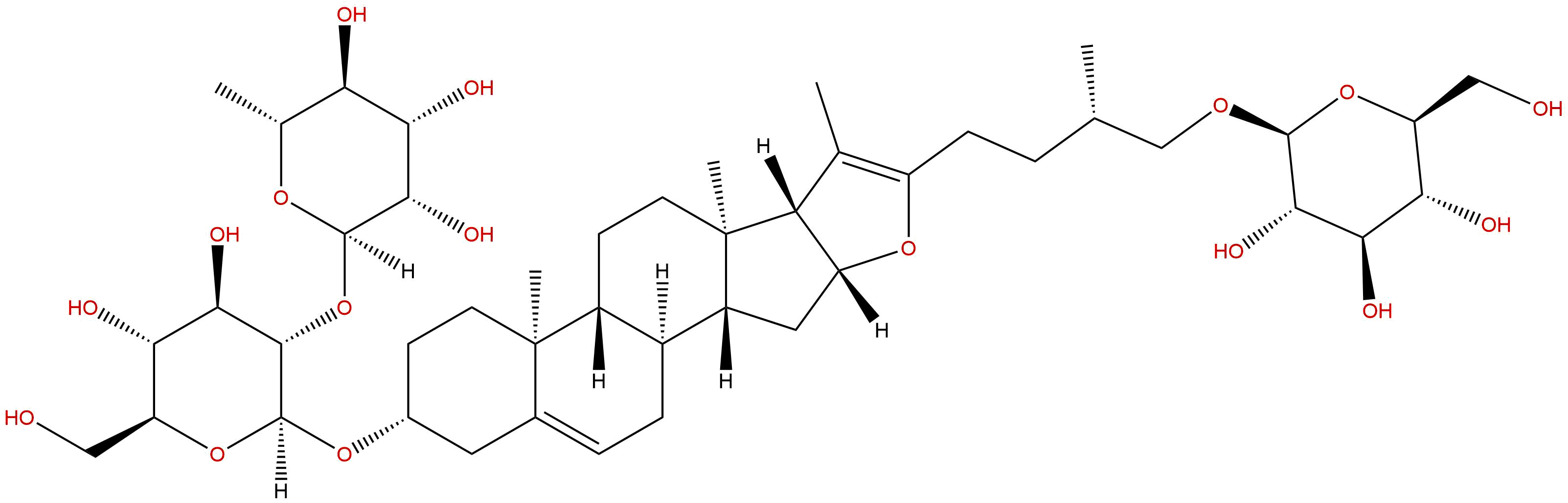
Original slender dioscin is a spirostanol type steroid saponin. Its parent nucleus is a classic spirostane structure, consisting of 27 carbon atoms and containing six rings (A, B, C, and D rings are steroid nuclei, and E and F rings are furan spiro rings). The characteristic of this compound is that both the C-3 and C-26 positions are connected to oligosaccharide chains. Specifically, its sugar chain is usually composed of monosaccharides such as glucose, xylose, and arabinose in a specific order and connection. This complex glycosylation modification is an important structural basis for its high polarity, water solubility, and biological activity.
According to the provided pharmacological parameters, its molecular weight is 885.0540, which is a medium to large molecule. The calculated lipid water partition coefficient (LogP) is 1.8789, indicating that the compound has a certain lipophilicity but is not highly lipophilic. Its topological polar surface area (TPSA) is as high as 266.9100 Å ², which is mainly attributed to the large number of hydrogen bond donors and acceptors brought by multiple hydroxyl and glycosidic bonds in the molecule. High TPSA is a key factor limiting its transmembrane passive diffusion. The water solubility value is 0.1688 (usually measured in mg/mL or mol/L, not specified here, but the value is relatively small), indicating that its solubility in water is limited and it belongs to insoluble compounds. These physicochemical properties collectively determine its pharmacokinetic behavior: low blood-brain barrier permeability (predicted as "low"), which is unfavorable for its use in central nervous system diseases, but for anti osteoporosis drugs that mainly act on the peripheral skeletal system, reducing central side effects may be a potential advantage. In addition, preliminary toxicity predictions indicate that it has no hERG potassium channel inhibitory activity (predicted as' no '), suggesting a low potential risk of cardiac toxicity; The Ames test predicted a value of 0.0, indicating that it may not be mutagenic and has good genetic toxicity safety prospects.
Plant sources and extraction methods
The original slender dioscin is mainly derived from the Dioscorea genus in the Liliaceae family(Dioscorea)Or lily genus(Lilium)Separated from the bulbs of certain specific plants. Among them, "slender yam"(Dioscorea gracillima)Or its close relatives are the main plant sources of the compound reported. These plants are mostly distributed in East Asia, and their dry bulbs are often used in traditional medicine to treat rheumatism, cough, and other diseases. Modern research has revealed their value in regulating bone metabolism.
Its extraction and separation usually follow the classic process of natural product chemistry. Firstly, the plant bulbs are dried and crushed, and subjected to heating reflux or ultrasound assisted extraction using polar solvents such as methanol, ethanol, or aqueous ethanol to fully extract polar components including saponins. The extract is concentrated under reduced pressure to obtain a crude extract. Subsequently, preliminary enrichment was carried out using macroporous adsorption resin (such as D101, AB-8) column chromatography, usually with gradient elution using water and different concentrations of ethanol. Saponins were mostly concentrated in the 30% -70% ethanol elution site. After obtaining the saponin enrichment site, multiple chromatographic techniques such as normal phase silica gel column chromatography, reverse phase silica gel column chromatography (such as ODS-C18), high performance liquid chromatography (HPLC), and preparative liquid chromatography (pre HPLC) need to be used for repeated separation and purification. Due to the similar structure of steroidal saponins, separation is difficult and often requires online monitoring using thin-layer chromatography (TLC) or liquid chromatography-mass spectrometry (LC-MS). Finally, structural identification was carried out using techniques such as nuclear magnetic resonance (NMR, including 1H-NMR, 13C-NMR, 2D-NMR), mass spectrometry (MS), etc., and it was confirmed to be the original slender dioscin. In recent years, new technologies such as supercritical fluid extraction and high-speed countercurrent chromatography have also been attempted to be applied to the extraction and separation of this type of saponin, in order to improve efficiency and yield.
Pharmacological activity research
The core pharmacological activity of the original slender yam saponins is anti osteoporosis, which has been confirmed by various experimental models in vitro and in vivo.
In vitro research At the cellular level, the original slender yam saponins exhibit bidirectional regulatory effects on osteoblasts and osteoclasts. In osteoblast cell lines (such as MC3T3-E1, MG-63) or primary osteoblast models, this compound can significantly promote cell proliferation, differentiation, and mineralization nodule formation. Specifically manifested as upregulation of alkaline phosphatase (ALP) activity, increased collagen synthesis, and calcium salt deposition. At the same time, in osteoclast differentiation models induced by receptor activator of nuclear factor kappa B ligand (RANKL) (such as using RAW264.7 cells or mouse bone marrow mononuclear macrophages), protodioscin can effectively inhibit the differentiation of osteoclast precursor cells into mature multinucleated osteoclasts and suppress the ability of mature osteoclasts to form bone resorption cavities. This inhibitory effect is often accompanied by a decrease in the activity of osteoclast specific markers, such as tartrate resistant acid phosphatase TRAP.
In vivo research In animal models, the anti osteoporosis effect of original slender yam saponins has been validated. The most commonly used model is the postmenopausal osteoporosis rat or mouse model induced by ovariectomy (OVX). After treatment with saponins from the original slender yam, compared with the model group, animals in the treatment group can observe: 1) Significant increase in bone mineral density (BMD)Bone density of femur, tibia or lumbar spine was detected by dual energy X-ray absorptiometry (DXA) or micro computed tomography (micro CT), and the results showed that bone loss was effectively contained or partially restored. 2) Significant improvement in bone microstructure Micro CT three-dimensional reconstruction analysis showed that the number of bone trabeculae (Tb. N) increased, the degree of separation of bone trabeculae (Tb. Sp) decreased, and the thickness of bone trabeculae (Tb. Th) increased in the treatment group, with bone structural parameters closer to those of the sham surgery group. 3) Enhanced biomechanical properties of bone The three-point bending test showed that the biomechanical indicators such as ultimate load and stiffness of the femur in the treatment group were significantly better than those in the model group, indicating an improvement in the bone's ability to resist fractures. 4) Biochemical markers of bone metabolism tend to balance Serological testing shows that the levels of markers that promote bone formation (such as bone specific alkaline phosphatase BALP, osteocalcin OC) increase, while the levels of markers that reflect bone resorption (such as type I collagen C-terminal peptide CTX-1, TRAP-5b) decrease. In addition, this compound has shown certain protective effects in glucocorticoid induced, age-related, or disuse osteoporosis models.
Mechanism of action and molecular targets
The mechanism of action of original slender Dioscorea saponins against osteoporosis is the result of multi-target and multi pathway synergistic effects, involving the promotion of bone formation mediated by osteoblasts and the inhibition of bone resorption mediated by osteoclasts.
1. Promote bone formation related targets and pathways:
* Regulation of core transcription factors Original slender yam saponins can be significantly upregulated RUNX2 and SP7(Osterix) The expression. RUNX2 is the main transcription factor controlling osteoblast differentiation, and SP7 is a key factor downstream of RUNX2, both of which jointly regulate osteoblast specific genes (such as COL1A1、BGLAP(Osteocalcin))The transcription. This compound promotes the expression and activity of RUNX2 and SP7 by activating classic bone formation signaling pathways such as Wnt/β - catenin and BMP/Smad.
* Extracellular matrix synthesis Directly promote type I collagen protein(COL1A1 The synthesis of gene encoding, which is the most important organic component in bone matrix, provides a template for mineralization.
* Hormone receptor regulation Research has shown that the original slender yam saponins may act as plant estrogen like substances and interact with estrogen receptors(ESR1)Weak interactions occur, partially simulating the bone protective effect of estrogen, especially in the OVX model. Meanwhile, it may also activate vitamin D receptors(VDR)Synergistically promote the expression of genes such as osteocalcin (BGLAP) and calcium phosphate metabolism.
2. Inhibit bone resorption related targets and pathways:
* Osteoclast differentiation and functional inhibition Original slender yam saponins can interfere with the balance of the RANKL/RANK/OPG system. On the one hand, it may promote the secretion of osteoprotegerin by osteoblasts(OPG, Encoded by TNFRSF11B gene)OPG acts as a bait receptor to competitively bind to RANKL, thereby blocking the binding of RANKL to RANK on osteoclast precursors. On the other hand, it directly inhibits the activation of the RANKL induced NF - κ B and MAPK (such as JNK, ERK, p38) signaling pathways, thereby suppressing the expression of the osteoclast differentiation core transcription factor NFATc1, ultimately leading to the inhibition of osteoclast differentiation.
* Osteoclast specific enzyme inhibition This compound can downregulate tissue protease K(CTSK)Expression and activity. CTSK is a key protease secreted by osteoclasts for the degradation of bone matrix type I collagen, and inhibition of CTSK is one of the important mechanisms of anti bone resorption drugs.
* Regulation of Sclerosing Proteins (SOST)There are studies suggesting that the original slender yam saponins may downregulate the secretion of bone cells SOST Expression of sclerosing protein. SOST is a potent inhibitor of the Wnt/β - catenin pathway. Inhibiting SOST can alleviate the inhibition on osteoblasts and may indirectly affect osteoclast activity.
* Inflammatory cytokine related In the inflammatory environment of osteoporosis, matrix metalloproteinase-9(MMP9)Participate in the degradation of bone matrix and the migration of osteoclasts. The original slender yam saponins have been shown to inhibit the activity of MMP9, thereby reducing excessive degradation of bone matrix.
In summary, the original slender yam saponins promote bone formation by acting on targets such as ESR1, VDR, RUNX2, SP7, COL1A1, BGLAP, while inhibiting bone resorption by regulating targets such as TNFRSF11B/OPG, CTSK, SOST, MMP9, jointly exerting their "open source and throttling" effect on osteoporosis.
Evaluation of drug properties and pharmacokinetics
Although the original slender yam saponins exhibit excellent pharmacological activity, their drug like and pharmacokinetic properties are the key bottlenecks for their successful development as drugs.
Drug analysis Based on its physicochemical properties (molecular weight 885, LogP~1.88, TPSA>260), this compound meets some of the warnings in the "Rule of Five" (molecular weight>500, hydrogen bond donor/acceptor number may exceed the limit) and belongs to the "Beyond Rule of Five" compound. High TPSA and molecular weight result in poor membrane permeability, which explains its predicted low blood-brain barrier permeability and potentially poor oral bioavailability. Low water solubility is another challenge, requiring appropriate formulation strategies (such as making nanocrystals, cyclodextrin inclusion complexes, phospholipid complexes, or solid dispersions) to improve dissolution and absorption. In terms of safety prediction, the absence of hERG inhibition and Ames mutagenicity risk are positive signals, but comprehensive preclinical toxicology evaluations (such as acute toxicity, subchronic toxicity, reproductive toxicity, etc.) have not been systematically reported and are necessary for future research.
Pharmacokinetic study At present, there is a relative lack of pharmacokinetic research data on the saponin system of the original slender yam. However, based on the structural characteristics of its steroidal saponins, it can be inferred that its PK behavior may have the following features:
1. absorb After oral administration, due to its high molecular weight and polarity, its passive diffusion absorption in the gastrointestinal tract is limited. The gut microbiota may hydrolyze its sugar chains, generating secondary glycosides with deglycosylation or oligosaccharides. These metabolites have increased lipid solubility, may be more easily absorbed, and may have inherent activity (i.e. prodrug effect). But the first pass effect may be significant.
2. distribution After absorption, it is mainly distributed in tissues and organs with abundant blood flow, such as the liver and kidneys. Due to its low fat solubility and high plasma protein binding rate (steroidal saponins often bind to albumin), its specific distribution and accumulation ability in bone tissue are crucial and require experimental confirmation.
3. Metabolism The liver is the main metabolic site and may undergo phase I metabolism (such as hydroxylation) and phase II metabolism (such as glucuronidation and sulfation). The complex glycosylation structure also makes it susceptible to hydrolysis by glycosidases in the gastrointestinal tract and blood.
4. excretion The prototype drug and its metabolites may be mainly excreted through bile and kidneys.
In the future, it is necessary to use technologies such as liquid chromatography tandem mass spectrometry (LC-MS/MS) to establish sensitive and specific biological analysis methods, and conduct systematic pharmacokinetic studies in animal models (rats, dogs, etc.) to clarify their absolute bioavailability, half-life, tissue distribution (especially bone tissue), metabolite identification, and excretion pathways, providing a basis for dosage form design and administration regimen optimization.
Clinical application prospects and prospects
As a natural steroidal saponin with clear anti osteoporosis activity, the original slender yam saponins have broad clinical application prospects, but also face many challenges.
Potential application directions:
1. Preventive and therapeutic drugs for osteoporosis As a single active ingredient or compound preparation, the development of preventive and therapeutic drugs for postmenopausal women, elderly patients, and glucocorticoid induced osteoporosis is expected to become a supplement or alternative to existing chemical drugs, especially suitable for populations who are intolerant to existing drugs or concerned about long-term side effects.
2. Bone repair material additive By utilizing its characteristic of promoting osteogenic differentiation, it is loaded into bone tissue engineering scaffold materials (such as hydroxyapatite, collagen, polylactic acid, etc.) for local sustained release, and used for bone defect repair, treatment of delayed or non healing fractures.
3. Functional or health food Given its natural origin and relatively good safety prediction, it can be explored as a food additive or health food ingredient with bone health maintenance functions.
Challenges faced and future research directions:
1. Efficient and sustainable sources of raw materials Plant extraction has low yield, high cost, and is affected by season and place of origin. In the future, modern biotechnology such as plant cell culture and synthetic biology (heterologous synthesis in microorganisms) need to be explored to achieve large-scale and stable production of active ingredients.
2. Optimization of drug properties To address the bottleneck of poor solubility and low oral bioavailability, it is necessary to conduct in-depth pharmaceutical research. Developing new drug delivery systems, such as nano targeted delivery systems, to improve their bone targeting and bioavailability is key to enhancing their efficacy, reducing systemic exposure, and minimizing side effects.
3. In depth study on the mechanism of action Although multiple potential targets have been identified, the direct interaction mode and affinity between the original slender yam saponins and these targets (such as ESR1, VDR) are still unclear. Verification requires the use of surface plasmon resonance (SPR), isothermal titration calorimetry (ITC), co crystallization, and other techniques. At the same time, using multiple omics technologies such as genomics, proteomics, and metabolomics, the network map regulating bone metabolism is systematically revealed.
4. Complete preclinical and clinical evaluation of the system Systematic pharmacological (different animal models, long-term administration), pharmacokinetic, and toxicological (GLP standards) studies must be completed in accordance with new drug development standards. With sufficient preclinical data support, gradually advance Phase I, II, and III clinical trials to verify their safety, efficacy, and optimal medication regimen in humans.
5. Structural modification and structure-activity relationship Using it as a lead compound, structural modifications (such as simplifying sugar chains and modifying parent nuclei) are carried out to synthesize a series of derivatives, and their structure-activity relationships are studied. It is expected to discover new compounds with stronger activity and better drug properties.
Conclusion
Original slender dioscin is a natural steroid saponin with significant anti osteoporosis potential discovered from traditional medicinal plants. It can promote bone formation mediated by osteoblasts and inhibit bone resorption mediated by osteoclasts through multi-target and multi pathway synergistic effects, demonstrating clear therapeutic effects in various osteoporosis animal models. Its chemical structure is clear, and preliminary pharmacological predictions indicate low risks of cardiac and genetic toxicity. However, its high molecular weight, polarity, and low water solubility also pose challenges for drug development, such as poor oral absorption and low bioavailability. Future research should focus on addressing key issues such as large-scale production, formulation optimization, in-depth elucidation of mechanisms of action, and systematic preclinical development. With the continuous deepening and breakthroughs of these studies, the original slender dioscin is expected to gradually develop from a promising natural active molecule into an important candidate in the field of anti osteoporosis drug development, providing new and safer treatment options for osteoporosis patients.