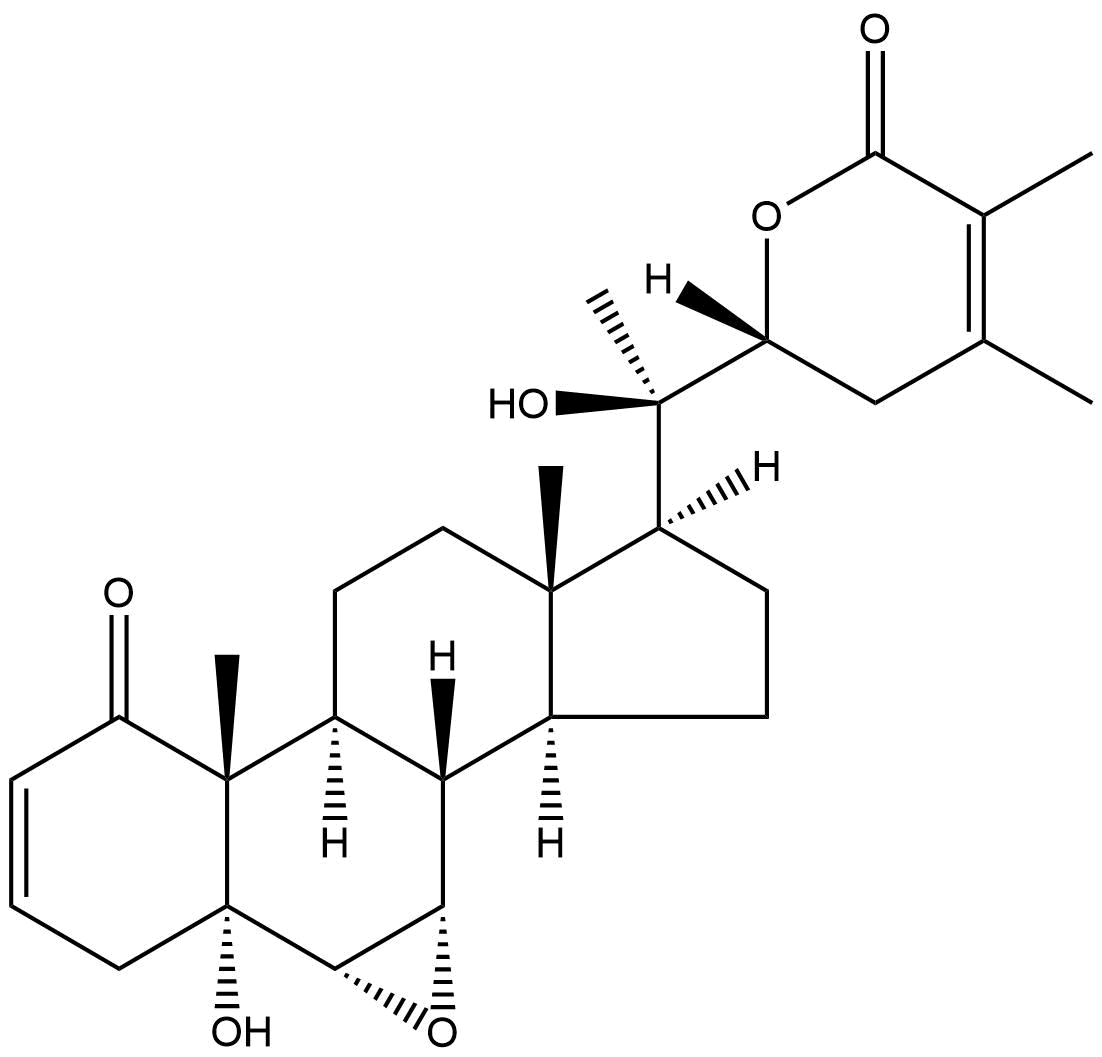


Product name: Withanolide A
Synonym name:
Catalogue No.: BP4207
Cas No.: 32911-62-9
Formula: C28H38O6
Mol Weight: 470.606
Botanical Source: Ashwagandha
Type of Compound: Terpenoids
Purity: 95%~99%
Analysis Method: HPLC-DAD or/and HPLC-ELSD
Identification Method: Mass, NMR
Packing: Brown vial or HDPE plastic bottle
Storage: Store in a well closed container, protected from air and light. Put into refrigerate or freeze for long term storage.
Whenever possible, you should prepare and use solutions on the same day. However, if you need to make up stock solutions in advance, we recommend that you store the solution as aliquots in tightly sealed vials at -20℃. Generally, these will be useable for up to two weeks.
The product could be supplied from milligrams to grams
Inquire for bulk scale.
For Reference Standard and R&D, Not for Human Use Directly.
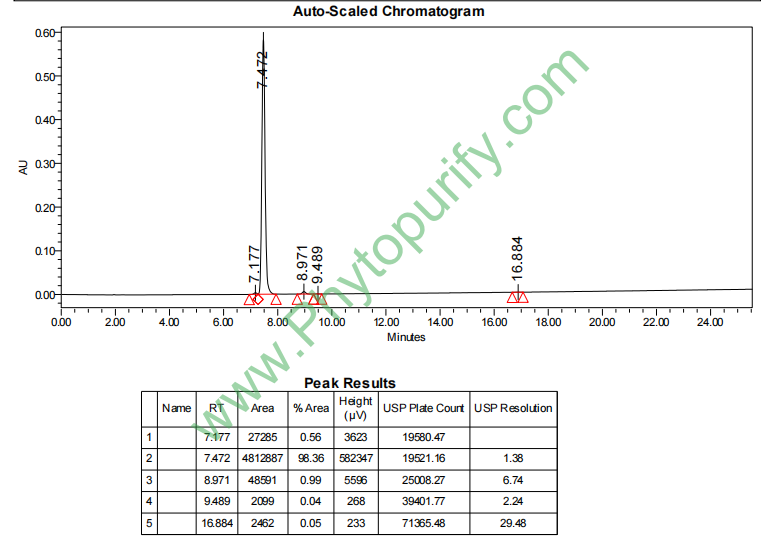
HPLC of Withanolide A
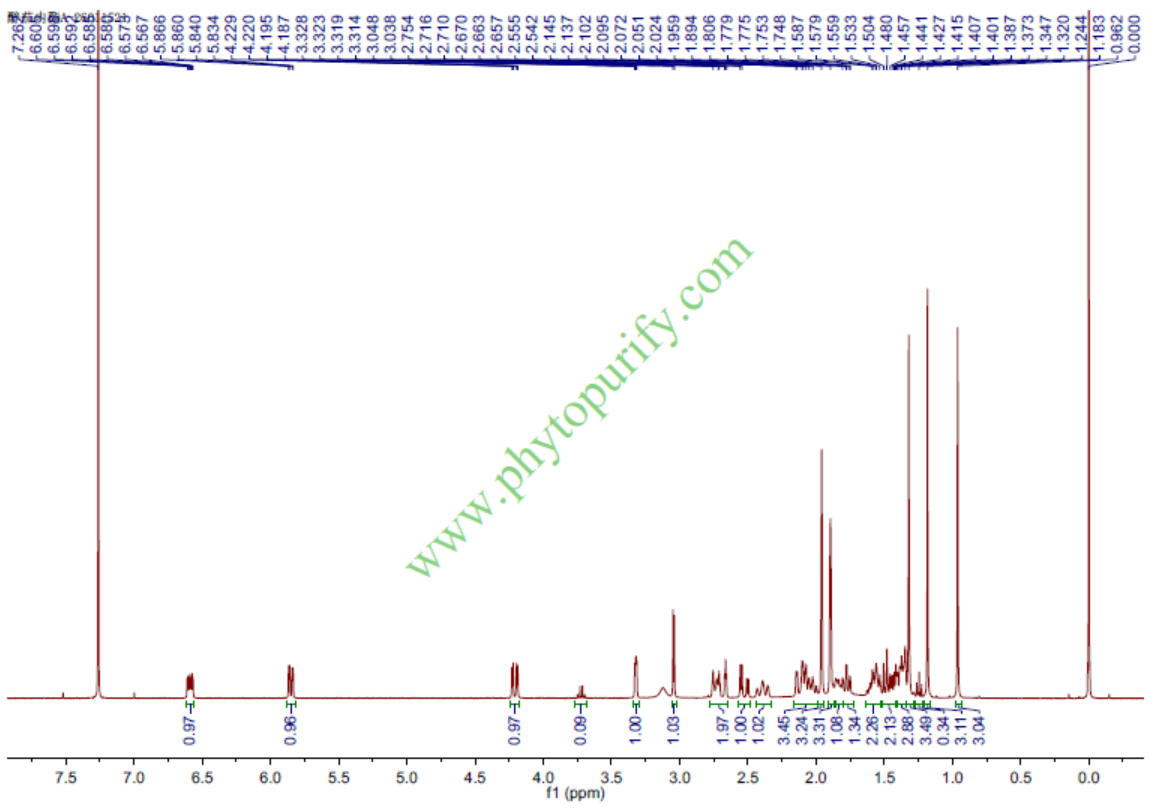
HNMR of Withanolide A
Storage conditions:Short-term storage at 2~8℃, long-term storage at -20 ~ -80℃
96.3600
3.0343
3.0345
.0124
2.8513
9.0660
High
81.1478
5.4192
No
No
No
No
Yes
No
0.0
Yes
No
No
Yes
Withanolide A (CAS number: 32911-62-9) is a natural steroid ester compound with significant biological activity, mainly isolated from the traditional Indian herb Ashwagandha (scientific name: Withania somnifera). As a widely used medicinal plant in traditional Indian medicine, Ashwagandha has attracted much attention due to its diverse pharmacological activities. As one of its main active ingredients, salvianolic acid A exhibits multiple biological effects such as anti-inflammatory, anti-tumor, and neuroprotective effects. In recent years, the potential of salvianolic acid A in inducing cell apoptosis, regulating inflammation, and studying neurodegenerative diseases has gradually been revealed, becoming a hot topic in natural product pharmacology research.
This article will provide a systematic review of the chemical structure and physicochemical properties, plant sources, and extraction methods of salvianolic acid A, with a focus on exploring its pharmacological activity and mechanism of action. Pharmacokinetic analysis will be conducted based on drug parameters, and the clinical application prospects will be discussed. The aim is to provide scientific basis and theoretical support for the drug development of this natural product.
Drunken eggplant lactone A belongs to the steroid lactone class, with a molecular formula of C28H38O6 and a molecular weight of 470.6060. Its structural features include a typical steroid skeleton and lactone ring, containing multiple hydroxyl and ketone groups, endowing it with strong biological activity. Its LogP value is 3.0343, indicating moderate lipid solubility, which is beneficial for membrane penetration; The polar surface area (TPSA) is 96.36 Å ², indicating that the molecule has a certain polarity that facilitates binding to biological targets.
Drunken eggplant lactone A has low water solubility (0.0124 mg/mL), but its high blood-brain barrier permeability gives it an advantage in the treatment research of neurological diseases. In addition, the hERG channel inhibition experiment showed a negative result, indicating a low risk of cardiac toxicity; The Ames mutagenicity test result was 0, indicating no significant mutagenicity and good safety.
Drunken Solanine A is mainly derived from the Indian plant Withania somnifera, which belongs to the Solanaceae family and the Solanaceae genus. Indian drunken eggplant is widely used in traditional Ayurvedic medicine, with various pharmacological activities such as regulating immunity, anti-inflammatory, antioxidant, and anti-tumor effects. Drunken eggplant lactone A, as one of its main active ingredients, varies in content in different plant parts and growth stages, with higher levels in roots and leaves.
The methods for extracting salvianolic acid A mainly include solvent extraction, ultrasound assisted extraction, and chromatographic separation. The commonly used solvents are ethanol, methanol, or ethyl acetate, and the extraction process is usually combined with cold soaking or reflux extraction to improve yield. The extraction solution is purified through multiple steps such as concentration, liquid-liquid distribution, and silica gel column chromatography, and finally the purity and structure are identified by high performance liquid chromatography (HPLC) and mass spectrometry (MS). In recent years, the application of supercritical CO2 extraction and membrane separation technology has also provided new ideas for the efficient extraction of coumarin A.
Drunken eggplant lactone A exhibits significant anti-inflammatory effects. In vitro and in vivo experiments have shown that it can significantly inhibit the expression and secretion of various inflammatory mediators, such as tumor necrosis factor (TNF), interleukin-6 (IL-6), nitric oxide synthase type 2 (NOS2), and prostaglandin synthase (PTGS1/PTGS2). Its anti-inflammatory effect is achieved by regulating the nuclear factor kappa B (NF - κ B) and signal transduction and transcriptional activation factor 3 (STAT3) pathways, reducing inflammatory responses and protecting tissues from damage.
Drunken eggplant lactone A can induce apoptosis in various tumor cells and exhibits good anti-tumor potential. Its mechanism of action involves activation of mitochondrial pathways, cell cycle arrest, and upregulation of pro apoptotic protein expression. Drunken eggplant lactone A promotes programmed cell death by activating the caspase family, particularly CASP1. In addition, it has inhibitory effects on tumor cell proliferation, migration, and invasion, demonstrating broad-spectrum anticancer activity.
Drunken eggplant lactone A has good neuroprotective function, especially showing potential therapeutic value in neurodegenerative disease models. Its high blood-brain barrier permeability enables it to effectively act on the central nervous system, alleviate oxidative stress and inflammatory reactions, and protect neurons from damage. Related studies have shown that salvianolic acid A can regulate TRPV1 and TRPA1 plasma channels, alleviate neuroinflammation and pain, and promote neurological function recovery.
The multi-target mechanism of action of Drunken Solanine A is the basis of its multiple pharmacological activities. Its main targets include:
At the molecular level, lactone A inhibits the transcription of pro-inflammatory genes by suppressing the NF - κ B signaling pathway, while activating antioxidant and anti apoptotic pathways, comprehensively regulating the balance between cell survival and death. In addition, its inhibitory effect on STAT3 further blocks the proliferation signals of inflammation and tumor cells.
The pharmacological parameters of Drunken Solanine A indicate that it has good potential for drug development. The molecular weight of 470.6 conforms to Lipinski's rule, with a LogP of approximately 3.03, indicating moderate lipid solubility and favorable oral absorption. The TPSA is 96.36, which is relatively high but still within an acceptable range, supporting its effective binding to the target. Low water solubility suggests the need to optimize solubility in formulation design to improve bioavailability.
Drunken eggplant lactone A has high blood-brain barrier permeability and is suitable for the treatment of central nervous system diseases. The negative inhibition of hERG channel and the absence of mutagenicity in Ames test indicate its high safety. Although there is currently limited detailed pharmacokinetic data on it, previous studies have shown that the bioavailability of salvianolic acid A is good after oral administration, and its metabolism in vivo is mainly carried out through the liver enzyme system. Further research is needed on the activity and toxicity of metabolites.
Drunken eggplant lactone A, as a multifunctional natural product, has broad clinical application potential. Its anti-inflammatory and anti-tumor activities provide new drug candidates for adjuvant therapy of autoimmune diseases, chronic inflammation, and various cancers. Especially in the field of neurodegenerative diseases such as Alzheimer's disease, Parkinson's disease, etc., Bacterone A has shown great application prospects due to its neuroprotective effects and good blood-brain barrier penetration.
Future research needs to focus on the pharmacokinetic optimization, formulation development, and clinical safety validation of salvianolic acid A. At the same time, combining modern molecular biology and medicinal chemistry methods, we will deeply analyze its mechanism of action and target network, and promote its clinical translation. In addition, the synergistic effects and potential drug interactions of Aconite A with other drugs are also worth paying attention to.
Drunken eggplant lactone A, as an important active ingredient in Indian drunk eggplant, has become a focus of natural product pharmacology research due to its unique steroid lactone structure and multi-target pharmacological activity. It exhibits significant biological effects in the fields of anti-inflammatory, anti-tumor, and neuroprotective effects, and has good drug efficacy and safety. In the future, through systematic pharmacokinetic studies, mechanism elucidation, and clinical trials, salvianolic acid A is expected to become a new natural drug for treating inflammation related diseases and neurodegenerative diseases, contributing new strength to human health.
