


Synonym name:
Catalogue No.: BP0595
Cas No.: 81525-13-5
Formula: C34H44O19
Mol Weight: 756.707
Botanical Source: Phtheirospermum japonicum, Forsythia koreana, Phlomis armeniaca, Scutellaria salviifolia, Marrubium vulgare and Forsythia viridissima
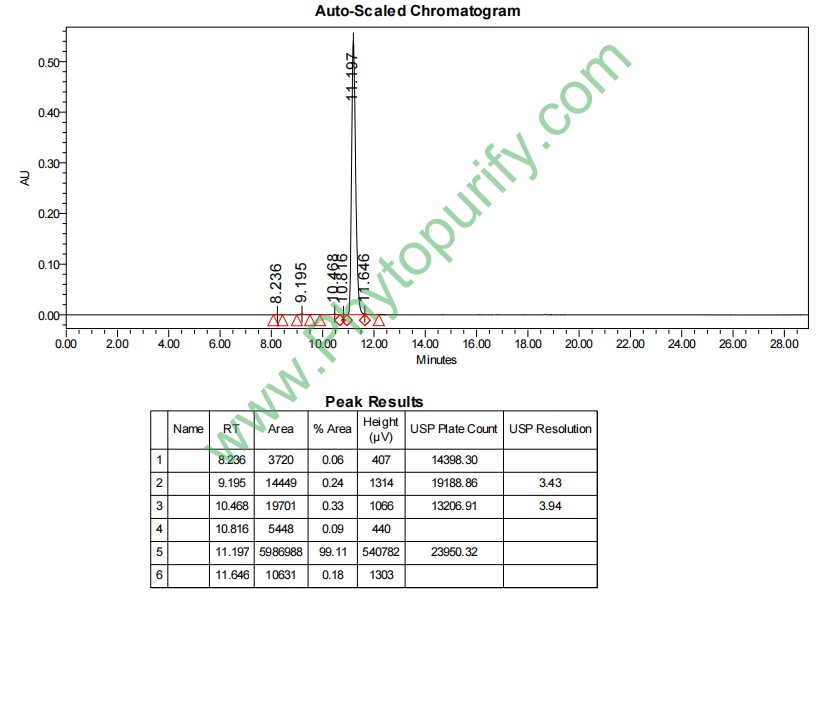
Purity: 95%~99%
Analysis Method: HPLC-DAD or/and HPLC-ELSD
Identification Method: Mass, NMR
Packing: Brown vial or HDPE plastic bottle
Can be supplied from milligrams to grams.
For Reference Standard and R&D, Not for Human Use Directly.
Inquire for bulk scale.
Description:
Forsythoside B inhibits inflammatory response, has antioxidant, antisepsis properties, and also has potent neuroprotective effects with a favorable therapeutic time-window, reduce of cerebral ischemia and reperfusion injury degree, attenuating blood-brain barrier (BBB) breakdown. Forsythoside B could inhibit TNF-alpha, IL-6, IκB and modulate NF-κB.
References:
Phytother Res. 2012 Jul;26(7):981-7.
Forsythoside B protects against experimental sepsis by modulating inflammatory factors.
METHODS AND RESULTS:
The present study investigated the effects of Forsythoside B on an experimental model of sepsis induced by caecal ligation and puncture (CLP) in rats and elucidated the potential mechanism in cultured RAW 264.7 cells. Results showed that Forsythoside B concentration-dependently down-regulated the levels of TNF-α, IL-6 and high-mobility group-box 1 protein (HMGB1) in lipopolysaccharide (LPS)-stimulated RAW264.7 cells, inhibited the IκB kinase (IKK) pathway and modulated nuclear factor (NF)- κB. Intravenous injection (i.v.) of Forsythoside B alone or plus Imipenem reduced serum levels of TNF-α, IL-6, HMGB1, triggering receptor expressed on myeloid cells (TREM-1) and endotoxin, while the serum level of IL-10 was up-regulated and myeloperoxidase (MPO) in lung, liver and small intestine was reduced. Meanwhile, i.v. of Forsythoside B alone or plus Imipenem reduced CLP-induced lethality in rats. These data indicated that the antisepsis effect of Forsythoside B is mediated by decreasing local and systemic levels of a wide spectrum of inflammatory mediators. Its antisepsis mechanism may be that Forsythoside Bbinds to LPS and reduces the biological activity of serum LPS, and inhibits NF-κB activition.
CONCLUSIONS:
Our studies enhance the case for the use of Forsythoside B in sepsis. Forsythoside B itself has promise as a therapy for the treatment of sepsis in humans.
Phytomedicine. 2010 Jul;17(8-9):635-9.
Cardioprotection with forsythoside B in rat myocardial ischemia-reperfusion injury: relation to inflammation response.
The present study was undertaken to examine the effect of Forsythoside B (FB) on rat myocardial ischemia-reperfusion (I/R) model and elucidate the potential mechanism.
METHODS AND RESULTS:
Left ventricular systolic pressure (LVSP) and +/-dp/dt(max) were detected. Blood samples were collected to determine serum levels of troponin T (Tn-T), TNF-alpha and IL-6. Hearts were harvested to assess histopathological change and infarct size, determine content of MDA, myeloperoxidase (MPO), SOD and GPx activities, analyze expression of high-mobility group box 1 (HMGB1), phosphor-I kappaB-alpha and phosphor-nuclear factor kappaB (NF-kappaB) in ischemic myocardial tissue by Western blot. Compared with control group, rats treatment with FB showed a significant recovery in myocardial function with improvement of LVSP and +/-dp/dt(max). The myocardial infarct volume, serum levels of Tn-T, TNF-alpha and IL-6, content of MDA and MPO activity in myocardial tissue were all reduced, protein expression of HMGB1, phosphor-I kappaB-alpha and phosphor-NF-kappaB were down-regulated, while attenuated the decrease of SOD and GPx activities. Besides, the infiltration of polymorph nuclear leukocytes (PMNs) and histopathological damages in myocardium were decreased in FB treated groups.
CONCLUSIONS:
These findings suggested that FB rescued cardiac function from I/R injury by limiting inflammation response and its antioxidant properties.
HPLC of Forsythoside B
Storage conditions:Short-term storage at 2~8℃, long-term storage at -20 ~ -80℃
304.2100
-.3947
-.4041
3.9302
.4750
.0758
Low
74.7133
5.3751
No
No
No
No
No
No
0.0
Yes
No
Yes
Yes
Forsythoside B (CAS number: 81525-13-5) is a traditional Chinese medicine derived from Forsythia suspensa(Forsythia suspensa)Phenylethanoid glycosides obtained through separation. As one of the important active ingredients in Forsythia suspensa, Forsythia suspensa glycoside B and its homolog Forsythia suspensa glycoside A together form the material basis of Forsythia suspensa's heat clearing and detoxifying, swelling reducing and dispersing effects. In recent years, with the deepening development of natural product chemistry and molecular pharmacology, Forsythia suspensa glycoside B has become an increasingly hot topic in pharmacological research due to its extensive and significant pharmacological activities, especially anti-inflammatory, antiviral, and immunomodulatory effects. Its unique chemical structure enables it to act on multiple key signaling pathways and molecular targets, demonstrating the potential for intervention in various disease models, especially in the fields of viral hepatitis, inflammatory diseases, and more. This article aims to systematically review the chemical properties, plant sources, pharmacological activities, mechanisms of action, pharmacological evaluation, and clinical application prospects of Forsythia suspensa glycoside B, in order to provide comprehensive scientific references for the in-depth research and development of this compound.
Forsythian glycoside B belongs to the phenylethanoid glycoside class, with a molecular formula of C34H44O19 and a molecular weight of 756.7070. Its core structure consists of caffeoyl groups, phenylethanolic glycosides, and multiple sugar units. Specifically, its structure includes a phenylethanolic glycoside (hydroxytyrosol) linked to a glucose through a glycosidic bond, and the 6-position hydroxyl of the glucose is further linked to a rhamnose to form a sugar chain. Meanwhile, the caffeoyl group is connected to the 4-hydroxy group of glucose through ester bonds. The structural characteristics of this polyhydroxy, polyphenolic hydroxyl, and caffeoyl group determine its unique physicochemical properties.
According to the analysis of the pharmacological parameters, the logarithm of the lipid water partition coefficient (LogP) of Forsythia suspensa glycoside B is -0.3947, indicating its good hydrophilicity. Its topological polar surface area (TPSA) is as high as 304.2100 Å ², which is closely related to the presence of multiple hydroxyl, sugar, and ester bonds in its molecule, and also indicates its strong hydrogen bonding ability. The water solubility value is 3.9302 (usually referring to LogS or related indicators, indicating moderate or good solubility), further confirming its hydrophilic properties. These properties collectively affect its absorption, distribution, metabolism, and excretion processes within living organisms. Higher polarity and larger TPSA typically result in weaker ability to penetrate cell membranes (especially the blood-brain barrier), which is consistent with the evaluation of "blood-brain barrier: low". In addition, preliminary in vitro safety evaluation showed no significant inhibitory effect on hERG potassium channels (hERG inhibition: No), and the Ames test result was 0.0, suggesting that it may not have mutagenicity, providing preliminary positive signals for its safety.
Forsythia suspensa glycoside B is mainly derived from the plant Forsythia suspensa in the family Rhinoceros(Forsythia suspensa The dried fruit (i.e. traditional medicinal herb "Forsythia suspensa") and leaves of (Thunb.) Vahl. Forsythia suspensa, as a classic traditional Chinese medicine, was first recorded in the "Shennong Bencao Jing". Its medicinal parts are mainly fruit. However, modern plant chemistry research has found that the leaves of Forsythia suspensa are also rich in various phenylethanoid glycosides, including Forsythia suspensa glycoside B, and the content may have development value.
The extraction of Forsythia suspensa glycoside B usually follows the conventional process of natural product chemistry. Firstly, dry and crush the forsythia plant material (fruit or leaves). Common extraction solvents include methanol, ethanol, or their different concentrations of aqueous solutions. Reflux extraction, ultrasound assisted extraction, or microwave-assisted extraction techniques are used to improve extraction efficiency. After filtration and concentration, the crude extract is preliminarily enriched and purified using macroporous adsorption resins (such as D101 and AB-8). Different concentrations of ethanol aqueous solutions are used for gradient elution, and Forsythia suspensa glycoside B is usually enriched in the elution site at specific concentrations (such as 30% -50% ethanol). Further purification depends on chromatographic techniques, including silica gel column chromatography, reverse phase silica gel column chromatography (such as ODS-C18), dextran gel column chromatography (such as Sephadex LH-20), and high-performance liquid chromatography. Among them, preparative high-performance liquid chromatography is the key technology for obtaining high-purity Forsythian B monomer. The optimization of extraction process often revolves around parameters such as solvent type, concentration, solid-liquid ratio, extraction temperature, and time, aiming to improve the yield and purity of the target compound.
Forsythian glycoside B exhibits diverse pharmacological activities, with research mainly focused on anti-inflammatory, antiviral, antioxidant, and cardiovascular and cerebrovascular protection.
anti-inflammatory activity This is one of the most in-depth areas of research on Forsythia suspensa glycoside B. Numerous in vitro and in vivo experiments have confirmed that Forsythian B can significantly inhibit the production of inflammatory mediators by macrophages (such as RAW264.7 cells) induced by inflammatory stimuli such as lipopolysaccharides (LPS). It can dose dependently reduce the levels of nitric oxide (NO) and prostaglandin E2 (PGE2), and significantly inhibit the gene expression and protein secretion of key pro-inflammatory cytokines such as tumor necrosis factor - α (TNF - α), interleukin-6 (IL-6), and interleukin-1 β (IL-1 β). In acute inflammation models such as carrageenan induced paw swelling in rats and xylene induced ear swelling in mice, as well as chronic inflammation models such as dextran sulfate induced colitis in mice, Forsythia suspensa glycoside B has shown good anti-inflammatory effects.
Antiviral activity The antiviral effect of Forsythia suspensa glycoside B, especially Anti Hepatitis B Virus (Anti HBV) Activity has been a research highlight in recent years. Research shows that forsythiaside B can inhibit the replication of hepatitis B virus in HepG2.2.15 and other cell models. Its role is reflected in many aspects: inhibiting the activity of hepatitis B virus DNA polymerase (HBV-POL), thereby interfering with the replication of the virus genome; Reduce the secretion of hepatitis B virus surface antigen (HBsAg) and e antigen (HBeAg); It may also have inhibitory effects on the expression of viral core protein (Core) and PreS1 antigen (PreS1). In addition, studies suggest that it may indirectly exert antiviral effects by affecting the function of the viral transcriptional regulatory protein HBx. These multi-target characteristics make them highly promising in the development of anti HBV drugs.
Antioxidant and Cardiovascular Protective Activities Due to its phenolic hydroxyl structure, Forsythia suspensa glycoside B has a strong ability to scavenge free radicals such as DPPH and ABTS, exhibiting significant in vitro antioxidant activity. In the animal models of myocardial ischemia/reperfusion injury and atherosclerosis, forsythiaside B can alleviate oxidative stress injury and inhibit the inflammatory reaction of vascular endothelial cells through its antioxidant and anti-inflammatory effects, thus playing the role of myocardial protection and anti atherosclerosis. Its traditional efficacy of promoting blood circulation may be related to this type of activity.
Other activities The study also found that Forsythia suspensa glycoside B has potential antibacterial and neuroprotective activities, but related research is still in the preliminary stage and needs further exploration.
The pharmacological effects of Forsythia suspensa glycoside B are closely related to its regulation of key intracellular signaling pathways, and its mechanism of action research mainly focuses on pathways such as nuclear factor kappa B (NF - κ B) and mitogen activated protein kinases (MAPKs).
The core regulatory role of NF - κ B signaling pathway NF - κ B is a core transcription factor that regulates inflammation, immunity, and cell survival. In the resting state, NF - κ B binds to its inhibitory protein I κ B and exists in the cytoplasm. When stimulated by LPS, TNF - α, etc., the I κ B kinase complex is activated, leading to phosphorylation and ubiquitination degradation of I κ B protein, thereby releasing NF - κ B (mainly p65/p50 dimer) to translocate to the nucleus and initiate transcription of downstream inflammatory cytokine genes. Research has shown that Forsythia suspensa glycoside B can effectively inhibit the phosphorylation and degradation of I κ B α, prevent nuclear translocation of NF - κ B p65 subunit, and reduce its binding activity with DNA. This directly leads to the inhibition of downstream gene expression of TNF - α, IL-6, IL-1 β, inducible nitric oxide synthase (iNOS), and cyclooxygenase-2 (COX-2). This is the core molecular mechanism by which it exerts a powerful anti-inflammatory effect.
Regulation of MAPKs signaling pathway The MAPKs family (including ERK, JNK, p38) also plays important roles in inflammatory responses and cellular stress. Forsythia suspensa glycoside B has been shown to inhibit the phosphorylation activation of JNK and p38 MAPK in LPS induced macrophages, but its effects on the ERK pathway have been reported differently. By inhibiting the JNK/p38 pathway, Forsythian B can further synergistically inhibit the activity of transcription factors such as AP-1, thereby suppressing the production of inflammatory mediators at multiple levels.
Potential targets for anti HBV effects In terms of anti HBV effects, the mechanism of action of Forsythian B involves direct interference with the virus's lifecycle. Its direct inhibition HBV-POL Activity is the key to blocking virus replication. At the same time, it can be lowered HBsAg and HBeAg The secretion may be related to its inhibition of viral protein synthesis or interference with viral particle assembly and secretion. Correct Core Protein and PreS1 The influence of antigens also suggests that they may act on the early steps of virus capsid assembly or virus attachment/invasion. In addition, considering the role of HBx protein in activating pathways such as NF - κ B in host cells to facilitate virus replication, the inhibition of NF - κ B by Forsythian B may indirectly weaken the pro viral function of HBx.
Other potential targets Forsythian glycoside B may also enhance cellular antioxidant defense by activating antioxidant pathways such as nuclear factor E2 related factor 2 (Nrf2)/heme oxygenase-1 (HO-1), which is related to its cardiovascular and cerebrovascular protective effects.
Although Forsythia suspensa glycoside B has significant in vitro activity, its drug like and pharmacokinetic (PK) properties are the key factors determining its successful development as a drug.
Absorption, Distribution, Metabolism, and Excretion (ADME):
Analysis of drug properties parameters As mentioned earlier, its molecular weight (756.7) is slightly higher than the upper limit of the commonly considered "five rules of class drugs" (<500), but its TPSA is too high (>140 Å ² is generally considered unfavorable for membrane permeability), and LogP is negative. These parameters collectively indicate that its oral absorption may be poor. This is the main obstacle to its development as an oral formulation.
Existing pharmacokinetic studies At present, there are relatively limited research reports on the pharmacokinetics of Forsythia suspensa glycoside B system. Some existing pharmacokinetic studies on animals, such as rats, have shown that the plasma concentration time curve after intravenous administration conforms to a two compartment model and eliminates quickly; After oral administration, the blood drug concentration is low and the bioavailability is not high. This is consistent with its predicted physical and chemical properties. Therefore, improving its bioavailability is a key focus of future formulation research, and possible strategies include preparing prodrugs, using nanocarrier systems (such as liposomes, nanoparticles), phospholipid complexes or self microemulsions, and other novel delivery technologies.
As an active molecule derived from traditional Chinese medicine, Forsythia suspensa glycoside B has broad clinical application prospects, but also faces many challenges.
Potential clinical application directions:
Challenges and Prospects Faced:
Forsythia suspensa glycoside B is a phenylethanolic glycoside compound with multiple pharmacological activities discovered from traditional Chinese medicine Forsythia suspensa. It exerts strong anti-inflammatory effects by effectively inhibiting key inflammatory signaling pathways such as NF - κ B; Meanwhile, by interfering with the HBV lifecycle through multiple targets, it demonstrates antiviral potential. Although its high polarity and molecular weight pose significant challenges for drug development, particularly in terms of low oral bioavailability, its clear mechanism of action, good in vitro activity, and preliminary safety data provide a solid foundation for its further development. In the future, through innovation in drug delivery technology, structural optimization, and in-depth pharmacological and clinical research, Forsythia suspensa glycoside B is expected to gradually move from a potential natural active molecule to a candidate drug or health product raw material with clinical application value in the fields of antiviral, anti-inflammatory, and cardiovascular and cerebrovascular protection, becoming one of the successful examples of modernization of traditional Chinese medicine and research and development of new natural product drugs.
