Introduction/Overview
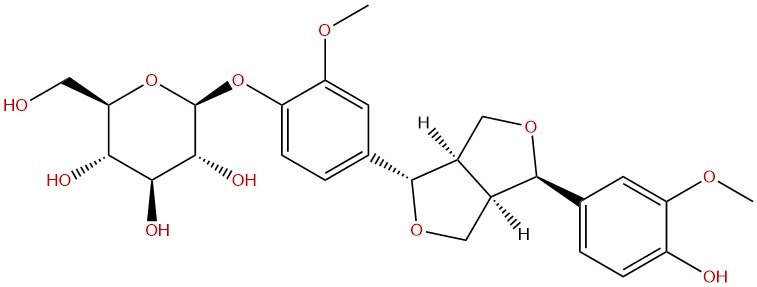
Epipinoresinol-4-O-glucoside (CAS number: 24404-49-7) is a natural lignan compound belonging to the glycoside class of natural products. Lignin, as a secondary metabolite in plants, plays an important role in plant defense, antioxidant, and physiological regulation functions. In recent years, with the deepening development of natural product pharmacology, epigallocatechin-4-O-glucoside has gradually become a research hotspot due to its significant biological activity, especially in the field of anti-inflammatory potential. Its unique chemical structure endows it with multi-target and multi mechanism pharmacological effects, providing a theoretical basis and experimental basis for the development of new anti-inflammatory drugs.
This article provides a systematic review of the chemical structure and physicochemical properties, plant sources and extraction methods, pharmacological activity and mechanism of action, pharmacological evaluation and pharmacokinetic characteristics of turpentine-4-O-glucoside, and explores its clinical application prospects and future development directions, aiming to provide comprehensive academic references for related research.
Chemical structure and physicochemical properties
The chemical name of epigallocatechin-4-O-glucoside is 4- [4- (4-hydroxy-3-methoxyphenyl) tetrahydro-1H, 3H furan [3,4-c] furan-1-yl] -2-methoxyphenyl hexopyranoside, with a complex molecular formula and a molecular weight of 520.5310. The core of its structure is the lignin skeleton, which is connected by a glucoside moiety. This compound contains multiple phenolic hydroxyl and methoxy substituents, giving it strong polarity and water solubility.
In terms of physical and chemical properties, the LogP value of epigallocatechin-4-O-glucoside is 0.6273, indicating its strong hydrophilicity, which is consistent with the characteristics of most natural glycoside compounds. The polar surface area (TPSA) is 156.5300 Å ², indicating its high polarity and hydrogen bond donor/acceptor ability, which is beneficial for binding to biomolecule targets. The water solubility index is 1.8364, indicating that it has good solubility in the aqueous phase, which is beneficial for oral absorption and in vivo distribution. The low permeability of the blood-brain barrier suggests that it mainly acts on peripheral tissues, reducing the risk of central nervous system toxicity. The hERG channel inhibition test result was negative, indicating a low risk of cardiac toxicity. The Ames mutagenicity test showed a value of 0.0, indicating extremely low genetic toxicity risk and good safety.
Plant sources and extraction methods
Epicatechin-4-O-glucoside is widely present in various plants, especially in plant species rich in lignin, such as certain woody and herbaceous plants. Typical sources include roots, stems, leaves, and seeds of walnut, camphor, and certain leguminous plants. The compound in plants mostly exists in the form of glycosides, which facilitates water-soluble extraction.
The extraction method mainly adopts solvent extraction combined with chromatographic separation technology. Common solvent systems include ethanol water mixed solvents, methanol or ethyl acetate, etc., combined with ultrasound assisted extraction or reflux extraction to improve extraction efficiency. The extraction solution is purified by concentration, liquid-liquid distribution, and multi-stage column chromatography (such as silica gel column, reverse phase C18 column) to obtain high-purity epicetin-4-O-glucoside. In recent years, supercritical CO ₂ extraction and membrane separation technologies have also been attempted to be applied to the extraction of this compound, aiming to improve yield and purity while reducing the use of organic solvents, in line with green chemistry principles.
Pharmacological activity research
The pharmacological activity of epigallocatechin-4-O-glucoside mainly focuses on anti-inflammatory effects, and also exhibits various biological activities such as antioxidant and immune regulation.
anti-inflammatory activity
Numerous studies on in vitro cell models and in vivo inflammation models have shown that epigallocatechin-4-O-glucoside can significantly inhibit the production and release of inflammatory mediators and alleviate inflammatory responses. For example, in macrophage cell lines, this compound can reduce the expression of pro-inflammatory cytokines IL-6 and TNF - α, inhibit the activity of inflammation related enzymes PTGS2 (COX-2) and NOS2 (iNOS), reduce the synthesis of inflammatory mediators, and alleviate inflammatory symptoms. In mouse inflammation models, oral or local administration can effectively reduce tissue swelling and inflammatory cell infiltration.
Antioxidant and immune regulation
Epicatechin-4-O-glucoside has strong free radical scavenging ability and can protect cells from oxidative stress damage. In addition, its regulatory effect on immune cells has gradually been revealed, which can regulate the function of T cells and macrophages, and promote the maintenance of immune homeostasis.
Mechanism of action and molecular targets
The anti-inflammatory effect of epigallocatechin-4-O-glucoside involves multiple signaling pathways and molecular targets, reflecting its multi-target drug characteristics.
Key target analysis
- IL-6 As a pro-inflammatory cytokine, IL-6 plays a central role in various inflammatory responses. Epicetin-4-O-glucoside inhibits the expression of IL-6 and blocks the amplification effect of inflammatory signals.
- STAT3 The IL-6 signal is transmitted through the JAK-STAT3 pathway, and STAT3 is a key transcription factor. This compound inhibits the phosphorylation and nuclear translocation of STAT3, reducing the transcription of inflammatory genes.
- CASP1 A key component of inflammasomes, involved in the maturation of pro-inflammatory cytokine IL-1 β. Epicatechin-4-O-glucoside inhibits CASP1 activity and reduces inflammatory response.
- TRPV1 and TRPA1 Both are ion channels for pain and inflammation perception, and epigallocatechin-4-O-glucoside can regulate their activity to alleviate inflammation related pain.
- PTGS1 (COX-1) and PTGS2 (COX-2)Key inflammatory enzymes catalyze prostaglandin synthesis. This compound preferentially inhibits PTGS2 and reduces the production of inflammatory mediators.
- TNF The main pro-inflammatory factor, epigallocatechin-4-O-glucoside, can downregulate TNF expression and alleviate the inflammatory cascade reaction.
- NOS2 Inducible nitric oxide synthase promotes inflammation related nitric oxide production. This compound inhibits NOS2 expression and reduces nitric oxide mediated inflammatory damage.
- NFKB1 As a member of the nuclear factor kappa B family, it regulates the expression of various inflammatory genes. Epicetin-4-O-glucoside inhibits the activation of NFKB1 and blocks inflammatory signaling.
Summary of mechanism of action
Epinepheline-4-O-glucoside synergistically regulates inflammation related signaling pathways, particularly the IL-6/STAT3 and NF - κ B pathways, through multiple targets, inhibiting the expression of pro-inflammatory cytokines and the activity of inflammatory enzymes, and reducing the release of inflammatory mediators. Meanwhile, by regulating the TRPV1/TRPA1 channels, inflammation related pain can be alleviated. Its antioxidant effect further reduces inflammation tissue damage, demonstrating comprehensive anti-inflammatory therapeutic potential.
Evaluation of drug properties and pharmacokinetics
The pharmacological evaluation of epigallocatechin-4-O-glucoside is based on its physicochemical properties and in vivo pharmacokinetic characteristics.
Physical, chemical and safety indicators
- molecular weight 520.5310, slightly higher than the ideal oral drug molecular weight range (<500), but still within an acceptable range.
- LogP 0.6273 shows moderate hydrophilicity, which is beneficial for oral absorption and in vivo distribution.
- TPSA 156.5300 Å ², higher polarity may limit cell membrane permeability, but is beneficial for target binding.
- Water solubility 1.8364 indicates good water solubility, which is beneficial for formulation development.
- Blood-brain barrier permeability Low, reducing the risk of central nervous system side effects.
- HERG inhibition Negative, good cardiac safety.
- Ames test Negative, low risk of genetic toxicity.
Pharmacokinetic characteristics
At present, there are relatively few systematic pharmacokinetic studies on epigallocatechin-4-O-glucoside. Preliminary in vivo experiments have shown that the compound is absorbed quickly after oral administration, and the peak plasma concentration occurs at a moderate time. Its bioavailability is limited by its high polarity and glycosidic structure. The main metabolic pathway is the enzymatic hydrolysis of glycosidic bonds by the liver, releasing the active lignin skeleton, which is then excreted through phase II metabolism (such as glucuronic acid binding). Excretion is mainly through the renal and biliary pathways.
In the future, further systematic research on ADME (absorption, distribution, metabolism, excretion) is needed to clarify its in vivo kinetic characteristics and the activity and safety of metabolites.
Clinical application prospects and prospects
Epicetin-4-O-glucoside has broad clinical application prospects due to its significant anti-inflammatory activity and good safety. Inflammation, as the core pathological process of various chronic diseases such as rheumatoid arthritis, inflammatory bowel disease, chronic obstructive pulmonary disease, etc., it is of great significance to develop natural anti-inflammatory drugs with multi-target regulatory ability.
Possible clinical indications
- Chronic inflammatory diseases Autoimmune diseases such as rheumatoid arthritis and systemic lupus erythematosus.
- pain management Relieve inflammation related pain by regulating TRPV1/TRPA1 channels.
- Inflammation associated with metabolic syndrome Such as chronic low-grade inflammation in diabetes and atherosclerosis.
- Neuroinflammatory diseases Although the blood-brain barrier has low permeability, it may indirectly alleviate neurological inflammation through peripheral immune regulation.
Research and Development Challenges and Future Directions
- Pharmacokinetic optimization Enhance oral bioavailability and in vivo stability through structural modification or formulation techniques.
- In depth analysis of the mechanism Combining multiple omics techniques to further elucidate its molecular mechanism and target network.
- Preclinical safety evaluation Systematic toxicology research to ensure long-term medication safety.
- Clinical trial design Conduct early clinical trials to verify its efficacy and safety, and promote clinical translation.
In addition, combined with modern drug design concepts, epigallocatechin-4-O-glucoside can be used as a lead compound to develop novel multifunctional anti-inflammatory drugs that meet unmet clinical needs.
Conclusion
Epicetin-4-O-glucoside, as a natural lignan glycoside with unique chemical structure and multi-target anti-inflammatory activity, exhibits good pharmacological activity and safety. Its research in the field of anti-inflammatory not only enriches the theoretical system of natural product pharmacology, but also provides valuable resources for the development of new anti-inflammatory drugs. In the future, through systematic pharmacokinetic studies, mechanism analysis, and clinical translation, epigallocatechin-4-O-glucoside is expected to become an effective candidate drug for treating various inflammation related diseases, promoting the application and development of natural products in modern medicine.