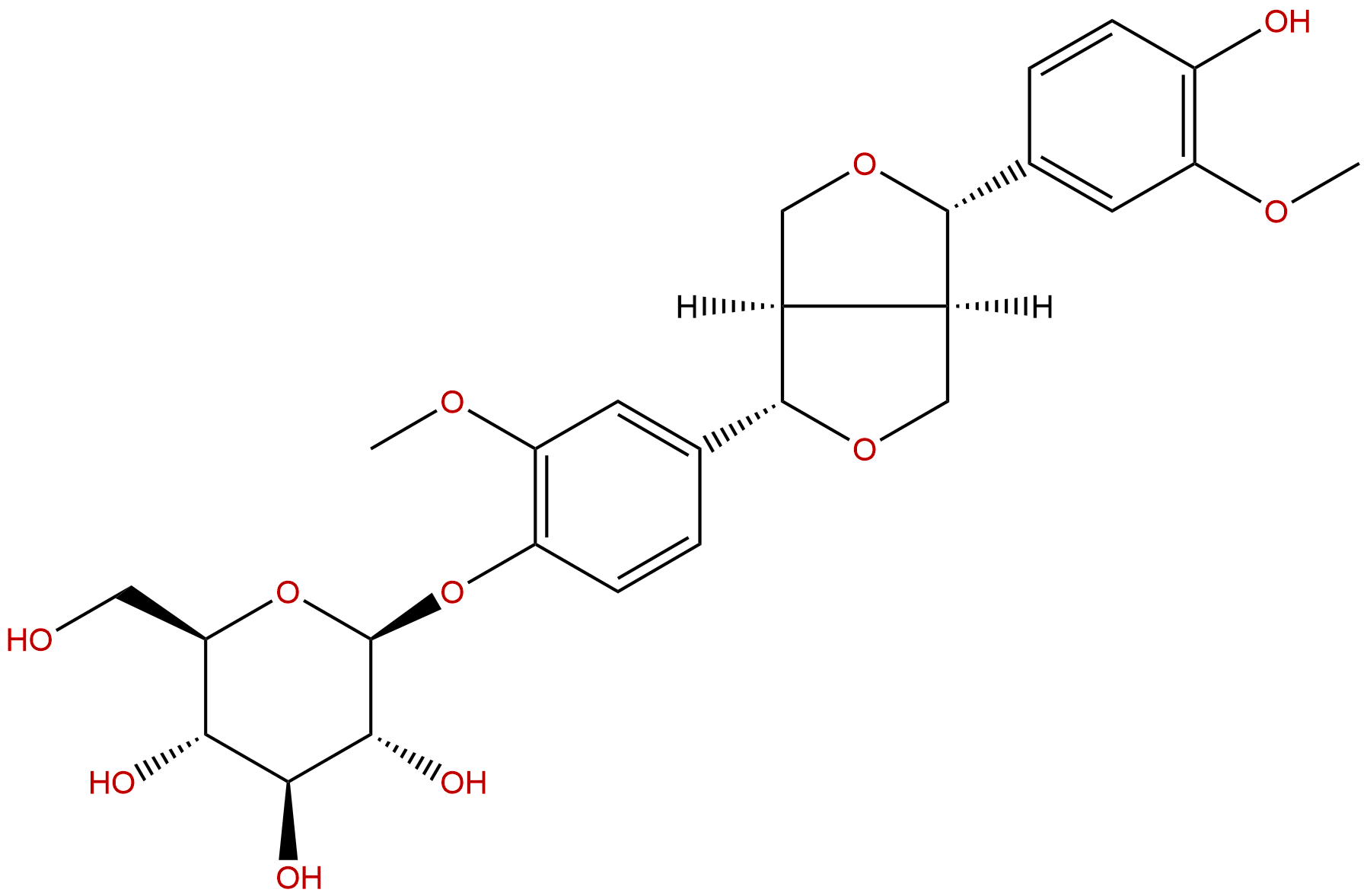


Product name: Pinoresinol 4-O-glucoside
Synonym name:
Catalogue No.: BP3317
Cas No.: 69251-96-3
Formula: C26H32O11
Mol Weight: 520.531
Botanical Source:
Physical Description: Powder
Type of Compound: Lignans
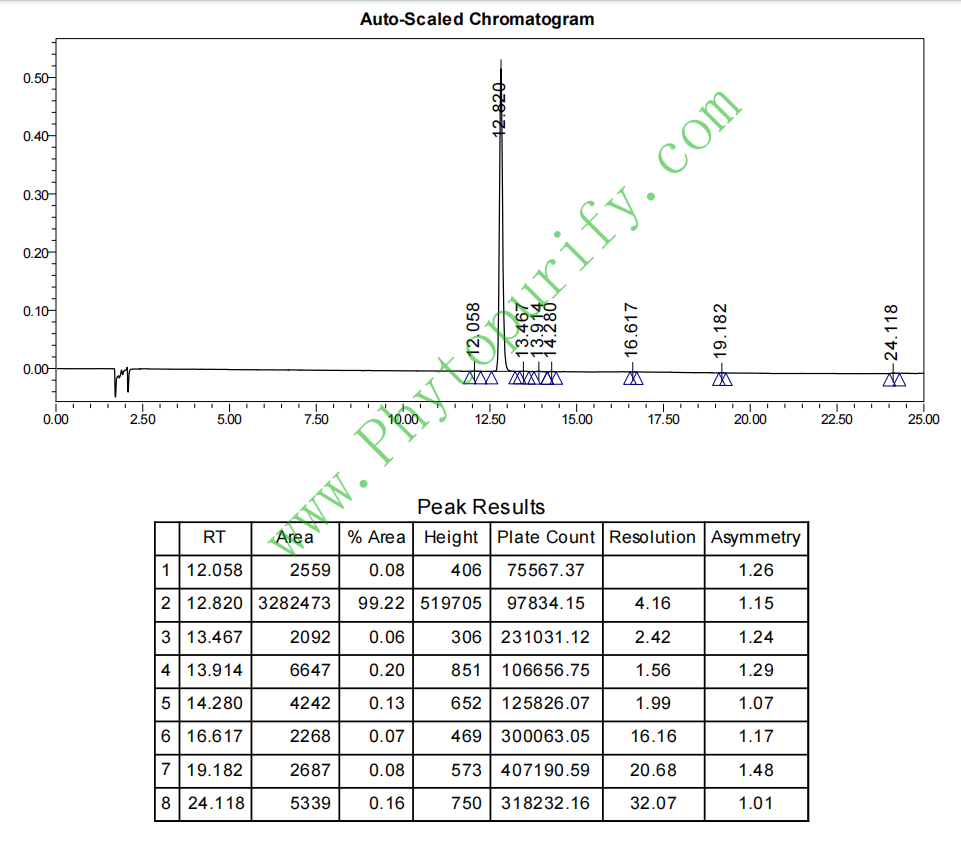
Purity: 95%~99%
Analysis Method: HPLC-DAD or/and HPLC-ELSD
Identification Method: Mass, NMR
Packing: Brown vial or HDPE plastic bottle
The product could be supplied from milligrams to grams. Inquire for bulk scale.
We provide solution to improve the water-solubility of compounds, thereby facilitating the variety of activity tests and clinic uses.
For Reference Standard and R&D, Not for Human Use Directly.
HPLC of Pinoresinol 4-O-glucoside
Storage conditions:Short-term storage at 2~8℃, long-term storage at -20 ~ -80℃
156.5300
.6246
.6232
1.7882
.8323
.2036
Low
76.2994
4.4639
No
No
No
No
No
No
0.0
Yes
No
No
Yes
Pinoresinol-4-O-glucoside is a naturally occurring lignan glycoside compound with a CAS number of 69251-96-3, a molecular formula of C26H32O11, and a molecular weight of approximately 520.53 g/mol. Lignin is a class of phenylpropanoid secondary metabolites widely present in the plant kingdom, typically composed of two phenylpropanoid units connected by a β - β 'bond, and possessing diverse biological activities. Pinaresin-4-O-glucoside is a glycoside derivative formed by attaching a glucose group to the hydroxyl group at position 4 of Pinaresinol. This glycosylation modification can significantly alter its water solubility, stability, and bioavailability.
This compound is mainly derived from plants in the Oleaceae family Weeping Forsythia(Forsythia suspensa)Separated from the middle. Forsythia suspensa is a commonly used traditional Chinese medicine herb for clearing heat and detoxifying. Its fruit (Forsythia suspensa) and stem and leaves (Forsythia suspensa leaves) are both used in medicine. Modern research has found that Forsythia suspensa is rich in various lignans, among which turpentine-4-O-glucoside is one of them and is considered an important material basis for its pharmacological effects.
Early research revealed the role of turpentine-4-O-glucoside in plant defense, such as serving as a defensive substance for certain insects (such as caterpillars) after feeding. However, what is even more remarkable is its potential medicinal value. Current research indicates that this compound is capable of Significantly enhance tumor necrosis factor related apoptosis inducing ligand (TRAIL) - induced apoptosis in cancer cells It demonstrates the potential for anti-tumor sensitization. More systematic and in-depth research focuses on its impact on The protective function of the skeletal system Especially its anti-osteoporosis Its activity has made it a hot topic molecule in the field of natural product drug development.
This article will provide a systematic and professional scientific interpretation of this compound from the aspects of its chemical structure, plant origin, pharmacological mechanism of action, medicinal evaluation, and research prospects.
The chemical structure of turpentine-4-O-glucoside is based on the lignin skeleton of turpentine. Pine resin itself is a tetrahydrofuran type lignin composed of two phenylpropane units with methoxy and hydroxyl groups, connected by two β - β 'bonds (i.e. 8-8' and 7-O-9 '/9-O-7'). In turpentine-4-O-glucoside, a glucose group is connected to a phenolic hydroxyl group (speculated to be at position 4) of the parent nucleus of turpentine through a glycosidic bond, forming lignan glycoside.
Its SMILES string(COc1cc([C@H]2OC[C@H]3[C@@H]2CO[C@@H]3c2ccc(O[C@@H]3O[C@H](CO)[C@@H](O)[C@H](O)[C@H]3O)c(OC)c2)ccc1O)Accurately described its atomic connection sequence and stereochemistry. From the string, multiple chiral centers (indicated by the @ symbol) can be seen, indicating that this is a molecule with a specific stereoconfiguration, usually naturally occurring as one of the (-) - or (+) - enantiomers, and its biological activity may be closely related to the specific stereoconfiguration.
Analyze its physicochemical properties based on the provided pharmacological parameters:
- Molecular weight (MW):520.53 g/mol, Slightly higher than the commonly considered "drug like" molecular weight threshold (500 Da), but still within an acceptable range, especially for natural product derivatives.
- Lipid water partition coefficient (LogP/LogD)LogP is approximately 0.62, and LogD (usually 7.4 at a specific pH) is approximately 0.62. This indicates that the compound has Moderate lipophilicity It is neither highly lipophilic (LogP>5) nor highly hydrophilic (LogP<0). This balance is beneficial for its distribution within living organisms.
- Topological Polarity Surface Area (TPSA)Up to 156.53 Å ². TPSA is an important parameter for predicting molecular membrane permeability, and high TPSA is typically associated with Low membrane permeability relevant. This value far exceeds the threshold of common oral medications (about 140 Å ²), indicating that their ability to cross cell membranes through passive diffusion (such as intestinal absorption, blood-brain barrier) may be weak.
- Water solubility The value is 1.7882 (usually measured in mg/mL or log mol/L, not specified here, but inferred from LogP and structure), indicating that it has a certain degree of water solubility, mainly due to the introduction of glucose groups.
- Caco-2 permeability 0.2036 (usually on the order of apparent permeability coefficient Papp × 10 ⁻⁶ cm/s), with a low value, confirms the difficulty of membrane permeation caused by high TPSA, suggesting that its oral absorption may be poor.
- Blood-brain barrier (BBB) penetrability Marked as' low ', it conforms to the general rule of high TPSA and moderate LogP molecules, indicating that it is not easily able to enter the central nervous system.
In summary, turpentine-4-O-glucoside is a medium-sized polar molecule with a glycosidic structure, and its prominent characteristics are Good water solubility but poor membrane permeability This has a significant impact on its administration method and pharmacokinetic properties.
The main plant source of turpentine-4-O-glucoside is Forsythia suspensa(Forsythia suspensa)Forsythia suspensa is a deciduous shrub in the Oleaceae family, and its dried fruit is the famous traditional Chinese medicinal herb "Forsythia suspensa", which is included in the Chinese Pharmacopoeia. Forsythia suspensa has a slightly cold nature, a bitter taste, and belongs to the lung, heart, and small intestine meridians. It has Clearing heat and detoxifying, reducing swelling and dispersing nodules, and dispersing wind and heat Its efficacy is commonly used in clinical practice to treat diseases such as wind heat cold, initial onset of warm diseases, high fever, irritability and thirst, carbuncles, sores and toxins, and scrofula and phlegm nuclei.
In classic Chinese medicine formulas, Forsythia suspensa is widely used, such as Yinqiao Powder (for treating wind heat and cold), Qingying Decoction (for treating heat entering the bloodstream), etc. Traditionally, its medicinal parts are mainly fruits, but modern research also focuses on the resource utilization of its stems and leaves (Forsythia suspensa leaves).
Modern plant chemistry research has isolated and identified various active ingredients from Forsythia suspensa, including phenylethanoid glycosides (such as Forsythia suspensa glycosides), lignans (such as turpentine and turpentine glycosides), flavonoids, volatile oils, etc. Among them, lignans are considered important contributors to the anti-inflammatory, antioxidant, and hepatoprotective effects of Forsythia suspensa. As a characteristic lignan glycoside in Forsythia suspensa, turpentine-4-O-glucoside has attracted attention due to its clear biological activity, although its content is not the highest.
Although traditional applications do not directly target osteoporosis, according to traditional Chinese medicine theory, "the kidney governs the bone and generates marrow", some medicinal herbs with kidney tonifying effects are often used to treat bone weakness (similar to osteoporosis). Although Forsythia suspensa is mainly used for clearing heat and detoxifying, the lignans it contains may indirectly or directly benefit bone health through multi-target regulatory mechanisms. This provides a traditional basis and material basis for modern research to discover anti osteoporosis lead compounds from Forsythia suspensa.
The pharmacological activity research of turpentine-4-O-glucoside is currently mainly focused on anti-osteoporosis and Anti tumor sensitization There are two aspects, among which the mechanism of anti osteoporosis research is more systematic and in-depth. Its mechanism of action is closely related to regulating multiple key targets related to bone metabolism.
Osteoporosis is a systemic bone disease characterized by reduced bone mass, destruction of bone microstructure, and increased bone fragility. The dynamic balance of bone metabolism depends on osteoblast mediated bone formation and osteoclast mediated bone resorption. The anti osteoporosis effect of turpentine-4-O-glucoside is mainly reflected in Promote osteoblast differentiation and bone formation Up there.
According to the provided target information, its mechanism of action involves the following key targets:
ESR1 (estrogen receptor alpha)Estrogen plays a central role in maintaining bone homeostasis. Estrogen inhibits bone resorption and promotes bone formation by binding to estrogen receptors (ESR) on osteoblasts and osteoclasts. Pinacetin-4-O-glucoside may serve as a potential phytoestrogens Or estrogen receptor modulators, which interact with ESR1 to mimic or enhance the protective effect of estrogen, thereby inhibiting osteoclast activity and stimulating osteoblast function. This is a classic pathway through which many lignans, such as open-loop isoquercetin, exert bone protective effects.
RUNX2 (Runt related transcription factor 2)This is the process of osteoblast differentiation and bone formation Main regulatory transcription factors RUNX2 can activate the expression of numerous downstream osteogenic specific genes, such as osteocalcin and type I collagen. Research has shown that turpentine-4-O-glucoside can upregulate the expression and transcriptional activity of RUNX2 in osteoblasts, thereby initiating and promoting osteogenic differentiation programs.
SP7(Osterix)This is another key osteogenic specific transcription factor located downstream of RUNX2. RUNX2 induces the expression of SP7, which is crucial for the differentiation of pre osteoblasts into mature osteoblasts. Rosin-4-O-glucoside synergistically promotes osteogenic differentiation by activating the RUNX2-SP7 signaling axis.
BMP2 (Bone morphogenetic protein 2)BMPs are members of the TGF - β superfamily and powerful bone formation inducers. BMP2 can activate the Smad signaling pathway, thereby strongly inducing the expression of RUNX2. Pinacetin-4-O-glucoside may activate downstream osteogenic differentiation pathways by upregulating BMP2 expression or enhancing its signal transduction.
ALP (alkaline phosphatase)This is not a gene target, but rather an early differentiation of osteoblasts Key functional markers The increase in ALP activity marks the initiation of osteoblast differentiation process and the beginning of extracellular matrix maturation. After treatment of osteoblasts with turpentine-4-O-glucoside, the activity of ALP can be significantly increased, which is direct functional evidence for its promotion of osteogenic differentiation.
Integration of mechanism of action Overall, turpentine-4-O-glucoside may activate BMP2 signaling directly or indirectly (such as phytoestrogenic effects), thereby upregulating the expression of core transcription factors RUNX2 and SP7. The activation of this transcriptional regulatory network ultimately leads to upregulation of osteogenic differentiation markers (such as ALP) and enhanced extracellular matrix mineralization, thereby promoting new bone formation. Meanwhile, its potential estrogen receptor activation ability also helps to suppress excessive bone resorption. This multi-target and synergistic characteristic gives it an advantage in regulating bone metabolism balance.
The existing description indicates that the compound can "greatly sensitize cancer cells to TRAIL induced apoptosis". TRAIL is a member of the tumor necrosis factor family and can selectively induce apoptosis in cancer cells with low toxicity to normal cells, but many cancer cells resist it. Rosin-4-O-glucoside, as a sensitizer, may overcome this resistance and enhance the efficacy of TRAIL by regulating the apoptosis signaling pathway in cancer cells (such as downregulating apoptosis inhibitory proteins c-FLIP, XIAP, or activating the caspase cascade). This activity is different from its mechanism of anti osteoporosis effect, demonstrating the complexity of multi-target action of natural products. However, the depth and breadth of research in this direction are currently not as good as research on anti osteoporosis.
Drug efficacy assessment aims to predict the likelihood of a compound developing into a successful drug. We combined Lipinski's Rule of Five (Ro5) and other key parameters to analyze turpentine-4-O-glucoside:
Lipinski's Five Rules Compliance Status:
1. Molecular weight ≤ 500 Da Not compliant (520.53>500).
2. Lipid water partition coefficient LogP ≤ 5 Meets (0.62<<5).
3. Number of hydrogen bond donors (HBD) ≤ 5 From a structural perspective, there are multiple hydroxyl groups on the sugar group, and with the addition of phenolic hydroxyl groups on the lignin core, the HBD number may be close to or slightly exceed 5.
4. Number of hydrogen bond acceptors (HBA) ≤ 10 There are multiple ether bonds, sugar epoxy atoms, and hydroxyl groups in the molecule, and the number of HBAs far exceeds 10 (the molecular formula C26H32O11 has 11 O atoms, all of which are potential HBAs).
Conclusion The compound is clearly violate The multiple terms in Lipinski's Five Rules (molecular weight, HBA number, and possibly HBD number). Ro5 is mainly used to predict the absorption characteristics of small molecule oral drugs, and violating Ro5 usually means Oral bioavailability may be low。
In depth analysis based on other pharmacological parameters:
- absorb The high TPSA (156.53) and low Caco-2 permeability (0.2036) directly confirm its Poor passive absorption in the intestine This is closely related to its glycoside structure, high polarity, and relatively high molecular weight. After oral administration, it may mainly stay in the intestine or rely on the gut microbiota to hydrolyze the glucose group and absorb its aglycone (turpentine).
- distribution The plasma protein binding rate (PPB) is about 76.3%, which is moderately high and can affect its free drug concentration. The low penetration of BBB indicates that it is not suitable for the treatment of central nervous system diseases, but for anti osteoporosis (peripheral effects), this may avoid central side effects.
- Metabolism and toxicity:
-The Ames test (0.0) and chromosome aberration (none) results are negative, indicating No direct genetic toxicity。
-HERG inhibition (No) indicates its Low risk of cardiac toxicity This is an important security advantage.
-In serum biochemical indicators, there may be indications that Alkaline phosphatase (Ser_LK) and alanine aminotransferase (Ser_LT) influential. It is worth noting that an increase in ALP is a manifestation of its pharmacological activity (promoting osteogenesis) and needs to be distinguished from pathological ALP elevation caused by liver injury. Elevated ALT requires vigilance against potential liver cell effects, and close attention should be paid to liver toxicity in subsequent development.
-No risks of skin sensitization, respiratory sensitization, phototoxicity, etc.
- Comprehensive score of drug properties The SyneAccess value is 4.4639 (usually the lower the value, the easier it is to synthesize/obtain, and the higher the value, the more complex it is), indicating that as a natural product, its synthesis or acquisition has a certain degree of complexity. The MRTD (maximum recommended therapeutic dose) information is' no ', which may indicate that a systematic exploration of the dose range has not yet been conducted.
Summary of Medicinal Properties Pinacetin-4-O-glucoside, as a natural lignan glycoside, has a clear Pharmacological activity and good preliminary safety(No genetic toxicity or cardiac toxicity). The biggest bottleneck of its medicinal properties lies in Low oral bioavailability caused by physicochemical properties It is unlikely to be developed directly as an oral small molecule drug. Future development strategies may include:
1. Use it as Prodrug After oral administration, the glycoside is hydrolyzed in the intestine and absorbed to exert its effect.
2. Development Non oral administration route Such as injections (which need to address water solubility and stability), transdermal administration, or local administration (such as implant materials used for local repair of fractures).
3. Take it as lead compound Optimize the structure (such as simplifying sugar groups, preparing liposomes or nano formulations) to improve its pharmacokinetic properties.
Research status:
At present, research on turpentine-4-O-glucoside is still ongoing Preclinical stage Most studies have focused on in vitro cell models (such as osteoblast line MC3T3-E1, human bone marrow mesenchymal stem cells) and a few animal models (such as ovariectomy induced postmenopausal osteoporosis rat model), confirming its efficacy in promoting osteogenic differentiation, increasing bone density, improving bone microstructure, and preliminarily elucidating its mechanism of action through the BMP2/RUNX2/SP7 pathway and estrogen receptor. There are only preliminary in vitro research reports on anti-tumor sensitization. There is still a lack of detailed data on its pharmacokinetics, in vivo metabolic pathways, long-term toxicology, and formulation studies.
Application Prospects:
1. As a natural medicine/health product candidate for anti osteoporosis With the aging population, the market for osteoporosis drugs is huge. Existing drugs (such as bisphosphonates, denosumab, teriparatide, etc.) have their own advantages and disadvantages, especially the safety issue of long-term use. The turpentine-4-O-glucoside derived from traditional medicinal plants, with its multi-target and bone formation promoting mechanism, may provide a new and less side effect option. Developed into Functional food additives, health foods, or plant-based medicines This is a more feasible direction in the near future.
2. As a functional component of bone repair biomaterials Load it onto bone tissue engineering scaffolds (such as hydroxyapatite, collagen composite materials) or bone cement, locally release it at the site of fracture or bone defect, directly stimulate local osteogenesis, promote healing, and avoid the absorption and distribution problems of systemic administration.
3. As a chemical probe or tool molecule Used for in-depth research on the precise molecular mechanisms by which lignans regulate bone metabolism and estrogen receptor pathways.
4. Combination therapy strategy Exploring its combined application with existing anti osteoporosis drugs, especially anti bone resorption drugs, may produce synergistic effects and achieve dual regulation of "promoting formation" and "inhibiting absorption".
Future research directions:
- In depth mechanism research Clarify the mode and efficacy of its interaction with ESR1; Explore whether it affects osteoclast differentiation (such as the RANKL/OPG system); Perform whole genome or proteomic analysis to discover more unknown targets.
- Pharmacokinetic and Metabolic Studies Systematically study its absorption, distribution, metabolism, and excretion processes in different animals, and clarify its active form (whether it is a glycoside or a aglycone).
- Pharmaceutical research Develop new drug delivery systems, such as phospholipid complexes, cyclodextrin inclusion complexes, nanoparticles, or microemulsions, to improve their bioavailability in response to their physical and chemical property defects.
- Security system evaluation Complete standardized preclinical toxicology studies, particularly conducting in-depth evaluations of their potential liver effects (ALT).
In summary, turpentine-4-O-glucoside is a natural active molecule with clear anti osteoporosis potential. Despite facing challenges in terms of drug efficacy, its unique pharmacological mechanism and safety advantages from natural sources make it of significant research and development value in the field of bone health. By overcoming its shortcomings through modern pharmaceutical and medicinal chemistry methods, it is expected to transform it from a phytochemical component into innovative drugs or health products that benefit patients.
