Research progress on multidimensional pharmacological activity and medicinal properties of caffeic phenylethanoid glycoside derived from Forsythia suspensa
Introduction/Overview
Natural products, as an important source of drug discovery, play an irreplaceable role in the long history of human fight against diseases. Chinese traditional medicinal plant Forsythia suspensa(Forsythia suspensa (Thunb.) Vahl is a plant in the Oleaceae family, and its dried fruit is used as a classic traditional Chinese medicine called "Forsythia". It has the effects of clearing heat and detoxifying, reducing swelling and dispersing nodules, and dispersing wind and heat. It is widely used in the treatment of external wind and heat, the onset of warm diseases, ulcers, swelling, and toxins. Modern pharmacological research has revealed that Forsythia suspensa contains abundant phenylethanoid glycosides, among which Forsythoside A and Forsythoside B have been widely studied and proven to have significant anti-inflammatory, antioxidant, antibacterial, and antiviral activities.
Forsythoside I (CAS number: 1177581-50-8) is a type of caffeoyl phenylethanoid glycoside (CPG) isolated and identified from Forsythia suspensa in recent years. As a new member of the phenylethanoid glycoside family, Forsythia suspensa glycoside I has a typical caffeoyl and phenylethanoid glycoside skeleton in structure, and its unique molecular configuration endows it with diverse biological activities. Preliminary studies have shown that Forsythia suspensa glycoside I has oral efficacy and exhibits significant protective effects in various inflammatory models, especially in the mouse acute lung injury (ALI) model where it shows good therapeutic effects. In addition, in response to the global public health threat of dengue fever, Forsythia suspensa glycoside I exhibits potential antiviral and immunomodulatory activity by regulating multiple key targets such as TNF, NFKB1, IL6, ATP1A1, NS3, NS1, IFNAR1, IRF3, NS5, E protein, etc.
This article aims to systematically review the chemical structure, physicochemical properties, plant sources, extraction methods, pharmacological activity, mechanism of action, pharmacological evaluation, and clinical application prospects of Forsythia suspensa glycoside I, in order to provide comprehensive scientific basis for the in-depth research and development of this natural product.
Chemical structure and physicochemical properties
Chemical structural characteristics
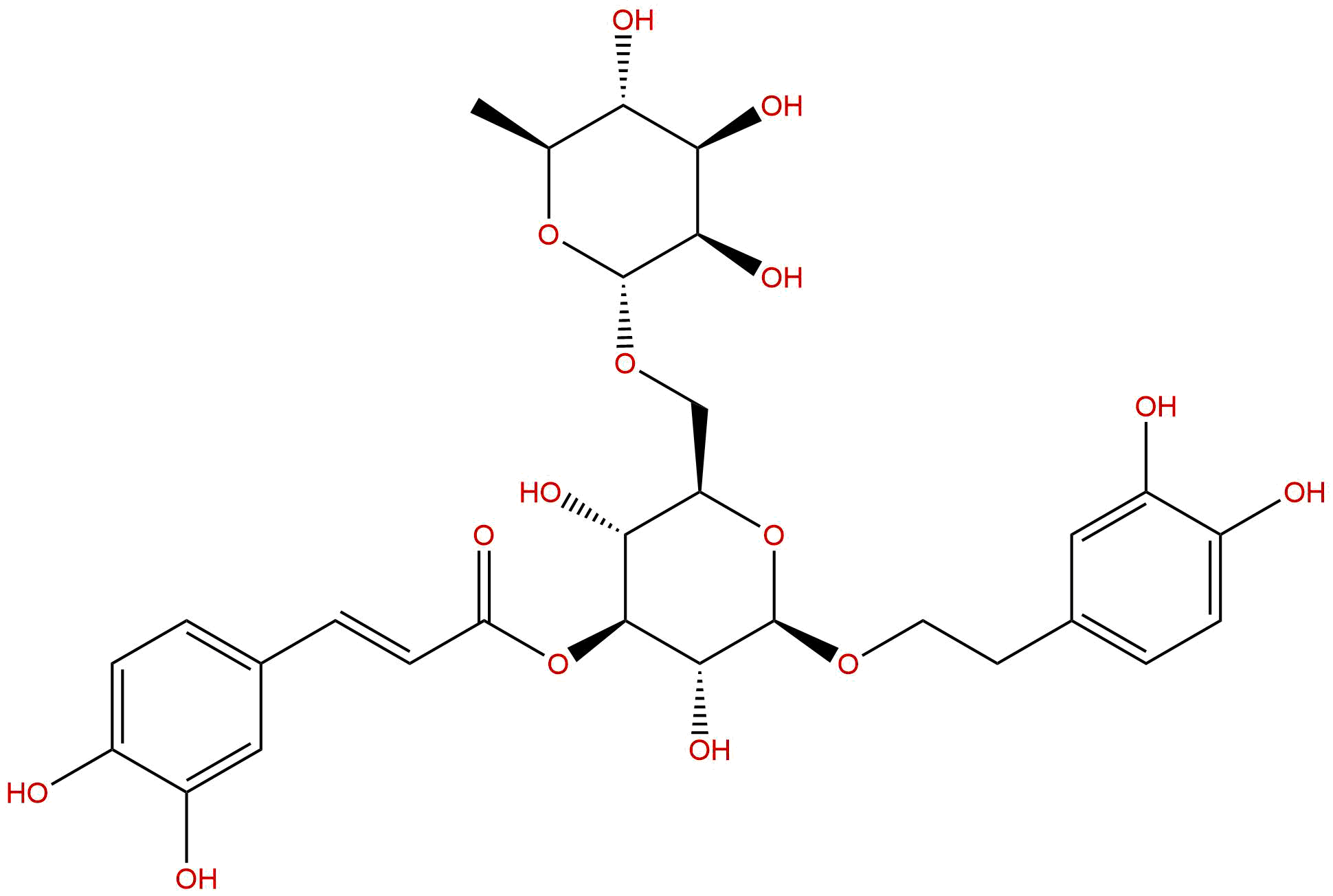
Forsythia suspensa glycoside I belongs to the class of caffeic phenylethanoid glycosides, and its core structure consists of phenylethanoid glycosides, caffeoyl groups, and glycosides. Specifically, its structural features include: a phenylethanol unit (usually 3,4-dihydroxyphenylethanol, also known as hydroxytyrosol) is connected to a β - D-glucose molecule through a glycosidic bond, while a caffeoyl group (3,4-dihydroxycinnamoyl) is connected to a specific hydroxyl group of glucose through an ester bond. This ternary structure pattern of "sugar glycoside acyl" is a typical feature of caffeic phenylethanoid glycosides and the structural basis for their various biological activities.
The molecular formula of Forsythia suspensa glycoside I is C ₂₉ H ∝₆ O ₁₅, with a molecular weight of 624.5920 g/mol. Compared with Forsythia suspensa glycoside A (molecular weight 624.59), the two have the same molecular weight, but there may be structural isomerism due to differences in glycosylation or caffeoyl substitution positions. This subtle structural difference often leads to significant changes in biological activity and pharmacokinetic properties.
Physical and chemical property parameters
According to the pharmacological evaluation data, Forsythia suspensa glycoside I exhibits the following key physicochemical properties:
-
Lipid water partition coefficient (LogP): 0.3656. The low value indicates that Forsythia suspensa glycoside I has strong hydrophilicity, which is consistent with the structural characteristics of the molecule containing multiple hydroxyl and sugar groups. A lower LogP value usually indicates better solubility of the compound in the aqueous phase, but may affect its transmembrane permeability.
-
Polarized surface area (TPSA): 245.2900 Å ². TPSA is an important parameter for predicting the oral absorption and blood-brain barrier penetration ability of compounds. It is generally believed that compounds with TPSA greater than 140 Å ² are difficult to penetrate the blood-brain barrier. The high TPSA value of 245.29 Å ² for Forsythia suspensa glycoside I strongly suggests its extremely low blood-brain barrier penetration ability, which is completely consistent with the conclusion of "blood-brain barrier: low" in drug evaluation.
-
Water solubility 4.9826 (possibly logS value or solubility score). This value indicates that Forsythia suspensa glycoside I has good solubility in water, which provides favorable conditions for its dissolution and absorption after oral administration. Good water solubility is also beneficial for the development of non oral administration routes such as intravenous injection.
-
HERG inhibition: No. HERG (human Ether - à - go Related Gene) potassium channel inhibition is an important predictor of drug cardiac toxicity. Forsythian glycoside I has no hERG inhibitory activity, indicating a low risk of cardiac safety.
-
Ames test: 0.0. The Ames test was used to detect the mutagenicity of compounds, and a result of 0.0 indicates that Forsythian suspensa glycoside I did not exhibit genetic toxicity in this test system, and the preliminary safety is good.
Overall, Forsythia suspensa glycoside I has typical natural product characteristics: moderate molecular weight, good water solubility, low lipophilicity, no significant hERG inhibition or mutagenicity, but limited blood-brain barrier penetration ability. These properties determine its possible routes of administration and range of indications.
Plant sources and extraction methods
Plant-based
Forsythia suspensa glycoside I is mainly derived from the Forsythia plant of the Forsythia genus in the Rhinoceros family(Forsythia suspensa (Thunb.) Vahl)。 Forsythia suspensa is widely distributed in East Asian regions such as China, Japan, and South Korea, and is mainly produced in Shanxi, Henan, Shaanxi, Shandong, and other places in China. The dried fruit of Forsythia suspensa is the authentic source of traditional Chinese medicine "Forsythia suspensa". In addition, the leaves, roots, stems and other parts of Forsythia suspensa also contain abundant phenylethanolic glycosides.
It is worth noting that other plants in the Forsythia genus, such as the Golden Bell Flower(Forsythia viridissima)Korean Forsythia suspensa(Forsythia koreana)It may also contain Forsythia suspensa glycoside I or its structural analogues, but the content and distribution ratio may vary due to factors such as species, place of origin, and harvest season. In addition, in recent years, there have been research reports on certain plants in the family Rhamnaceae, such as Cistanche deserticola(Cistanche deserticola)There are also similar coffee based phenylethanoid glycosides in it, but whether Forsythia suspensa glycoside I is unique to Forsythia suspensa still needs further chemical taxonomic research to confirm.
Extraction and Separation Purification Methods
The extraction of Forsythia suspensa glycoside I is usually carried out by solvent extraction combined with modern chromatographic separation techniques for purification. The typical extraction process is as follows:
-
Raw material pretreatment Dry Forsythia suspensa fruits or branches and leaves are crushed and then subjected to reflux extraction or cold soaking extraction with a certain concentration of ethanol (usually 50% -80%) or methanol. Factors such as extraction temperature, time, and solid-liquid ratio need to be optimized to achieve the maximum extraction rate.
-
Preparation of crude extract The extract is concentrated under reduced pressure to obtain a paste. The extract can be further subjected to liquid-liquid extraction using solvents of different polarities, such as petroleum ether, ethyl acetate, n-butanol, etc., to remove lipid soluble impurities and water-soluble impurities such as sugars. Forsythian glycoside I is usually enriched in the n-butanol extraction site or at the ethyl acetate water interface due to its equipolarity.
-
chromatographic separation The crude extract was subjected to column chromatography using macroporous adsorption resins (such as D101, AB-8, etc.) and eluted with a gradient of ethanol water systems at different concentrations to preliminarily enrich phenylethanolic glycosides. Subsequently, the separation and purification were further carried out by classic methods such as silica gel column chromatography, ODS (octadecylsilane bonded silica gel) reverse phase column chromatography, Sephadex LH-20 gel column chromatography, etc.
-
Preparation of High Performance Liquid Chromatography (HPLC)For the acquisition of high-purity Forsythia suspensa glycoside I, preparative HPLC is commonly used, with acetonitrile water or methanol water system (often with a small amount of formic acid or acetic acid added) as the mobile phase, and separation is carried out under the monitoring of a UV detector (usually with a detection wavelength of 280-330 nm). The retention time of Forsythia suspensa glycoside I can be determined by comparing it with standard samples.
-
Structural Identification The purified compound was structurally confirmed by techniques such as nuclear magnetic resonance spectroscopy (¹ H-NMR, ¹ ³ C-NMR, 2D-NMR), mass spectrometry (HR-ESI-MS), and ultraviolet spectroscopy (UV).
In recent years, with the development of green extraction technology, methods such as ultrasound assisted extraction, microwave-assisted extraction, and enzyme assisted extraction have also been attempted for the extraction of Forsythia suspensa glycoside I, aiming to improve extraction efficiency, shorten extraction time, and reduce the use of organic solvents. In addition, new separation technologies such as high-speed countercurrent chromatography (HSCCC) have shown promising application prospects in the separation of phenylethanolic glycosides due to their high separation efficiency and minimal sample loss.
Pharmacological activity research
anti-inflammatory activity
Inflammation is a defensive response of the body to stimuli such as infection and tissue damage, but excessive or uncontrolled inflammation can lead to tissue damage and the occurrence of various diseases. The research on Forsythia suspensa glycoside I in the anti-inflammatory field mainly focuses on acute lung injury models.
Acute lung injury (ALI) and its severe form, acute respiratory distress syndrome (ARDS), are common critical illnesses in clinical practice, characterized by damage to alveolar epithelial cells and capillary endothelial cells, pulmonary edema, and infiltration of inflammatory cells. In a mouse model of acute lung injury induced by lipopolysaccharide (LPS), pretreatment or treatment with Forsythia suspensa glycoside I can significantly alleviate pulmonary pathological damage, manifested as:
-Reduce the total protein content and the number of inflammatory cells (especially neutrophils) in bronchoalveolar lavage fluid (BALF);
-Inhibit the release of pro-inflammatory cytokines such as tumor necrosis factor - α (TNF - α), interleukin-6 (IL-6), and interleukin-1 β (IL-1 β);
-Reduce the wet/dry weight ratio of lung tissue (reflecting the degree of pulmonary edema);
-Inhibition of myeloperoxidase (MPO) activity (reflecting neutrophil infiltration).
These results indicate that Forsythia suspensa glycoside I exerts a protective effect in acute inflammation models through multi-target and multi pathway regulation.
Antiviral activity
Dengue fever is an acute infectious disease caused by the transmission of dengue virus (DENV) through mosquito vectors. Approximately 390 million people worldwide are infected each year, and severe cases can develop into dengue hemorrhagic fever (DHF) or dengue shock syndrome (DSS). Currently, there are no specific antiviral drugs available. Forsythian glycoside I exhibits potential activity against dengue virus.
Research has shown that Forsythia suspensa glycoside I may exert anti dengue virus effects through the following mechanisms:
- Inhibit virus replication By targeting virus non structural proteins NS3 (with protease and helicase activity), NS5 (RNA dependent RNA polymerase), and envelope protein E, interference with virus genome replication and virus particle assembly is achieved.
- Regulating host immune response By regulating host factors such as TNF, NFKB1, IL6, etc., the "cytokine storm" induced by the virus is alleviated, which is the key pathological mechanism of dengue fever severity.
- Protecting vascular endothelial cells ATP1A1 (Na ⁺/K ⁺ - ATPase α 1 subunit) is one of the receptors for the interaction between dengue virus E protein and host cells. Forsythian glycoside I may protect the endothelial barrier function and reduce vascular leakage by interfering with the binding of viruses to ATP1A1.
- Activate innate immunity By regulating the IFNAR1 (type I interferon receptor) and IRF3 (interferon regulatory factor 3) signaling pathways, interferon production is promoted and the host's antiviral status is enhanced.
It is worth noting that Forsythia suspensa glycoside I regulates multiple dengue virus related targets simultaneously, reflecting the characteristic of natural products with multiple targets and pathways, which may help reduce the development of virus resistance.
antioxidant activity
Coffee based phenylethanoid glycosides generally exhibit significant antioxidant activity, mainly attributed to the ortho dihydroxy structure in their molecules (i.e. the catechol structure on the caffeoyl and phenylethanoid glycosides). The antioxidant activity of Forsythia suspensa glycoside I has been confirmed in various in vitro experiments:
- Free radical scavenging ability It exhibits good scavenging activity against DPPH free radicals, ABTS cationic free radicals, hydroxyl free radicals, etc.
- Reducing power Has the ability to reduce iron ions (FRAP method).
- Metal chelating ability Can chelate transition metal ions such as Fe ² ⁺ and inhibit the production of reactive oxygen species in Fenton reactions.
At the cellular level, Forsythia suspensa glycoside I can reduce intracellular reactive oxygen species (ROS) levels induced by oxidative stress, protecting cells from oxidative damage. This antioxidant activity may synergize with its anti-inflammatory and antiviral effects, jointly exerting tissue protective effects.
Other pharmacological activities
In addition to the main activities mentioned above, Forsythia suspensa glycoside I may also have the following pharmacological effects:
- Antibacterial activity It may have inhibitory effects on certain Gram positive and Gram negative bacteria, but its antibacterial spectrum and efficacy still need to be systematically studied.
- immunomodulation In addition to anti-inflammatory effects, it may also affect the function of immune cells such as T cells and B cells.
- Hepatoprotective effect Based on its antioxidant and anti-inflammatory properties, it may play a protective role in drug-induced liver injury or alcoholic liver disease models.
Mechanism of action and molecular targets
Anti inflammatory mechanism
The anti-inflammatory mechanism of Forsythia suspensa glycoside I involves multiple signaling pathways and molecular targets:
-
NF - κ B signaling pathway NF - κ B is the core transcription factor of inflammatory response. Forsythia suspensa glycoside I can inhibit the phosphorylation and degradation of I κ B α, thereby preventing the nuclear translocation of NF - κ B p65 subunit and reducing the transcription of downstream pro-inflammatory genes such as TNF - α, IL-6, IL-1 β, COX-2, iNOS. This mechanism has been validated in both LPS stimulated macrophages and alveolar epithelial cells.
-
MAPK signaling pathway The mitogen activated protein kinase (MAPK) family includes ERK, JNK, and p38, which play important roles in inflammatory signaling. Forsythian glycoside I can inhibit LPS induced phosphorylation of p38 and JNK, but has little effect on ERK phosphorylation, demonstrating selective regulation of specific MAPK subtypes.
-
NLRP3 inflammasome The activation of NLRP3 inflammasome is a key step in the mature secretion of IL-1 β and IL-18. Forsythia suspensa glycoside I may inhibit ROS production and K ⁺ efflux, blocking the assembly and activation of NLRP3 inflammasomes.
-
Oxidative stress inflammation positive feedback loop By clearing ROS and enhancing the activity of antioxidant enzymes such as SOD, CAT, GSH Px, Forsythia suspensa glycoside I can cut off the vicious cycle between oxidative stress and inflammation.
Mechanism of anti dengue virus
The mechanism of action of Forsythia suspensa glycoside I against dengue virus can be summarized into two aspects: direct antiviral and indirect immune regulation:
- Direct antiviral effect:
- Targeting NS3 protease NS3 protease is an enzyme necessary for the maturation of dengue virus polyprotein processing. Molecular docking and enzyme activity inhibition experiments suggest that Forsythia suspensa glycoside I may inhibit its catalytic function by binding to the active site of NS3 protease.
- Targeting NS5 RNA polymerase NS5 is a key enzyme for viral RNA replication. Forsythian glycoside I may interfere with the binding of NS5 to RNA templates or primers.
-
Targeting E protein The E protein mediates the adsorption and membrane fusion of viruses with host cells. Forsythian glycoside I may block virus entry into host cells by binding to E protein.
-
Indirect immune regulatory effect:
- Regulating TNF and IL-6 The severity of dengue fever is closely related to the excessive production of cytokines such as TNF - α and IL-6. Forsythia suspensa glycoside I may alleviate the "cytokine storm" by inhibiting the NF - κ B pathway and downregulating the expression of these cytokines.
- Activate IFN signaling By regulating IFNAR1 and IRF3, it promotes the production of type I interferon (IFN - α/β) and enhances the antiviral status of host cells.
- Protect vascular endothelium By regulating ATP1A1, the normal ion homeostasis and barrier function of vascular endothelial cells are maintained, reducing vascular leakage.
Multi target network regulation
The characteristic of Forsythia suspensa glycoside I lies in its network regulation mode of "multi-target, multi pathway". In the treatment of dengue fever, it simultaneously acts on viral targets (NS3, NS5, E, NS1) and host targets (TNF, NFKB1, IL6, ATP1A1, IFNAR1, IRF3). This "dual pronged" strategy may have the following advantages:
-Improve antiviral efficacy and reduce the risk of virus resistance;
-Simultaneously controlling virus replication and excessive inflammatory response of the host, achieving a "comprehensive treatment of both symptoms and root causes";
-Through the synergistic effect of multiple targets, it is possible to reduce the high dose required for single target drugs, thereby reducing toxic side effects.
Evaluation of drug properties and pharmacokinetics
Comprehensive evaluation of drug properties
Based on classic pharmacological evaluation criteria such as Lipinski's "Rule of Five" and Veber's rule, the pharmacological characteristics of Forsythia suspensa glycoside I are as follows:
| parameter |
Forsythian glycoside I |
Ideal range |
Evaluation |
| molecular weight |
624.59 Da |
<500 Da |
relatively high |
| LogP |
0.37 |
<5 |
Comply with |
| Hbond donor |
About 10 (hydroxyl) groups |
<5 |
relatively high |
| Number of hydrogen bond acceptors |
About 15 (oxygen atoms) |
<10 |
relatively high |
| TPSA |
245.29 Ų |
<140 Ų |
relatively high |
| Number of rotatable keys |
About 10 |
<10 |
approaching the limit |
From the above analysis, it can be seen that the molecular weight and number of hydrogen bond acceptors of Forsythia suspensa glycoside I exceed the ideal range of Lipinski rule, and the TPSA is also much higher than 140 Å ². These characteristics are usually associated with low oral bioavailability. However, many successful drugs in natural products (such as paclitaxel, cyclosporine A, etc.) do not fully comply with the "five rules", so the potential of Forsythia suspensa glycoside I as a drug cannot be denied solely based on this.
It is worth noting that Forsythia suspensa glycoside I performs well in terms of safety: it has no hERG inhibitory activity and a negative Ames test, indicating a low risk of cardiac and genetic toxicity. In addition, good water solubility is beneficial for formulation development.
Pharmacokinetic characteristics
At present, there is insufficient systematic research on the pharmacokinetics of Forsythia suspensa glycoside I, but based on the study of its structural analogues (such as Forsythia suspensa glycoside A) and physicochemical properties, reasonable speculation can be made:
- absorb The oral absorption of Forsythia suspensa glycoside I may be poor, with main obstacles including:
- High molecular weight (>600 Da) makes it difficult to cross the intestinal epithelial cell membrane through passive diffusion;
- High polarity (low LogP) and high TPSA are not conducive to transmembrane transport;
- May be affected by efflux transporters such as P-glycoprotein (P-gp).
However, studies have shown that Forsythia suspensa glycoside I has oral efficacy (effective when administered orally in a mouse ALI model), suggesting the possibility of an active transport mechanism or the production of active metabolites by gut microbiota metabolism.
-
distribution Due to its high polarity and low fat solubility, the tissue distribution of Forsythia suspensa glycoside I may be mainly limited to extracellular fluid and blood, making it difficult to penetrate the cell membrane and enter the cell. The blood-brain barrier has extremely low penetration ability, which means that the distribution of the central nervous system is limited.
-
Metabolism Forsythian glycoside I may undergo the following metabolic pathways in the body:
- hydrolysis In the intestine or liver, ester bonds may be hydrolyzed by esterases, releasing caffeic acid and phenylethanolic acid glycosides;
- Glucuronidation/sulfation Phenolic hydroxyl groups may undergo phase II metabolic binding reactions;
-
Metabolism of gut microbiota After oral administration, Forsythia suspensa glycoside I may be metabolized by gut microbiota into smaller molecules of active metabolites (such as hydroxytyrosol, caffeic acid, etc.), which may have better absorption and biological activity.
-
excretion Due to its high water solubility, Forsythia suspensa glycoside I and its metabolites may be mainly excreted through the kidneys in their original form or in the form of conjugates, or may be excreted into the intestine through bile.
Strategies for improving drug properties
Regarding the shortcomings in the pharmacological properties of Forsythian suspensa glycoside I, the following improvement strategies can be considered:
- Prodrug design Acetylation, phosphorylation and other modifications of phenolic hydroxyl groups to improve lipid solubility and oral absorption;
- nano-formulation Using carrier systems such as liposomes, polymer nanoparticles, and solid lipid nanoparticles to improve bioavailability;
- Simplified structure Search for active pharmacophores of Forsythia suspensa glycoside I and design analogs with simpler structures and smaller molecular weights;
- combination therapy Combined with absorption enhancers (such as surfactants and P-gp inhibitors) to enhance oral absorption.
Clinical application prospects and prospects
Acute lung injury/ARDS
Acute lung injury is a common critical illness in clinical practice, and there is currently a lack of specific therapeutic drugs. The significant protective effect of Forsythia suspensa glycoside I in animal models provides a basis for its use as a candidate drug for ALI treatment. Future research should focus on:
-Validate its efficacy in various ALI models, such as LPS, mechanical ventilation, ischemia-reperfusion, etc;
-Clarify the optimal route of administration (oral, intravenous, nebulized inhalation, etc.) and dosage range;
-Evaluate its synergistic effect with existing therapeutic drugs such as glucocorticoids, antibiotics, etc.
dengue fever
The treatment of dengue fever faces the dual challenges of a lack of antiviral drugs and complex mechanisms of severity. Forsythian glycoside I has the potential to become a candidate compound for anti dengue fever through its unique mechanism of simultaneously acting on both viral and host targets. Future research directions include:
-Systematically evaluate the antiviral effect of dengue virus infection in cell and animal models (such as AG129 mice, STAT2 knockout mice, etc.);
-Study its broad-spectrum antiviral activity against different serotypes of dengue virus (DENV-1 to DENV-4);
-To explore the combination medication scheme with existing antiviral drugs (such as remdesivir, Fapiravir, etc.);
-Evaluate its protective effect on vascular leakage in a dengue hemorrhagic fever/shock syndrome model.
Other inflammatory diseases
Based on its anti-inflammatory activity, Forsythia suspensa glycoside I may also have potential applications in other inflammation related diseases, such as:
- Chronic obstructive pulmonary disease (COPD)By inhibiting airway inflammation and oxidative stress;
- Inflammatory bowel disease (IBD)By regulating intestinal immunity and barrier function;
- Rheumatoid arthritis By inhibiting synovitis and bone destruction;
- neuroinflammation However, due to the ability to penetrate the blood-brain barrier, special administration routes or structural modifications may be required.
Challenges and Prospects
Although Forsythia suspensa glycoside I exhibits various pharmacological activities and good safety, its clinical translation still faces many challenges:
-
Pharmacokinetic bottleneck Low oral bioavailability is the biggest obstacle. Effective formulation techniques or prodrug strategies need to be developed to improve its in vivo exposure.
-
Deep analysis of the mechanism of action At present, the research on the molecular targets and signaling pathways of Forsythia suspensa glycoside I is still not deep enough, and it is necessary to use chemical biology methods (such as drug affinity reaction target stability DARTS, thermal stability migration analysis CETSA, surface plasmon resonance SPR, etc.) to identify its direct target proteins.
-
Study on Structure Activity Relationship There are numerous structural analogues of Forsythia suspensa glycoside I, and a systematic study of its structure-activity relationship can help discover lead compounds with stronger activity and better drug properties.
-
Large scale preparation The cost of extracting and purifying Forsythia suspensa glycoside I from natural plants is relatively high, and chemical synthesis or biosynthetic methods need to be developed to meet the needs of subsequent research and development.
-
toxicological evaluation Although the preliminary safety data is good, systematic toxicology studies such as acute toxicity, long-term toxicity, and reproductive toxicity are still needed.
Conclusion
Forsythia suspensa glycoside I, as an important coffee based phenylethanoid glycoside compound in Forsythia suspensa, has shown significant development potential in anti-inflammatory and antiviral fields due to its unique chemical structure and diverse biological activities. It exerts a protective effect in acute lung injury models by regulating multiple inflammatory signaling pathways such as NF - κ B and MAPK; At the same time, by targeting dengue virus NS3, NS5, E proteins, as well as host TNF, NFKB1, IL6, ATP1A1, IFNAR1, IRF3 and other targets, the potential value of anti dengue fever has been demonstrated.
From the perspective of medicinal properties, Forsythia suspensa glycoside I has the advantages of good water solubility, low cardiac toxicity, and no genetic toxicity. However, problems such as low oral bioavailability and poor blood-brain barrier penetration ability still need to be addressed. Future research should focus on pharmacokinetic improvement, in-depth analysis of mechanisms of action, systematic study of structure-activity relationships, and preclinical pharmacological evaluation.
Under the global trend of "returning to nature" and "multi-target drug discovery", Forsythia suspensa glycoside I, as a typical representative of natural products, not only helps to clarify the pharmacological substance basis of traditional Chinese medicine Forsythia suspensa, but also provides valuable lead compounds for the development of new anti-inflammatory and antiviral drugs. With the continuous advancement of modern medicinal chemistry, pharmacology, and pharmaceutical technology, Forsythia suspensa glycoside I and its derivatives are expected to enter the clinical research stage in the near future, bringing new hope for the treatment of major diseases such as acute lung injury and dengue fever.