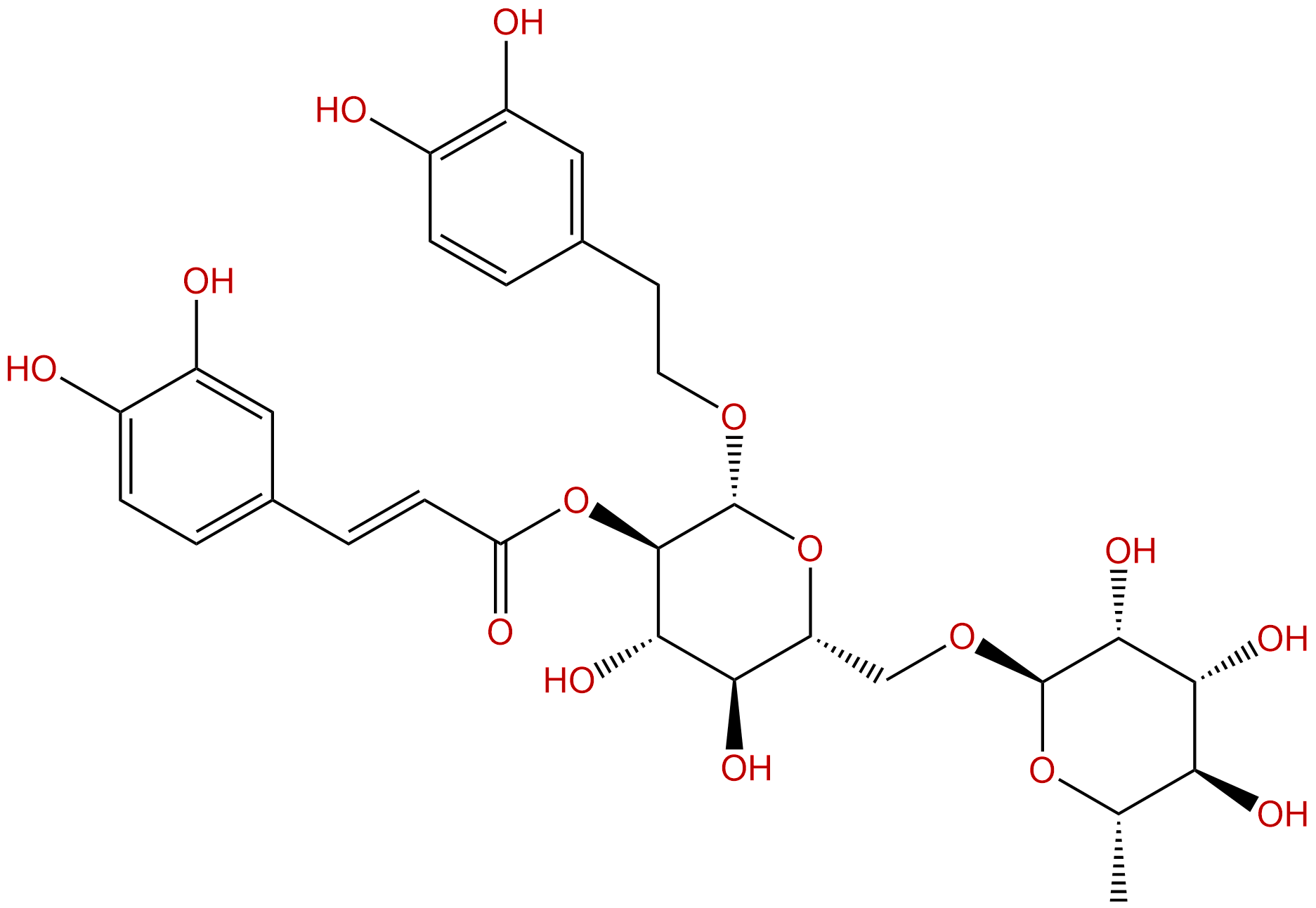


Product name: Forsythoside H
Synonym name:
Catalogue No.: BP2012
Cas No.: 1178974-85-0
Formula: C29H36O15
Mol Weight: 624.592
Botanical Source:
Physical Description:
Type of Compound:
Purity: 95%~99%
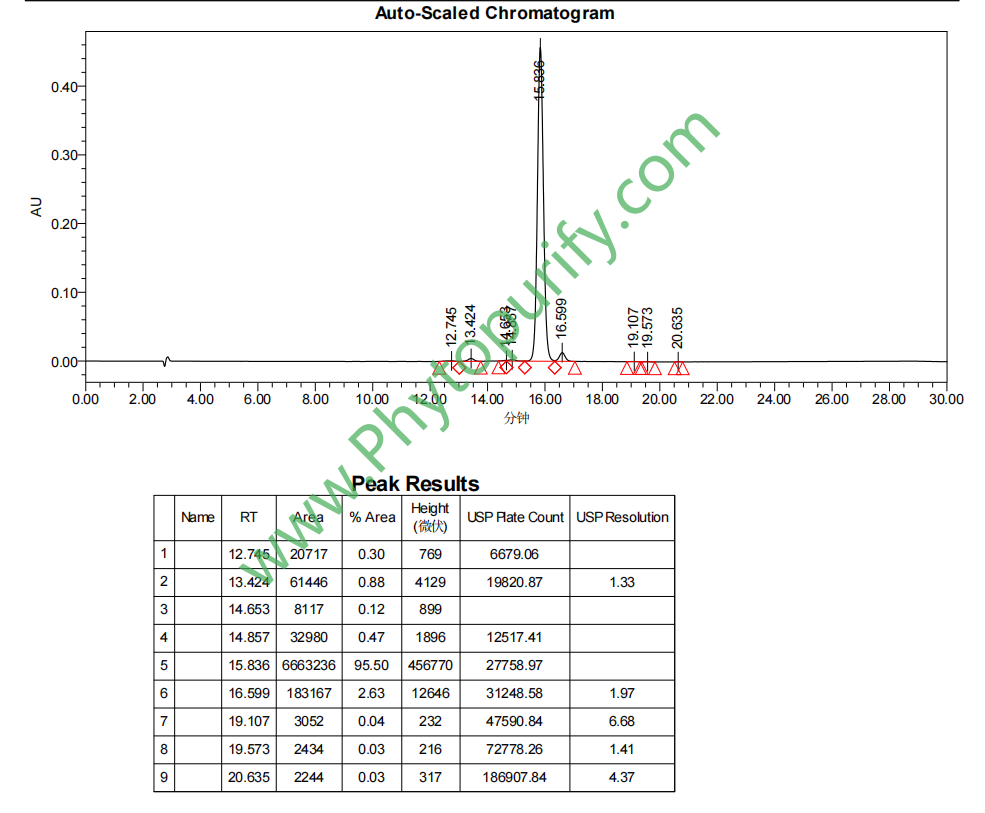
Analysis Method: HPLC-DAD or/and HPLC-ELSD
Identification Method: Mass, NMR
Packing: Brown vial or HDPE plastic bottle
The product could be supplied from milligrams to grams. Inquire for bulk scale.
We provide solution to improve the water-solubility of compounds, thereby facilitating the variety of activity tests and clinic uses.
For Reference Standard and R&D, Not for Human Use Directly.
HPLC of Forsythoside H
Storage conditions:Short-term storage at 2~8℃, long-term storage at -20 ~ -80℃
245.2900
.2622
.2507
5.2012
.5801
.0935
Low
74.4800
4.7411
No
No
No
No
No
No
0.0
Yes
No
Yes
Yes
Natural products have always been an important source of drug discovery and development, particularly demonstrating unique value in the fields of anti infection, anti-inflammatory, and immune regulation. Phenylethanoid glycosides (PhGs), as a class of secondary metabolites widely present in the plant kingdom, have attracted much attention due to their structural diversity and significant biological activity. Among them, Forsythoside H is derived from the Oleaceae plant Forsythia suspensa(Forsythia suspensa A type of caffeoyl phenylethanoid glycoside (CPG) isolated from (Thunb.) Vahl. As one of the important active ingredients in Forsythia suspensa, Forsythia suspensa glycoside H has gradually revealed its multifaceted pharmacological potential in recent years, especially in antiviral, anti-inflammatory, and immunomodulatory effects, making it a molecular entity worthy of further exploration in the field of natural product pharmacology.
Forsythia suspensa, as a traditional Chinese medicine, has the effects of clearing heat and detoxifying, reducing swelling and dispersing nodules. It is commonly used to treat diseases such as wind heat, cold, abscess, swelling and toxin. Modern pharmacological research has confirmed that Forsythia suspensa extract and its active ingredients have broad-spectrum antibacterial, antiviral, anti-inflammatory, and antioxidant activities. Forsythia suspensa glycoside H, as a relatively low content but significantly active component in Forsythia suspensa, started its research relatively late, but has shown unique biological effects. Compared with Forsythoside A, which belongs to the same genus, Forsythoside H has slight structural differences, which may lead to different characteristics in target selectivity and pharmacological activity intensity.
At present, research on Forsythia suspensa glycoside H on a global scale is still in its early stages, but existing research data suggests that this compound has potential inhibitory effects in the field of antiviral activity, especially against the replication processes of herpesviruses (such as herpes simplex virus HSV) and retroviruses (such as human immunodeficiency virus HIV). In addition, its anti-inflammatory activity is closely related to the regulation of key inflammatory enzyme activities such as myeloperoxidase (MPO). This article aims to systematically review the chemical structure, plant origin, pharmacological activity, mechanism of action, pharmacological characteristics, and clinical application prospects of Forsythia suspensa glycoside H, in order to provide comprehensive scientific basis for the in-depth development and utilization of this natural product.
The chemical structure of Forsythia suspensa glycoside H belongs to the typical caffeoyl phenylethanoid glycoside class. Its core structure consists of three parts: a phenylethanolic glycoside (usually hydroxytyrosol or similar), a caffeoyl group, and one or more sugar groups (usually glucose and xylose). Specifically, the molecular formula of Forsythia suspensa glycoside H is C ₂₉ H ∝₆ O ₁₅, with a molecular weight of 624.5920 g/mol. Its structural feature is that the caffeoyl group is connected to specific positions of the sugar group through ester bonds, while the phenylethanolic glycoside is connected to the sugar group through glycosidic bonds. This complex glycosidic structure endows the molecule with unique physicochemical properties and biological activity.
From the perspective of physical and chemical properties, Forsythia suspensa glycoside H exhibits typical hydrophilic characteristics. Its lipid water partition coefficient (LogP) is 0.2622, indicating that the compound tends to partition between the aqueous and lipid phases towards the aqueous phase, meaning it has some water solubility but poor lipid solubility. This characteristic is closely related to the presence of multiple hydroxyl and sugar structural units in its molecule. Its water solubility (LogS) value is 5.2012, further confirming its relatively good solubility in water, which is beneficial for its absorption and transport in organisms, but may also limit its transmembrane penetration ability. The Topological Polar Surface Area (TPSA) is as high as 245.2900 Å ², far exceeding the recommended upper limit of 140 Å ² for oral medications. A high TPSA value usually indicates that the molecule has strong polarity and is difficult to penetrate cell membranes, especially the blood-brain barrier (BBB). In fact, the evaluation of pharmacological parameters shows that the blood-brain barrier penetration ability of Forsythia suspensa glycoside H is "low", indicating that its application in the treatment of central nervous system diseases may be limited, but it also reduces the risk of central nervous system toxicity.
In addition, pharmacological evaluation also showed that Forsythia suspensa glycoside H has no inhibitory effect on hERG potassium channels (hERG inhibition: no), which reduces its risk of causing cardiac QT interval prolongation and arrhythmia, and is a favorable safety signal. The Ames test result was 0.0, indicating that the compound did not exhibit mutagenicity in the bacterial recovery mutation test, suggesting that its genetic toxicity is relatively low. These physicochemical properties and preliminary safety data provide positive references for the subsequent development of Forsythia suspensa glycoside H. However, its high polarity and high molecular weight also suggest that formulation technology (such as nanocarriers and prodrug design) may need to be considered for oral administration to improve its bioavailability.
Forsythia suspensa glycoside H is mainly derived from the plant Forsythia suspensa in the family Rhinoceros(Forsythia suspensa The dried fruit of (Thunb.) Vahl, also known as Chinese medicine Forsythia suspensa. Forsythia suspensa is widely distributed in East Asia such as China, Japan, and South Korea, and is one of the commonly used medicinal herbs in clinical practice in China. Except for Forsythia suspensa, other plants of the same genus such as Golden Bell Flower(Forsythia viridissima)Or Qin Lianqiao(Forsythia giraldiana)It may also contain this ingredient, but the content is usually low. The content of Forsythia suspensa glycoside H in Forsythia suspensa varies depending on factors such as origin, harvest season, and processing method. It is generally believed that the content is higher in green Forsythia suspensa (immature fruit) than in old Forsythia suspensa (mature fruit).
The extraction method of Forsythia suspensa glycoside H is mainly based on its polarity characteristics, using solvent extraction method. The commonly used extraction solvents are water, methanol, ethanol, or their mixed solutions in different proportions. Due to the presence of multiple phenolic hydroxyl and sugar groups in the compound, it is sensitive to heat and acidity. Therefore, during the extraction process, it is usually necessary to control the temperature (such as room temperature or heating reflux but avoid prolonged high-temperature treatment) and pH value (neutral or weakly acidic environment). Traditional extraction methods include cold soaking, percolation, and heating reflux extraction. In order to improve extraction efficiency and selectivity, modern technologies such as ultrasound assisted extraction and microwave-assisted extraction have also been introduced in recent years. These methods can significantly shorten extraction time and increase the yield of target compounds.
The crude extract after extraction contains a large amount of impurities, such as sugars, proteins, pigments, and other phenolic compounds. Therefore, separation and purification are the key steps to obtain high-purity Forsythian glycosides H. Common separation and purification strategies include:
In the separation process, the identification of compounds usually relies on nuclear magnetic resonance spectroscopy (NMR, including ¹ H-NMR, ¹ ³ C-NMR, 2D-NMR) and high-resolution mass spectrometry (HR-MS) techniques, which confirm their chemical structures by comparing with known literature data or standard standards.
The pharmacological activity research of Forsythia suspensa glycoside H mainly focuses on two fields: antiviral and anti-inflammatory, and there are also preliminary reports of antioxidant and immune regulatory activities.
Antiviral activity is one of the most concerned pharmacological activities of Forsythian suspensa glycoside H. Research has shown that Forsythia suspensa glycoside H has inhibitory effects on various viruses, and its mechanism of action involves multiple stages of the virus lifecycle.
Anti herpes simplex virus (HSV) activity HSV-1 and HSV-2 are the main pathogens causing oral and genital herpes. Research has shown that Forsythia suspensa glycoside H can inhibit the replication of HSV. Its potential targets may include viral DNA polymerases (UL42, UL54) and immediate early protein ICP27. UL42 is an auxiliary subunit of HSV DNA polymerase, which is crucial for viral DNA replication; UL54 is the catalytic subunit of viral DNA polymerase. Forsythian glycoside H may interfere with the function of these enzymes and block the replication of the viral genome. In addition, ICP27 is an essential immediate early protein for HSV replication, involved in the processing and transport of viral mRNA. Inhibiting the function of ICP27 can significantly reduce the expression of viral proteins. Meanwhile, Forsythia suspensa glycoside H may also affect the activity of viral thymidine kinase (TK), which is an enzyme necessary for the activation of viral nucleoside analogue drugs such as acyclovir. However, the inhibition of TK by Forsythia suspensa glycoside H may be a non-specific effect, and its specific mechanism needs further clarification.
Anti human immunodeficiency virus (HIV) activity Forsythian glycoside H also exhibits certain inhibitory potential against HIV. Its potential targets include HIV-1 protease (HIV1-PR) and integrase (INT). HIV-1 protease is responsible for cleaving viral precursor proteins into mature functional proteins and is an important target for anti HIV drugs. The integrase is responsible for integrating viral DNA into the host cell genome and is a key step in establishing persistent infection of the virus. Forsythian glycoside H may inhibit the catalytic function of these enzymes by binding to their active sites, thereby blocking the maturation and integration process of the virus. In addition, Forsythia suspensa glycoside H may also interfere with HIV virus entry into target cells by downregulating the expression of co receptors CCR5 and CXCR4 on the host cell surface. CCR5 and CXCR4 are necessary co receptors for HIV-1 to enter CD4+T cells. Blocking their binding to the viral envelope glycoprotein gp120 can effectively inhibit viral invasion.
Antiviral activity against other viruses In addition to HSV and HIV, Forsythia suspensa glycoside H may also have inhibitory effects on other viruses such as respiratory syncytial virus (RSV) and influenza virus, but related research is not yet systematic. Its broad-spectrum antiviral potential deserves further exploration.
Inflammation is a defense response of the body against injury and infection, but excessive or persistent inflammation can lead to tissue damage and various diseases. Forsythian glycoside H exhibits significant anti-inflammatory activity.
As a compound containing multiple phenolic hydroxyl groups, Forsythia suspensa glycoside H has direct antioxidant activity. It can eliminate various free radicals, such as hydroxyl radicals (· OH), superoxide anion radicals (O ₂⁻ ·), and DPPH radicals, and inhibit lipid peroxidation. This antioxidant activity is an important foundation for its anti-inflammatory properties and protection of cells from oxidative stress damage.
Preliminary studies also suggest that Forsythia suspensa glycoside H may have immunomodulatory, antibacterial (especially against certain drug-resistant strains), and liver protective effects, but these activities require further experimental evidence to support.
The pharmacological activity of Forsythia suspensa glycoside H is the result of its interaction with multiple molecular targets. Based on existing research, its mechanism of action can be elucidated from two main aspects: antiviral and anti-inflammatory.
The antiviral effect of Forsythia suspensa glycoside H is not a single target, but is achieved through the synergistic action of multiple targets and links.
The anti-inflammatory mechanism of Forsythia suspensa glycoside H mainly involves the regulation of inflammatory signaling pathways and key enzyme activities.
Overall, the molecular target network of Forsythia suspensa glycoside H includes:
This multi-target mode of action is a major advantage of natural products, which can reduce the risk of virus resistance and simultaneously exert dual anti-inflammatory and antiviral effects.
The pharmacological evaluation of Forsythia suspensa glycoside H is a key step in pushing it from the laboratory to clinical application. Based on its physicochemical properties and preliminary pharmacokinetic studies, a preliminary evaluation of its potential as a drug can be conducted.
At present, there are few direct studies on the pharmacokinetics of Forsythia suspensa glycoside H in vivo. However, based on its structural analogues (such as Forsythia suspensa glycoside A) and physicochemical properties, some characteristics can be inferred:
Given the potential low oral bioavailability of Forsythia suspensa glycoside H, future drug development may require the following strategies:
The unique antiviral and anti-inflammatory dual activity of Forsythia suspensa glycoside H has shown potential clinical application prospects in multiple therapeutic fields.
Although Forsythia suspensa glycoside H has broad prospects, its translation from laboratory to clinical still faces many challenges:
Forsythia suspensa glycoside H, as an important caffeoylphenylethanolic glycoside in Forsythia suspensa, has shown significant research value and development potential in the fields of antiviral and anti-inflammatory due to its unique chemical structure and multi-target pharmacological mechanism of action. It achieves dual antiviral and anti-inflammatory effects by inhibiting key viral replication enzymes (such as UL42, UL54, HIV1-PR, INT) and host inflammatory signaling pathways (NF - κ B, MAPK) and key enzymes (MPO). This synergistic effect has unique advantages in treating viral infections and their associated inflammatory complications.
However, the pharmaceutical challenge of Forsythia suspensa glycoside H, especially its low oral bioavailability caused by its high polarity, is the main bottleneck facing its clinical translation. Future research should focus on: 1) utilizing modern medicinal chemistry and nanotechnology to develop prodrugs or novel delivery systems to improve their pharmacokinetic properties; 2) Thoroughly elucidate its metabolic pathways and active metabolites in the body; 3) Validate its efficacy and safety in various in vivo disease models; 4) The system conducts structure-activity relationship research to provide a basis for discovering better candidate drugs.
In summary, Forsythia suspensa glycoside H is a natural product lead compound worthy of further investigation. Although the road from laboratory to clinical application is still long and challenging, with the interdisciplinary integration and technological advancement, Forsythia suspensa glycoside H and its derivatives are expected to become a new choice for treating viral infections and inflammatory diseases in the future, contributing to human health.
